| A Humane WorldKitty Block’s BlogBy Kitty Block and Sara Amundson |
Mink fur production drops to historic all-time low in the US
1

| A Humane WorldKitty Block’s BlogBy Kitty Block and Sara Amundson |

https://apnews.com/article/lifestyle-maine-bears-6f9241b2082c1f1a16d7220aa7bc5a06
yesterday
AUGUSTA, Maine (AP) — Maine’s bear hunters can start setting bait for the animals later this week.
Maine has a large and growing black bear population that numbers about 35,000. State biologists have said that population is growing by about 3% every year. The state has tried to manage the growth of the bear population with its hunting season.
Most of the bear hunt takes place with the use of bait. Hunters are allowed to start laying bait on July 31, and they can hunt with the use of bait from Aug. 30 to Sept. 25.
The bear season continues until late November, though far fewer bears are taken in the later months. The use of bait has long attracted criticism from wildlife advocates who believe it is cruel and note that the bear population has continued to grow despite its use.
Alaska Air National Guardsmen of the 176th Wing rescued an injured hunter on Wood River near Fairbanks last week.
The hunter activated the SOS button on his satellite phone and sent a text message to his…
For the full story, select an option below.
https://phys.org/news/2021-07-high-chemicals-ice-arctic-ocean.html
JULY 27, 2021
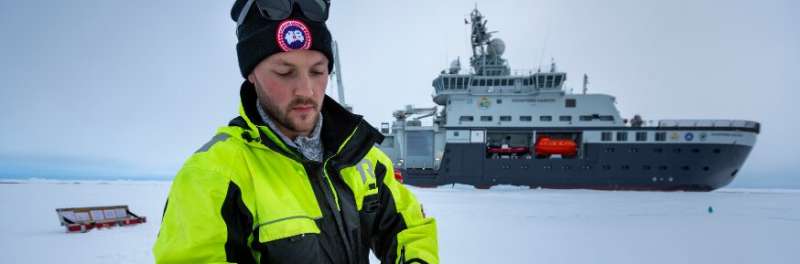
Known as ‘forever’ chemicals due to the fact they do not break down in the environment, poly- and perfluoroalkyl substances (PFAS) are used in a wide range of products and processes from fire proofing to stain resistant surfaces.
The Lancaster University study has found them in the surface seawater close to melting Arctic ice floes at concentrations of up to two times higher than levels observed in the North Sea, even though the region of the Barents Sea under investigation was thousands of kilometers from populated parts of Europe.
The research has shown these chemicals have traveled not by sea, but through the atmosphere, where they accumulate in Arctic sea ice. Because Arctic ice is melting more quickly than before, these harmful chemicals are efficiently released into surrounding seawater resulting…
View original post 710 more words
Male spending – on petrol and meat – is apparently worse for the environment than women’s. But it’s the system, not individuals, that needs to change

Tue 27 Jul 2021 11.30 EDT
Sorry, boys, but it’s all your fault.Melting ice caps,flash floods,rising sea levels: men are to blame for the lot of it. Please don’t drown the messenger, I’m just relayingthe results of a Swedish studythat found that men’s spending habits cause 16% more climate-heating emissions than women’s. The biggest difference seems to be that men spend more money on petrol. Another big difference: the men surveyed bought more meat than women. So this is the way the world ends, eh? Not with a…
View original post 571 more words
CBC News · Posted: Jul 19, 2021 8:02 AM ET | Last Updated: July 20

9 comments
A northern Ontario pet rescue group says it’s had to start turning away unwanted dogs that were adopted during the pandemic.
Many people got pets during the pandemic, but Jill Pessot, director of Pet Save in Sudbury, says if they weren’t properly train or socialized it likely led to anti-social behaviour in the dogs, and now their owners don’t know what to do with them.

Some are posting online to try to sell their unwanted dogs.
“If you’re looking for a dog this year on the net — and there’s a bunch of them on there — be careful because there’s a reason they’re on there. If every [dog] was a perfect dog, they wouldn’t be on the internet,” she said.
Other owners are surrendering their new pets to shelters or rescue groups like Pet Save
“And now they’re coming into rescues because people, number one, couldn’t even enlist trainers for a while or didn’t know when to enlist that trainer,” Pessot said.
There are eight dogs in the Pet Save kennel with behaviour issues, where they normally only have one or two.
Pessot is getting calls daily about owners wanting to surrender animals to her, and she’s having to turn them away.
Many pet issues could be solved with patience and a good trainer to help.
Jacqueline Preyde is founder of Canine Intuition Training and Rehabilitation, a dog training service in Sudbury that specializes in behavioural correction.
Her biggest piece of advice to new dog owners is to crate-train their pooch.
“Crate training is a very useful tool, especially in a time where dogs are very dependent on their owners,” she said. “If you create the crate as a safe space it really helps with the transition with then having to leave the home.”
Preyde also suggests giving the dog something to lick or chew before you have to leave them at home by themselves. That provides mental stimulation and a distraction.
She warns new dog owners to do proper research on the breed they’re considering and methods for correct training, adding there are lots of great resources online.
“When it comes to certain behaviours though, I’m adamant about reaching out to a professional, just because we see a lot more anxiety and reactivity nowadays than we used to,” Preyde said.
“We just see a lot of people that don’t understand the magnitude of what a certain breed or what a puppy requires anymore.”
By Zachary Rosenthal, AccuWeather staff writer
Updated Jul. 27, 2021 9:04 AM PDTCopied

A person uses an umbrella for shade from the sun while walking near Pike Place Market, Tuesday, June 29, 2021, in Seattle. The unprecedented Northwest U.S. heat wave that slammed Seattle and Portland, Oregon, moved inland Tuesday — prompting an electrical utility in Spokane, Washington, to resume rolling blackouts amid heavy power demand. (AP Photo/Ted S. Warren)
No other region in the country is warming faster than the western United States when it comes to increasing daytime highs, a trend that became apparent with the unprecedented and record-shattering heat wave that took over the Pacific Northwest earlier this summer.
Heat has been building all across the west this year. In June, Idaho, Utah, Arizona, Nevada and California all had record heat statewide. Salt Lake City had its warmest June in 74 years of records with an average temperature of 80.2 F, which is 8.6 degrees Fahrenheit above normal.
Seattle finished the month of June more than 5 degrees above average, while Portland, Oregon, closed out the month an astonishing 7 degrees above average, with the heat killing hundreds in the United States and Canada.
As a continent, North America experienced its hottest June in recorded history last month.

AccuWeather meteorologists explained five reasons for the heat across the West this summer.
Much of the Southwest, central Rockies and northern Plains were facing a severe drought, while pockets of drought also existed in the Pacific Northwest. The Southwest, in fact, has been in “decadal, long-term drought,” according to AccuWeather Senior Meteorologist Paul Pastelok.

Drought conditions across the United States in mid-April, with severe to exceptional drought encompassing much of the Southwest. (U.S. Drought Monitor)
Drought in the spring helps to enhance the risk of extreme heat and drought in the summer due to a positive feedback mechanism. Since there is little moisture in the ground, more of the sun’s energy goes directly to heating the surface, drying out the surface even more.
Monsoonal moisture provides key rainfall for the Southwest, and that moisture was greatly lacking in both 2020 and 2021. In the summer of 2020, the position of the upper high-pressure area over the Southwest was nearly stationary, causing prolonged heat and high evaporation rates that led to expanding drought conditions.https://playlist.megaphone.fm/?e=ADL1374184317
In 2021, precipitation shut off in the late winter and spring, speeding up snowmelt across California and the interior West, which set the stage for the extreme summer heat. Monsoonal rain has come back this summer with deadly force across the American Southwest.
In a typical La Niña pattern, storms during the western wet season, which runs from October to April, tend to shift farther north, allowing points to the south to dry out. These impacts took hold in the latter part of the wet season, with dry conditions causing higher evaporation and creating higher pressure aloft, resulting in a stronger heat dome.

This year, though, the high pressure that typically builds over the Southwest was stronger in the West and helped to send record heat into the Northwest, northern Rockies and western Canada.
Water temperatures may have also helped to play a role in causing intense heat in the West. A large area of above-normal sea-surface temperature anomalies has stretched across the northeastern Pacific near the West Coast this summer.

Map showing unusually warm sea-surface temperature anomalies (temperatures compared to normal in degrees Celsius) as of July 24, 2021. (NOAA)(NOAA)
“What this may have done is pulled the upper high pressure farther west most of the time (during the extreme heat in late June over the Northwest), which led to the intense heat in the western U.S. and western Canada,” Pastelok explained, describing the formation of a heat dome which helped to trap heat in the western U.S. and western Canada.

Over the last 30 years, the greatest warming in terms of maximum temperatures in the months of June and July has occurred in the western United States, meaning that the record warmth these past few months is not terribly surprising.

The average summer temperature in Portland, Oregon has increased by 2.5 degrees Fahrenheit in the past 50 years. (Climate Central)
Increased warming in the region will help make a typical heat wave in the Pacific Northwest even worse. One recent study found that June’s heat wave would have been “virtually impossible without human-caused climate change.”
By JERUSALEM POST STAFF JULY 25, 2021 15:13


Car pollution(photo credit: REUTERS)Advertisementhttps://a787e037d6243c0c04ba899d111a4413.safeframe.googlesyndication.com/safeframe/1-0-38/html/container.htmlA recent study based on computational models claims that within the next decade, global human welfare will begin to decline.The study was written by Gaya Herrington, a sustainability and dynamic system analysis researcher at the consulting firm KPMG, and published in the Yale Journal of Industrial Ecology. According to the study, simple supply and demand raises the following problem: If the world’s economy and population continues at its current growth rate, the world’s natural resources will eventually run out. Then, the economy and population will begin to shrink in order to match its supply. A groundbreaking MIT study in 1972 titled “Limits to Growth” (LtG) was the first to try to solve the problem based on empirical data and computational analysis. The 1972 study created a computer model that analyzed global resource consumption and production based on used data from many fields, including population, fertility rates, pollution levels, food production, and industrial output.
Top Articles
 READ MORE
 READ MORE


 Flurry of Israeli Palestinian phone calls doesn’t spell peace ‑ 8 takeshttps://imasdk.googleapis.com/js/core/bridge3.472.0_en.html#goog_736838594https://imasdk.googleapis.com/js/core/bridge3.472.0_en.html#goog_1019506851 https://imasdk.googleapis.com/js/core/bridge3.472.0_en.html#goog_1141435868javascript:false
 The study then presented 12 possible scenarios for the future, based on different forecasts of human behavior. In most of the scenarios, incessant economic growth eventually overshoots the world’s natural resources, rendering further economic growth impossible. Personal welfare would then begin to decline as a result.”Business as Usual” (BaU) was one of the most famous of the 1972 scenarios. BaU predicted that global economic growth would continue as it had done before. When BaU was feeded into the computational models, the outcome was that around the 2040s the world’s economy will begin to lose ground, and the world’s population, food availability, and other resources would drop as a result.The 2020 study looked at today’s data and compared it to the 1972 predictions. The computer analysis showed that two of the 1972 predictions were very close to the current state of the global economy.
One of them was BaU.According to the study: “The two scenarios aligning most closely with observed data indicate a halt in welfare, food, and industrial production over the next decade or so, which puts into question the suitability of continuous economic growth as humanity’s goal in the twenty-first century.”BaU does not necessary end in a total collapse of human society. the researchers explained in the study. But, it will still create a sharp economic downturn that could destabilize the world as we know it.However, according to the study, there is still another model within reach, if human behavior changes drastically.While this scenario is least aligned with the 2020 data, humans may decide to deliberately limit their own economic output before the dearth of natural resources forces them to. This includes, among others, having smaller families and limiting industrial pollution and consumption of natural resources.


Enjoy the video, below, of darling rescued river otter pups, but, care, go beyond, and please, if you haven’t already done so,we need you to submit comment, against Montana’s proposal to allow trappers to kill ~ 50% more River Otters in Western and Northwestern Montana.
Why is Fish, Wildlife, and Parks even proposing this? FWP writes, because they met with the Montana Trappers Association and Montana Fur Harvesters, and that they want to trap and kill more river otters. FWP goes on to state that from harvest reports and anecdotal information they believe the otter can handle it.
Comment Deadline Monday, 7/26, 5pm MST.
Submitpublic commentin opposition via email:
fwpwld@mt.gov or FWcomm@mt.gov
Subject line: River Otter proposals
Montanans, be sure to let them know which town you are from, especially if in Region 1 or Region 2.
Montanans can choose tosubmit public comment online. By clicking on…
View original post 509 more words

