Total animal deaths at rodeo and chuckwagon races have topped 100 since 1986
David Bell · CBC News · Posted: Jul 15, 2019 3:29 PM MT | Last Updated: July 15, 2019
Chuckwagon driver Chad Harden was disqualified from the Calgary Stampede after causing an accident on July 11, 2019, that led to a horse being put down. Chuckwagon horses make up more than two-thirds of the animal deaths at the Stampede. (CBC Sports)
106 comments
The 2019 Calgary Stampede is now tied for second place as the deadliest year for chuckwagon horses in more than three decades — with the total tally of animal deaths surpassing 100.
The latest deaths bring the total number of animals that have died during the rodeo and chuckwagon races at the Stampede since 1986 — when the most detailed records are available — to 102.
The Calgary Stampede declined requests to provide the organization’s own details on deaths through the years.
The most complete records available publicly are from the Vancouver Humane Society, which has added up the tally since 1986 using data from the Calgary Humane Society and media reports.
That gives it the unfortunate honour of tying with 2010 as having the second highest toll on chuckwagon horses. Chuckwagon horses make up more than two-thirds of the animal deaths at the Stampede.
The top of the list is 1986, when 12 horses died.
Two humans have also died in the competition since 1986: outrider Eugene Jackson in 1996 and wagon driver Bill McEwen in 1999. Both died of head injuries.
The Vancouver Humane Society says the total tally includes:
72 chuckwagon horses.
Nine calves.
Five steers.
Four bucking horses.
One wild ride horse.
One show horse.
One bull.
Outside of the Stampede itself, nine horses died in 2005 while being herded over a bridge on their way to the grounds.
The latest deaths prompted renewed calls from animal rights advocates and others for the Stampede to end chuckwagon races and the rodeo.
This graph tallies animal deaths, by year, at the Stampede. Use the drop-down menu to see the data by animal type:https://datawrapper.dwcdn.net/TLADr/2/
The Calgary Stampede has launched a review in response to Sunday’s deaths. Last week, a chuckwagon driver who caused an accident that led to a horse being put down was fined $10,000 and banned from competing at future Stampedes.
The Stampede says it has made many changes over the years to increase the safety of animals and humans.
The Stampede’s roots can be traced to 1886, when the Calgary and District Agricultural Society held its first fair.
The 2019 Calgary Stampede ran July 5-July 14.
A tarp covers the scene of the accident that led to three horses being euthanized after a chuckwagon race at the Calgary Stampede on June 14, 2019. (Anis Heydari/CBC)
TORONTO — Reported methane emissions from animal agriculture underestimate the actual level of emissions in the atmosphere, a new environmental study finds.
A joint study by New York University and Johns Hopkins University found that the bottom-up method of methane emission testing used in Canada and the United States does not properly reflect emissions in the atmosphere, meaning they could be between 30 per cent to 90 per cent higher than what is reported.
“Government agencies, like Environment and Climate Change Canada or the U.S. Environmental Protection Agency, typically use what we call a bottom-up approach or an inventory approach in order to estimate emission of greenhouse gases,” says Scot Miller, secondary author of the study and professor of environmental health and engineering at Johns Hopkins University, in an interview with CTV News.
The bottom-up approach to estimating methane gas emission involves tallying up populations of animals and determining, on average, how much methane a typical animal is producing, Miller says.
Those two quantities are then multiplied to produce estimates for total methane emissions from animal agriculture.
“An upside of this approach is that you get a really detailed process-based understanding of what processes are involved in greenhouse gas emissions,” Miller says. “People will, for example, go out and measure emissions from individual cows and understand how food sources impact emissions from cows.”
However, the study published in Environmental Research Letters, found that emission estimates produced using the bottom-up approach do not accurately record the amount of methane in the atmosphere.
“You can imagine, on the flip side of this, as you take these individual measurements and then extrapolate them to larger and larger scales, that there is a process or something that you might have missed,” says Miller.
The study found that when emission estimates from bottom-up approaches were compared to estimates produced using the more expensive top-down method of testing, there were significant discrepancies in the level of emissions reported.
A top-down approach to estimating the level of methane in the atmosphere involves measuring greenhouse gas emissions in the sky using planes, telecommunication towers and satellites, and then tracking the sources back to the ground.
“An upside of that approach is that if we can fly a plane over a landscape and measure methane across that landscape,” says Miller. “If there are emissions over that landscape there really isn’t anywhere [for it] to hide.”
However, Miller explains that the top-down approach also has some disadvantages.
“A downside of that approach is that if we use observations from an airplane that flew a kilometre above the Earth’s surface, we can’t necessarily determine whether those emissions came from a cow, or a pool of manure next door,” says Miller. “We kind of only get a board-scale view of the landscape.”
Matthew Hayek, lead author of the study and professor of environmental studies at New York University, says that the most accurate estimates will use aspects of both approaches.
“It’s a combination of the two,” says Hayek. “Improving both until they hone in on the same answer. We leave room in the study that the bottom-up estimates need to come up or that the top-down emissions might also have some bias in them that needs to come down.”
Hayek says that these underestimated reports of methane emissions have international implications, as the intensive farming found in Canada and the United States has slowly become the global standard, with countries like China and others in Southeast Asia looking to adopt North American farming practices.
“The reporting of this mismatch was not available outside of specific atmospheric chemistry and physics journals,” says Hayek.
“It was not being discussed by anyone who had a hand in the international development of taking our methods of animal agriculture production, that are predominantly used in the United States, where these mismatches occur, to countries where these technologies are currently being exported, including China, much of East and Southeast Asia.”
Miller says that the next step for researchers is to get a better understanding of why these two models differ and how scientists can produce more accurate readings of methane in the atmosphere.
“I think a potentially important first step is to take more intensive observations across multiple scales in order to get a better sense of why the top-down and bottom-up estimates disagree,” says Miller. “If this disagreement is due to how we estimate emissions from manure management or how we estimate emissions from animals themselves, those different sources would imply very different things about trying to mitigate emissions.”
Hayek says that it is important for governments to acknowledge this discrepancy and work to produce a more accurate reading of greenhouse gases in the atmosphere.
“Our role as scientists here is not to condemn or support but to warn,” says Hayek, “and this was a warning and a flagging of an issue that has not received a proportionate amount of attention.”RELATED IMAGES
This file photo shows cows in a dairy farm, Tuesday, September 25, 2018 in Saint-Henri-de-Taillon, Que. (THE CANADIAN PRESS / Jacques Boissinot)
More heatwaves even worse than those seen recently in north-west of America forecast in research
Firefighters tackle the Bootleg fire, near Klamath Falls, Oregon on 17 July. Scientists say the world has yet to see the worst impacts possible from global heating.Photograph: US Forest Service/AFP/Getty Images
“Record-shattering” heatwaves, even worse than the one that recently hit north-west America, are set to become much more likely in future, according to research. The study is a stark new warning on the rapidly escalating risks the climate emergency poses to lives.
The shockingtemperature extremes suffered in the Pacific north-westand in Australia 2019-2020 were “exactly what we are talking about”, said the scientists. But they said the world had yet to see anything close to the worst impacts possible, even under the global heating that had already happened.
Media and citizens have begun asking if China has properly prepared for climate emergency
People ride in the front of a loader to cross a flooded street in Zhengzhou, Henan province.Photograph: Noel Celis/AFP/Getty Images
Vincent NiChina affairs correspondentMon 26 Jul 2021 11.19 EDT
At about 5pm last Tuesday, as heavy rainfall continued to pound her apartment building in Zhengzhou, the climate policy researcher Zhang Jin headed out to her local supermarket. But the buns and vegetables were all gone, and the queue in the supermarket was “over a hundred metres’ long”, she laterrecalled.
After learning that some of her relatives were trapped elsewhere in the city, she decided to drive out to help them. But she was surprised to discover other drivers abandoning their vehicles. Zhang realised something was very wrong, and turned back.
Firefighters battled at least three wildfires Friday in Okanogan County that threatened hundreds of homes and briefly clogged the Methow Valley with hazardous smoke.
The Cedar Creek blaze, which is burning five miles southwest of Mazama, and the Cub Creek 2 fire, burning five miles north of Winthrop, prompted evacuationsthroughout the area.
The blazes are two of at least 15 large wildfires currently burning in the Pacific Northwest — eight in Washington and seven in Oregon — across 638,000…
The nest predator bounty program began in 2019 as a key component of Gov. Kristi Noem’s Second Century Initiative. Its goals were to diminish the population of animals that eat pheasant and duck eggs, to get youth and families outside together, and to help ensure trapping remains a part of South Dakota’s outdoor heritage.
Now with the program to start its third year, it has been given what worked best from its two previous years. It is back to the $10 bounty per predator tail. With the upcoming program season being April 1 through July 15, the GF&P could collect 50,000 tails, thus reaching the 2021 cap of $500,000.
Russell Olson is vice-chair of the South Dakota Game, Fish and Parks Commission. He discussed the Nest Predator Bounty Program, in advance of the Commission’s January 28-29 meeting. The public can attend through conference call or remotely through Zoom. Number eight on the agenda is the Pheasant Hunting Marketing Campaign 2020 Summary. Number 27 on the agenda is the Nest Predator Bounty program. Number 29 on the agenda is Future of Habitat Update.
The 2019 cap on receiving harvested predator tails was $500,000, at $10 per tail, Olson said. South Dakota citizens can harvest the included species — raccoons, striped skunks, badgers, opossums, and red fox — year-round, but to be eligible for the bounty program the animals must be harvested during the program timeframe, or until the cap was reached. In fall of 2019, Responsive Management completed an independent survey of South Dakota residents and program participants, measuring their opinions on trapping and the Nest Predator Bounty Program. Overall, 83% of South Dakota residents approved of the program.
Participants must comply with South Dakota trapping and hunting rules and regulations, found in the current hunting and trapping handbook or online at https://gfp.sd.gov/pages/regulations/. Road kill animals are not eligible. Payment for the tails is through a check in the mail approximately every 30 days.
On August 12, the 2019 Nest Predator Bounty Program closed, after receiving 50,000 nest predator tails from nearly 3,000 participants. Game, Fish and Parks’ Secretary, Kelly Hepler, said, “The success of this program is directly tied to the stories we have received from the families who were inspired to start trapping for the first time. Participants have not only been successful at removing large numbers of nest predators which will help nesting birds in their local areas, but more importantly, they have had fun and experienced our outdoor resources in a way they might not have ever known.”https://f08d04fdc480da248fda0d030b5cbeb1.safeframe.googlesyndication.com/safeframe/1-0-38/html/container.html
The 2020 Nest Predator Bounty Program ran from April 1 through July 1. This year, though, the cap was $250,000 — half from 2019, and each tail received $5 — half of the original $10. Program changes for 2020 also included that participants under the age of 18 and landowners harvesting nest predators from their own land were not required to have a license. All other participants must have a hunting, fishing, or furbearer license. And, the method of take included shooting of nest predators in addition to trapping. Participants could submit up to $595 worth of tails per household. Due to the pandemic, the GF&P did not accept tails until a later date, and participants were to freeze all tails until dates and locations were determined for submission.
“COVID caused an unknown aspect to the 2020 program,” Olson said. “Still, in some of the counties, we doubled the number of youth participating. Of the 4,100 tails collected over the first two years, 16% were harvested by participants 17 years old and younger. We strove for the three Rs — recruit, retain, and reactivate. We want to see people getting out, getting off of their couches to going outdoors.” One of the goals is for at least 20% of bounty participants to be under the age of 18. The main species of tails turned in were racoon tails, with skunk tails taking a distant second. One of the GF&P offices collecting the tails is the Fort Pierre office at 20641 S.D. Hwy. 1806 in Fort Pierre, call 605-223-7680.
“I have heard people say the program has achieved its goals. People know the correlation of predators and the brood production success. I know, and it seems amazing, that every year about 75% of the pheasant broods are lost to predators. This is according to the biologists, and I have learned to trust these guys. Habitat is shrinking, and it’s easier for predators to find the broods — like shooting fish in a barrel for predators to get eggs and chicks. The Nest Predator Bounty Program will help us and the pheasants in the long run. I personally feel we’ve seen more pheasants this year, but the guy 10 away might say he has never seen the impact.”
Olson mentioned a weekly give-away program. Of the kids turning in predator tails, one winner each week will receive three live traps, a quality skinning knife, and a copy of the Trappers Association handbook — a package totaling an estimated $350.
Reaching the cap could end the season early. “The program could very well hit its cap, say the 1st of June, and the season would be over,” said Olson.
“The South Dakota Game, Fish and Parks is focused on increasing participation in trapping from all ages while at the same time, reducing localized populations of nest predators as a way to enhance pheasant and duck nest success,” states the GF&P website. “The activity of trapping nest predators during the nesting season has been a management technique for decades. Trapping is central to wildlife management, conservation and sustaining our state’s outdoor traditions for the next generation.”
The goals of the program for South Dakota residents were, are still are:
Enhance duck and pheasant nest success;
Increase trapping participation, awareness and education;
Ensure South Dakota’s hunting and trapping heritage remains strong for the next 100 years; and
Get the next generation involved and interested in outdoor recreation, conservation and wildlife management while increasing support for habitat.
Olson added that the GF&P hopes to double youth participation in ETHICS S.D., a furbearer education program collaboration between GF&P, 4-H, the S.D. Trappers Association, and the Western S.D. Fur Harvesters. There were six 4-H clubs from around the state participating in ETHICS SD as a pilot program from October 2019-April 2020. ETHICS stands for Ecology, Trapping, History, Identification, Conservation, and Stewardship. Once furs are harvested, students learn skills in fleshing, stretching, salting and drying furs to compete for $1,000 in scholarships at next spring’s South Dakota Trapper’s Association youth division fur competition. Each 4-H group has approximately 10 student participants (ages 10-18), one 4-H adviser, and at least one trapping expert to assist with the class content. Parental and volunteer involvement has been key to the success of the program.
Bunny, TikTok’s beloved “talking” Sheepadoodle, never fails to stun her followers. From asking for play dates with dog friends on her augmentative and alternative communication (AAC) device to posing existential questions, it appears that the more Bunny talks, the more insight we gain into the minds of dogs.
Of course, as Salon has previously reported, it is unclear (scientifically speaking) whether Bunny has been trained to use specific buttons on her AAC device, a sound board made up of buttons with a different word vocally recorded on each, or if her communications are actually spontaneous. While the videos posted by her human parent Alexis Devine on Tiktok are mesmerizing, a recent one sheds light on something scientists know little about: what dogs dream about. In the video, Bunny is clearly in a deep sleep, kicking her paws and making soft noises, as though she is deep in a dream state. Devine wakes her up and asks: “What talk sleep?” to which Bunny replies, via the AAC device, “stranger animal.”Advertisement:
Is it possible that Bunny was having a nightmare about a “stranger animal?”
Leo Trottier, cognitive scientist and founder of How.TheyCanTalk Research and developer of the FluentPet system Bunny uses, is blunt about it: “We don’t know,” he says. The project Bunny is a part of includes at least 2,600 animals — including dogs, cats and a few horses. Participants receive instructions on how to set up their AAC buttons for their pets and their human parents set up cameras to constantly monitor the animals when they are in front of their boards. The data is sent to the lab so that researchers, like Trottier, can examine what they say. While Bunny is one of the most advanced subjects in the study, Trottier isn’t entirely convinced Bunny is reporting back her dreams. However, he admits he finds her behavior very “intriguing.”
First, before the aforementioned interaction was published on social media, Trottier says Devine sent him multiple videos where Bunny was stringing the words “night talk sleep” together — in the morning, right after she woke up.Advertisement:
“This appeared to be an entirely novel combination of buttons that we hadn’t seen before, so we were confused about what it meant,” Trottier said. “At the time the most intriguing interpretation — I don’t know if that means it’s the most likely one, but certainly to me it was the most intriguing interpretation — was that it might have been Bunny wanting to try to communicate about dreams.”
Trottier said he suggested that Devine wake up Bunny the next time it happens.
Want more health and science stories in your inbox? Subscribe to Salon’s weekly newsletter The Vulgar Scientist.
“Bunny appeared to first respond as though she had been asked the question, which in and of itself is interesting, and then she did respond with a report that would be consistent with if you were ostensibly having a dream,” Trottier said. “Her behavior is intriguing and appears to be consistent with what we might expect if she were, but significant work would have to be done to figure out if she is reporting on her dreams at all, or instead doing something entirely unrelated; and if she is dreaming, whether what she apparently reports to be dreaming about is in fact accurate.”Advertisement:
Technically, Trottier and his colleagues aren’t studying dog dreams, which would be very difficult to do. That’s partly because not much is known about human dreaming, and the barriers to studying dreams are even more challenging when it comes to animals.
“In general, animal dreaming is very difficult to interrogate,” said Matthew Wilson, a neurobiology professor at Massachusetts Institute of Technology’s Picower Institute for Learning and Memory. “And that’s simply because dreams are based on assessment of recall content.”
Wilson, who co-authored a groundbreaking study that found that rats dream and they replay memories while they dream, said there is a lot known about the structure of canine sleep. For example, dogs do experience rapid eye movement (REM) sleep, a state that’s associated with dreaming in humans. In 1977, scientists studied the electrical brain activity of six dogs for 24 hours and published their findings in the journal Physiological Behavior. They found that dogs spent 12 percent of that span in REM sleep, 21 percent of that time drowsy, and 44 percent of that time alert. They also spent 23 percent of their time in slow-wave sleep, which is the deepest kind of non-REM sleep.Advertisement:
“In rodents, rats and mice, we can confirm that there is some trace of experience during the day that gets replayed during sleep in a manner that looks a lot like dreaming,” Wilson said. “So, it seems to replay experiences as they occur, not just snapshots, but the sequences are much like movies . . . they experience patterns of brain activity that look like the animals actually running in the maze during sleep. Parts of the brain that would be responsible for imagery, or seeing things during wakefulness, those also get activated during sleep.”
Could it be possible that Bunny was dreaming about a strange animal she encountered during her wakeful hours?
“There’s no reason to believe that what you see in a rodent would be any different than what you would see in a dog or cat,” Wilson said. What is more of a mystery is if animals have confabulating-structured dreams — similar to when humans dream of something they didn’t do in real life, like fly or teleport. That is very difficult to study because that would require communicating with the animal, who would have to recall their dream.Advertisement:
“The only way we have to verify the content is to compare it with brain activity that they’ve actually experienced,” Wilson said. “So in a sense we can only see or detect dreams that correspond to an awake experience.”
Wilson said he believes canines have “all the ingredients for it,” but it would be obviously difficult to study or prove.
Indeed, researchers suspect speculation on Bunny’s dreams may thus be a bit premature.
“With Bunny’s button use, there are more fundamental questions — such as, does she even know how to properly answer a question,” How.TheyCanTalk’s Trottier said. “That would normally come before being able to make any kind of investigation of Bunny’s dreaming reports.”
File photo of a skunk at Edinburgh Zoo in Edinburgh, Scotland. (Photo by Jeff J Mitchell/Getty Images)
CORTLAND COUNTY — A 58-year-old man died Friday night after getting shot with a crossbow while he and another person tried to kill a skunk.
Shortly after 9 p.m., New York State Police in Homer responded to a home on Jipson Hill Road in the town of Taylor for a report of a man shot with a crossbow. Paramedics were already on the scene when troopers arrived.
Preliminary investigations showed that James R. Parker and another man were trying to kill a skunk outside the home. The other man shot at the skunk with the crossbow and accidentally hit Parker, troopers said.
NOW PLAYINGCrew battling Tamarack Fire makes narrow escape out of fire and flamesCNN00:35/00:48Now PlayingCrew battling Tamarack…
Source: CNNCrew battling Tamarack Fire makes narrow escape out of fire and flames00:48
(CNN)California’s largest wildfire has destroyed multiple buildings and is threatening thousands more as the battle against the blaze stretched into its 12th day. Low moisture in vegetation and limited access in the remote area have hampered firefighters, officials said.
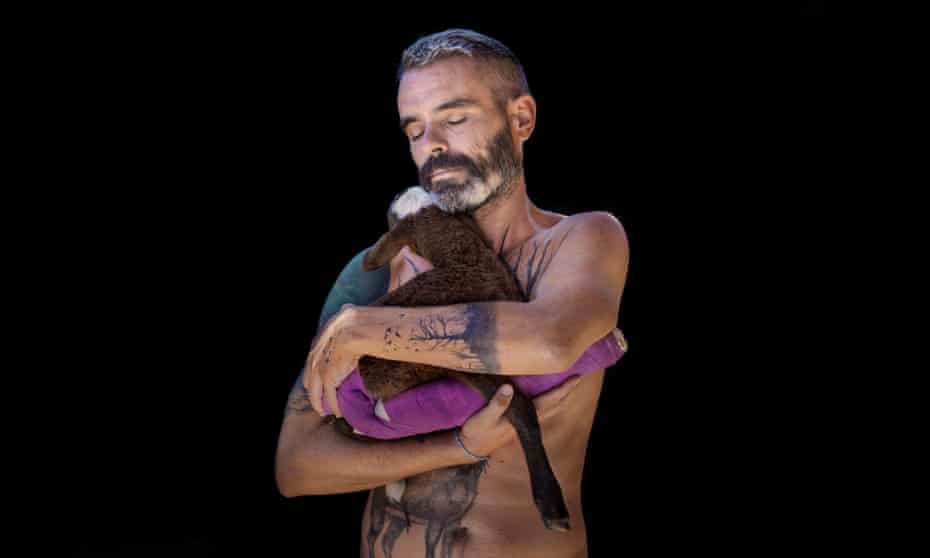
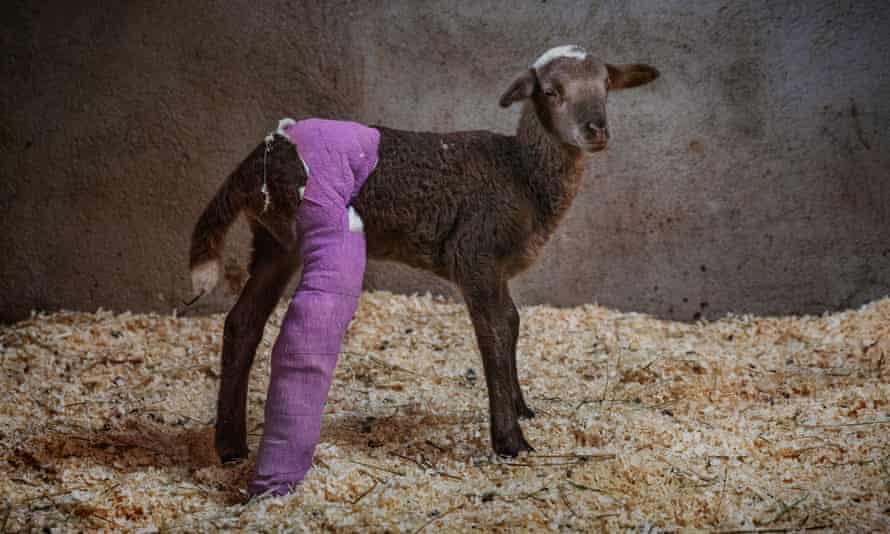
Armoní the lamb with Gaia animal sanctuary co-founder Coque Fernández Abella. Photograph: Ana Palacios
Spain may be famous for its love of meat – but sanctuaries across the country are coming to the rescue of its doomed cows, bulls, pigs, sheep and geeseErica BuistSat 24 Jul 2021 07.00 EDT
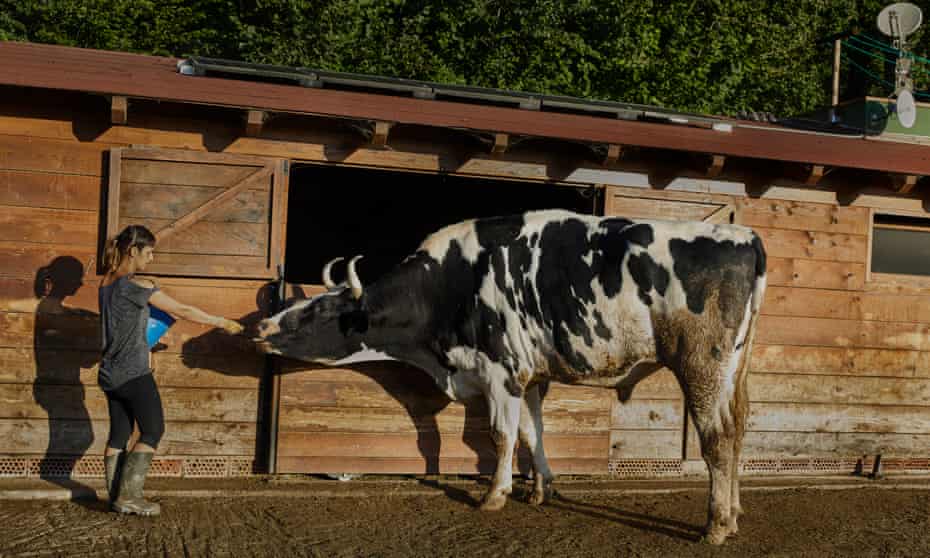
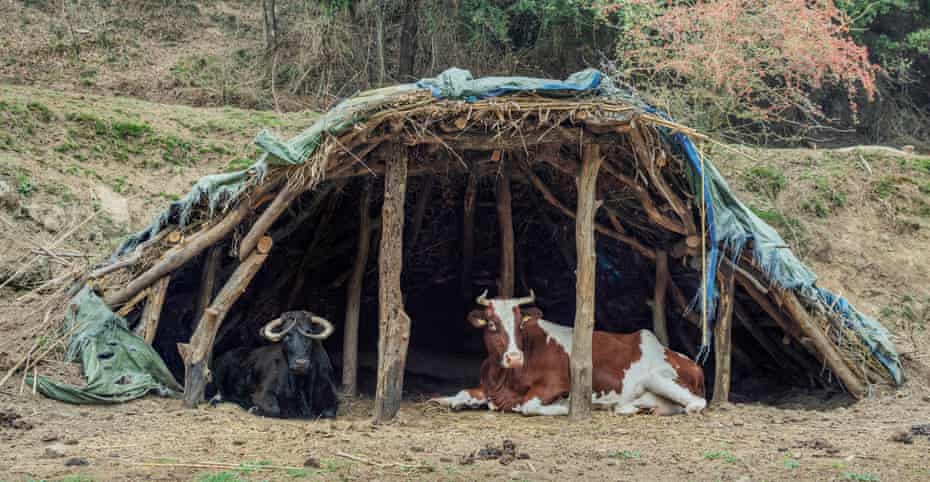
In the north-east Spanish region of Catalonia, an enormous bull called Pedro is poking his head over a barn door to look at some sheep. He’ll stay there for two hours if the sanctuary volunteers let him; he’ll have to be tempted away with treats so that the sheep can be let out to graze. Pedro knows the routine; he’s been here since he was a calf, when he was bottle-fed by volunteers. He lives a charmed life – he is fed, he roams, he watches sheep, he sleeps; and when he dies, it will be of natural causes.
“He’s enormous!” I say to Olivia Gómez de Zamora, a veterinary assistant from Madrid who spends a lot of time coaxing Pedro from the barn.
Pedro the bull with Olivia Gómez de Zamora. Photograph: Ana Palacios
Gómez de Zamora tells me this type of cattle is bred for its milk. “The adult males are slaughtered for meat,” she says. “So we never see them.”
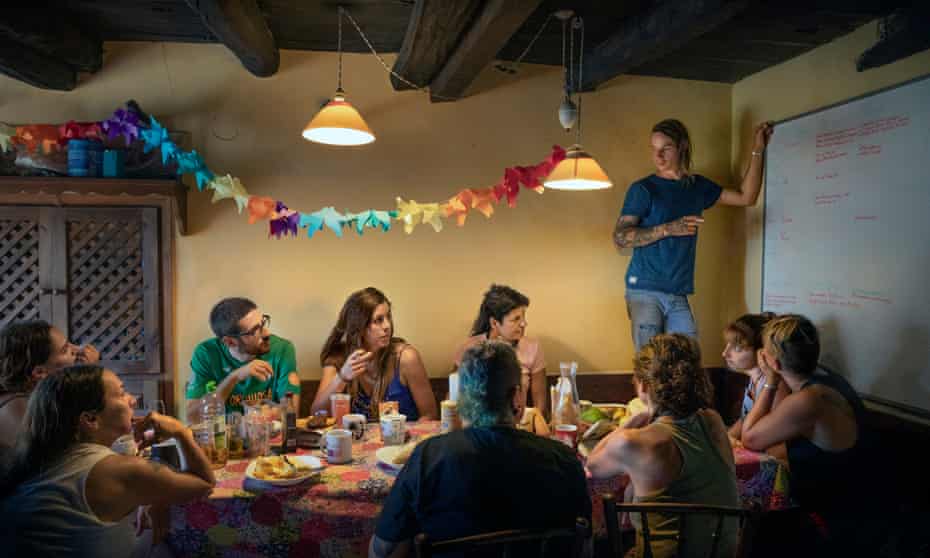
Fundación Santuario Gaia, where Pedro lives, and El Hogar are two of about 20 animal sanctuaries in Spain where vegan activists dedicate themselves to rescuing animals, creating a place where they can live without being put to work or slaughtered. The employees and volunteers spend a huge amount of time in each other’s company. Some might call it intense: they live and work together, cook and eat together, and there are leisure activities such as movie nights and debates. The sanctuaries are connected via WhatsApp, where they share veterinary information and coordinate animal rescues.
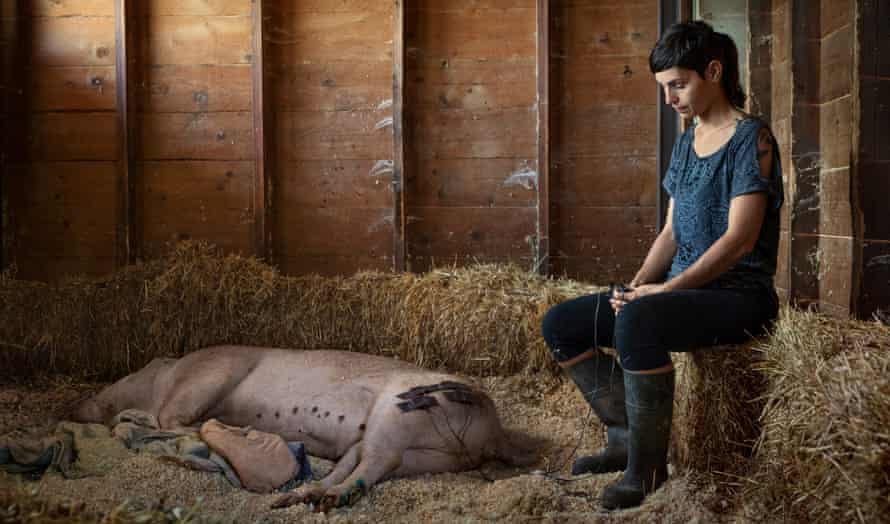
Paola the pig is given electrotherapy. Photograph: Ana Palacios
We’re used to seeing dogs and cats saved from abuse or neglect, but at Gaia and El Hogar – around two hours’ drive apart on either side of Barcelona – most of the animals are pigs, cows, goats and chickens. Gaia co-founder Coque Fernández Abella, 43, an animal rights activist and vet, says: “We wanted it to be for so-called farm animals because they are the most forgotten. No one takes care of them because they’re seen as products.https://c7be63103c6d2f402fc0bb3f9afb17e2.safeframe.googlesyndication.com/safeframe/1-0-38/html/container.html
“Growing up,” he adds, “it was typical to kill pigs to eat at home. Since I was small I had to help with it – it was horrible, because of the screams, but you had to do it. I remember when we rescued our first pig, the memories of the killings came back to me. After everything bad I’ve done in the past, it’s right that I should help animals now.”
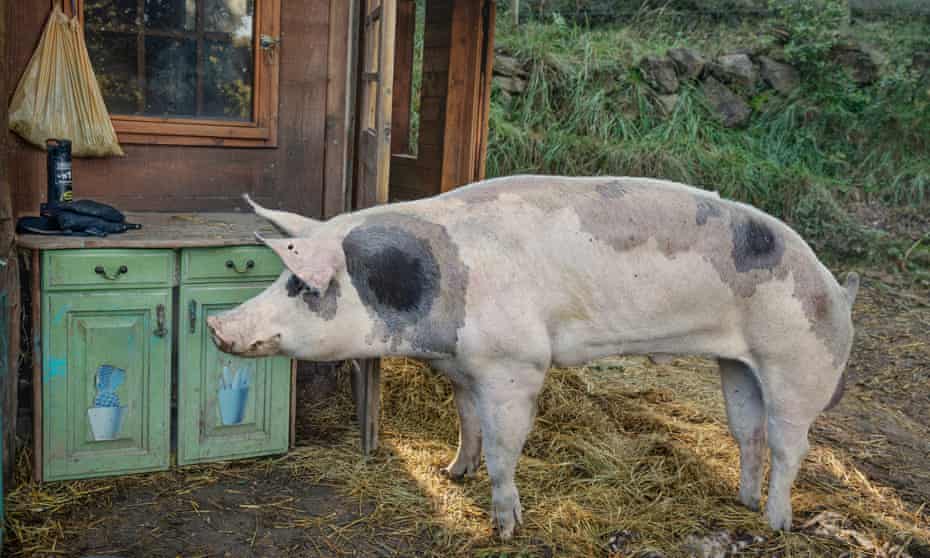
River the pig, named after late actor and animals rights activist River Phoenix. Photograph: Ana Palacios
Veganism and such care for animals may seem surprising in Spain. Matador directly translates as “killer”. Surely animal-rescuing vegans are an oddity in the land of bullfighting and pata negra?
“It’s true we are very much into ham and bullfighting,” says photographer Ana Palacios, who stayed at both sanctuaries for two weeks, capturing their daily goings-on. “But in the UK, you guys hunt foxes!” While the carnivorous tradition is there, especially in the south, “it isn’t that popular among young people,” Palacios says. But veganism is increasing in popularity in many countries – even the ham capital of the world. Between 2017 and 2019, Spanish study the Green Revolution found a trend towards plant-based eating. In 2017, 0.2% of Spaniards identified as vegan; by 2019, it was 0.5%. Vegetarians account for 1.5% of Spain’s population. Animal welfare was the second most common reason cited for going vegetarian or vegan (23.8%) after health (67%).
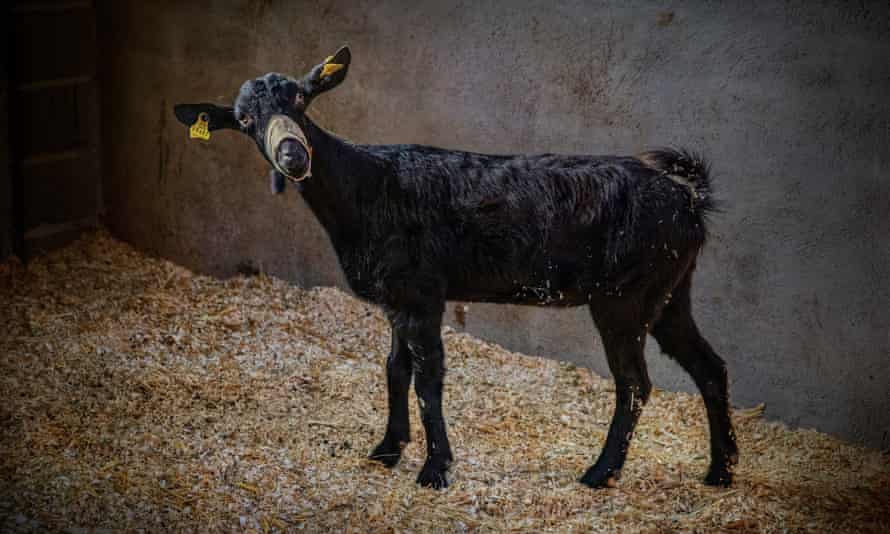
Flavia the goat at Gaia. Photograph: Ana Palacios
Gaia employee Marta Sampaio, 24, says her parents were concerned when she made the decision to stop eating meat, aged 15. Now, any time she’s ill, her enthusiastically carnivorous father is convinced her diet is to blame. She travelled to Spain from Lisbon to find a place to work with animals. After training for a few months as a veterinary assistant, she Googled vegan sanctuaries in Spain, and started as a volunteer at Gaia. She found herself empathising, unexpectedly, with chickens. Her first was a chick called Angie, brought in by a girl who found her wandering alone in the road. Because chickens are bred to produce eggs every day, all year round (rather than in cycles of a week or so, two or three times a year), they’re frequently sick. Sampaio has gained a reputation as the “crazy chicken lady” for her habit of taking the sick ones home. “Angie was a baby and didn’t have any brothers or sisters, so she couldn’t be with the other chickens,” she says. “I kept her at home and she slept with me, in the crook of my shoulder.”
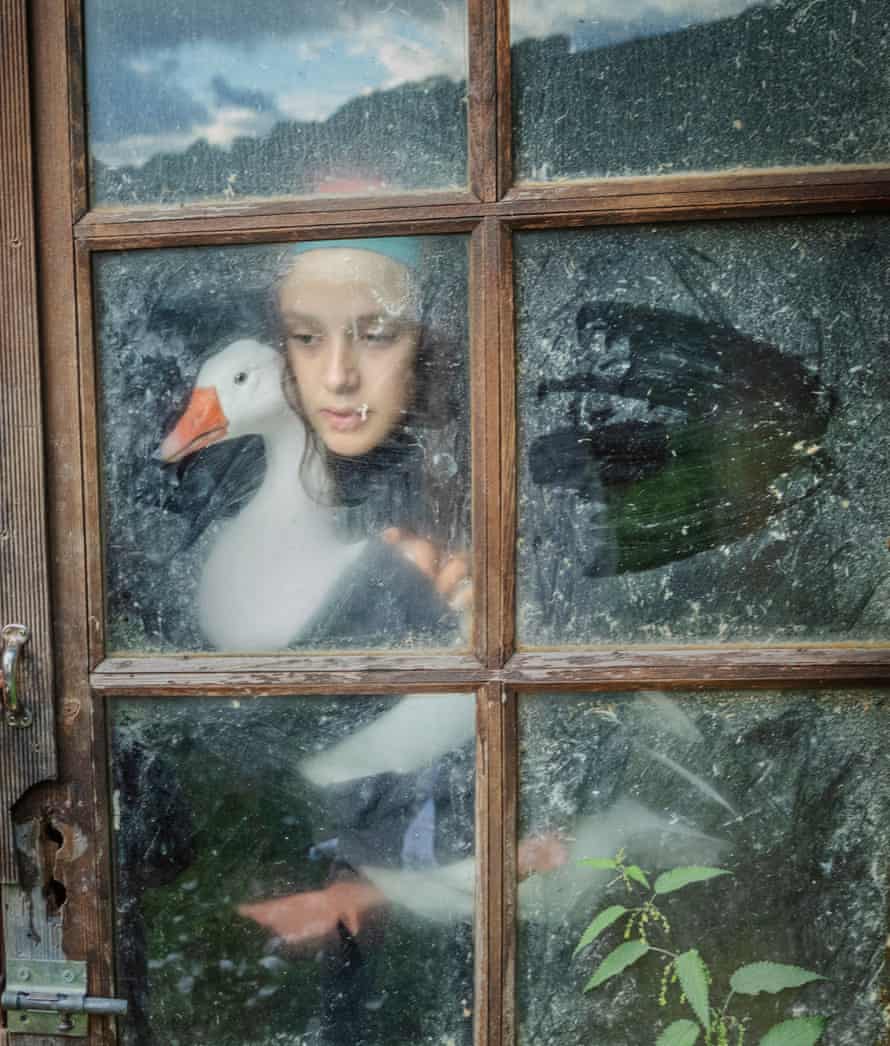
Laiteana the goose with Carla Heras. Photograph: Ana Palacios
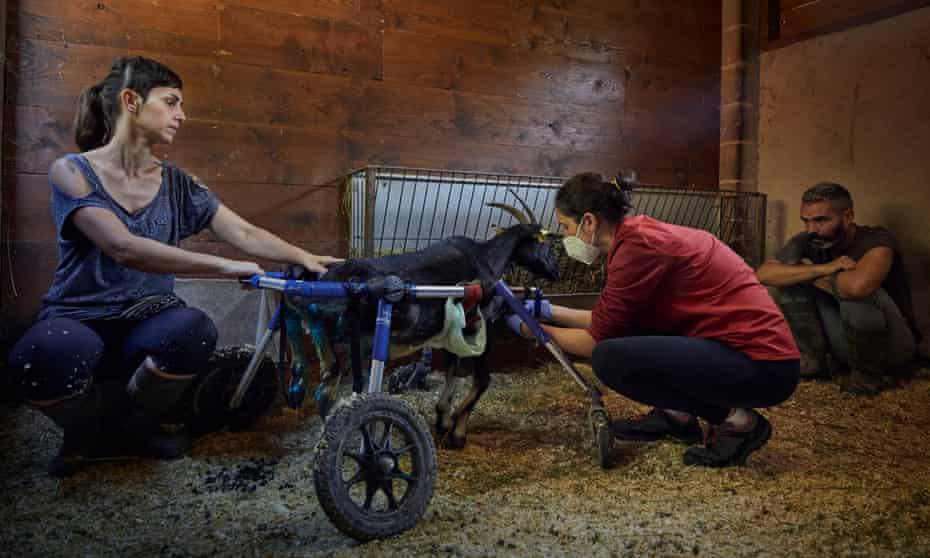
Gómez de Zamora left her veterinary assistant job in Madrid to work at Gaia, and stayed for two years. Now back in Madrid, she still collaborates with the sanctuary, but is filled with grief for one animal she cared for there. Her eyes well up and her voice cracks as she remembers Juana the goat, who had a mass on her spine that caused paralysis. “The time I spent with Juana was very beautiful and very painful, because we were aware of her complicated prognosis and that the moment was coming when we wouldn’t be able to do any more,” she says. “It was hard: you had to be OK for her, because her mind was still OK, even if her body wasn’t. You had to make sure she was still enjoying life, and going out in the sun in her wheelchair.”
Juana the goat, who died three months later. Photograph: Ana Palacios
It’s easy to imagine vegan animal sanctuaries as soft, emotional places, but there is a steely side. Animals aren’t just rescued from the sides of roads: sometimes they’re swiped from state execution. In 2017, the El Hogar sanctuary made headlines after rescuing a bullfighting cow called Margarita.
Margarita had an irresponsible owner. “When he got drunk with his friends, they would chase her on horseback,” says El Hogar founder Elena Tova. “She is still afraid of men.” The authorities discovered he hadn’t legally registered Margarita; under Spanish law, unregistered cows must be killed as without a vaccine record, there is a risk their meat could make people ill, or even cause a pandemic.
Armonía was only five days old when she and her mother were given to Gaia. Photograph: Ana Palacios
Advertisement
“They couldn’t be reasoned with,” says Tova, who explained again and again that she wanted to take Margarita to a vegan sanctuary to live out her natural life; they could guarantee she would never be used for meat. “They didn’t want to change the law or make exceptions. So we created a page on change.org calling for Margarita not to be killed. It got 190,000 signatures in less than a month.” She convinced the owner to let them take Margarita. “But it wasn’t enough: the vets still wanted to kill her. They made excuse after excuse and drowned us in red tape, until a judge who felt for us wrote to me to say, ‘They’re not going to give you the cow’ – they already had a date to kill her. So I went one night, under cover of darkness, and stole Margarita.”
Margarita the cow (left) with her friend Ruby. Photograph: Ana Palacios
She insists she wasn’t afraid, and points out that the move was technically legal: the owner had signed a contract permitting her to access the farm and take Margarita away, so it wasn’t breaking and entering. But the authorities – whom Tova called next day to explain where Margarita was – were, as she puts it, “super pissed off. They turned up at the sanctuary. Then the press came, and TV cameras – we were on the radio and in the papers.” Eventually, the strength of public opinion forced a change in the law. “Now, in Catalonia, when a cow is unidentified, they can’t kill her.”
Neo the pitbull, who arrived at El Hogar in 2016, with a broken back. Photograph: Ana Palacios
Advertisement
Tova was only nine when she began caring for abandoned dogs and cats. She even stole snails and crabs from supermarkets, so they wouldn’t be killed. When her parents refused to allow her to bring any more animals home, she took food to an olive tree where the animals knew to wait for her. But doesn’t it take its toll, this level of care and concern for creatures who are abandoned and abused, who get sick and injured, and always, eventually, die? Yes, she says, it does. “We are very happy, but we have an inner sadness that’s very difficult to get rid of. So you have to be pragmatic, put your focus on the positive things you can change and think about the animals rather than yourself and your feelings.”
Over breakfast at El Hogar, helpers divide the day’s tasks and share information about the animals. Photograph: Ana Palacios
Even though keeping their operations running is a constant financial struggle, both sanctuaries are nursing bigger dreams. Fernández Abella wants to expand Gaia so they can save many more than the 500 animals they’re currently caring for, and hopes their stories will turn more people towards veganism. Tova, at El Hogar, promises to open a small animal hospital onsite “if it kills her”, so terminally ill animals can die in their own home.
As for Palacios, she found herself changed by her time photographing the sanctuaries, almost a year ago. “It was the profound bond between animals and humans that really struck me,” she says. She hasn’t eaten meat since.




 Dog in lying in grass sleeping (Photo illustration/Michael Cogliantry)