by:Brittany FlowersPosted:Jul 20, 2021 / 08:48 AM EDT/Updated:Jul 20, 2021 / 08:48 AM EDTjavascript:false
LILLEY TOWNSHIP, Mich. (WOOD) — Some people are born with a disability and for others, it comes unexpectedly. In either case, loss of direction or purpose, decrease in self-esteem and the challenges of everyday life can put people with disabilities at a higher risk for depression.
Carson Nyenhuis of Grandville found himself in this unexpected situation after a motorcycle crash five years ago.
“I’m paralyzed from the chest down from the accident,” Nyenhuis said. “During my recovery and stuff, I went through some bad depression and had some buddies take me back out in the woods and it really revitalized my spirit and my everything.”
That’s when he realized he loved to help people and wanted to find a way to give others the same opportunity and experience that he had.While there…
The Chicago Roo Crew is seeing more people than usual getting rid of their birds — a difficulty on top of trying to pay off vet bills for the birds they already care for.
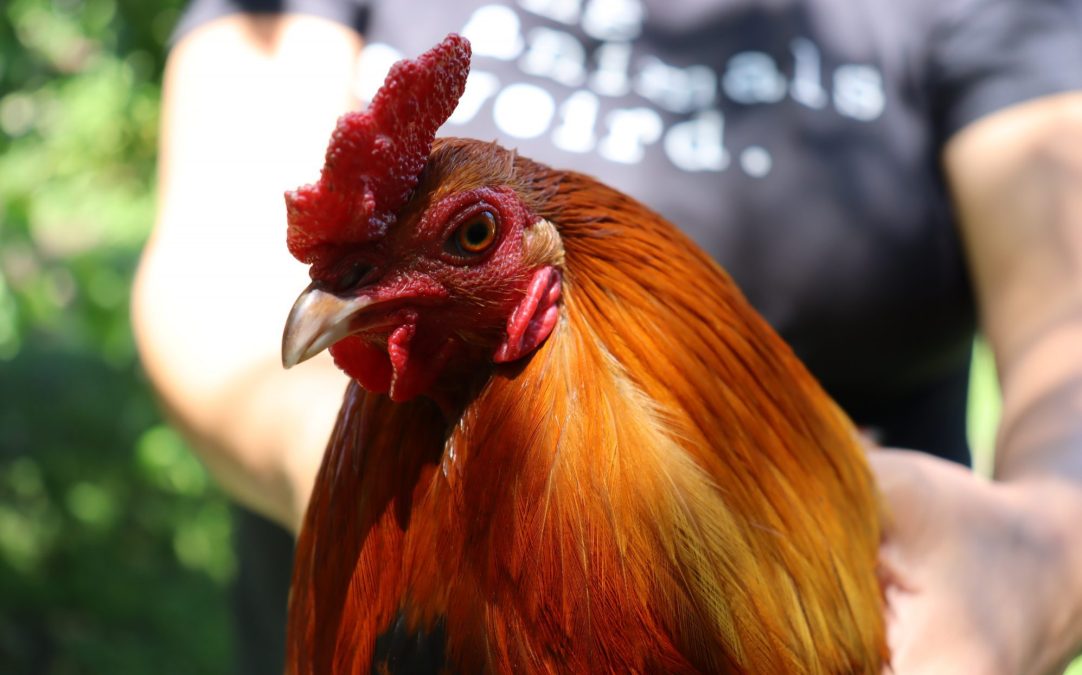
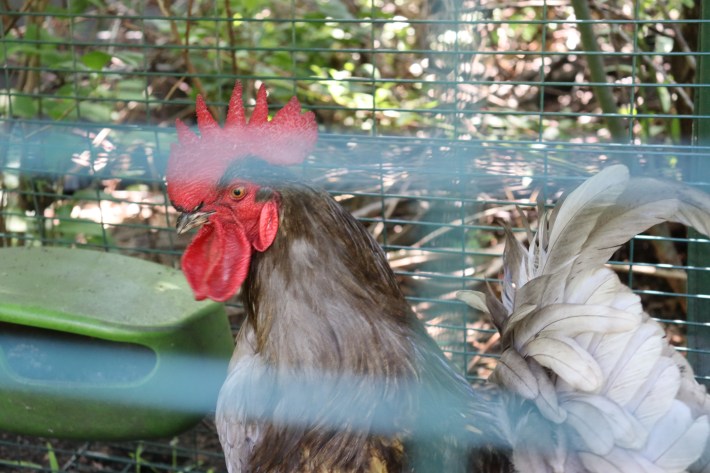
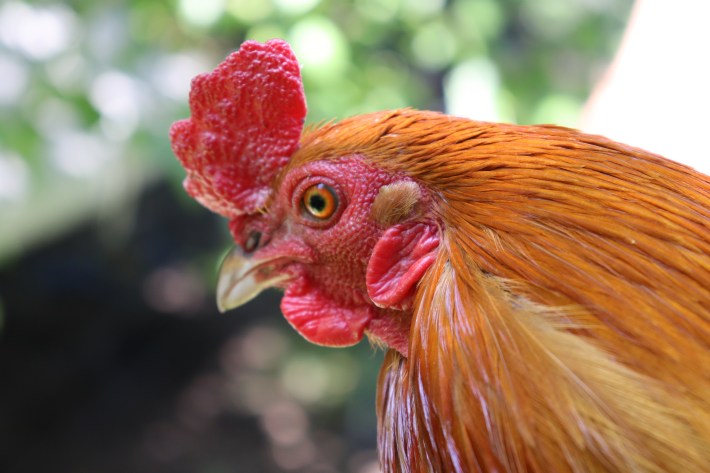
Chicago Roo Crew takes in birds like Fuego, who’ve been dumped or are ex-fighters in cockfighting rings.
Credibility:
Original Reporting
On the Ground
Sources Cited
BRONZEVILLE — Julia Magnus has always lived around birds.
Her family raised parrots when she was growing up. Nowadays, her Bronzeville yard is home to birds like Fuego, a fiery game rooster, and Ember Miji Pop Claw, a chicken with spurs. She’s become an animal rights lawyer and a volunteer at Chicago Roo Crew, a female-led group that advocates for the care of roosters in the city.
It’s a life where her birds’ clucking never gets old. But now her organization and volunteers need help.
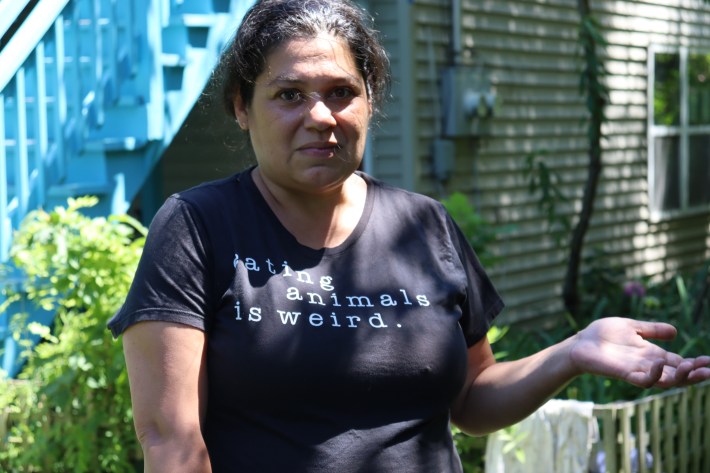
Julia Magnus, an animal rights lawyer and volunteer for Chicago Roo Crew as seen on July 1, 2021.
During the pandemic, Chicago Roo Crew has been inundated with birds who were often given up by people who said the animals were more work than they’d anticipated. At one point, the group received six requests in two weeks to foster roosters and birds. They’ve had to stop taking in birds, and medical expenses are ballooning for the ones they are caring for.
Now the group has started a GoFundMe to help pay outstanding veterinary bills. As of Friday, they’ve raised just over $3,100, which Magnus said is less than half of what they owe to care for the birds.
“The more people who contribute to the vet bills, and the more people, equally as importantly, offer to foster or adopt, the more we can take and the more we can do,” she said.
Facing Increased Challenges
Over the past several years, the Chicago Roo Crew has worked throughout the city to provide resources, guidance and other services to people raising hens and roosters, less common but increasingly sought-after animal companions. Volunteers often go on chicken runs, which are rescue trips to save lost or dumped chickens who the group then fosters.
“They’re very special, intelligent animals,” Magnus said.
Other work includes collaborating with groups like the Chicago Chicken Rescue, a local animal sanctuary, to organize rescues and care for birds, many of which have disabilities or are ex-fighters. Magnus and other volunteers also work with groups like Bronzeville-Kenwood Mutual Aid to share organically grown produce via a Facebook page.
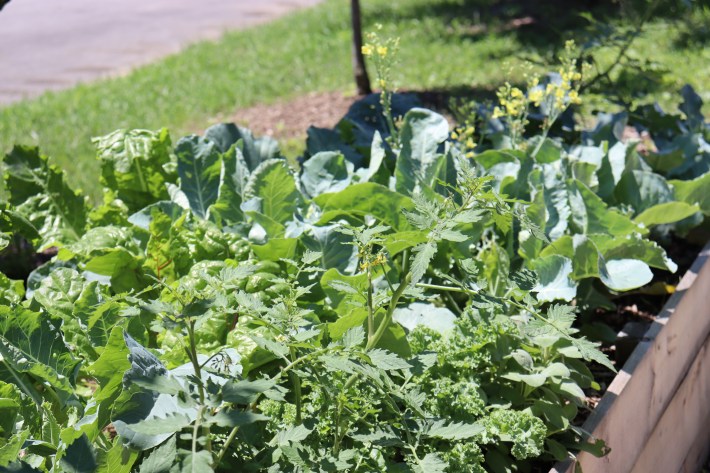
Chicago Roo Crew’s raised beds grow produce the community is free to have through a mutual aid group.
With their group at capacity, Magnus has had to start saying “no” to people asking for help, instead detailing other resources to care for chickens. This is necessary because it would irresponsible to take in more birds than they can handle, Magnus said.
“Right now, currently, we’re closed for intake,” Magnus said. “Because we have too many [birds] and our vet bills are tremendous.”
Christina Zelano, founder of Chicago Chicken Rescue, also has to make tough decisions about which animals she’s able to take in.
“We also get an overwhelming number of requests just from people who live in the city and around the city to take in unwanted animals and pets,” Zelano said. “That’s a challenge. You know, we don’t have unlimited space, and so we really have to prioritize animals that are in dire need of help.”
The volunteers’ work often is exacerbated by school hatchery projects and illegal cockfighting rings, which leave swaths of birds in need of homes.
Many of the birds Chicago Roo Crew fosters require medical care. Some suffer from upper respiratory or parasitic infections. Others are injured and missing eyes, limbs or combs. Frostbite is common during the winter.
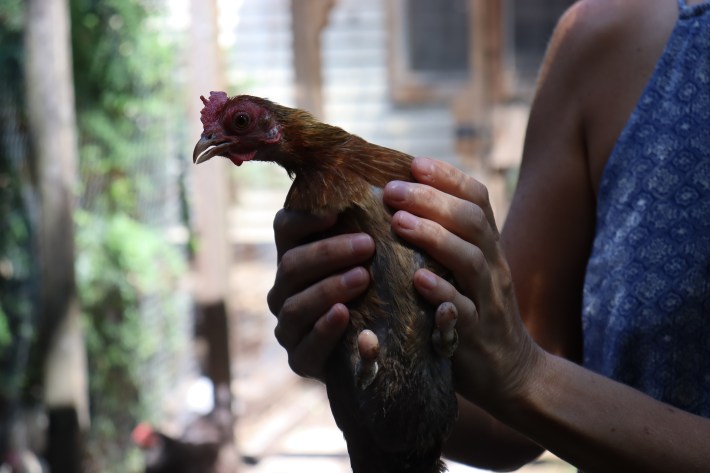
This Serama hen missing its feet is one of Zelano’s longterm residents at Chicago Chicken Rescue in Woodlawn.
Donations to the group’s fundraiser go directly toward veterinary bills at Niles Animal Hospital and Bird Medical Center.
“Obviously, we have other needs,” Magnus said. “But our volunteers pay those needs out of pocket, whether it’s infrastructure like runs or whether it’s crates or it’s gas money for transport. Everyone just pitches in for that at this point.
“But we do, ultimately, really need a lot of financial support to keep doing what we do. And it’s very frustrating.”
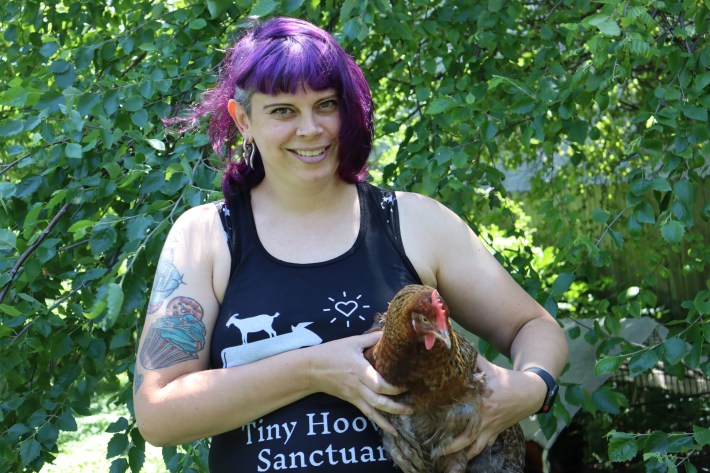
While fundraising can be a challenge for many nonprofits, chicken advocacy groups have an especially difficult time, said Sandi Swiss, vice president of Tiny Hooves Sanctuary and another Chicago Roo Crew volunteer.
“Fundraising, unfortunately, for roosters and chickens, can be a little bit harder than for a cow or a pig because, for whatever reason, so many people don’t even think they could have a connection with them,” Swiss said. “They’re not always seen as cute or cuddly animals.”
Sandi Swiss is a Chicago Roo Crew volunteer vice president of Tiny Hooves Sanctuary and organizer.
Working with other rescue groups is critical, Magnus said.
“Anytime we get calls for dumped birds, we always coordinate who’s going to go, who’s gonna do what,” she said.
Those collaborations also have led to busts and rescue missions. Chicago Roo Crew worked with Chicago Chicken Rescue, Chicago Animal Care and Control and police on a cockfighting bust in Englewood that saved 114 birds in 2019. Magnus said volunteers were able to treat and foster many of the birds, preventing them from being euthanized.
Magus became even more determined to advocate for responsible chicken care after that.
The experience also helped with the group’s most recent rescue operation in June, which involved a cockfighting ring based in Texas. Magnus and Swiss drove to downstate Mount Vernon to meet a team from Animal Investigation and Response, and they took in 10 roosters and four Cornish Cross chickens.
Galileo the rooster is another of the Chicago Roo Crew’s intakes.
Some of those birds are being treated at Chicago Chicken Rescue. Others have been adopted, something the volunteers encourage.
“It’s a way to, hopefully, start solving the bigger problem,“ Swiss said. “Encouraging people to take one or two birds and provide a home for them, recognize them as individuals and spend time with them. That also helps provide homes for all these animals that don’t have homes and are going to end up having a much worse fate if we can’t find a loving home for them.”
”We can not have everybody doing what Christina does, what Tiny Hooves does, what Farm Bird Sanctuary does,” Magnus said. “We need people to do it on a smaller, micro-sanctuary level. It’s just so critical right now that we do it, especially in a city where we have the ability to do it because it’s entirely legal. And you have the support from us. You have the support from other groups. That’s what we need most.”
Fuego, a game rooster as seen on July 1, 2021, is just one of the birds currently homed at Chicago Roo Crew.
POCATELLO, Idaho (KIFI) – This week, Idaho Fish and Game is offering its Ladies and Girls Hunter Education Class at the regional Fish and Game office in Pocatello.
This is a fun and educational setting for female students who would like to earn their hunter education certification. The course will be taught by female instructors who are eager to share their knowledge and passion about hunting, safety, and ethics in the field.
This course is for girls and women of nearly all ages nine and older.
The Ladies and Girls Hunter Education Class provides an opportunity for moms, daughters, grandmothers, aunts, and friends to get together and learn more about an activity that is not only fun, but a great way to enjoy the outdoors and…
One, as an outdoorsman and deer hunter, I am in favor of keeping the wolf population in check. Yes, they are beautiful, magnificent beasts but so are deer and the hunting dogs frequently deprecated by the wolves.
Two, Hunter Nation, which I have joined and support, is a grass roots organization that stands up for the heritage of hunting. This is a good and wholesome activity that teaches humility and character. I’m proud to be a hunter and conservationist.
Three, Ted Nugent is an outdoor icon. I never really loved his music but I certainly love his enthusiasm for the great outdoors and the people who enjoy hunting and fishing in…
I’m a big fan of the Endangered Species Act (ESA). In fact I wrote my PhD on an ESA issue — wolves at Isle Royale National Park — back in 1997. The Endangered Species Act has helped keep some species from being wiped out across the U.S.
In that vein, it was good to hear about the proposed “Extinction Prevention Act” recently introduced in Congress by U.S. Rep. Grijalva and U.S. Senator Blumenthal. The Extinction Prevention Act proposes to give more funding to species protection programs. This is good news because the ESA has been fiscally starved by past congresses and presidential administrations.
But the Extinction Prevention Act is not enough. Biodiversity is under assault across the U.S. as growth and development — mostly driven by human population growth — ravages and devours natural landscapes.
Scientists have been paying attention to this. As one example, the authors in the scientific journal, Issues In Ecology, (Winter 2016) stated:
“The ESA has not kept pace with rapid socioeconomic changes in the United States and advances in conservation science. Since 1973, the US population has grown by more than 50%, and gross domestic product has expanded from approximately $1.4 trillion to more than $16 trillion, resulting in multiple stressors to vulnerable species….the greatest threats to listed species are habitat loss and degradation…. Human population growth, economic activity, and intensive land uses have rapidly increased. Threats to listed species such as habitat loss and degradation and invasive exotic species have increased in severity. Climates have undergone fundamental change. These trends will likely continue.”
Whether it’s puma in southern California, or grizzly bear in the Northern Rockies, human population growth is squeezing out the non-human world, invading its habitat, pushing it to the edge of extinction. In my local watersheds in northern Colorado, population growth is devouring landscapes, rivers, and wildlife habitats.
In 2019, the Center for American Progress reported: “The United States is quietly losing its remaining forests, grasslands, deserts, and natural places at a blistering pace. Every 30 seconds, a football field worth of America’s natural areas disappears to roads, houses, pipelines, and other development.”
The U.S. House and President Biden have taken positive steps recently around protecting wildlife habitat with the 30×30 campaign that proposes to protect 30 percent of the U.S. landscape by the year 2030. At the very same time though, around 2 million more people are added to the U.S. population each year which creates a Los Angeles County-sized blob of urban sprawl — another 10 million people — on the U.S. landscape every 5 years.
It feels like one-step-forward, two-steps-back to me. We can spend more money trying to save species, and launch new programs to protect more critical wildlife habitat, but if we keep adding 2 million people to the U.S. every year, we’re going backwards in our conservation goals.
We need to stabilize the U.S. population if we are to have any chance of saving endangered species as well as the majority of the extraordinary, but extremely threatened, natural world around us.
To help inform proposals for the Aug. 20 Fish and Wildlife Commission meeting, Montana Fish, Wildlife & Parks is soliciting public comments on two topics: Elk shoulder seasons and trapping setbacks.
The comments will be incorporated into FWP staff’s presentation to the Commission at its meeting Aug. 20. The Commission will allow further public comment on these subjects during the meeting.
Elk Shoulder Seasons
At its June meeting, the Fish and Wildlife Commission approved a proposal to go out for public comment to extend Elk Shoulder Seasons to Feb. 15 on private land in 18 hunting districts. These are hunting districts where shoulder seasons currently exist, but end prior to Feb. 15.
The department would now like the public to provide input on expanding…
SPRINGFIELD, Ill. (AP) — Four hunters from Indiana have pleaded guilty and paid fines in a southern Illinois poaching case.
The Illinois Department of Natural Resources says in a recent news release that the four hunters pleaded guilty to unlawful use of a rifle.
Jon Reynolds, Tim Allen, James Hall, and Cade Cruse are accused of deer hunting with rifles without required permits or hunting licenses and had two untagged, harvested deer with them.
Illinois Conservation Police seized four rifles and donated the untagged deer to a local animal rehabilitator to help feed injured wildlife.
The four hunters were sentenced to 1 year of supervision and paid $5,000 in fines.
Abortion rights activists gather outside the U.S. Supreme Court to protest against recently passed anti-abortion laws across the country, on May 21, 2019, in Washington, D.C.
In June of 2022, upwards of35 percentof the U.S. could instantly lose access to legal abortion. The Supreme Court’s decision onDobbs v. Jackson Women’s Health Organizationcould effectively overturnRoe v. Wade, a landmark case in 1973 which held that a person’s right to choose an abortion was integral to their right to privacy and therefore should not be dictated by the government. Through decades of carefully orchestrated, conservative state-level action,24 statesare poised to overturnRoeprotections, including 10 with immediate “trigger bans” in place…
Brazil’s rainforest stores a huge amount of CO2. As it’s released at record rates, we may have passed a tipping point
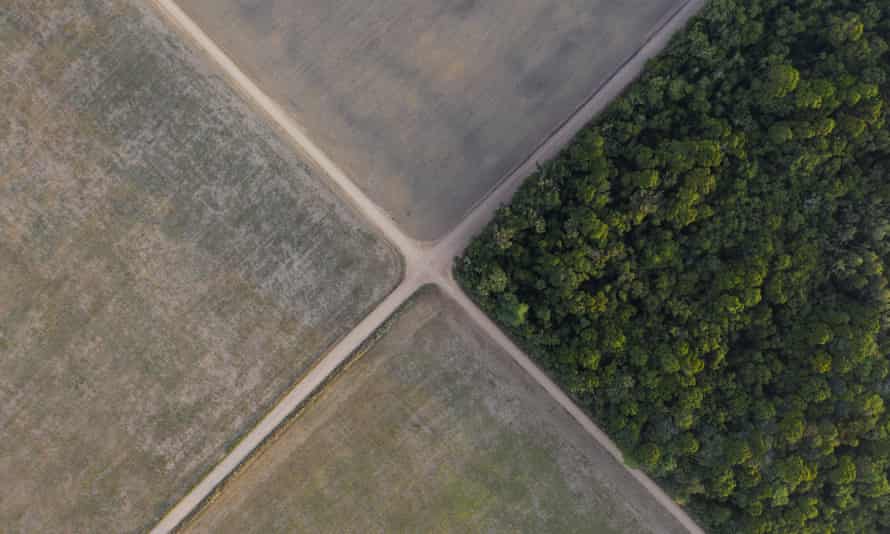
‘We are witnessing the destruction of great swathes of the Amazon, into islands of trees within a sea of soy bean plantations and cattle ranches.’ Soy fields in Belterra, Pará state, Brazil. Photograph: Léo Corrêa/AP
Mon 19 Jul 2021 07.28 EDT
The Amazon acts as a vital organ for our entire planet. The largest rainforest in the world, it provides an important function to both the Earth’s water and carbon cycles. The region, home to abundant and highly diverse species and ecosystems, houses more than 390bn trees. These have an exceptional capacity to recycle water by pumping it from the soil back up into the atmosphere, but also play a crucial role in storing carbon: the Amazon forest stores an amount of carbon equivalent to two to three times all the CO2 emitted by the UK since 1750. When trees die, either by natural causes or deforestation, this carbon can return to the atmosphere.
Climate change, and at least four decades of deforestation and degradation of the Amazon following the installation of main roads that have expanded from south to north and east to west through the basin, have created a situation in which the Amazon is more open than ever to human destruction. The declining capacity of the forest, notably in its south-east, to uptake one of the main greenhouse gases, has a knock-on effect: reducing the rainforest’s own resilience to climate change and exponentially increasing the possibility of the climate reaching a theorised “tipping point”.
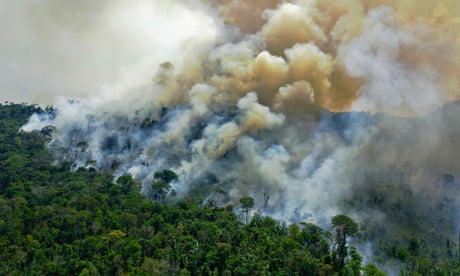
The synergic effects between a highly fragmented and degraded forest caused by decades of deforestation, logging and fire, and more frequent and intense drought events caused by climate change, generates the perfect condition for recurrent forest fires. The study shows that large pools of carbon are being emitted through such fires, especially in the north-east. This is clearly shocking and extremely worrying, but also surprising is the volume of carbon emitted by the remaining forest in the south-east. There, several years after the conversion to pasture, the remaining forest is acting differently to the other regions: the new landscape and climate mean the forest is changing its behaviour, with even standing forests inexplicably emitting carbon. The impacts of returning fires in the rainforest, which is a fire-sensitive ecosystem, include change in forest structure, reduction in carbon stocks, biodiversity and nutrient availability.
To restore the net carbon emissions of the Amazon forest to its balance and avoid other portions of the region’s forest reaching a tipping point where massive mortality further affects resilience, we must reduce forest loss by deforestation and fires, and invest in massive landscape restoration. Unfortunately, Brazil is taking a different route in relation to these major sources of carbon emissions. The country, which is the sixth largest greenhouse gas emitter in the world, has 44% of its emissions directly associated with land use change, mainly the conversion of forests to agriculture and pasture fields.
For decades, the so-called Amazon tipping point hypothesis has been predicting that once we reach 20% deforestation of the basin, the system would shift from a carbon sink to a carbon source. Now, the longstanding hypothesis has started to be confirmed, as we witness the destruction of great swathes of one of the most magnificent forests on Earth, into islands of trees within a sea of soy bean plantations and cattle ranches. Yet this Nature paper indicates that Brazil may be emitting much more than previously reported.https://36d0eb969e924a3a01b91d8a6a52bd8c.safeframe.googlesyndication.com/safeframe/1-0-38/html/container.html
The chances of reversing this situation are becoming more distant by the day. There has been no investment in restoration by the federal government – and the rates of deforestation and fires have been reaching new heights month after month. This situation has been aggravated since Jair Bolsonaro took over the presidency. Enforcement agencies have been weakened and deauthorised, a problem compounded by a lack of direction and resources. Stakeholders including illegal loggers and miners have had their voices heard by the government over indigenous peoples and local communities. Ongoing changes in environmental policies, such as allowing mining in indigenous lands, formalising land titles on public lands occupied illegally, and loosening the environmental licensing process, continue to incentivise illegal activities, generating more deforestation and fire.
To change this situation, we must better implement enforcement to fight and inhibit illegal activities that cause deforestation and environmental crimes in the Amazon; provide positive incentives for sustainable use and good practices in forestry and agriculture; support indigenous peoples and local communities’ economies; increase transparency and traceability of Amazon products; and engage the private sector and international community in green financing and other environmental solutions.
From individuals to large organisations, we must boycott the products and initiatives that drive deforestation, and instead consume products and fund initiatives that keep the forest standing. If both the Brazilian and global societies don’t wake up to the importance of a healthy Amazon to the fight against the pervasive effects of climate change in the region, we will all lose out.
Ane Alencar is the science director of the Amazon Environmental Research Institute (IPAM), Brazil. Dr Adriane Esquivel Muelbert is a lecturer in global forest ecology at the University of Birmingham and Birmingham Institute of Forest Research (BIFoR)