Mama grizzly bear killed on highway in Yoho National Park orphans two cubs

https://www.rmotoday.com/banff/mama-grizzly-bear-killed-on-highway-in-yoho-national-park-orphans-two-cubs-3836288?fbclid=IwAR3wlQPSczNkFAuj1IqXzmBoE37X_OQMoONAhafDJXJyebsB0r4vHX901Zo

The orphaned cubs, a male and a female, were relocated by wildlife specialists into a remote backcountry area within their mother’s traditional home range, which included parts of Banff and Yoho national parks.a day ago By: Cathy Ellis
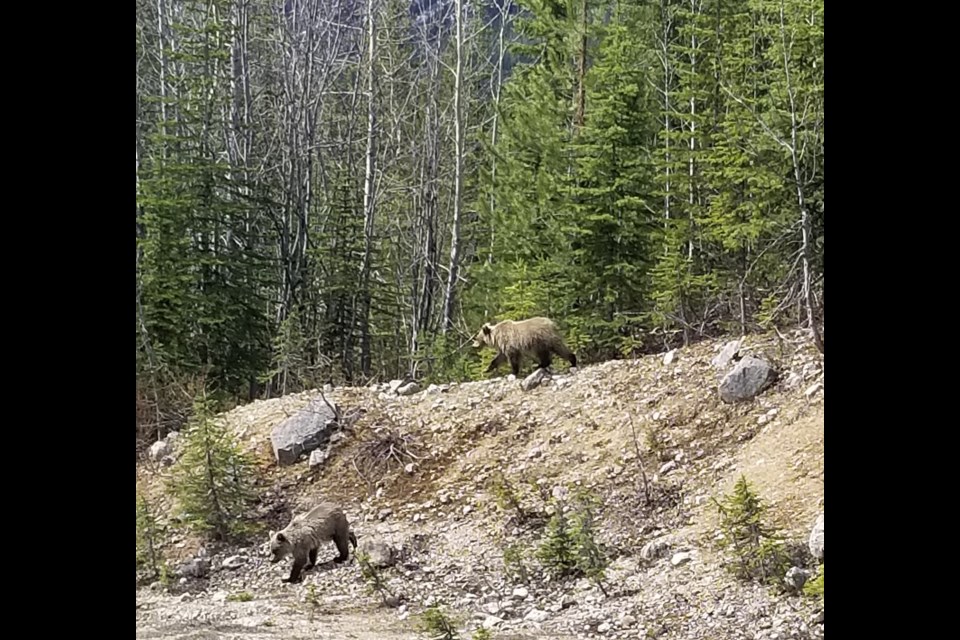
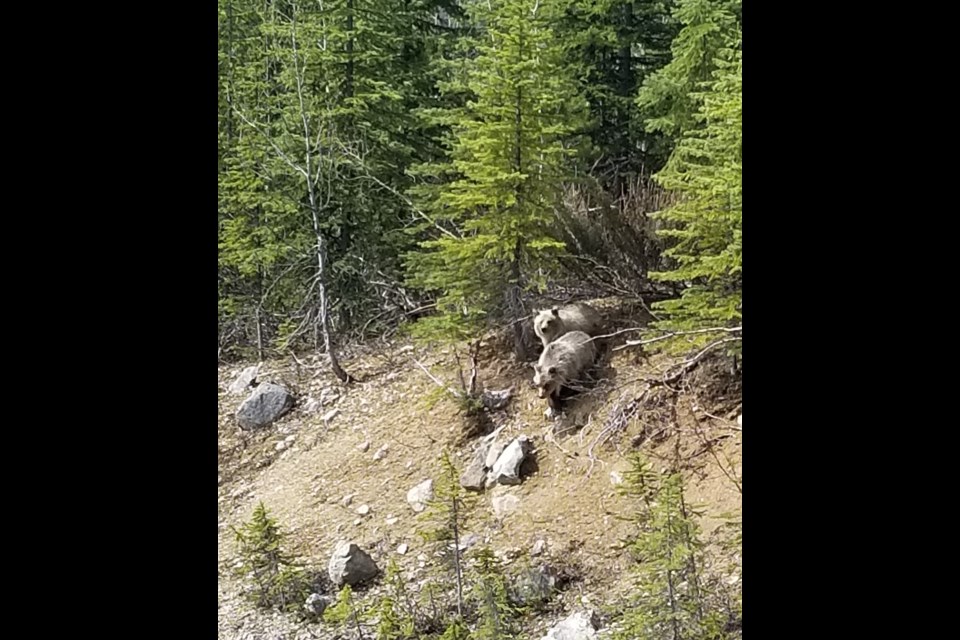
  • Two yearling grizzly bear cubs have been orphaned following the death of a well-known mama bear on the busy Trans-Canada Highway in Yoho National Park.

Photo by Parks Canada
  • Two yearling grizzly bear cubs have been orphaned following the death of a well-known mama bear on the busy Trans-Canada Highway in Yoho National Park.

Photo by Parks Canada
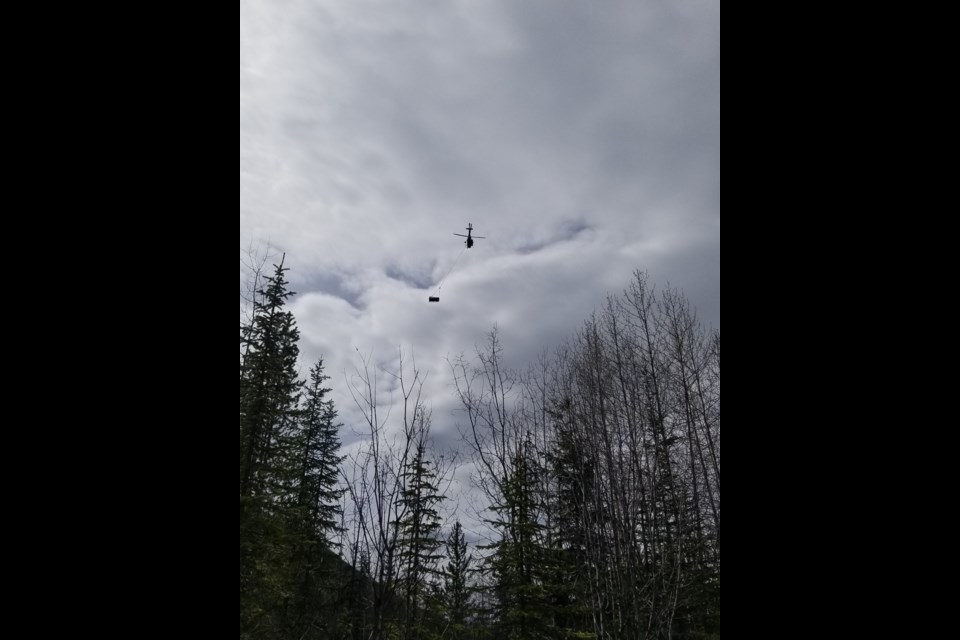
  • The bear cubs are transported by helicopter to the new location.

Photo by Parks Canada

PreviousNext1 / 3 Two yearling grizzly bear cubs have been orphaned following the death of a well-known mama bear on the busy Trans-Canada Highway in Yoho National Park. Photo by Parks CanadaExpand

Two yearling grizzly bear cubs have been orphaned following the death of a well-known mama bear on the busy Trans-Canada Highway in Yoho National Park.

Photo by Parks Canada
Two yearling grizzly bear cubs have been orphaned following the death of a well-known mama bear on the busy Trans-Canada Highway in Yoho National Park.

Photo by Parks Canada
The bear cubs are transported by helicopter to the new location.

Photo by Parks Canada

FIELD – Two yearling grizzly bear cubs have been orphaned following the death of a well-known mama bear on the busy Trans-Canada Highway in Yoho National Park.

Female grizzly bear No. 156, who produced two litters of cubs in her nine years of life, was struck by a car on the highway about one kilometre east of Field at 2 a.m. on Saturday (May 29).

The cubs, a male and a female, were relocated by wildlife specialists into a remote backcountry area within their mother’s traditional home range, which included parts of Banff and Yoho national parks.

Parks Canada wildlife experts say they wanted to give the one-and-a-half-year-old cubs every possible opportunity to remain in the wild, adding the young bruins were continuing to hang around the collision site on the weekend.

“There was a very high risk that they were going to get struck and killed as well,” said Jon Stuart-Smith, a human-wildlife management specialist for Lake Louise, Yoho and Kootenay.

A team of trained wildlife responders and experts assess individual situations and respond with management interventions aimed at the best possible outcomes for wildlife.

Previous research has indicated cubs in this region, on average, typically stay with their mothers for about four years. However, previous experience has shown one-and-a-half-year-old cubs have survived on their own in this area.

In 2011, two other cubs the same age were orphaned when their mother was struck by a train on the Canadian Pacific Railway line.  One of the cubs survived four years before getting run over on the Trans-Canada Highway in Yoho in 2015. The male bruin sustained serious injuries and had to be euthanized on site.

Stuart-Smith gives bear No. 156’s cubs a greater than 30 per cent chance of making it on their own.

“There is precedent that they can survive on their own at this stage of their life,” he said.

“Every year the chances of surviving into adulthood get greater and greater.”

The siblings’ chances of beating the odds also get better if they stay together. They can forage for food together and be vigilant and on the look-out for predators.

“Siblings together often have a higher survival rate than when they’re on their own,” Stuart-Smith said.

The cubs weighed about 50 pounds, which is on the low side, but otherwise appeared healthy.

After the wildlife specialists handled them and put ear tags in each of them for future identification, the cubs were flown by helicopter to the release site.

“They were doing well and we let them go,” said Stuart-Smith said.

The bears are too little for GPS collars, which track where the animals travel. As bears grow quickly at this age, any collar would have had to come off in short order.

“Although it would have been very important information to get, we wanted to put their well-being and their chance of survival as the first priority,” Stuart-Smith said.

The biggest risk to the young bears is a large male grizzly bear predating upon them. Adult male bears are known to kill cubs that are not theirs – and it’s the mother that typically defends them.

The other great risk is if the cubs return at some point to the deadly stretch of highway where their mother was killed in search of the easy-to-get roadside dandelions and vegetation.

Stuart-Smith said although there were limited relocation options because of snow in the high country, the bears were taken to an area with natural foraging opportunities.

He said he’s optimistic the cubs will find enough nutrition to sustain themselves through summer and fall in order to den up and make it through the winter with enough reserves to come out in the spring.

“Getting them away from the highway was important for us, but now it’s just a matter of them figuring out how to survive and feed themselves,” said Stuart-Smith.

“We’re hoping the conditions that we found for them are enough to keep them there and away from human habituation and the highway where they would have a higher risk of being struck or getting into trouble.”

Bear 156 spent most of her life in the backcountry, but historically brought her cubs down to the valley bottom by the Trans-Canada Highway for a few weeks each spring to feed on roadside green-up.

It is hoped No. 156’s cubs have learned the lessons she has taught them, including following the green-up as snow melts and feeding on natural food sources previously shown to them.

“She would spend most of her time in the backcountry in Banff and Yoho, and amazingly enough, not really run into anybody back there,” Stuart-Smith said.https://9033353bdaee190a7d5260c5f8e269d9.safeframe.googlesyndication.com/safeframe/1-0-38/html/container.html

“She probably would have moved them on to other habitat shortly, so it’s quite unfortunate she was struck at this time.”

Bear No. 156 was captured and fitted with a GPS collar as part of the joint Parks Canada-Canadian Pacific Railway five-year study on ways to reduce bear mortality on the train tracks.

This is her second litter of cubs. Her previous litter of two, which includes a rare white grizzly bear, has been spotted again this spring. Those bears are now in their fifth year.

“We have seen them periodically and thankfully most visitors have been respectful of their space,” Stuart-Smith said.

“Hopefully they continue to make a living and go on to produce offspring themselves as well.”

Parks Canada urges motorists to consider not stopping when they see bears by the side of the road if it is unsafe, but to stay in their vehicles if they do decide to pull over.

Following the death of bear No. 156, motorists are also reminded to observe speed limits and to drive with extra caution in the early morning and evening hours when wildlife are most active.

“These are really important things in order to avoid tragic incidents like this,” Stuart-Smith said.

Please report all wildlife sightings on the roads or any wildlife incidents to Parks Canada dispatch at 403-762-1470.


NASA aims for 2 new missions to Venus to learn more about ‘lost habitable’ world

Exposing the Big Game's avatarThe Extinction Chronicles

https://www.foxnews.com/science/nasa-aims-for-2-new-missions-to-venus-to-learn-more-about-lost-habitable-world

13 hours ago

In 1989, NASA used a space shuttle to send its Magellan spacecraft into orbit around Venus

ByEdmund DeMarche| Fox News

closehttps://static.foxnews.com/static/orion/html/video/iframe/vod.html?v=20210526013148#uid=fnc-embed-1

Fox News Flash top headlines for June 2

For the past few years, Mars has beenhaving its moment.

The planet has captured the fascination of Hollywood, the U.S. and China both landed rovers on its surface and Elon Musk, the head of SpaceX, recently announced that his company hopes to launch its next-generation rocket in 2022 from a platform in the Gulf of Mexico. His sights are set on Mars.

Other planets have become something of an afterthought. When was the last time you caught yourself thinking about Neptune? Pluto had the worst fate of all and in 2006 wasdowngraded to dwarf planet.

(NASA/JPL-Caltech)

But NASA on Wednesday announced its intention to bring more…

View original post 270 more words

Biden suspends Trump-era oil drilling leases in Alaska’s Arctic refuge

https://www.theguardian.com/us-news/2021/jun/01/biden-suspends-oil-drilling-leases-alaska-arctic-refuge-trump-era

Interior department order follows a temporary moratorium on oil and gas lease activities imposed by president on first day in office

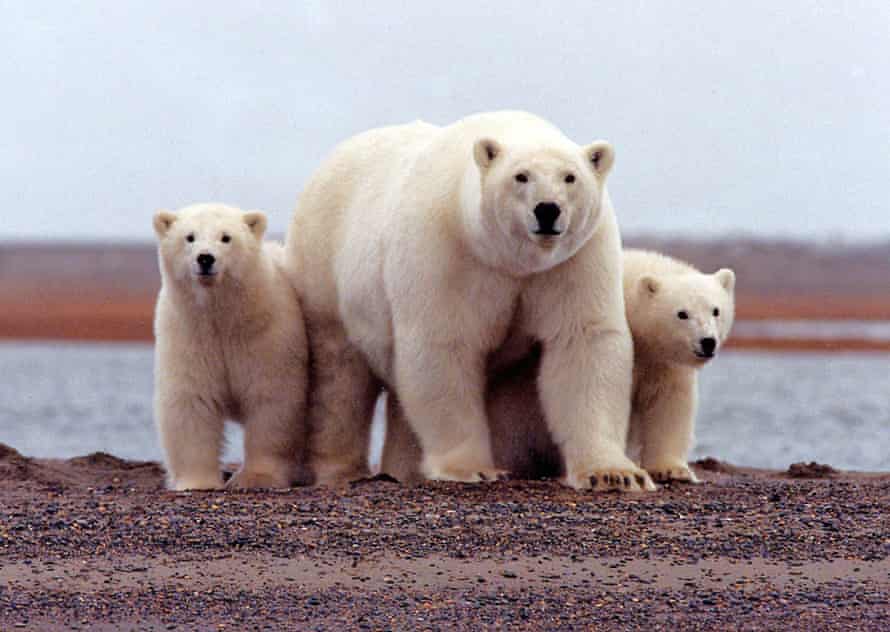
A polar bear keeping close to her young along the Beaufort Sea coast in the Arctic National Wildlife Refuge in Alaska.
A polar bear keeping close to her young along the Beaufort Sea coast in the Arctic national wildlife refuge in Alaska. Photograph: Reuters

Supported by

SEJ

About this contentJillian AmbroseWed 2 Jun 2021 10.21 EDT

The Biden administration has reversed plans approved by Donald Trump to allow companies to drill for oil and gas in Alaska’s Arctic national wildlife refuge, a remote region that is home to polar bears, caribou – and 11bn barrels of oil.

The decision to suspend the oil drilling licences follows the temporary moratorium on oil and gas lease activities imposed by Joe Biden on his first day in the White House, and serves as a high-profile show of his climate credentials after approving hundreds of requests to drill on federal lands in recent weeks.

Biden used his 2020 presidential campaign to oppose drilling in the remote, 19.6m-acre Alaskan refuge, which is considered sacred by the indigenous Gwich’in communities and is also home to polar bears, caribou, snowy owls and other wildlife, including migrating birds from six continents.

The region has long been an area of deep political contention between Republicans and the oil industry, which have long been trying to open up the oil-rich refuge, and the Democrats, environmental groups and some Alaska Native tribes which have been trying to block drilling since the mid-1990s.

But after a decades-long battle the first sale of the lease areas in the refuge earlier this year failed to attract interest from the oil industry’s biggest players, potentially making the decision to suspend the oil drilling licences an easier option for Biden’s officials which last week angered environmental groups by defending a major oil project on Alaska’s north slope.Advertisement

California teen who shoved bear to save dogs: ‘I didn’t know I had it in me’

https://imasdk.googleapis.com/js/core/bridge3.462.0_en.html#goog_1130443918https://imasdk.googleapis.com/js/core/bridge3.462.0_en.html#goog_1779031852https://imasdk.googleapis.com/js/core/bridge3.462.0_en.html#goog_4316489

The US Department of Justice said the Trump-era decision to allow the project in the National Petroleum Reserve of Alaska’s north slope was “reasonable and consistent” with the law and should be allowed to go ahead. It added that opponents of the Willow project were seeking to stop development by “cherry-picking” the records of federal agencies to claim environmental review law violations.

The decision to green light the Willow project, spearheaded by $78bn oil company Conoco-Phillips, was heavily criticised by climate campaigners which claim that it flies in the face of Biden’s pledges to address climate change. It has also raised concern that the Biden administration is not willing to take a stand against US oil giants.

The Arctic is heating up at three times the rate of the rest of the planet and ConocoPhillips will have to resort to installing “chillers” into the Alaskan permafrost, which is rapidly melting due to global heating, to ensure it is stable enough to host drilling equipment.

By contrast, the suspension of oil drilling in Alaska’s Arctic national wildlife refuge is unlikely to be opposed by the oil industry after the the first sale of drilling rights raised less than $15m (£11m) from two small oil drillers and failed to attract interest from companies including ExxonMobil, Chevron and ConocoPhillips.

Kristen Miller, acting executive director of the Alaska Wilderness League, hailed suspension of the Arctic leasing program, which she said was the result of a flawed legal process under Trump.

“Suspending these leases is a step in the right direction, and we commend the Biden administration for committing to a new program analysis that prioritises sound science and adequate tribal consultation,” she said.

More action is needed, Miller said, calling for a permanent cancellation of the leases and repeal of the 2017 law mandating drilling in the refuge’s coastal plain.

The drilling mandate was included in a massive tax cut approved by congressional Republicans during Trump’s first year in office. Republicans said it could generate an estimated $1bn over 10 years, a figure Democrats call preposterously overstated.

Bernadette Demientieff, executive director of the Gwich’in Nation steering committee, thanked the president and the interior secretary, Deb Haaland, and said that tribal leaders are heartened by the Biden administration’s “commitment to protecting sacred lands and the Gwich’in way of life”.

Agencies contributed to this report

Earth’s History Sends Climate Warning – Urgent Action Needed

TOPICS:Atmospheric ScienceCarbon DioxideClimate ChangeClimate Science

By UNIVERSITY OF ST ANDREWS JUNE 2, 2021

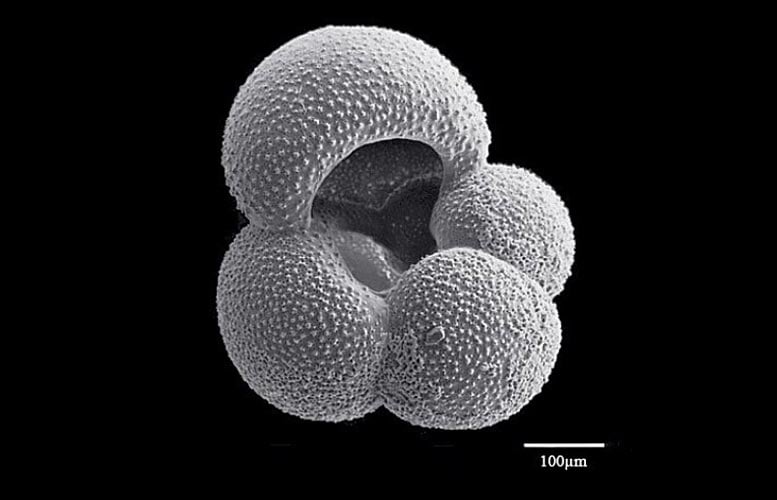
Chemical fingerprints of past CO2 levels are preserved in microscopic fossil shells such as this foraminifera. Credit: University of St Andrews

A new study of historical carbon dioxide levels stresses urgent action is needed to avoid prehistoric levels of climate change.

The international team of scientists, led by the University of St Andrews, collected data spanning the last 66 million years to provide new insights into the kinds of climates we can ultimately expect if CO2 levels continue to rise at the current rate. The projected rise would result in prehistoric levels of warmth that have never been experienced by humans.

The study, published in the scientific journal Annual Review of Earth and Planetary Sciences on May 31, 2021, provides the most complete history to date of how CO2 has changed over the last 66 million years, the time since dinosaurs last roamed the planet. The data collected shows more clearly than ever before the link between CO2 and climate.

Working with colleagues from Texas A&M University, the University of Southampton and the Swiss University ETH Zürich, the international team pulled together data collected over the last 15 years using high-tech laboratory techniques.

Samples were taken from cores of mud from the deep-sea floor, where microscopic fossils and ancient molecules accumulate, preserving a story of what CO2 and the climate looked like at the time. By firing these ancient atoms through super sensitive instruments, scientists can detect the chemical fingerprints of past changes in CO2, which can be compared with present day changes. For example, the study explains, through fossil fuel burning and deforestation, how humans have now driven CO2 back to levels not seen since around three million years ago.

https://www.youtube.com/embed/8KOPl1a_eho?feature=oembed
The history of atmospheric CO2 levels and global average temperature over the last 60 million years: the CO2 scale shows CO2 in terms of doublings, as this is the key control on climate.

Dr. James Rae, from the University of St Andrews School of Earth and Environmental Sciences, who led the international team explained: “For instance, the last time CO2 was as high as it is today enough ice melted to raise sea level by 20 metres and it was warm enough for beech trees to grow on Antarctica.

“If we allow fossil fuel burning to continue to grow, our grandchildren may experience CO2 levels that haven’t been seen on Earth for around 50 million years, a time when crocodiles roamed the Arctic.”

Dr. Rae added: “CO2 has transformed the face of our planet before, and unless we cut emissions as quickly as possible, it will do it again.”

At COP26 in Glasgow this November, politicians will work on international agreements to lower CO2 emissions to net-zero levels, and prevent CO2 rising further.

Reference: “Atmospheric CO2 over the Past 66 Million Years from Marine Archives” by James W.B. Rae, Yi Ge Zhang, Xiaoqing Liu, Gavin L. Foster, Heather M. Stoll and Ross D.M. Whiteford, 31 May 2021, Annual Review of Earth and Planetary Sciences.
DOI: 10.1146/annurev-earth-082420-063026

Climate crisis is suffocating the world’s lakes, study finds

Exposing the Big Game's avatarThe Extinction Chronicles

https://www.theguardian.com/environment/2021/jun/02/climate-crisis-is-suffocating-the-worlds-lakes-study-finds

Falling oxygen levels harming already struggling wildlife and drinking water supplies, say scientists

Lake Ammersee near Munich, Bavaria, Germany
Lake Ammersee near Munich, Bavaria, Germany. Oxygen levels in lakes have fallen three to nine times faster in the past 40 years.Photograph: Lukas Barth-Tuttas/EPA

Damian CarringtonEnvironment editor@dpcarringtonWed 2 Jun 2021 11.00 EDT

The climate crisis is causing a widespread fall in oxygen levels in lakes across the world, suffocating wildlife and threatening drinking water supplies.

Falling levels ofoxygen in oceans had already been identified, but new research shows that the decline in lakes has been between three and nine times faster in the past 40 years. Scientists found oxygen levels had fallen by 19% in deep waters and 5% at the surface.

Rising temperatures driven by global heating is the main cause, because warmer water cannot hold as much oxygen. Furthermore, rising summer heat leaves the top layer of lakes hotter…

View original post 525 more words

China confirms first human case of bird flu strain

Exposing the Big Game's avatarThe Extinction Chronicles

https://borneobulletin.com.bn/china-confirms-first-human-case-of-bird-flu-strain-2/

June 2, 2021

BEIJING (AFP) – China reported the world’s first human infection of the H10N3 bird flu strain yesterday but said the risk of it spreading widely among people was low.

A 41-year-old man was admitted to hospital with fever symptoms in the eastern city of Zhenjiang on April 28 and was diagnosed with H10N3 a month later, China’s National Health Commission (NHC) said in an online statement.

“The risk of large-scale spread is extremely low,” the NHC said, adding that the man was in a stable condition and his close contacts had reported no “abnormalities.”

It described H10N3 as low pathogenic – less likely to cause death or severe illness – in birds.

The NHC said there had been no human cases of H10N3 previously reported in the world.

Women head to work on a rainy morning during rush hour in Beijing. PHOTO: AP

Several strains of…

View original post 107 more words

Why Beyond Meat Stock Climbed on Wednesday

Exposing the Big Game's avatarExposing the Big Game

https://www.fool.com/investing/2021/06/02/why-beyond-meat-stock-climbed-on-wednesday/

Traditional meat processor JBS, with which the plant-based food company competes, has fallen victim to a cyberattack.

Evan Niu, CFA(TMFNewCow)Jun 2, 2021 at 1:39PMAuthor Biohttps://platform.twitter.com/widgets/follow_button.06c6ee58c3810956b7509218508c7b56.en.html#dnt=false&id=twitter-widget-0&lang=en&screen_name=TMFNewCow&show_count=true&show_screen_name=true&size=l&time=1622665833680

What happened

Shares ofBeyond Meat(NASDAQ:BYND)were up by 7.9% as of 1:21 p.m. EST Wednesday after traditional meat processing companyJBS(OTC:JBSAY)had its operations disrupted by a ransomware attack. Based on Brazil, JBS is the largest meat processor in the world.

So what

The cyberattack, which JBS disclosed earlier this week, impacted the company’s servers and IT infrastructure in North America and Australia. The company immediately suspended the use of all affected systems and has been working diligently to restore them. In an update provided on Tuesday, JBS said that its operations in Mexico and the U.K. were not affected. Nine of JBS’s plants in the U.S. were shut down on Tuesday, but the company said that it…

View original post 248 more words

Why Beyond Meat Stock Climbed on Wednesday

https://www.fool.com/investing/2021/06/02/why-beyond-meat-stock-climbed-on-wednesday/

Traditional meat processor JBS, with which the plant-based food company competes, has fallen victim to a cyberattack.

Evan Niu, CFA(TMFNewCow)Jun 2, 2021 at 1:39PMAuthor Biohttps://platform.twitter.com/widgets/follow_button.06c6ee58c3810956b7509218508c7b56.en.html#dnt=false&id=twitter-widget-0&lang=en&screen_name=TMFNewCow&show_count=true&show_screen_name=true&size=l&time=1622665833680

What happened

Shares of Beyond Meat (NASDAQ:BYND) were up by 7.9% as of 1:21 p.m. EST Wednesday after traditional meat processing company JBS (OTC:JBSAY) had its operations disrupted by a ransomware attack. Based on Brazil, JBS is the largest meat processor in the world.

So what

The cyberattack, which JBS disclosed earlier this week, impacted the company’s servers and IT infrastructure in North America and Australia. The company immediately suspended the use of all affected systems and has been working diligently to restore them. In an update provided on Tuesday, JBS said that its operations in Mexico and the U.K. were not affected. Nine of JBS’s plants in the U.S. were shut down on Tuesday, but the company said that it expected the “vast majority” of its food plants to be fully operational Wednesday.Hand holding a Beyond Beef package at a grocery store

IMAGE SOURCE: BEYOND MEAT.

The hackers are believed to be based in Russia, according to JBS and the U.S. government. This ransomware attack comes just a month after a similar incursion temporarily crippled Colonial Pipeline, which significantly disrupted the supply of gasoline, diesel, and jet fuel to the East Coast. The attacks highlight vulnerabilities in the underlying infrastructure that many U.S. businesses rely on.

Now what

Pipeline stocks jumped last month on Colonial Pipeline’s woes, and some rival food producers’ stocks are similarly rising in light of JBS’s troubles. While a protracted disruption of the company’s operations could lead to higher meat prices, potentially making plant-based alternatives more attractive, any meat shortages caused by the attack are expected to be short term in nature.

Since the shutdowns of JBS’s meat processing plants should only last a day or two, it’s unlikely that the attack will translate into a meaningful boost for Beyond Meat’s business.

Should you invest $1,000 in Beyond Meat right now?

Before you consider Beyond Meat, you’ll want to hear this.

Our award-winning analyst team just revealed what they believe are the 10 best stocks for investors to buy right now… and Beyond Meat wasn’t one of them.

The online investing service they’ve run for nearly two decades, Motley Fool Stock Advisor, has beaten the stock market by over 4X.* And right now, they think there are 10 stocks that are better buys.

Killing wildlife to see who wins

Exposing the Big Game's avatarCommittee to Abolish Sport Hunting Blog

https://www.thespectrum.com/story/opinion/2021/05/25/writers-range-killing-wildlife-see-who-wins/7421506002/

Ted WilliamsWriters on the RangeView Comments

Would you like to earn money and prizes by killing coyotes, foxes, cougars, bobcats, wolves, raccoons, squirrels, crows, rattlesnakes, rabbits, prairie dogs, woodchucks or skunks?

If so, you can enter any of the thousands of wildlife-killing contests permitted and sometimes promoted by 44 state game and fish agencies. Such contests are legal in all Western states save California, Washington, Arizona and Colorado.

These events have names like “Song Dog Smackdown,” “Good Ol Boy’s Fall Predator Tournament” and “Predator Palooza.”

Names of competing teams are no less evocative. Placing high in a Lone Star Predator Calling Classic were “Beer Belly Varmint Hunters” and “Team Anthrax.”

Standard equipment includes reclining chairs, electronic predator calls, tripods and other gun rests, spotting scopes, spotlights, night-vision goggles, other thermal-imaging equipment and high-capacity assault rifles equipped with telescopic sights. Prizes include cash — $50,000 if you win the…

View original post 616 more words

JBS cyberattack forces shutdown all company’s US beef plants

https://www.foxbusiness.com/markets/jbs-cyberattack-shuts-down-one-fifth-us-beef-production

Meat shortage in the US a concern following cyberattack

By Thomas BarrabiFOXBusinessclosehttps://static.foxnews.com/static/orion/html/video/iframe/vod.html?v=20210526013148#uid=fnc-embed-1

Meat prices up as cost of animal feed hits record high

Brazil-based JBS, the world’s largest meat producer, has shuttered all of its US-based beef plants as of Tuesday while responding to a cyberattack.

placeholder

The shutdowns impacted all nine beef plants, located in Arizona, Texas, Nebraska, Colorado, Wisconsin, Utah, Michigan and Pennsylvania, according to officials from the United Food and Commercial Workers (UFCW) International Union, which represents more than 25,000 JBS employees. JBS’s US-based pork plants are still operational.

The shuttered plants produce nearly one-quarter of U.S. beef supplies. In total, JBS employs more than 66,000 workers across 84 US-based locations.

The attack raised concerns of a potential meat shortage in the U.S. and several other countries impacted by the situation. It wasn’t immediately clear how the shutdown would affect meat prices.

JBS did not immediately respond to a request for comment. Bloomberg was first to report on the shutdowns.

BIDEN ADMIN WARNS RUSSIA ‘RESPONSIBLE STATES’ AREN’T REFUGES FOR ‘RANSOMWARE CRIMINALS’ AFTER JBS ATTACKvideo

Colonial pipeline hack shows how dependent US is on energy infrastructure: Energy expert

IHS Markit vice chairman Daniel Yergin weighs in on the impact of the colonial pipeline shutdown and his outlook for renewable energy.

JBS USA said it discovered on Sunday that an “organized cybersecurity attack” had impacted some of its computer systems in North America and Australia. The company noted it would “take time” to resolve the cybersecurity breach and warned it “may delay certain transactions with customers and suppliers.”

UFCW called on the company to pay workers impacted by the plant shutdowns.

“As the union for JBS meatpacking workers across the country, UFCW is pleased JBS is working around the clock to resolve this, and UFCW is urging JBS to ensure that all of its meatpacking workers receive their contractually guaranteed pay as these plant shutdowns continue,” UFCW International President Marc Perrone said in a statement.

GET FOX BUSINESS ON THE GO BY CLICKING HERE

JBS has yet to publicly disclose that it was targeted by a ransomware attack. The White House said it was aware of the situation and indicated a criminal group likely based in Russia was believed to be responsible.

“JBS notified the administration that the ransom demand came from a criminal organization likely based in Russia. The White House is engaging directly with the Russian government on this matter and delivering the message that responsible states do not harbor ransomware criminals,” White House principal deputy press secretary Karine Jean-Pierre said at a press briefing.