Nicholas R. LongrichSenior Lecturer in Evolutionary Biology and Paleontology, University of Bath
Disclosure statement
Nicholas R. Longrich does not work for, consult, own shares in or receive funding from any company or organization that would benefit from this article, and has disclosed no relevant affiliations beyond their academic appointment.
Humans evolved in Africa, along with chimpanzees, gorillas and monkeys. But primates themselves appear to have evolved elsewhere –likely in Asia– before colonising Africa. At the time, around 50 million years ago, Africa was an island isolated from the rest of the world by…
SEQUOIA NATIONAL PARK, CALIFORNIA, UNITED STATES – 2018/09/01: Upward view of giant sequoias in Sequoia National Park, California, USA.
More evidence surfaced this week that shows that forests are struggling to do humans’ dirty work when it comes to climate change. Although companies and countries are increasingly relying on forests to draw down their planet-heating carbon dioxide emissions, the math isn’t adding up to show big benefits.
California might haveoversold the success of carbon offsets used in its cap-and-trade system, which is often billed as one of the world’s most successful market-based mechanisms to tackle climate change. The system appears to be failing because California is actually overcounting how much carbon dioxide forests keep out of the atmosphere, according to a new study by nonprofit CarbonPlan, that’s still under peer review, and reporting by ProPublica and MIT Technology Review. (One of the authors, James Temple, was previously a senior director at The Verge.)
That finding follows research published earlier this week in the journal Nature Climate Change that found a giant discrepancy between how much climate pollution countries officially reported and how much pollution independent models calculated for them. In this case, forests mucked up the numbers because countries are attributing more carbon reductions to their forests than independent models do.THAT LETS THOSE POLLUTERS OFF THE HOOK
Trees do provide a crucial service for people and the planet by “breathing in” and storing carbon dioxide. So protecting forests is important for their health and ours. But schemes devised to sell forests’ carbon storage to polluters as a way to cancel out their emissions haven’t always resulted in the CO2 reductions they’re supposed to achieve. Ultimately, that lets those polluters off the hook instead of pushing them to do more in the race to prevent a deeper climate crisis.
In the US, forest owners can sell their land’s ability to store carbon as “credits” to polluters. Since California sets a cap for how much CO2 pollution industries generate, companies can purchase those credits to cancel out some of their emissions and stay below the cap (with each credit representing one metric ton of CO2). But up to 39 million credits, nearly a third in the state’s program, didn’t actually provide the climate benefits they were supposed to, according to the new analysis by CarbonPlan.
That’s because the state was using averages to estimate how much CO2 each parcel of forest could hold. In reality, some pieces of forest can store more than others based on what kinds of trees are there and how dense the forest is. Forest managers also “gamed the system” by selling credits from parcels that inflated how much carbon they stored, ProPublica and MIT Technology Review reported.FOREST MANAGERS ALSO “GAMED THE SYSTEM”
The California Air Resources Board disputes the study’s findings, which are still undergoing peer review. “We were not given sufficient time to fully analyze an unpublished study and are not commenting further on the authors’ alternative methodology,” a spokesperson for the Air Resources Board wrote to ProPublica and MIT Technology Review. (This isn’t the first time California’s cap-and-trade system has come under scrutiny. Previous research found that some “economically disadvantaged neighborhoods” near regulated facilities experienced higher rates of pollution after the carbon trading system began.)
Discrepancies in carbon accounting due to forests show up globally, too, according to the Nature Climate Change study. There was a 5.5 billion ton difference between the amount of carbon dioxide emissions nations report each year and what independent models calculated. That’s a big gap, nearly as much as the US’s net emissions in 2019. It boils down to the way the US and other countries count up carbon caught by their forests, which doesn’t match up with the methods other researchers use. The lack of standardized reporting across the board for countries and scientists could throw a wrench in global efforts to curb greenhouse gas emissions. It’s hard to make progress if everyone’s taking different measurements.
What’s more, countries that are big polluters and that have a lot of forests, like the US, can lean on that asset more than countries without as much forest cover, The Washington Post writes. Countries like the US use forests to subtract emissions, and they end up reporting a smaller “net” footprint as a result. That can make it look like they’ve made bigger environmental gains even if they’re still polluting a lot.“A FREEBIE FROM NATURE”
If the US didn’t count on forests and other land ecosystems to offset some 12 percent of its emissions, its carbon footprint would actually be much higher. “We are lucky to have those natural carbon sinks,” Christopher Williams, a professor at Clark University, told TheWashington Post. “However, that carbon uptake is a freebie from nature for which we do not really get to take credit in our battle against climate change.”
Despite the risks that come with relying on those freebies, it’s getting trendier than ever to invest in forest-based climate solutions. YouTubers and the World Economic Forum have launched feel-good tree-planting initiatives. Tech companies like Microsoft that have made commitments to become carbon “neutral” or carbon “negative” say that they’ll draw down at least as many emissions as they release — and are relying heavily on trees to do that. But trees can only do so much — and, if the results of these studies hold up, perhaps much less than people previously thought they could.
It’s no secret that the Western world needs a dietary intervention. Animal agriculture continues to be among the leading causes of greenhouse gas emissions, and without a major shift to a plant-based diet globally as well as at an individual level, the future looks bleak.
The question is, though, how do you make consumers aware of the carbon footprint of their food? Enter climate labels. Just as nutritional labels help consumers make the right purchase for their health, these labels, which are being added to restaurant menus and food products, are designed to help consumers make healthier choices for the planet.
In 2020, the World Resources Institute launched the Cool Foods Meals badge to make it easier for consumers to choose climate-friendly meals when dining out. The launch was timely, as it followed on the tails of a survey conducted by the Yale Program on Climate Change Communication and Earth Day Network which found that 64 percent of individuals said they were either purchasing or eating plant-based foods to help reduce global warming.
Science, of course, shows that the best foods for planetary health are also the same ones that support human health: plants. So, could these climate labels inadvertently end up encouraging people to eat less meat? There is hope.
THE ENVIRONMENTAL COST OF ANIMAL AGRICULTURE
Every year, around 70 billion animals are raised and slaughtered for food. Our industrial, profit-driven food system benefits some while exploiting and harming animals, marginalized communities, public health, and the planet we all call home. If we are to fight climate change, we must act to change the food system now. Animal Agriculture’s Negative Impact on Climate Change: Reporting on our large-scale industrial farming of animals, Laura Bridgeman writes, “Called humanity’s greatest mistake by some due to the resulting hard labor, diminished nutrition, and social inequality brought by agriculture, this system of food production now presents the world with a new quandary: environmental destruction on scales that can no longer be ignored.”
The environmental impacts of concentrated animal feeding operations [CAFOs], more widely known as factory farms, are many and devastating. “CAFOs produce enormous amounts of waste, which collect in vast open-air lagoons that can be breached by extreme weather events or gradually seep into groundwater. Water pollution from CAFOs can cause algal blooms which can devastate entire marine ecosystems. Air pollution is generated from CAFOs as manure is vaporized, sending toxic wafts through the air to surrounding communities,” writes Bridgeman.
Farmed animals generate well over 14 percent of all anthropogenic emissions. The bulk of these emissions are due to the raising of cattle for meat and dairy, which contribute 60 percent of total livestock emissions. Cattle Farming Is One of the Most Destructive Industries on the Planet: Animal agriculture is a leading cause of environmental degradation, and cattle farming is among the worst offenders.
“Farming is one of the largest contributors to greenhouse gases, thus being a major cause of climate change,” writes Nimisha Agarwal. “Cattle farming has also often displaced local communities who have ensured more regenerative and balanced uses of land in their environments. It causes air and water pollution.” Agarwal adds that cattle farming, which “also treats living beings as commodities and shows no consideration for their welfare,” is an industry that “depends on clearing the land of forests, which is the habitat of many animals, thus threatening biodiversity.”
While grass-fed beef has been offered up as a more sustainable option, Jessica Scott-Reid writes that consumers are being duped. “Grass-fed beef production is often marketed as small-scale with wholesome images of family farms and small herds. But in most North American supermarkets, grass-fed beef is sold by some of the largest, most environmentally destructive meat producers on the planet, including Perdue, Hormel, and JBS.” Is Regenerative Agriculture Really a Climate Solution?: “Regenerative agriculture is an attempt to reconcile agriculture with a healthy environment, and therefore address the destructive nature of farming as it currently exists,” writes Matthew Chalmers.
But as farmers are embracing regenerative grazing and other forms of regenerative agriculture, experts remain skeptical of the positive impacts of these methods. Chalmers writes that while regenerative agriculture could be a “vital component” in fighting climate change, it alone is not enough: “If corporate agriculture and opportunistic farmers adopt sustainable farming practices without introducing a comprehensive plan to overhaul the farming system, animal agriculture’s contribution to the climate crisis will continue to accelerate.” 9 Boundaries We Must Respect to Keep the Planet Habitable: Our food system is one of many threats the planet faces, and experts are warning that we must take action to change it.
“Scientists note nine planetary boundaries beyond which we can’t push Earth Systems without putting our societies at risk: climate change, biodiversity loss, ocean acidification, ozone depletion, atmospheric aerosol pollution, freshwater use, biogeochemical flows of nitrogen and phosphorus, land-system change, and release of novel chemicals,” writes Claire Asher. “The best way to prevent overshoot, researchers say, is to revamp our energy and food systems.” POLITICO: White House Dances Around A Big Contributor to Climate Change: Agriculture: While President Biden announced this month his plans to reduce U.S. greenhouse gas emissions by 2030, Ryan McCrimmon writes that the administration is not taking enough action when it comes to the agriculture industry.
“President Joe Biden needs the help of the powerful farm industry to reach his sky-high climate goals. But his plans for cutting agricultural emissions might not have enough teeth to take a big bite out of global warming,” writes McCrimmon. “The White House hasn’t set any specific targets yet for agriculture.” Read more from Sentient Media.We are exposing the truth about Big Ag. Donate now.
The Cool Foods badge, which identifies dishes with a lower carbon footprint, was first embraced by Panera Bread, which became the first company to receive the Cool Food Meals certification. Today, when you look on Panera’s menu, you’ll see climate-friendly foods denoted with a bright green badge. As of October 2020, 55 percent of its menu was labeled as low-carbon Cool Food Meals.
In 2020, Chipotle launched its Real Foodprint tracker, giving customers detailed information about five metrics behind the chain’s ingredients, including how much water an order saves, how many antibiotics it avoided, how much organic land it supported, how much less carbon it put into the atmosphere, and how much it improved soil health.
A new survey from Michigan State University indicates a disconnect between climate change and food. Only 44 percent of participants knew that eating more plant-based foods could have a significant impact on greenhouse gas emissions.
Researchers in Sweden asked 803 individuals to answer questions online about their food-related habits and choices, finding that the majority of study participants either wanted the knowledge of the climate impact of food products, or at least weren’t against it—and after individuals who wanted the information digested it, their willingness to pay for meat substitutes increased.
While climate labels are still so new that long-term data doesn’t yet exist to understand their full impact, early data from some restaurants shows positive changes. For instance, after Just Salad introduced its Climatarian menu, sales of those items increased significantly.
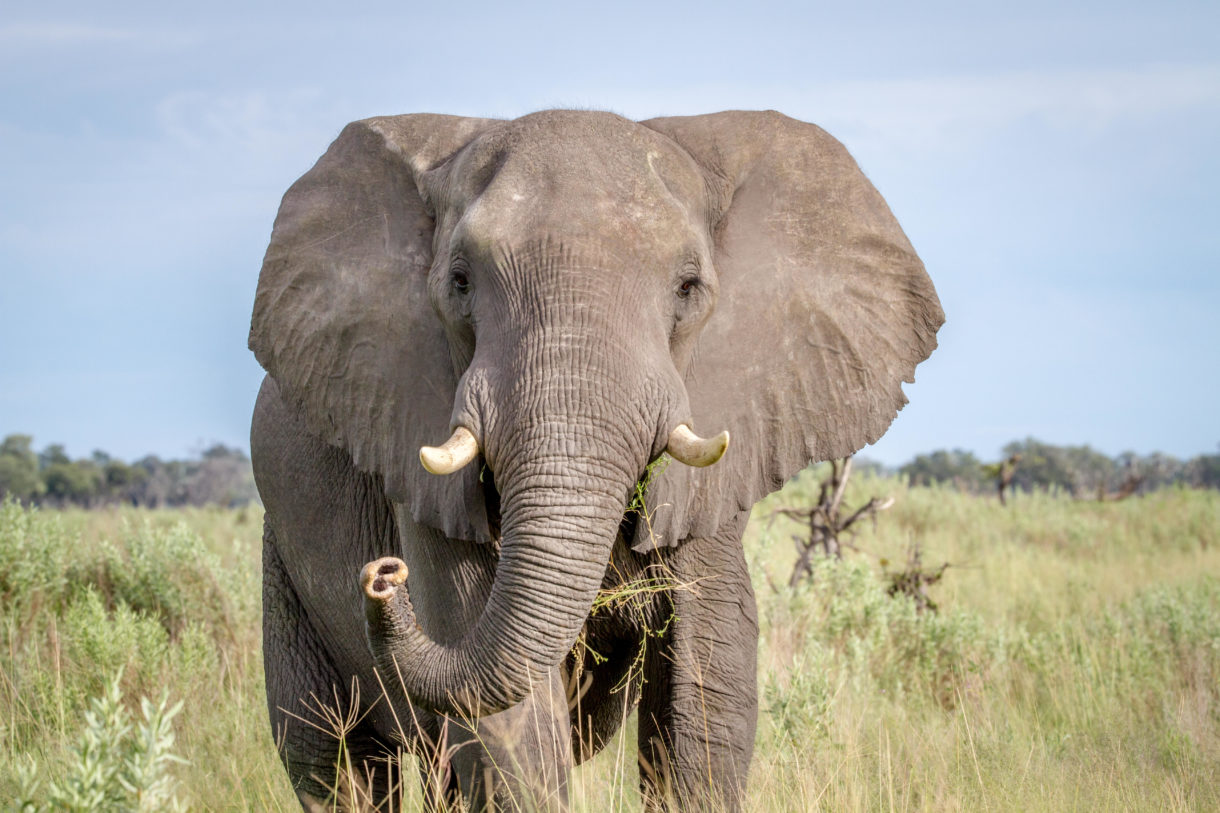
The video shows LaPierre’s botched attempt to kill an African elephant, then his struggling to follow a guide’s instructions for ending the animal’s pain. Multiple misplaced gunshots and the animal is still alive; over the course of nearly 10 minutes the elephant suffers an agonizingly slow and painful death.
The footage is hard to watch, and theNew Yorkerpiece captures some appalling details about the events, including LaPierre’s wife cutting off the tail of the elephant she killed as a trophy. But this one repulsive hunt is part of a much larger…
Editor’s Note: MeatEater mistakenly included images of the wrong people in the earlier version of this story. We’re very sorry for that error and apologize to anyone affected.
Four southwest Mississippi men have been sentenced for poaching wild turkeys in multiple states. In addition to killing in excess of the legal limit, they did not have licenses and were illegally transporting the animals across state lines.
According to MDWFP, a group of Mississippians were charged and arrested for killing nearly 100 turkeys in the 2019 season and trespassing on 15 properties.
During this 11-month investigation, it was discovered that the unlawful activities were taking place in other states, as well. Poachers were crossing state lines with spurs and beards of illegally harvested turkeys in violation of the Lacey Act, prompting a federal investigation.
According to a recent news release, Kenneth Britt, Tony Smith, Barney Bairfield III, and Dustin Treadway were sentenced by U.S. District Judge David Bramlette for violating federal wildlife laws.
The original indictment charged the defendants for taking over 25 wild turkeys without license in Kansas and Nebraska and illegally transporting spurs and beards. Additionally, Britt faced a federal felony charge for lying to a federal law enforcement officer and Smith faced felony charges for killing red-shouldered hawks.
On Feb. 24, 2021, Judge Bramlette sentenced Britt to 5 years of probation with a fine of $25,000; Smith to 4 years of probation with a fine of $15,000; Bairfield to 2 years of probation with a fine of $3,000; and Treadway to 2 years of probation with a fine of $5,000.
Violating these probation terms, which include “a worldwide prohibition from hunting of any type…including accompanying anyone in hunting or being present at a hunting camp during hunting season” could result in imprisonment for any of the offenders.
“The Department of Justice is committed to enforcing the Lacey Act and other federal laws to protect our wildlife resources,” Acting U.S. Attorney Darren LaMarca said following the sentencing. “It is my hope that this prosecution sends a strong message that the wanton, indiscriminate killing of the American Wild Turkey, or any animal for that matter, will be met with debilitating and just consequences.”
Meat, dairy and egg production in Canada involves forcing thousands of animals to live in filthy conditions. By any epidemiological standard, this is a disaster waiting to happen, write Jenny Henry and Darlene Levecque. Photo by Mercy for Animals Canada
As Canadians venture beyond the one-year mark since the official declaration of the COVID-19 pandemic, we do so with much reflection and lessons learned. We now look very differently at issues of public health, personal hygiene and even travel. However, one area that appears to be lacking the mass scrutiny and worry it deserves, especially in the wake of a pandemic caused by a zoonotic disease, is our food system, particularly how we breed, confine and slaughter animals.
It is likely that COVID-19 emerged in much the same way as bird flu, swine flu, Ebola and mad cow disease: from food markets and factory farms. Farmed and caged animals create the perfect breeding environment for zoonotic diseases, and not just in other countries. Canadians need to be much more concerned about the potential for future pandemics stemming from our own food system.
The environmental impacts of raising animals for food have been made abundantly clear in recent years. Animal agriculture is wiping out rainforests, causing mass extinction of species, polluting our air and waterways, and bringing us dangerously close to causing irreversible changes to the Earth’s climate systems. And now it appears that if global warming doesn’t get us, a zoonotic disease just might.
GET TOP STORIES IN YOUR INBOX.
Email *
Meat, dairy and egg production in Canada involves packing thousands of animals together in massive sheds, forcing them to live in filthy conditions, filling man-made lagoons with animal waste and making staff work in dangerously close contact with animals and each other. By any epidemiological standard, this is a disaster waiting to happen. In fact, the U.S. Centers for Disease Control and Prevention states that “three out of every four new or emerging infectious diseases in people come from animals.”
Federal and provincial governments in Canada help fund meat, dairy and egg production to the tune of hundreds of millions of dollars each year through subsidies, grants and loans. In 2019, for example, the federal government began doling out $1.75 billion over eight years to nearly 11,000 dairy farmers across Canada to compensate for market losses, while also providing up to $10 million in grants for selected dairy processors via the Dairy Processing Investment Fund. The Canadian government also announced in 2019 a $6-million investment to help promote pork exports and, last year, a $691-million gift to egg and chicken farmers. And this is all before receiving government aid for pandemic-related market disruptions. That’s a lot of taxpayer money being distributed to a food system that poses tremendous risk to the health and home of Canadians.
The government has invested some money into safer and healthier plant protein production over the last couple of years, providing nearly $100 million to Winnipeg-based Merit Functional Foods, which produces plant-based protein from Canadian peas and canola. Alberta-based Food Processing Development Centre is also receiving $2.6 million of federal funding to “support the installation of equipment specifically focused on supporting companies to develop new plant-based foods and products,” according to a Western Economic Diversification Canada statement. But this is just not enough to fund a full transition to safer food production that we so urgently need.
As a non-partisan advocacy group, Nation Rising is trying to level that playing field by lobbying governments to shiftmultibillion-dollar subsidies away from animal agriculture and towards the creation of a more sustainable, plant-based food system. We are also working to educate and empower the public to meet with their own MPs and demand change.
Canada cannot continue breeding, confining and killing animals for food on the scale that we do, and the government should not be continuing to fund it. Aside from the mass suffering of animals, the environmental degradation and noted health concerns associated with consuming animal products, we now know of the major risks that factory farming can pose to public health.
Canadian governments should be helping animal farmers transition to safer plant-based food production, write @vegan_bumblebee and @LevecqueDarlene of @NationRising.
Canadian governments should look to initiatives being led in the U.S. and Europe, such as Transfarmation, by international advocacy group Mercy For Animals, The Vegan Society’s Grow Green campaign and ReFarm’d for examples on how to help animal farmers transition to safer plant-based food production.
We’ve reached a precipice. If Canadian governments and industries don’t start planning for a fundamental shift toward more sustainable and less harmful food production, we might not last another hundred years.
Jenny Henry and Darlene Levecque are co-founders of Nation Rising, a non-partisan political advocacy group lobbying the federal government to shift subsidies away from animal agriculture and towards the creation of a plant-based food system.April 28th 2021
A man from Guyana — Kevin Andre McKenzie, 36 — is accused of smuggling the birds that are prized in singing contests, authorities said.
Matt Troutman, Patch StaffPosted Tue, Apr 27, 2021 at 4:45 pm ET|Updated Tue, Apr 27, 2021 at 5:02 pm ET
Reply
One of 35 finches found stuff in hair curlers that customs officials said they found on a man accused of smuggling the birds through JFK Airport. (United States District Court Eastern District Of New York)
NEW YORK CITY — A passenger flying into John F. Kennedy International Airport tried to smuggle a flock of finches into the country, authorities said.
Customs officials found 35 live finches stuffed in hair curlers concealed on the passenger — Kevin Andre McKenzie, 36 — Monday, according to a federal criminal complaint.
“In such contests, often conducted in public areas like parks, two finches sing and a judge selects the bird determined to have the best voice,” the complaint states. “Many who attend the singing contests wager on the birds. A finch who wins these competitions becomes valuable and can sell for more than $10,000. Although certain species of finch are available in the United States, species from Guyana are believed to sing better and are therefore more valuable.”
McKenzie is a resident of Guyana, authorities said. He flew from the South American country and arrived at JFK, where customs agents searched him, the complaint states. Subscribe
They found the birds stuffed in hair rollers concealed beneath his pants legs and jacket, the complaint states.
A criminal complaint shows bird-stuffed hair curlers authorities said they found Monday on a man they accused of smuggling. (United States District Court Eastern District of New York)
“The defendant told agents that he had been offered $3,000 to smuggle the birds into the United States,” the complaint states. “He was paid $500 before the flight, and he expected to receive the remaining $2,500 when he exited Customs.”
United States law prohibits importing wildlife and specifies commercial birds must be quarantined for 30 days to prevent the spread of diseases such as bird flu.
McKenzie faces a charge of intentionally and unlawfully importing and bringing into the United States merchandise contrary to law. He was released on a $25,000 bond.
An 18-year-old died Monday when he was shot while hunting with friends in Southwest Alaska, troopers said.
Joseph George was goose hunting around 6:30 p.m. Monday in Nightmute, said Gretchen Weiss-Brooks, a spokeswoman for the Alaska State Troopers. He was shot at close range when one of the friends fired as a goose flew by, Weiss-Brooks said by email.
“No suspicious activity is suspected at this time,” she said.
Troopers in Bethel were notified of the accident around 7:20 p.m., troopers wrote in anonline statement.
No charges or citations have been filed, and troopers said the investigation is ongoing. George’s body was sent to the State Medical Examiner’s Office, troopers said.
Statistics bureau offers no details, saying only that detailed data would be released in its coming once-a-decade census report
China’s population first exceeded 1.4 billion in 2019.PHOTO:KEVIN FRAYER/GETTY IMAGES
ByJonathan ChengUpdated April 29, 2021 4:43 am ET
PRINT
TEXT
Listen to this article1 minute00:00 / 01:101x
BEIJING—China’s population increased in 2020, the nation’s statistics bureau said in a brief statement Thursday.
The National Bureau of Statistics didn’t elaborate, saying only that detailed data would be released in its coming census report, according to the one-sentence statement published on its website.
The release of the once-in-a-decade census results has been delayed for several weeks.
In recent years, economists have raisedconcerns over China’s rapidly aging population, which they warn could raise a variety of social issues and cloud the future for the world’s second-largest economy.
The Financial Times reported on Wednesday that Beijing’s census would showthe country’s first…



 We believe in the free flow of information




 Posted Tue, Apr 27, 2021 at 4:45 pm ET|Updated Tue, Apr 27, 2021 at 5:02 pm ET


