‘It’s bizarre’: Almost two dozen seals found decapitated along Nova Scotia beaches

https://nationalpost.com/news/its-bizarre-almost-two-dozen-seals-found-decapitated-along-nova-scotia-beaches

‘I was in disbelief … I’ve never seen anything like it’Author of the article:Samantha PopePublishing date:Apr 16, 2021  •  1 day ago  •  4 minute read  •   71 Comments

Kimberly Hayman said she hopes an investigation will get to the bottom of what happened to the headless seals she found along the shores of two local beaches.
Kimberly Hayman said she hopes an investigation will get to the bottom of what happened to the headless seals she found along the shores of two local beaches. PHOTO BY KIMBERLY HAYMAN

Article content

A Cape Breton resident has made a disturbing discovery: Almost two dozen decapitated seals dotting the shores of two beaches.

“I was in disbelief … I’ve never seen anything like it,” said Kimberly Hayman, who’s lived in Dominion, Nova Scotia for three years. “I don’t like to see any animals suffer. I was just really disturbed.”

Former Toronto Maple Leafs GM wins tax battle as judge calls CRA’s position ‘absurd’
Close sticky video

 https://c5x8i7c7.ssl.hwcdn.net/vplayer-parallel/20210408_1900/ima_html5/index.htmlhttps://c5x8i7c7.ssl.hwcdn.net/vplayer-parallel/20210408_1900/videojs/show.html?controls=1&loop=30&autoplay=0&tracker=6c5c108a-8425-4e32-801e-54122191b59c&height=316&width=562&vurl=%2F%2Fa.jsrdn.com%2Fvideos%2Fcdgv_nationalpost%2F20210418054549_607bc5f1517fc%2Fcdgv_nationalpost_trending_articles_20210418054549_607bc5f1517fc_new.mp4&poster=%2F%2Fa.jsrdn.com%2Fvideos%2Fcdgv_nationalpost%2F20210418054549_607bc5f1517fc%2Fcdgv_nationalpost_trending_articles_20210418054549_607bc5f1517fc_new.jpg

dslogo

While on a midday stroll along Big Glace Bay’s shoreline on Sunday, Hayman said she and some friends were startled to find 10 headless seals — all with holes in their torsos — sprawled along the pebbly beach. There was no odour and the bodies still looked pretty fresh, she said, with dogs curiously running over to investigate.

Though she said she felt upset by the sight, she didn’t think much else of it. Then the next day, while out on her usual sunrise walk along nearby Dominion Beach, Hayman said she counted 11 more of these decapitated animals and began to wonder what was going on.  

Advertisement

STORY CONTINUES BELOWThis advertisement has not loaded yet, but your article continues below.

Article content

“I just kept taking pictures because I was thinking, ‘This can’t be normal — that’s 21 in total,’” she said.  

Twenty-one decapitated seals were found along the shores of two Cape Breton beaches, all with a “hole in their torso,” Hayman said.
Twenty-one decapitated seals were found along the shores of two Cape Breton beaches, all with a “hole in their torso,” Hayman said. PHOTO BY KIMBERLY HAYMAN

Fisheries and Oceans Canada confirmed it is aware of the headless seals, though it said Nova Scotia’s Marine Animal Response Society (MARS) is taking the lead on the situation. It’s a familiar incident to the group, as several hundred dead seals were also found washed up near Cape Breton and Sambro shores in April last year. 

In that case, the society’s response co-ordinator told CBC News it didn’t appear like the seals were killed as part of the seal hunt, as their skulls were intact and had not been crushed. This time around, Hayman said she saw no skulls nearby.

Similar issues have also persisted on the west coast of Canada, with headless sea lions found along British Columbia shores instead of seals. Last June, marine mammal zoologist Dr. Anna Hall said she believed decapitated sea lions along eastern Vancouver Island shores were deliberately beheaded by humans, with one incident being filmed on camera.

As for what’s happening on Nova Scotia beaches, Hall said she believes a similar crime may be happening. There appears to be consistencies among the carcasses, she said, reminding her of what she saw last summer on Vancouver Island.

Advertisement

STORY CONTINUES BELOWThis advertisement has not loaded yet, but your article continues below.

Article content

“The carcasses have a distinct similarity to them,” she said. “While we can’t say definitely that the seals on the east coast have been decapitated by human efforts, it does seem that is a distinct possibility looking at the photographs.”

However, MARS’s executive director and marine mammal biologist Tonya Wimmer said it appears to be a natural occurrence that happens every year to varying degrees, especially when sea ice has not been particularly thick or prevalent.

Though she hasn’t received images of all the seals yet, Wimmer said the holes don’t appear to be man-made, despite people assuming they have been caused by gunshots or other human-related trauma.

“From the images and information we’ve received, many of the holes are where the umbilicus would have been and is likely scavenging by other animals,” she said, explaining how it’s quite common for scavengers to target the area around the belly button, genitals or eyes.

Though there have been different theories about what happened, including that seal heads are being crushed by moving ice, Wimmer said she can’t say for certainty that’s what’s happening this time around.

Advertisement

STORY CONTINUES BELOWThis advertisement has not loaded yet, but your article continues below.

Article content

“The cause remains unknown,” she said. “(But) for the majority of animals we’ve examined during the incidents we’ve documented, it doesn’t appear to be due to human interactions.”

Hall said she doubts sea ice is to blame.

“I would be very surprised that this many seals would be decapitated by sea ice,” she said. “I’ve never heard of that before. That being said, I’m in Pacific Canada where we don’t have that issue.”

Either way, Hall said it’s disturbing to see that many decapitated seals in one localized region — which she said is cause for suspicion. While she said it could also be a result of shark predation, she said she still believes there might be something more to it.

“The sheer number of animals discovered within such a short time frame — 21 animals in three days — suggests that there is a possibility that those numbers could actually be higher,” she said. “It seems more likely that there is a human element to this, and I would really hope that DFO will take the appropriate steps to determine definitively what the cause of death of these animals were.”

For Hayman, she said coming across these seals was quite an unsettling experience, especially not knowing for sure what happened to them. She added she would hate to see it happen each year.

“I just feel like if this isn’t happening naturally, then what the heck is happening?” Hayman said. “To me, it’s bizarre.”

Mississauga Animal Services on what to do if you spot a coyote or den

https://www.mississauga.com/news-story/10362867-list-mississauga-animal-services-on-what-to-do-if-you-spot-a-coyote-or-den/

Staff Photographer

NEWS

LIST:

Coyote pup denning season starts in March and April

Sabrina GamrotMississauga NewsTuesday, March 30, 2021

Spring is officially upon us and, as a result, wildlife will start to appear more often.

Coyotes start denning to raise their pups in March and April, which may result in increased sights and activity.

Dens for coyotes and pups can be created in many areas including the side of hills, tree stumps, underneath patios or decks and in culverts around natural areas or hydro corridors, according to the city of Mississauga.

Coyotes will instinctively protect their young and will vocalize, growl or act in a defensive manner toward any predators or people.

Mississauga Animal Services is sharing a number of tips to use if you encounter a den or see a coyote.

Coyotes help to control rodent and rabbit populations and are an important aspect of our ecosystem, said the city.

IF YOU SUSPECT A DEN IS NEARBY:

• Avoid the area

•. Keep dogs on a leash not longer than six feet

• Don’t dump food or garbage outside, which could attract wildlife

Related content

MAP: List of coyote sightings in Mississauga

• Call Animal Services if dens pose a public risk 

IF YOU ENCOUNTER A COYOTE:https://4c624841fc305c1cfa32d1c375cd5dc4.safeframe.googlesyndication.com/safeframe/1-0-38/html/container.html

• Stay calm and wait until it leaves

• Do not turn your back and run, the coyote may chase you

• Look big by waving your arms, clap, yell or make startling movements and stand tall

• Startle the coyote by opening an umbrella, using a flashlight or alarm

• If you are in immediate danger, call 911.

HOW TO PROTECT YOUR PETS: 

• Supervise your pets when outside in the yard

• When seeing a coyote, pick up your dog if possible

• Keep dogs on a leash

• Keep cats indoors as much as possible

Coyote sightings can be submitted online to the city’s interactive map, which tracks all sightings.

For more information, residents can call Animal Services at 905-896-5858 or visit Mississauga.ca/coyotes.

U.S., China Agree To Cooperate On Climate Crisis With Urgency

Exposing the Big Game's avatarThe Extinction Chronicles

https://www.npr.org/2021/04/18/988493971/u-s-china-agree-to-cooperate-on-climate-crisis-with-urgency

  • Facebook
  • Twitter
  • Flipboard
  • Email

April 18, 20217:58 AM ET

THE ASSOCIATED PRESS

U.S. special envoy for climate John Kerry speaks during a roundtable meeting with reporters in Seoul on Sunday. The United States and China have agreed to cooperate with other countries to curb climate change, just days before a virtual summit of world leaders to discuss the issue.U.S. Embassy Seoul via AP

SEOUL, South Korea (AP) — The United States and China, the world’s two biggest carbon polluters, agreed to cooperate to curb climate change with urgency, just days before President Joe Biden hosts a virtual summit of world leaders to discuss the issue.

The agreement was reached by U.S. special envoy for climate John Kerry and his Chinese counterpart Xie Zhenhua during two days of talks in Shanghai last week, according to a joint statement.

The two countries “are committed to cooperating with each other and…

View original post 689 more words

DNR CONSERVATION OFFICER SAYS SHOOT ONLY TURKEYS YOU CAN SEE

Exposing the Big Game's avatarCommittee to Abolish Sport Hunting Blog

https://www.kciiradio.com/2021/04/17/dnr-conservation-officer-says-shoot-only-turkeys-you-can-see/

The Iowa Department of Natural Resources advises spring turkey hunters to make sure you see an actual turkey before firing at it.

The second of five spring turkey hunting seasons for combination gun and bow licenses continues through Tuesday. DNR Conservation Officer for Washington and Keokuk counties Wes Gould says because turkey hunters are camouflaged while trying to lure the fowl closer with turkey calls, it can be misleading to other hunters, “Especially on public areas, but it can also happen on private property if more than one person has permission, is we’ll be sitting hunting turkeys and calling and we think we hear a turkey and get up and move towards that sound and unfortunately sometimes people get close enough, they think they’re right on top of that sound, but can’t see…

View original post 130 more words

Fox, coyote and turkey hunting proposed at Potomac River wildlife refuges

https://www.insidenova.com/headlines/fox-coyote-and-turkey-hunting-proposed-at-potomac-river-wildlife-refuges/article_57ff51ca-9eba-11eb-b5cd-abf68e4e6af6.html?fbclid=IwAR1NRtmWtZvK1X6CyooXBEb5M6aj__TrqEqzMKLwMd92flK4ucTLf-DGeq8

  • Apr 16, 2021 Updated Apr 16, 2021
Occoquan Bay NWR
The scene from a wildlife viewing platform at Occoquan Bay National Wildlife Refuge in Woodbridge.By Casey Pugh

U.S. Fish and Wildlife is seeking public comment on new plans for fox, coyote, waterfowl and turkey hunting, along with expanded deer hunting and fishing opportunities, at the Potomac River National Wildlife Refuge Complex in Woodbridge and southern Fairfax.Trending on InsideNoVa https://c5x8i7c7.ssl.hwcdn.net/vplayer-parallel/20210408_1900/ima_html5/index.htmlhttps://c5x8i7c7.ssl.hwcdn.net/vplayer-parallel/20210408_1900/videojs/show.html?controls=1&loop=30&autoplay=0&tracker=a400ac00-21b7-4967-adeb-951c15739530&height=352&width=625&vurl=%2F%2Fd14c63magvk61v.cloudfront.net%2Fvideos%2Fdgv_insidenova%2F20210418054149_607bc4b07dee4%2Fdgv_insidenova_trending_articles_20210418054149_607bc4b07dee4_new.mp4&poster=%2F%2Fd14c63magvk61v.cloudfront.net%2Fvideos%2Fdgv_insidenova%2F20210418054149_607bc4b07dee4%2Fdgv_insidenova_trending_articles_20210418054149_607bc4b07dee4_new.jpgXPowered By 

The complex includes the Elizabeth Hartwell Mason Neck, Occoquan Bay, and Featherstone National Wildlife Refuges. The USFW is inviting the public to review and comment on the draft plan for proposed hunts and fishing access.

The proposed plan includes:

  • Open fishing opportunities on non-motorized watercraft in designated areas of Occoquan Bay NWR, Mason Neck NWR and Featherstone NWR. Additionally, Featherstone NWR will also open fishing opportunities to motorized watercraft in designated areas.
  • Expanded deer hunting hours at Occoquan Bay NWR.
  • Open opportunities for mentored turkey hunting and mentored archery deer hunting on Occoquan Bay NWR.
  • Open fox and coyote hunting opportunities in conjunction with permitted deer hunt days at Occoquan Bay NWR.
  • Open waterfowl hunting opportunities in designated areas of Featherstone NWR.

A “hunt application/permit” (FWS Form 3-2439) will be required for hunting deer on E.H. Mason Neck NWR and Occoquan Bay NWR. No more than $10 application fee and $20 permit fee for deer and turkey hunts would be established to defray the costs of operation.

Deer hunt permit applications would most likely be administered by a contracted company that will feature online, mail, and telephone services to collect hunter information, required fees, and issue permits, the release said.

Draft documents for review are available here.

You can contact the refuge at 703-490-4979 to request more information. Submit your comments to the refuge by mail at 12638 Darby Brooke Court, Woodbridge, VA 22192 or by email at HuntFishRuleComments@fws.gov with the subject line of “Potomac River NWR Complex.”

The comment period will be open through the end of the 2021-2022 federal hunting and sport fishing regulations open comment period to be announced in the Federal Register, USFW said in a news release. Federal officials expect the comment period to be open through mid-June. 

“Across the country, national wildlife refuges work closely with state agencies, tribes, and private partners to expand recreational hunting and fishing access,” the release said. “Hunting and fishing provide opportunities for communities, families, and individuals to enjoy the outdoors, support conservation efforts, and participate in a popular American tradition.”

Dispatch says one person injured in hunting shooting accident in Union Co.

Exposing the Big Game's avatarCommittee to Abolish Sport Hunting Blog

https://www.foxcarolina.com/news/dispatch-says-one-person-injured-in-hunting-shooting-accident-in-union-co/article_45ec4ae4-9f8a-11eb-9b86-57484f9a46a3.html

Ambulance emergency generic
Storyblocks/J.M. Guyon – Copyright 2013

UNION, SC (FOX Carolina) -On Saturday, dispatch said the Union County Sheriff’s Office responded to a hunting shooting accident that injured one person.

According to dispatch, a call came in at 9:27 a.m. for a shooting accident on Sardis Road and Hickory Nut Holler Road.

Dispatch said one person was injured and taken to to the hospital.

Copyright 2021 FOX Carolina

View original post

Clothes dryer vs the car [vs having babies]: carbon footprint misconceptions

https://www.ft.com/content/c5e0cdf2-aaef-4812-9d8e-f47dbcded55c

Landmark survey of 21,000 people in almost 30 countries shows perception gap on climate impact of personal actions Air drying clothes saves just 0.2 tonnes of carbon emissions a year per person © Reuters Share on Twitter (opens new window) Share on Facebook (opens new window) Share on LinkedIn (opens new window) Save Chelsea Bruce-Lockhart 12 HOURS AGO 222 Print this page The majority of people are unable to identify which lifestyle decisions are the most effective at limiting their carbon footprint, according to an international survey of more than 21,000 people across almost 30 countries. Yet, an overwhelming number claim they know which personal actions they must take to play their part in tackling climate change, according to the Ipsos Mori survey exclusive to the Financial Times. Across all countries, the average person who took part in the survey almost consistently ranked an avoidance of tumble dryers and a switch to low-energy lightbulbs as more effective ways to reduce individual emissions — rather than not owning a car or choosing a plant-based diet. In reality, an individual using less carbon-intensive forms of travel, instead of driving a car, could prevent an average of 2.4 tonnes of carbon dioxide equivalent from being released into the atmosphere each year in a developed country. Air drying clothes would save just 0.2 tonnes of carbon emissions a year per person. By comparison, total annual greenhouse gas emissions, including carbon dioxide, are about 10.4 tonnes per person in high-income countries, compared with 12 tonnes in 2000.  The reality is . . . the actions that need to be taken require significantly bigger sacrifices Ipsos Mori Entire global annual greenhouse gas emissions, including carbon dioxide, are about 51bn tonnes. This is more than 40 per cent higher than emissions in 1990, which were around 35bn tonnes. “Our research shows that the issue of the environmental crisis is familiar to people around the world,” said Kelly Beaver, managing director of public affairs at Ipsos Mori. “But people remain confused about what actions are most likely to have a significant effect on their carbon footprint.” “The public seem to have got the message when it comes to the importance of recycling, but the reality is . . . the actions that need to be taken require significantly bigger sacrifices,” Beaver added.  Recycling was the action most commonly selected as an effective means to limit an individual’s greenhouse gas emissions. Yet, the environmental impact of recycling has less to do with limiting emissions, and more to do with reducing personal waste and eliminating plastic pollution. Annual emissions savings for an individual who is recycling as much as possible are estimated to be around 0.2 tonnes of CO2 equivalent. Recommended Climate change Climate change quiz

One of the options most ignored by respondents, as a possible way to reduce personal impact on the environment, was choosing to have fewer children. A commonly quoted estimate for annual emissions saved from having one less child dwarfs that of other actions, at 58.6 tonnes of CO2-equivalent emission, as featured in Environment Research Letters in 2017. Although some academics argue this is an overestimate, the Ipsos Mori survey responses suggest there is a lack of awareness around the potential impact having smaller families can have on the climate.

A generational knowledge divide was also highlighted in some of the results. Younger people were more aware of the environmental impact of having fewer children as well as the benefits of a plant-based diet, the results showed, while older populations placed more value in recycling. One of the most unexpected findings in the survey, considering the misperceptions, was that nearly 70 per cent of respondents believed they knew how to lessen their impact on the environment. People in Japan were least confident about how to lessen their carbon footprint, followed by Russia and also Saudi Arabia and South Korea, all countries with a relatively high dependence on fossil fuels. Chart has been updated to correct two countries’ responses. Follow @ftclimate on Instagram Climate Capital Where climate change meets business, markets and politics. Explore the FT’s coverage here 

Meltwater Pulse 1A: Melting Ice Sheets Caused Sea Levels to Rise Up to 18 Meters

Exposing the Big Game's avatarThe Extinction Chronicles

TOPICS:Climate ChangeDurham UniversityOceanographySea Level

ByDURHAM UNIVERSITYAPRIL 16, 2021

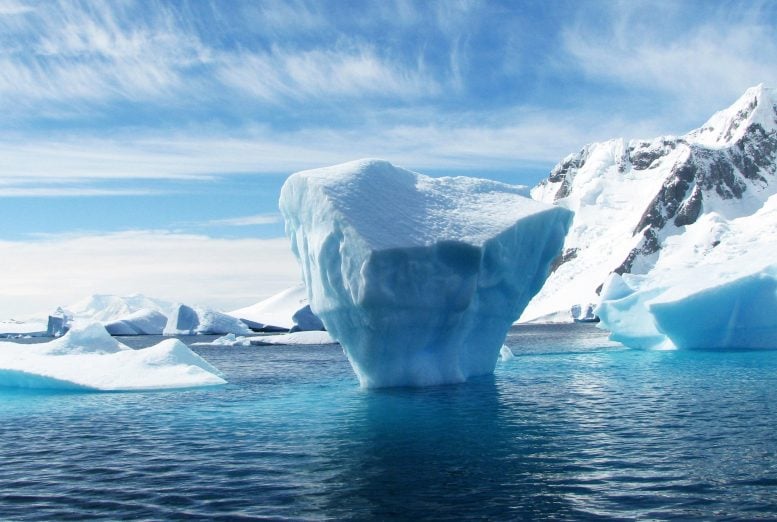
Melting Ice Arctic Antarctic Concept

It is well known that climate-induced sea level rise is a major threat. New research has found that previous ice loss events could have caused sea-level rise at rates of around 3.6 meters per century, offering vital clues as to what lies ahead should climate change continue unabated.

A team of scientists, led by researchers from Durham University, used geological records of past sea levels to shed light on the ice sheets responsible for a rapid pulse of sea-level rise in Earth’s recent past.

Geological records tell us that, at the end of the last ice age around 14,600 years ago, sea levels rose at ten times the current rate due to Meltwater Pulse 1A (MWP-1A); a 500 year, ~18 meter sea-level rise…

View original post 547 more words

Strange Black Bear Photos Show Animal Standing Like a Man in North Carolina

BY ARISTOS GEORGIOU ON 4/16/21 AT 6:19 AM EDT01:06

https://www.newsweek.com/strange-black-bear-photo-man-north-carolina-1584124

Two college students came across a black bear standing in a strangely human-like pose on Sunday in North Carolina.

Erin McAllister and her boyfriend Zachary Allen—both of whom are studying at East Carolina University—were exploring Pocosin Lakes National Wildlife Refuge in Hyde County in the hope of seeing some bears when the encounter occurred.

The couple were driving down a road in the refuge when they spotted the bear standing in the unusual position.READ MORE

NEWSWEEK NEWSLETTER SIGN-UP >

While bears are known to stand on two legs, the couple said something seemed strange about its posture. Allen captured some eerie images of the bear, which McAllister then posted on Facebook.

“To be honest, when we both first saw it, we weren’t even sure it was real! It was standing so still and stoically,” McAllister told Newsweek.

“We had both never seen black bears in the wild before—but my boyfriend had seen some at the zoo in Grandfather Mountain, and could tell right away that the bear in that standing position seemed kind of unnatural and odd.”

The couple said they suspected the bear in question was relatively young, estimating that it stood at around five feet tall on its hind legs. According to McAllister, the animal stood “very still” as the couple slowly crept up towards it in their car on a dirt road.NEWSWEEK SUBSCRIPTION OFFERS >

“He seemed wholly unbothered by us, and aside from a slight glance our direction, continued on looking towards the opposing forest on the other side of the road,” McAllister said.https://www.facebook.com/v2.6/plugins/post.php?app_id=&channel=https%3A%2F%2Fstaticxx.facebook.com%2Fx%2Fconnect%2Fxd_arbiter%2F%3Fversion%3D46%23cb%3Df2de21a60a662c%26domain%3Dwww.newsweek.com%26origin%3Dhttps%253A%252F%252Fwww.newsweek.com%252Ff7454e0346c65%26relation%3Dparent.parent&container_width=500&href=https%3A%2F%2Fwww.facebook.com%2Ferin.m.mcallister.9%2Fposts%2F3891235910996942&locale=en_GB&sdk=joey&show_text=false&width=500

“It was after a few minutes that I noticed a group of three similarly sized black bears run in front of our car, across from their side of the road, into the forest near the standing bear. Once this standing bear saw them—what we assume were friends, he quickly lowered himself back onto all fours, and ran off into the woods to meet them! We like to interpret this whole experience as the standing bear looking for his friends.”

McAllister said the bear stood in that position for close to 10 minutes, in total. She posted the strange images of the bear to a Facebook group called Carolina Critters, causing quite a reaction.

Several Facebook users commented that the animal looked like a man in a bear suit.

Meanwhile, one user, Brentley Norman, said: “Thought it was Bigfoot!”

Another user, Lisa Smoot Motley, said: “What great posture!! Some of the slouchy teenagers I’ve seen should take lessons!”

McAllister said the reaction to the pictures had been “overwhelming and exciting.”

“There are many people in this state who are passionate about wildlife, so it was no shock to me that they were as intrigued by the pictures as we were when we saw them in person.”

A black bear in North Carolina
A black bear standing in the Pocosin Lakes National Wildlife Refuge, North Carolina.ZACHARY ALLEN/ERIN MCALLISTER