Independent Group Leader, Max Planck Institute for the Science of Human HistoryApril 17, 2021
Our species,Homosapiens, rose in Africa some300,000 years ago. The objects that early humans made and used, known as the Middle Stone Age material culture, are found throughout much of Africa and include a vast range of innovations.
A Utah man will serve three months in prison for the 2019 fatal shooting of a northern elephant seal in California.
Prosecutors said Jordan Gerbich, 30, was sentenced Monday for killing the animal while it rested on a San Simeon-area beach, NBC Newsreports.
He pleaded guilty in December to one count of illegally taking a marine mammal, according to areleasefrom the U.S. Attorney’s Office Central District of California.
Gerbich was living in The Golden State when he shot the seal in the head, using a handgun, on Sept. 28, 2019 after a drunken friend ordered him to kill an animal “as a kind of grotesque test,” his federal public defender…
The slander against the Netflix documentary Seaspiracy says a lot about fishing industry influence in marine science. We have somehow allowed the fisheries industry’s own scientists to define sustainable fishing goals — it’s a disgrace leading to an ecological nightmare.
The upwelling scrutiny around Seaspiracy deflects from the greater issues it raises. (Valery Sharifulin / TASS via Getty Images)
Our new issue, “Biden Our Time,” is out now. We discuss the last four chaotic years of US politics, what happened in November, and what to expect from the Biden administration. Get a $20 discounted print subscription today!
“Ocean QAnon,” “eco-fascism,” “self-indulgent vegan propaganda” — fishing industry scientists are angry about Seaspiracy, the new Netflix special topping charts around the world, which details the impact of industrial fishing on marine life and the complicity of certification labels and even some ocean conservation groups. The controversy swirling around Seaspiracy seems to center around statistics, but beneath the surface lurk deeper questions about industry influence in marine science.
Seaspiracy is not without its faults. Its interview style is abrasive. It has excessive animation. It makes a couple of statistical misinterpretations and several oversimplifications. Yet the film is mainly accurate and devastatingly detailed, provoking viewers around the world to question the industry values that have become integral to marine science orthodoxy: Why do we call fish populations “stocks”? What does it mean to call them “under-fished”? How do they calculate maximum sustainable yield? Is it really sustainable?
The academy’s response to Seaspiracy was swift, stern, and sloppy. Although allegedly leaked documents show that groups like the National Fisheries Institute were preparing a media response for weeks, the industry-funded Sustainable Fisheries, University of Washington’s fact-check page falsely claimed that one of the film’s source studies — estimating 20-32 percent of marine life imported to the United States was caught illegally — had been retracted. Ironically, they had to retract the claim. Sustainable Fisheries UW correctly questioned a sea turtle bycatch statistic, for which Seaspiracy repeated a mistake made on a Sea Turtle Conservancy white paper. Even though fisheries scientists tracked down the source study, they didn’t seem to read the abstract, which revealed that the near-global figure was misattributed to the United States. Instead, they attacked its credibility, revealing the modus operandi of fishing industry public relations.
It’s fair to say that Seaspiracy cited some studies that can be considered dated or disputed, but it also left out some of the most harrowing statistics published in recent years. The most current worldwide analysis estimated the bycatch of at least 8.5 million sea turtles in a seventeen-year period. Catch reconstructions show total fish hauls as peaking in 1996 and declining ever since, despite exponential industrialization and permeation of fishing fleets. A global investigation of navigation patterns estimated up to a quarter of fishing vessels may have forced labor on deck.
The most controversial statistic in the film is the projection of global crashes in commercially exploited fish populations by 2048. What the industry doesn’t mention is that they generated the controversy. Since the 2006 publication of “Impacts of Biodiversity Loss on Ocean Ecosystem Services” in Science magazine, industry groups have doggedly scoldedmediaoutlets for citing it. Professor Ray Hilborn, who founded Sustainable Fisheries UW, emerged as this study’s most prominent critic. A decade later, he would be exposed for not only receiving millions of dollars in seafood industry funding but failing to disclose it as a conflict of interest. While he did work with the author of the 2048 projection on a subsequent paper, this research didn’t correct or disprove its conclusions but rather cited them.
The lead author on both studies is a conservation biologist named Boris Worm, who said fisheries scientists’ cooperation on the second made him “somewhat more optimistic” but explicitly stated that the work “did not revisit the original projections.” When he finally did so in 2016, he clarified that updated models were less ominous but remained “sobering.” Hilborn nevertheless continues to crusade on behalf of industrial fishing, publicly advocating against marine reserves and providing testimony to lawmakers on the dangers of “under-fishing.” His foundation’s Seaspiracy response disputes four statistics out of more than one hundred, all of them by downplaying the degree of the problem and criticizing colleagues’ research, begging the question: Is the film full of errors, or does it just upset the industry?In essence, we have allowed fisheries industry scientists to define sustainable fishing goals, somewhat like allowing petroleum geologists to set emissions targets.
The enduring controversy over the 2048 projection is emblematic of a much deeper rift in marine science, between those who view fish as wildlife to be protected versus resources to be extracted — namely conservation biology versus fisheries science. While conservation biologists aim to restore fish populations, the explicit goal of fisheries science is to repress their recovery. The simplistic modeling formulae upon which modern fisheries science is founded defines the population level of maximum sustainable yield as half of a fish population’s carrying capacity. In theory, this strikes a balance between reproducing individuals and limiting factors where maximum population growth — and, conveniently, maximum profitability — will occur.
This means that when the UN Food and Agriculture Organization says that two-thirds of “fish stocks [are] within biologically sustainable levels” (disputed in itself), this means that most of these populations are at approximately half their historical levels, with the remaining third lower yet. Below 40 percent, populations are classified as overfished — in the United States, however, the threshold is 25 percent. Anything above 60 percent carrying capacity is defined as “under-fished.” This philosophy is not only markedly errant from fishing practices sustained for millennia by indigenous cultures but has become one of the greatest threats to their subsistence. In essence, we have allowed fisheries industry scientists to define sustainable fishing goals, somewhat like allowing petroleum geologists to set emissions targets.
However, fisheries scientists weren’t the only academics to decry Seaspiracy. While received rather differently by marine biologists around the world, these industry paradigms run deep in American academia. Sylvia Earle and Callum Roberts, the marine biologists Seaspiracy consults, represent marginalized ideologies and receive criticism for valuing fish as wildlife, as Dr Earle puts it, arguing that our goal should be to minimize, not maximize, their extraction. This advocacy got her locked out of meetings as the first female chief scientist at the National Oceanic and Atmospheric Administration, advising the regulatory body formerly called the National Marine Fisheries Service — now NOAA Fisheries — of which she says the “primary purpose is to serve the interest of commercial fishing.”
While the pointed message of the film has inspired a reflection on these values among average viewers, it seems that academic institutions, in fisheries science and marine biology alike, may be some of the last to consider them. At least that’s how I felt after a summer researching at UW.
“Looks like we’ll have another urchin-cracking party,” my principal investigator chuckled, planning another student’s study on urchin gonad contents. My eyes widened as I realized she was talking about “my” urchins, whose feeding behavior I was studying in tanks down the road. They were wild-captured giant red sea urchins — Strongylocentrotus franciscanus — the biggest species in the world. They can grow to twenty-one inches from spine to spine and live for perhaps two hundred years. Some of these urchins may have walked the seafloor below the bustling canoe fleets of the precolonial Salish nations. Many were likely older than me. I wanted to set them free but was hesitant to object, as this research project was a critical opportunity for me to build connections and obtain references for grad school.
As I loaded up the urchins near the dock, the marine lab’s program director approached me. I waved nervously. “Thank you,” she said, in her thick Senegalese accent. She told me of prestigious urchin researchers she’d seen in her career simply leave captured urchins in stagnating tanks to die in the sun. “Of course,” I replied. She must not have heard that there were other plans for them. As I reached the other side of the channel and cut the engine, I pulled out a plastic drum brush and began tickling the urchins’ tube feet until they let go. I leaned over the gunwale, placing them carefully in the water and finally came to my favorite — Houdini. I was never quite able to design an enclosure capable of containing that one.
Watching the little urchin slowly disappear into the depths of Puget Sound, I couldn’t help but smile, rediscovering what I had always known yet learned to forget: marine life is wildlife.
The upwelling scrutiny around Seaspiracy deflects from the greater issues it raises. Life on Earth began in the sea, and human life has always been bound to it. We must protect our ocean, using all strategies at our disposal, and collectively reclaim the authority to govern how it is treated from those who profit from its exploitation.
Photo by: National Park Service via AP, FileFILE – In this March 21, 2019, aerial file photo provided by the National Park Service, is the Junction Butte wolf pack in Yellowstone National Park.By: Jacob Fischler – Daily MontananPosted at 8:51 AM, Apr 05, 2021 and last updated 7:51 AM, Apr 05, 2021
A controversial decision in the last months of the Trump administration to remove gray wolves from the endangered species list led to a massive overhunt in Wisconsin this year that Ojibwe tribal representatives said disrespected their wishes.
But there’s no indication yet that the Biden administration will attempt to roll back that move, despite an order the day President Joe Biden took office that departments across the government review decisions from the previous four years that were “damaging to the environment, unsupported by the best available science, or otherwise not in the national interest.” The order specifically cited the gray wolf delisting as one to reconsider.
It’s also unclear what effect the three-day hunting season in Wisconsin, where hunters killed nearly double the state’s non-tribal quota, will have on other states.
The season was held in late February after a Nov. 3 Fish and Wildlife Service order removed gray wolves from the endangered species list in all of the lower 48 states, mostly affecting the Great Lakes region. Wolves in the Northern Rocky Mountains had already been delisted federally.
A Wisconsin judge ruled in February that state law required a wolf hunting season. The state set a limit of 119 wolves that could be harvested by the general public, with an additional 81 reserved for the Ojibwe tribes.
“The second it gets beyond a certain threshold, there’s a quick and irrational desire to hunt them again,” Jennings said.
Jennings’ group opposed the hunt because of biological factors and because of the reverence for wolves in Ojibwe culture.
The animal’s fate is seen as tied to the Ojibwe people, and they view policies throughout U.S. history where the government has sought to remove both Native Americans and wolves as strengthening that shared existence, Jennings said.
“What happens to one happens to the other,” he said. “There’s a mirror prophecy…. And that mirrored history is pretty fresh in the minds of a lot of our tribal nations.”
Although the state was forced by the court decision to hold a hunting season, Jennings said tribes were not meaningfully consulted.
“When you’re pushing for a hunt to happen in a week’s time, you’re essentially saying ‘We’re going to bypass the tribal consultation process,’” Jennings said. “And that’s exactly what tribal communities viewed as happening.”
The timing of Wisconsin’s hunt, when females may be pregnant and wolf pelts are not as valuable, added a layer of disrespect, the group said in a statement before the season opened.
Representatives for the Wisconsin Department of Natural Resources did not return messages seeking comment Friday.
Managing large carnivores
Government management of large carnivores like wolves is often controversial. The animals can pose a danger to people, livestock and the livelihoods of ranchers.
“Wolves are strong, smart and vicious predators,” Luke Hilgemann, the CEO of Hunter Nation, the organization that sued the state to force a wolf season, wrote in a March 19 op-ed for the Wisconsin State Journal. “Wolves are to be respected and revered. But too many of any species — particularly predators — can wreck the entire ecosystem.”
In neighboring Minnesota, wolf populations have remained strong since before the animal was listed on the federal endangered species list, said Dan Stark, a large carnivore specialist with the Minnesota Department of Natural Resources. The population has hovered around 2,700 for the past three years, about double the 1,250-1,400 goal that federal authorities set.
“Anything we can learn about what methods were allowed or what steps were taken to manage and provide the controls for that season closure could help inform us as we develop or if we adopt a proposal for a season,” he said.
Minnesota DNR policymaking committees include tribal members and formal tribal consultation is also part of the process, as is consultation with people concerned about wolves preying on livestock, Stark said.
The department’s review of its wolf management policy was slowed by the pandemic, Stark said. A review committee would likely have a plan ready for public review in the summer and a final recommendation in the fall.
Jennings said there was no indication of how the federal government might act. Interior Secretary Deb Haaland is the first Native American person to hold that office, but tribal communities understand her job goes beyond their concerns, Jennings said.
Other than citing the gray wolf in the executive order, the Biden administration has not given any other sign it intends to undo the delisting, which could be a lengthy process.
If the agency agreed the rule was invalid, it could begin a new rulemaking process to put the gray wolf back on the list, she said.
The government’s answer to the Earthjustice suit is due April 19.
A spokeswoman for the Fish and Wildlife Service declined to comment. A spokesman for the Interior Department did not return a request for comment.
The Fish and Wildlife Service kept the grizzly bear, another well-known large and potentially dangerous mammal, on the endangered species list, the service announced this week.
Wolf hunting in Montana
In Montana, where wolf hunting has been legal since a 2011 law authored by Sen. Jon Tester and Rep. Mike Simpson, R-Idaho, the state Legislature has pursued measures to expand hunting.
“What we’re seeing this session is an all-out war against wolves,” Nick Gevock, the conservation director for MWF, said. “We support ethical wolf hunting, but this is something different. This is a purposeful effort to drive their numbers to a bare minimum.”
Gilles Stockton, the president of the Montana Cattlemen’s Association, said the state’s official tally of around 870 wolves is likely an undercount. The animals are overpopulated throughout the state and are a threat to livestock producers, he said. Hunting is an important tool in managing that threat, he added.
The group didn’t have a position on the specific bills the Legislature has passed, but said “more aggressive methods are necessary and should be allowed.”
Many in western Montana, where wolf populations are more plentiful, have advocated for similar measures for years, Gevock said. But with the state now led by a Republican governor after 16 years of Democratic control, the chances of enactment are greater.
Gevock said the governor’s office has not said if it will veto the bills.
State authorities fined Gianforte earlier this month for killing a wolf without first taking the proper training course.
Department of JusticeU.S. Attorney’s OfficeDistrict of Oregon
FOR IMMEDIATE RELEASEMonday, April 12, 2021
PORTLAND, Ore.—A Portland resident and purveyor of Chinese homeopathic remedies pleaded guilty and was sentenced today for selling pangolin scales illegally imported into the U.S., announced Acting U.S. Attorney Scott Erik Asphaug.
Agnes Yu, 53, was sentenced to three years’ federal probation and a $5,000 fine.
“Illegal trafficking poses a grave and persistent threat to wildlife populations across the globe. The purchase or sale of these animals is a serious crime and priority for federal law enforcement,” said Acting U.S. Attorney Asphaug.
“We commend the Department of Justice and all other agencies that played a role in aiding this investigation and prosecution,” said James Ashburner, a Special Agent in Charge for the U.S. Fish and Wildlife Service Office of Law Enforcement. “Trafficking of pangolins, and other protected species, is a huge part of global illegal wildlife trade. The Service will continue to use every tool at its disposal to fight wildlife trafficking and bring to justice the individuals who are depriving our planet of these magnificent creatures for their own profit.”
According to court documents, Yu and her husband operated Wing Ming Herbs, a store selling Chinese homeopathic remedies and other merchandise in Southeast Portland. On December 7, 2003, U.S. Customs and Border Protection personnel screened Yu and her husband at the U.S.-Canada border. The inspection recovered 10 dried sea snakes and 49 dried big-toothed sea snakes. As a result of this encounter, U.S. Fish and Wildlife Service sent the Yus a letter informing them about federal laws and regulations governing the import and export of wildlife into and out of the U.S, including the Convention on International Trade in Endangered Species of Wild Fauna and Flora (CITES). CITES lists each of the wildlife species whose trafficking it regulates under one of three appendices, with the most endangered and protected listed in Appendix I.
On November 14, 2017, an undercover Postal Inspector with the U.S. Postal Inspection Service went to Wing Ming and spoke with Yu in Chinese. The inspector covertly recorded and videotaped the meeting. In the course of their transaction, Yu sold the inspector thirty grams of pangolin scales for approximately $165. Personnel at the U.S. Fish and Wildlife Service National Fish and Wildlife Forensics Laboratory later confirmed the scales had been taken from a pangolin, a species of scaled anteater-like mammals endemic to Asia and sub-Saharan Africa. All species of pangolins (which form the genus Manis) are listed in CITES Appendix I, meaning that all commercial trafficking in pangolins is prohibited by the Convention.
Yu was aware of U.S. and foreign restrictions on the import, export, and sale of CITES-listed plants and wildlife but did not comply with those restrictions. Yu repeatedly exported American ginseng to customers in China in 2017 and 2018. American ginseng is listed on CITES appendix II, requiring exporters to obtain and ship such ginseng with a valid CITES certificate. Neither Yu nor Wing Ming Herbs procured such certificates.
On July 24, 2018, an undercover agent with the U.S. Fish and Wildlife Service went to Wing Ming Herbs and purchased giant sea horses, which are protected by CITES appendix II and fourteen shark fins, four of which originated from scalloped hammerhead sharks, which are protected by the Endangered Species Act (ESA). On the same date, the U.S. Fish and Wildlife Service conducted a search warrant at Wing Ming Herbs and seized additional pangolin scales, ground Asian elephant ivory which is protected by CITES Appendix I and ESA, eleven penises and fifteen gall bladders of red deer which are protected by ESA, and giant devil ray which is protected by CITES Appendix II. Yu agreed to abandon all the wildlife seized in the search warrant, which included thousands of additional wildlife items.
On March 22, 2021, Yu was charged by criminal information with recklessly selling pangolin illegally imported into the U.S. in violation of CITES.
This case was investigated by the U.S. Fish and Wildlife Service Office of Law Enforcement with assistance from the U.S. Postal Inspection Service, the National Oceanic and Atmospheric Administration, the U.S. Department of Agriculture, Plant Protection Quarantine, and the Oregon State Police. It was prosecuted by Ryan W. Bounds, Assistant U.S. Attorney for the District of Oregon.
The U.S. Fish and Wildlife Service is responsible for protecting America’s wildlife from poaching, illegal commercialization, and other kinds of wildlife crime. If you have information related to a wildlife crime, please call 1-844-FWS-TIPS (1-844-397-8477) or email fws_tips@fws.gov.
Trappers are backing a bill to ask voters to approve a Constitutional amendment to make trapping a right. But the bill also extends that right to hunting and fishing to increase the likelihood it would pass.
This week, Rep. Paul Fielder, R-Thompson Falls, told the Senate Fish and Game committee that the reason he wanted House Bill 367 to pass is to prevent wildlife advocacy groups from backing any more state ballot initiatives to ban trapping on public lands.
Groups such as Footloose Montana and Trap Free Montana Public Landshave tried four times to putinitiatives on the Montana ballot between 2010 and 2016.The first three attempts didn’t make it onto the ballot and the last onefailed to pass, but Fiedler said trappers paid a half-million dollars to oppose the initiatives.
This year, as is the case every year, safety is the most important component of Missouri’s spring turkey season.
This season, which runs from April 19-May 9, is one of the state’s big outdoor events of the spring. The season limit is two male turkeys, only one of which may be taken during the first week of the season. Shooting hours are a half-hour before sunrise until 1 p.m. CDT.
As is the case with all of Missouri’s hunting seasons, spring turkey season is a time for hunters to focus on proper techniques for handling firearms, practicing good judgment in the field and all the other safety aspects that are important parts of hunting.
Last year, the Missouri Department of Conservation received one report of a nonfatal hunting incident during the…
It can be hard to keep up with the plant-based food industry. Every month seems to bring buzzy product launches and press releases from startups about the millions of dollars they’ve raised from investors. At the same time, big-name traditional food companies continue to launch their own lines of dairy- and meat-free foods at a rapid clip.
Each year the Plant Based Foods Association and the Good Food Institute — the two main groups that advocate for meat and dairy alternatives — publish a state of the industry of sorts, analyzing how these products actually perform in grocery stores. It’s a useful zoom-out that helps put the blitz of plant-based food development into perspective.
Twice a week, we’ll send you a roundup of the best ideas and solutions for tackling the world’s biggest challenges — and how to get better at doing good. Sign up here.
Their latest report looked at 2020 sales figures and found that — as with the previous year — plant-based food retail sales grew much faster (27 percent) than the total US retail food market (15 percent). And this wasn’t just on the coasts; there was more than 25 percent growth in all US census regions.
Plant-based meat sales grew by 45 percent and plant-based milk sales were up 20 percent from 2019.
The retail market for plant-based food grew significantly from 2019 to 2020.
The growth may be eye-popping, but there’s a big caveat here: Supermarkets had an unusually good year. Early in the pandemic, panic-buying sent grocery sales surging, and earnings remained high throughout 2020 as people cooked at home more to avoid crowds and save money, giving the sales of both plant-based and animal-based foods a big bump.
Another important caveat: The plant-based food category is starting from a very low baseline. A 45 percent increase in plant-based meat sales over one year is a big deal, but it can be brought back down to earth by a grim, stubborn fact: More than 99 percent of the meat we eat in the US still comes from animals.
But this continued year-after-year growth at the very least shows there is growing demand for alternatives.
Plant-based is now more than a trend
In the mid- to late 2010s, it was common for journalists and market research groups to predict plant-based as the next big trend. Years later, it’s clear that it’s more than a trend — it’s a sizable sector of the food industry, especially alternative dairy, which is becoming less and less alternative.
Fifteen percent of fluid milk sales in retail are now plant-based, plant-based butter is at 7 percent, and plant-based coffee creamer 6 percent. Some subcategories of plant-based meat are getting more and more consumer dollars, too — for example, 2.7 percent of packaged meat sales are now plant-based. To be clear, these figures are for sales, not volume. Since plant-based products tend to cost more than their animal-derived counterparts, the actual volume of plant-based milk and packaged meat that Americans are picking up at the grocery store is likely a good amount lower than 15 percent and 2.7 percent, respectively.
Despite the relatively small share of grocery dollars spent on plant-based foods, investors are confident that alternative proteins will continue to capture more and more of the overall food industry. Last month, GFI reported that in 2020 alone, the alternative protein sector raised $3.1 billion from investors. That’s more than half of all the money raised in this space over the past decade. Much of the $3.1 billion went to big names like Impossible Foods and Oatly, but many newer companies got a boost, too.
It will take many years to see if this investment — a lot of it likely to be used on R&D — pays off, but it sets up the industry to make headway on its biggest challenges: bringing down the cost of plant-based products, making them taste better, and making them more widely available.
Better news for animals is the rise of plant-based eggs, which saw sales grow by 168 percent from 2019 to 2020. But more so than any other subcategory mentioned here, plant-based eggs were starting from an especially low baseline — Eat Just’s liquid plant-based egg only became widely available in late 2020, with practically no predecessors (or competitors).
Who’s buying plant-based food?
In addition to looking at in-store sales, PBFA and GFI also commissioned a consumer survey to look at who’s buying plant-based foods at the supermarket. They found that households with under $35,000 in income spend the least on these foods, while a little more than half of all money spent on plant-based foods comes from households making over $70,000 a year (the US median household income is $68,703).
This data underscores the importance of plant-based companies’ efforts to lower prices, and suggest that more companies ought to try to make plant-based meat as cheap as possible from the get-go, rather than creating an expensive, high-demand product at first in the hope it can scale and become affordable over time, the approach taken by most startups so far.
The survey also found that people of color overindexed on plant-based purchasing, meaning they were both more likely to buy plant-based foods and spend more on plant-based foods compared to the consumer panel, whereas white consumers underindexed.
The demographics of who’s buying plant-based foods at the grocery store.
This is not too surprising. A 2018 US Gallup poll found that nonwhite Americans were three times as likely as white Americans to identify as vegetarian, which could suggest that non-vegetarian people of color are more likely to buy plant-based food than non-vegetarian white people.
Overall, the share of households purchasing plant-based products went up only 4 percentage points since last year. Impressively, though, over half of American households reported buying a meat or dairy alternative in 2020 although only a small percentage of Americans identify as vegetarian or vegan. This could be caused, in part, by the widespread adoption of the term “plant-based” on package labeling — as opposed to “vegan” or “vegetarian” — as research has shown people are less likely to purchase food when it has a “v” word on it.
According to the report, the percentage of “plant-based” claims on packaging more than doubled last year compared to 2019. I’ve even seen this “plant-based” halo effect cross over to retail categories outside of food. Take, for example, Tide’s “plant-based” laundry detergent (I just hope nobody mistakes it for food).
It might be the case that non-vegetarians read “vegetarian” on a food package and dismiss it as something that isn’t for them, whereas “plant-based” is a more vague term, and rarely used as an identity.
The plant-based industry may be small, but that’s because it’s so new
These annual reports are released with a hefty dose of enthusiasm and optimism, which is warranted given how quickly the plant-based food sector is growing (and no surprise given the source).
But they also show just how far plant-based producers and advocates still have to go to achieve the enormous goal they’re setting out to accomplish: fundamentally changing how humanity has produced meat and milk for decades.
To do that, the plant-based food industry will need to see many consecutive years of significant growth before it can start to bring down the number of animals raised in factory farms.
That’s not happening, at least yet — meat consumption continues to rise slowly in the US while it explodes around the globe. But it’s also worth remembering that this new generation of the plant-based food industry is still in its infancy; it was only a couple of years ago when the sector’s biggest players even got their products on grocery store shelves.
It’ll be a while until we see if their efforts to transform the food industry gain serious ground. But the continual progress is encouraging.
An environment activist in Kathmandu takes part in a protest calling for climate action as air pollution reaches hazardous levels due to recent wildfires across Nepal.Photograph: Skanda Gautam/Zuma/Rex/Shutterstock
When it comes to addressing the climate emergency, there have been hopeful moments before that ultimately led to nothing. Now, hope rises againJeffGoodellFri 16 Apr 2021 06.00 EDT
156
The Earth’s climate has always been a work in progress. In the 4.5bn years the planet has been spinning around the sun, ice ages have come and gone, interrupted by epochs of intense heat. The highest mountain range in Texas was once an underwater reef. Camels wandered in evergreen forests in the Arctic. Then a few million years later, 400 feet of ice formed over what is now New York City. But amid this geologic mayhem, humans have gotten lucky. For the past 10,000 years, virtually the entire stretch of human…


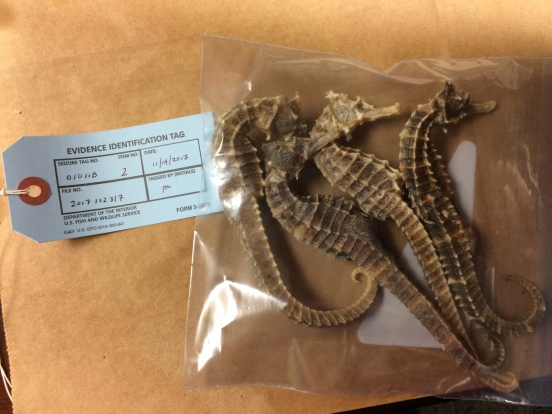 Confiscated dried sea horses
 Confiscated fried pangolin scales
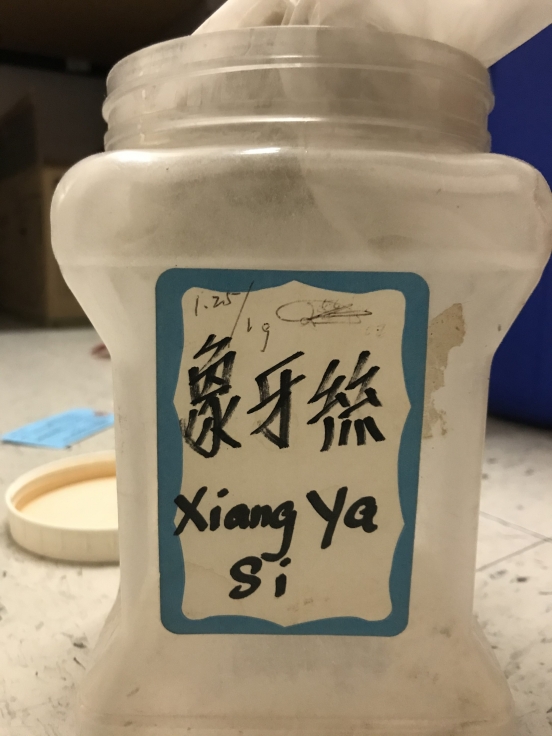 Confiscated Asian elephant ivory powder
 Confiscated dried shark fins


 Top Articles