


It’s Time to Make a Big Deal About Something And That Something is the Dying Ocean..
By Captain Paul Watson.
Predictably, the successful release of Seaspiracy on Netflix is receiving some criticism from the usual subjects. That was expected, but it really is not all that important. Many documentaries that I have been involved with over the years have been met with similar negativity and vitriol. I remember the criticisms of Rob Stewart and his wonderful film Sharkwater. And The Cove also was belittled by some although the criticisms did not prevent the film from winning the Academy Award for best documentary of the year. Sea of Shadows was also belittled as was even my own film WATSON by Leslie Chicott and I do remember Lesley’s earlier film Inconvenient Truth and all the climate change denialists with their hired “scientist” apologists lambasting the credibility of Al Gore. And don’t even get me started on all the “experts” denouncing Greta Thunberg for being too dramatic, too, young, and too naïve for their taste. Seaspiracy as a film is what it is, a message transmitted by a medium to provoke discussion and to expose and illustrate a global problem and as such it is both powerful and influential and most importantly thanks to Netflix it is reaching millions and trending phenomenally. It was never meant to be some academic scientific dissertation filled with footnotes and boring references to peer reviewed papers. It’s a film, not some doctoral thesis to be picked apart in search of validation to justify a particular bias.
If we were to produce a 90-minute film with a purely objective scientific fact confirmed narrative as suggested, it would most likely not appeal to the general public and nothing would change. The corporations and those who work for them already know the facts. They just don’t care because they are motivated by profit.Film making is story telling. It’s meant to be emotive. It’s designed to captivate viewers and to entice discussion and controversy. If people are talking about it that means it’s a success. If people are criticizing it, that means it is having an impact. If some people are condemning it, that means that some people are threatened by it.Personally, I don’t care if there are scientists and industry people who dislike the film. I don’t need biostitutes and P.R. firms to lecture me on something I have seen and witnessed with my own eyes over the last 60 years. There is no such thing as a sustainable fishery. That is my considered observation based on 60 years of experience. Phytoplankton populations in the sea have been reduced by 40% since 1950 and that is probably the most important validated scientific fact to be concerned about. (Source: https://www.scientificamerican.com/…/phytoplankton…/
Life in the Ocean is being diminished and that diminishment is escalating. I’m not surprised that there are many who wish to deny this just as there have been many quick to deny climate change.Change comes about through stories and in today’s world, the most powerful communication medium is film. Lucy and Ali Tabrizi are telling an important story and it’s a great deal to tell in a mere 90 minutes. I would have liked to have seen more details, but more tends to be difficult when making a film because there always tends to be too much material and too little time. Seaspiracy is a hit and it is reaching millions and Ali and Lucy Tabrizi have done a wonderful job in a project that I have actively been involved with for the last few years and proud to be associated with as I’m sure Captain Peter Hammarstedt and Dr. Sylvia Earle are as well. Fisheries consultant Francisco Blaha amusingly generalized the filmmakers by stating that the film has a tendency to generalize. He tweeted, “I’m over the set up where the ‘bad guys’ are predominantly Asian, the ‘victims’ predominantly black/brown, and the ‘good guys’ talking about it and saving the ocean are predominantly white.”Blaha admits in a tweet that he actually did not see the entire film and his bias is apparent in his job title as “fisheries consultant” to industrialized fishing corporations. In the film the bad guys are not predominantly Asian. The film focus is on European as well as Asian fishermen and shows how artisanal fishing communities in Africa are being devastated by industrialized fishing. Industrialized fishing corporations are the bad guys. His assertion that those in the film are predominantly white males is also incorrect. The film was made by a man of Middle Eastern background and a woman – Lucy Tabrizi and features the voices of Dr. Sylvia Earle, Dr. Jane Hightower, Tamara Arenovich, Lori Marino and Lamya Essemlali amongst others. As for Sea Shepherd, we are working hand in hand with African and Latin American nations to oppose Asian AND European exploitation of the waters of these nations. We are in fact working with and for African and Central and South America nations. This means we are working in opposition to the industry that Blaha consults for. In 2019, Blaha was the winner of the 2019 World Seafood Champion Award which is all we need to know to understand his bias
This film by Ali and Lucy is their project, it is their voice and they have every right to tell their story the way they wish to tell their story. If the critics don’t like it they should take up the challenge and make their own film. In fact, that is the only valid response. All this chatter and pooh-poohing of a film they happen to not like is irrelevant and meaningless.If they want to make a film with what they consider to be “real” science they should do it. It’s easy to be a critic, easy to slam the work and creativity of others. If there is a film they would rather see produced, one that meets with their approval they should just shut up and make it.
Farley Mowat wrote and made a TV series Sea of Slaughter a few decades ago. Solid science it was indeed yet it was dismissed by industry and restricted to the limited audience of the CBC and he was also told that he was not delivering his message properly meaning he should be doing it by not offending anyone. He warned us years ago about what was happening yet nothing changed and things became much worse.
This film despite the naysayers and the critics is a critically acclaimed success and that is a fact. It is a weapon of revelation and it is influencing millions and it needs to be built upon and not dismissed or belittled, especially by people who profess to care about marine ecology. The Ocean does not have time for the justifiers, the appeasers and the complainers. Right now, the Ocean needs activists more than scientists.https://www.ecowatch.com/commercial-fishing-netflix…

bySHANNON STOWERSSaturday, April 3rd 2021AA
<p>A man in Nicholas County was cited this week for allegedly trapping raccoons who were eating corn put out to kill turkeys out of season. (Courtesy of West Virginia DNR Police){/p}


NICHOLAS COUNTY, W.Va. (WCHS) —A man in Nicholas County was cited this week for allegedly trapping raccoons who were eating corn put out to kill turkeys out of season.
The man was charged for killing at least two turkeys and one deer out of season, according to West Virginia Natural Resources Police. He was also cited for hunting turkey over bait and illegally trapping raccoons.https://www.facebook.com/plugins/post.php?href=https%3A%2F%2Fwww.facebook.com%2FDNRpolice%2Fposts%2F5317707034938089&width=500&show_text=true&height=784&appId
Officers said the man was using some of the illegally harvested deer meat to bait traps used to catch raccoons who were eating the corn that was put out for bait in order to kill turkeys.
The spring turkey seasonin West Virginia runs from…
View original post 14 more words
Gaurav Talwar/ TNN /Apr 5, 2021, 04:58 ISTFACEBOOKTWITTERLINKEDINEMAILAA+

Dehradun: Atripto a jungle near their village to hunt for wild fowl turned horribly wrong for seven youngsters — all aged between 18 and 23 years — when one of them was accidentally hit by a bullet and died. The accident shook three others in the group so much that they consumed poison and committed suicide. The youths, who hailed from Kundi village in Bhilangana block of Tehri district, had gone to…
View original post 332 more words
By Marc Bekoff September 06, 2013

A pair of imperial cormorants in courtship. Isla Ping (Image credit: G. Harris/Wildlife Conservation Society.)
Marc Bekoff, emeritus professor at the University of Colorado, Boulder, is one of the pioneering cognitive ethologists in the United States, a Guggenheim Fellow, and co-founder with Jane Goodall of Ethologists for the Ethical Treatment of Animals. This essay is adapted from one that appeared in Bekoff’s column Animal Emotions in Psychology Today. He contributed this article to LiveScience’s Expert Voices: Op-Ed & Insights.
In June, during a series of lectures I presented in Germany, a number of people asked questions of the sort, “Isn’t it about time we accept that animals are sentient and that we know what they want and need? Shouldn’t we stop bickering about whether they are conscious, feel pain and experience emotions?”
Of course, this isn’t the first time I’ve heard those questions, and my answer is always a resounding, Yes. Scientists do have ample, detailed, empirical facts to declare that nonhuman animals are sentient beings, and with each study, there are fewer and fewer skeptics.
Many people, like those at the lectures in Germany, are incredibly frustrated that skeptics still deny what researchers know. Advocates for animal welfare want to know what society is going to do with the knowledge we have to help other animals live in a human-dominated world.RECOMMENDED VIDEOS FOR YOU…CLOSEhttps://imasdk.googleapis.com/js/core/bridge3.448.1_en.html#goog_1955747892Volume 0% PLAY SOUND
Declaring consciousness
As I was flying home, I thought of a previous essay I wrote called “Scientists Finally Conclude Nonhuman Animals Are Conscious Beings” in which I discussed the the Cambridge Declaration on Consciousness that was publicly proclaimed on July 7, 2012, at that university. The scientists behind the declaration wrote, “Convergent evidence indicates that non-human animals have the neuroanatomical, neurochemical, and neurophysiological substrates of conscious states along with the capacity to exhibit intentional behaviors. Consequently, the weight of evidence indicates that humans are not unique in possessing the neurological substrates that generate consciousness. Non-human animals, including all mammals and birds, and many other creatures, including octopuses, also possess these neurological substrates.”
They could also have included fish, for whom the evidence supporting sentience and consciousness is also compelling (see also). And, I’m sure as time goes on, researchers will add many other animals to the consciousness club.
A universal declaration on animal sentience
Based on the overwhelming and universal acceptance of the Cambridge Declaration on Consciousness I offer here what I call a Universal Declaration on Animal Sentience. For the purpose of this essay I am defining “sentience” as “the ability to feel, perceive, or be conscious, or to experience subjectivity” (for wide-ranging discussion please click here.)
I don’t offer any specific, geographic location for this declaration because, with very few exceptions, people worldwide — including researchers and non-researchers alike — accept that other animals are sentient beings.
One notable exception is Oxford University’s Marian Dawkins who continues to claim we still don’t know if other animals are conscious — using the same data as those who wrote the Cambridge Declaration on Consciousness. I call this Dawkins’s Dangerous Idea.
But, the Universal Declaration on Animal Welfare is instead based on what I believe is the indisputable fact that animals are sentient and that they can suffer and feel pain, as recognized by the Treaty of Lisbon and the rapidly growing field of compassionate conservation. Evidence of animal sentience is everywhere — the remaining questions are a matter of why sentience evolved, not if it evolved.

Research supporting animal sentience
The database of research on animal sentience is strong and rapidly growing. Scientists know that individuals from a wide variety of species experience emotions ranging from joy and happiness to deep sadness, grief, and post-traumatic stress disorder, along with empathy, jealousy and resentment. There is no reason to embellish those experiences, because science is showing how fascinating they are (for example, mice, rats, and chickens display empathy) and countless other “surprises” are rapidly emerging.
A large amount of data are available on an interactive website called the “Sentience Mosaic” launched by the World Society for the Protection of Animals (WSPA; for more details please see also), which is dedicated to animal sentience.
An essay written by Helen Proctor and her colleagues at WSPA provides a systematic review of the scientific literature on sentience. The effort used a list of 174 keywords and the team reviewed more than 2,500 articles on animal sentience. They concluded: “Evidence of animal sentience is everywhere.”
Of particular interest is that Proctor and her colleagues also discovered “a greater tendency for studies to assume the existence of negative states and emotions in animals, such as pain and suffering, than positive ones like joy and pleasure.” This is consistent with the historical trend of people who readily denied emotions such as joy, pleasure and happiness to animals accepting that animals could be mad or angry (see also Helen Proctor’s “Animal Sentience: Where Are We and Where Are We Heading?“). There is also an upward trend in the number of articles published on animal sentience (identified using sentience-related keywords) from 1990 to 2011.
Solid evolutionary theory — namely, Charles Darwin’s ideas about evolutionary continuity in which he recognized that the differences among species in anatomical, physiological and psychological traits are differences in degree rather than kind — also supports the wide-ranging acceptance of animal sentience. There are shades of gray, not black and white differences, so if people have a trait, “they” (other animals) have it too. This is called evolutionary continuity and shows that it is bad biology to rob animals of the traits they clearly possess. One telling example: humans share with other mammals and vertebrates the same areas of the brain that are important for consciousness and processing emotions.
Humans are not uniquely sentient
People surely are not exceptional or alone in the arena of sentience. We need to abandon the anthropocentric view that only big-brained animals such as ourselves, nonhuman great apes, elephants and cetaceans (dolphins and whales) have sufficient mental capacities for complex forms of sentience and consciousness.
So, the interesting and challenging question is why has sentience evolved in diverse species, not if it has evolved. It‘s time to stop pretending that people don‘t know if other animals are sentient: We do indeed know what other animals want and need, and we must accept that fact.Advertisement
Nonhuman-animal minds aren’t as private as some people claim them to be. Surely, we might miss out on some of the nitty-gritty details, but it is safe to say that other animals want to live in peace and safety and absent from fear, pain and suffering, just as we do.
(Nonhuman animals even worry — despite the erroneous claim that they don’t, ample evidence shows they do worry about their well-being (“Do Animals Worry and Lose Sleep When They’re Troubled?“) and that excessive worrying and a lack of rest and sleep can be costly.)
While some people still claim that we do not know that other animals are sentient beings, countless animals continue to suffer in the most egregious ways as they are used and abused for research, education, food, clothing and entertainment. And indeed, animal sentience is assumed in many comparative studies and recent legislation — such as policies protecting chimpanzees from invasive research, based on what is known about these amazing sentient beings. [America’s Fleeting Chance to Correct Chimps’ Endangered Status]
Society really doesn’t need any additional invasive research to move on and strongly declare that other animals are sentient, though studies continue. For example, Farm Sanctuary has put out a call for proposals for observational research on the cognitive and emotional lives of farm animals. Some researchers are indeed looking into using brain imaging to access the minds of other animals (see for example Emory University’s Gregory Berns’s work with dogs; Dr. Berns told me that he now has 11 dogs who are “MRI-certified”).
Moving forward as a society
The time is now to shelve outdated and unsupported ideas about animal sentience and to factor sentience into all of the innumerable ways in which we encounter other animals. When the Cambridge Declaration was made public, there was a lot of pomp, champagne and media coverage. There is no need to have this fanfare for a Universal Declaration on Animal Sentience. It can be a deep, personal, and inspirational journey that comes from each of our hearts — and such a realization has a strong, and rapidly growing, evidence-based foundation.
The animals will be grateful and warmly thank us for paying attention to the science of animal sentience. When we listen to our hearts, we are recognizing how much we know about what other animals are feeling and that we owe it to them to protect them however we can. Please, let’s do it now. It is easy to do and we can do no less.
This article was adapted from “A Universal Declaration on Animal Sentience: No Pretending“ in Psychology Today. More of the author’s essays are available in “Why Dogs Hump and Bees Get Depressed” (New World Library, 2013). The views expressed are those of the author and do not necessarily reflect the views of the publisher.This version of the article was originally published on LiveScience.
6 HOURS AGO
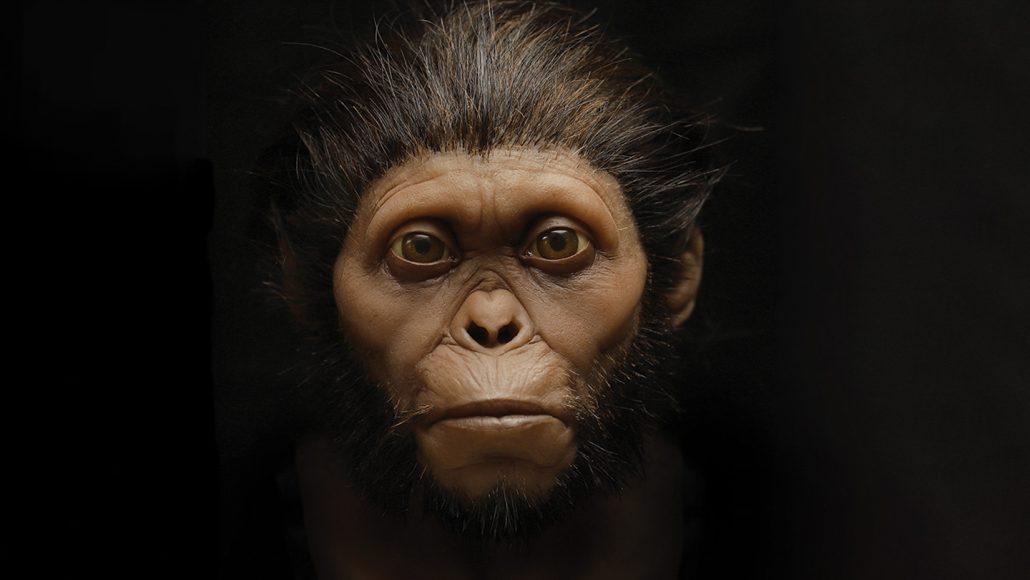
Depictions of extinct human ancestors and cousins are often more art than science.
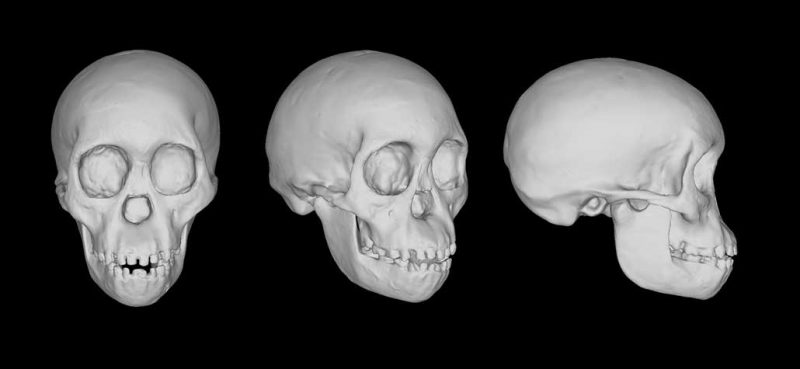
Take, for example, two reconstructions of the Taung child, a 2.8-million-year-old Australopithecus africanus skull discovered in South Africa in 1924. One version, made using a sculptor’s intuition, appears more apelike. A second version, made while working alongside a scientist, appears more humanlike.
Now, the researchers that produced the dueling images are attempting to remove some of this subjectivity by introducing standards that may give more accurate and reproducible portraits of species known only from fossilized bone. The team points out some of the flaws in facial reconstructions of ancient hominids — and the social and ethical implications misleading portraits may have — in a report published February 26 in Frontiers in Ecology and Evolution.
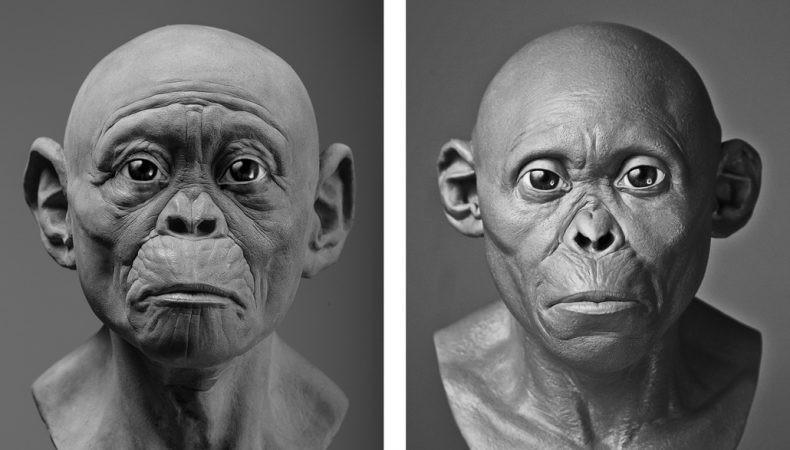
Getting the depictions right matters, says Rui Diogo, a biological anthropologist at Howard University in Washington, D.C. When museumgoers see artists’ renditions of Neandertals or extinct hominids, visitors often don’t realize how much bias creeps into the work. “They think it is reality,” he says. And that can skew people’s views and reinforce existing prejudices of present-day people.
For instance, reconstructions of multiple extinct hominids in the Smithsonian National Museum of Natural History in Washington, D.C., portray skin getting lighter and lighter in color as species became more and more bipedal. “But there is zero evidence to say the skin was whiter,” Diogo says. Such a depiction might give the mistaken impression that people with lighter skin are more evolved.
Headlines and summaries of the latest Science News articles, delivered to your inboxE-mail*GO
Artists’ depictions can also give erroneous views of human evolution and extinct species’ intelligence and behavior, says Diogo’s coauthor Ryan Campbell, an anatomical scientist and physical anthropologist at the University of Adelaide in Australia. For instance, Neandertals are often portrayed as having matted, dirty hair. “It’s as if there is a bias toward portraying our ancestors as if they were stupid and didn’t have hygiene,” he says.
But animals of all kinds groom themselves, and there is no reason to think that Neandertals or other extinct hominids were any different. In fact, presenting reconstructions without hair might be more accurate, says Campbell. Hair is usually not preserved in fossils and DNA data from bones may hint at hair color, but don’t reveal grooming habits.
“Reconstructing hair is not even informed speculation,” Campbell says. “It’s imaginary speculation.”
Scientists and artists often work together to produce reconstructions, but the choices they make may be driven more by whim than science, the researchers contend. By studying muscles in the great apes and other nonhuman primates, Diogo and colleagues have constructed reference databases that scientists might use in reconstructing faces from fossils. Even then, whether a sculptor chooses chimpanzee or human muscles as their starting point can produce very different outcomes.
“The reconstructions of the past, most of them did not have a scientific basis,” Diogo says. “Our goal is to change the methods and to change the biases” to give a more accurate view of human evolution.
https://www.cnn.com/2021/04/05/europe/russia-arctic-nato-military-intl-cmd/index.html
of Nagurskoye on March 16, 2021. Satellite image ©2021 Maxar Technologies
By Nick Paton Walsh, CNN
Updated 6:42 AM ET, Mon April 5, 2021
(CNN)Russia is amassing unprecedented military might in the Arctic and testing its newest weapons in a region freshly ice-free due to the climate emergency, in a bid to secure its northern coast and open up a key shipping route from Asia to Europe.Weapons experts and Western officials have expressed particular concern about one Russian ‘super-weapon,’ the Poseidon 2M39 torpedo. Development of the torpedo is moving fast with Russian President Vladimir Putin requesting an update on a “key stage” of the tests in February from his defense minister Sergei Shoigu, with further tests planned this year, according to multiple reports in state media.

Images show build up of Russia’s military presence in the Arctic04:15Thisunmanned stealth torpedois powered by a nuclear reactor and intended by…
View original post 2,014 more words
Putin signs law allowing him to remain president through 2036
BY JOSEPH CHOI – 04/05/21 12:26 PM EDT

© Getty Images
Russian PresidentVladimir Putinon Mondaysigned a law that will allow him to run for two more terms once his currentone ends in 2024.
As reportedby The Guardian, thelaw could potentially allow Putin, 68, to remain in office until 2036.He has been the de facto political leader of Russia since 2000.
The Guardian notesthat should Putin stay in power until 2036, he would be the longest running leader of Russia since the Russian Empire, surpassing the tenure of dictator Joseph Stalin, who remained in power over the Soviet Union for 29 years.
Putin would be 84 years old when he left office should he decide to run for the two additional terms he is now allowed.
Putin is currently on his fourth term as president of Russia, being…
View original post 129 more words
BY LI COHEN
UPDATED ON: APRIL 5, 2021 / 1:18 PM/ CBS NEWShttps://www.cbsnews.com/embed/video/?v=d65e9519d3b2bcdaf8e22fe3b932f73b#zVZtb9s2EP4rgj4OoUXqXQaGIWk3tFubZU2zD40KgxJPNhfqZaRkxyjy33eUFNtJB%2FRTuiEwQpHHu%2BNzz718cfnQt53ie3fZ6wHO3K0U0LrLL67soTbu8vaL2%2B87cJfuthXumSsFLoOKBkXIUwI0DkkYBQUpAoiICFhWUUjCIMxQtu7uP0D11t541V2qmzcq%2FfP6HW3%2B%2Fv19vKNp%2Fcent%2Ft3n65ksvsVpY0a1ihZtk0JujFkrdsd6Te8JxoUcAOkrciOmx52vAdNZEMq1WopOCnbQQmy4Vsg0Gylbpsamp4rPGgM%2FD0AqjRoope9sk95NdlwrAnjtFvQzmzDaSvnF8UXztHQYrHAqwLu8CIuqkGpZ3rMqMixvp7qOapwZINaR1%2Bd0VfH%2Buo88dV55mvJm7aRJVcfv4OxXtZgel537pLFLIl9xsKQUorvHjTvZdvgQRIdP9%2FxAhQ6Rf1lFKECNX03CA5ypOZrVIskMjb2m77vzDL3cq8sTAM7wxa4kGivl%2BWibOvc2wxF7snc07nnU5%2FlHg3xF%2BVeWAURFT6SLI04CWM%2FJgX4CaFlHANNWVQkfu71m6EuGi5V7sUhvQ9imnsijosyLpMQCl5BWQH4EPkiDQOaBKkfTt6QajD4HPJirCMH30icRoGfktnDxV%2FdGoHb%2FCtCwQsixPyU3ic%2BQuSzLCozEZeosSzihAHPAhHEARcB5cL%2FX0D0cOZ2GrYSdjdaPcHKdEqWsOC1Wi9km3u8Q3y26PVYw3LvWzUn92bFueceCt%2BJ%2Fk63YoFVbzxZzJGZojF%2FoCmMx0aZ50FhKQIfsjjLkgSBHp8Vr0bB2gKlF3UwpI9W%2Fe9utmp1zXs0yzsL4pjSuXdP6g7WNx%2FeocTwDOzdbvfUlxnkF2PFGBRp3tZdaz13lxVXBhsUtitZjg3KZk4Y0zCOkDJJlArCGPgkE8wnlLK0gpRTWtCT3lJYsklD6lY3shnzT4LmutxgA7y15449dx7PPyP5uEbnPlqrl7weC%2FHFtfPRSr3%2FWsvFfhK6%2FVrqMzIZOmlagecMfUKQbF11mXUQ1haD6WDokJjGHJ7MlTovERJzodry7lBlzY0BfT0UptSyAHEQNx3C2OpHuQ3cn7%2BGig%2FKBpye4Z877l4cd4PsLIzOItu0e83LO%2BsvQoyBNmWrYVwjSwNKI5rG2JzCCYfLmQ62X8W49YM1iR%2BNWZl%2BtbZoWcZMO7xbcfvey9w7P8iU1vy2ZP5hx%2FTPdD8gcPVwf6XbDnS%2F%2Fw0wVq4fJiB4FAcsEcj5LMyYHwQ8iN0HDFoNPR%2F7D76mh%2FXernFv04qJ89CIUe3Miwp4P2gQpLTtDeycMw89aB%2FRtJE5Tg%2B4xFKDi0MS3G%2B0zQSloJwy6XAt957rzr2fpFmpdr0GsZLNj9RWuFPQpfm54YWyAZ1GMq6xCyg4H9B%2FbaepWzdijEVJGBIf44FFPy1IKvyAJFxAERcR%2BCKy5H1y9ZGZSmL730BzIjDOaIzHWcVYQtKKRiT0g4wUgpUkDWiUVSVPAgru4crVULzG99hQYA0iNCQ0cPxgybKlnx3FHqeXOfcdAaXCjDKObW7j5AI16DWm%2FN7hBica5PS2ldrZyX7j1FIpBNRYuTWmwbzM7ZSI44psLKJnjuZCthyxxznnWHJy18FCdGdOnHkMatNjbFbz7jjdbbGVzMcCzB1WmbH8vIatfaFr68D6UcBSemXnY5u4%2BP%2BNtPXp1h2MhdTuXE9EQNnBzELzXXygTc%2FRUyjcuZ6N%2BFcJFZDaWdqHaqplHCdtQv2MsTRkaTIl6EkpGrUrWUvMmfDwzOt20CVM9c6Z86%2FQvBFXive29I%2Fm5mq%2Bss6tjm%2B2n7P2WcLaBK7kUFt6YnuqpDo5thdQBCs57tnmZQl9mF6fN%2B2v%2BsjU0B5bw8gK2zkOrDjtITac%2BN2XG6IQQZTWwGvSt4LvyYGG0dg6ahCSX7XoHQZiBh%2FvizmU%2F5lf1viM78sZGevSN5%2F4HVr4w8M%2F
Hundreds of residents in Manatee County, Florida, were ordered to evacuate their homes over Easter weekend as officials feared that a wastewater pond could collapse “at any time.” On Saturday, Florida Governor Ron DeSantisdeclareda state of emergency for the area.
County officials said the pond, located at the former Piney Point phosphate processing plant, had a “significant leak,” according to CBS affiliateWTSP-TV.The Manatee County Public Safety Departmenttoldpeople near the plant to evacuate due to an “imminent uncontrolled release of wastewater.”
“A portion of the containment wall at the leak site shifted laterally,” said Manatee Director of Public Safety Jake Saur, “signifying that structural collapse could occur at any time.”https://www.cbsnews.com/newsletters/widget/e879?v=d65e9519d3b2bcdaf8e22fe3b932f73b&view=compact#xVPLbtswEPwVgmczFvWIHrcUKdBeigBpT1VhUOTKJkKJAklZMIL8e5eK4gS5F72Js7OvmdUztVPQdvS0eaYgrQLaUKjKmu7oWcOCL2mHSciAwGS9jmQE77yHQL5YdaEvOxqckE96PMYi2n8dRWdA0Sa4GXZUuKClgbs5nKz7jvBvWnDOizLPWVokFctvq45VKs1YKRR0t10BqSron0%2BpP8QAMdloIu0Jxg%2BEWJVycVv3nJes6pOC5WlWs05xyaosKepeijJLgF5THubuXoS4bZqknCU5SzKSZg2vm7R%2Bp%2F3UwURSb6zTShAF0ggHnviA2cT2BAZwRxjlhQhPMALubLUjiw4nMmhjoriRdxTGbJ8tajoGMegRa6gdcUJpixLrM5BF%2BAAL4q6lxIB48h%2BGuUywGjIGGMNhQzGu4KzlW1iBfwp2Qlj7ezjHDaN34vhGGGHxBx1gQBgNhW8aXBR29lHSiDyC3Hye%2FUbacnHBCbdYJ4UOY9hJy1X%2FvkwUVFnHuhR6xjmkTGR9wpK05rzKeVUW9VvCq5ev1WeUbKsuRmy6Q4cHHWiTXxd%2FtLOT6%2BqdJ3F8JHVOjOrBiNBbN6wDYHBdLY57eFchPrd%2BGyNOAcLoeYgHOznba%2FMhHBOQAmPUDqMqnriMs2kpzC9nED6FMPmm3bf7ZVlutsQb%2FFXaffxq99vBsPVOmO3Z9U7Yu8UsGozvIE%2FMoKbIdiAGFqwSF3Y9zKLdbw7%2B1%2BabiP%2BqycvLXw%3D%3D
As of Monday afternoon, the leaks have not been fixed, according to officials. Thermal imaging from a drone on Sunday…
View original post 1,703 more words
BY EMILY CHAN27 MARCH 2021
The documentary film, produced by the same team as 2014’s Cowspiracy: The Sustainability Secret, reveals the hugely damaging impact of commercial fishing, here’s what you need to know.SHARE
For many, it was Cowspiracy: The Sustainability Secret – the 2014 film that pulled back the curtain on large-scale factory farming – that turned them off meat. Now, a new Netflix documentary from the same team, Seaspiracy, looks set to do the same for seafood.
Directed and narrated by British filmmaker Ali Tabrizi, the Netflix film takes us on a whistlestop tour of our oceans, shining a light on everything from how important sharks and dolphins are to our ecosystems, to the hugely damaging effects that commercial fishing has on our planet (considering that up to 85 per cent of the oxygen we breathe comes from our seas).
Here, six eye-opening lessons from Seaspiracy that may change the way you look at seafood forever.
Read more: The Blue Beauty Movement: Everything You Need To Know
© Artgrid

Bycatch — fish and other marine species that are unintentionally caught when trying to catch another type of fish — is one major issue highlighted by the film (40 per cent of global fishing catch is unused, wasted or not accounted for). Often, bycatch is thrown back into the sea — and while this may sound positive, these fish are unlikely to survive due to lack of oxygen or trauma.
Shocking statistics shown in the film suggest that 50 million sharks (much-maligned creatures that are essential to the preservation of our oceans) are caught annually as bycatch, while up to 10,000 dolphins are caught off the Atlantic coast of France every year alone as bycatch, according to Sea Shepherd, a nonprofit marine conservation group.
While eating sustainably caught fish seems like the right thing to do, Tabrizi shines a light on how the Dolphin Safe and the Marine Stewardship Council labels might not be able to provide the assurance that customers are looking for.
Asked in the film whether he could guarantee that every can of fish labelled ‘dolphin safe’ is actually dolphin-safe, Mark J Palmer from the Earth Island Institute — the organisation that manages the dolphin-safe label — said: “Nope. Nobody can. Once you’re out there in the ocean, how do you know what they’re doing? We have observers on board — observers can be bribed.”
Responding to the documentary, David Phillips, director of the International Marine Mammal Project of the Earth Island Institute, said in a statement: “The dolphin-safe tuna programme is responsible for the largest decline in dolphin deaths by tuna fishing vessels in history. Dolphin-kill levels have been reduced by more than 95 per cent, preventing the indiscriminate slaughter of more than 100,000 dolphins every year.”
A spokesperson for the Marine Stewardship Council added: “MSC-certified fisheries must adhere to our verifiable and science-based requirements, ensuring that fish stocks are conserved for future generations. The positive impact of our programme has been recognised by the United Nations, as being important in helping to support ocean biodiversity.”
© Sea Shepherd

Fish that have been farmed are also often considered more eco-friendly than wild fishing, as they’re not being taken from the wild population. But what you might not know is that some species of farmed fish are fed wild-caught fish, leading one expert in the documentary to call fish farming “wild fishing in disguise”. Not only that but farmed salmon would actually be grey if it wasn’t fed a chemical in its food that gives it its famous pink colour.
Other problems shown in the documentary include lice infestations, with salmon pictured being eaten alive by sea lice parasites. In fact, millions of salmon are dying on salmon farms every year from diseases such as anaemia and heart disease.
By now, we all know the damaging impact that single-use plastic has on our oceans. But did you know that only an estimated 0.03 per cent of plastic pollution waste comes from straws? Although rarely discussed, fishing nets and equipment actually make up a significant amount of the plastic pollution in our oceans, too — including 46 per cent of the so-called Great Pacific Garbage Patch in the north Pacific Ocean. It goes without saying that this is hugely damaging to sea life, which can easily get tangled up in the fishing nets.
© Netflix

You might have heard of blood diamonds, but environmental journalist George Monbiot says that ‘blood shrimp’ are now a huge concern — with horrifying reports of slave labour being used in Thailand to catch shrimp and prawns in the ocean. One former fisherman interviewed in the documentary described how he was abused and threatened at gunpoint, alleging that the dead bodies of others who were killed were kept in freezers on board their ship.
All of this — plus the jaw-dropping estimate that we’re now catching up to 2.7 trillion fish a year, the equivalent to 5 million fish every minute — means that we need to seriously consider our consumption of fish and other seafood (less than one per cent of our global oceans are protected from commercial fishing). Is it possible to continue consuming fish, both from an ethical and environmental perspective? Tabrizi certainly doesn’t think so.
Seaspiracy is streaming on Netflix now

