DENVER— The U.S. District Court of Colorado hasruledthat the U.S. Fish and Wildlife Service violated the law by funding a Colorado Parks and Wildlife plan to kill hundreds of mountain lions and dozens of black bears without properly analyzing the risks to those animals’ populations and the rest of the environment.
“This ruling immediately halts the use of taxpayer dollars for the slaughter of Colorado’s mountain lions,” said Andrea Zaccardi, a senior attorney at the Center for Biological Diversity. “I’m so pleased that the court put a stop to these scientifically baseless plans that needlessly targeted Colorado’s ecologically important, native carnivores.”
Mountain lions and black bears are critical to their native ecosystems. Mountain lion predation provides food for more bird and mammal scavengers than that of any other predator on the planet. Black bears’ diverse diet of fruits results in broad…
Vials of AstraZeneca’s COVISHIELD vaccine for COVID-19 are seen at a filling lab at the Serum Institute of India, Pune, India, Thursday, Jan. 21, 2021. Experts say there is a pressing need for India to bolster vaccination, which started sluggishly in January. (AP Photo/Rafiq Maqbool)
PHOENIX – Arizona public health officials reported a three-week high of 940 new coronavirus cases on Friday along with 12 additional deaths from COVID-19.
The Arizona Department of Health Servicessaid120 of the new cases were from one lab reporting a backlog spanning the entire pandemic. However, Friday’s case update was the highest since March 12, with or without the backlog.
The state’s latest documented totals were 843,132 COVID-19 infections…
Dr Sebastian Rosier at Pine Island Glacier in 2015. Credit: Dr Sebastian Rosier
Researchers have confirmed for the first time that Pine Island Glacier in West Antarctica could cross tipping points, leading to a rapid and irreversible retreat which would have significant consequences for global sea level.
Pine Island Glacier is a region of fast-flowing ice draining an area of West Antarctica approximately two thirds the size of the UK. The glacier is a particular cause for concern as it is losing more ice than any other glacier in Antarctica.
Currently, Pine Island Glacier together with its neighbouring Thwaites glacier are responsible for about 10% of the ongoing increase inglobal sea level.
Scientists have argued for some time that this region of Antarctica could reach a tipping point and undergo an irreversible retreat from which it could not recover. Such a…
Experts say extreme weather including droughts will become more common as planet heats
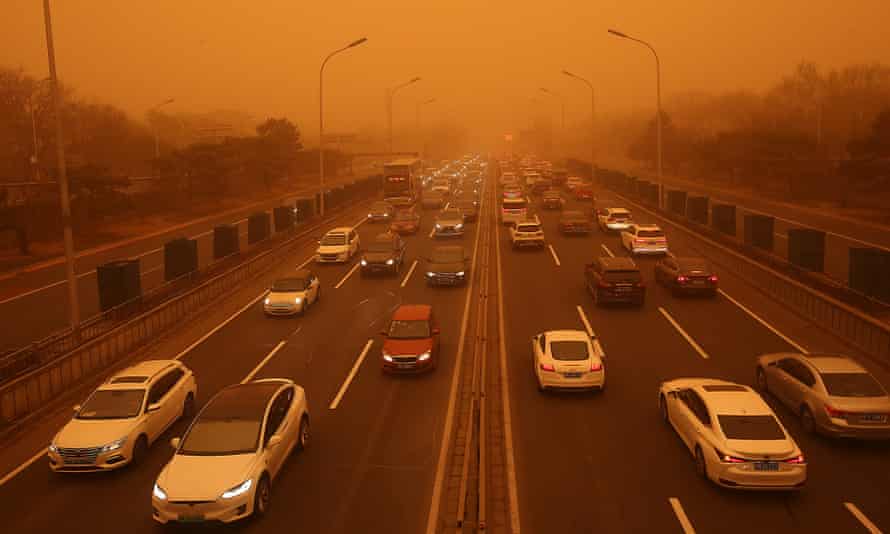
A sandstorm shrouds Beijing in mid-March. The storms were brought about by higher than normal temperatures and low precipitation and snow cover.Photograph: Todd Lee/Zuma Wire/Rex/Shutterstock
Recent sandstorms that shrouded Beijing in a post-apocalyptic orange haze and intensive droughts in other parts of the country are bringing into stark relief the challengesChinafaces from rising temperatures induced by the climate crisis.
The widespread sandstorms that pelted the capital and spread as far as central China for several days in mid-March and again at the end of the month were brought on by lower than average snow cover and precipitation, as well as higher than normal temperatures and winds across Mongolia and northern China.
The combination provides perfect conditions for creating sandstorms and could signal more frequent…
A trio of young bonobos play under the watchful eyes of their caregivers..Ley Uwera for NPR
At an animal sanctuary in the Congo, several dozen Congolese schoolchildren are getting a crash course in bonobos.
These gentle, endangered apes, who resemble chimpanzees, are “our closest cousins,” educator Blaise Mbwaki tells the students in French. “They have a human character, and they are Congolese.”
“So if you eat a bonobo,” Mbwaki says, “you are eating your cousin. It is cannibalism.”
It’s a blunt message. But Mbwaki and other staff here at the Lola ya Bonobo sanctuary think it may offer the best hope of saving this species from extinction.
Only about 20,000 wild bonobos are left, and they are found only in the central rainforests of the Democratic Republic of the Congo. So the staff at Lola are working to engage Congolese students in efforts to protect the bonobos that remain.
Bonobos share nearly 99% of their DNA with humans. And studies of the animals at Lola are helping scientists understand how humans evolved traits like empathy.
But humans haven’t shown much empathy for bonobos. As a species, we’ve hunted them for food, sold their babies as pets, and spoiled much of their natural habitat.
A male bonobo at Lola yo Bonobo sanctuary. Only about 20,000 wild bonobos are left, and they are found only in the central rainforests of the Democratic Republic of the Congo.Ley Uwera for NPR
Most of the 60 or so bonobos at Lola arrived as orphans. “Their mothers were killed in the forest for meat and hunters kept the babies to sell,” says Dr. Jonas Mukamba, the resident veterinarian at Lola.Article continues after sponsor messagehttps://0d9cecb803990edf6c50d80e8f8d0024.safeframe.googlesyndication.com/safeframe/1-0-38/html/container.html
The sanctuary’s goal is to prepare the bonobos for life in the wild. In the meantime, they live in Lola’s spacious, forested enclosures and serve as ambassadors to daily delegations of school children.
The children learn that “this animal is unique in the DRC,” says ClaudineAndré, who founded Lola ya Bonobo in 1994. “It is a treasure of nature in Congo.”
André is the daughter of a Belgian veterinarian who practiced in Kinshasa. She has spent much of her life trying to make sure bonobos have a future in the Congo.
It was the Congo river that probably gave rise to bonobo. More than a million years ago, scientists believe, some bonobo ancestors ended up on the South side of the river. That separated them from their chimpanzee relatives to the North.
Neither animal likes to swim. So over time, bonobos became a separate species, one that is smaller, gentler, and less aggressive than chimps.
The 10,000 plus students who have visited Lola ya Bonobo learn all this and why it matters, André says.
“Everything is connected on the planet,” she says. “So the kids have to understand that it’s not only the bonobo [at risk]. All the biodiversity is in danger.”
The children also learn to take action if they see a bonobo being kept as a pet, which is a crime in the DRC.
“Very often it’s one of these kids from the school who call us and say, “I saw a bonobo,” André says.
Today’s students have moved from the classroom to the edge of a bonobo enclosure.
Group of school children in science class visiting Lola ya Bonobo sanctuary.Ley Uwera for NPR
“Bonjour les bonobos,” Mbwaki calls out to the group of animals eyeing their human visitors. “Bonjour Elikya,” he says to one of the females.
Elikya was born here to a mother who had arrived as an orphan. Now Elikya is raising a baby of her own.
But the ultimate goal is to release bonobos like Elikya into the wild. So Lola has established a second sanctuary called Ekolo ya Bonobo hundreds of miles away.
“It’s a place where bonobos used to be,” says Dr. Raphaël Belais, a veterinarian at Lola. “But unfortunately during the wartime the hunting was going quite strong so they have no more bonobos in this piece of forest.”
It would be nice if all the bonobos at Lola could eventually go to their new home, Belais says. “Unfortunately, some of the orphans are too traumatized or too mutilated.”
Still, more than a dozen animals from Lola have been moved to Ekolo and most of them are doing well. Their future, though, will be determined by Congolese people like the students who came to Lola today.
So I ask a 10-year-old named Gaska Basili, what he learned about bonobos during the visit.
“They are like our brothers,” he replies in French.
“And what would you do if you saw a bonobo being kept illegally?” I ask.
Scientists caution high death rate is outpacing births
Population of whales estimated at around 360
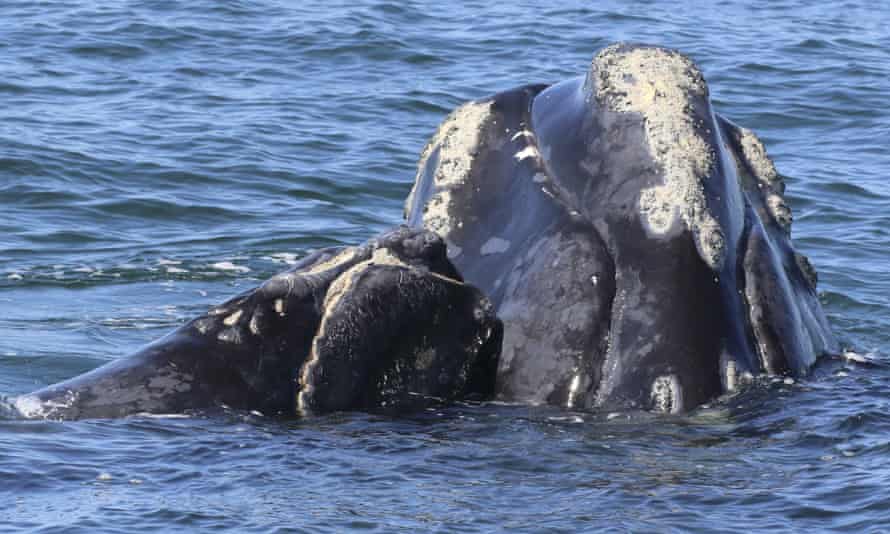
A North Atlantic right whale mother and calf in waters near Cumberland Island, Georgia in March.Photograph: AP
AssociatedPressinBostonSat 3 Apr 2021 12.47 EDT
71
North Atlantic right whales gave birth over the winter in greater numbers than scientists have seen since 2015,an encouraging signfor researchers who became alarmed three years ago when the critically endangered species produced no known offspring at all.
Survey teamsspotted 17 newborn calves swimming with their mothers between Florida and North Carolina from December through March. One calf died after being hit a boat, a reminder of a death rate experts fear is outpacing births.
The calf-count equals the combined total for the previous three years. In a dismal 2018, scientists saw no births for the first time in three decades. Still, researchers say greater numbers are…
Giving live animals as Easter gifts has been a tradition for decades, as a child I received a rabbit one Easter and baby chicks the Easter after. And beside my anecdotal evidence of the chicks wreaking havoc in my family’s backyard, there are serious humane and public health reasons to stick to chocolate gifts this Easter.
Year after year hundreds of human illnesses and agonizing deaths for baby chicks, ducks and rabbits are caused by this gift giving tradition. However, this has done nothing to curb the practice.
From 2000 through 2018 there were 76 Salmonella outbreaks linked to live poultry. Those outbreaks sickened 5,128, resulting in 950 hospitalizations and 7 deaths. The number of individual cases of Salmonella, E. coli, Campylobacter and other infections from children playing with live chicks, ducks and bunnies is unknown.
Part of the problem is that children are among the most likely to not observe good hygiene around the animals and children don’t have mature immune systems.
The Centers for Disease Control and Prevention says that children younger than five years of age shouldn’t handle or touch chicks, ducklings or other poultry, as young children are even more likely to get sick from germs like Salmonella.
In 2020, CDC and public health officials in all 50 states investigated 17 multistate outbreaks of Salmonella illnesses linked to contact with poultry in backyard flocks. The number of illnesses reported this year was higher than the number reported during any of the past years’ outbreaks linked to backyard flocks.
As of Dec. 17, 2020, a total of 1,722 people infected with one of the outbreak strains of Salmonella were reported from all 50 states — 333 people were hospitalized and there was one death. Twenty-four percent of ill people were children younger than five years of age; 576 of the 876 ill people interviewed reported contact with chicks and ducklings.
People reported obtaining chicks and ducklings from several sources, including agricultural stores, websites and hatcheries.
Humane societies and animal rights groups across the U.S. advise against purchasing these pets as Easter gifts. A leading concern among these groups is the risk of animal “dumping.” This happens after the child has lost interest in the pet and the parent releases the animal into the wild. This can lead to tragedy on part of the pet and is an ecological concern.
For instance, domestic rabbits are not prepared for life in the wild and make easy prey for predators. They also will compete with other rabbit species in the area, potentially destroy native plants and can reproduce rapidly. Domestic rabbits can also carry and spread diseases, such as the RHD virus, to the indigenous rabbit species.
For more information on handling chicks safely watch the short video below.
About Salmonella infections
Food contaminated with Salmonella bacteria does not usually look, smell or taste spoiled. Anyone can become sick with a Salmonella infection. Infants, children, seniors, and people with weakened immune systems are at higher risk of serious illness because their immune systems are fragile, according to the CDC.
Anyone who has handled live poultry and developed symptoms of Salmonella infection should seek medical attention. Sick people should tell their doctors about the possible exposure to Salmonella bacteria because special tests are necessary to diagnose salmonellosis. Salmonella infection symptoms can mimic other illnesses, frequently leading to misdiagnosis.
Symptoms of Salmonella infection can include diarrhea, abdominal cramps, and fever within 12 to 72 hours after eating contaminated food. Otherwise, healthy adults are usually sick for four to seven days. In some cases, however, diarrhea may be so severe that patients require hospitalization.
Older adults, children, pregnant women, and people with weakened immune systems, such as cancer patients, are more likely to develop a severe illness and serious, sometimes life-threatening conditions.
Some people get infected without getting sick or showing any symptoms. However, they may still spread the infections to others.
(To sign up for a free subscription to Food Safety News,click here.)
Areportfrom the World Bank is identifying the economic costs ofillegal logging, fishing, and thewildlife trade. The bank puts the cost of these illegal activities at between $1 and $2 trillion.
The report,Illegal Logging, Fishing and Wildlife Trade: The Costs and How to Combat It, found that the majority of the losses-90 percent- are from ecosystem services provided by oceans and forests, including biodiversity, flood retention, carbon storage, and water filtration. Theseneedsare fulfilled by these ecosystems and it’s expensive to be without them.Advertisement
Share on facebookShare on pinterestShare on twitter
In this post from his blog,From the Wild Side, long-time backcountry hunter and western outdoor writer David Stalling strongly criticizes recent state-sponsored wolf-killing programs in Idaho.
“We reached the old wolf in time to watch a fierce green fire dying in her eyes. I realized then and have known ever since that there was something new to me in those eyes, something known only to her and to the mountain. I was young then and full of trigger-itch; I thought that because fewer wolves meant more deer, that no wolves would mean hunters’ paradise. But after…
The corporate industrialized fishing interests as expected are working overtime in their attempts to discredit Seaspiracy. They are cherry picking the science and trying to suggest that industrial fishing is both sustainable and necessary. It’s not.Commercial industrialized fishing is not sustainable. It exists because of billions of dollars of government subsidies to prop it up. Remove the subsidies and the entire industry, an industry based on short term profit for short term gain will collapse.This film Seaspiracy is not directed at artisanal or indigenous fishing. In fact artisanal and indigenous fishing communities are being diminished and destroyed by corporate fishing. There are some positives. Kudos to Alaska for banning fish farms and for the hatcheries that support the wild salmon runs but this is an exception to the norm.For the most part the sea is being strangled of life by the super trawlers, the bottom trawlers, the huge seiners, the long-liners, the gill netters and by aquaculture.The situation is serious. It involves slavery, it promotes high seas piracy, it scours the sea bottom, it pollutes the marine environment with millions of tons of discarded plastic fishing debris.Corporate fishing is a global scheme of short term investment for short term gain and the fact is that coral reefs are dying, plastic is choking the depths, fish populations are being dangerously depleted and phytoplankton populations have been diminished by 40% since 1950 and phytoplankton produces more oxygen and sequesters more CO2 than all the trees and plants on land.How can it be justified for an endangered fish (Antarctic toothfish) to be caught and transported across the globe to be sold as Chilean sea bass in restaurants in Denver, Paris or a hundred other different cities? How can it be justified to feed millions of fish every year to pigs, chickens, farm raised salmon, cats and fur farms? How can it be justified to wipe out the herring runs off British Columbia to feed salmon in cages or to destroy seals in Canada or dolphins in Japan as scapegoats for the excessive greed of the fishing industry. I was raised in an Eastern Canadian fishing village in the Fifties and I have witnessed this steady diminishment of life in the sea and the astonishing ability of humanity to adapt and accept this diminishment. I have spent more than a half a century at sea in all the world’s oceans and I have seen the death, the destruction, the pollution and the greed.I don’t care what propaganda the industry and its enablers spread or how many biostitutes they hire to justify their greed. The fact is that a super trawler is an abomination against nature, a 100-mile long gill net or longliner is a weapon of mass ecological destruction and government subsidies are the evidence that worldwide, many governments are willingly complicit in the extermination of marine life and the collapse of marine eco-systems.I have seen with my own eyes the heart-breaking devastation of the Great Barrier Reef. We pulled one gill net from one ship (Thunder) from the depth of 2 kilometers off the coast of Antarctica that was 72 kilometers long and weighed 70 tons. We seized a drift net in the North Pacific that was over 100 miles in length and I’ve seen and smelt the bodies of a quarter of a million salmon rotting on the beach in Chile. Sustainable fishing is a myth and slapping the word onto a can of tuna claiming that no dolphins died is a blatant lie. And what about the tuna? 90% of Bluefin tuna populations have been eradicated? We massacre 70 million sharks a year primarily for their fins for a soup that has zero nutrition and then we complain when an average of five people die from shark attacks per year, a number lower than that of 40 people on average that die each year from falling from a skateboard. The fishing industry is driven by the politics and the economics of extinction. The more scarce the fish, the greater the demand and thus the greater the profit and there is almost a universal lack of economic or political will to police the high seas and to crack down on the poachers, the quota exceeders, the by-catch wasters and the corporate cartels that finance and control them. Predictably the industry trots out images of traditional fishermen, usually artisanal fishing communities implying that it is these hard-working individuals that we are seeking to shut down when it is the industrialized fishing operations that have been devastating artisanal and indigenous fishing communities around the world. After a long lifetime of voyages and campaigns and tens of thousands of sea miles, I have realized a truth and a reality that the industry works hard to ignore, discredit and deny. That truth is that life in the Ocean is being diminished and the very fact that we have lost 40% of our oxygen producing phytoplankton bodes darkly ill for the future of humanity. This is the reality. When the Ocean dies, we die with it.Note: For those who will surely try to claim that I am exaggerating about phytoplankton diminishment, here is a source for reference: (1) Source: Scientific American. Phytoplankton Population Drops 40 percent Since 1950 by Lauren Morello 2010.