Seaspiracy: The 7 biggest claims from the new documentary

As Netflix’s newest sustainability documentary racks up views, Sophie Gallagher looks at the biggest takeaways from the 90-minute film on fishing, marine destruction and modern slavery

4 days ago 5 comments
(Netflix/Seaspiracy)

Leer en Españolhttps://buy.tinypass.com/checkout/template/show?displayMode=inline&containerSelector=.above-article-prompt-donations&templateId=OT5EPQ0EFYOW&templateVariantId=OTV98APZR6XXX&offerId=fakeOfferId&showCloseButton=false&trackingId=%7Bjcx%7DH4sIAAAAAAAAAFWQXW-CMBRA_0ufkbRA-XpjG4uaLTpnsPrW1A47a22giLLsv1sZ22Lfbs85ucn9AlRsQQre8w4_ZrP1ZQocoGnJC8HbyY3sFeo0_WT-pYy6RESW87PmleCK8d7ISU6mfvEyfsqKO5qfOWuMOKpeQzGMqw8IGziC9nlNcDzsI4klTqCikZT7RMR3fcb-4np3bJf8oCU1PFhNFmi1eXgdE4J83yY7Wv9CkJqq4Q4ww9zXsyXO528wf17PVuCfFbQSVJlBKZI4m28WISHEOoweNBWlqkGqGikdcBK1-FFPo-EmutL4ws4nan2hLQl9FwWe68HI9QP72dS8ykqujGXblt1WGwlSFKII4xDB8PsKLe7z6YABAAA&experienceId=EXEXJ3VLHDAV&widget=offer&tbc=%7Bjzx%7D0hRl93QRmnQWEMayU4HVECNTirPe62qePhDM8ZA03-tKIBO2aJ-CUudwgTb8BGWxDznyWfY0j_DZOiWsb9e3Xg&iframeId=offer-0-3nvln&url=https%3A%2F%2Fwww.independent.co.uk%2Flife-style%2Fseaspiracy-netflix-fishing-cowspiracy-b1824343.html%3Futm_content%3DEchobox%26utm_medium%3DSocial%26utm_source%3DFacebook%26fbclid%3DIwAR0ZlevaX8TRJqIEg5l5PTVpoJmOXSg8bN7KAdXyToHjA19mDgNYWJtrmjI%23Echobox%253D1617104326&parentDualScreenLeft=0&parentDualScreenTop=0&parentWidth=1139&parentHeight=537&parentOuterHeight=607&aid=SEz5CAOYyJ&tags=article&contentSection=Lifestyle&contentAuthor=Sophie+Gallagher&contentCreated=2021-03-31T09%3A45%3A21Z&pageViewId=kn1zpajc3yg7z9i7&visitId=v-kn1zpajprp5ycxva&userProvider=publisher_user_ref&userToken=&customCookies=%7B%22_pc_reg_gating%22%3A%22control%22%7D&hasLoginRequiredCallback=true&width=624&_qh=ccddddc1d5T

he internet is home to tens of thousands of documentaries on everything from cat killers to Fyre festival, but some manage to cut through the noise, change the conversation and get people thinking differently. Just as Blackfish did in 2013 on animals in captivity, then Cowspiracy: The Sustainability Secret in 2014 on meat farming, now Netflix presents the 2021 version – Seaspiracy.

From the co-creators of Cowspiracy, this documentary on the fishing industry breaks new ground on the conversation around what it really means for seafood to be sustainable. It examines global fisheries, and shows how while many of us have been distracted by the problems caused by land agriculture, there was another problem brewing in our waters.

Travelling across the world from the Faroe Islands, to Thailand, Japan and Scotland, filmmaker and narrator Ali Tabrizi (and his partner) chart a journey from a childhood love of the ocean to pulling back the curtain on some of the biggest problems it faces, and whether those tasked with caring for it are really the stewards the public believe they are.

Here are the seven biggest lessons The Independent learned from the documentary that will shape the way we see fish forever.https://imasdk.googleapis.com/js/core/bridge3.448.1_en.html#goog_1019278848

Plastic is a problem for our seas

The documentary opens with all-too-familiar headlines of whales and other sea animals being washed up on beaches, their stomachs filled with plastic. As well as snapshots of highly-publicised campaigns about reducing the amount of plastic humans contribute to the ocean – in particular, cotton buds, straws and plastic bottles.

Tabrizi says: “There is a garbage truck load of plastic dumped every minute into the ocean and over 150 billion tonnes of microplastics are already there – they [the microplastics] now outnumber the stars in the milky way.” So far, nothing we don’t already know or haven’t seen in a David Attenborough documentary.

But it is not necessarily the plastic you might imagine

Given the amount of attention given to reducing household or personal plastic use and government campaigns to ban plastic cotton buds, straws and drinks stirrers, it is only fair that the public would see these as the greatest threats to the marine environment.

INDY/LIFE Newsletter

Be inspired with the latest lifestyle trends every week

Please enter your email addressPlease enter a valid email addressPlease enter a valid email addressSIGN UPI would like to be emailed about offers, events and updates from The Independent.Read our privacy notice

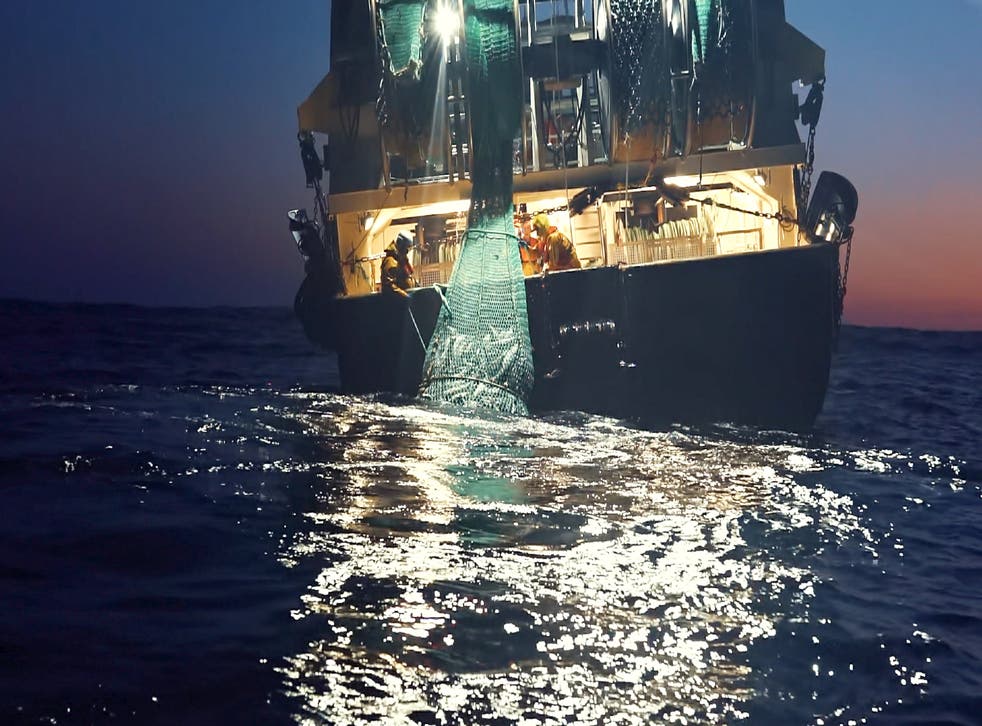
But Seaspiracy argues that actually one of the biggest plastic deposits are byproducts of commercial fishing, such as nets, claiming 46 per cent of waste in the great pacific garbage patch [a collection of marine debris in the North Pacific Ocean, also known as the Pacific trash vortex] is made up of fishing nets, while plastic straws only account for 0.03 per cent of plastic entering the ocean. And long-line fishing sets down enough lines to wrap around the planet 500 times every day.

(Netflix/Seaspiracy)

Environmentalist George Monbiot says: “Discarded fishing nets are far more dangerous for marine life than our plastic straws because they are designed to kill.”

It also claims that while 1,000 turtles are killed by plastic in the oceans, 250,000 sea turtles are captured, injured or killed by fishing vessels. Professor Calumn Roberts, a marine scientist, claims that the Deepwater Horizon oil spill in 2010 actually “benefited” marine life because “large areas were closed to fishing” giving the oceans a “respite”.

Bycatch is a huge problem caused by fishing

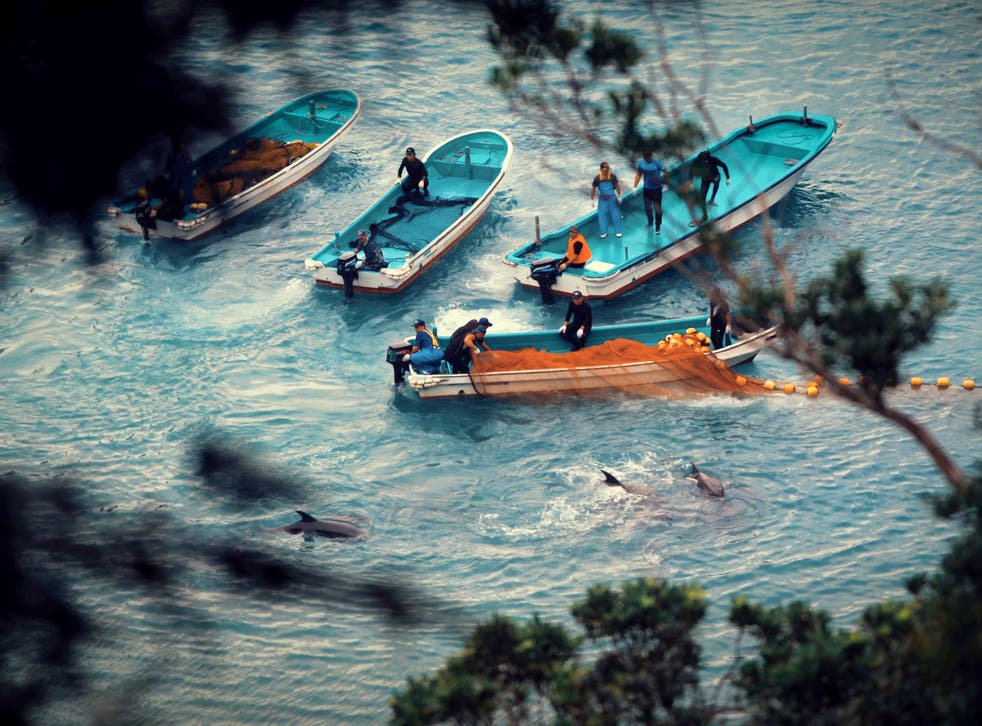
Bycatch is the fish or other mammals unintentionally caught when fishermen are trying to catch a target fish – for example, catching dolphins in nets designed for tuna fishing. Some of this bycatch is killed instantly but even that which is thrown back into the sea, it says is unlikely to survive. The film suggests that as many as 50 million sharks are caught annually as bycatch.about:blankabout:blank✕

Captain Peter Hammarstedt, from the Sea Shepherd nonprofit conservation society, says: “One of the most shocking things that most people don’t realise is that the greatest threat to whales and dolphins is commercial fishing. Over 300,000 whales and dolphins are killed every single year as a bycatch of industrial fishing.” Sea Shepherd also claims that up to 10,000 dolphins are caught in the Atlantic, off the west coast of France, every year during fishing.

Not only is this problematic in terms of destroying species but also for the climate, because whales and dolphins play a crucial role in fertilising phytoplankton in the sea, which Seaspiracy says absorbs four times as much carbon dioxide as the Amazon rainforest, and generates 85 per cent of all oxygen on earth. 

(Netflix/Seaspiracy)

Labels aren’t all they are cracked up to be

If you are reassuring yourself that your seafood consumption is not harming dolphins as bycatch – or any other marine life – because it has the ‘dolphin safe’ label on the tin, or the Marine Stewardship Council labels, then Seaspiracy urges consumers to think again.Top Articles

Asked whether he could guarantee that every can of fish labelled ‘dolphin safe’ is actually so, Mark J. Palmer of the Earth Island Institute, in charge of the dolphin safe program, says: “No – nobody can [guarantee the product is dolphin safe] – once you’re out there in the ocean. How do you know what they’re doing? We have observers on board but the observers can be bribed and are not out on a regular basis.”

However in a followup statement on their website, Palmer has clarified: “When asked whether we could guarantee that no dolphins were ever killed in any tuna fishery anywhere in the world, I answered that there are no guarantees in life, but that by drastically reducing the number of vessels intentionally chasing and netting dolphins as well as other regulations in place, that the number of dolphins that are killed is very low. 

We have observers on board but the observers can be bribed and are not out on a regular basis

“The film took my statement out of context to suggest that there is no oversight and we don’t know whether dolphins are being killed. This is simply not true.

“The bottom line is that the Dolphin Safe label and fishing restrictions save dolphin lives. Yes, commercial fishing is out of control in many cases worldwide.  But canned Dolphin Safe tuna is far more protective of dolphins and target fish stocks than the vast majority of other fisheries.”

A spokesperson for the Marine Stewardship Council (MSC) added in defence of its own certification labels: “This certification process is not carried out by the MSC – it is independent of us and carried out by expert assessment bodies. It is an entirely transparent process and NGOs and others have multiple opportunities to provide input. All our assessments can be viewed online at Track a Fishery. Only fisheries that meet the rigorous requirements of our Standard get certified. 

(Netflix/Seaspiracy)

“Contrary to what the film-makers say, certification is not an easy process, and some fisheries spend many years improving their practices in order to reach our standard. In fact, our analysis shows that the vast majority of fisheries that carry out pre-assessments against our criteria, do not meet these and need to make significant improvements to gain certification.”

Sustainable is not a defined term in seafood

As well as raising questions over labels such as ‘dolphin safe’ the film also asks whether there is any way that fishing can be sustainable or any type of fish we can eat that is not as bad for the oceans as large-scale commercial fishing. But much of the documentary seems to suggest sustainability is still too much of a grey term to be useful.

María José Cornax is the fisheries campaigns manager for Oceana Europe, a nonprofit ocean conservation organisation, says: “There is not a definition of sustainability as a whole for fisheries…The consumer cannot assess right not properly what fish is sustainable and what is not. The consumer cannot make an informed decision right now.”

There will be practically empty oceans by 2048

Dr Sylvia Alice Earle, an American marine biologist, explorer, author, and lecturer, says; “The estimate is by middle of 21st century if we keep taking wild fish at the level we are today there won’t be enough fish to catch,” predicting virtually empty oceans by by as soon as 2048.

Seaspiracy claims fishing catches up to 2.7 trillion fish per year, or 5,000,000 every single minute, and says that no industry on earth has killed as many mammals. It also highlights the problems generated by fishing methods such as bottom trawling [a method of fishing that involves dragging heavy weighted nets across the sea floor], which it claims wipes out an estimated 3.9 billion acres of sea floor per year.

Farming not the answer

The programme presents the option of farming as an alternative to catching wild fish from the seas. But on a visit to a salmon farm in Scotland, it reveals the problems of breeding in captivity such as illness, lice, and waste production.

It says that each salmon farm produces as much organic waste as 20,000 people and that the Scottish salmon industry produces organic waste equivalent to the entire population of Scotland each year. It also claims that as a result of shrimp and prawn farming, 38 per cent of the world’s mangrove forests have been destroyed.

(Netflix/Seaspiracy)

Slavery at sea is a massive problem

George Monbiot makes the comparison to “blood diamonds” when talking about the human impact of fisheries on the labour market, saying that slavery is still used on boats.

The documentary makes a comparison between the number of American soldiers that died during five years of the Iraq War – 4,500 – to the reported 360,000 deaths of fish workers during the same period. Captain Hammarstedt from Sea Shepherd says: “[It is] the same criminal groups behind drug trafficking and human trafficking.”

Former fishermen are interviewed at a safehouse in Thailand and claim that they were kept on boats for years – one says he was at sea for a decade – living in squalid conditions, facing death threats and being held at gunpoint. One claimed the ship’s captain kept dead bodies of other sailors in the freezer on board.

As well as human misery in the form of slavery – the documentary also makes the connection between the destruction of local fishing communities and people in poor communities being driven to subsistence on the land, eating more bush meat and land mammals, where fish is in short supply. The documentary makes the link between this increase and the outbreak of Ebola in west Africa.
(Netflix/Seaspiracy)

The best thing you can do is stop eating fish

Although the documentary does explore different options – such as eating more sustainable fish or only fish from farms rather than from the wild – it concludes that the “best thing to do for marine ecosystems is not eat fish” at all. It also says that there should be established “no take zones” for fishing around the world in order to preserve underwater habitats.

It says that long-held beliefs that fish do not feel pain or are not intelligent enough to be fearful is unfounded, and that other reasons to avoid fish include the heavy contamination of industrial pollutants – including mercury, heavy metals and dioxins.

As far as Seaspiracy is concerned, fish should be off the menu altogether. 

But MSC says: “Sustainable fishing does exist and helps protect our oceans…One of the amazing things about our oceans is that fish stocks can recover and replenish if they are managed carefully for the long-term. 

“While we disagree with much of what the Seaspiracy documentary-makers say, one thing we do agree with is that there is a crisis of overfishing in our oceans. However, millions around the world rely on seafood for their protein needs. With the global population set to reach 10 billion by 2050, the need to harness our natural resources more responsibly is more urgent than ever. Sustainable fishing has a vital role to play in securing those resources.”

Rare animal photographed alive for the first time in the wild

https://thehill.com/changing-america/sustainability/environment/546138-rare-animal-photographed-alive-for-the-first-time

WildCRU is trying to make a difference.ByChristian Spencer | April 2, 2021https://imasdk.googleapis.com/js/core/bridge3.448.1_en.html#goog_1373678144Volume 20%This video will resume in 10 seconds 

Story at a glance

  • A rare species was spotted.
  • Scientists can now use camera traps, instead of bushmeat hunters, to find an animal’s whereabouts.

Camera traps, devices used to capture wildlife using motion sensors, are saving the animals from bushmeat hunters and spotting rare animals in the process.

In the West African country of Togo, researchers were able to see images of the Walter’s duiker, a petite African antelope species, for the first time in the wild, according to Gizmodo.

Rare species of aardvarks and a mongoose were also discovered roaming the wild in Togo using camera traps. 

“Camera traps are a game changer when it comes to biodiversity survey fieldwork,” University of Oxford wildlife biologist Neil D’Cruze told Gizmodo. “I’ve spent weeks roughing it in tropical forests seemingly devoid of any large mammal species. Yet when you fire up the laptop and stick in the memory card from camera traps that have been sitting there patiently during the entire trip—and see species that were there with you the entire time —it’s like being given a glimpse into a parallel world.”


America is changing faster than ever! Add Changing America to your Facebook or Twitter feed to stay on top of the news.


For bushmeat hunters, who specialize in gathering wildlife in rural communities, their services, considered illegal and an unsustainable over-hunting practice, are no longer needed for biologists to gather information. Some bushmeat hunters would kill rare animals to sell their rare carcasses to market.

The Walter’s duiker was discovered in 2010 when bushmeat specimens were compared to other known duiker specimens. However, recent images of the Walter’s duiker are the first scientists have ever seen. Few and far between, some rare species do not make the endangered listing because of the International Union for Conservation of Nature classifies them as “data-deficient.” 

The Wildlife Conservation Research Unit, a Department of Zoology at the University of Oxford in England, also known as WildCRU, is trying to make a difference.

“This graceful antelope has, for the last 200 years, displayed a great talent for avoiding scientists, but proven tragically less adept at avoiding nets, snares and hunting dogs,” zoologist at the University of Oxford David Macdonald said. “Plotting their whereabouts in bushmeat markets is roughly analogous to plotting the habits of deer in the UK by mapping their occurrence on butchers’ slabs.”

Michigan’s coronavirus surge worst in nation, data shows

Exposing the Big Game's avatarThe Extinction Chronicles

https://www.clickondetroit.com/news/michigan/2021/04/02/michigans-coronavirus-surge-worst-in-nation-data-shows/

State leads US in highest daily new virus cases, infection rate, positive test rate

A screenshot of Covid Act Now's map of the U.S. with states color-coded according to their "Covid Risk Level." Michigan is labeled as at "very high risk" of a COVID outbreak, along with 10 other states, according to data. Photo courtesy of Covid Act Now's website. -- April 2, 2021
A screenshot of Covid Act Now’s map of the U.S. with states color-coded according to their “Covid Risk Level.” Michigan is labeled as at “very high risk” of a COVID outbreak, along with 10 other states, according to data. Photo courtesy of Covid Act Now’s website. — April 2, 2021(Covid Act Now)

Michigan’s coronavirus spread is now the worst in the country as of Friday, as the state’s daily case counts and infection rate continue to rise, according to recent data.

Over the last several weeks, Michigan has seen COVID-19 has spread more rapidly, causing virus cases and hospitalizations to surge once again.In mid-March, Michigan had the highest COVID infection rate in the U.S., according to data from Covid Act Now — now the state is leading the nation in daily new coronavirus…

View original post 1,317 more words

Hiker’s dog injured in illegal wolf trap

Exposing the Big Game's avatarCommittee to Abolish Sport Hunting Blog

https://www.postregister.com/messenger/news/hikers-dog-injured-in-illegal-wolf-trap/article_1176c9ad-110d-529f-9407-5a67e825603e.html

  • By Shelley Ridenour . Challis Messenger
  • 20 hrs ago

1of 2

Traeger, a golden retriever, was caught in a wolf trap for about 90 minutes in January. The trap was illegally placed on Trail Creek Road above Mackay. He has recovered from his injuries.

    Michelle Stennett of Ketchum sits with her golden retriever Traeger. The dog was caught in a wolf trap and Stennett suffered injuries when she tried to get him out of the trap. The unmarked trap was on Trail Creek Road above Mackay. The location and absence of trapper identification are both violations of Idaho law.

      The bright sun along Trail Creek Road above Mackay drew three women and a dog out for an afternoon hike on Jan. 2, but the chilly day turned cold after the dog was caught in a wolf trap for about 90 minutes…

      View original post 1,204 more words

      Javelina freed from trap stuck on its snout

      https://www.kold.com/2021/03/31/javelina-freed-trap-stuck-its-snout/

      Error. Something went wrong.AZ Game and Fish frees entrapped javelinaBy KOLD News 13 Staff| March 31, 2021 at 3:47 PM MST – Updated March 31 at 3:47 PM

      TUCSON, Ariz. (KOLD News 13) – A days-long search for a javelina entangled in a trap finally came to an end Wednesday and the little peccary, freed.

      Officials with the Arizona Game and Fish Department searched for the animal since Saturday, March 27, 2021, according to a tweet from the agency.

      But, with help from Oracle locals and the Pinal County Sheriff’s Office, the AZGFD team was able to capture the javelina, take off the bothersome trap around its snout, treat it with some antibiotics then set it on its way.https://platform.twitter.com/embed/Tweet.html?creatorScreenName=KOLDNews&dnt=false&embedId=twitter-widget-0&frame=false&hideCard=false&hideThread=false&id=1377366363635773440&lang=en&origin=https%3A%2F%2Fwww.kold.com%2F2021%2F03%2F31%2Fjavelina-freed-trap-stuck-its-snout%2F&siteScreenName=KOLDNews&theme=light&widgetsVersion=e1ffbdb%3A1614796141937&width=550px

      Copyright 2021 KOLD News 13. All rights reserved.

      Game, Fish and Parks 3rd annual Nest Predator Bounty Program begins today

      Exposing the Big Game's avatarCommittee to Abolish Sport Hunting Blog

      Pierre, SD, USA / DRGNewsJody HeemstraApr 1, 2021 2:16 PM

      The third year of the South Dakota Game, Fish, and Parks Nest Predator Bounty program begins today (April 1, 2021).

      As part of Gov. Kristi Noem’s Second Century Initiative, tails from raccoon, striped skunk, badger, red fox and opossum will be eligible for $10 per-tail payments with a maximum total payout of $500,000. The per-tail payment $5 more that was paid last year.

      Tails eligible for submission can be harvested via trapping or hunting. Participants need a hunting, furbearer or fishing license to be eligible to participate in the bounty program. Landowners harvesting nest predators for the program on their own land and youth under 18 are exempt from this license requirement.

      “New to 2021 is the Youth Participation Trap Giveaway,” said GFP Department Secretary Kevin…

      View original post 211 more words

      Grizzlies in Lower 48 to retain threatened status

      Exposing the Big Game's avatarCommittee to Abolish Sport Hunting Blog

      Grizzlies in Lower 48 to retain threatened status

      Future for bears still in flux as new U.S. Fish and Wildlife leadership develops strategy.by Amanda Eggert04.01.2021

      The U.S. Fish and Wildlife Service, which administers the Endangered Species Act, is recommending that grizzly bears in the Lower 48 retain threatened status in the near-term, following the recent release of afive-year status review.

      According to the report, grizzly bears in two regions — the Greater Yellowstone Ecosystem and the Northern Continental Divide Ecosystem— have made strong strides toward biological recovery, but concerns about limited habitat connectivity, human-caused mortality, motorized vehicle use in grizzly habitat, and uncertainty surrounding future conservation efforts factored into the decision to keep grizzly bears in the Lower 48 listed.

      Agency spokesperson Joe Szuzwalak said FWS is still deciding on next steps following the report’s release. He said new leadership in the Biden administration is “just getting…

      View original post 323 more words

      Nevada’s mule deer ‘problem’: It’s not what they say

      Exposing the Big Game's avatarCommittee to Abolish Sport Hunting Blog

      By Don Molde -March 29, 2021 Facebook Twitter

      Habitat, not predators, is the major factor determining mule deer numbers in Nevada. (Photo: U.S. Fish and Wildlife Service).

      Are coyotes and mountain lions the reason Nevada’s mule deer population rests well below historic high levels? Or is it the changing landscape and habitat in this most arid of states?

      You’ve probably guessed the answer. Here’s some of the story.

      In the 1800s when wagon trains, explorers, miners, and prospectors were traveling and living in Nevada, the only ungulates (hoofed animals) present in significant numbers were pronghorn (antelope) and bighorn sheep. Deer were scarce to absent.

      In the early 1900s, mule deer were imported to Nevada by railroad and turned loose in eastern Nevada to serve as meat for mining camps. Deer hunting was probably a motive, too.

      While bighorn sheep are the…

      View original post 1,107 more words

      Breaking news: U.S. says grizzly bears should remain protected under Endangered Species Act

      By Kitty Block and Sara Amundson

      April 1, 2021 0 Comments

      Breaking news: U.S. says grizzly bears should remain protected under Endangered Species Act

      States that are home to these bears should be doing all they can to protect them but instead they have chosen to sell them out to trophy hunting interests. Photo by Don Getty1.2KSHARES

      Grizzly bears in the lower 48 states should retain their current protections under the Endangered Species Act, according to the U.S. Fish and Wildlife Service, the primary federal agency that makes decisions on the conservation of wildlife species. This is encouraging news for these native carnivores who have been under attack from trophy hunting interests in the states they live in, and who need all the help they can get to survive.

      In a report published yesterday, the USFWS recommended that grizzly bears retain “threatened” status based on a five-year scientific status review.

      Under the previous administration, the USFWS, in 2017, sought to prematurely delist grizzly bears in the Greater Yellowstone Ecosystem as a handout to trophy hunters. We stopped this effort—and with it the first trophy hunting season on grizzlies in decades—in its tracks with a federal court victory in 2018 followed by an appeals court victory in 2020.

      There are fewer than 1,800 grizzly bears now in the lower 48 states—a small number, by any measure. These animals were nearly wiped out of existence in the United States between 1915 and 1975. Today they occupy less than 2% of their original range in the United States.

      Grizzly bear populations increase slowly. Female bears do not reproduce until they are between three and eight years of age and they produce small litters, with many years between each litter. Not all of the cubs survive to adulthood. That is why every bear must count, and why it may take a decade for a female bear to replace herself in the population. And the threats to their survival are many, including poachers, ranchers and state wildlife agencies who continually target these animals and kill them over fear and exaggerated claims that they kill cattle—claims we debunked using USDA data.

      In its report, the USFWS pointed to tremendous threats grizzlies continue to face, including “limited habitat connectivity, management of access by motorized vehicles, human-caused mortality and uncertainty surrounding future conservation efforts in some ecosystems.”

      The USFWS report also correctly recognized that the long-term survival of grizzly bears depends on establishing populations in parts of their historic range where they remain absent, like Washington’s North Cascades and Idaho’s Bitterroot ecosystem. We urge the USFWS to follow through by developing a comprehensive plan to achieve a truly interconnected, recovered population of grizzly bears.

      States that are home to these bears should be doing all they can to protect them but instead they have chosen to sell them out to trophy hunting interests. We recently told you about Montana’s state legislature passing a host of bills in anticipation of a federal delisting. Those bills would have, among other atrocities, allowed ranchers to shoot grizzly bears they “perceived” as a threat to their livestock. They included measures such as barring the relocation of grizzly bears to promote their recovery.

      These bills also allow hound-hunting of black bears in early spring and expanding wolf snaring and trapping, which could also harm grizzly bears and cubs. Fortunately, continuing federal protection will shield grizzlies from some of the worst impacts of these bills if they become law.

      The Montana and Wyoming delegations in Congress are also engaged now in efforts to delist these bears—a shortsighted approach because grizzly bears and other wildlife contribute heavily to these states’ economies, with thousands of tourists flocking there each year to catch a glimpse of these animals in the wild.

      We are encouraged by the USFWS recommendation today, but so long as these other threats to grizzly bears continue our work is far from done. You can rest assured we will keep a vigilant eye and continue to work hard to ward off efforts by bad state legislators, wildlife managers and members of Congress to hurt these iconic animals.

      Sara Amundson is president of the Humane Society Legislative Fund.