As long as yellow school bus and weighing as much as 20 cars, the eastern North Pacific gray whale is a gentle giant often seen breaching just off the California coast. As of 2016 the population consisted of27,000individuals, but around two years ago unusual numbers of whales started dying off, alarming scientists.
Since 2019, gray whales have been decimated by something called anunusual mortality event, or UME. A UME is an unexpected phenomenon during which a significant number of marine mammals die. So far, this UME has resulted in 378 confirmed gray whale deaths, and possibly many more that are unrecorded. This event continues.
A dead adult female gray whale stranded in Laguna San Ignacio in Mexico on March 17, 2019. The whale was 12.8m in length. / Credit: Fabian Rodríguez-González
A coalition of conservation groups is going to court to overturn Trump Administration’s weakening of the landmark bird protection law.By National Audubon SocietyJanuary 19, 2021
Speak out to reinstate critical bird protections under the Migratory Bird Treaty Act.Take Action
WASHINGTON – “What the Trump administration did to the Migratory Bird Treaty Act was illegal and we are going to do whatever it takes to reverse it,” said David Yarnold, president and CEO of the National Audubon Society. “This bird-killer policy has already been struck down in court and we’re confident that we’ll see the same outcome again here.”
The National Audubon Society, joined by several other conservation organizations,** filed a federal lawsuit today in the Southern District of New York challenging the Trump Administration’s weakening of the Migratory Bird Treaty Act. This is not the first legal challenge to the rollback of the MBTA. In August of 2020, in response to a previous lawsuit filed by Audubon, other organizations, and states, the Southern District ruled that the administration’s 2017 Solicitor’s Opinion did not align with the intent and language of the 100-year-old law, and overturned the policy.
Despite this ruling, the administration spent the remainder of its term racing to finalize a regulation to codify the unlawful Solicitor’s Opinion, and published the regulation two weeks ago.
“While we’re confident in the wide-ranging and bipartisan support to reinstate these vital protections, this lawsuit is necessary to challenge a plainly illegal policy that will devastate our bird populations, said Sarah Greenberger, interim chief conservation officer, National Audubon Society. “With both the law and public opinion on our side, we intend to act not only in the courts but with the new administration and Congress to quickly reinstate and strengthen the decades-old precedent for protecting our nation’s birds.”
The 2017 policy change by the Trump administration ignored the intent and language of the law to protect and conserve birds. Instead, it attempted to limit the MBTA’s protection only to activities that purposefully kill birds, exempting all industrial hazards from enforcement. Any “incidental” death—no matter how inevitable, avoidable or devastating to birds—became immune from enforcement under the law. If the Trump administration’s legal opinion had been in place in 2010, BP would have faced no consequences under the MBTA for the more than one million birds killed in the Deepwater Horizon oil spill.
New science has revealed the loss of 3 billion birds in North America since 1970 and that two-thirds of those birds are at risk of extinction due to climate change. In light of these alarming reports, the National Audubon Society is advocating for a multi-front approach to reinstate the longstanding and common sense interpretation this foundational law.
“We hope to see the Biden-Harris administration begin a process to reinstate MBTA protections and use the opportunity to add a reasonable permitting process to manage incidental take,” said Greenberger. “We also hope to see Congress pass the Migratory Bird Protection Act to clarify these longstanding protections and authorize this common-sense approach.”
The Migratory Bird Protection Act was passed out of the House Natural Resources Committee in the 116th Congress and had a bipartisan group of 90+ co-sponsors. The bill would secure protections for birds and direct the Fish and Wildlife Service (FWS) to develop a permitting process for “incidental take” through which relevant businesses would implement best management practices and document compliance, further driving innovation in how to best prevent bird deaths.
**Co-plaintiffs in the lawsuit filed today are: the American Bird Conservancy, Center for Biological Diversity, Defenders of Wildlife, Natural Resources Defense Council, National Wildlife Federation, and Sierra Club.**
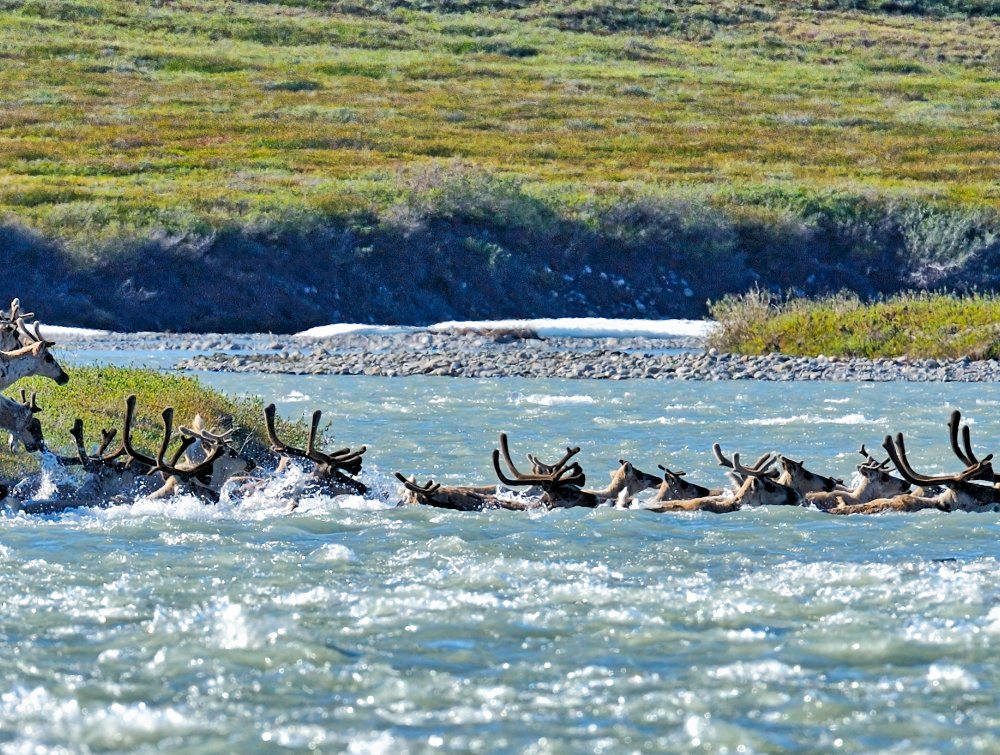
The Hulahula River runs from Alaska’s Brooks Range to the cArctic Refuge’s coastal plain, which is the calving ground of the Porcupine Caribou Herd.EDWARD BENNETT/BENNETT IMAGES LLC
After Trump’s sell off, the Arctic Refuge gets a reprieve
Just hours after being sworn into office, President Biden took a number of monumental actions to protect public lands, address the climate crisis and combat systemic racism, including an executive order that places a moratorium on all oil and gas activity in the Arctic National Wildlife Refuge.
This occurred only one day after the previous administration issued leases for drilling in the refuge’s coastal plain in a rushed, flawed and likely illegal process.
Biden’s action was met with great enthusiasm, particularly by many Gwich’in and Iñupiat peoples who have depended on and protected the…
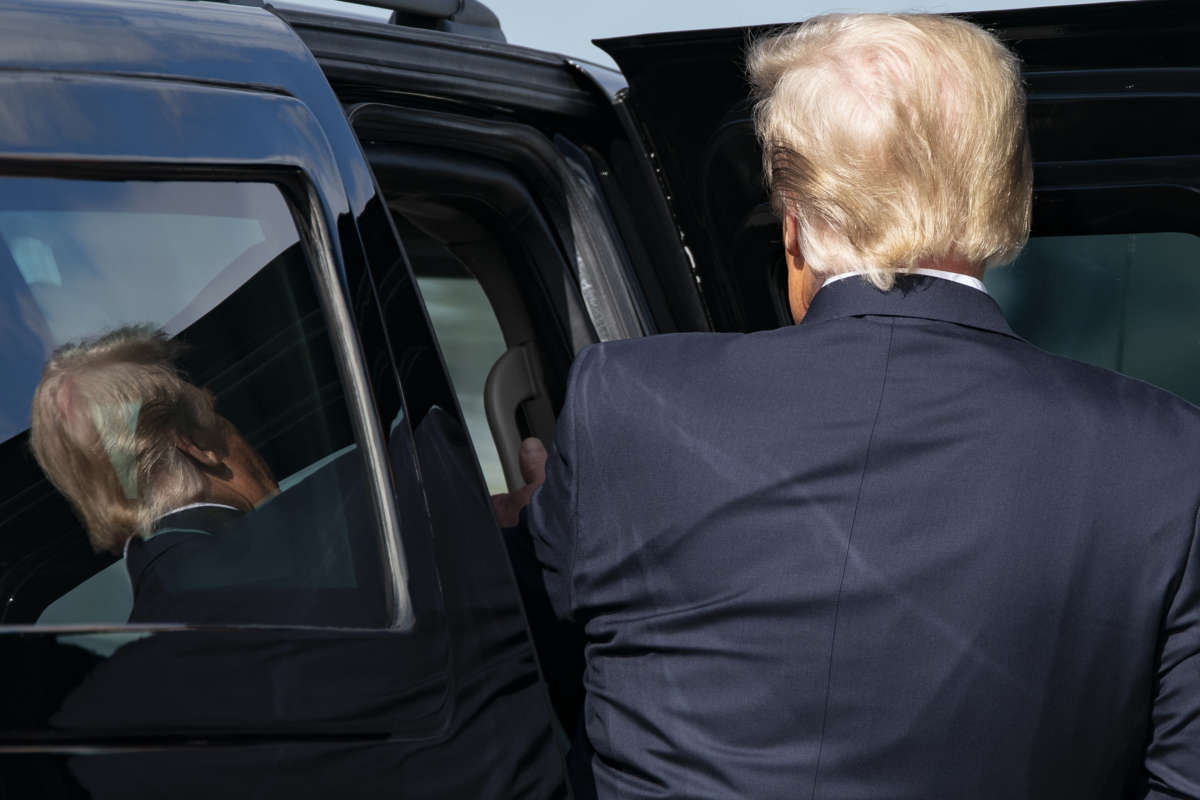
Outgoing U.S. President Donald Trump steps into his limo after landing at Palm Beach International Airport in West Palm Beach, Florida, on January 20, 2021.
One of these days, and I pray that day comes soon, I will arrive at a writing assignment with no compelling reason to type the letters t-r-u-m-p in that particular sequence. Ignoring him completely will someday be balm and reward, not to mention responsible journalism. The fact that he appears to be positioning himself to potentially destroy the Republican Party, however, means I have to write that name a few more times before I’m free.
After losing the 2020 election dozens of times at the ballot box and subsequently in courtrooms across the…
Congress is now considering a bill that would stop exhibitors from using big cats for public contact.Photo by the HSUS3.3KSHARES
A U.S. District Court has ordered Jeff Lowe, a notorious big cat exhibitor who took over the running of Joe Exotic’s zoo, GW Exotics, to surrender all big cat cubs and their mothers in his possession over allegations of mistreatment.
The preliminary injunction in the Department of Justice case for recurring inhumane treatment and improper handling of animals protected by the Endangered Species Act was based on shocking findings by the U.S Department of Agriculture at Lowe’s facility in Oklahoma.
The shocking allegations against Lowe, his wife and his business partner Eric Yano included claims of ongoing failure to provide animals with adequate food and veterinary care.Federal officials also allegedthat there were “foul-smelling, partially…
An animal identified as a wolverine by Washington Department of Fish and Wildlife biologists was photographed scavenging a marine mammal carcass on the ocean shore near Surfside on May 23.Jennifer HenryFEATURED
LONG BEACH PENINSULA — One of the Pacific Northwest’s most secretive and seldom-seen animals escaped to the beach during the Memorial Day weekend.
A wolverine was photographed in south Pacific County last week at two locations separated by dozens of miles. Numbering only about 300 in the lower 48 states with fewer than 50 in Washington, these bear-like members of the weasel family are legendary fighters with what a state biologist on May 26 called a “tough as nails” attitude.
PETA has pressured the Irving-based oil giant since 2007 to drop its support of the race.
Mitch Seavey’s team reaches the finish line in the Iditarod Trail Sled Dog Race, Wednesday, March 18, 2020, in Nome, Alaska. (Marc Lester/Anchorage Daily News via AP)(Marc Lester / AP)
The Iditarod, the world’s most famous sled dog race, has lost another major sponsor as it prepares for a scaled back version of this year’s race because of the pandemic, officials said Thursday.
Historical cemetery affected by new section of the border wall in Texas
The historical Jackson Ranch Cemetery in Pharr, Texas, is one of many properties that have been…
“After careful review of sponsorships in light of current economic conditions, we’ve decided to conclude our sponsorship of the Iditarod following the 2021 race,” Exxon Mobil spokesperson Ashley Alemayehu said in an email to the AP.
“The health and safety of the dogs, and everyone involved in the event, has always been an important consideration for us,” Alemayehu said.
The Iditarod called Exxon Mobil a “great partner” in the race as well as the Iditarod Education program, saying in a statement that, “After careful review of sponsorships in light of current economic conditions, they have decided to conclude their sponsorship of the Iditarod following the 2021 race.”
Messages seeking comment from Iditarod officials were not immediately returned.SPONSORED CONTENT
The loss amounts to $250,000, PETA said, but Exxon Mobil could not immediately confirm the sponsorship amount. In 2009, Exxon Mobil committed to giving the Iditarod $1.25 million over the ensuing five years.
“We’re glad that they have recognized that it’s absolutely bad for business when corporations support abusive industries and events like the Iditarod,” said Colleen O’Brien, a vice president for the animal rights group.
PETA has lobbied Exxon Mobil to drop its sponsorship of the race since 2007. In December, the organization submitted a shareholders resolution to “end all sponsorship of activities in which animals are used and abused and killed,” O’Brien said. PETA owns 102 shares of the company’s stock.
Exxon Mobil executives met with PETA on a teleconference on Tuesday, in which they confirmed they would end sponsorship. O’Brien said PETA then withdrew the resolution and canceled Exxon Mobil-targeted ads it had planned to run on buses in Anchorage, in the Anchorage Daily News and the Texas edition of The Wall Street Journal leading up to the March 7 start of this year’s race.
PETA also called off planned protests for at least a dozen ExxonMobil locations around the country.
The animal rights group has been targeting national sponsors of the race to end what it sees as the abuse of dogs it says are forced to run the thousand-mile race.
The group claims more than 150 dogs have died since the race began in 1973. The Iditarod disputes the number but has not provided the AP with its count despite numerous requests over the years.
PETA last year took credit when Alaska Airlines and Chrysler, through an Anchorage dealership, dropped their sponsorships after PETA conducted protests at the airline’s corporate headquarters in Seattle and the carmaker’s in Detroit. At the time, neither company confirmed PETA’s protests played a role in their decisions.
Other national sponsors that have dropped out include Wells Fargo and Jack Daniel’s Tennessee Whiskey.
The loss of Exxon Mobil leaves only one national sponsor of the race, Millennium Hotels and Resorts through its Anchorage location, the Lakefront hotel. It also serves as the Iditarod’s headquarters during the race.
O’Brien said they will contact Millennium Hotels and Resorts and “urge them to sever their ties with the race before they’re targeted next. We’re not going to stop until dogs are no longer forced to race until they’re dead.”
A message sent through the Millennium website seeking comment was not immediately returned.
The race’s other sponsors are Alaska-based businesses or those with close ties to the state.
The Iditarod normally starts in Willow, Alaska, about 50 miles north of Anchorage, and takes mushers and their dogs nearly a thousand miles over rugged Alaska terrain to the finish line in Nome. However, this year’s race has been scaled back to about 860 miles and will start and end near Willow.
Twelve mushers, including defending champion Thomas Waerner of Norway, have dropped out of this year’s race, leaving 53 teams.
That’s among the three smallest fields in the last two decades, and all in the last three years. Last year, 57 teams started the race and 33 finished. In 2019, 52 teams began the race.
Increased line speeds benefit no one but chicken producers looking to fatten their profits. Even at existing speeds, conditions inside a slaughterhouse are already immensely dangerous and inhumane. Photo by Kharkhan_Oleg/iStock.com
The Biden administration has withdrawn a deplorable pending rule that would have allowed qualifying chicken slaughter plants in the United States to permanently dial up line speeds from an already inhumane and lightning-fast 140 birds per minute to 175 birds per minute.
The U.S. Department of Agriculture’s Food Safety and Inspection Service, under the Trump administration, approved waivers for slaughterhouses to operate at faster speeds. Dozens of chicken slaughterhouses received such waivers, including 16 that received waivers in the spring of 2020. It was a terrible decision given that slaughterhouses had been declared coronavirus hotspots. To add insult to injury, the Trump administration soon after began working on a new rule that would allow qualifying chicken plants to operate at the higher speed, without even applying for a waiver. In essence, chicken producers looking to make more profit could simply ratchet up the line speed to kill more chickens with no consideration for animal welfare or worker safety.
The Humane Society Legislative Fund had been working with key leaders in the House and Senate to advance a shift on this issue, directing the USDA to review its policy in the recently enacted omnibus appropriations package and critical lobbying to urge candidate Biden to speak out about line speeds on the campaign trail. Withdrawing this rule was one of our top priorities for the Biden administration. Next, we will continue to focus on ending the waiver for the dozens of slaughterhouses that are already operating at the higher speeds. We and our allies are already suing the USDA to stop this waiver program and revoke the waivers, and we are urging the USDA, under new leadership, to promptly do so.
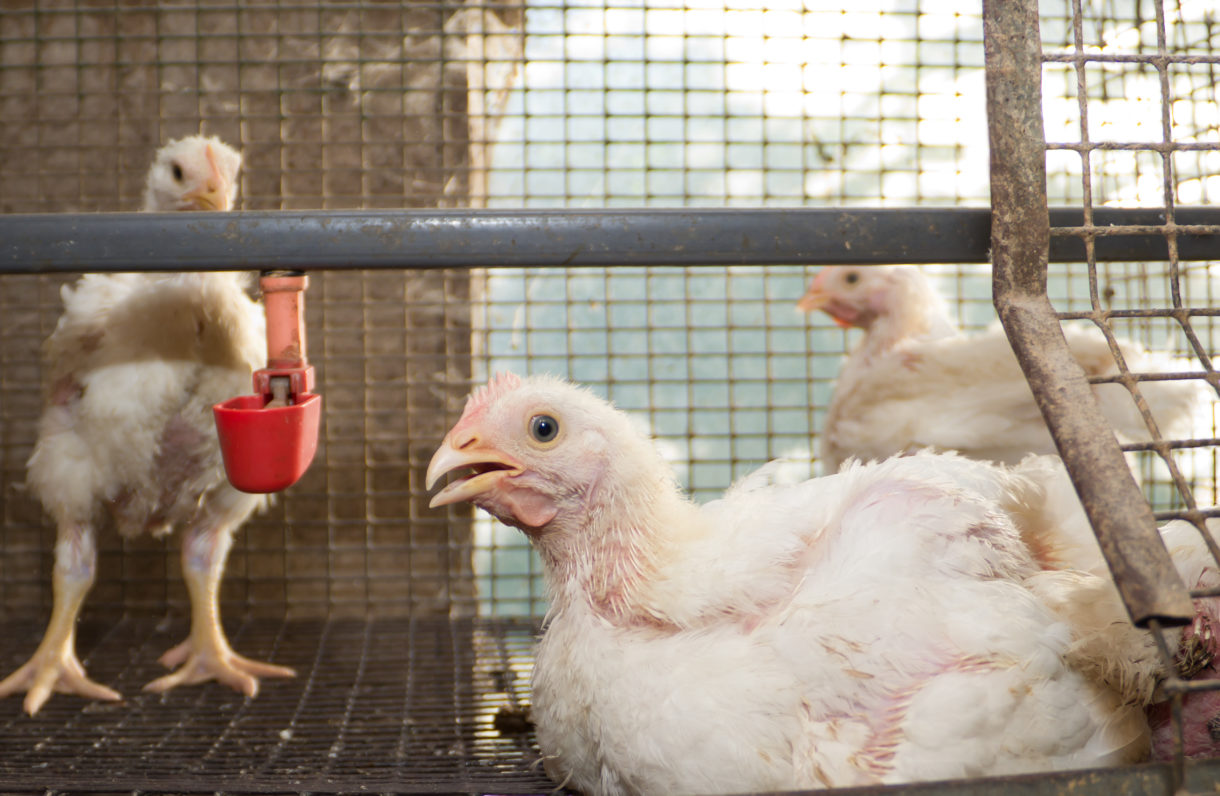
Increased line speeds benefit no one but chicken producers looking to fatten their profits. Even at existing speeds, conditions inside a slaughterhouse are already immensely dangerous and inhumane. Workers, struggling to keep up with rapidly moving slaughter lines, grab the chickens and slam them into shackles, injuring the animals’ fragile legs while they’re still conscious. Some birds miss the throat-cutting blade and enter the scalder—a tank of extremely hot water—alive and fully conscious. Human injury rates are also high as workers struggle to keep up with fast-moving lines. Imagine the additional risks to animal welfare and worker safety from increasing line speeds even more.
Faster speeds also further increase the risk of pandemic spread in slaughterhouses, where more than 48,000 workers have already been infected with the coronavirus and at least 245 have died. In fact, other federal agencies, including the Centers for Disease Control and Prevention and the Occupational Safety and Health Administration, had asked that line speeds be slowed down during the pandemic.
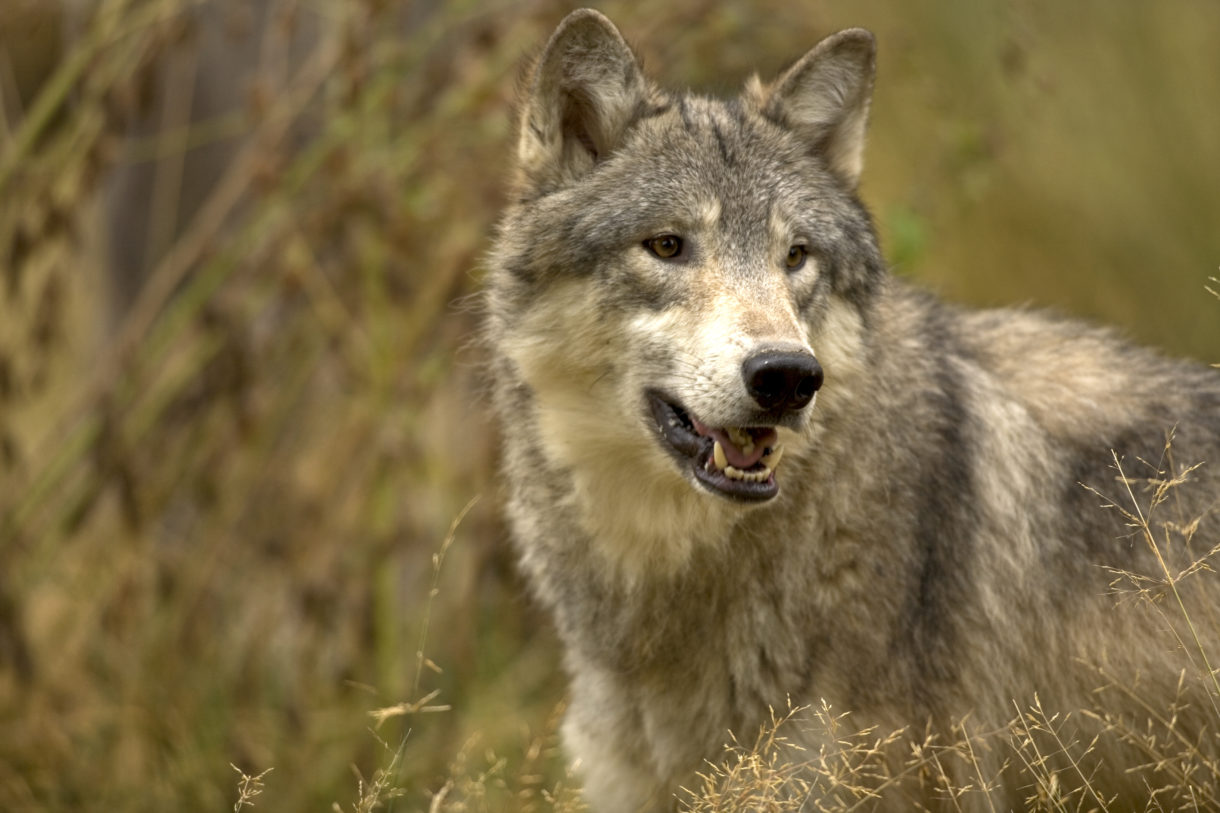
We are excited about today’s outcome—it is the right decision for worker safety, animal welfare, food safety and the mitigation of pandemic risk. But there is a great deal more we hope to accomplish in coming weeks and months. President Biden has a strong record on animal protection, and we will be working with his administration to withdraw harmful regulatory actions against animals taken under Trump, including the removal of slaughter speed limits at pig slaughterhouses. We will also work to undo a number of harmful rules finalized by the last administration, including reinstating protections for gray wolves, reversing harmful changes to the Endangered Species Act, and stopping harmful hunting practices on Alaska’s federal lands. It’s a new day, and we are excited to make this one of the best years ever for animal protection policy gains at the federal level.
Wisconsin residents got less than 48 hours’ notice about the hearing today, but hundreds of individuals, scientists, and tribal representatives still submitted written comments and nearly 50 people signed up to testify, with the majority opposing such a reckless rush to slaughter.Photo by JAMcGraw/iStock.com16.0KSHARES
An attempt by some Wisconsin lawmakers to force a rushed and unlawful wolf hunting season in the state beginning next month has been narrowly defeated by the state’s Natural Resources Board.
In November, we reported how we had helped stop an effortby the Wisconsin Natural Resources Board to open a wolf hunting season soon after the Trump administration stripped federal protections for wolves. In aletter to state officials, including Gov. Tony Evers and the Department of Natural Resources, we warned that such an action would be unscientific and illegal, with disastrous consequences for the…