Young Man Found Dead in Wild Boar Hunting Trap In Nayagarh
Reply

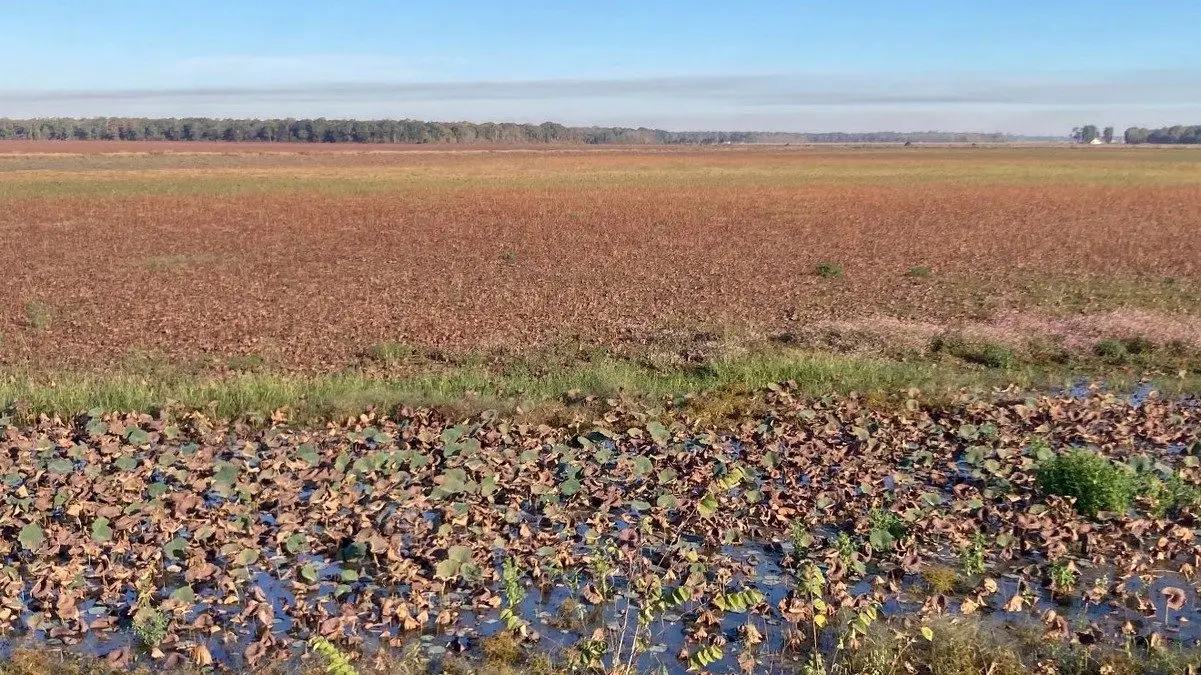

Halowell Reservoir at George H. Dunklin Jr. Bayou Meto WMA is normally holds water to flood the rest of the moist-soil units on this rest area; but there’s no water to pump and begin flooding. AGFC photo by Jeffrey Cothren.
Fourteen months of drought have taken their toll on Arkansas’s wetlands, and the effects will be felt much more by waterfowl hunters as the first segment of Arkansas’s duck season begins Nov. 21. Although the season is a month away, Arkansas Game and Fish Commission Director Doug Schoenrock is preparing commissioners and the hunting public for an uncharacteristically dry season.
BuyMaps
“We’re still more than a month away until duck season opens, but we need to talk now to prepare you and our hunters about the effects of this prolonged drought on both public and private land,” Schoenrock said at the agency’s Oct. 7 committee meeting in Little Rock. “Much of Arkansas is more than 20 inches behind in cumulative rainfall totals. That sort of deficit doesn’t disappear after a few 1-inch rains.
“The AGFC is monitoring conditions and making sure the information across all of our wetland-focused wildlife management areas is available for everyone to see, but it’s largely in the hands of Mother Nature,” Schoenrock said. “Hunters may need to temper their expectations with the forecast we’re getting for the beginning of duck season.”
Low-Water Woes
David Luker, AGFC assistant chief of wildlife management, presented the hard facts about the lack of water.
“At the beginning of October, we had adequate water to flood only 42 percent of the moist-soil units we manage on AGFC-controlled land. Those numbers will drop as long as this drought continues,” Luker said.
Jeffrey Cothren, AGFC Wetland Habitat Program coordinator, gave a little more detail on those numbers, and the outlook isn’t promising.
“The 71 units that still have some water to flood total about 4,627 acres, but we currently have the capability to flood only 42 huntable moist-soil units, which is 3,553 acres; 2,020 of those acres are at Steve N. Wilson Raft Creek Wildlife Management Area,” Cothren said. “Even then, the best-case scenario for that area is to have 34 permit hunt locations available by Christmas, and that’s with us pumping water from the White River 24/7, which has already started. Even with the drought, staff have created some of the best moist-soil vegetation that I’ve ever seen and they should be proud of that effort; we just need the water to flood it for the ducks.”
Even some of the areas with dedicated water in AGFC-owned lakes are feeling the heat. Lake Charles, which feeds greentree reservoirs in Shirey Bay Rainey Brake in northeast Arkansas, is currently only 4.5 feet deep as land managers begin making decisions about this year’s flooding capabilities.
BuyMaps
“The lake was already 4 feet below normal pool last year before flooding the GTRs and still has not recovered. It’s now more than 8 feet below normal pool. The water left isn’t sufficient to flood the GTRs, and we would almost certainly collapse the existing fishery for little to no benefit to waterfowl or duck hunters. We have decided that we will not use water from the lake to flood the GTRs until the lake recovers.”
The same scenario is playing out at Harris Brake Lake and Harris Brake WMA in the Arkansas River Valley. The GTRs on Harris Brake Lake take a large volume of water to flood because the depth of the main channels in the system is well over 10 feet in some places. All of the channels must fill before the water overtops the banks and floods these GTRs. Harris Brake Lake is currently 2.5 feet low; using the remaining water in the lake would cause major damage to the fishery and provide little, if any, wetland habitat for waterfowl or hunters.
The Problem With Pumping
Hunters desperate for a solution often ask why the AGFC doesn’t simply “turn on the pumps” to add water to these wetland areas. The answer to that question is complex, but it ends with a simple reality: “You cannot pump water that isn’t there.”
According to Luker, roughly 95 percent of the AGFC’s artificially flooded wetlands rely on rainfall and surface water. Some are filled by gravity-fed canals connected to nearby lakes, but many must have water transported using relift pumps placed in rivers, streams, and ditches. After 14 months of drought, most of these water sources have run dry or are too low to draw from using current infrastructure. Pumps that can be used have begun pumping already, and the agency has invested in more portable pumps dedicated to Cypress Bayou, Prairie Bayou and Steve N. Wilson Raft Creek WMAs. Staff are also working with the local irrigation district at Ed Gordon Point Remove WMA to procure additional water through a dedicated canal leading to the WMA, but the availability of water through that means is limited as well.
Groundwater is not the solution, either. Pumping a few 40-acre fields is much different than supplying the massive acreage required to flood the land the AGFC controls. Furthermore, the reduction in rice acreage across Arkansas this year has greatly reduced the amount of water available on a landscape level needed to provide ducks and other waterfowl energy during their migration.
BuyMaps
“Pumping from the ground for wildlife causes a litany of issues, including the reduction of the water table farmers and cities depend upon,” Schoenrock said. “And the volume of water needed during this drought overcomes what we can responsibly pump. We’ve run pumps on Lake Ashbaugh in Northeast Arkansas nonstop for the last 16 months, and the amount of water lost to evaporation and seepage there still leaves that lake incredibly low. We’re at the point where the pumps installed last year have already been worked to death from constant use. Ashbaugh is providing some habitat, but it’s not sustainable at this rate if we don’t get help from rain.”
Cothren explains that a few wells exist on WMAs, but the volume of water needed to flood the surrounding areas using wells would take months and could be surpassed by one or two well-placed rains. “We have already initiated pumping on most of the small areas where we have groundwater available, but it’s not a long-term solution,” Cothren said.
Universal Issue
The issue isn’t solely a public land problem. Private leases and hunting clubs are also suffering from a lack of moisture.
“I spoke to David Graves in our Private Lands Habitat Division, who coordinates the Waterfowl Rice Incentive Conservation Enhancement program, and he said that only five to 10 of the 47 hunt locations enrolled for this year currently have adequate surface water available to flood,” Luker said. “Of the 4,569 acres enrolled in the program, 967 are Wetland Reserve Easement acres; only about 100 acres of that can be flooded with the water currently available to those landowners.”
All rice fields and WRE acreage enrolled in the WRICE program have strict requirements to use only surface water for flooding, ensuring that most of the water table underneath these areas is reserved for drinking water and agricultural use.
“Even with that, the water table is so low right now that I recently spoke to a farmer who said he dug 9 feet deep before finding soil that had any moisture content,” Luker said. “There are a lot of farmers in some of these drought-stricken areas who are experiencing dry wells and surging pumps because the water level of the aquifer has taken such a hit during the last year and a half.”
Rice Sparse
According to the 2026 Prospective Plantings Report from the U.S. Department of Agriculture, rice acreage in Arkansas dropped from over 1.1 million acres to 851,000 acres. This is the first time since 1983 that rice acreage dropped below 1 million acres. Rising fertilizer and fuel costs, combined with lower market price estimates, drove many rice producers to pursue lower-cost alternatives such as soybeans and corn.
BuyMaps
“Water across the Arkansas landscape is needed to meet habitat needs for migrating waterfowl and shorebirds,” Luke Naylor, AGFC chief of wildlife management, said. “We work with a lot of native vegetation and other food sources on public land to give a complete package of nutritional needs, but rice production and flooded rice fields have always been key drivers of duck numbers and are essential to their energy needs during migration and winter. We should expect lower duck numbers statewide and tougher hunting conditions as duck season begins. That said, timely winter rains can turn this around, given that much less water is needed to provide at least temporary habitat and hunting opportunities on rice fields.”
Watching Water
The AGFC has a set of tables dedicated to keeping the public informed about planned operations for the moist-soil units and greentree reservoirs it operates to benefit wetland habitat. Visit http://www.agfc.com/wetlandmanagement to learn more and see updated tables of wetland conditions and flooding plans for this winter.
Visit www.agfc.com/education/arkansas-waterfowl-rice-program-wrice/ to learn more about the WRICE program and track hunt locations available for the 2026-27 duck hunting season. Each hunt location will be evaluated weekly and will only be entered into the draw if enough water is present to offer waterfowl habitat and hunting opportunity.
Currently, we are entering the peak season for wild and migratory birds to gather, feed, live, and stop over. This is also the time when illegal hunting, trapping, trading, transporting, storing, and consuming of wild and migratory birds is likely to increase in the province.
Strengthening the protection of migratory and wild birds.

Forest rangers in Nghi Son release wild birds back into their natural environment.
To curb the practice of trapping and hunting wild birds, the Nghi Son Forest Protection Department has proactively advised local authorities to issue documents on the management, conservation, inspection, control, and prevention of acts that harm wild and migratory birds. The department has also advised on the establishment of 10 inter-agency teams, comprising forest rangers, police, military personnel, relevant departments and agencies, and village/neighborhood leaders, to conduct inspections, take action, and dismantle nets, traps, and bird shelters.
Authorities have also intensified inspections in key areas for hunting and trapping birds in key wards and communes. In coordination with local authorities, they have promoted awareness campaigns, patrols, and inspections on streets, markets, and fields to detect, handle, and promptly prevent the trapping, transportation, and trading of wild birds; and to collect illegal bird-catching tools and nets. As a result, from the beginning of 2026 to the present, the Nghi Son Forest Protection Unit has conducted 125 inspections, confiscated and destroyed 2,800 meters of nets, 256 traps, 15 bird-attracting loudspeakers, 268 bamboo stakes, and 132 fake storks, and released 116 wild birds back into their natural environment.
You may also like

Bim Son Ward Police are stepping up efforts to protect biodiversity and prevent the trapping and catching of wild birds during the migration season.During the migratory season of wild birds, the use of nets and other means to trap and catch them poses a risk to the natural bird population, disrupts the ecological balance, and negatively impacts the habitats of wild animals. In response to this situation, the Bim Son Ward Police have intensified their efforts to monitor the area, promptly detecting and preventing acts that threaten wildlife.

Tuyen Quang Provincial Police join forces to protect wild birds during migration season.Tuyen Quang, with its rich natural forest ecosystem, diverse river and lake systems, and numerous nature reserves, has become an ideal stopover point on the migration routes of many rare bird species. However, this is also the time when the illegal trapping, hunting, and trafficking of migratory birds become increasingly complex.

Ninh Binh province has launched a coordinated operation to dismantle groups involved in the illegal hunting and extermination of migratory birds.VTV.vn – Ninh Binh Provincial Police have launched a coordinated campaign to strictly handle acts of trapping and transporting migratory birds illegally, contributing to the protection of biodiversity.
Regarding this situation, Mr. Trinh Dang Tinh, Head of the Forest Protection and Violation Handling Department (Provincial Forest Management Sub-Department), said: From the end of September to December every year is the season when wild birds migrate to coastal and midland areas. Taking advantage of this time, the trapping and hunting activities become more complex.
The perpetrators often choose recently harvested fields, dense thickets, or shallow puddles to set up their traps. Their methods are quite sophisticated, using fake storks made of foam as bait, planting numerous bamboo sticks coated with super glue, and combining this with sound-emitting devices to lure the birds… With this method, once birds are caught in the trap, it is difficult for them to escape. If not thoroughly stopped, this destructive practice will not only severely reduce the number of individuals but also directly disrupt the balance of the natural ecosystem.
Following the directive from the Department of Agriculture and Environment regarding the peak period of wildlife protection, the Provincial Forest Protection Department has instructed its subordinate units to simultaneously implement many decisive measures. Besides strengthening propaganda efforts, the forest protection force is closely coordinating with the police, market management, and local authorities to tighten management of the area. The forces are determined to strictly handle acts of illegal hunting, possession, transportation, and consumption of wild and migratory birds. In particular, the department requires increased patrols, the complete dismantling of nets and traps in fields, alluvial plains, and mangrove forests; and the complete eradication of the open advertising and sale of wild birds on the streets and online.
As a result, from the beginning of 2026 to the present, the forest rangers have discovered, seized, and destroyed 22,840 meters of nets, 2,166 bamboo stakes, 506 sticky traps, 281 fake storks, and some tools used for trapping birds. In coordination with local authorities, they released 134 wild birds back into the wild; handled 16 administrative violations, with a total fine of 56.5 million VND paid into the State budget.
You may also like

The police of Cat Tien 2 commune coordinated the inspection and removal of nets used to trap wild birds, working together to protect wildlife.In order to proactively prevent and stop illegal wildlife hunting, contributing to environmental protection and biodiversity conservation, on October 9, 2026, the Cat Tien 2 Commune Police, in coordination with the Da Huoai Forest Ranger Station and the Phuoc Son Forest Ranger Station – Cat Tien National Park, conducted inspections in several areas within the commune.

The police in Sen Ngu commune are actively promoting awareness and coordinating efforts to prevent the indiscriminate killing of wild birds, thereby protecting the natural ecosystem.In order to raise awareness and promote compliance with the law among the people in the work of protecting wild animals, contributing to maintaining ecological balance and protecting the natural environment, in recent times, the Sen Ngu Commune Police have proactively implemented many propaganda measures and coordinated with relevant forces to strengthen the prevention and suppression of hunting, trapping, and extermination of wild bird species in the area.

Prevent bird trapping and control consumption.VHO – Staying close to the area, maintaining patrols and monitoring online trading activities, the Quang Tri Provincial Forest Protection Force is coordinating efforts to prevent the hunting of wild animals and migratory birds. Public awareness campaigns focus on encouraging people to protect birds in their natural habitat and controlling the source of animals for release into the wild.
To curb the extermination of wild birds, in the coming period, the Provincial Forest Protection Department will continue to closely coordinate with localities to tighten patrol work, closely monitor the area, and resolutely handle all individuals involved in trapping, transporting, and illegally trading wild birds in order to create a deterrent effect and protect the natural ecosystem.
Text and photos: Khac Cong
 Báo Thanh Hóa•23/10/2026

