22 tigers, 40 leopards died in state in Jan-Apr
Reply

07.01.25
Canva Photos
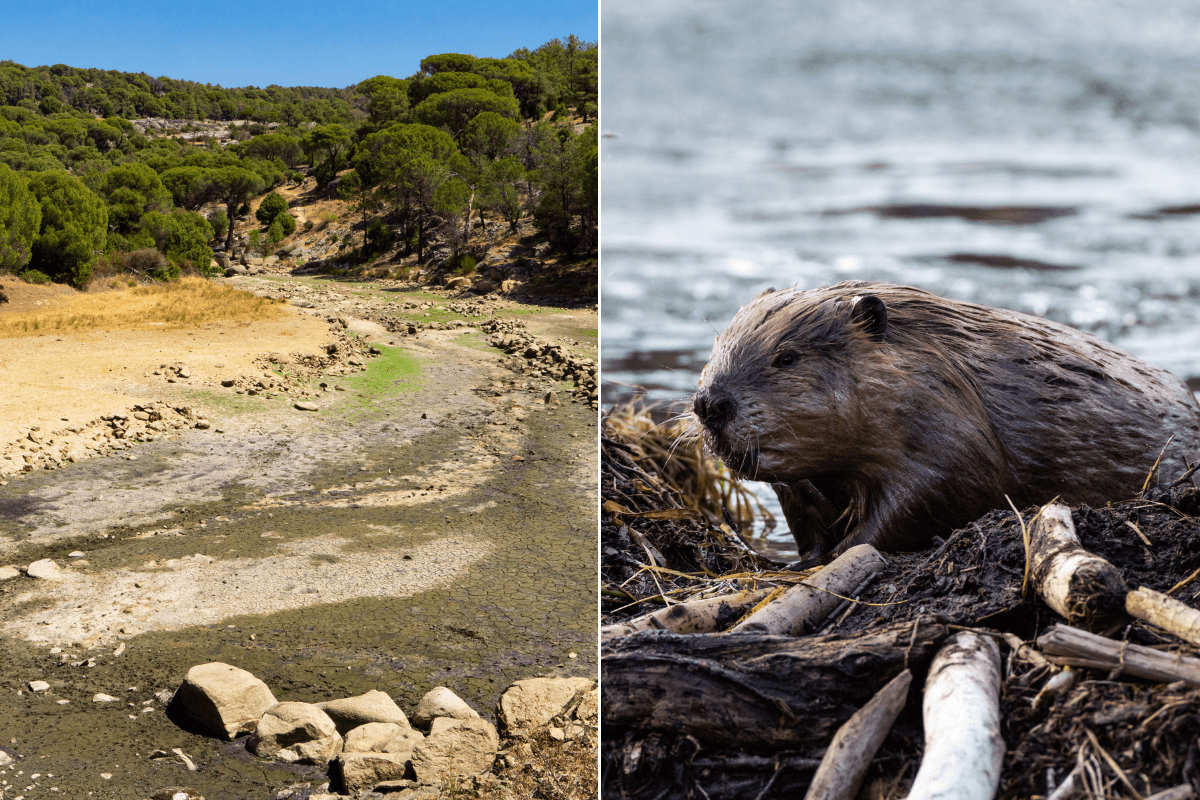
Can outsider beavers save this dried up river?
It’s not easy being a river in the desert under the best of circumstances. The ecosystem exists in a very delicate balance, allowing water sources to thrive in the harsh conditions. These water sources in otherwise extremely dry areas are vital to the survival of unique wildlife, agriculture, and even tourism as they provide fresh drinking water for the people who live nearby.
But man-made problems like climate change, over-farming, and pollution have made a tough job even tougher in some areas. Rivers in Utah and Colorado that are part of the Colorado River Basin have been barely surviving the extremely harsh drought season. When the riverbeds get too dry, fish and other aquatic creatures die off and the wildfire risk increases dramatically.
About six years ago, one team of researchers had a fascinating idea to restore the health of some of Utah’s most vulnerable rivers: Bring in the beavers.
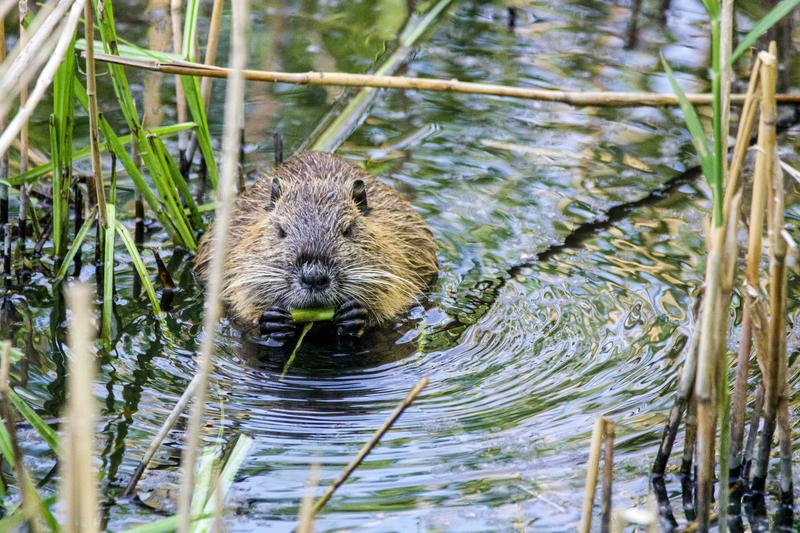
Beaver in water.Photo by Svetozar Cenisev on Unsplash
In 2019, master’s student Emma Doden and a team of researchers from Utah State University began a “translocation” project to bring displaced beavers to areas like Utah’s Price River, in the hopes of bringing it back to life.
Why beavers? It just makes dam sense! (Sorry.)
Beaver dams restrict the flow of water in some areas of a river, creating ponds and wetlands. In drought-stricken areas, fish and other wildlife can take refuge in the ponds while the rest of the river runs dry, thus riding out the danger until it rains again.
When beavers are present in a watershed, the benefits are unbelievable: Better water quality, healthier fish populations, better nutrient availability, and fewer or less severe wildfires.
It’s why beavers have earned the title of “keystone species,” or any animal that has a disproportionate impact on the ecosystem around them.
Doden and her team took beavers who were captured or removed from their original homes due to being a “nuisance,” interfering with infrastructure, or being in danger, and—after a short period of quarantine—were brought to the Price River.
Despite the research team’s best efforts, not all the translocated beavers have survived or stayed put over the years. Some have trouble adapting to their new home and die off or are killed by predators, while others leave of their own accord.
But enough have stayed and built dams since 2019 that the team is starting to see the results of the effort. In fact, beaver projects just like this one have been going on all over the state in recent years.
https://www.youtube.com/embed/9-L___3vV9s?rel=0 – YouTube www.youtube.com
The water levels in the river are now the healthiest they’ve been in years. The fish are thriving. Residents of Utah are overjoyed at the results of the experiment.
A column in The Salt Lake Tribune from 2025 (six years after the beaver translocation began) writes that the revitalization of the Price River “helped save our Utah town.”
“A tributary of the Colorado River, the Price River runs through downtown Helper. On a warm day, you’re likely to find the river filled with tourists and locals kayaking, tubing and fishing along its shore. A decade ago, it was hard to imagine this scene—and the thriving recreation economy that comes with it—was possible.”
Of course, it wasn’t JUST the beavers. Other federal water cleanup investments helped remove debris, break down old and malfunctioning dams, and place tighter regulations on agriculture grazing in the area that depleted vital plant life.
But the experts know that the beavers, and their incredible engineering work, are the real MVPs.
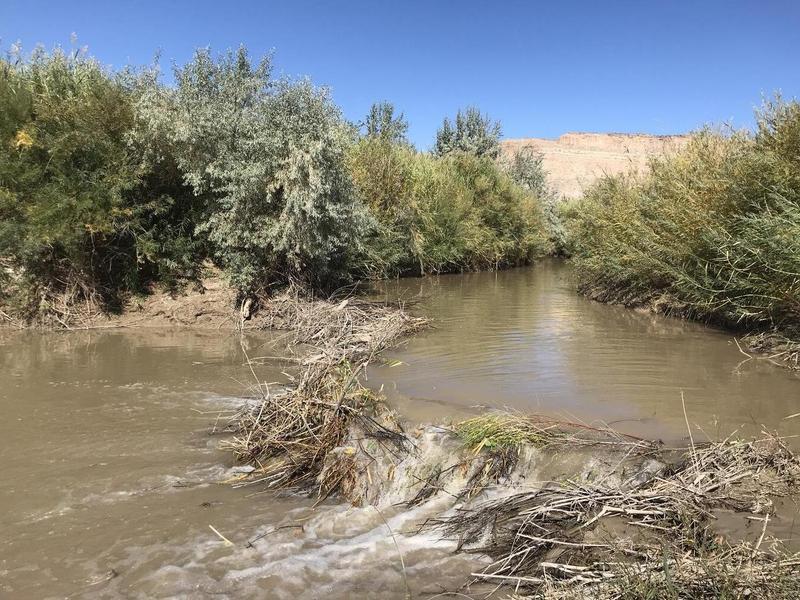
An actual beaver dam on the now-thriving Price RiverPublic Domain
In other drying, struggling rivers in the area, researchers are bringing in beavers and even creating manmade beaver dams. They’re hoping that the critters will take over the job as the rivers get healthier.
Utah’s San Rafael river, which is in bleak condition, is a prime candidate. In on area of the river, a natural flood inspired a host of beavers to return to the area and “riparian habitat along that stretch had increased by 230%, and it had the most diverse flow patterns of anywhere on the river,” according to KUER.
It’s hard to believe that beavers nearly went extinct during the heyday of the fur trapping industry, and continued to struggle as they were considered nuisances and pests. Now, they’re getting the respect they deserve as engineer marvels, and their populations have rebounded due to better PR and conservation programs.
To that I say…it’s about dam time!
Date: July 2, 2025
Author(s): Kitty Block and Sara Amundson
A decade ago, an American trophy hunter shot an African lion just outside Zimbabwe’s Hwange National Park with an arrow. Like many hunters before and after him, he was seeking a trophy, a part of his kill that he could lawfully import back home to the United States. He could hang it on his wall, and have a story to tell, too. To his family. To his friends. To fellow hunters at Safari Club International conventions.
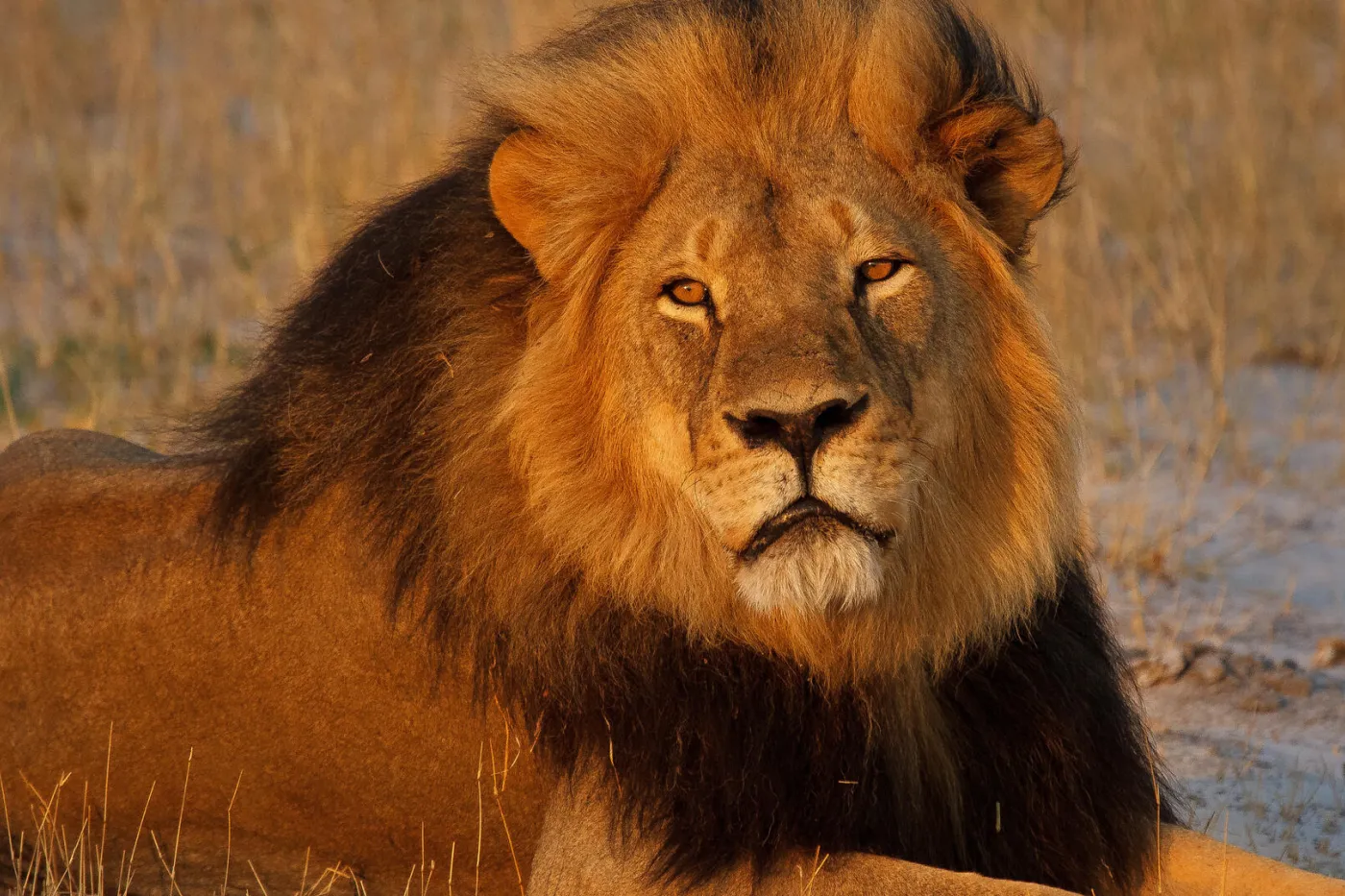
It wouldn’t be his story to tell, in the end, because that trophy hunter shot a lion named Cecil, a majestic, studied and storied resident of the park—and left a firestorm of controversy in his wake. With the help of safari guides, the hunter lured Cecil outside the park’s protective limits, using the carcass of an elephant as bait. The arrow critically wounded Cecil, who fled into the night. The hunter and his guides then went back to camp. When they returned the next day, 15 hours later, they found the suffering lion several hundred yards from the spot where he’d been wounded, still struggling to survive. His lungs were filling with blood, in which he was slowly drowning. The hunter shot the lion again with a compound bow, killing him.
We are determined to stop cruelties like this. To end trophy hunting of wildlife species, including lions, zebras, giraffes, leopards and elephants in Africa alone, is a worldwide struggle, one that involves dozens of countries whose policies enable their citizens to travel to African nations to kill animals as trophies or for trophy parts and bring them home legally. At both ends and in every stage of this exchange, governments, tourism and other parties facilitate a heartless pursuit of animals with lax regulations and broad indifference to the harm the practice causes.
After an investigative reporter disclosed the events leading to Cecil’s death, his story enraged millions of people across the globe. Their spontaneous and broadscale outrage ensured that this would never become a story of manly courage, prowess or achievement. It would, instead, be a story of raw cruelty and human avarice—one that sparked greater public awareness and concrete action against trophy hunting. This was especially true considering that the hunt had not broken any laws.
About 7,700 miles away from where Cecil was killed lies Washington, D.C. The decisions made there, in Congress, at the U.S. Fish and Wildlife Service and in the White House directly determine the destiny of imperiled animal species such as the African lion and, by extension, the fate of individuals like Cecil, and other known and beloved lions like Mopane, who was gunned down in the same area as Cecil in 2021, and Cecil’s son Xanda, who was killed in 2017.
The U.S. is the world’s largest importer of hunting trophies of mammal species protected under CITES (the Convention on International Trade in Endangered Species of Wild Fauna and Flora), and the FWS continues to authorize the import of hunting trophies from many species listed under the Endangered Species Act.
In 2015, in response to our petition, the FWS listed the African lion under the Endangered Species Act. In 2017, we wrote to the agency to point out that it was failing to rely on the best available science when reviewing permit applications to import lion trophies from Zimbabwe. In 2017 and 2021, we provided the agency with scientific research demonstrating that trophy hunting of lions in Zimbabwe is poorly managed and that lion hunting quotas are not science-based.
Much the same can be said for the decisions made in the capitals of other nations whose citizens revel in trophy hunting of endangered and imperiled animals, and the capitals in the home range nations where such animals live. Both importing and exporting nations peddle an unscientific and misleading narrative of mutual benefit and sound conservation in defense of what a growing majority of people worldwide consider indefensible.
All too few of these nations are doing enough to bring this moral and ecological nightmare to an end.
And yet, in the years since Cecil’s death there have been positive developments abroad: France (2015), the Netherlands (2016), Australia (2018), Colombia (2019) and Belgium (2024) have banned the import of certain hunting trophies, including lions.
Among the range nations, Malawi banned the trophy hunting of lions in 2017, but the practice continues elsewhere. Since Cecil’s death, Zimbabwe has exported several hundred lions and their parts as trophies. That’s just the legal trade; the illicit trade traffics in unknown numbers of lion parts from slain animals.
And this is just lion hunting. The entire universe of trophy hunting targets and kills many other species, with the same grim cruelties, the same staggering totals, the same greed, and the same deceptive arguments by governments, whether importers or exporters, about conservation. But trophy hunting isn’t conservation. It’s the slaughter of wild animals for profit, and the commodification of the natural world at any cost.
Many nations are responsible for allowing this global horror show to continue, but much responsibility sits with the U.S., which as of 2018 accounted for some 75% of all trophy imports. The EU nations, together, place a distant second, and still the EU isn’t doing enough to end their role in international trophy hunting, and our colleagues in the UK are pressing the issue toward a parliamentary vote.
Action against trophy hunting depends on strong laws for the protection of species and their enforcement, so we are also, in the U.S., fighting off multiple legislative threats to the Endangered Species Act itself, as well as states’ attempts to increase the trophy hunting of mountain lions, wolves and the nation’s other vital native carnivores. Support for the Endangered Species Act and opposition to trophy hunting are both strong: A 2022 poll in the U.S. revealed that 76% of Americans oppose trophy hunting and 65% oppose the importation of hunting trophies of species listed under the Endangered Species Act. The same is true for polls in Argentina, France and South Africa.
In a decisive shift in attitude about trophy hunting, too, more than 40 airlines, cargo handlers and other companies no longer agree to transport hunting trophies. This has proven to be a genuine lever of change since most hunters who can’t find a way to get dead wildlife and trophies home won’t want to bother with the travel and expense of going abroad just to kill and return emptyhanded.
The struggle to end the bloodthirsty expeditions that kill animals like Cecil every day is far from over. But we’re not going to give up until trophy hunting becomes what we know it already is: a cruelty with no place in the 21st century, in any country, on any continent.
Sara Amundson is president of Humane World Action Fund.

