Volunteer opportunities for upcoming sagebrush and bitterbrush plantings in the Magic Valley Region
Reply

Date: October 8, 2026Author(s): Kitty Block and Sara Amundson
This week, a U.S. District Court in Michigan denied the U.S. Department of Justice’s lawsuit challenging Michigan’s cage-free egg law.
Michigan is one of 11 states that ban the use of cages for egg-laying hens and one of eight states that ban the sale of eggs from cage facilities. Michigan’s cage-free egg law, which improved upon its earlier law, passed with strong bipartisan support in 2019 and went into effect on Dec. 31, 2024.
The federal government’s lawsuit was utterly frivolous and disingenuous: It sought to blame high egg prices nationwide (which were actually caused by avian flu) on humane farm animal laws that have been upheld time and again by the courts, including the Supreme Court of the United States.
As creators, supporters and defenders of many of these state-level animal welfare laws addressing the cruelties and dangers of extreme confinement, we are pleased—but not surprised—by the District Court’s decision. We and our coalition of animal welfare organizations also intervened in this lawsuit. (Here is our statement at the time of our filing.)
The District Court held that the U.S. government lacks standing to bring such a lawsuit, and it did not buy the DOJ’s claim that the law was responsible for higher egg prices, thus causing harm to consumers. In other words, the government failed to demonstrate a plausible injury to the United States.
That’s because there isn’t one. The Michigan suit is essentially a copycat of a case that the Trump administration filed in California, and both suits were filed long after many other suits filed by industry were rejected by the courts. These suits are about politics, not actual problems facing Americans. This is just one more instance in which the federal government has chosen to side with the backwards-facing segments of the factory farming industry, ignoring the millions of Americans who have signaled their desire for more compassionate and safer standards in agriculture.
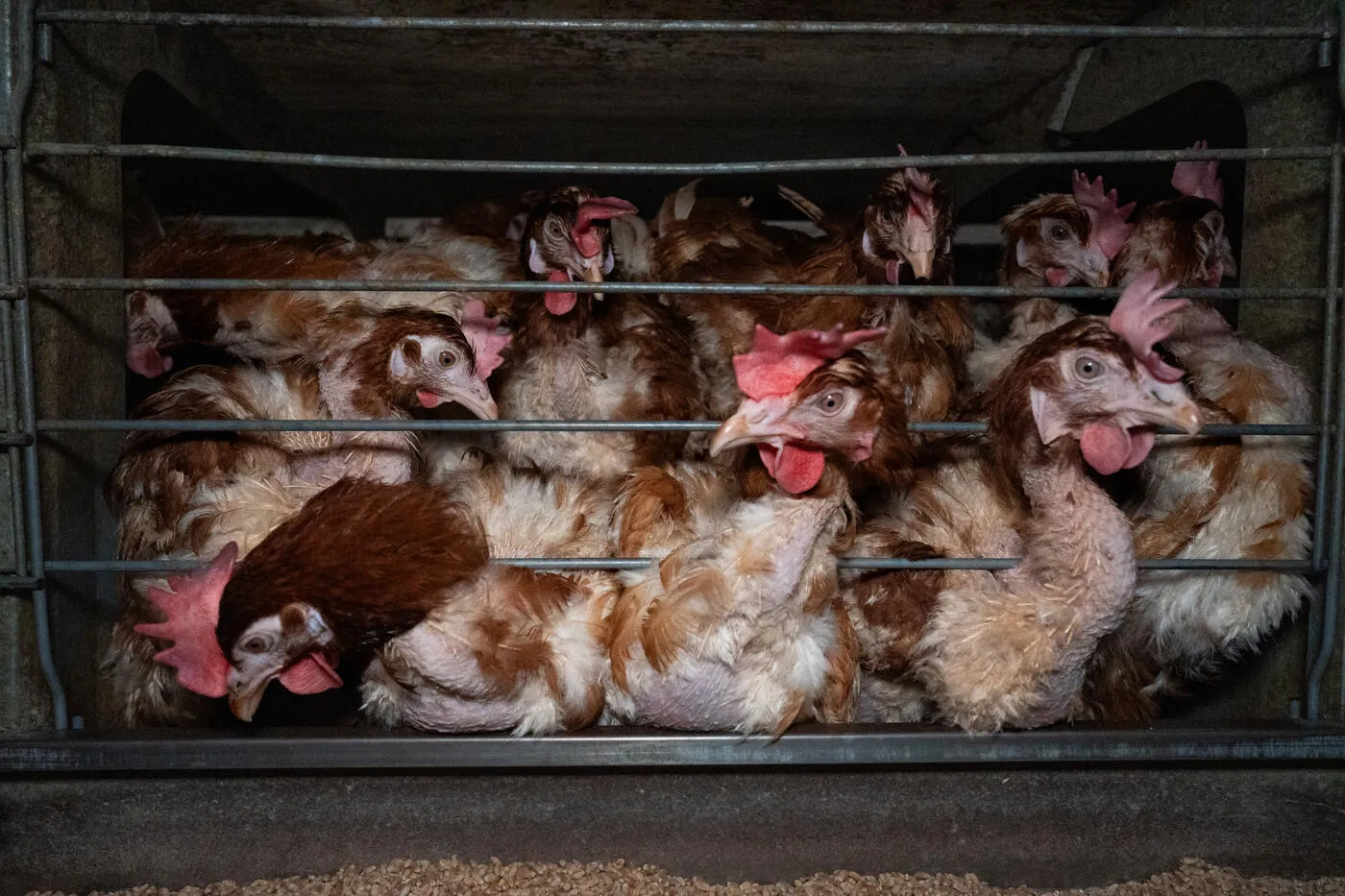
Against the tide of public opinion and the principles of good governance, certain Big Ag interests are determined to build a moat around the cruel and archaic production methods that cause animals so much misery and suffering. These intensive confinement systems are also the perfect environment in which zoonotic disease can spread, threatening the health of all of us.
The lawsuit was clearly part of the effort to resuscitate the failing cage-age for farmed animals. And once again, the backwards coalition of cruelty has lost its case.
Because the District Court held that the U.S. government lacks standing to sue in the matter, it did not address the merits of the DOJ’s preemption challenge. This challenge claimed that only the federal government can regulate eggs. This is similar to the argument that Big Pork and other special interests have made again and again. This argument is the basis for Big Pork’s ceaseless whining and bullying in the U.S. Congress and in every public forum in which they can get people to listen, whether that means having to lie about the source of price increases, pushing unsuccessful legal claims, or staunchly defending some of the most indefensible animal cruelty on earth.
What makes the Michigan case so plainly ridiculous is that the state’s egg farmers support the law that the suit would scrap and called the federal government out on it. Michigan Allied Poultry Industries filed briefs intervening in the case in support of the law. And nationwide, the egg industry is getting close to being comprised of 50% cage-free systems.
Having lost in the District Court, the government can continue its challenge to Michigan’s law if it appeals to the Sixth Circuit within 60 days. The Trump administration should finally see that this kind of litigation has become a serious waste of time and resources. It is not helping voters, consumers, or egg farmers, especially those who have already made the more humane choice and investment to convert to cage-free systems.
The same can be said for the entire campaign by the National Pork Producers Council and other increasingly isolated groups to scuttle state-level laws through the Save Our Bacon Act and related maneuvers in the federal Farm Bill. (We’re fighting their SOB story there, too.)
The Trump administration, like the Biden administration before it, is on the wrong side of history when it comes to the ongoing legal and moral struggle over factory farming, and it really should find better ways to serve the public.
The lobbying groups and politicians trying to torpedo state-level farmed animal welfare and public health statutes are compulsive in their efforts to falsely blame California’s Proposition 12 and Californians for forcing their values on midwestern states. It’s easier to do that than it is to acknowledge the enactment of similar laws in midwestern states with strong agricultural sectors like Ohio and Michigan.
Every state law bearing on farmed animal welfare has made an enormous difference. These laws together have improved the treatment of countless millions of animals.
The federal government must stop debasing itself for those who want to keep farmed animals in cages and recognize the paradigm shift that has already begun. People all over the world are coming to the view that, if we use animals for food, we should care enough to ensure they live in conditions of higher welfare. And no matter where the coalition of cruelty goes next, we will be there, protecting progress for animals from these pathetic and groundless attacks.
U.S. residents
The “Save Our Bacon Act” is bad for animals, consumers, and farmers. If it is enacted, hundreds of state laws protecting animals and addressing disease control, toxic materials, food labeling and more could be destroyed.
Kitty Block is president and CEO of Humane World for Animals. Follow Kitty Block on X. Sara Amundson is president of Humane World Action Fund.
Caden Perry, Milwaukee Journal Sentinel
Updated Wed, October 7, 2026 at 11:14 AM PDT
2 min read
Add Yahoo as a preferred source to see more of our stories on Google.
1
Avian influenza has been detected in a backyard chicken flock in Racine County, according to the Wisconsin Department of Agriculture, Trade and Consumer Protection. Officials said risk of the infection spreading is low for the general public.
The 121 chickens in the backyard operation and other poultry operations within 10 kilometers – roughly six miles – have been quarantined. This is the sixth avian flu case in Wisconsin this year and the fourth in Racine County since 2022.
There are no movement restrictions on poultry at this time, the department said. The last time poultry movement was restricted to slow infections in the spring, when millions of chickens were infected.
Advertisement
Avian influenza, or bird flu, is a virus that infects poultry and waterfowl. Infections can spread from bird-to-bird contact and through manure, tools, equipment, vehicles and clothing.
Department officials believe the Racine County flock was infected via commingling of poultry with wild waterfowl.
More: Wisconsin respiratory illness rates rise but activity remains very low

In poultry, signs of avian flu infection include sudden death, misshapen eggs, coughing, sneezing, swelling, lack of energy, difficulty breathing, stumbling and diarrhea. Avian flu has a 90% to 100% mortality rate in poultry.
Commercial and backyard poultry handlers should always wash their hands before and after handling poultry, restrict access to wild birds, disinfect equipment and keep new birds separate from existing flocks for 30 days.
Humans can get sick from infected birds, but the current strain of avian flu does not easily spread from person to person.
If you suspect your poultry has been infected with avian flu, the department recommends contacting your district veterinarian immediately. Sick or dead wild birds should be reported to the Wisconsin Department of Natural Resources at DNRWildlifeSwitchboard@wisconsin.gov or 608-267-0866.
This article originally appeared on Milwaukee Journal Sentinel: Avian flu detected in Racine County backyard poultry flock
DNR says the wolves were ‘humanely euthanized’ following ‘verified threats to human health and safety’
By Joe Schulz
October 2, 2026

Nine wolves were killed by federal officials in northern Wisconsin in late August and early September, following “a series of verified threats to human health and safety,” according to the state Department of Natural Resources.
In a statement Friday afternoon, a spokesperson for the Wisconsin DNR said the threats to humans occurred in rural Price County and were reported between July 2025 through August 2026.
Prior to pursuing euthanasia, the DNR recommended “numerous non-lethal measures,” like removing potential attractants, auditory harassment, increasing lighting and increasing human activity.
WPR’s “Wisconsin Today” newsletter keeps you connected to the state you love without feeling overwhelmed. No paywall. No agenda. No corporate filter.EmailSubscribe
“Unfortunately, these did not resolve the issue,” the spokesperson said. “Reports demonstrated a pattern of behavioral escalation, with the wolves showing less response to hazing and more acclimation to human presence.”
In late August and early September, the nine wolves were “trapped and humanely euthanized” by the U.S. Department of Agriculture’s Wildlife Services division, within the agency’s Animal and Plant Health Inspection Service.
A spokesperson for the USDA said the Wildlife Services program does not have a decision-making role in wolf issues.
“We investigate and let the state know if it was a probable or confirmed threat — if it wasn’t, we also let them know that,” the USDA spokesperson said in a statement. “The Wisconsin DNR has the authority to determine, based on the severity of the threat, the next steps.”
The DNR says the agency was in contact with the U.S. Fish and Wildlife Service throughout the decision-making process, and the “lethal removal actions were taken” under authorities of the the Endangered Species Act.
“The DNR acknowledges the sensitivity of these actions,” the DNR spokesperson stated. “Such decisions are not made lightly.”
The Milwaukee Journal Sentinel was the first to report the wolf deaths. The paper reported that the wolves were all believed to be part of the same pack.
Wolf attacks on humans are rare. There have only been two fatal wolf attacks on humans across North America in the last 20 years. Researchers have documented at least 26 fatal wolf attacks worldwide from 2002 to 2020.
This is the first time wolves were killed by officials in Wisconsin since a federal court ruling in 2022 gave gray wolves endangered species protections in the lower 48 states.
The DNR has been monitoring Wisconsin’s wolf population since the 1970s. The agency released projections this summer showing the state’s wolf population fell slightly this year. They estimated this year’s population was 1,162 wolves in about 321 packs, down slightly from last year’s estimate of 1,225 and the 2024 estimate of 1,311.
The removal of the nine wolves in northern Wisconsin is expected to “have no lasting negative biological impact on the wolf population in the area,” the DNR spokesperson stated.
The state is working with the U.S. Fish and Wildlife Service to transfer the remains of the euthanized wolves to the Great Lakes Indian Fish and Wildlife Commission as a recognition of “the profound cultural and spiritual significance for the Ojibwe and other tribes,” the DNR spokesperson added.
Wisconsin Public Radio, © Copyright 2026, Board of Regents of the University of Wisconsin System and Wisconsin Educational Communications Board.

