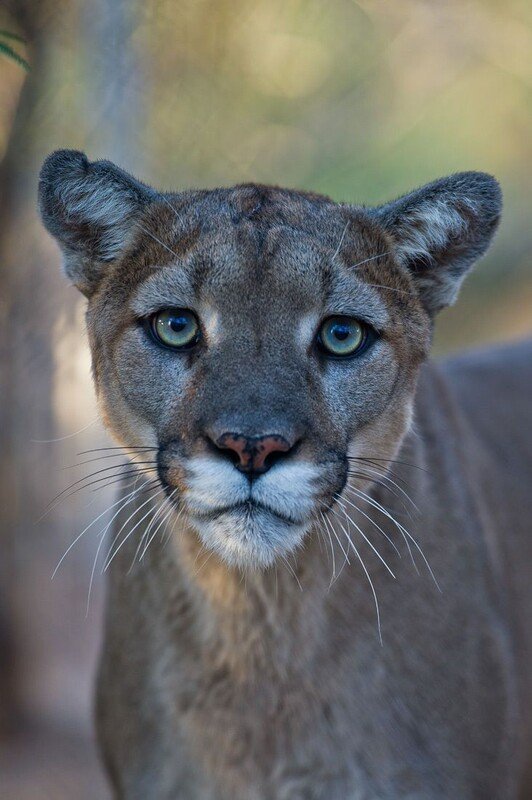
PHOENIX— The Center for Biological Diversity sued the Arizona Game and Fish Department and Commission today, challenging their mountain lion sport hunting quotas as unsustainable and asking the court to suspend issuing mountain lion sport hunting permits until the state’s population has recovered and is sustainable. The mountain lion hunting season begins Aug. 21.
The department’s data shows that 1,937 mountain lions were killed by sport hunters from 2018 to 2024, an average of 277 per year. Of these, 54% were kittens younger than 1 year old (518) or pre-reproductive juveniles younger than 2 years old (519). In addition, females made up 41% of mountain lions killed during that period. Research shows that killing more than 20% of adult females in a hunting population can sharply reduce mountain lion numbers.
“Arizona’s state-sanctioned killing of kittens and juvenile mountain lions is barbaric, unsustainable and illegal,” said Robin Silver, Center co-founder and board member. “State law requires the Game and Fish Commission and Department to put science and public trust first rather than the whims of the mountain lion sport hunters and ranchers. It’s time to end this slaughter and ensure that mountain lions will continue to roam the wilds of Arizona into the future.”
Today’s lawsuit includes three independent modeling analyses of seven years of department hunting data by wildlife demographic experts. All three analyses concluded that without reducing hunting quotas, Arizona’s mountain lions will face steep, unsustainable population declines. The quota for the upcoming season is 340 mountain lions.
The lawsuit says the Arizona Game and Fish Department and Commission’s unsustainable management practices violate their own acknowledgment that they are legally required to hold the state’s wildlife in the public trust.
The Center is represented by the law firm Hofmeyr Wang.
The Center for Biological Diversity is a national, nonprofit conservation organization with more than 1.8 million members and online activists dedicated to the protection of endangered species and wild places.
Australia’s beloved animals are again under threat as the H5N1 strain of bird flu spreads, with more mass deaths expected. Scientists are bracing for another wave of ecological loss and are particularly concerned about rare and threatened species.
It’s normal to find this news overwhelming, especially in the wake of a growing list of environmental disasters: from algal blooms to coral bleaching, and floods and fires that devastate wildlife and ecosystems.
We research ecological grief – the deep sadness people feel about the loss of nature – and climate emotions – human feelings in response to the climate crisis. We have listened to hundreds of people talk about their feelings about our environment, and their fears and hopes for its future. Some describe sadness, anger or concern. Others try to avoid bad news.
These responses are rarely simple. They are often rooted in particular places and species we love, and in the memories, identities and relationships attached to them. Because of this, grief can co-exist with feelings like awe, pride, belonging and care.
Here, we share some ways to make space for your feelings and find connection and support.
It’s normal to finding news about environmental loss, such as bird flu, overwhelming. Stephen Frink/Getty
What is ecological grief?
Grief is an understandable response to witnessing harm to places and species that matter to us. We might experience environmental loss directly, particularly when we live or work in threatened places. At other times, we encounter it through news and social media, or against the wider backdrop of future threats such as climate change. Because ecological loss is ongoing, cumulative, and sometimes ambiguous, we need to practise support, connection and care in ways that we can sustain over time.
Don’t let yourself be misled. Understand issues with help from experts
Yet our feelings in response to loss are often hard to talk about, especially when they are minimised or dismissed by others. Our society is not very good at “doing grief”. Death is difficult to understand, and can feel like something to be avoided at all costs.
In addition, many of us have lost the rituals and gathering places that enable us to process loss together, such as those offered through spiritual or cultural practices. This can lead to disenfranchised grief, when loss is not acknowledged or validated, leaving people feeling isolated.
Becoming more “grief literate” means developing the knowledge, values and practical skills to understand grief, and support ourselves and others. For environmental loss, this might involve talking with people who are feeling a similar way, spending time in restorative places, or making art, either alone or in groups.
Many South Australians have been distressed by the effects of the deadly algal bloom on marine life, such as this giant cuttlefish. wildest animal/Getty
A growing awareness of loss
The good news is communities and professionals are coming together to support people as they grapple with ecological loss. In Australia, organisations like Psychology for a Safe Climate host a network of mental health practitioners who are aware of the realities of climate change and can provide professional support.
Psychology for a Safe Climate also offers regular “climate cafes”, where people can connect with others who share concerns about beloved species and ecosystems.
Aboriginal and Torres Strait Islander peoples have learnt to live amid the drastic changes to Country wrought by centuries of colonisation. Their knowledge and practices offer a vital source of wisdom for all, but must be treated with respect and reciprocity if they are offered beyond their own communities. We Al-li shares Indigenous cultural traditions and trauma informed practices through online courses and other training.
Across the world, new groups are forming to support people grappling with ecological grief. US-based not-for-profit Good Grief Network runs peer-to-peer programs delivered by over 180 facilitators globally. Another organisation, Radical Joy, invites people to “make beauty in a wounded place”, either together or alone.
Paying attention to feelings
As we work with people experiencing ecological loss, we are slowly learning to notice and respond to how we are feeling in ourselves. This might include noticing we need to rest, or take a break from news about ecological “doom”.
It might be as simple as going outside and feeling the grass under our feet, or the wind on our face.
For people in environmental professions, Claudia’s team at the University of Queensland have created an ecological grief resource to guide workplaces to provide better support. It encourages compassionate listening with a colleague, which involves listening without judging or offering solutions. It also suggests undertaking a project – like holding a remembrance event or creating something using art – to honour a loss.
With colleagues at Black Dog Institute and the University of Sydney, Chloe developed an activity booklet for young people, families and all those interested in creative tools for exploring climate and environmental feelings. It provides joyful, open-ended prompts for drawing, photography, and writing that can help people of all ages understand their relationship to the natural world.
Making space for feelings of grief over effects of ecological change can sustain you for the long haul. Posnov/Getty
Making space for grief
Perhaps most importantly, we have learned that paying attention to feelings like ecological grief is not a distraction from responding to pressing environmental challenges.
By making space for grief, you also create opportunities for care, connection and action. This can sustain us all for the long haul, helping us focus on small, achievable changes without losing sight of the bigger picture.
If you are experiencing overwhelming grief or emotional distress, free and confidential support is available anytime in Australia. Call Lifeline at 13 11 14, Griefline at 1300 845 745, or Beyond Blue at 1300 22 4636.
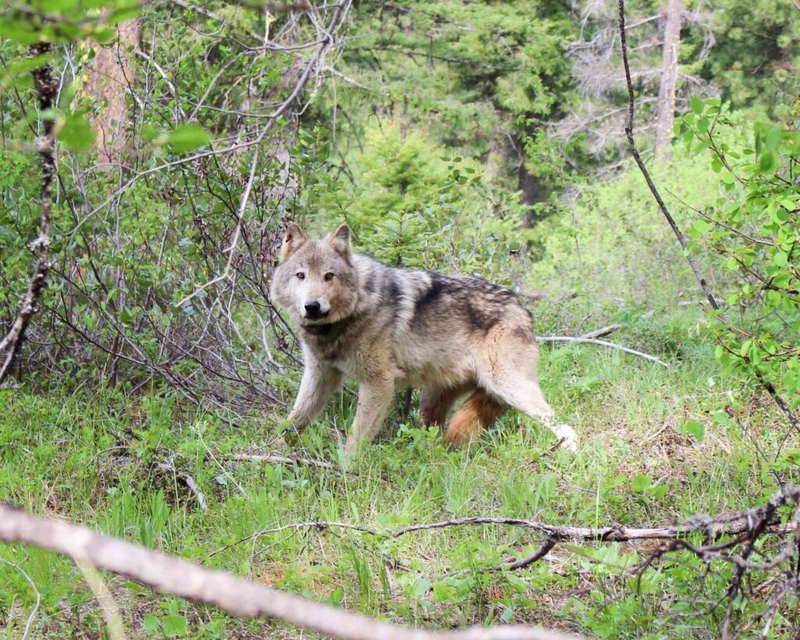
A gray wolf. (Washington Department of Fish & Wildlife)
How many wolves are left in Montana?
Nobody knows.
Montana Fish, Wildlife and Parks admitted that its iPOM counting method over-estimated wolf numbers for years. Instead of 1,094 wolves, FWP’s revised iPOM 2.0 method now estimates that Montana’s population is 725 wolves—34% less.
Longtime wolf researchers say the population is closer to 400 wolves.
Either way, the tipping point has been breached; wolves are in perilous decline. The average pack has plummeted to four wolves, well below a healthy, functioning pack size.
Yet FWP is proposing a quota of 250 wolves and 20 wolves per person.
In 2025, FWP recorded 328 wolf mortalities including the 247 killed by hunters and trappers. and those killed by vehicle collisions and other causes.
If that scenario is repeated with a 250 quota, there will be 397 survivors. If the reality is 400 wolves left on the landscape, wolves will be effectively exterminated.
By law (Montana Code Annotated 87-1-901), 450 wolves must be maintained in Montana to ensure 15 breeding pairs. This rule is the core foundational benchmark of the Montana Gray Wolf Conservation and Management Plan 2025.
The history of exaggerated numbers and quotas should trigger the Commission to suspend wolf killing to keep wolves at or above the legal number. This includes not giving FWP and USDA Wildlife Services carte blanche to kill an unlimited number of wolves, as proposed.
FWP’s deeply flawed iPOM was built on four bad models and the iPOM 2.0 does not improve it. Information is hidden; FWP can’t verify it. FWP no longer radio collars wolves and does not collect scat (markers) for genetic individual identification. The iPOM is riddled with bias and not updated with annual variables. FWP depends on phone surveys with game hunters six weeks after hunting season. This means coyotes are mistaken for wolves, the same wolves are counted multiple times, locations are sketchy, packs are guessed at. Relying on anecdotal sightings recollected by hunters untrained in data collection is the antithesis of reliable research.
FWP chose not to adopt a method similar to Italy’s most accurate Integrated Spatial Model, which uses multiple lines of evidence and non-invasive inputs to determine individual genetic information, pack size and population estimates. Instead, FWP uses numbers which are wrong and irrelevant because wolf survival depends on family social structures and individuals holding families together.
Wolves are held in the public trust. But as trustee, FWP pays only lip service to societal values, ignoring 74% of Montanans who want wolves on the landscape and hundreds of people who speak out against high quotas and killing methods that amount to persecution.
As the top apex predator, wolves provide humans healthy ecosystems by “culling weak deer and elk, suppressing coyotes that prey on calves/sheep, reducing disease transmission, restoring streamside vegetation that supports songbirds, beavers, trout and insects and reducing deer-vehicle collisions,” wrote Dr. Robert Crabtree, chief scientist, Yellowstone Ecological Research Center. “Naturally formed, larger packs are the key indicator of a healthy ecosystem.”
Deficient data, canine distemper, habitat destruction and catastrophic wildfires, heat and drought signal doom for this keenly intelligent, valuable species.
This is no time for recreationally killing 250 wolves struggling to survive.
At the Aug. 19 meeting, the Montana Fish and Wildlife Commission can and should place a moratorium on wolf hunting and trapping until a transparent, reliable method of ascertaining wolf packs and wolf population health is established. It is the right thing to do in a time of great uncertainty.
Poten is the co-founder and board president of Footloose Montana and Heister is the co-founder and executive director of Footloose Montana.