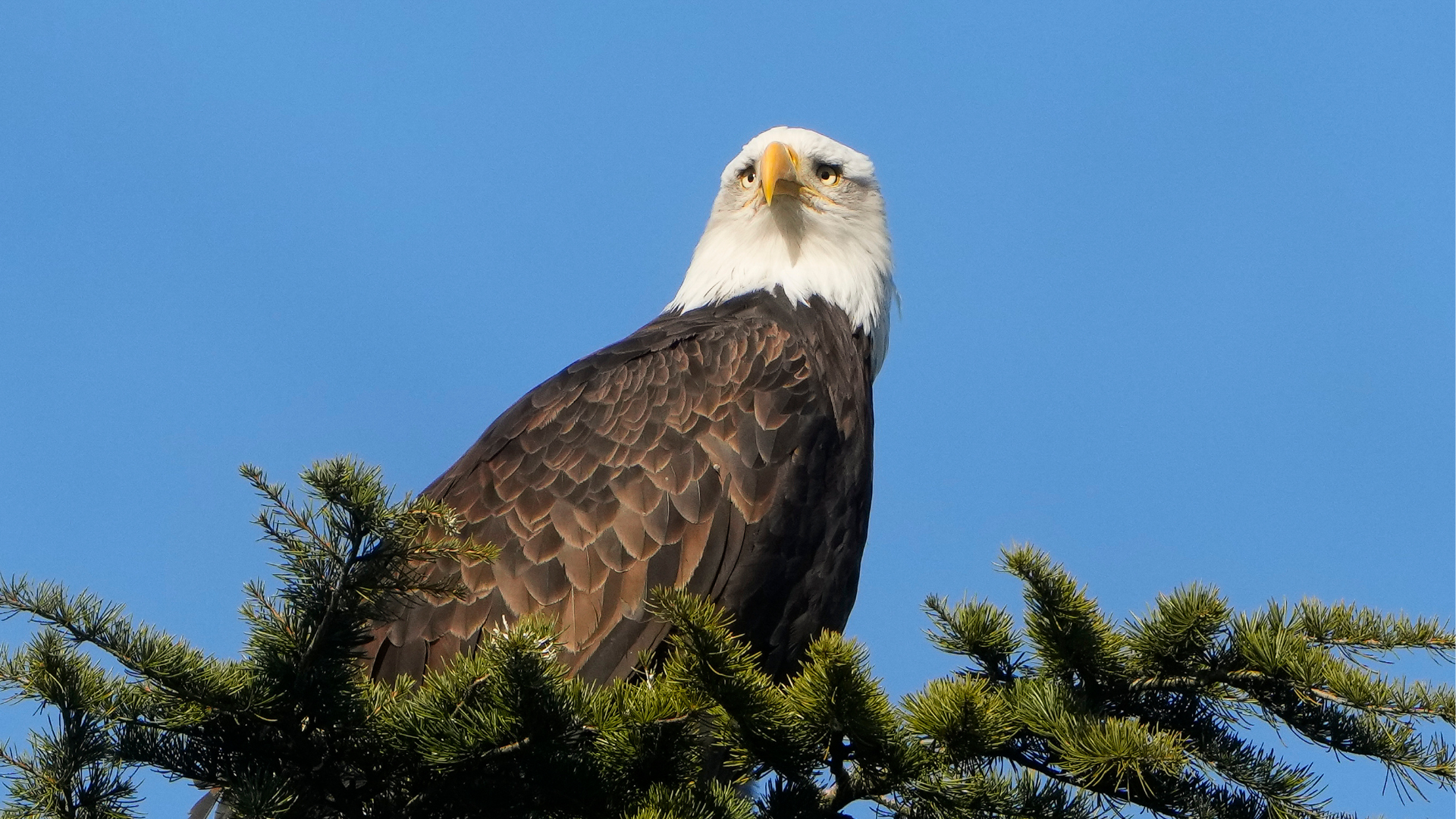
The eagle was found with shotgun pellets in its brain, federal prosecutors said.
ByBill Hutchinson 
Wednesday, August 5, 2026 1:20PM
Watch ABC News live news stream and get 24/7 latest, breaking news coverage, and live video.
Live
Watch ABC News live news stream and get 24/7 latest, breaking news coverage, and live video.
Federal criminal charges have been filed against a Washington state man whom authorities allege fatally shot a bald eagle in the head on his rural property, authorities said.
Benjamin G. Allen of Brush Prairie in Clark County, Washington, was charged Tuesday with violating the Bald and Golden Eagle Protection Act and unlawfully killing a migratory bird, according to a statement from the U.S. Attorney’s Office for the Western District of Washington.
If convicted of the misdemeanor charges, Allen could face up to a year in prison and a fine of up to $500,000, the statement said.
ABC News could not reach Allen for comment on Wednesday. It was unclear if Allen has hired an attorney.
The 66-year-old Allen “is accused of shooting and killing the bird with a shotgun,” according to the statement.

00:00
03:06
Read More
The incident occurred on Feb. 5, 2026, when a witness reported hearing a gunshot coming from Allen’s property, the statement said.
“According to records in the case, special agents from Washington Department of Fish and Wildlife were called to the property in Brush Prairie regarding a dead eagle with blood around its head,” according to the statement, which further said that agents interviewed Allen about the deceased eagle and “his actions that day.” The statement did not disclose what Allen may have told the agents.
“Allen kept chickens not far from where the dead eagle was discovered,” the statement noted, adding that an exam by a veterinarian concluded the eagle died from two shotgun pellets found in its brain.
Allen has been summoned to appear in U.S. District Court in Tacoma, Washington, on Sept. 8.
While bald eagles are the national symbol of the United States, they are no longer considered endangered. The birds, however, are still protected under the 1940 Bald and Golden Eagle Protection Act, which prohibits individuals from killing them.
The charges against Allen come after a 42-year-old Texas man, Santos Guerrero, pleaded guilty in May to federal charges that he fatally shot a bald eagle on his property near Houston in 2024. Guerrero faces up to a year in prison and a $100,000 fine when sentenced, according to the U.S. Attorney’s Office for the Southern District of Texas.
In another case in Washington state, 49-year-old Travis John Branson of Cusick was sentenced to nearly four years in prison and fined $777,250 after he pleaded guilty in 2024 to charges stemming from the killing of numerous eagles and hawks on Washington’s Flathead Indian Reservation, according to federal prosecutors.
Prosecutors said Branson admitted to a self-described “killing spree” of thousands of eagles and hawks between 2009 and 2021, butchering the birds and selling their parts, including eagle feathers, on the black market. Prosecutors said investigators traced the deaths of 118 eagles and 107 hawks directly to Branson.