As the number of infected dairy herds mount, so too does pessimism about driving H5N1 out of cows
Reply


Irish StarFollow
63.1K Followers
Story by Alex Shipman & John O’sullivan
• 1h • 3 min read

Both Thomas Matthew Crooks’ home and car were reportedly laden with explosives© The Express
Reports indicate that the man who attempted to assassinate Donald Trump was found with explosives in his vehicle and at his residence. Twenty-year-old Thomas Matthew Crooks – whose photos were released earlier – was fatally shot after discharging rifle shots at the ex-president during a gathering in Butler, Pennsylvania on Saturday.
Certificates of Deposit (CDs) Rates7.6% High Yield CD! Find High CD Interest Rates Now
The New York Times has been informed by sources that upon searching Crooks’ car, authorities discovered two explosive devices, and they suspect a third was located at his home. Fresh information is surfacing about the gunman, a resident of Bethel Park, Pennsylvania – a community situated roughly an hour and 15 minutes drive from Butler.
According to two law enforcement officials, who disclosed information to the Associated Press, it’s believed that the firearm was an AR-style rifle, purchased by his father over six months ago, reports the Express US. The FBI is currently piecing together how Crooks came into possession of the weapon and his underlying motive. He is the primary subject of the ongoing investigation, as stated by officials.
A police cordon has been established around the vicinity of the assailant’s home, nestled in the hilly suburbs of working-class Pittsburgh.
 Related video: Trump’s Murder Bid: Who was Sniper Thomas Matthew Crooks, Which Weapon He To Shoot Trump | Watch (Oneindia (Video))
Loaded: 58.64%Play

Current Time 0:58
/
Duration 3:24Quality SettingsCaptionsFullscreen

Trump’s Murder Bid: Who was Sniper Thomas Matthew Crooks, Which Weapon He To Shoot Trump | WatchUnmute
0
More videos
Crooks’ political affiliations remain ambiguous; while he was registered as a Republican voter in Pennsylvania, campaign finance documents reveal a $15 donation to a progressive political action committee on January 20, 2021, the day President Joe Biden took the oath of office.
Pennsylvania court records show no criminal history for him. In a post on Truth Social, Trump expressed his belief that “it was God alone who prevented the unthinkable from happening” amidst the crowded rally.
Following a heartfelt plea, he uttered: “Thank you to everyone for your thoughts and prayers yesterday, as it was God alone who prevented the unthinkable from happening.”
For all the latest news straight to your inbox, sign up for our FREE newsletters here.
Keeping his composure, he added: “We will FEAR NOT, but instead remain resilient in our Faith and Defiant in the face of Wickedness. Our love goes out to the other victims and their families.”
Certificates of Deposit (CDs) Rates7.6% High Yield CD! Find High CD Interest Rates Now
He didn’t forget those wounded when he mentioned: “We pray for the recovery of those who were wounded, and hold in our hearts the memory of the citizen who was so horribly killed.”
In his final note to unity, he declared: “In this moment, it is more important than ever that we stand United, and show our True Character as Americans, remaining Strong and Determined, and not allowing Evil to Win.”
Wrapping up his message with optimism and forward-looking words, he stated: “I truly love our Country, and love you all, and look forward to speaking to our Great Nation this week from Wisconsin.”
July 11, 2024
https://newatlas.com/biology/seabirds-foraging-hurricanes/
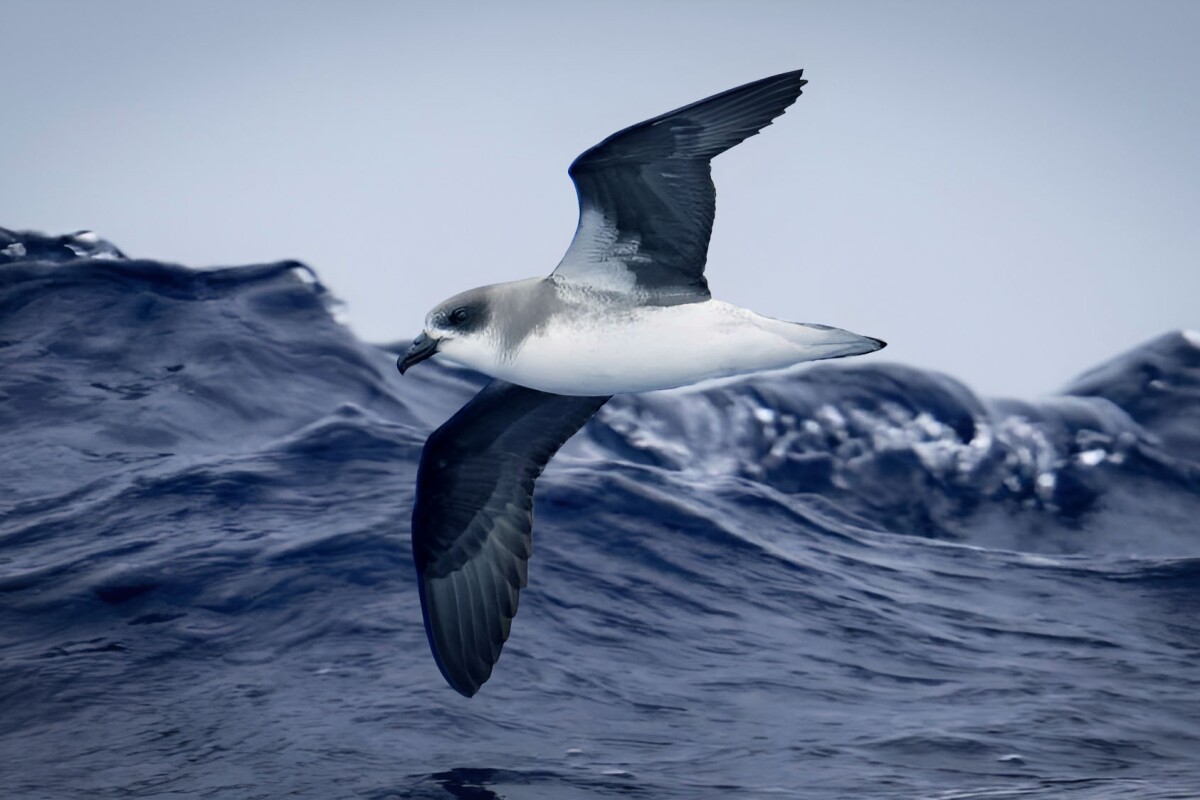
The Desertas petrel has learnt to exploit storms
Kirk Zufelt/WHOI
VIEW 1 IMAGES
A daredevil seabird species has learnt to harness the insane power of hurricanes, seeking out storms over the ocean to ‘ride’ them for their own benefit. It’s the first time this behavior has been observed, and now has scientists wondering if it’s far more widespread in the avian world.
In October last year, we reported on the case of a streaked shearwater that had embarked on a thrilling 700-mile (1,130-km) ride on a typhoon, revealed in great detail thanks to a GPS tracker. Scientists at the time thought it may have been taken by surprise by the storm, unable to escape the intense winds that flung the bird 15,000 feet (4,500 m) above its regular flying range.
MORE STORIES

Astronauts may soon be drinking their own “pee water” via real-world stillsuits

New microwave process could let astronauts make bricks out of moon dust
But this new groundbreaking report from the Woods Hole Oceanogeaphic Institution (WHOI) upends that hypothesis, with the pelagic Desertas petrel seabirds flying towards hurricanes like Helen Hunt chasing down tornadoes in Twister.
“Initial studies suggested that seabirds either circumnavigate cyclones or seek refuge in the calm eye of the storm. However, the Desertas petrels we tracked did neither; instead, one-third of them followed the cyclone for days, covering thousands of kilometers,” said lead author Francesco Ventura at WHOI. “When we saw the data, we nearly fell off our chairs. This is the first time we have observed this behavior.”
The pigeon-sized petrels (Pterodroma deserta), which nest on Portugal’s Bugio Island, off western North Africa, will spend weeks at sea in a foraging frenzy that takes them on a 7,500-mile (12,000-km) round trip across the Atlantic Ocean. But because they can’t dive that deep, they tend to have to wait until nighttime for fish, squid and crustaceans to appear closer to the water’s surface. And this is where the hurricanes come into play.
“We correlated the birds’ locations with intensifying storm conditions, including waves up to eight meters (26 ft) high and wind speeds of 100 kilometers (62 miles) per hour,” said Ventura. “Upon encountering strong winds, the birds reduced ground speed, likely by spending less time in flight to avoid injury to their wings. In addition, the wakes of the storms provided predictably favorable wind conditions with higher tailwind support than alternative routes. Impressively, none of the birds we tracked were harmed by the storms and there was no incidence of nest desertion.”
The high winds and rough seas bring cooler, deep-sea water to the surface, and an increase in chlorophyll due to this mixing, which ramps up phytoplankton abundance, bringing with it the fish, squid and crustaceans that feed on it. This results in a seafood buffet for the birds, meaning far less time and energy invested in feeding.
“The cyclones present a highly valuable foraging opportunity for Desertas petrels because the storms churn up mesopelagic prey from deep within the vertical column, giving the seabirds an easy meal at the surface,” said Ventura. “While storms are typically seen as destructive, particularly in coastal areas, our research reveals that functional perturbance driven by storms can create new opportunities. We’re advancing our understanding of how petrels navigate the open ocean to find food.”
It’s the first time this sort of collective storm-surfing behavior has been recorded, and it’s a big win for scientists who have long struggled to study how hurricanes and other intense weather fronts impact birds at sea.
“It’s striking how well the birds know how to exploit the large-scale wind conditions over the North Atlantic for their travels,” said Caroline Ummenhofer, a scientist at WHOI. “When you overlay the petrels’ foraging trips on top of average winds, it’s a very close match.
“As we’ve now discovered, Desertas Petrels follow hurricanes where prey have accumulated closer to the surface in the wakes of the storms,” added Ummenhofer. “We now have a fresh perspective on hurricanes’ impact on marine ecosystems through the eyes of an apex predator.”
It’s a remarkable glimpse at wildlife adaptation, as the birds essentially game the system for their benefit.
“This study provides valuable insights into the resilience and foraging strategies of pelagic seabirds in the face of extreme weather events,” said Ummenhofer.
The study was published in the journal Cell Biology.

