White House Issues Nuclear Weapons Update
Reply

By Paul Sutter
published 10 hours ago
Is there a center of the cosmos, and if so, where is it?


The James Webb Space Telescope deep field image showing some of the earliest and most distant galaxies ever seen. (Image credit: NASA, ESA, CSA, and STScI)
The universe is undeniably vast, and from our perspective, it may seem like Earth is in the middle of everything. But is there a center of the cosmos, and if so, where is it? If the Big Bang started the universe, then where did it all come from, and where is it going?
To start tackling these questions, let’s go back about 100 years. In the 1920s, astronomer Edwin Hubble made two amazing back-to-back discoveries: Early in the decade, he found that “island universes,” now known as galaxies, sit very far away from us; later that decade, he discovered that, on average, all galaxies are receding away from us.
Thankfully, there was already a handy theoretical explanation for all of this. Einstein‘s theory of general relativity had predicted that the universe was dynamic — either expanding or contracting. That contrasted with the prevailing view at the time: that the cosmos was perfectly static. And so it was up to a quartet of scientists working semi-independently to take Einstein’s equations at their word, developing what is now known as the Friedmann-Lemaitre-Robertson-Walker metric, the foundation of modern cosmology.
Amazon’s Worst Nightmare: Thousands Canceling Prime for This Clever HackOnline Shopping ToolsLearn More
Click here for more Space.com videos…
This solution to Einstein’s equation, together with Hubble’s startling observations, tells us that we live in an expanding universe. On average, all galaxies are getting farther away from all other galaxies, and long ago, all the matter in the cosmos was compressed into an infinitely tiny point known as the singularity — the Big Bang.
Related: How was the universe created?
So where is the Big Bang? Surely, that would be the true center of the universe. Unfortunately, the reality that we have uncovered about the universe through modern science does not lend itself to an easy explanation, or even the ability to imagine it. That’s because there is no center of the universe. There is no edge, either. The cosmos is not expanding from anywhere, and it’s not expanding into anything.
First, let’s tackle the edge. The universe is, by definition, all of the things that there ever could be. Edges are things that divide one region from another. But if the universe consists of all regions, there can’t be an edge. This means the universe might be infinitely big, and it’s impossible to point to the center of an infinite space.
Sign up to our newsletter for the latest updates on rocket launches, skywatching events and more!Contact me with news and offers from other Future brandsReceive email from us on behalf of our trusted partners or sponsorsBy submitting your information you agree to the Terms & Conditions and Privacy Policy and are aged 16 or over.
Another possibility is that the universe is indeed finite. But this would mean that at very vast scales — far larger than what we can observe — the cosmos curves back on itself. This also means it doesn’t have a center.
As an analogy, look at Earth. You can point to the center of the three-dimensional planet — it’s the molten bit in the core. But try to point to the center of Earth’s surface, like on a map. It could be at 0-0 latitude and longitude; it could be at the poles; it could be at your grandma’s house. Any point is just as good as any other.
This means the Big Bang happened everywhere throughout the universe simultaneously; it happened in the room you’re sitting in, and it happened in the most distant galaxy we can see. The Big Bang was not a point in space; it was a location in time. It belongs in the finite past of every entity in the universe.
RELATED STORIES:
—What is the big rip, and can we stop it?
—The history of the universe: Big Bang to now in 10 easy steps
But there is an interesting twist to this story. The universe does have an age; it’s about 13.77 billion years old. And because the speed of light is only so fast, only a small portion of the cosmos is illuminated for us. There’s a limit to what we can see, and that edge is about 45 billion light-years away. (This is possible because the universe expands faster than light.)
The vast majority of the universe is hidden from us, like the beam of a flashlight in a far forest; we can see only to the limits of the light. And from our perspective, all other galaxies are racing away from the Milky Way.
It appears as if we were at the center of the entire universe. Of course, the same could be said of any galaxy within the cosmos. From their perspective, they are at the center of their observable bubble, and all galaxies are racing away from them.
That’s the curse and the blessing of an expanding universe. There is no center, and yet at the same time, all observers, including us, can rightfully claim to be in the middle of it all.

June 16, 2024
| Play Ted Nugenton Amazon Music Unlimited (ad) |
Rock musician and hunting enthusiast Ted Nugent, who recently lost his beloved family dog Happy, spoke out in support of hunting rights during an appearance on the latest episode of The Chuck Shute Podcast. Referencing the fact that he cried for days after Happy died, Ted said in part (as transcribed by BLABBERMOUTH.NET): “I eat venison. I don’t eat dogs. [Former U.S. president] Barack Obama eats dogs, but I don’t eat dogs. And I have some friends in Vietnam and China that eat dogs, and it’s meat. If that’s what you wanna eat, but we don’t have that relationship with our dogs. Even though if you go to a Chinese restaurant, I promise you you’re gonna eat dogs at some point and cats. The point is, is that I’m a hunter, a fisherman and trapper. I harvest the surplus to maintain a healthy environment. Anybody who’s got a problem with that is like brain dead. You’ve gotta be the dumbest motherfucker on the planet to think you can stop hunting for one season. I donate tons of venison, which is the purest, most healthy, nutritious, delicious protein in the world. [My wife] Shemane and I, and my son, my family, we donate tons of venison to soup kitchens and homeless shelters. Do you really know somebody that has a problem with that? Can you realize how soulless, how nasty a person would have to be to go, ‘Well, you shouldn’t feed the homeless venison.’ [Laughs] Fuck you. “
Regarding the fact that hunting is often criticized for being inhumane and cruel to animals, Ted said: “As a hunter, fisherman and trapper, I provide the most humane, conscientious, moral, quick death of anything that dies in nature. When you don’t hunt, disease runs in, distemper and rabies.
https://imasdk.googleapis.com/js/core/bridge3.646.1_en.html#goog_1506099971
191.7K
Led Zeppelin: Jimmy Page On Making The Led Zeppelin Remasters – Part 1 | Louder
“When I drove to Detroit yesterday to jam with a bunch of guys, and even going 100 miles an hour in my Hellcat, I counted, just visible, 111 dead deer. I couldn’t keep up with the raccoons and the possums and the skunks and the other dead [animals]. I mean, there’s death every 50 feet. So if you stop hunting for one year, can you imagine the terror, the harm, the painful, agonizing death from cars and disease and overpopulation?
“To be against hunting is to literally have no soul,” he continued. “You have no soul. And quite honestly, my son Rocco is a vegan and his new fiancée, they’re vegans. They have dietary considerations. I have no problem with that. I’ve never said, ‘You have to eat meat,’ but some of these nutcases go, ‘You’re cruel for eating deer.’ No, you’re cruel for being against a meaningful science-based harvest of the deer, because they’re having fawns now, and if I didn’t kill a bunch of deer on my swamp, there’d be no room for those fawns and they would eat all the prime vegetation and they would end up…
“I’m a hunter and I couldn’t be more proud,” Ted added. “In fact, there’s a gay pride month. Is that what that is? Well, I’m having a hunter pride month. I’m celebrating that I’m a hunter and I’m proud to be an American hunter. And anybody that’s got a problem with that, shut the fuck up.”
Nugent went on to criticize animal rights activists, saying: “The animal rights thing is a scam. The humane society in the United States has never saved an animal. All they do is they try to take advantage of people’s ignorance and emotion and get [a lot of] people to make gargantuan donations. And then they don’t do anything except pay them big salaries and fly across the country. It’s a scam. If you really wanna do the right thing for an animal… if you wanna find someone that is kind, loving and supportive and humane to animals, I give you the ranchers and farmers, the family ranchers and farmers, the hunting families, the fishing families, the trapping families. If you don’t harvest the surplus, the new production will have nowhere to live. It’s so simple, even guitar players can figure it out.
“You’ve gotta reduce the fish population in any body of water because they’re going to reproduce and the body of water is only so large,” he explained. “It’ll only support so much life. Do I have to say this in 2024? How embarrassing that I have to explain the simplicity of sustained yield science.
“Hunting, fishing, and trapping is the ultimate beneficial environmentalism available to man. If you want clean air, soil and water — it’s insane I have to say this; it is not taught in schools, thanks to the teacher’s union — if you want clean air, soil and water, and I think everybody wants clean air, soil and water, the best thing you can do is to buy a hunting license, a fishing license and a trapping license because all of our money goes to safeguard habitat, determine the sustained yield science of the annual harvest so that they don’t deplete that wildlife habitat, which is the only source of producing clean air, soil and water. So if you want clean air, soil and water, thank a hunter, thank a fisherman, thank a trapper, ’cause that’s what we do.”
Back in 2018, Nugent defended trophy hunting, calling it “the ultimate discipline and test and sport on Earth.” However, he stressed that it is most important that nothing is wasted and that the hunter uses every part of the animal. He also said that hunters get a bad rap thanks to the media. “Trophy hunters don’t cut off the head and leave the body there [like] the media and the fake-news punks have perpetuated,” Nugent told podcaster Mitch Lafon.
In 2015, Nugent drew the ire of animal rights activists after he posted a photo of fellow rocker Kid Rock posing with a cougar he’d presumably killed.
Nugent, a longtime board member of the National Rifle Association, fanned the flames with a comment that both insulted animal welfare supporters (“braindead squawkers”) and boasted about their “trophy.”
That same year, Ted defended the killing of Cecil the lion by American trophy hunter Walter Palmer, saying people were “stupid” for being outraged about the animal’s death. He called lions “a renewable resource.”
On Facebook, he commented: “All animals reproduce every year & would run out of room/food to live [without] hunting. The animals have more animals EVERY year!! Where would liars propose they live!!”
The 75-year-old Nugent has in the past referred to Barack Obama as a “subhuman mongrel.” The musician later apologized for using “street-fighter terminology” and said he wished he used “more understandable language,” such as “violator of his oath to the Constitution.”
https://blabbermouth.net/news/ted-nugent-to-be-against-hunting-is-to-literally-have-no-soul
USA TODAY
https://www.usatoday.com/story/news/nation/2024/06/16/bird-flu-spreading-concerns-grow/74090745007/
0:26
1:47
https://imasdk.googleapis.com/js/core/bridge3.646.1_en.html#goog_1760165027
More than three years into a worldwide outbreak of bird flu, the virus continues to expand in the U.S., with growing impacts to food production and animals. Over 80 million chickens, thousands of wild birds and dozens of mammal species, including a polar bear, have been infected.
Now it’s running rampant among dairy cows, turning up in 94 herds across 12 states since March. The latest animal to test positive was an alpaca on an Idaho farm.
“It’s gigantic, the scope and scale of the presence of the disease,” said Julianna Lenoch, national coordinator for the Department of Agriculture’s wildlife disease program.
This scale ‒ and related concerns ‒ are reflected in the price of eggs, renewed warnings to cook ground beef and eggs thoroughly, and in extraordinary measures dairy and poultry farmers are being asked to take to prevent its spread.
As the outbreak lingers and expands, it’s prompting growing concerns about the risks to humans and the influence of warmer temperatures and more extreme weather events in making this and future pandemics worse.
The highly contagious H5N1 virus has spread to six continents since the first detections in Europe and Asia in 2020. It has been reported across North and Central America and most of South America and has been found on every continent except Australia. It also turned up in Antarctica last fall raising alarm about potential consequences for some of the world’s most beloved birds: penguins.
Timeline:From chickens to foxes, here’s how bird flu is spreading across the US
The U.S. has experienced avian influenza outbreaks in the past, but this one is lasting longer and is more widespread. Domestic poultry flocks, either in commercial operations or backyard flocks and farms, have been infected in every state except Louisiana and Hawaii, including more than 5.9 million birds just since May 1.
Get the Daily Briefing newsletter in your inbox.
The day’s top stories, from sports to movies to politics to world events.
Delivery: DailyYour Email
Since 2022, infections have been reported in 14 million turkeys and 80 million chickens, including 71 million egg layers. Farmers must kill chickens and turkeys when a poultry flock tests positive, and experts say the slaughter to prevent human infection has helped drive up the cost of eggs.
Infected mammals have been found in 31 states, with the greatest number of infections found in foxes, mice, striped skunks, mountain lions, cats and harbor seals.
Research studies find the prolonged presence and spread of the virus increases the risk of genetic mutations that could allow it to pass more easily from animals to people and among people.
“The longer we have virus out there, the more possibility there is for changes,” said Lenoch, who oversees the federal program responsible for tracking the virus in wild birds.
Yes, but the risk in the U.S. is still very low, federal officials reiterated in a Thursday briefing. They say the public should be “alert but not alarmed.”
Since it arrived during the winter of 2021-2022, four people have tested positive in the U.S. All were exposed to the virus on farms. In the first case, in 2022, the worker was helping to cull infected poultry on a farm. All three patients this year had exposure to dairy cows. Two only reported conjunctivitis, or pink eye, while the third also experienced upper respiratory symptoms. No one in the U.S. has died from the virus, according to federal officials, but deaths have been reported internationally.
So far, for the general public, everything but raw milk is considered safe, federal officials say, as long as you’re cooking ground beef and eggs all the way through. Cooking takes care of any remnants of the virus that could be in egg yolks or in ground beef after once-infected dairy cows are shipped to market to be butchered.
In milk, pasteurization kills the active virus so it can’t be transmitted, federal research shows. However, harmless traces of the virus remain, and are found in an estimated 20% of the nation’s milk supply.

The Food and Drug Administration said it does not know if the virus can be transmitted in raw milk, but has asked states that allow the sale of raw milk to restrict it as a precautionary measure.
“The fact that it’s in 20% of our milk supply should be disturbing to everyone because that means it’s gone around already,” said Xavier Becerra, U.S. Health and Humans Services secretary, during a speech to the Western Governors Association last week. “If it starts to jump, that’s when we really have to worry.”
The great concern among federal agencies and researchers is that the virus will evolve and become more contagious among humans. For now, it’s hard for humans to contract the virus and it hasn’t been passed from person to person.
Without stringent measures to avoid repeated viral transmission between wild and domestic animals, experts say the risks to people could grow.
The Department of Agriculture and Centers for Disease Control and Prevention are urging farmers to step up efforts to prevent the spread by cleaning and disinfecting equipment, especially when the same equipment is used to handle manure and feed and to better protect farm employees.
Preventing farm to farm spread is “really critical,” agency officials said Thursday.
The outbreak is “unique in global expansion” and in the number of bird and mammal species that it’s infecting, concluded a study published earlier this year by Tufts University researchers Jonathan Runstadler and Wendy Puryear. “Though the risk to humans remains low, this unexpected outbreak well illustrates the continued need for vigilance and further study,” the study stated.

Avian influenza is spread globally among birds, particularly migratory waterfowl such as ducks. They’re natural reservoirs and migrate over long distances, traversing hemispheres in some cases. As they travel, infected birds shed the virus in mucus, saliva, and feces.
In previous outbreaks, wild birds would often get exposed and just carry the virus around with no symptoms, Lenoch said. With the current strain that has evolved, wild birds have been getting sick and dying in large groups.
The virus raises many concerns, not only because of its impacts on human health and agriculture, but also because it’s killing wildlife, such as seabirds, raptors and marine mammals, said Diann Prosser, a research wildlife biologist with the U.S. Geological Survey’s Eastern Ecological Science Center.
The spillover into dairy cows is rare and officials aren’t certain how it started. One study released by federal officials this week said it likely started with wild birds infecting a cow in the Texas Panhandle. Cows from that herd, which weren’t showing any symptoms at the time, the report stated, were shipped to Michigan, where the virus quickly spread to other states. Investigations continue.
Typically, outbreaks eventually burn themselves out as wild birds build immunity and stop spreading the virus. That’s expected to occur this time, as well, but it’s taking longer than usual.
Scientists don’t fully understand all the methods of transmission, but most involve bird poop.
Wild waterfowl are the main carriers, said Maurice Pitesky, an associate professor in cooperative extension, poultry health and food safety epidemiology at the University of California Davis.
The first four U.S. birds discovered with it were wild ducks taken by hunters in the Carolinas. Lenoch said the nation’s duck hunters, who have their own suggested safety guidelines, have been invaluable at working with officials to get wild waterfowl tested.
Pitesky listed these examples of ways the bird flu virus may be transmitted:
A visual guide:The bird flu outbreak
A key difference between this outbreak and previous ones is an increase in global average temperatures, especially since this outbreak started. Last year was the hottest year on record, and this year appears to be charting a similar course.
The potential for warmer temperatures to alter the transmission of viruses and contribute to global pandemics has long been a concern to scientists studying potential links between climate change and the spread of viral outbreaks and pandemics.
Prosser was a co-author on a study last fall that pointed out changing climate patterns and extreme weather events closely parallel this “unprecedented global spread of highly pathogenic avian influenza.”
There’s no single answer to the link between climate change and the bird flu outbreak in the U.S. and further studies are needed, she said. On one hand, flu particles could degrade more quickly in warmer conditions which would decrease its ability to spread. However if heat waves cause changes in food resources or immune stress in humans or animals, the virus might be able to spread more easily, she said.
The warming climate isn’t the only thing altering the environment, Pitesky said. Human encroachment on agriculture and wild landscapes may be an even bigger potential factor.
Farms now increasingly are found near wild areas, especially wetlands, as agricultural areas expand and droughts dry up existing wetlands.
“We’re producing more poultry than ever before and the more poultry we’ve produced, the less room for wild waterfowl, and less habitat for animals to roost and feed,” Pitesky said. If these wild areas overlap with domestic poultry and cattle farms, it increases the potential for more disease transmission.
“In California we’ve lost 95% of our natural wetlands, primarily to agriculture,” he said. “There’s obviously benefits to that when it comes to feeding 8 billion (people).” But an unintended consequence is “waterfowl are using suboptimal habitats.”

By Yajati Keshari Rout On Jun 16, 2024
ShareFacebookTwitterTelegramWhatsapp
Bhubaneswar: A man died after being shot at allegedly by his brother-in-law while both had gone to poach wild animals in the forest near Bhaliagani village within Mohana police station limits of Gajapati district.
The deceased man has been identified as Kailash Nayak.
According to sources, the incident took place Saturday, while Kailash and his brother-in-law were hunting wild animals and a bullet hit Kailash killing him on the spot.
Reportedly, police have seized the body and sent it for post-mortem. Also, the police have detained the deceased’s brother-in-law, suspected of opening fire on Kailash.
Police have started investigating the incident to ascertain whether it is a case of murder or an accident, sources added.
The Wyoming Game and Fish Department killed three bighorn sheep that wandered into Sinks Canyon State Park out of concern for disease, but a local wildlife researcher questions the need for the killings.
June 14, 20244 min read
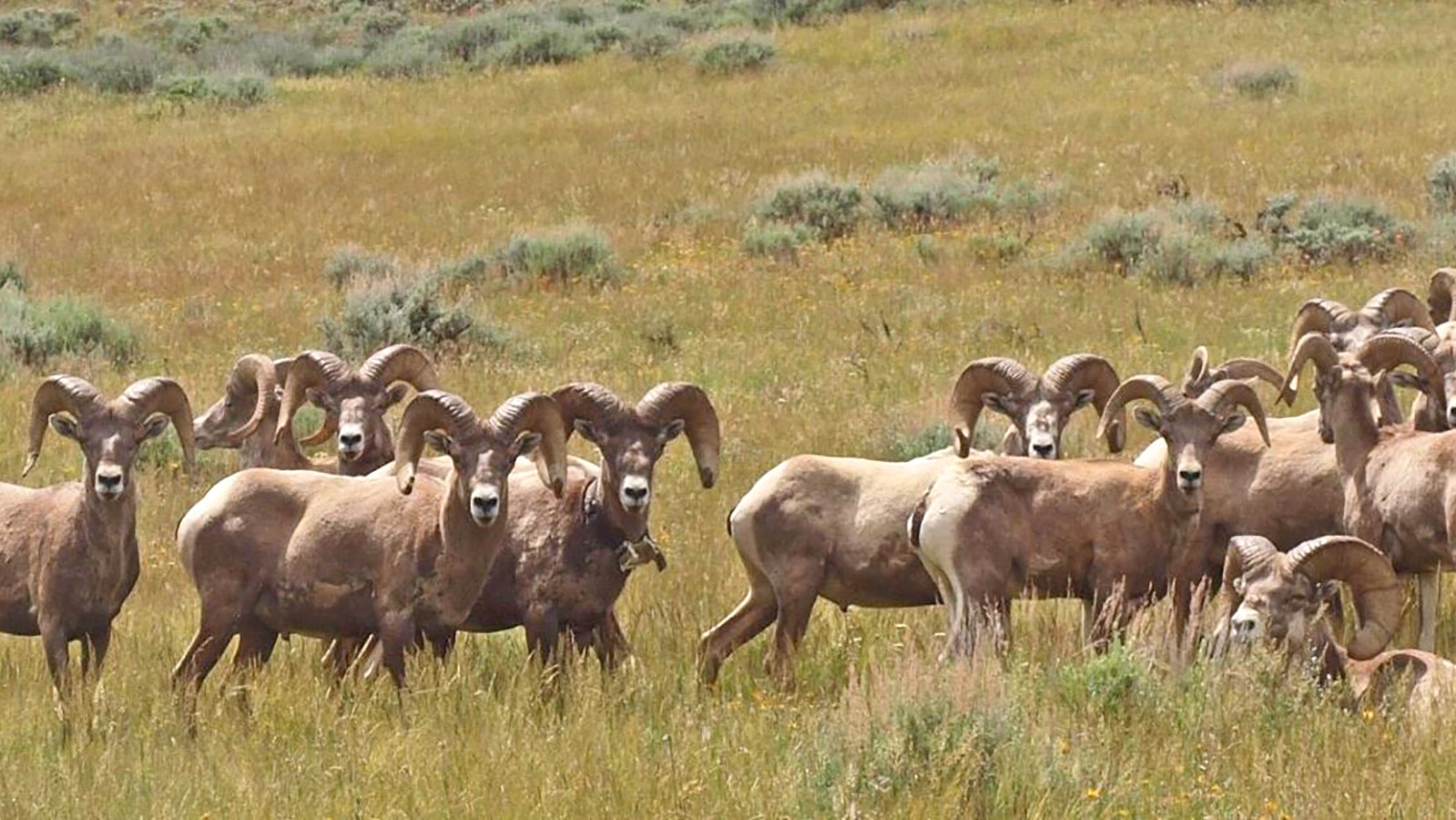
Wyoming Game and Fish personnel recently killed three young bighorn rams that wandered into Sinks Canyon State Park, per state policy to prevent the potential spread of lethal disease to other wild sheep.
But a local wildlife researcher questioned the need for the action, suggesting that bighorns should be tested for possible pneumonia infection from domestic sheep before they’re killed, not after.
“I would like to have them take an animal’s life on evidence of a problem, and not just summarily take an animal’s life on the assumption that they’re infected,” Jack States, who lives in the Sinks Canyon area, told Cowboy State Daily on Friday.

Wyoming has a policy to prevent bighorn from mingling with domestic sheep whenever possible. Bighorn are vulnerable to pneumonia and other respiratory diseases that can potentially spread to them from domestic sheep.
So, the rams that wandered into Sinks Canyon State Park were killed to prevent the possibility of them becoming infected and carrying it back to wild herds, according to Game and Fish.
“When bighorn sheep co-mingle with domestic sheep, they may be exposed to bacteria that domestic sheep are known to harbor,” the agency says. “While these pathogens, or bacteria, may be treatable in domestic sheep, they can be fatal to bighorn sheep.”
It’s because of that risk that wildlife officials say they take that drastic action.
“Wandering bighorn sheep pose a very high risk of introducing pathogens back into their wild herds, and we want to prevent future disease events from happening. Bighorn sheep are very sensitive to many pathogens, so we take reasonable precautions to prevent exposure of these pathogens to the herd,” Game and Fish Wildlife Health Laboratory Supervisor Jessica Jennings-Gaines said in a statement from the agency.
Young rams are known to range long distances, but frequently return back to their herds, according to Game and Fish.

It’s thought the rams that were killed came from North Fork Canyon northwest of Lander, “where a small herd exists,” according to the agency.
Tissue samples were taken from the lambs and sent to a laboratory to be tested for disease. Meat from the animals was donated to needly locals.
From the perspective of ranchers, there is also concern that allowing bighorns and domestic sheep to get too near each other could in some instances cause sheep ranchers to lose their grazing leases on federal lands.
Some central Wyoming ranchers are worried about that, in light of the proposed reintroduction of bighorn sheep into the remote and rugged Sweetwater Rocks area.
States has a Ph.D. in environmental ecology and has assisted Game and Fish and U.S. Fish and Wildlife Service with bighorn research in Wyoming and other states.
He said he understands the concerns over wild and domestic sheep mingling and the threat of disease.

But he questions the need to kill bighorn sheep without trying to capture them, get blood samples and test those for disease first.
“What if they’re not infected?” States asked. “What if those sheep came from a herd that was not infected, and they eliminated their right to try to find a new habitat?”
He said that respiratory disease infections are common in bighorn sheep across Wyoming, and many rams might have developed some immunity.
Ewes don’t seem to have as much immunity, and bighorn lambs seem especially vulnerable to dying from infections, he said.
The famed Whiskey Mountain herd, also near Lander, has battled waves of disease outbreaks since the 1990s.
States said he’s worried about the future of that herd, particularly because lambs keep dying from disease.
“I think they’re still in decline, though they haven’t had the sort of massive die-offs they did in the 1990s,” he said. “We’re not getting the necessary recruitment (lamb survival rates) to prevent the extinction of that herd,” he said.
Allowing bighorn to expand their range in some places might give them better odds, he added.
“We can’t keep restricting bighorn sheep to defined herd units like we’re doing now, where they cross a line and get shot because of possible contract with domestic sheep,” States said.
He said that Game and Fish has kept him in the loop regarding the removal of the rams in Sinks Canyon and the subsequent testing for disease, which he appreciates.
“We need to do everything possible to develop a constructing and transparent relationship with all the agencies involved in sheep management,” he said.

