Washington state’s Makah tribe clears major hurdle toward resuming whale hunts


by GENE JOHNSON Associated PressThu, June 13th 2024 at 9:56 AM

Updated Thu, June 13th 2024 at 11:52 AM

https://komonews.com/news/local/washington-state-wa-makah-tribe-indian-whale-hunt-hunting-olympic-peninsula-noaa-fisheries-waiver-marine-mammal-protection-act-seattle-united-states-clears-major-hurdle

UserWay icon for accessibility widget
FILE - Two Makah Indian whalers stand atop the carcass of a dead gray whale moments after helping tow it close to shore in the harbor at Neah Bay, Wash., May 17, 1999. Earlier in the day, Makah Indians hunted and killed the whale in their first successful hunt since voluntarily quitting whaling over 70 years earlier. The United States on Thursday, June 13, 2024 granted the Makah Indian Tribe in Washington state a long-sought waiver that helps clear the way for its first sanctioned whale hunts since 1999. (AP Photo/Elaine Thompson, File)

FILE - In this May 17, 1999, file photo, a boy reaches out to touch the carcass as Makah Indian whalers strip a gray whale of its flesh and villagers and media members gather around following the tribe's first successful whale hunt in over 70 years, in Neah Bay, Wash. (AP Photo/Elaine Thompson, File)

3

VIEW ALL PHOTOS

View All Photos

FILE – Two Makah Indian whalers stand atop the carcass of a dead gray whale moments after helping tow it close to shore in the harbor at Neah Bay, Wash., May 17, 1999. Earlier in the day, Makah Indians hunted and killed the whale in their first successful hunt since voluntarily quitting whaling over 70 years earlier. The United States on Thursday, June 13, 2024 granted the Makah Indian Tribe in Washington state a long-sought waiver that helps clear the way for its first sanctioned whale hunts since 1999. (AP Photo/Elaine Thompson, File)

Comment bubble

105

SEATTLE — The United States granted the Makah Indian Tribe in Washington state a long-sought waiver Thursday that helps clear the way for its first sanctioned whale hunts since 1999 and sets the stage for renewed clashes with animal rights activists.

The Makah, a tribe of 1,500 people on the northwestern tip of the Olympic Peninsula, is the only Native American tribe with a treaty that specifically mentions a right to hunt whales. But it has faced more than two decades of court challenges, bureaucratic hearings and scientific review as it seeks to resume hunting for gray whales.

The decision by NOAA Fisheries grants a waiver under the Marine Mammal Protection Act, which otherwise forbids harming marine mammals. It allows the tribe to hunt up to 25 Eastern North Pacific gray whales over 10 years, with a limit of two to three per year. There are roughly 20,000 whales in that population.

The hunts will be timed in an effort to avoid harming endangered Western North Pacific gray whales that sometimes visit the area — about 200 to 300 remain — as well as a group of about 200 gray whales that generally spend summer and fall feeding along the Northwest coast.

Nevertheless, some hurdles remain. The tribe must enter into a cooperative agreement with the agency under the Whaling Convention Act, and it must obtain a permit to hunt, a process that involves a monthlong public comment period.

Promoted Links

Which American Cars Cost Less to Insure? (Find out Here)Ottoinsurance.com

The Makah Tribe did not immediately respond to a request for comment.

Animal rights advocates, who have long opposed whaling, could also challenge NOAA’s decision in court. DJ Schubert, a senior wildlife biologist with the Washington, D.C.-based Animal Welfare Institute, said his organization would object to the issuance of the hunt permit but likely wait until final approvals are given before deciding whether to sue.

He noted that while the Eastern North Pacific gray whale population appears healthy now, it has fluctuated wildly in recent years, and no one knows how the whales will fare as climate change continues to affect the Arctic. Scientists estimate that as much as 40% of the population died off from 2018 to last year before it began to recover.

“We completely respect the tribe’s cultural practices and traditions,” Schubert said. “We just fundamentally disagree that they need to hunt whales to continue those traditions. We hope that as this decision-making process plays out, perhaps the Makah Tribe and the government could reconsider the need to hunt whales and advocate for protection instead of persecution.”

Archeological evidence shows that Makah hunters in cedar canoes killed whales for sustenance from time immemorial, a practice that ceased only in the early 20th century after commercial whaling vessels depleted the population.

By 1994, the Eastern Pacific gray whale population had rebounded, and they were removed from the endangered species list. Seeing an opportunity to reclaim its heritage, the tribe announced plans to hunt again.

The Makah trained for months in the ancient ways of whaling and received the blessing of federal officials and the International Whaling Commission. They took to the water in 1998 but didn’t succeed until the next year, when they harpooned a gray whale from a hand-carved cedar canoe. A tribal member in a motorized support boat killed it with a high-powered rifle to minimize its suffering.

It was the tribe’s first successful hunt in 70 years.

The hunts drew protests from animal rights activists, who sometimes threw smoke bombs at the whalers and sprayed fire extinguishers into their faces. Others veered motorboats between the whales and the tribal canoes to interfere with the hunt. Authorities seized several vessels and made arrests.

After animal rights groups sued, the 9th U.S. Circuit Court of Appeals overturned federal approval of the tribe’s whaling plans. The court found that the tribe needed to obtain a waiver under the 1972 Marine Mammal Protection Act.

Eleven Alaska Native communities in the Arctic have such a waiver for subsistence hunts, allowing them to kill bowhead whales — even though bowheads are listed as endangered.

The Makah Tribe applied for a waiver in 2005. The process repeatedly stalled as new scientific information about the whales and the health of their population was uncovered.

Comment bubble

JOIN THE CONVERSATION (105)

Some of the Makah whalers became so frustrated with the delays that they went on a rogue hunt in 2007, killing a gray whale that got away from them and sank. They were convicted in federal court
Two Poaching Groups Kill 26 Javan Rhinos in Ujung Kulon

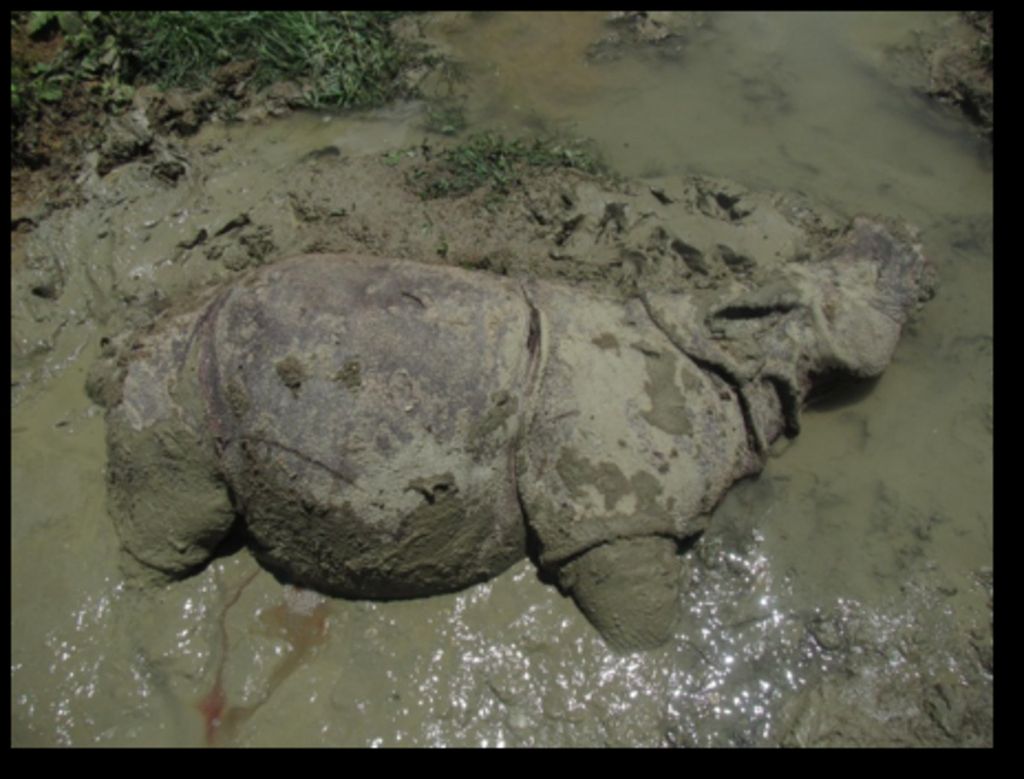
A total of 14 people from two hunting groups were revealed to have killed 26 Javan rhinos in Ujung Kulon National Park.

Audio Berita

7 menit

This article has been translated using AI. See Original 

https://www.kompas.id/baca/english/2024/06/13/en-dua-kelompok-pemburu-terungkap-telah-membunuh-26-badak-jawa-di-ujung-kulon?open_from=English_Page.

By

PRADIPTA PANDU

13 June 2024 16:06 WIB·5 minutes readTEKS 

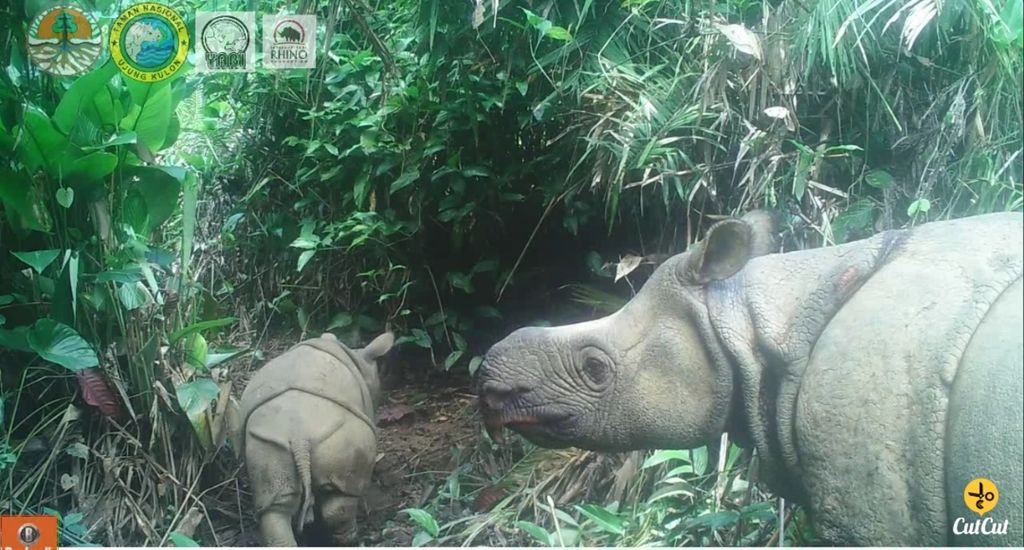
A hidden camera in Ujung Kulon National Park captured footage of a Javan rhino calf and its mother. There are a total of 74 protected fauna species in Ujung Kulon National Park. The photo was sent by the Ministry of Environment and Forestry Public Relations on September 20, 2020.
HUMAS KLHKA hidden camera in Ujung Kulon National Park captured footage of a Javan rhino calf and its mother. There are a total of 74 protected fauna species in Ujung Kulon National Park. The photo was sent by the Ministry of Environment and Forestry Public Relations on September 20, 2020.

A joint team from the Ministry of Environment and Forestry together with the Banten Regional Police arrested five hunters of Javanese rhinoceros (Rhinoceros sondaicus) who had been on the wanted list or DPO. This operation to suppress wildlife poaching in Ujung Kulon National Park is a follow-up operation in 2023.

The arrest of five Javan rhinoceros hunters was revealed at a press conference in Serang, Banten on Tuesday (11/6/2024). The five wanted individuals were apprehended in Kampung Ciakar, Rancapinang Village, Pandeglang Regency, Banten, along with evidence in the form of long-barreled guns and ammunition.

The five fugitives who were successfully apprehended are AT, SAH, LEL, SAY, and IS. All of them are residents of Ciakar Village, Pandeglang. The DPOs are part of a syndicate network that hunts wild animals using homemade firearms.

A total of 14 people consisting of two groups killed 26 Javan rhinos.

Initially, the joint operation on May 7-16, 2024 successfully captured AT. The news of AT’s arrest then led four other DPOs to surrender, namely SAH, LEL, SAY, and IS.

In addition, there are still 8 wanted individuals who have not been apprehended with the names SK, SH, ICUT, RAH, KR, NH, and WD. They are still being pursued to this day.

Previously, in 2023, a person convicted in the same case named Sunendi was sentenced to 12 years in prison and a fine of IDR 100 million by a judge at the Pandeglang District Court. He was sentenced to multiple crimes (multidoor) for possession of firearms, theft of camera traps (trap), and poaching wild animals.

https://cdn-assetd.kompas.id/yJYU35OOpGi6ejhVepxgQN0Qgtg=/1024x779/https%3A%2F%2Fasset.kgnewsroom.com%2Fphoto%2Fpre%2F2019%2F04%2F30%2F1971559b-0258-45fe-9f57-539e46304365_png.jpg
BALAI TAMAN NASIONAL UJUNG KULONundefined

The deepening of the case based on Sunendi’s testimony and the other five suspects shows that the Javan rhinoceros hunters in Ujung Kulon National Park are divided into two groups. The first group is led by Sunendi with a total of 10 members. Meanwhile, the second group is led by a fugitive with the initials RAH and has a total of 4 members.

Banten Regional Police Chief Inspector General Abdul Karim said that the Banten Regional Police had named a total of 14 suspects as perpetrators of Javan rhino poaching in Ujung Kulon National Park. A total of 14 people consisting of two groups killed 26 Javan rhinos.

In detail, the first group had hunted and killed 22 Javan rhinos. This group consists of two suspects who have been arrested, namely SN and AD. Meanwhile, four others are still at large, namely NR, IC, HR and SH.

Then, the second group with suspects SR, LL, and SY killed 4 Javan rhinos. This group has four members who are included in the DPO and are still in the pursuit stage, namely KR, RH, IN, and WD.

Capture process

Abdul Karim explained that his team had received a report regarding the hunting of rhinos from the Ministry of Environment and Forestry Letter No. 176 on May 29, 2023, and Police Report No. 128. Based on the reports, the Banten Regional Police formed a joint task force called the Ujung Kulon National Park Operation Task Force, consisting of 116 personnel.

On November 26 2023, the team succeeded in arresting a DPO with the initials N as a hunter or shooter with evidence in the form of two weapons and ammunition and two handy talkie (HT) units. Then on March 17 2024, the team arrested YG who was acting as a seller with evidence in the form of a ponawl and a transfer slip proving the sale of rhino horn.

Afterwards, on April 23rd, 2024, the joint team succeeded in capturing one person with the initial WL. He acted as a receiver who bought the results of the hunt with evidence of a transfer of the purchase of rhinoceros horn worth Rp 500 million.

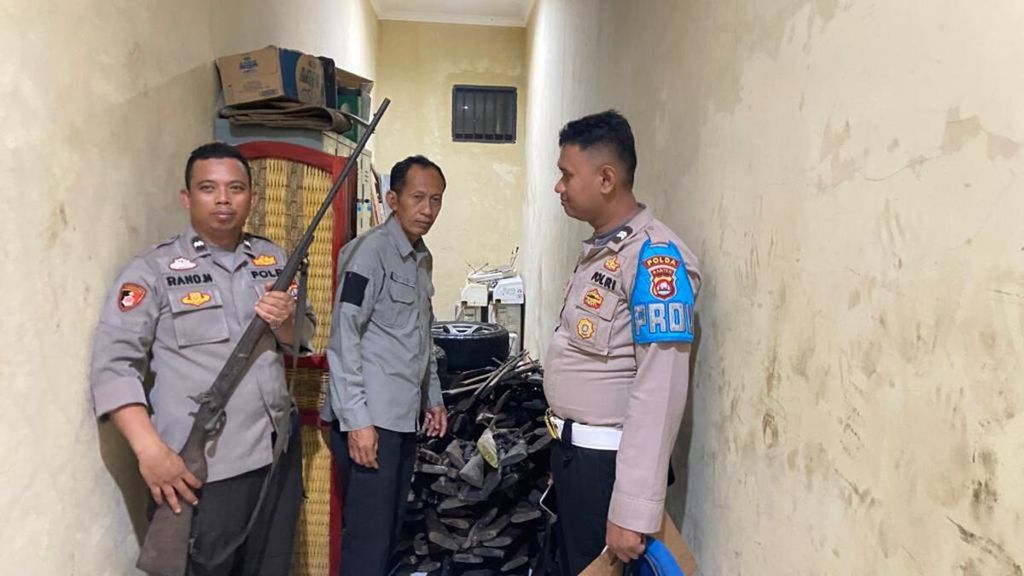
A total of 202 homemade firearms belonging to residents around the Ujung Kulon National Park area were handed over to the Banten Regional Police between 31 July and 3 August 2023. Illegal activities such as poaching threaten the survival of the Javan rhino (Rhinoceros sondaicus) and wildlife. others in Ujung Kulon National Park, Banten.
DOKUMENTASI HUMAS POLDA BANTENA total of 202 homemade firearms belonging to residents around the Ujung Kulon National Park area were handed over to the Banten Regional Police between 31 July and 3 August 2023. Illegal activities such as poaching threaten the survival of the Javan rhino (Rhinoceros sondaicus) and wildlife. others in Ujung Kulon National Park, Banten.

The evidence successfully seized from five wanted individuals in 2024 includes three homemade firearms, 15 lead bullets, gunpowder, steel sling traps, and other equipment. Meanwhile, the evidence seized in 2023 was long and short firearms, active bullets, as well as several protected wildlife parts, including the Javan rhinoceros.

Director General of Law Enforcement at the Ministry of Environment and Forestry, Rasio Ridho Sani, stated that the environmental investigator has been ordered to coordinate with the Banten Regional Police in the development of handling this case, especially in finding eight other fugitive perpetrators and the investors involved.

Also read: Intensive Javan Rhino Conservation Strategy Urgently Implemented

He ensured that law enforcement efforts against perpetrators of environmental crimes, including poaching and illegal wildlife trade, would continue. Multidoor law enforcement efforts are also continuing to ensure maximum punishment and provide a deterrent effect for the perpetrators and all parties involved.

Since 2015 until now, the Directorate General of Gakkum KLHK has carried out 504 operations handling wild plants and animals, 862 encroachment operations, and 767 illegal logging operations. Then, a total of 1,533 cases have entered the P21 stage, 305 have been facilitated by law enforcement officials, 21 cases of civil lawsuits have been inkracht, and 6 cases are in the civil trial process.

Threats in TNUK

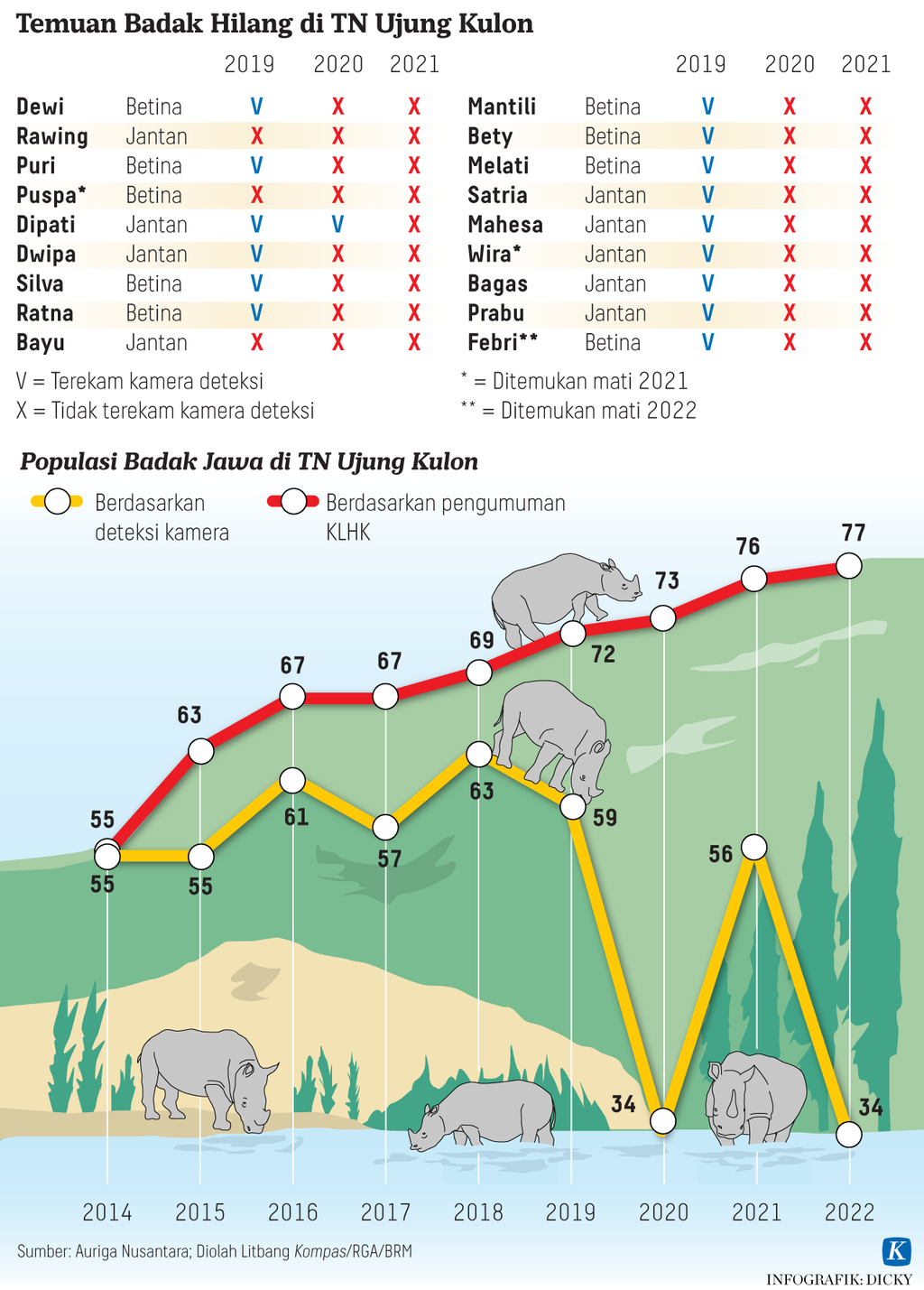
The findings in this report are based on information gathered from various sources from September 2022 to March 2023, as well as direct observations on location. Auriga Nusantara also obtained detection camera footage in Ujung Kulon National Park to strengthen the analysis of the disappearance of Javan rhinoceroses.https://cdn-assetd.kompas.id/5tn2m5ejge2sfX8aFKTCfErKRrg=/1024x1429/https%3A%2F%2Fasset.kgnewsroom.com%2Fphoto%2Fpre%2F2023%2F04%2F11%2F5984e851-520b-4bc2-9cf1-d4f5cd32e2ab_png.png

Director General Conservation of Natural Resources and Ecosystems of the Ministry of Environment and Forestry, Satyawan Pudyatmoko, said that the Ministry of Environment and Forestry is still conducting an analysis regarding the number of Javan rhinos that have died due to poaching. The Ministry of Environment and Forestry also still needs clarification from the Banten Regional Police regarding the time period for hunting Javan rhinos from these perpetrators.

Also read: 15 Javan Rhinos in Ujung Kulon Disappeared Unnoticed

According to Satyawan, the ecology of the Javan rhinoceros is still not well-known. Meanwhile, to ensure the survival of the remaining Javan rhinoceros population, the Ministry of Environment and Forestry has installed more and evenly distributed camera traps at every point.

“In situ rhino conservation is of course done by protecting the habitat and population. The Minister of Environment and Forestry has given directions to build a sanctuary in Ujung Kulon to develop safer rhinos. “In the future, more modern conservation efforts can be carried out with artificial insemination,” he said.

Rhode Island lawmakers approve bill to ban “captive hunting” operations

Lawmakers have approved legislation that would let Rhode Island join the more than half of states with a full or partial ban on “captive hunting” — a hunt that occurs within a structure designed to restrict the free movement of animals and prevent them from escaping.

by The Associated Press3 hours ago

FILE – Sun shines on the Rhode Island Statehouse Wednesday, Nov. 10, 2004, in Providence, R.I. Rhode Island lawmakers have approved legislation Tuesday, June 11, 2024, that would let it join more than half of states with a full or partial ban on “captive hunting” — a hunt that occurs within a structure designed to restrict the free movement of animals and prevent them from escaping. (AP Photo/Victoria Arocho, File) Credit: AP
IHOFO

By STEVE LeBLANC Associated Press

Lawmakers have approved legislation that would let Rhode Island join the more than half of states with a full or partial ban on “captive hunting” — a hunt that occurs within a structure designed to restrict the free movement of animals and prevent them from escaping.

The bill would bar the use of manmade or natural barriers intended to prevent animals from fleeing the confined area of a hunt. Private lands set up as hunting or shooting preserves, or game ranches, are included.

The legislation also states no species of animal may be imported or captured for use in captive hunting. The bill was first proposed after a sporting club had sought permission to import exotic animals, like elk and boar, for members to hunt on its property.

The legislation would not apply to the release of domestic game birds on public property, or on private property licensed by the state Department of Environmental Management as a shooting preserve for the purpose of hunting.

“Physically preventing an animal from escaping death is not hunting, and I do not know a single active hunter who thinks such practices are acceptable,” said state Rep. Scott Slater, a Democrat, one of the sponsors of the bill.

https://googleads.g.doubleclick.net/pagead/ads?client=ca-pub-9721850486222359&output=html&h=280&adk=490985953&adf=167371930&pi=t.aa~a.2666216801~i.13~rp.4&w=780&abgtt=6&fwrn=4&fwrnh=100&lmt=1718227660&num_ads=1&rafmt=1&armr=3&sem=mc&pwprc=9800333657&ad_type=text_image&format=780×280&url=https%3A%2F%2Fwhatsupnewp.com%2F2024%2F06%2Frhode-island-lawmakers-approve-bill-to-ban-captive-hunting-operations%2F&host=ca-host-pub-2644536267352236&fwr=0&pra=3&rh=195&rw=780&rpe=1&resp_fmts=3&wgl=1&fa=27&uach=WyJXaW5kb3dzIiwiMTUuMC4wIiwieDg2IiwiIiwiMTI1LjAuMjUzNS45MiIsbnVsbCwwLG51bGwsIjY0IixbWyJNaWNyb3NvZnQgRWRnZSIsIjEyNS4wLjI1MzUuOTIiXSxbIkNocm9taXVtIiwiMTI1LjAuNjQyMi4xNDIiXSxbIk5vdC5BL0JyYW5kIiwiMjQuMC4wLjAiXV0sMF0.&dt=1718227839366&bpp=2&bdt=178806&idt=-M&shv=r20240606&mjsv=m202406110101&ptt=9&saldr=aa&abxe=1&cookie_enabled=1&eoidce=1&prev_fmts=0x0&nras=2&correlator=7547748162461&frm=20&pv=1&ga_vid=201336223.1718227826&ga_sid=1718227832&ga_hid=1964280305&ga_fc=1&u_tz=-420&u_his=1&u_h=864&u_w=1536&u_ah=816&u_aw=1536&u_cd=24&u_sd=1.25&dmc=8&adx=160&ady=2351&biw=1521&bih=714&scr_x=0&scr_y=1543&eid=44759876%2C44759927%2C44759842%2C44798934%2C95331687%2C95331695%2C95334511%2C95334528%2C95334573%2C95334579%2C95334819%2C31084470%2C95334054%2C95335292&oid=2&pvsid=3972003865560233&tmod=1407853021&wsm=1&uas=3&nvt=1&ref=https%3A%2F%2Fwww.google.com%2F&fc=1408&brdim=0%2C0%2C0%2C0%2C1536%2C0%2C1536%2C816%2C1536%2C714&vis=1&rsz=%7C%7Cs%7C&abl=NS&fu=128&bc=31&bz=1&psd=W251bGwsbnVsbCxudWxsLDNd&nt=1&ifi=2&uci=a!2&btvi=1&fsb=1&dtd=13

Joanne Bourbeau, northeast regional director at the Humane Society of the United States, said killing animals for trophies and bragging rights is unacceptable.

Sign up for our free newsletter; we’ll keep you informed about all that’s happening, new, and to do out there!Sign Up

“The captive trophy hunting industry breeds animals solely to be shot and killed within fenced enclosures,” she said. “This critical legislation would allow Rhode Island to join the other 26 states that already have full or partial bans on captive hunting.”

https://www.adsensecustomsearchads.com/afs/ads?psid=5134551505&channel=AutoRsVariant&cx=r-f8c2a8e1d4ccd1e20&fexp=21404%2C17301437%2C17301438%2C17301442%2C17301504%2C17301509&client=pub-9721850486222359&r=m&hl=en&rpbu=http%3A%2F%2Fgoogle.com&rpqp=q&type=3&rs_tt=c&oe=UTF-8&ie=UTF-8&client_gdprApplies=0&format=r5&nocache=2671718227855356&num=0&output=afd_ads&domain_name=whatsupnewp.com&v=3&bsl=10&pac=0&u_his=1&u_tz=-420&dt=1718227855357&u_w=1536&u_h=864&biw=1521&bih=714&psw=1521&psh=8230&frm=0&uio=-&cont=autors-container-0&drt=0&jsid=csa&nfp=1&jsv=641883529&rurl=https%3A%2F%2Fwhatsupnewp.com%2F2024%2F06%2Frhode-island-lawmakers-approve-bill-to-ban-captive-hunting-operations%2F&referer=https%3A%2F%2Fwww.google.com%2F

Lawmakers have also approved a second bill meant to update the protocols for reporting car accidents involving wildlife and for collecting the resulting roadkill for consumption.

https://googleads.g.doubleclick.net/pagead/ads?client=ca-pub-9721850486222359&output=html&h=280&adk=490985953&adf=460963540&pi=t.aa~a.2666216801~i.21~rp.4&w=780&abgtt=6&fwrn=4&fwrnh=100&lmt=1718227660&num_ads=1&rafmt=1&armr=3&sem=mc&pwprc=9800333657&ad_type=text_image&format=780×280&url=https%3A%2F%2Fwhatsupnewp.com%2F2024%2F06%2Frhode-island-lawmakers-approve-bill-to-ban-captive-hunting-operations%2F&host=ca-host-pub-2644536267352236&fwr=0&pra=3&rh=195&rw=780&rpe=1&resp_fmts=3&wgl=1&fa=27&uach=WyJXaW5kb3dzIiwiMTUuMC4wIiwieDg2IiwiIiwiMTI1LjAuMjUzNS45MiIsbnVsbCwwLG51bGwsIjY0IixbWyJNaWNyb3NvZnQgRWRnZSIsIjEyNS4wLjI1MzUuOTIiXSxbIkNocm9taXVtIiwiMTI1LjAuNjQyMi4xNDIiXSxbIk5vdC5BL0JyYW5kIiwiMjQuMC4wLjAiXV0sMF0.&dt=1718227839366&bpp=1&bdt=178805&idt=-M&shv=r20240606&mjsv=m202406110101&ptt=9&saldr=aa&abxe=1&cookie_enabled=1&eoidce=1&prev_fmts=0x0%2C780x280&nras=3&correlator=7547748162461&frm=20&pv=1&ga_vid=201336223.1718227826&ga_sid=1718227832&ga_hid=1964280305&ga_fc=1&u_tz=-420&u_his=1&u_h=864&u_w=1536&u_ah=816&u_aw=1536&u_cd=24&u_sd=1.25&dmc=8&adx=160&ady=3287&biw=1521&bih=714&scr_x=0&scr_y=1543&eid=44759876%2C44759927%2C44759842%2C44798934%2C95331687%2C95331695%2C95334511%2C95334528%2C95334573%2C95334579%2C95334819%2C31084470%2C95334054%2C95335292&oid=2&pvsid=3972003865560233&tmod=1407853021&wsm=1&uas=3&nvt=1&ref=https%3A%2F%2Fwww.google.com%2F&fc=1408&brdim=0%2C0%2C0%2C0%2C1536%2C0%2C1536%2C816%2C1536%2C714&vis=1&rsz=%7C%7Cs%7C&abl=NS&fu=128&bc=31&bz=1&psd=W251bGwsbnVsbCxudWxsLDNd&nt=1&ifi=3&uci=a!3&btvi=2&fsb=1&dtd=49

The bill would broaden reporting requirements for collisions with deer to any accident involving wildlife that substantially damage the vehicle, such as collisions with turkeys or bears.

It would also make reporting these collisions easier for drivers by allowing them to report directly to the Department of Environmental Management through an online portal or phone number rather than having to contact a conservation officer.

Data from wildlife collisions are used in statistical models by environmental officials to estimate wildlife population. The legislation would also let the state salvage unwanted roadkill for general consumption.

https://googleads.g.doubleclick.net/pagead/ads?client=ca-pub-9721850486222359&output=html&h=280&adk=490985953&adf=2241142632&pi=t.aa~a.2666216801~i.27~rp.4&w=780&abgtt=6&fwrn=4&fwrnh=100&lmt=1718227660&num_ads=1&rafmt=1&armr=3&sem=mc&pwprc=9800333657&ad_type=text_image&format=780×280&url=https%3A%2F%2Fwhatsupnewp.com%2F2024%2F06%2Frhode-island-lawmakers-approve-bill-to-ban-captive-hunting-operations%2F&host=ca-host-pub-2644536267352236&fwr=0&pra=3&rh=195&rw=780&rpe=1&resp_fmts=3&wgl=1&fa=27&uach=WyJXaW5kb3dzIiwiMTUuMC4wIiwieDg2IiwiIiwiMTI1LjAuMjUzNS45MiIsbnVsbCwwLG51bGwsIjY0IixbWyJNaWNyb3NvZnQgRWRnZSIsIjEyNS4wLjI1MzUuOTIiXSxbIkNocm9taXVtIiwiMTI1LjAuNjQyMi4xNDIiXSxbIk5vdC5BL0JyYW5kIiwiMjQuMC4wLjAiXV0sMF0.&dt=1718227839366&bpp=3&bdt=178805&idt=3&shv=r20240606&mjsv=m202406110101&ptt=9&saldr=aa&abxe=1&cookie_enabled=1&eoidce=1&prev_fmts=0x0%2C780x280%2C780x280&nras=4&correlator=7547748162461&frm=20&pv=1&ga_vid=201336223.1718227826&ga_sid=1718227832&ga_hid=1964280305&ga_fc=1&u_tz=-420&u_his=1&u_h=864&u_w=1536&u_ah=816&u_aw=1536&u_cd=24&u_sd=1.25&dmc=8&adx=160&ady=3983&biw=1521&bih=714&scr_x=0&scr_y=1543&eid=44759876%2C44759927%2C44759842%2C44798934%2C95331687%2C95331695%2C95334511%2C95334528%2C95334573%2C95334579%2C95334819%2C31084470%2C95334054%2C95335292&oid=2&pvsid=3972003865560233&tmod=1407853021&wsm=1&uas=3&nvt=1&ref=https%3A%2F%2Fwww.google.com%2F&fc=1408&brdim=0%2C0%2C0%2C0%2C1536%2C0%2C1536%2C816%2C1536%2C714&vis=1&rsz=%7C%7Cs%7C&abl=NS&fu=128&bc=31&bz=1&psd=W251bGwsbnVsbCxudWxsLDNd&nt=1&ifi=4&uci=a!4&btvi=3&fsb=1&dtd=55

Currently only the parties directly involved in the collision can salvage deer for their own enjoyment. This change would let wildlife salvaged from a collision be used by organizations or individuals who have the capability to process it.

“As populations of large animals like deer, bears and turkeys increase in Rhode Island, an increase in vehicle collisions is bound to follow,” said Rep. David Bennett, a Democrat. “Allowing large animals killed in these collisions to be distributed to those who know how to process them will reduce waste and allow those who like game to enjoy it.”

https://googleads.g.doubleclick.net/pagead/ads?client=ca-pub-9721850486222359&output=html&h=280&adk=490985953&adf=3832756476&pi=t.aa~a.2666216801~i.31~rp.4&w=780&abgtt=6&fwrn=4&fwrnh=100&lmt=1718227660&num_ads=1&rafmt=1&armr=3&sem=mc&pwprc=9800333657&ad_type=text_image&format=780×280&url=https%3A%2F%2Fwhatsupnewp.com%2F2024%2F06%2Frhode-island-lawmakers-approve-bill-to-ban-captive-hunting-operations%2F&host=ca-host-pub-2644536267352236&fwr=0&pra=3&rh=195&rw=780&rpe=1&resp_fmts=3&wgl=1&fa=27&uach=WyJXaW5kb3dzIiwiMTUuMC4wIiwieDg2IiwiIiwiMTI1LjAuMjUzNS45MiIsbnVsbCwwLG51bGwsIjY0IixbWyJNaWNyb3NvZnQgRWRnZSIsIjEyNS4wLjI1MzUuOTIiXSxbIkNocm9taXVtIiwiMTI1LjAuNjQyMi4xNDIiXSxbIk5vdC5BL0JyYW5kIiwiMjQuMC4wLjAiXV0sMF0.&dt=1718227839373&bpp=1&bdt=178812&idt=1&shv=r20240606&mjsv=m202406110101&ptt=9&saldr=aa&abxe=1&cookie_enabled=1&eoidce=1&prev_fmts=0x0%2C780x280%2C780x280%2C780x280&nras=5&correlator=7547748162461&frm=20&pv=1&ga_vid=201336223.1718227826&ga_sid=1718227832&ga_hid=1964280305&ga_fc=1&u_tz=-420&u_his=1&u_h=864&u_w=1536&u_ah=816&u_aw=1536&u_cd=24&u_sd=1.25&dmc=8&adx=160&ady=4654&biw=1521&bih=714&scr_x=0&scr_y=1800&eid=44759876%2C44759927%2C44759842%2C44798934%2C95331687%2C95331695%2C95334511%2C95334528%2C95334573%2C95334579%2C95334819%2C31084470%2C95334054%2C95335292&oid=2&pvsid=3972003865560233&tmod=1407853021&wsm=1&uas=3&nvt=1&ref=https%3A%2F%2Fwww.google.com%2F&fc=1408&brdim=0%2C0%2C0%2C0%2C1536%2C0%2C1536%2C816%2C1536%2C714&vis=1&rsz=%7C%7Cs%7C&abl=NS&fu=128&bc=31&bz=1&psd=W251bGwsbnVsbCxudWxsLDNd&nt=1&ifi=5&uci=a!5&btvi=4&fsb=1&dtd=149

Both bills, given final approval Tuesday by lawmakers. now head to Democratic Gov. Daniel McKee’s office for his signature.

Cows heading to Wisconsin’s fairs must test negative for bird flu, state officials say

Colleen Kottke

Wisconsin State Farmer

https://www.wisfarmer.com/story/news/2024/06/11/wisconsin-cows-must-test-negative-for-bird-flu-before-heading-to-fairs/74063074007/

AD

0:05

https://imasdk.googleapis.com/js/core/bridge3.645.0_en.html#goog_1465112261

Judge Dan Bauer talks with Hannah Sroka during the Senior Showmanship judging as the Waupaca County Fair in 2017. Lactating cows bound for a fair or exhibition must test negative for bird flu before leaving the farm.

Dairy exhibitors heading to fairs or exhibitions this summer will have one more thing to check off their list: having their cow tested for bird flu.

During a media call Tuesday, state officials from the Wisconsin Department of Agriculture, Trade and Consumer Protection (DATCP) announced all lactating dairy cattle bound for the show ring or other gathering will have to provide proof of a negative test before climbing into the show trailer.

Wisconsin State Veterinarian Darlene Konkle said the order regarding intrastate movement is an effort to prevent the spread of bird flu in dairy cattle. The order is effective June 19, the same day the 127th Elroy Fair kicks off its five-day run in Juneau County.

https://35f8d35076180d9817107ebe5a1ab11e.safeframe.googlesyndication.com/safeframe/1-0-40/html/container.html

“We are collaborating with the Wisconsin Association of Fairs, helping them with outreach and getting the word out to exhibitors and fair organizers across the state,” said DATCP Secretary Randy Romanski.

The confirmation of bird flu in dairy herds in the Upper Midwest, including in Michigan — and most recently Minnesota and Iowa — has spurred state officials to take action to minimize the risk of the illness being introduced or spread among cattle in the Badger state. To date, Wisconsin has not confirmed a case of the virus in dairy cattle, Konkle said.

Bird flu has been detected in dairy cattle in more than 90 herds across 12 states. In addition to the USDA Federal Order that requires Influenza A testing for interstate movement of dairy cattle, today’s announcement will limit the risk of commingling infected animals.

“With the busy fair season ahead of us, DATCP is activating its regulatory authority to protect the dairy, poultry and livestock industries in our state,” Konkle said.

According to state guidelines, a fair is defined as a state, local or county event, and an exhibition is an event at which animals from different locations are comingled at a single location. Konkle confirmed that the order does not restrict in-state herd-to-herd movement. Movement of animals to licensed livestock markets is also exempt.

Jensen Trinrud controls her cow during the Senior Showmanship judging as the Waupaca County Fair in 2017. Dairy exhibitors heading to fairs or exhibitions this summer will have one more thing to check off their list thanks to bird flu.

How are cattle tested?

In order to move lactating dairy cattle to fairs or exhibitions within the state, producers must receive a negative test for the bird flu virus at an approved National Animal Health Laboratory Network lab, with samples collected no more than 7 days prior to movement to the fair or exhibition.

Konkle noted that the testing is available to producers at no cost through USDA APHIS at network laboratories. Producers may also apply for reimbursement of shipping and veterinary fees for collection of samples.

“Most fairs already have a veterinarian that they work with, but we are also willing to help connect families with veterinarians around the state,” Konkle said.

Konkle said that samples can be dropped off at a designated laboratory by 1 p.m. Monday, Wednesday or Friday, with results being released at the end of the day. Samples left on Tuesday, Thursday, Saturday or Sunday will be tested the next business day.

This intrastate order will remain in effect until 60 days after the last detection of H5N1 in cattle herds in the United States. The virus was first diagnosed in a Texas herd at the end of March.

Biosecurity important in protecting herd and state industry

Konkle said dairy producers and those working with dairy are strongly encouraged to continue practicing strict biosecurity to protect their herds. DATCP is closely monitoring bird flu in dairy cattle and continues to encourage producers that notice unusual clinical signs in their cattle to work with their herd veterinarian.

To report herds with unexplained symptoms, veterinarians should contact DATCP at 608-224-4872 (business hours) or 800-943-0003 (after hours and weekends). Reports can also be emailed to datcpanimalimports@wisconsin.gov.

Romanski stressed the importance of communicating factual information to the public about the safety of the country’s food supply despite worrisome headlines.

“Numerous tests have been done on ground beef and muscle tissue and they’re not finding any sign of the virus. Of course, cooking meat properly is also important,” Romanski said. “Pasteurization also keeps our milk supply safe. The public needs to hear this message.”