Standoff Over Wolf Torture: Locals Block Motorcycle Rally From Daniel Bar
Reply

Share

Updated: 9:47 AM EDT Jun 12, 2024Infinite Scroll Enabled
Digital Media ManagerPlay VideoPlayUnmute
Loaded: 16.62%
Remaining Time -6:27CaptionsPicture-in-PictureFullscreen
The latest breaking updates, delivered straight to your email inbox.Your Email AddressSUBMITPrivacy Notice
COLLETON COUNTY, S.C. —
A South Carolina man will spend time in prison after another man and his daughter were killed in a hunting accident, according to the South Carolina Department of Natural Resources.
(Video above: Morning headlines from WYFF News 4)
Advertisement
Sean Peterson, 33, pleaded guilty this week in Colleton County to two counts of negligent use of a firearm while engaged in hunting.
The charges stem from the shooting deaths of Kim Drawdy and Drawdy’s 9-year-old daughter on Jan. 1, 2020, according to SCDNR.
SCDNR said Peterson fired at a noise from the bushes without identifying his target.
Following the guilty plea, a judge sentenced Peterson to five years in prison and four years of probation.
By Brenda Goodman, CNN
11 minute read
Updated 11:05 AM EDT, Tue June 11, 2024
https://www.cnn.com/2024/06/11/health/bird-flu-animals-humans/index.html
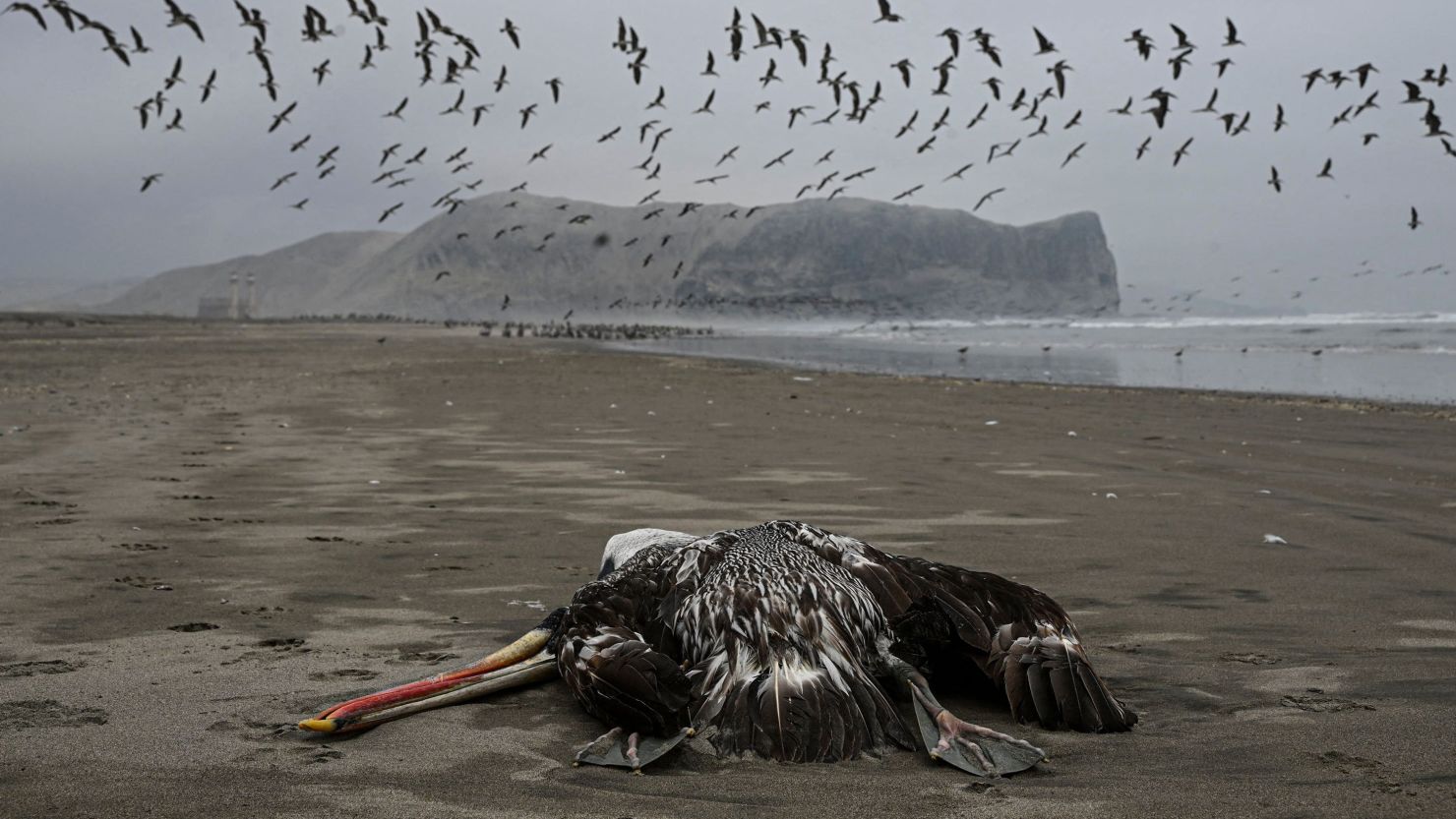
A pelican suspected to have died from H5N1 avian influenza is seen on a beach in Lima on December 1, 2022. Ernesto Benavides/AFP/Getty ImagesCNN —
Mark Naniot remembers 2022 as the summer from hell.
As the co-founder of Wild Instincts animal rescue in Wisconsin’s Northwoods, Naniot and his team spent the season sweating in gloves, gowns, smocks and masks and going through what felt like endless rounds of disinfection as they moved between the cages of the sick and injured animals they cared for.
The precautions were necessary for a trio of infectious diseases occurring with some frequency in wild animals that summer: Covid-19 was still making life difficult, and a devastating contagion called chronic wasting disease was showing up in deer in the area.
ADVERTISING
Then, there was H5N1 bird flu to contend with. “It’s highly, highly transmissible,” said Naniot, who has been involved in animal rescue for 35 years.
Since it was first discovered in birds in 1996, H5N1 has shown itself to be a Swiss Army Knife of a virus, evolving the necessary tools to break into the cells of a growing list of species. So far, it has infected and killed millions of wild and farmed birds. It’s also been found in at least 26 different kinds of mammals, including, most recently in the United States — cows, cats and house mice.
The voraciousness of the virus prompted Dr. Jeremy Farrar, chief scientist of the World Health Organization in April to call it “a global zoonotic animal pandemic.”
Along the way, people have been a kind of collateral damage. Humans can be infected, but we aren’t really the intended targets.
That could all change quickly, however.
“Influenza actually makes mutations, in the sense of making errors copying its genome, at a higher rate than a coronavirus like SARS-CoV2,” said Dr. Jesse Bloom, a computational biologist who focuses on influenza viruses at the Fred Hutch Cancer Center in Seattle.
These errors don’t always work in favor of the virus. Most of the time, viruses with errors won’t work or be fit enough to continue to copy and survive. But every once in a while, a random error can result in a change to the virus that give it an advantage in its environment, and that version of the virus will continue to spread and grow.
Enter your email to subscribe to the CNN Five Things Newsletter.

You give us five minutes, we’ll give you five things you must know for the day.Sign Me Up
By subscribing you agree to our
If humans happen to be that environment, and H5N1 changes at the right place at the right time, suddenly the animal pandemic could become a major problem for people, too.

RELATED ARTICLEAlpacas test positive for H5N1 bird flu for the first time
Naniot had seen wild birds come into Wild Instincts rescue with H5N1 — bald eagles, hawks and owls — but nothing had prepared him for the red fox kits.
The baby foxes were brought in stumbling and uncoordinated, making him think they might have gotten into some kind of poison. Then the seizures started.
“They would have these severe, severe seizures,” Naniot said. “Screaming very loud, whole-body tremors.”
The first seizures lasted for 20 to 30 seconds at a time. “And then it would get longer and longer and longer,” he said.
Naniot hadn’t known his young patients could get bird flu. Further research clued him in to the fact that foxes had recently joined a growing list of species that could succumb, usually after eating the flesh of infected dead birds.
“The severity of the seizures is something I really hadn’t seen before,” Naniot said. “It’s a very sad thing to see, the progression of the disease.”
Though H5N1 is known to have infected nearly 900 people in the past 30 years, these infections have been sporadic and usually self-limiting. The virus can still be deadly, however: More than 50% of people who are known to have been infected with H5N1 have died.
Still, the virus isn’t particularly good at infecting humans. Even when virus manages to get into a person and cause symptoms, it rarely gets passed to someone else.
“We call these dead-end infections,” said Dr. Scott Weese, a veterinarian and expert in zoonotic infections, at the University of Guelph in Canada.
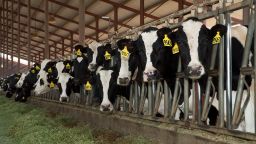
The way a dead-end infection happens, Weese explains, is that a person is around a large amount of the virus, or their immune system is too weak to resist, and H5N1 gets in. But it is not a virus that’s well-adapted to humans, so it never really builds up in respiratory secretions — the fluid that coats the nose, throat, and lungs — which would give it a way out through coughs, sneezes or even exhaled breath.
There have been at least three of these have apparently dead-end infections in dairy workers in the US, who worked closely with infected milk cows. Two of the workers developed conjunctivitis, or eye infections. In one case, the worker reported getting splashed with raw milk in their eyes. A third developed respiratory symptoms after close contact with cows. All were successfully treated with an antiviral medication. None developed severe symptoms or infected others.
Using a strain of H5N1 from the recent cattle outbreak, scientists recently confirmed that this version of the virus is unlikely to transmit through the air. In experiments with ferrets, which are considered the gold standard for studying how viruses transmit in people, researchers at the US Centers for Disease Control and Prevention grew a sample of the same H5N1 virus taken from a farmworker with the flu in Texas to experimentally infect six of the animals. Then, three healthy ferrets were placed in the same enclosures with three of the sick animals. These animals could touch, nose and lick the sick animals, and all of them became ill.
Next, the CDC tested airborne transmission by putting three healthy ferrets into an enclosure where they could breathe the same air as sick animals but couldn’t touch them. Only one of those three animals became ill, suggesting that the virus carried by cattle in the current outbreak is not well adapted to respiratory spread, the CDC wrote in a news release on the study.
So far, that seems to be what’s happening in the real world, too. Though more than 80 dairy herds have tested positive across at least 12 states, the number of human infections has apparently been low, though there’s been little testing to confirm that.
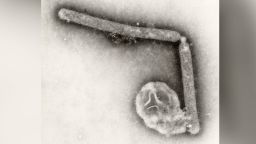
RELATED ARTICLEWhat a US farmworker’s case of bird flu tells us about tracking the infection
These early ferret experiments are good news, the CDC noted, because it means the virus would need to change to become an infection spread person-to-person through the airborne droplets. The agency said it plans to repeat the tests.
As Covid has shown, all of this could change in the the rub of an eye or a small cough. The more opportunity the virus has to spread, the more opportunity it has to change in ways that will help it pry its way into human cells.
“It’s really important to understand everything we know today is a snapshot of today, and these viruses can change very quickly,” said Dr. Rick Bright, an immunologist and former director of the US Biomedical Advanced Research and Development Authority in an interview with CNN Chief Medical Correspondent Dr. Sanjay Gupta for the Chasing Life podcast.
“They can adapt, and they can spread very easily when they do change,” said Bright, who is now CEO of Bright Global Health.
Dr. Erin Sorrell, a virologist and a senior scholar at the Johns Hopkins Center for Health Security, says that while humans have been exposed to seasonal strains of the flu, and flu vaccines help build immunity H1 and H3 flu strains, H5N1 would look pretty different to our bodies.
“Our existing immunity to H3 and H1 is not necessarily going to protect us against exposure to an H5 virus,” she said.
The CDC’s ferret study also had some sobering findings. In contrast to seasonal flu, which makes ferrets sick, but doesn’t kill them, H5N1 killed all the ferrets that were infected.
“While the three cases of A(H5N1) in the United States have been mild, it is possible that there will be serious illnesses among people,” the CDC wrote in its conclusions on the study.
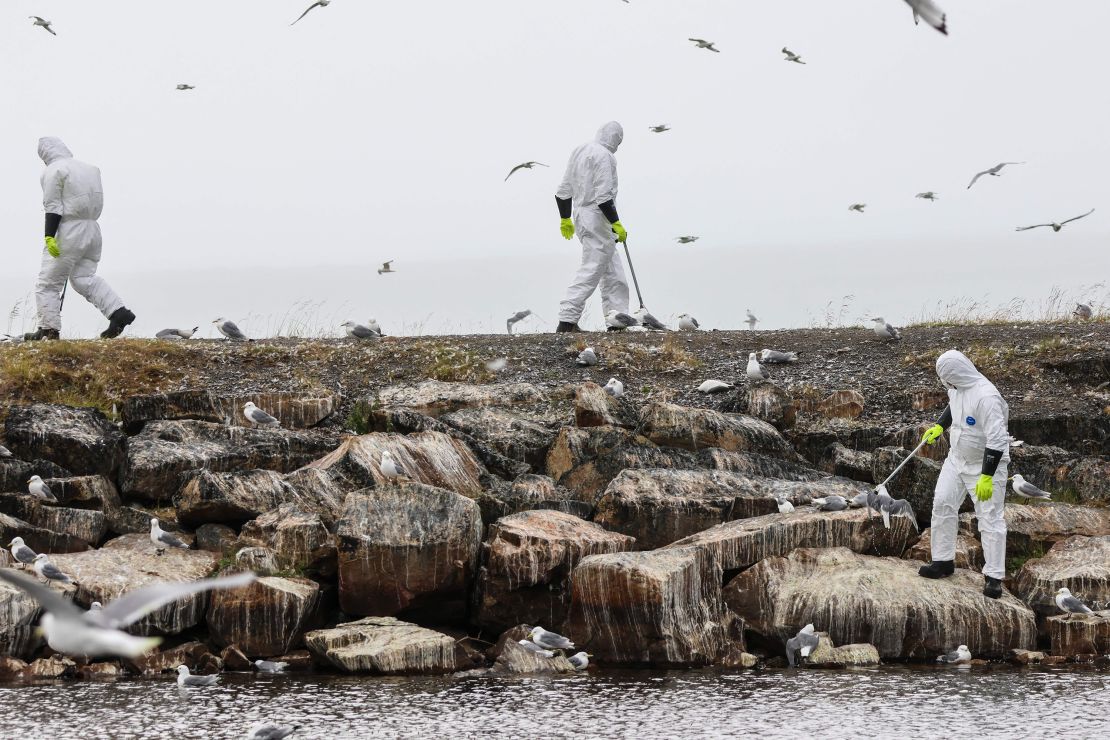
Dead birds are collected in July 2023 along the coast in the Vadso municipality of Finnmark in Norway following a major outbreak of bird flu. Oyvind Zahl Arntzen/NTB/AFP/Getty Images
In the more than two dozen human infections with H5N1 virus worldwide since 2022, with the most recent iteration of the virus, there’s been a wide spectrum of severity. Fourteen illnesses were severe or critical, seven were fatal, six were mild and eight didn’t have any symptoms at all, according to the CDC.
Dr. Seema Lakdawala, a microbiologist and immunologist at Emory University who specializes in the flu, thinks the difference in symptom severity may be due to previous exposure to seasonal viruses. Her experiments in ferrets suggest that our bodies wouldn’t necessarily be totally defenseless. In her lab, ferrets with previous exposures to seasonal flu strains didn’t get as sick when exposed to new flu viruses compared to those with no prior exposure to seasonal strains. She says she hasn’t tested this with any of the strains involved in the cattle outbreak, however.
So while we probably don’t have any antibodies — the immune system’s front-line soldiers — at the ready to fight off an H5 infection, there are memory cells in our tissues that might recognize parts of a new flu virus and respond.
How much help we might get from past exposures to flu viruses is difficult to predict, however, which is why vaccination would still be important to tune up our immunity.
The US has vaccines against H5 viruses in its Strategic National Stockpile, and last month, government officials said 4.8 million doses are being “filled and finished” so they would be ready for use, though there’s no plan to give them to anyone yet.

RELATED ARTICLEWastewater monitoring in Texas picked up an early signal of the bird flu outbreak
Finland has already ordered 20,000 doses of a different H5 strain — H5N8 — which, will be used as soon as they’re available to protect workers who might be vulnerable to the virus, such as scientists and those in direct contact with infected animals on mink farms, local officials told health and science news outlet, STAT News.
For now, the CDC maintains its assessment that the risk to the general public from H5N1 is low, though people who work with infected animals have a higher risk and should wear protective clothing and take additional precautions to avoid getting sick. The Administration for Strategic Preparedness and Response, or ASPR, has made that protective equipment available to states for use on farms, and the USDA has made additional funding available to farms to support efforts to safeguard their livestock from disease.
But so far, wearing this equipment is voluntary, and there are concerns that it might be difficult for farm workers to wear the full recommended kit, which includes coveralls, an apron, a mask, eye protection, a head covering, gloves and boots during the summer, which is again expected to break heat records.
The government has also said it is working on the development of a rapid test for H5N1.
Bright thinks severity of symptoms may depend on how much virus a person is exposed to when they are infected. Touching contaminated milk or the body of a dead bird and then rubbing your eyes or nose might deliver a smaller dose of the virus, and ultimately result in milder symptoms. Whereas ingesting large amount of virus — as some animals do when they scavenge for food or as humans in some countries do when consuming dishes made with duck blood — could lead to severe disease.

RELATED ARTICLEWith bird flu infecting dairy cattle, FDA asks some states to curb sales of raw milk
“The virus is able to infect a number of internal organs. So it doesn’t just locate, say, in the lungs, as we would think most influenza viruses would,” Bright said. It’s also been found in “the brains and then the spleens, the intestines, and the heart and throughout the body of those animals.”
Dr. Richard Webby, who directs the WHO’s Collaborating Centre on the Ecology of Influenza in Animals and Birds at St. Jude Children’s Research Hospital, agrees.
“It’s at the top of the list in terms of bad guy viruses,” he said, noting that the virus is nerve-loving, or neurotropic. “So it goes to the brain and causes very, very severe disease.”
Infected animals often behave strangely or aggressively. Ducks waddle in circles, twisting their necks, writhing on the ground.
“I would hate to see it in humans,” Webby said.
So far, the virus hasn’t made the changes that would enable it to become a fully human pathogen, said Dr. Michael Osterholm, who directs the Center for Infectious Disease Research and Policy at the University of Minnesota. It’s unclear whether it ever will.
“I’ve been a student of this virus. And I surely have been amazed at how it’s changed over the course of the last 20-some years, but at the same time, you know, I’m looking for evidence that it is likely to become a virus infecting humans and then transmitted by humans to other humans. And we just haven’t seen that yet,” he added.
Sign up here to get The Results Are In with Dr. Sanjay Gupta every Tuesday from the CNN Health team.
Naniot at the Wisconsin animal rescue said they tried to save about seven infected fox kits in the summer of 2022, but all of them died.
Other rescue organizations in their network had a few foxes infected with H5N1 that survived, but they ultimately went blind.
While all the precautions they took to safely work with the animals were arduous, Naniot said he’s grateful they were effective. They never spread the virus to any of the other animals in the facility — including themselves.
“Unfortunately, it’s kind of like when Covid went through, you know, it first started someplace,” he said.
Naniot says he hasn’t encountered any infected animals since 2022, but he’s watching the news closely in case any cow herds become infected in Wisconsin, knowing that he could easily see H5N1 again.
“It spread kind of like wildfire, and it’s a highly, highly contagious disease.”
4 hours ago
By Jaroslav Lukiv, BBC NewsShare Iceland grants whale hunting permit despite animal welfare concerns
4 hours ago
By Jaroslav Lukiv, BBC NewsShare https://www.bbc.com/news/articles/c2ll8d00kzgo

Iceland’s government has issued a licence to hunt whales to the country’s sole whaling company – a move condemned by animal welfare groups.
The licence for the 2024 hunting season allows the Hvalur company to kill 128 fin whales.
The decision “is based on a precautionary approach and reflects the government’s increased emphasis on the sustainable use of resources,” the government said.
The Humane Society International animal protection charity said the licence was granted “despite clear evidence of immense animal suffering”.
It said an independent report by the Icelandic Food and Veterinary Authority on whaling in 2022 “revealed some whales killed in Icelandic hunts had taken up to two hours to die, with 41% of whales suffering immensely before dying for an average of 11.5 minutes”.
“Such suffering was deemed in contravention of the country’s Animal Welfare Act,” the charity said.
Iceland, Norway and Japan are currently the only three nations that allow commercial whaling.
In a statement on Tuesday, the Icelandic government said the licence to Hvalur “is valid for the 2024 hunting season”.
It said the company was now permitted to hunt “99 whales in the Greenland/West Iceland region and 29 whales in the East Iceland/Faroe Islands region, totalling 128 whales”.
“This decision aligns with the Marine and Freshwater Research Institute’s 2017 advice and considers the conservative ecosystem factors of the International Whaling Commission,” the statement added.
Last year, Hvalur – which is believed to have two whaling vessels – was allowed to hunt 161 fin whales.
The whaling season in Iceland usually lasts from June to September, before it becomes too windy and dark.
Most of the whale meat is exported to Japan.
The practice has given rise to protests from conservation groups which consider fin whales – the second-longest marine mammal after the blue whale – to be vulnerable to extinction.
In a recent survey, 51% of Icelanders said they were opposed to commercial whaling.
https://imasdk.googleapis.com/js/core/bridge3.645.0_en.html#goog_370234576
0 seconds of 20 secondsVolume 90%
Animal rights activists pasted a cartoon image over a portrait of King Charles III on Tuesday at a London art gallery, the latest in a series of incidents at U.K. museums as campaigners use vandalism to publicize their causes.Photos
3Updated 9:37 AM PDT, June 11, 2024Share https://apnews.com/article/britain-king-charles-iii-portrait-wallace-gromit-7b58e557321e09752f6029e817212fbb
LONDON (AP) — Animal rights activists pasted a cartoon image over a portrait of King Charles III on Tuesday at a London art gallery, the latest in a series of incidents at U.K. museums as campaigners use vandalism to publicize their causes.
A group called Animal Rising shared a video of campaigners pasting a picture of a character called Wallace, from the “Wallace and Gromit” comedy series, over the king’s head.
The so-called ‘’comic redecoration″ was designed to highlight an investigation that Animal Rising said found widespread violation of animal husbandry rules at farms approved by the Royal Society for the Prevention of Cruelty to Animals.
A speech bubble next to the head of Wallace read: “No cheese, Gromit. Look at all this cruelty on RSPCA farms!”
The painting is protected by a sheet of plastic and wasn’t damaged, according to the Philip Mould Gallery, where it is on display.
ADVERTISEMENT
The larger-than-life painting by Jonathan Yeo was unveiled last month and is the first portrait of Charles to be completed since he ascended the throne in 2022. It captures the king in shades of red with his hands clasped atop the hilt of his sword and a butterfly flitting above his right shoulder.
By Anna Harris
Published: Jun. 10, 2024 at 1:56 PM PDT|Updated: 36 minutes ago
By Anna Harris
Published: Jun. 10, 2024 at 1:56 PM PDT|Updated: 36 minutes ago
COLLETON COUNTY, S.C. (WCSC) – A Colleton County man charged in the shooting deaths of a father and his daughter during a 2020 hunting trip entered guilty pleas before his case could go to trial.
Sean Peterson, 33, was charged with two counts of negligent use of a firearm while in engaged in hunting that resulted in death in the Jan. 1, 2020, shooting deaths of Kim Drawdy, 30; and Lauren Drawdy, 9.
Judge Maite Murphy sentenced Peterson Monday to a total of five years in jail and four years’ probation.
Peterson decided to enter his pleas after the state conducted a full jury selection and pre-trial motions.
Investigators said Peterson was out hunting with friends on New Year’s Day of 2020 in a wooded area on Barracada Road near Walterboro and he admitted at the time to shooting toward noise coming from the bushes, which he believed to be deer. But he fatally struck the Drawdys in that shooting.
Monday’s sentencing was filled with emotional testimony from both sides, each of which filled multiple benches.
“We don’t get to go teach Lauren how to drive. We don’t get to help her pick out a prom dress,” Kim Drawdy’s former sister-in-law, Brandy Branton, said. “We don’t get to float out on the river with Kim anymore. We don’t get to fish with him anymore. Nothing.”
Some, like Kim Drawdy’s cousin, Tina O’Quinn, could hardly speak.
“Kim was a very good person,” O’Quinn said. “Lauren was a beautiful little girl. None of this should have ever happened.”
Peterson himself acknowledged the family, who he says he has not spoken to since the deaths.
“I love y’all and it was not intentional,” Peterson said. “If I could take it back, I would.”
Before Peterson decided to plead during pre-trial motions, Murphy denied defense attorney Scott Harvin’s motion to exclude evidence of any prior hard drug use from the New Year’s party the night before the hunting trip. But she did approve his second motion to exclude the fact that Peterson had an expired hunting license at the time of the incident because it was not the proximate cause of death.
“Everybody was guilty in that situation,” Peterson’s mother, Valorie Jones, said. “Nobody was innocent in that situation. And everything that was done, everybody did that day.”
Murphy addressed some of the claims.
“Quite frankly, there was an innocent person out there, and that was Lauren,” Murphy said. “Mr. Harvin, I don’t buy for a second that the drugs had nothing to do with it. It was a part of the crime.”
State Solicitor Julie Kate Keeney claimed the hard drugs were used all night before the hunting incident, which would have affected his judgment. She said the number one rule of hunting is to know your target.
Harvin disagreed about the drug use, saying they stopped in the early hours of the morning and that was irrelevant to the hunting incident itself.
The maximum sentence Peterson could have received was six years in prison. The state asked for extended time but the defense asked for 90 days in jail, plus probation.
COLLETON COUNTY, S.C. (WCSC) – A Colleton County man charged in the shooting deaths of a father and his daughter during a 2020 hunting trip entered guilty pleas before his case could go to trial.
Sean Peterson, 33, was charged with two counts of negligent use of a firearm while in engaged in hunting that resulted in death in the Jan. 1, 2020, shooting deaths of Kim Drawdy, 30; and Lauren Drawdy, 9.
Judge Maite Murphy sentenced Peterson Monday to a total of five years in jail and four years’ probation.
Peterson decided to enter his pleas after the state conducted a full jury selection and pre-trial motions.
Investigators said Peterson was out hunting with friends on New Year’s Day of 2020 in a wooded area on Barracada Road near Walterboro and he admitted at the time to shooting toward noise coming from the bushes, which he believed to be deer. But he fatally struck the Drawdys in that shooting.
Monday’s sentencing was filled with emotional testimony from both sides, each of which filled multiple benches.
“We don’t get to go teach Lauren how to drive. We don’t get to help her pick out a prom dress,” Kim Drawdy’s former sister-in-law, Brandy Branton, said. “We don’t get to float out on the river with Kim anymore. We don’t get to fish with him anymore. Nothing.”
Some, like Kim Drawdy’s cousin, Tina O’Quinn, could hardly speak.
“Kim was a very good person,” O’Quinn said. “Lauren was a beautiful little girl. None of this should have ever happened.”
Peterson himself acknowledged the family, who he says he has not spoken to since the deaths.
“I love y’all and it was not intentional,” Peterson said. “If I could take it back, I would.”
Before Peterson decided to plead during pre-trial motions, Murphy denied defense attorney Scott Harvin’s motion to exclude evidence of any prior hard drug use from the New Year’s party the night before the hunting trip. But she did approve his second motion to exclude the fact that Peterson had an expired hunting license at the time of the incident because it was not the proximate cause of death.
“Everybody was guilty in that situation,” Peterson’s mother, Valorie Jones, said. “Nobody was innocent in that situation. And everything that was done, everybody did that day.”
Murphy addressed some of the claims.
“Quite frankly, there was an innocent person out there, and that was Lauren,” Murphy said. “Mr. Harvin, I don’t buy for a second that the drugs had nothing to do with it. It was a part of the crime.”
State Solicitor Julie Kate Keeney claimed the hard drugs were used all night before the hunting incident, which would have affected his judgment. She said the number one rule of hunting is to know your target.
Harvin disagreed about the drug use, saying they stopped in the early hours of the morning and that was irrelevant to the hunting incident itself.
The maximum sentence Peterson could have received was six years in prison. The state asked for extended time but the defense asked for 90 days in jail, plus probation.
Researchers used artificial intelligence algorithm to analyse calls by two herds of African savanna elephants in Kenya
Agence France-Presse in ParisMon 10 Jun 2024 12.24 EDTShare
https://www.theguardian.com/science/article/2024/jun/10/elephant-names-study-ai
Elephants call out to each other using individual names that they invent for their fellow pachyderms, according to a new study.
While dolphins and parrots have been observed addressing each other by mimicking the sound of others from their species, elephants are the first non-human animals known to use names that do not involve imitation, the researchers suggested.
For the new study published on Monday, a team of international researchers used an artificial intelligence algorithm to analyse the calls of two wild herds of African savanna elephants in Kenya.
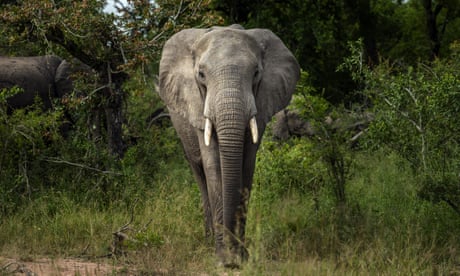
The research “not only shows that elephants use specific vocalisations for each individual, but that they recognise and react to a call addressed to them while ignoring those addressed to others”, the lead study author, Michael Pardo, said.
https://imasdk.googleapis.com/js/core/bridge3.644.0_en.html#goog_1797892363
https://imasdk.googleapis.com/js/core/bridge3.644.0_en.html#goog_1797892364
https://imasdk.googleapis.com/js/core/bridge3.644.0_en.html#goog_1797892365
https://imasdk.googleapis.com/js/core/bridge3.644.0_en.html#goog_1797892366
https://cds.connatix.com/p/plugins/cnx.bridge-1.0.5.html
https://cds.connatix.com/p/plugins/cnx.bridge-1.0.5.html
“This indicates that elephants can determine whether a call was intended for them just by hearing the call, even when out of its original context,” the behavioural ecologist at Colorado State University said in a statement.
The researchers sifted through elephant “rumbles” recorded at Kenya’s Samburu national reserve and Amboseli national park between 1986 and 2022.
Using a machine-learning algorithm, they identified 469 distinct calls, which included 101 elephants issuing a call and 117 receiving one.
Elephant make a wide range of sounds, from loud trumpeting to rumbles so low they cannot be heard by the human ear.
Names were not always used in the elephant calls. But when names were called out, it was often over a long distance, and when adults were addressing young elephants.
Adults were also more likely to use names than calves, suggesting it could take years to learn this particular talent.
The most common call was “a harmonically rich, low-frequency sound”, according to the study in the journal Nature Ecology & Evolution.
When the researchers played a recording to an elephant of their friend or family member calling out their name, the animal responded positively and “energetically”, the researchers said.
But the same elephant was far less enthusiastic when played the names of others.
Unlike those mischievous parrots and dolphins, the elephants did not merely imitate the call of the intended recipient.
This suggests that elephants and humans are the only two animals known to invent “arbitrary” names for each other, rather than merely copying the sound of the recipient.
“The evidence provided here that elephants use non-imitative sounds to label others indicates they have the ability for abstract thought,” the senior study author George Wittemyer said.
The researchers called for more research into the evolutionary origin of this talent for name-calling, given that the ancestors of elephants diverged from primates and cetaceans about 90m years ago.
Despite our differences, humans and elephants share many similarities such as “extended family units with rich social lives, underpinned by highly developed brains”, the CEO of Save the Elephants, Frank Pope, said.
“That elephants use names for one another is likely only the start of the revelations to come.”
Sonoma County ballot measure asks voters in rural region to ban what critics call factory farms.

What is underway in an iconic food-producing area might soon spread elsewhere as exurban development increasingly encroaches into agricultural regions nationwide. | Terry Chea/AP
By BEN FOX
06/09/2024 08:04 PM EDT
PETALUMA, California — Animal rights activists first forced their way onto Mike Weber’s chicken ranch six years ago, seeking to expose what they view as the horrors of egg production in a region known as the “American Provence” for its abundance of vineyards, dairies and organic farms.
That confrontation, which resulted in the arrest of 40 activists for trespassing, turned out to be just an initial skirmish in a battle playing out now over animal rights and farming that will soon move to the Sonoma County ballot. In November, voters will weigh in on a proposal to prohibit large poultry and livestock operations, which activists say are factory farms that pollute the environment and mistreat animals with closely packed confinement. Sonoma would be the first county in the United States to ban such facilities.
“People deserve a say over what happens in the county they live in, and people don’t want that happening here,” said Lewis Bernier, a researcher for Direct Action Everywhere, a Berkeley-based group with a history of confrontational protests that led efforts to get the measure on the ballot. The group has also collected signatures to place a similar question before Berkeley voters this fall, although it is largely symbolic since there are no commercial farms in the Bay Area college town.
In Sonoma, however, a measure pitting people who shop at farmers markets against those who supply them strikes deep in the terroir. Once-fringe beliefs about animal rights are becoming mainstream just as the nation is facing a rural economic crisis, having lost over a half a million farms since the 1980s. What is underway in an iconic food-producing area might soon spread elsewhere as exurban development increasingly encroaches into agricultural regions nationwide.

“If it can happen here,” said Sonoma State University political science professor David McCuan, “it can get on the ballot anywhere.”
Supporters of Measure J would force at least two dozen Sonoma County poultry and livestock operations to either downsize or shut down within three years. Farmers say it is an effort to push a “vegan mandate” to end animal farming and that the initiative would close more farms and have spinoff economic effects, both immediately and in the future.
“At the end of the day, they want to burn down our farm and every other farm in Sonoma County,” said Weber, whose family has produced eggs in the area since 1912.
Sonoma would be the first county in the U.S. to impose an outright ban on concentrated animal feeding operations, a designation used by the Environmental Protection Agency for regulating agricultural waste discharge. Activists use the phrase interchangeably with “factory farms,” to cover a range of modern poultry and livestock activities in which animals are raised and kept in dense conditions.
Sonoma is dotted with hundreds of farms, large and small, and has deep rural roots. Petaluma, where Weber’s farm is located, has long been tied to the dairy and poultry business and was once known as the “egg basket of the world.” The small city has a quintessential Americana charm. Much of Ronald Reagan’s classic 1984 campaign ad “Morning in America” was filmed in the city as was the 1973 movie “American Graffiti.”
That landscape may not have changed much, but Sonoma’s demographics have. Petaluma and nearby cities have become bedroom communities for people priced out of places closer to San Francisco and the Silicon Valley — filled with newcomers blasted for driving up home prices and ridiculed for grumbling about the odor of manure that occasionally wafts through the area, a scent known as the “Sonoma aroma.” Petaluma is a city of nearly 60,000 people, sprinkled with farm-to-table restaurants catering to foodies.
The crosscurrents that shape Sonoma today — an area where people are ready to challenge the business of farming even though their local economy remains inexorably tied to it — were on display last month when the county Board of Supervisors held a public hearing after activists gathered 37,000 signatures, more than enough to qualify Measure J for the ballot.

At the May 14 meeting, the measure’s supporters decried factory farms for cruelty, polluting the air and water with waste and for being “incubators for disease” such as bird flu. Activists sought to refute a dire local government assessment that projected widespread closures of farming activities and layoffs as a result of the measure’s passage.
“These industrial facilities harm animals,” said Cassie King, a member of Direct Action Everywhere. “They exacerbate wildfires and droughts. They are incubators for disease, like the avian flu that was mentioned, which has spread to mammals and humans. They pollute our air and water. They most impact the health of workers and people who live nearby these facilities.”
Supervisors warmly welcomed Measure J critics, who included local dairy farmers and two well-known local producers that rely on them, Clover Sonoma and Straus Family Creamery — and endorsed the warnings about the likely economic effects of the measure.
“What we’re going to do is kill farms and kill jobs,” said James Gore, a former U.S. Department of Agriculture official elected to the board in 2014. “And then you’re going to push us into a place where it doesn’t affect our ability to buy and sell but it does really increase the opportunity for these lands to be transitioned into suburban, urban, or other uses.”
In the end, the supervisors agreed to put the measure on the November ballot, but unanimously adopted a joint statement of opposition to the initiative. To the farm industry, the fact that a measure regarded with such local hostility has come so far in Sonoma County is a harbinger of where this fight might go next.
In May 2018, several hundred people organized by Direct Action Everywhere traveled about an hour’s drive north from Berkeley to protest Weber Family Farms, which Mike owns with his brother, Scott. Some forced their way inside the chicken houses, seizing dozens of birds including about 10 they claimed were sick and dying. The group argued that their action was legal under a California law against animal abuse. “Folks, we’re about to march into a massive factory farm in the heart of darkness and hell,” declared the group’s leader, Wayne Hsiung, according to video taken at the time. “We’re gonna expose what’s happening inside and try to take some of the animals out.”
Hsiung, a lawyer and onetime candidate for mayor of Berkeley who has argued that animals should have the same rights under the Constitution as people, held follow-up protests there and at Reichardt Duck Farm, also in Petaluma. The group has tried to make their case with photos showing birds with apparently untreated sickness and injuries.

“We need to stop the most egregious cruelty that’s happening,” said Bernier. “We need to put an end to it immediately.”
Weber disputes allegations of mistreatment, noting that his products receive a “certified humane” label from Humane Farm Animal Care, a nonprofit that says it uses veterinarians and animal scientists to set treatment standards. He said he also takes additional compliance monitoring measures for his company’s organic facilities and recycles his waste to sell as fertilizer. “I don’t know what we can do better,” he said. “The only thing I can do is to go out of business to make them happy.”
Measure J would likely have that impact. The initiative language appears to call for phasing out both large and medium-sized concentrated animal feeding operations, or CAFOs. Under that interpretation, the Sonoma County Farm Bureau says at least 60 poultry and livestock enterprises would have to close.


But Bernier says that’s a misreading of the initiative and that there are no operations in the county that meet the EPA definition of a medium CAFO because of the way they manage waste. Under the coalition’s interpretation, Measure J would cover dairies in the county with 700 cows and egg producers with 82,000 birds.
The debate over exactly which facilities would be covered by Measure J is somewhat of a moot point to the local Farm Bureau. “Their ultimate goal is they want to eradicate animal farming entirely and this is a stepping stone,” said Executive Director Dayna Ghirardelli.
Weber, who was forced to kill all 550,000 chickens at his main egg-producing facility in December because of an outbreak of bird flu, bristles at accusations that he mistreats animals, which he said would not be in the interest of him or any other farmer.
“It’s in our best interest to provide the ideal environment that is stress free,” he said.
Many people today, he said, do not understand what it takes to get food from farms into supermarkets. “If voters decide they want to make it illegal to eat meat I’m not going to fight it. That’s for the voters to decide,” he said. “But they shouldn’t be making the decision based on misleading information.”
California voters statewide have shown they are receptive to animal welfare initiatives in the recent past. In 2008, voters passed Proposition 2, which prohibited certain types of cramped cages for pregnant pigs, calves raised for veal and egg-laying hens. A decade later, voters went further with Proposition 12, a so-called “foie gras ban” that required farm animals get more space and egg-producing chickens go cage-free. Both passed with more than 60 percent of the vote.
There was also a bill introduced by two Democratic state lawmakers in February 2022 that would have prohibited new CAFOs in California. That measure never made it out of committee, a result of opposition from agriculture interests. (Senator Cory Booker of New Jersey, who is a vegan, has introduced similar legislation at the federal level.) Animal-rights activists hope that if Sonoma voters bless such regulations this fall, it could help loosen legislative resistance in Sacramento.

“If this passes, in a county that is known as an agricultural county, and prides itself on being a small farm, kind of county, then it opens up political cover to discuss the issue,” said Nickolaus Sackett, director of legislative affairs for Social Compassion in Legislation, a California-based animal-rights group. “That means the people want it and we should at least be having these conversations.”
Agriculture interests similarly recognize the potential for Measure J to be a threat beyond Sonoma County. Most of the $176,000 raised by the Family Farmers Alliance, which is sponsored by the Sonoma County Farm Bureau, has come from farming organizations elsewhere in the state.
“Sonoma has grown a lot to where there’s a lot of urban folks living there,” said Bill Mattos, president of the California Poultry Federation, which is donating to the campaign. “So they need to be educated.”
https://phys.org/news/2024-06-avocados-bad-vegans-ridiculous-meat.html#google_vignette

Those of us who find it difficult to eat less meat for the sake of climate tend to apologize or justify ourselves in social contexts. And… shaming vegans isn’t off limits. This, according to a new University of Copenhagen study. Clearer messaging about meat as a climate problem from public authorities could help, say the researchers.
Avocados are “bad” and vegans are ridiculous. My body needs meat. It’s my partner who doesn’t want to cut back on meat—not me. These are just a few of the things we say when feeling compelled to legitimize not being able to scale back on our meat consumption for the sake of climate.
The findings are from a University of Copenhagen study. In focus group discussions with Danish consumers, the researchers took note of which arguments came into play as participants addressed meat consumption.
“The study shows how we justify our reluctance to cut down on meat consumption when in social settings. All of the participants—predominantly meat eaters—agree that one of the best things a person can do to be a more climate-minded eater is to eat less meat. But when addressing their own meat consumption, other mechanisms kick in,” says Thomas A. M. Skelly, a Ph.D. fellow at the Department of Food and Resource Economics and first author of the article about the study, now published in the Journal of Consumer Culture.
While all six focus groups in the study agreed that reducing meat consumption is one of the most effective ways to make eating more climate-friendly, the participants began to engage in social negotiations on their own behalf along the way.
“That is, they come up with various excuses and justifications or try to shift the focus onto something else. For example, there was a tendency for them to shame avocados as being climate-unfriendly and scold vegans for being extremists. Common to the arguments is that they are perceived as socially legitimate in the groups, and that they help to maintain a morally responsible self-image among the participants,” says the other of the study’s authors, Associate Professor Kia Ditlevsen from the Department of Food and Resource Economics.
The participants deployed a variety of excuses and justifications. For example, some were based on not having the necessary knowledge, or that there is a biological need for meat, or that meals without meat just aren’t filling. Other justifications cast doubt on whether the actual climate footprint of meat production was as large as it is purported to be. Finally, at times, blame is assigned to other members of the household. For example, one participant says, “I don’t eat climate-friendly foods, unfortunately. I try, but I have a partner who’s against it. He wants meat.”
https://googleads.g.doubleclick.net/pagead/ads?client=ca-pub-0536483524803400&output=html&h=135&slotname=8188791252&adk=2329133447&adf=780081655&pi=t.ma~as.8188791252&w=540&abgtt=6&fwrn=4&lmt=1718046773&rafmt=11&format=540×135&url=https%3A%2F%2Fphys.org%2Fnews%2F2024-06-avocados-bad-vegans-ridiculous-meat.html&wgl=1&uach=WyJXaW5kb3dzIiwiMTUuMC4wIiwieDg2IiwiIiwiMTI1LjAuMjUzNS45MiIsbnVsbCwwLG51bGwsIjY0IixbWyJNaWNyb3NvZnQgRWRnZSIsIjEyNS4wLjI1MzUuOTIiXSxbIkNocm9taXVtIiwiMTI1LjAuNjQyMi4xNDIiXSxbIk5vdC5BL0JyYW5kIiwiMjQuMC4wLjAiXV0sMF0.&dt=1718046773133&bpp=1&bdt=244&idt=223&shv=r20240605&mjsv=m202406050102&ptt=9&saldr=aa&abxe=1&cookie=ID%3D2f05cd7691850c06%3AT%3D1701886612%3ART%3D1718045863%3AS%3DALNI_MbgFUsr3tBK_ibTf9yHt-YgAcvIfg&gpic=UID%3D00000d15f9be26d0%3AT%3D1701886612%3ART%3D1718045863%3AS%3DALNI_MbNwGW5uLom9OkoyV-GN3KefdzQXQ&eo_id_str=ID%3D7661de5f48853ad2%3AT%3D1707091950%3ART%3D1718045863%3AS%3DAA-AfjYm6rhA_FL7MpXyUDZhCf5p&prev_fmts=0x0&nras=1&correlator=8079110111768&frm=20&pv=1&ga_vid=777786165.1701886610&ga_sid=1718046773&ga_hid=1558809139&ga_fc=1&rplot=4&u_tz=-420&u_his=1&u_h=864&u_w=1536&u_ah=816&u_aw=1536&u_cd=24&u_sd=1.25&dmc=8&adx=395&ady=2548&biw=1521&bih=714&scr_x=0&scr_y=0&eid=44759876%2C44759927%2C44759842%2C31084257%2C31084350%2C44798934%2C95331696%2C95334508%2C95334524%2C95334565%2C95334572%2C95334580%2C95334829%2C95334053%2C95335292%2C31078668&oid=2&pvsid=980428307801534&tmod=602258831&wsm=1&uas=0&nvt=1&ref=https%3A%2F%2Fnews.google.com%2F&fc=1920&brdim=0%2C0%2C0%2C0%2C1536%2C0%2C1536%2C816%2C1536%2C714&vis=1&rsz=%7C%7CpeEbr%7C&abl=CS&pfx=0&fu=128&bc=31&bz=1&psd=W251bGwsbnVsbCxudWxsLDNd&nt=1&ifi=2&uci=a!2&btvi=1&fsb=1&dtd=231
The researchers also observed a tendency among participants to steer the topic away from meat and towards more comfortable topics.
“People quickly derail the topic and begin talking about other things, such as how they seek to avoid food waste and plastic packaging. Within the group, people are mutually supportive of such derailments. Our interpretation is that this is because these things are more culturally neutral and harmless to relate to. No one really has much of an identity attached to plastic disposal. People can envision doing these kinds of things without any great deprivation or personal cost,” says Ditlevsen.
Furthermore, various forms of shaming “morally superior” vegans are used to justify one’s meat consumption, as the researchers point out:
“For example, when a participant states that he or she doesn’t intend on going vegan, the other participants laugh. In doing so, they confirm to one another that veganism would be a ridiculous solution,” says Skelly.
The researchers also see a pattern in the groups of portraying vegans as extremists, and suggesting they are hypocritical, because they eat avocados and highly-processed “vegan foods,” which focus group participants refer to as climate damaging.
“With this notion, the participants confirm to each other that their food practices are not more problematic than food practices among people who have cut out meat entirely—even though the truth is that red meat has a far greater climate footprint than both avocados and vegan products, and vegans do not necessarily eat more avocados or processed products than meat eaters,” Skelly adds.
“So, a variety of things are used to excuse or justify their meat consumption, because otherwise, they would look stupid having already recognized that meat consumption is a major climate culprit. You get hit on the morals. Therefore, one has to—probably unconsciously—reassure themselves of being a morally coherent person,” says Ditlevsen.
Whether some of the justifications are due to a lack of knowledge on the part of consumers or the selective deployment of knowledge remains unclear:
“When all of the focus groups point to reduced meat consumption as one of the most climate effective things people can do, it demonstrates the existence of a collective knowledge. But on the other hand, this knowledge can be problematized—and the results demonstrate that it is socially acceptable to problematize it,” says Skelly.
“We are unable to conclude whether this is because people actually don’t know, or because not knowing is convenient. But there is certainly enough ambiguity in public discourse and the media for people to make these justifications without sounding completely ignorant in social settings.”
According to the researchers, the research results point to the need for public agencies and politicians to have unambiguous messaging with regards to meat consumption.
“When we have politicians who say, for example, that Danes should keep on eating spaghetti and meat sauce, it helps support the notion that we can simply carry on with our meat consumption. At the same time, the Danish Official Dietary Guidelines say that we should eat significantly less meat. So, there is a discrepancy between the announcements from public authorities and those in power,” remarks Ditlevsen.
The researcher concludes, “If there is to be more clarity and less confusion among consumers, so that it becomes more difficult to come up with socially acceptable excuses and justifications, clear statements from politicians and authorities must be made—messaging that unequivocally supports the importance of cutting back on meat consumption. This is also something that the European Union emphasizes. This alone probably won’t do, but it could help get people moving in the right direction.”
More information: Thomas A.M. Skelly et al, Bad avocados, culinary standards, and knowable knowledge. Culturally appropriate rejections of meat reduction, Journal of Consumer Culture (2024). DOI: 10.1177/14695405241243199
Journal information: Journal of Consumer Culture
Provided by University of Copenhagen
Explore further
Cigarette style warning labels could reduce people’s meat consumption

