China Issues Nuclear Statement to US
Reply

by Hannah Bird , Phys.org
https://phys.org/news/2024-06-siberia-mammoth-graveyard-reveals-year.html#google_vignette
Woolly mammoths are evocative of a bygone era, when Earth was gripped within an Ice Age. Current knowledge places early mammoth ancestors in the Pliocene (2.58–5.33 million years ago, Ma) before their populations expanded in the Pleistocene (2.58 Ma–11,700 years ago, kyr). However, as climate changed, their numbers dwindled to isolated populations in modern Siberia and Alaska, until their last dated survival 4 kyr ago.
In the East Siberian Arctic (>70 °N), there is not only evidence of significant woolly mammoth populations, but also how humans interacted with them, the focus of new research in Quaternary Science Reviews.
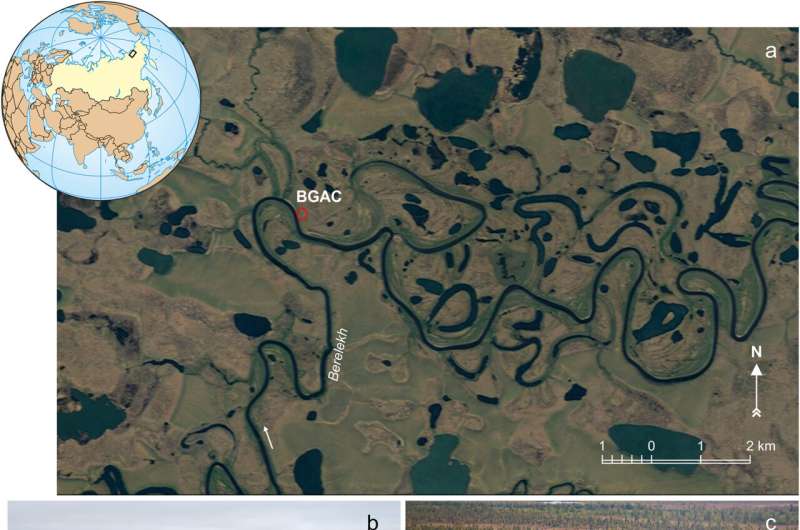
Along the Berelekh River, Russia, a ‘mammoth graveyard’ can be found. Here, thousands of disarticulated bones, representing a minimum of 156 individual mammoths, found alongside an archaeological site indicate the close proximity of these two communities, forming the Berelekh geoarchaeological complex.
Dr. Vladimir Pitulko, of the Russian Academy of Sciences, and colleagues aimed to assess the relationship between the ‘mammoth graveyard’ and the archaeological site through a re-examination of stratigraphic and paleogeographic data obtained in 2009, with new fieldwork focused on the left riverbanks where mammoth bones have readily yielded from their home in the sediment and appeared on the water’s edge. Alongside them are remains of Pleistocene hare, Arctic fox and wolves, as well as soot and charcoal from hearths and worked mammoth tusks (one being an unfinished throwing spear).
https://googleads.g.doubleclick.net/pagead/ads?client=ca-pub-0536483524803400&output=html&h=135&slotname=8188791252&adk=2329133447&adf=780081655&pi=t.ma~as.8188791252&w=540&abgtt=6&fwrn=4&lmt=1718045862&rafmt=11&format=540×135&url=https%3A%2F%2Fphys.org%2Fnews%2F2024-06-siberia-mammoth-graveyard-reveals-year.html&wgl=1&uach=WyJXaW5kb3dzIiwiMTUuMC4wIiwieDg2IiwiIiwiMTI1LjAuMjUzNS45MiIsbnVsbCwwLG51bGwsIjY0IixbWyJNaWNyb3NvZnQgRWRnZSIsIjEyNS4wLjI1MzUuOTIiXSxbIkNocm9taXVtIiwiMTI1LjAuNjQyMi4xNDIiXSxbIk5vdC5BL0JyYW5kIiwiMjQuMC4wLjAiXV0sMF0.&dt=1718045859678&bpp=1&bdt=2004&idt=2916&shv=r20240605&mjsv=m202406050102&ptt=9&saldr=aa&abxe=1&cookie=ID%3D2f05cd7691850c06%3AT%3D1701886612%3ART%3D1717452597%3AS%3DALNI_MbgFUsr3tBK_ibTf9yHt-YgAcvIfg&gpic=UID%3D00000d15f9be26d0%3AT%3D1701886612%3ART%3D1717452597%3AS%3DALNI_MbNwGW5uLom9OkoyV-GN3KefdzQXQ&eo_id_str=ID%3D7661de5f48853ad2%3AT%3D1707091950%3ART%3D1717452597%3AS%3DAA-AfjYm6rhA_FL7MpXyUDZhCf5p&prev_fmts=0x0&nras=1&correlator=2709901277497&frm=20&pv=1&ga_vid=777786165.1701886610&ga_sid=1718045863&ga_hid=707684969&ga_fc=1&rplot=4&u_tz=-420&u_his=1&u_h=864&u_w=1536&u_ah=816&u_aw=1536&u_cd=24&u_sd=1.25&dmc=8&adx=395&ady=1833&biw=1521&bih=714&scr_x=0&scr_y=0&eid=44759876%2C44759927%2C44759842%2C31084347%2C95331696%2C95334509%2C95334524%2C95334572%2C95334578%2C95334053%2C95335292%2C31078668&oid=2&pvsid=350657349681610&tmod=602258831&wsm=1&uas=0&nvt=1&ref=https%3A%2F%2Fnews.google.com%2F&fc=1920&brdim=0%2C0%2C0%2C0%2C1536%2C0%2C1536%2C816%2C1536%2C714&vis=1&rsz=%7C%7CpeEbr%7C&abl=CS&pfx=0&fu=128&bc=31&bz=1&psd=W251bGwsbnVsbCxudWxsLDNd&nt=1&ifi=2&uci=a!2&btvi=1&fsb=1&dtd=2923
The researchers suggest humans created these bone accumulations as a byproduct of the production of mammoth ivory technology, while hares may have been targeted for fur to produce winter clothing.
Notably, evidence of blowfly pupae activity on cavities in skulls and bones is indicative that the mammoth carcasses were added to the ‘graveyard’ de-fleshed. Indeed, there appears to be evidence of sorting of the bones, with only the most valuable transported to Berelekh from the area in which the mammoth was killed, leaving behind parts such as spinal columns, carpal (‘hand’) and tarsal (‘foot’) bones.
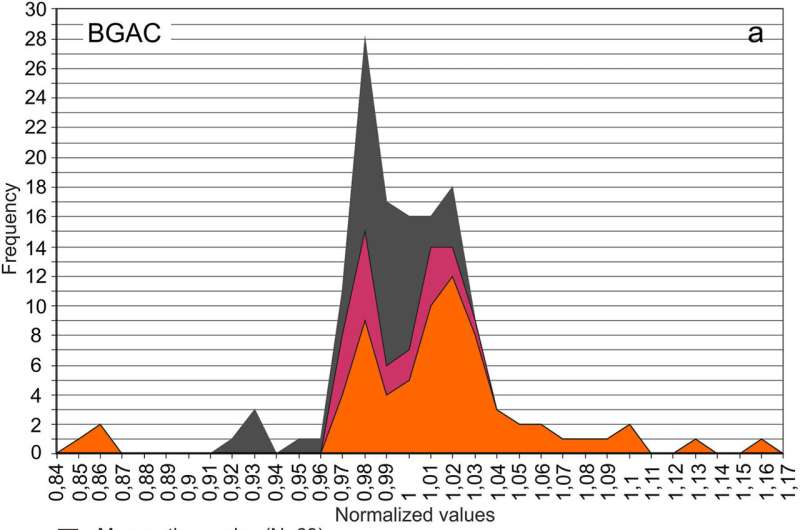
There are three radiocarbon dated peaks in woolly mammoth accumulation at 11.8, 12.2 and 12.4 kyr ago, which fall within known human settlement of the area (11.2–12.4 kyr ago) during the Bølling-Allerød deglacial, when the northern hemisphere warmed and pollen evidence suggests the region became more arid.
Fluctuations in the abundance of mammoths in the ‘graveyard’ suggest human settlement of the area may also have changed through time (frequent occupation but not permanent), which the researchers attribute to environmental changes on the floodplain permitting suitability for erecting campsites.
Radiocarbon dating of mammoth remains identifies their presence here pre-dating human settlement (beginning ~12.5 kyr ago), but also shows that humans remained in the area (until ~11.2 kyr ago) after mass mammoth remains accumulation declined (~11.8 kyr ago).
Given this, four possible causes are suggested by the scientists to explain such a significant mass accumulation of bones: 1) mass death by natural causes or human, 2) repeated group deaths in the same location, likely due to human predation, 3) concentration of remains by geological processes, such as river action, or 4) solely derived from human predation or scavenging from deceased carcasses.
However, the latter is considered to be the most likely to produce useful tools from ivory tusks, as well as meat to feed the community, as there is no evidence on the bones for a cause of mass death, radiocarbon ages do not cluster into multiple phases for recurrent death deposits and stream flows were unlikely to reach sufficient velocities to transport such heavy bones.
These findings are concurrent with mammoth remains at the Yana Paleolithic site, also in Siberia. Here, estimates suggest the ‘graveyard’ increased by 1–2 mammoths per year rather than a mass death event, a figure Dr. Pitulko and colleagues conclude could be similar or even higher for Berelekh.
This research is significant as it alters the previously-held belief that there was a lag of 50–80 years between mammoth bone accumulation from natural processes (such as deposition in flood channels) and human settlement, instead now defining a close relationship between the two over 700–800 years. Sadly, now that human-mammoth relationship has continued as ivory hunters have looted the site beyond further study.
More information: Vladimir V. Pitulko et al, From the Berelekh ‘mammoth graveyard’ to Berelekh geo-archaeological complex: Paleoenvironment, site formation processes, and human-mammoth relationships, Quaternary Science Reviews (2024). DOI: 10.1016/j.quascirev.2024.108692
Journal information: Quaternary Science Reviews
Curated By: News Desk
Edited By: Shilpy Bisht
Last Updated: JUNE 11, 2024, 00:58 IST
The threat of avian flu for people has become a priority for health officials and learning how the virus is moving from species to species. (Image: Unsplash)
Why NEET Candidates Are Demanding Probe Into UG Exam, How Come There Were 67 Toppers This YearNEXT »How BJP Has Fine-Tuned Bihar Caste Equations By Giving 8 Ministerial Berths In Modi Govt 3.0
The death of a person due to H5N2 bird flu is keeping many scientists and experts worried. The World Health Organization (WHO) confirmed that the death of a 59-year-old man in Mexico caused by a strain of bird flu was unusual.
Unlike the recent cases of H5N1 in people in the US, the patient did not have any known exposure to infected animals, but outbreak of H5N2 was reported in poultry in Mexico.
So, what does this mean?
The H5N1 has been found in 11 house mice in New Mexico, according to the US Department of Agriculture. Farms also reported H5N1 outbreaks in cows. So, it is possible that the mice consumed unpasteurized milk, which infected them. This means, the virus in inching closer to humans since most people are likely to encounter house mice than dairy cattle.
The threat of avian flu for people has become a priority for health officials and learning how the virus is moving from species to species. It is also not clear what tissue samples from the mice were positive. So, it is not known if the mice are transmitting the virus through urine or feces.
According to the Mexican health ministry, the man had a history of chronic kidney disease, type 2 diabetes and long-standing systemic arterial hypertension. He had been bedridden for three weeks before the onset of acute symptoms, developing fever, shortness of breath, diarrhoea, nausea and general malaise on April 17.
The man was taken to the hospital in Mexico City on April 24 and died later that day. “The death is a multi-factorial death, not a death attributable to H5N2,” WHO spokesman Christian Lindmeier told journalists in Geneva.
Seventeen contacts of the case in the hospital were identified. All tested negative for influenza. “The infection of H2N5 is being investigated to see if the man was infected by somebody visiting or by any contact with any animals before,” Lindmeier said.
RELATED STORIES
The UN’s Food and Agriculture Organization (FAO) said the risk of getting avian flu through eating poultry was “negligibly low”. “In all the hundred years of avian influenza… there has not been any demonstrated food-borne transmission,” Markus Lipp, senior food safety officer at FAO told the media via a video link.
You May Like
Ready for a challenge?Hero WarsPlay Now
He explained humans do not have “avian influenza receptors in their gastro-intestinal tract, contrary to certain animal species, as far as we know. So, there is a very slim likelihood, just from that perspective”.
However, the H5N1 was first identified in humans in 1997.
H5N2 is just one of several kinds of avian influenza viruses. The viruses are classified based on two types of protein on their surfaces: hemagglutinin, or H, which plays a crucial role in allowing the virus to infect cells, and neuraminidase, or N, which helps the virus spread. Many different combinations of H and N proteins are possible.
H5N2 belongs to a family of bird flu viruses called H5, which primarily infects wild birds. There are a total of nine known subtypes of H5 viruses, according to the Centers for Disease Control and Prevention.
H5N1, which was detected in dairy cows in the US in March, also belongs to this family.
Top VideosView All
In India, the virus has been found in Kerala. The state health minister, Veena George, stressed that bird flu has not affected humans in the state, but it’s important to take precautions to prevent its spread. Around 21,000 ducks were culled in Edathua and Cheruthana, the epicenters of the bird flu outbreak. Additionally, all domesticated birds within a one-kilometer radius of the outbreak zones will be killed.
H5N1 has infected people in 23 countries since 1997, according to the CDC, resulting in severe pneumonia and death in about 50% of cases.
Columbus Dispatch
AD
0:05
https://imasdk.googleapis.com/js/core/bridge3.644.0_en.html#goog_1357079202
Five cows in the United States have been infected and died from bird flu or slaughtered because they did not recover, Reuters reports.
Bird flu, also known as avian influenza or H5N1 virus, refers to the disease caused by infection from influenza Type A viruses. This virus spreads among wild aquatic birds and can infect domestic poultry and other bird and animal species.
Is beef still safe to eat? Is it safe to drink cow milk? Can humans catch bird flu, too? Here’s what to know.
Animals from more than 80 dairy cow herds across 10 states have contracted bird flu since late March, according to the U.S. Department of Agriculture. Cows in Ohio, along with South Dakota, Michigan, Texas, and Colorado, have died from bird flu. Most cows in Ohio and other states have died from secondary infections after having bird flu, according to Reuters.
Most cows affected by bird flu recover well, a USDA spokesperson said.
What about the birds?What could rising bird flu cases mean for your egg and poultry prices? What we know
The USDA reported bird flu particles in the beef tissue of one slaughtered dairy cow, and it was not sent to food supply. Experiments have shown that meat injected with the bird flu virus was not found with it after being cooked to medium up to well done.
So far, bird flu has not been found in stores.
All meat goes through a rigorous meat inspection process, according to the USDA website, and the administration is confident that meat supply is safe. Food Safety and Inspection Service (FSIS) veterinarians are present at all livestock facilities, and each animal is inspected twice before being slaughtered for the food supply.
Get the Evening Update newsletter in your inbox.
Stay up-to-date with the latest news from around Columbus
Delivery: DailyYour Email
The USDA recommends properly cooking raw meat to a safe internal temperature to kill bacteria and viruses in meat. The FSIS website has a free safe minimum internal temperature chart.
Yes, the FDA and USDA indicate that it is still safe to drink your store-bought milk due to the pasteurization process.
Collected samples don’t contain live avian flu virus, and positive results don’t mean the actual virus poses a risk to consumers.
FDA’s partners at the Centers for Disease Control and Prevention signal no significant uptick of human cases of flu and no cases of avian flu, specifically, beyond four cases reported in three states between April 1 and May 29, 2024.
Seriously, don’t drink the raw milk:Social media doubles down despite bird flu outbreak
According to farmers and veterinarians, symptoms of bird flu in cattle include reduced milk production, digestive issues, fever, and diminished appetite.
When farmers detect cows infected by bird flu, they separate them from the rest of the herd. Dairies have reported culling cows due to a lack of milk production.
Before the US confirmed bird flu was infecting cows, farmers were culling many cows because of decreased milk production. The numbers of culled cattle dropped, however, as farmers learned that cows can recover from avian flu infections.
Humans are not usually affected by the bird flu virus. However, sporadic human infections — seen only occasionally and usually without geographic concentration — have occurred.
Infected birds shed bird flu virus through their saliva, mucus and feces, according to the CDC. Human bird flu infections can happen when the virus gets into a person’s eyes, nose or mouth, or is inhaled.
Yes, but the CDC says that the public health risk related to bird flu remains low — only four cases of bird flu in humans have been reported from the 2024 outbreak.
Reported signs and symptoms of bird flu virus infections in humans have ranged from no symptoms, mild, to severe illness.
Symptoms include:
Less common signs and symptoms include:
The CDC developed new interim recommendations for prevention, monitoring, and public health investigations of highly pathogenic avian influenza in animals.
more:
By Timothy Malcolm,Weekend EditorJune 8, 2024
https://www.chron.com/news/article/texas-bird-flu-ferrets-cattle-19504613.php
After testing bird flu found earlier this year in a Texas dairy farm worker, the Centers for Disease Control and Prevention said in a report Friday that the H5N1 strain originating in the Lone Star State and currently spreading across the U.S. poses “a serious potential public health risk and could cause serious illness in people.”
https://imasdk.googleapis.com/js/core/bridge3.644.0_en.html#goog_1729195372
0:17
/
0:58
Watch More

This comes after CDC researchers tested the worker’s bird flu strain on ferrets, resulting in severe illness and death after direct contact with one another. The CDC said that ferrets have previously gotten sick from flu strains, but this is the first time a flu infection has proven fatal.
Bird flu tore through cattle in the Texas Panhandle starting in February, affecting 13 dairy farms and spreading to at least eight other states. The dairy farm worker, who reported an inflamed eye, is believed to have contracted bird flu through his work with cattle, though scientists couldn’t prove a direct connection between worker and animal as the cattle on his farm were not tested. Cows in nearby ranches, however, tested positive for H5N1.
ADVERTISEMENT
Article continues below this ad
The Texas farm worker is believed to be the first human who has ever contracted bird flu through another mammal, and not from an infected bird.
“Given the infected human was a dairy farm worker with reported exposure to sick, presumably infected cows in Texas and without reported exposure to other mammals or birds, we believe the genetic and epidemiologic data are strong evidence of infection of the human following exposure to presumably HPAI A(H5N1) virus-infected cows,” wrote the authors of a report published by the New England Journal of Medicine in May.
Two additional human bird flu infections were found last month in Michigan, both involving dairy farm workers. The Texas worker has since recovered from his illness. Additional cases were reported recently in Australia and in Mexico. The Mexican man who contracted bird flu died, but the World Health Organization reported that his death was the result of chronic diseases and not the virus.
ADVERTISEMENT
Article continues below this ad
The CDC said in its report Friday that the risk remains low for humans to contract bird flu, but those exposed to infected animals should take precaution.
“While the three cases of A(H5N1) in the United States have been mild, it is possible that there will be serious illnesses among people,” read the report.
Story by Tom Yulsman
• 1d • 3 min read
The first of several global heating analyses for May is in, and while expected, the news, from the Copernicus Climate Change Service, is still disturbing:
It was the warmest May on record, continuing a record-setting heat streak that has now lasted for each of the past 12 months, going back to June 2023.
sherumUS: Why Are People Snapping up This New Flag Wreath?
This means global temperatures have been at 1.63 degrees C above preindustrial levels over the past 12 months, according to the Copernicus analysis. Under the Paris Agreement, countries agreed to restrain the increase of global average surface temperature to 1.5 C.
This short-term warming doesn’t mean we’ve breached that threshold – which concerns a longer-term span of years, not months. Nonetheless, “we are way off track to meet the goals set in the Paris Agreement,” says Ko Barrett, deputy-secretary of the World Meteorological Organization. “We must urgently do more to cut greenhouse gas emissions, or we will pay an increasingly heavy price in terms of trillions of dollars in economic costs, millions of lives affected by more extreme weather and extensive damage to the environment and biodiversity.”
Unfortunately, the level of heat-trapping carbon dioxide in the atmosphere continues to accelerate, scientists from NOAA and the Scripps Institution of Oceanography announced yesterday.

Relentless Rise of CO2© Provided by Discover Magazine
Carbon dioxide’s relentless rise in the atmosphere continues: In May it reached its peak for the year at just shy of 427 parts per million – the highest level in millions of years. (Credit: NOAA Global Monitoring Laboratory)
“Not only is CO2 now at the highest level in millions of years, it is also rising faster than ever,” says Ralph Keeling, Director of the CO2 Program at Scripps, quoted in a release. “Each year achieves a higher maximum due to fossil-fuel burning, which releases pollution in the form of carbon dioxide into the atmosphere. Fossil fuel pollution just keeps building up, much like trash in a landfill.”
 Related video: Climate-warming gas levels rising faster than ever, scientists warn (Scripps News)
about:blank
National correspondent Clayton Sandell joins us live.
Loaded: 7.82%Play

Current Time 0:00
/
Duration 2:33Quality SettingsCaptionsFullscreen

Climate-warming gas levels rising faster than ever, scientists warnUnmute
0
Measured atop Hawaii’s Mauna Loa, CO2 reached its annual high in May at a little less than 427 parts per million. That’s 2.9 ppm greather than in May 2023. “When combined with 2023’s increase of 3.0 ppm, the period from 2022 to 2024 has seen the largest two-year jump in the May peak in the NOAA record,” according to the agency.
The CO2 surge will continue until we more vigorously restrain out gusher of emissions. And here is where we might actually find one ray of hope:
In the last decade, the growth in humankind’s emissions of carbon dioxide has slowly declined. The growth rate between 2013 and 2022 averaged 0.5 percent per year, down from a peak of 3 percent per year, according to Global Carbon Budget 2023, a detailed paper published at the end of last year.
CommonSearchesNew Electric SUVs Come with Tiny Price Tags (Take a Look)
If you’re wondering how the level of CO2 in the atmosphere can still be accelerating even as our emissions of CO2 to the atmosphere are slowing and perhaps even leveling off, that’s a great question! Part of the answer is likely to be the strong El Niño that began in June 2023 and is only now nearly gone. The climate phenomenon limits uptake of atmospheric CO2 by land ecosystems, according to John Miller, a carbon cycle scientist with NOAA’s Global Monitoring Laboratory.
But I suspect there’s more to this, so I’m hoping to explore the issue in more detail in a future column.
In the meantime, it’s important to keep in mind something the authors of the Global Carbon Budget Paper emphasized: While the slowdown in the amount of carbon dioxide we’re pumping into the atmosphere is indeed good news, “global fossil CO2 emissions continue to grow and are far from the rapid decreases needed to be consistent with the temperature goals of the Paris Agreement.”
Yahoo FinanceElectric air taxies are taking the skies
But here, too, there is a ray of hope: In its World Energy Outlook 2023 report, the International Energy Agency projects that CO2 emissions from energy use and industry will peak in the mid-2020s. In fact, pending further analysis of the numbers, the IEA says it may have actually happened last year.
If we can speed up our decarbonization efforts by accelerating the transition away from fossil fuels and curbing such land-use practices as deforestation, we still have time to avoid the most dire impacts of climate change.
Or as author and climate scientist Michael Man has written, “There is urgency in reducing carbon emissions. But there is also still agency on our part in acting.”
JUNE 8, 20245:00 AM ET
By
,
,

Confiscated live animals are temporarily held in what the U.S. Fish and Wildlife Service calls their “live room” at an office building near Los Angeles International Airport, while authorities try to find them longer-term housing and specialized care.
Ryan Kellman/NPR
TORRANCE, Calif. — In the back of an office building, in a small room that smells like rotting strawberries, a criminal investigator watches his evidence crawl around on wood chips in five open plastic tanks.
The box turtles, native to eastern North America, were found at a nearby international mail facility in Los Angeles about a week prior, packaged in a series of boxes bound for Asia.
“These guys were being illegally exported,” said the U.S. Fish and Wildlife Service (FWS) special agent, who asked to remain anonymous because of his undercover work. “Now it’s an ongoing investigation in terms of who shipped them.”
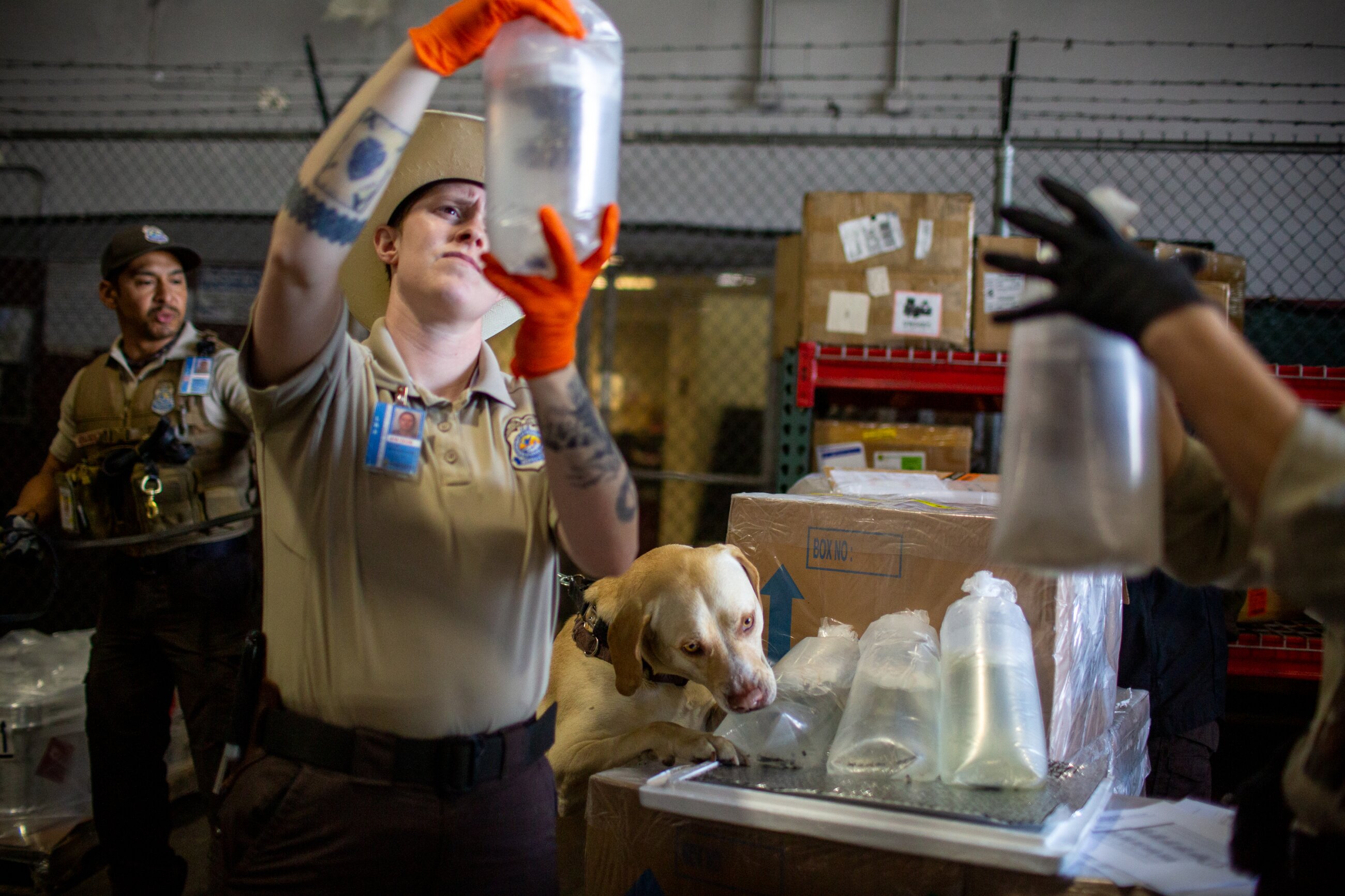
FWS Inspector Mac Elliot looks over a legal shipment while Braxton, a dog trained to smell heavily trafficked wildlife like reptiles and animal parts like ivory, enthusiastically does his job. Wildlife trafficking is one of the largest and most profitable crime sectors in the world. Estimates of its value range from $7-23 billion annually.
Ryan Kellman/NPR
The 40-some box turtles have a more immediate problem. They’re evidence of a crime and its victims. Distressed, possibly sick, and half a continent away from a home they’ll likely never see again, the turtles need specialized care and a long-term home.
Sponsor Message
Seized animals rarely get returned to the wild because it’s difficult to know where, specifically, they came from. They could carry disease.
“What to do with confiscated live animals has been a concern for as long as I’ve been a wildlife inspector because of the quantity, the care,” said Tamesha Woulard, a 36-year veteran of the FWS Office of Law Enforcement. “What happens after they’re here?”
Last year, the FWS and the Association for Zoos and Aquariums (AZA) launched a pilot project aimed at answering that question in Southern California. With wildlife trafficking surging globally, the organizations are now in talks to expand the program to other parts of the country.
“We’re reacting to a crisis,” said Sara Walker, senior advisor on wildlife trafficking at AZA. “It doesn’t do anything to actually reduce demand.”

Some of the confiscated turtles at the FWS office have mottled splotches on their shells, a sign of potential sickness.
The seized shipment of turtles included a mix of Eastern Box Turtles, native to the eastern U.S., and Yucatan Box Turtles, native to Mexico. The Yucatan Box Turtles have pale white heads.
Ryan Kellman/NPR
The illegal wildlife trade is surging
Wildlife trafficking is one of the largest and most profitable crime sectors in the world. Estimates of its value range from $7 billion to $23 billion annually. A recent report by the United Nations Office on Drugs and Crime found that more than 4,000 species are being targeted by traffickers globally, to be sold as food, medicine, ornaments or pets. The crimes are causing “untold harm to nature,” said Ghada Waly, the office’s executive director, jeopardizing “livelihoods, public health, good governance and our planet’s ability to fight climate change.”
Sponsor Message
An analysis by Moody’s Analytics that used government data from around the world found that from 2018-2021, wildlife trafficking surged 150% globally.
The latest available data from the FWS shows that from 2015-2019, nearly 50,000 live plants and animals were seized or abandoned in the U.S. over that four year period — an average of about 27 individuals per day.
Woulard said the number is definitely higher today.
“To me, what was highlighted after COVID is that people will try to make money using a lot of different methods,” she said. “E-commerce has exploded and there are people that are making pets out of animals that were never pets before.”
Squirrels, skunks, scorpions and snakes.
“But then I started finding ants,” Woulard said. “Ants? Really?”

Top and bottom left: Inspectors Mac Elliott and Ali Ventura look through a shipment. While Inspector Ray Hernandez takes a moment to instruct Braxton (bottom left). Seized animals rarely get returned to the wild because it’s difficult to know where, specifically, they came from. They could also carry disease.
Ryan Kellman/NPR
Illegal trade isn’t always nefarious, she said. Well-meaning pet enthusiasts don’t always know they’re purchasing something that was collected or shipped illegally. Importers don’t always mean to ship something that’s not allowed. Southern California is a hotspot for the legal import of tropical fish and corals, which can be hard to properly identify.
“There is a legal trade,” Woulard said. “What we do is we facilitate the legal trade and we intercept the illegal trade.”
When a live animal is seized by authorities, regardless of the reason, the authorities assume responsibility for the animal and its well-being.
At the FWS office in Torrance, there’s a room with saltwater tanks to house seized fish, corals and clams. The small room occupied by the 40 scurrying box turtles, a few doors down, has housed everything from rare birds to monkey-tailed skinks — “large lizards that don’t play well with each other,” Woulard said.
Their job is to keep the animals alive, she said. “Long enough for them to get to a place with better care.”

Aquatic species need specific water temperatures, pressure and chemistry. Specialized care at the Aquarium of the Pacific is often given by volunteers like Shaw Droker.
Ryan Kellman/NPR
A new approach
In the nine months since the Wildlife Confiscations Network launched, participants said it’s helped streamline the process of getting animals triaged and placed in long-term care facilities.
Sponsor Message
It’s also helped law enforcement officers “who are being absolutely inundated with live animals being smuggled,” said Walker, with the AZA.
Since August of last year, the network has helped place more than 1,300 animals at zoos, aquariums and conservancies in the region. The Aquarium of the Pacific in Long Beach has taken in 500 individual corals and clams in the last six months, said Nate Jaros, senior curator of fishes and invertebrates at the aquarium.
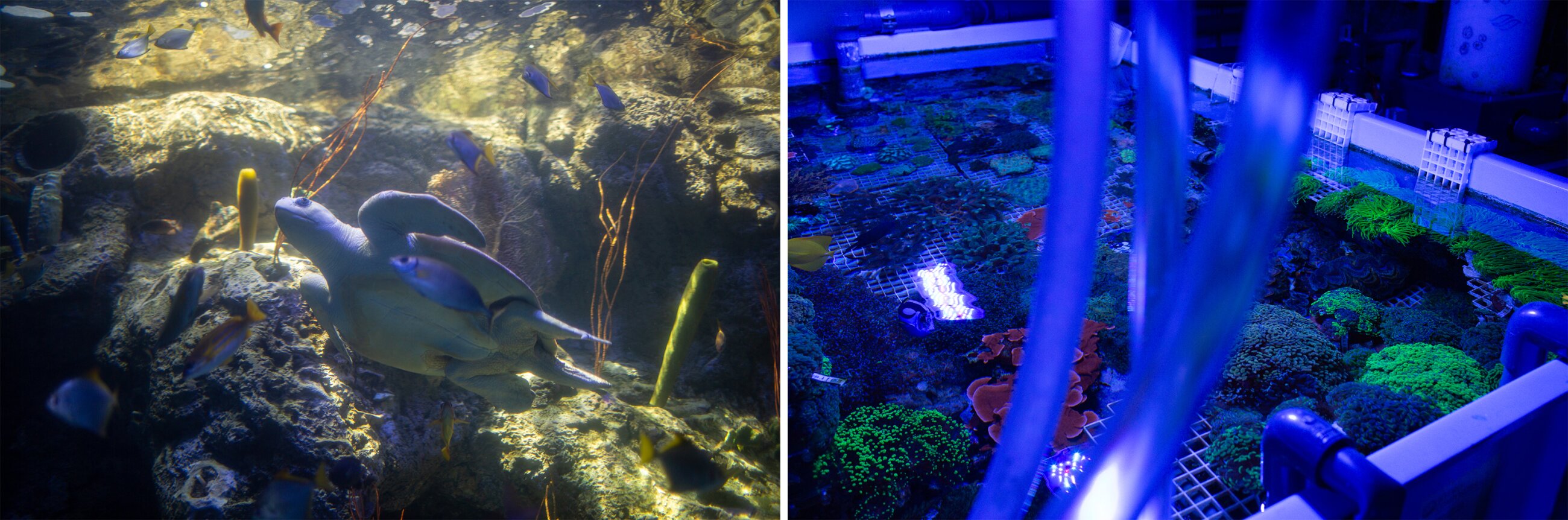
Left: The turtle pictured here was confiscated and has been living at the aquarium since the 1990’s. Right: Tropical corals are very popular with aquariasts in the U.S. They’re often confiscated by authorities because they’re misidentified.
Ryan Kellman/Ryan Kellman
“We really don’t harvest any wild coral for this,” he said, pointing to a massive display tank with schools of darting fish and colorful corals. “Mostly in-house propagation and confiscations have been enough to fulfill our coral exhibit needs.”
Animals that can’t be placed are likely to be euthanized. Fortunately, Walker said, since the Wildlife Confiscations Network launched in October that hasn’t happened yet. “But it’s going to happen in the future, I’m sure,” she said. “We’re just running out of space.”
Efforts are underway to launch similar networks in other parts of the country, Walker said, with the goal of creating a national network. The effort is “obviously a reactive initiative,” she said. “We’re reacting to a crisis. It doesn’t do anything to actually reduce demand.”

When animal care providers receive confiscated animals, they’re often malnourished, sick and distressed. Each animal is inspected and triaged to give it specific care.
Ryan Kellman/NPR
American turtles are increasingly part of the illicit trade
For some of the seized box turtles, temporarily housed at the Fish and Wildlife Service office, their long-term home is likely to be a couple hours drive north, at The Turtle Conservancy in Ojai, Calif.
Since 2017, the conservancy, which is closed to the public, has taken in about 500 confiscated turtles, including about 100 box turtles in just the last year.

Left: A Ploughshare Tortoise (center), native to Madagascar, is critically endangered due to poaching from the pet trade. Their rareness adds to their value on the illegal market. For poachers, Liu said, “It’s like finding a gold brick on the ground.” Right: Due to their golden coloration and friendly personalities, the Radiated Tortoise is one of the most heavily poached animals in the world, Liu said.
Ryan Kellman/NPR
The surge in American turtles being illegally collected and trafficked is part of a broader trend, said James Liu, director and head veterinarian at the facility.
Sponsor Message
“Now that there’s a lot more wealth in these Asian countries that have always liked turtles — they’ve always valued them as pets, as traditional medicine, as food — they now have the means to buy them from other countries,” he said.
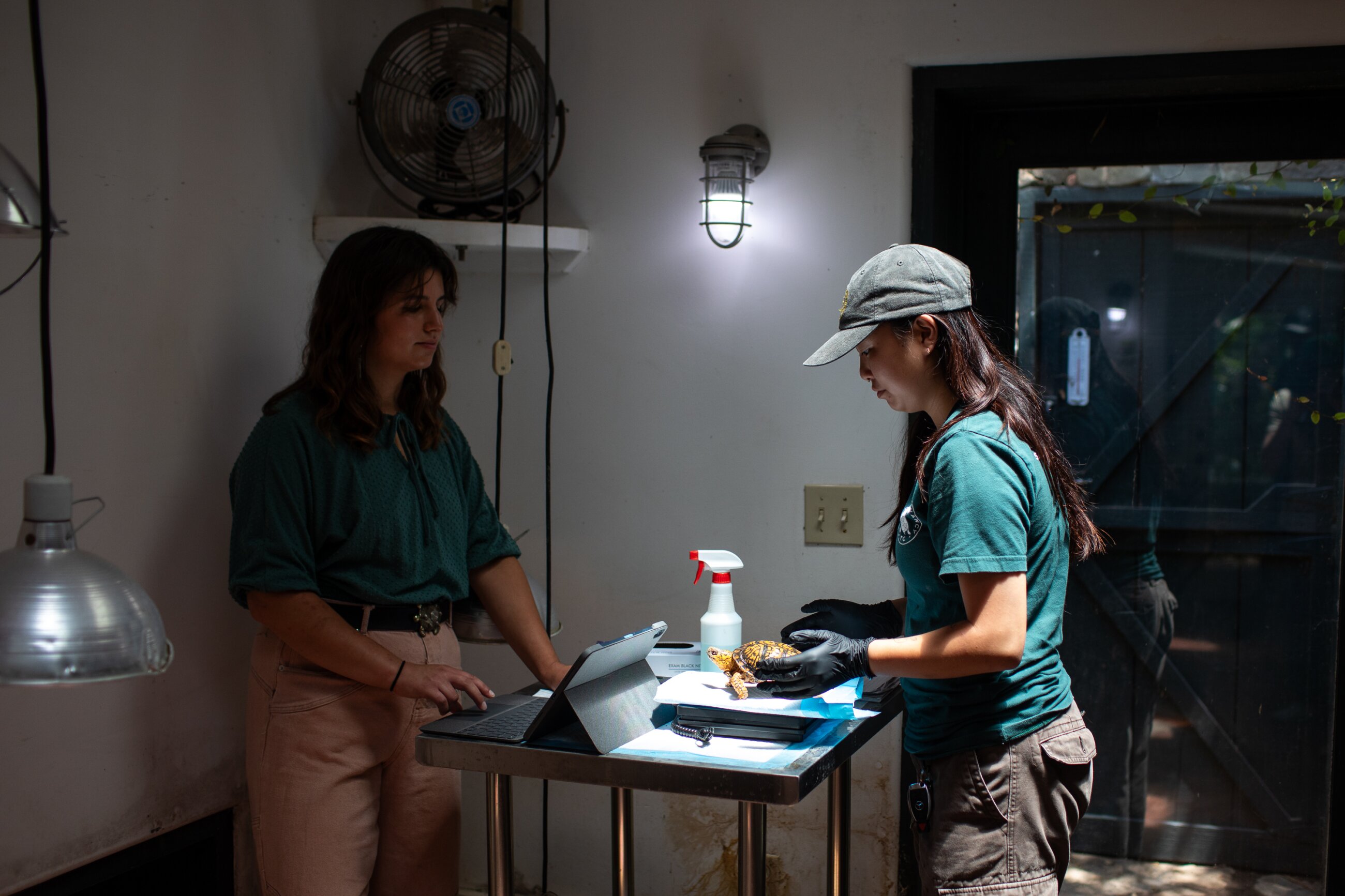
Abby Roeser (left) and Lani Yoo (right), of The Turtle Conservancy, weigh and inspect the confiscated turtles they’ve taken in daily to make sure they’re recovering from disease and malnutrition.
Ryan Kellman/NPR
The U.S. has the greatest turtle biodiversity in the world. That richness, coupled with steep declines in Asian turtle populations — what conservationists have dubbed the Asian turtle crisis — and economic hardships in the U.S. following the COVID-19 pandemic, “have created this perfect storm where now Americans are the people who are poaching and sending them to China,” Liu said.
A single box turtle can be sold for hundreds or thousands of dollars, depending on its coloration, wildlife officials said.
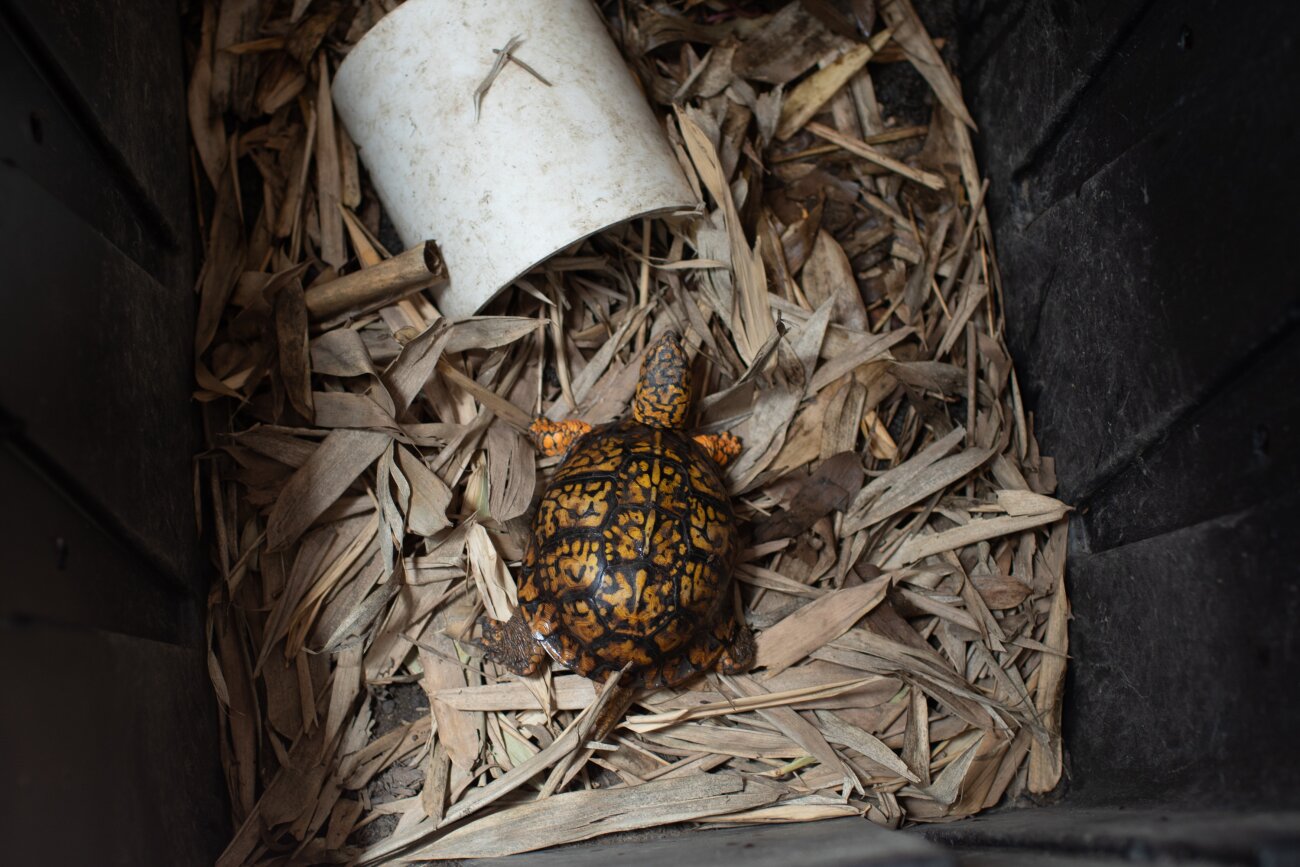
The patterns on box turtle shells are meant to emulate dappled light coming through trees to help the animals camouflage in their native forests of eastern North America. Their bright coloration also makes them more desirable for the pet trade.
Ryan Kellman/NPR
In the conservancy’s quarantine room, where new arrivals are kept for 60 days to be screened for disease and to be nursed back to health, Liu wiped the shell of a male box turtle with a wet rag. Its gleaming shell looks like a Rorschach test of ink black and golden orange.
The conservancy’s staff measured the turtle’s weight and moved on to the other confiscated turtles they had taken in. Their tanks run the length of a wall, stacked three high.
“It’s a quarantine, but really it’s an evidence locker,” Liu said. “Instead of cocaine and other contraband, it’s living creatures. It’s native U.S. turtles.”

