Man spends 25th birthday in hospital after being shot while turkey hunting
Reply

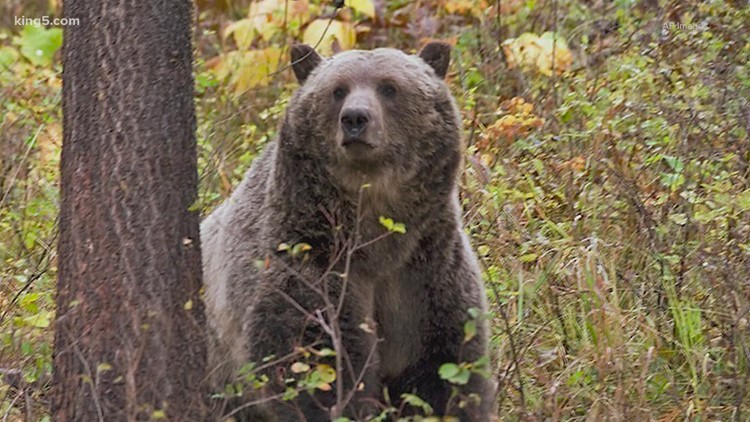
Grizzly bears will be translocated from the Rocky Mountains and interior British Columbia to establish a population in the North Cascades.

Author: Helen Smith
Published: 8:54 AM PDT April 25, 2024
Updated: 10:14 AM PDT April 25, 2024

WASHINGTON, USA — Two agencies officially announced Thursday their plans to restore a population of grizzly bears to the North Cascade Mountains.
The National Park Service (NPS) and U.S. Fish and Wildlife will seek to move three to seven grizzly bears a year over five to 10 years to establish an initial population of 25 grizzly bears. The animals will be translocated from ecosystems in the Rocky Mountains and Interior British Columbia, according to a press release.
Grizzly bears were native to the North Cascades for thousands of years but disappeared mostly due to hunting by humans. The last confirmed sighting of a grizzly bear in the U.S. portion of the North Cascades Mountains was in 1996. The North Cascades ecosystem is roughly 9,800 square miles, which is larger than the state of New Jersey, and home to some of the most intact wildlands in the contiguous U.S., according to the release.
The bears served as a key part of the North Cascades ecosystem, distributing native plant seeds and keeping other wildlife populations in balance, according to the NPS.
“We are going to once again see grizzly bears on the landscape, restoring an important thread in the fabric of the North Cascades,” said Superintendent of the North Cascades National Park Service Complex Don Striker.
The process to restore the grizzly bear population was the subject of much public input, with 12,000 comments submitted on the NPS’s draft environmental impact statement in 2023. The plans have been unpopular with people who live around the North Cascades National Park, including residents in Newhalem, and farther east into Central Washington.
There is no set timeline for when the translocation of grizzly bears to the North Cascades ecosystem will begin. The NPS will provide updates to the public as plans develop.
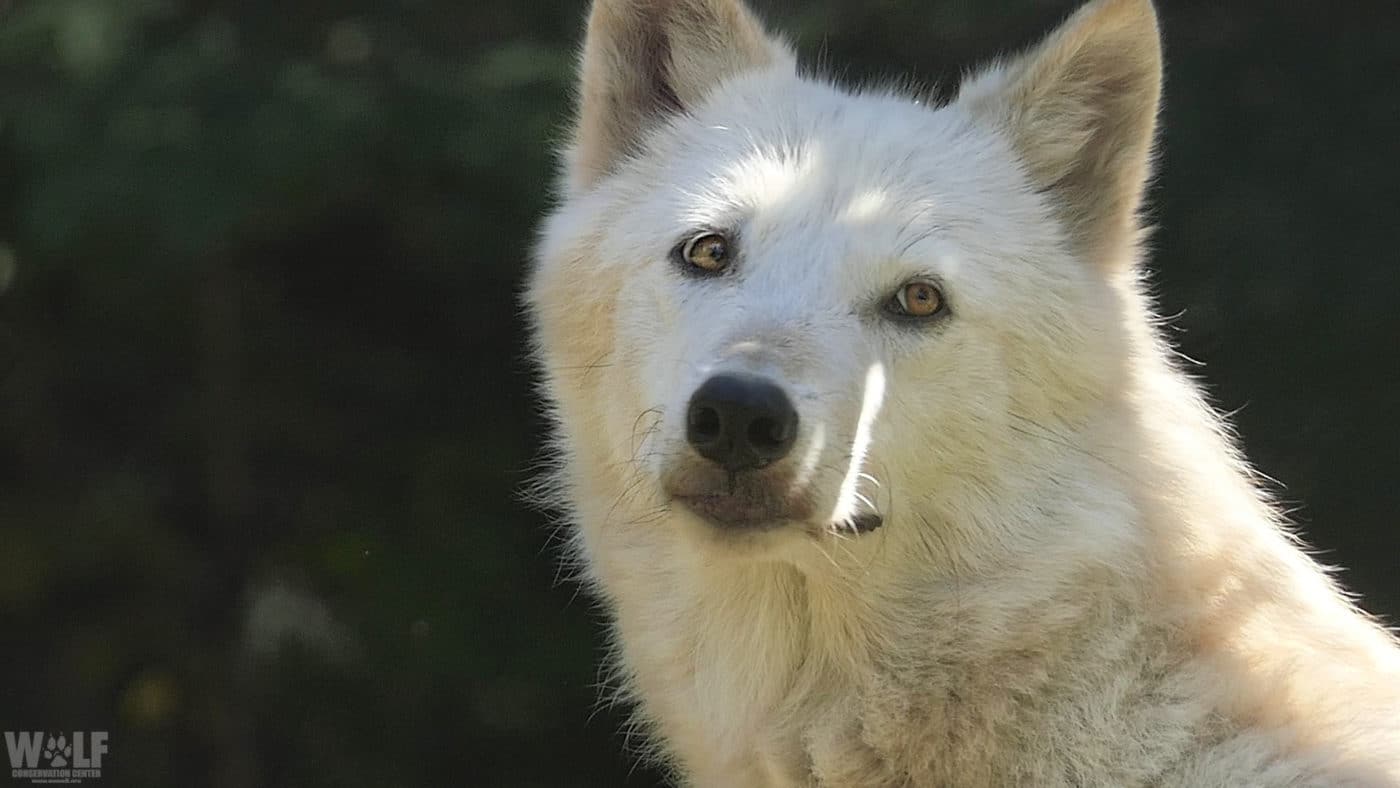
A Wyoming hunter has been cited after chasing and injuring a wolf on his snowmobile, taping their mouth shut, bringing them to his home and a bar, before killing them. It’s time to ban the use of snowmobiles and motorized vehicles to chase and kill wolves.
Wolf killing in Wyoming isn’t ethical hunting or necessary “wildlife management” – it’s animal cruelty and should be punished as such. Take action now against this cruel form of hunting.
*Required fields*Title: Mr. Ms. Mrs. Miss Dr. *First Name:*Last Name:*Your Email:*Address 1:*City:*State / Province: Choose a State AK AL AR AZ CA CO CT DC DE FL GA HI IA ID IL IN KS KY LA MA MD ME MI MN MO MS MT NC ND NE NH NJ NM NV NY OH OK OR PA RI SC SD TN TX UT VA VT WA WI WV WY AS FM GU MH MP PR PW VI AB BC MB NB NL NS NT NU ON PE QC SK YT None *ZIP / Postal Code:*Phone Number:
Yes, I would like to receive periodic updates and advocacy action alerts from Wolf Conservation Center.Remember me. What’s this?
Ban the use of Snowmobiles and Other Vehicles to Chase Down and Kill Wolves
Dear [Decision Maker],
Thank you for acknowledging that cruelty to any wildlife is unacceptable, and denouncing the brutal torture and killing of the young wolf.
I am reaching out to urge you to ban the use of snowmobiles and other motorized vehicles including aircraft, automotive vehicles, trailers, motor-propelled wheeled vehicles, or other vehicles designed for travel over snow for the purposes of chasing down and killing wolves in the state of Wyoming.
Wildlife policies that legalize and liberalize the cruel killing of native predators only breed further vitriol and hatred towards these animals; they don’t accomplish any management goals.
*Personalize your message
This cruel event should encourage Wyoming legislators and wildlife advocates to band together and ban the use of snowmobiles and other motorized vehicles to kill wolves in Wyoming and other states.
Sincerely,
[Your Name]
[Your Address]
[City, State ZIP]
[Your Email]


Colorado Parks and Wildlife reported Wednesday that the latest wolf activity map shows movement farther east in Larimer County.
Author: Jennifer Campbell-Hicks
Published: 12:51 PM MDT April 24, 2024
Updated: 12:51 PM MDT April 24, 2024

DENVER — A map released Wednesday by Colorado Parks and Wildlife (CPW) shows that gray wolves have crossed into watersheds east of the Continental Divide and onto the Front Range.
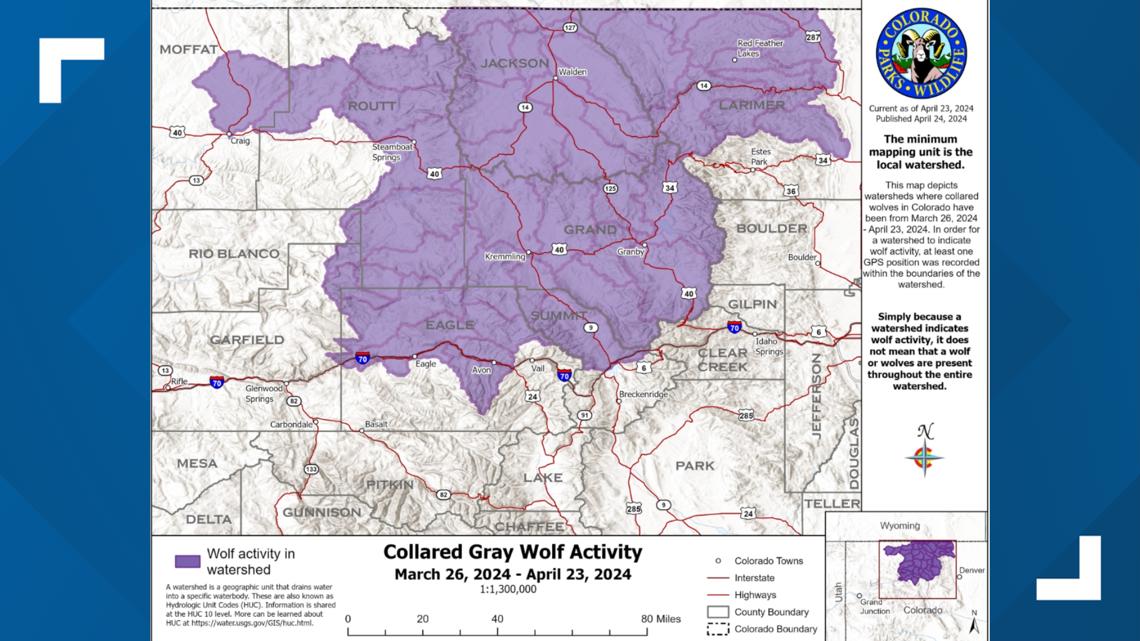
The new CPW map shows collared wolf activity between March 26 and April 23. The map shows that over the past month, at least one wolf with a GPS collar traveled in watersheds in Larimer and Boulder counties.
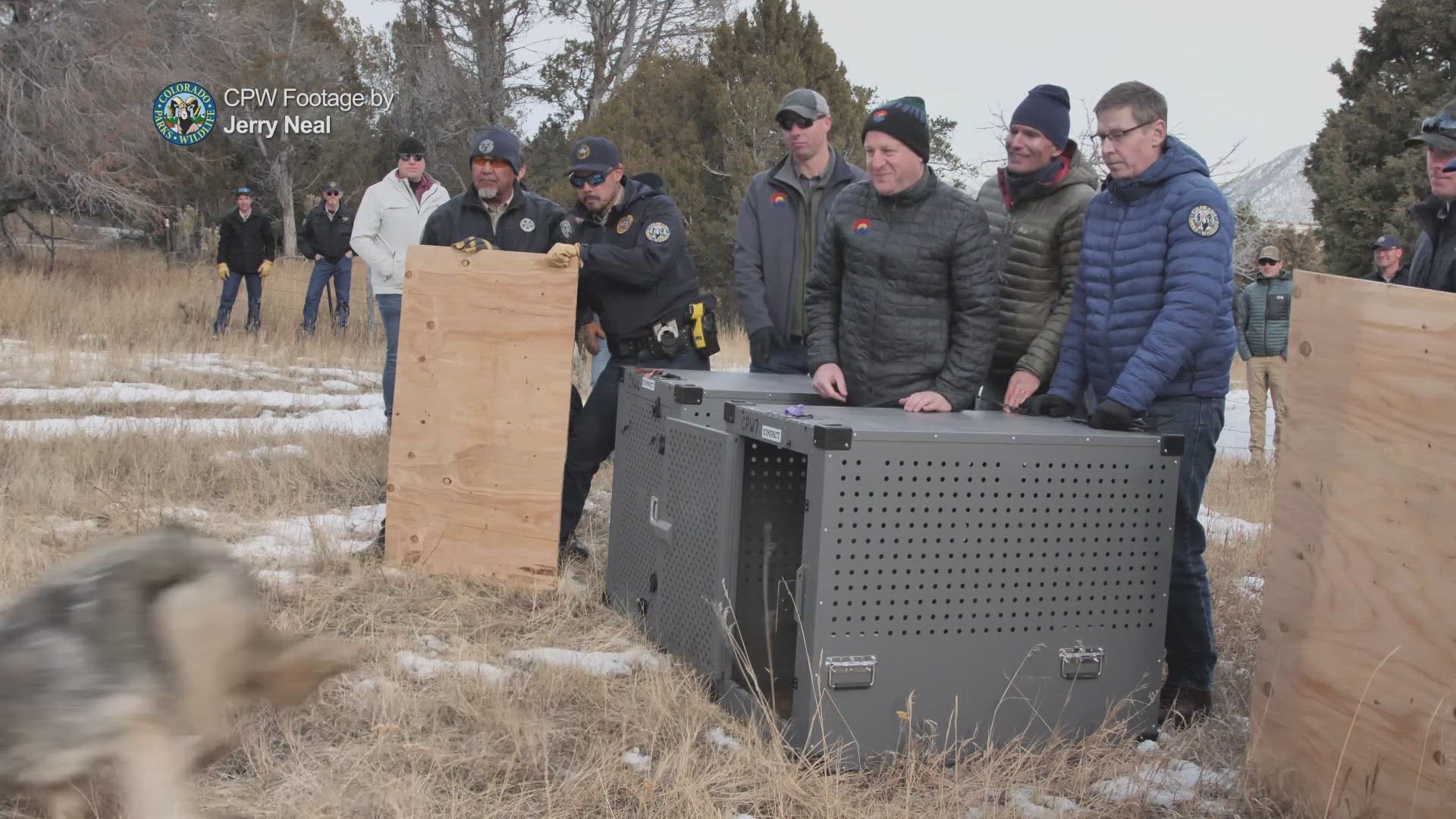
Ten gray wolves were released in Grand and Summit counties in mid-December in accordance with a voter-approved reintroduction program. Those were in addition to two wolves that dispersed into Jackson County on their own and produced six pups in 2021. In February 2023, Colorado Parks and Wildlife (CPW) officials placed collars on two of those wolves in North Park.
On April 18, authorities confirmed that one of the reintroduced wolves was found dead in Larimer County. The wolf appeared to die from natural causes, though a necropsy will determine the cause of death.
> The video above aired Tuesday: Wolf released as part of reintroduction found dead in Larimer County
RELATED: Wolf released as part of Colorado reintroduction found dead
Two of the 10 collars placed on reintroduced wolves have failed. CPW said the animals with failed collars are traveling with wolves that have functioning collars. Wildlife officials also confirmed the wolves with the failed collars are alive after seeing them from an airplane, CPW said.

Credit: Colorado Parks and Wildlife
Wolf activity in Colorado between March 26 and April 23, 2024.
The CPW activity map shows wolf activity in watersheds. Just because an area shows wolf activity doesn’t mean that wolves are present through the entire watershed or are currently there, CPW said.
CPW said the collars record a position every four hours. After four locations are recorded, that data is transmitted via satellite to biologists. CPW staff can use the data to see where wolves have been but not where they are at any current point in time, the agency said.
The map will be updated on the fourth Wednesday of every month, CPW said.
CPW also said on Wednesday that it has launched a website for wolf depredation reports to keep the public informed about confirmed livestock deaths by wolves.
Wolves have killed six cattle in Grand and Jackson counties this month. Several stockgrowers associations asked CPW to lethally remove the wolves responsible for the livestock deaths.
RELATED: Stockgrowers urge Colorado to remove wolves that killed cattle
CPW responded in a letter on Tuesday that the wolf possibly responsible for the depredations is the male of a pair that are “denning” and that the female’s GPS collar indicates she is likely in a den. The letter says that removing the “male breeder” would be irresponsible management and possibly cause the den to fail.
“The biological interpretation of this is that she was likely in a den during the time when connectivity with the collar was interrupted, which aligns with the expected timing of wolf reproduction,” the letter says. “This would be the first den from wolves reintroduced to Colorado. We are working diligently to confirm the den, and hope to have information on this soon.”
RELATED: ‘We’re able to do it here’ | Montana ranchers, agencies work together to find solutions to wolves
SUGGESTED VIDEOS: Wolves in Colorado

