SENATE TO CONSIDER BILL TO ALLOW SUNDAY HUNTING
Reply

“Rusty, I’ve never known a dog like him,” the famed primatologist said, remembering her beloved canine companion.
https://www.huffpost.com/entry/jane-goodall-childhood-dog_n_66082d30e4b06d4ea5c61fb3
Mar 30, 2024, 12:58 PM EDT

00:14
00:58
https://imasdk.googleapis.com/js/core/bridge3.630.1_en.html#goog_240868019
https://imasdk.googleapis.com/js/core/bridge3.630.1_en.html#goog_240868020
https://imasdk.googleapis.com/js/core/bridge3.630.1_en.html#goog_240868022
https://imasdk.googleapis.com/js/core/bridge3.630.1_en.html#goog_240868028
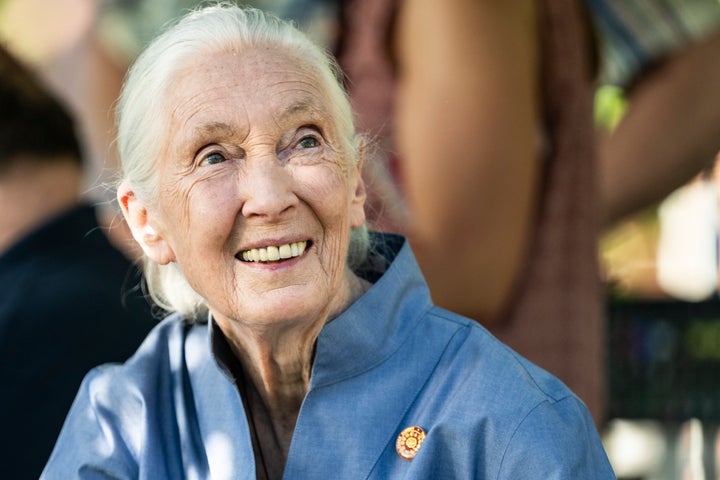
Iconic primatologist Jane Goodall changed how the world sees chimpanzees ― but one of her biggest influences was a dog.
The trailblazing scientist’s years of research, beginning in 1960 in Tanzania, won her international acclaim and played a pivotal role in the world’s understanding of animal intelligence.
ADVERTISEMENT
But Goodall, now 89, told The New York Times in an interview published Wednesday that she remembered a point in her career when the prevailing scientific establishment told her she had “done everything wrong.”
She recalled being told, “Chimps shouldn’t be named, they should be numbered. You can’t talk about their personalities. You can’t talk about them having brains capable of solving problems. And you certainly can’t talk about them having emotions.”
It was the memory of her childhood dog, Rusty, that gave her the conviction her critics were wrong.
“My dog Rusty, when I was a child, taught me that was absolute piffle,” she said. “Balderdash. Rubbish.”
ADVERTISEMENT
0 seconds of 0 secondsVolume 0%
Rusty was a neighborhood dog who belonged to a nearby hotel, but he would come over to her family’s home and spent most of his time with them.
It was like the canine had been “sent” to her by a higher power, she said, reminiscing, “Rusty, I’ve never known a dog like him.”
However, she admitted, “any dog” likely would have made a similar impression.
“We all know that [dogs] can be happy, sad, fearful and that they’re highly intelligent,” she said.
Goodall has spoken about Rusty in the past, and her latest remarks echo similar comments she’s made about what people can learn from their relationships with the animals in their lives.
“You cannot share your life in a meaningful way with a dog, a cat, a rabbit, a rat, a bird, a horse, a pig, I don’t care, and not know that they have emotions similar to ours and that they have minds that can sometimes solve problems,” she told Vox in a 2021 interview.
And while she’s best known for her work with chimpanzees, the primatologist hasn’t been shy about revealing her true favorite animal.
ADVERTISEMENT
“My favorite animal, altogether, is a dog,” she said in a 2015 video published by the Jane Goodall Institute. “Because dogs have taught me so much, and are so faithful and give unconditional love, and I don’t like to think of a world without dogs.”
At HuffPost, we believe that everyone needs high-quality journalism, but we understand that not everyone can afford to pay for expensive news subscriptions. That is why we are committed to providing deeply reported, carefully fact-checked news that is freely accessible to everyone.
Whether you come to HuffPost for updates on the 2024 presidential race, hard-hitting investigations into critical issues facing our country today, or trending stories that make you laugh, we appreciate you. The truth is, news costs money to produce, and we are proud that we have never put our stories behind an expensive paywall.
Would you join us to help keep our stories free for all? Your contribution of as little as $2 will go a long way.
Already contributed? Log in to hide these messages.
ANIMALSDOGSPETSJANE GOODALLCHIMPANZEES
Against All Odds, Jane Goodall Is Optimistic About Our FutureJane Goodall: If We Don’t Make Peace With Nature, Expect More Deadly Pandemics
Monday Apr 1st, 2024 39 Views The Agribusiness Update
FACEBOOK TWITTER LINKEDIN MAIL
From the Ag Information Network, this is your Agribusiness Update.
**The National Park Service and U.S. Fish and Wildlife released an environmental impact statement on options to restore grizzlies in the North Cascades of Washington state.
The agencies say the last grizzly sighting in the North Cascades was in 1996.
U.S. Representative Dan Newhouse of Washington says farmers are worried and the Interior Department is shutting out his constituents’ voices.
The NCBA and Public Lands Council have “condemned” the plan.
**The USDA, the FDA, and the CDC announced the detection of Highly Pathogenic Avian Influenza in cattle, primarily older cows in Texas, Kansas, and New Mexico.
It’s the first time Bird Flu has been found in dairy cattle and only the second time the virus has been detected in a ruminant animal.
The commercial milk supply remains safe due to the federal animal health requirements and pasteurization.
More tests are being conducted.
**Prop 12 is already raising the price of pork in California after going into effect last summer.
Data from the USDA’s Office of the Chief Economist shows pork sales have dropped across the state.
The OCE found prices for pork products affected by Prop 12, including loins, ribs, and bellies, have averaged 20% higher in California than before July 1st when the initiative was partially implemented.
Show audio player
Don’t make me pay for killing raccoons
This year’s raccoon bounty bill (HF 2665) is state sanctioned and taxpayer subsidized animal cruelty. The legislation’s goal is to incentivize the trapping, clubbing and skinning of raccoons. Lawmakers in committees on the bill have said the fur trapping industry is hurting because of low sales. They also say that raccoons are eating too much corn.
The estimated cost of this farce is $860,000 a year. If someone wants fewer raccoons on his farm, he already has the legal ability to do what he wants. He can already hire a trapper. I shouldn’t have to pay for it. The state legislature has an opportunity to say no to nonsense like this. The bill should be tabled and shouldn’t even be given a chance for a vote. But when it does inevitably get called the floor, our state representatives should reject it. Please contact your legislators and tell them to vote no!
Solon, Iowa
Published March 30, 2024 5:00pm EDT
Washington cattle producer Neil Kayser discusses the Biden administration’s aims to relocate the bears to the state on ‘The Ingraham Angle.’
The Biden administration’s plan to relocate grizzly bear populations to rural parts of Washington State will have a devastating impact on agriculture and livestock in the region while posing a significant danger to local communities, a fifth generation cattle producer warned.
Residents of Washington State are doubling down on their concerns surrounding the federal government’s plan to translocate grizzly bears, an apex predator, to the federally-managed North Cascades National Park, after the National Park Service and U.S. Fish and Wildlife Service declared the strategy their preferred plan for grizzly bear management in the region.
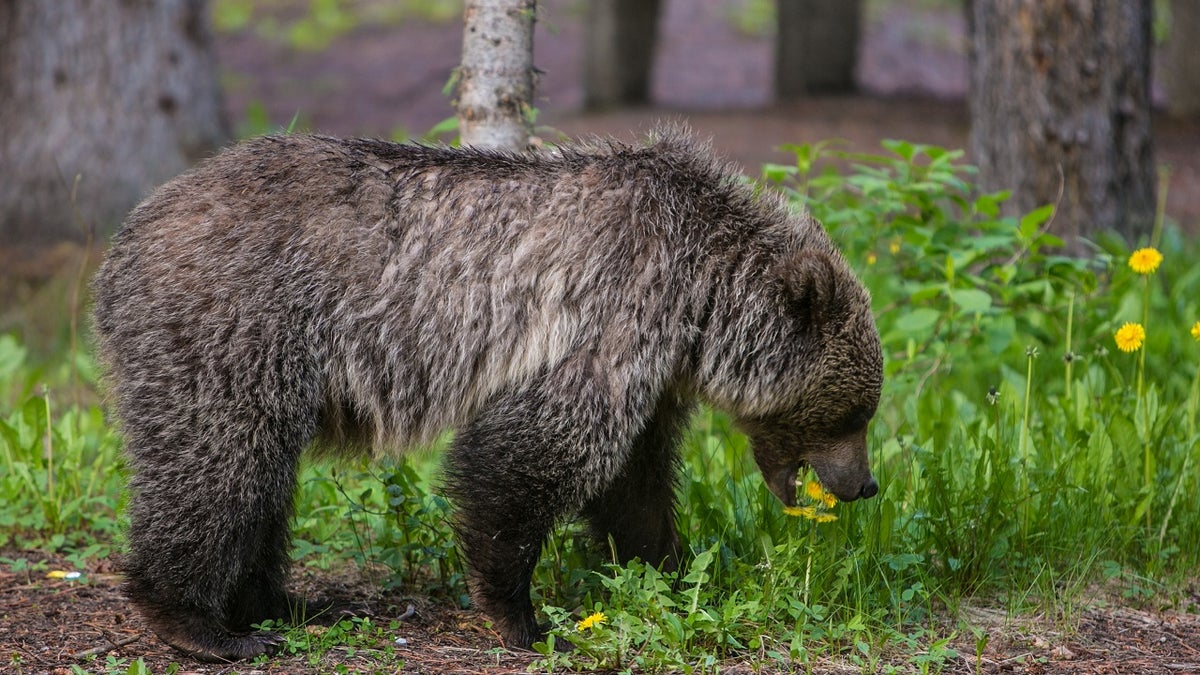
An adult grizzly bear walks through a campground and picnic area on June 27, 2013 in Lake Louise, Alberta, Canada, within Banff National Park. (George Rose/Getty Images)
The North Cascades National Park borders rural communities in northern Washington State. If approved, the plan would not only put the livelihoods of locals at risk, but it will pose a serious danger to families who live in the area, Neil Kayser, member of the Washington Cattleman’s Association and longtime cattle producer, told Laura Ingraham on Monday.
“There’s a real danger of our livestock …of the people that are working and living in this area that they’re going to bring the bears into. It’s a real threat and danger to our families,” Kayser said on “The Ingraham Angle.”
Despite widespread opposition, the government’s relocation proposal was accelerated last week with the National Park Service and U.S. Fish and Wildlife Service publishing a final environmental impact statement listing the translocation of grizzly bears from other ecosystems with an “experimental population designation” as their ideal management strategy.
BIDEN ADMIN BACKS OFF PROTECTIONS FOR APEX PREDATOR, ANGERING ENVIRONMENTALISTS
“Designation of grizzly bears released into the U.S. portion of the [North Cascades Ecosystem] as a [nonessential experimental population] would provide authorized agencies with greater management flexibility should conflict situations arise,” the agencies wrote in the filing. “Any management actions would be consistent with the overall goal of establishing and conserving the NEP while promoting social tolerance and human safety.”
“The designation allows for the advancement of recovery objectives by providing an opportunity to reestablish a population within the ecosystem,” they added. “The proposed geographic extent for the grizzly bear … includes all of Washington state except an exclusion area around the Selkirk Ecosystem grizzly bear recovery where a population of bears currently exists.”
The National Park Service and U.S. Fish and Wildlife Service further wrote in their environmental impact statement that its proposal is expected to improve social tolerance of grizzly bears, and even increase public visitation and recreation in North Cascades National Park “as visitors seek to experience grizzly bears in their native habitat.”
Kayser believes the agencies are far too optimistic, telling “The Ingraham Angle” that the grizzly bear management strategy should not be dictated by “federal bureaucrats” and should have included the input of local stakeholders and organizations.
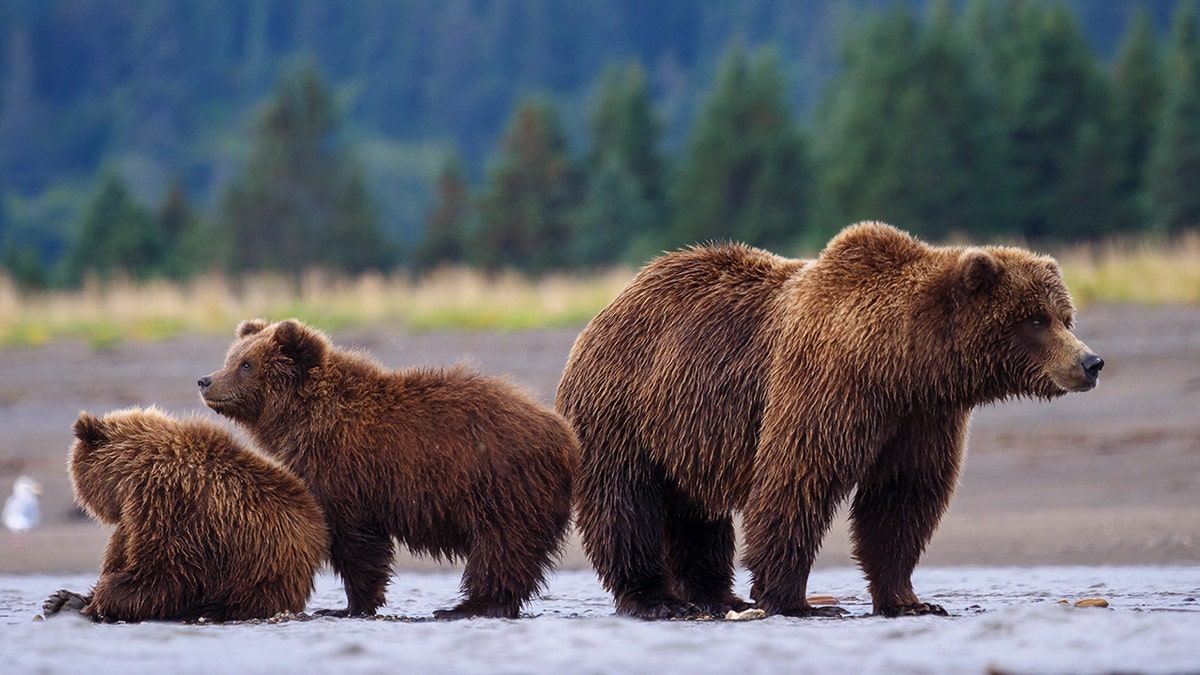
Coastal brown bear, also known as Grizzly Bear, Ursus Arcos, female and cubs. South Central Alaska. United States of America. (Education Images/Universal Images Group via Getty Images)
“I’m not a wildlife biologist, but I also believe that anything that gets hungry is going to eat something. And if there’s no wildlife there to eat, it’s going to be the livestock, it’s going to be the pets, the dogs and cats,” he said. “It’s going to harass the people that are hiking and walking in this area, that vacation there. It does not need to be done by a federal bureaucrat, it needs to be done by the Washington State [Department of] Fish and Wildlife and the local communities.”
“Nobody asked to house these bears in Portland or Seattle,” Kayser added. “They’re putting them in on our landscape that we try to make a living on to provide food and fiber and energy for the American consumer.”
Addressing the potential impact of the proposal on local communities, livestock and farms, the agencies wrote that they will allow people to injure or kill a grizzly bear that is threatening a person’s life or is in the act of attacking livestock, including working dogs on private land, under certain conditions.
The Biden administration first proposed the translocation plan in late September, Under the proposal, the federal government would release up to seven grizzly bears annually into the North Cascades ecosystem over the course of the next five to 10 years. The proposal was cheered by left-wing eco groups but criticized by the National Cattlemen’s Beef Association (NCBA), which represents cattle ranchers and local lawmakers, including Rep. Dan Newhouse, R-Wash.
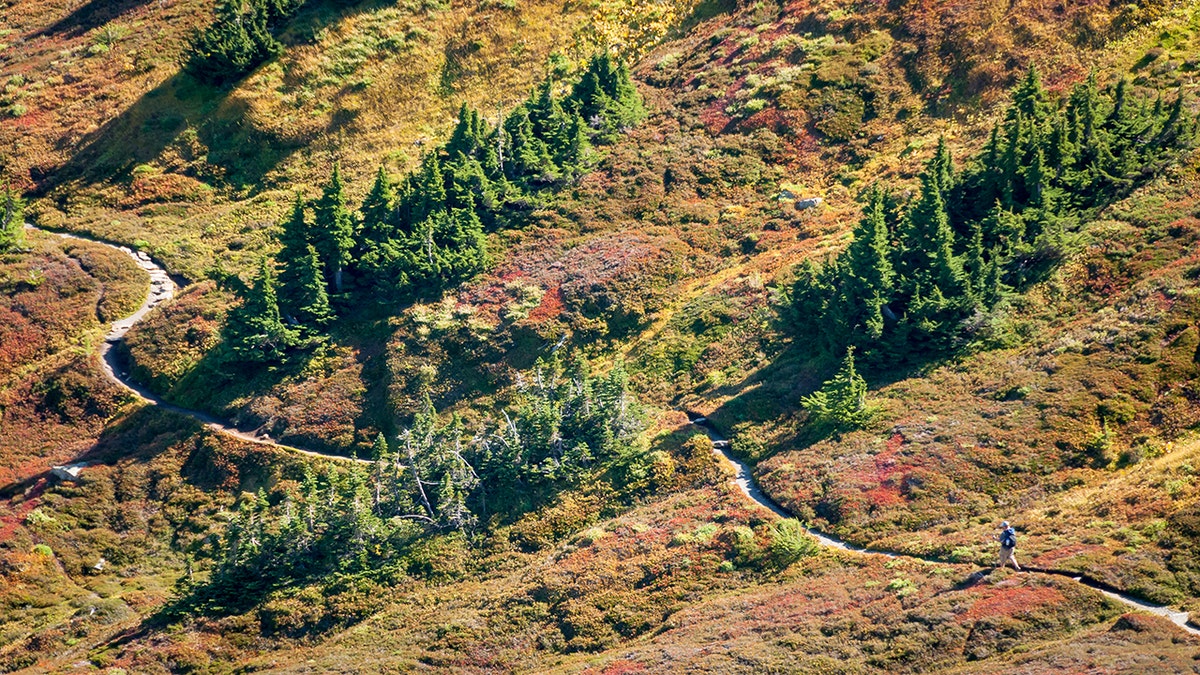
Hiker on Sahale Arm Trail, Cascade Pass, North Cascades National Park, Washington. (Greg Vaughn /VW PICS/Universal Images Group via Getty Images)
LOCAL RESIDENTS EXPLODE AT BIDEN OFFICIALS OVER PLAN TO RELEASE GRIZZLY BEARS NEAR THEIR COMMUNITIES
At a contentious public comment session in northern Washington in November, Newhouse dismissed the plan as “dangerous” and lacking in “common sense.”
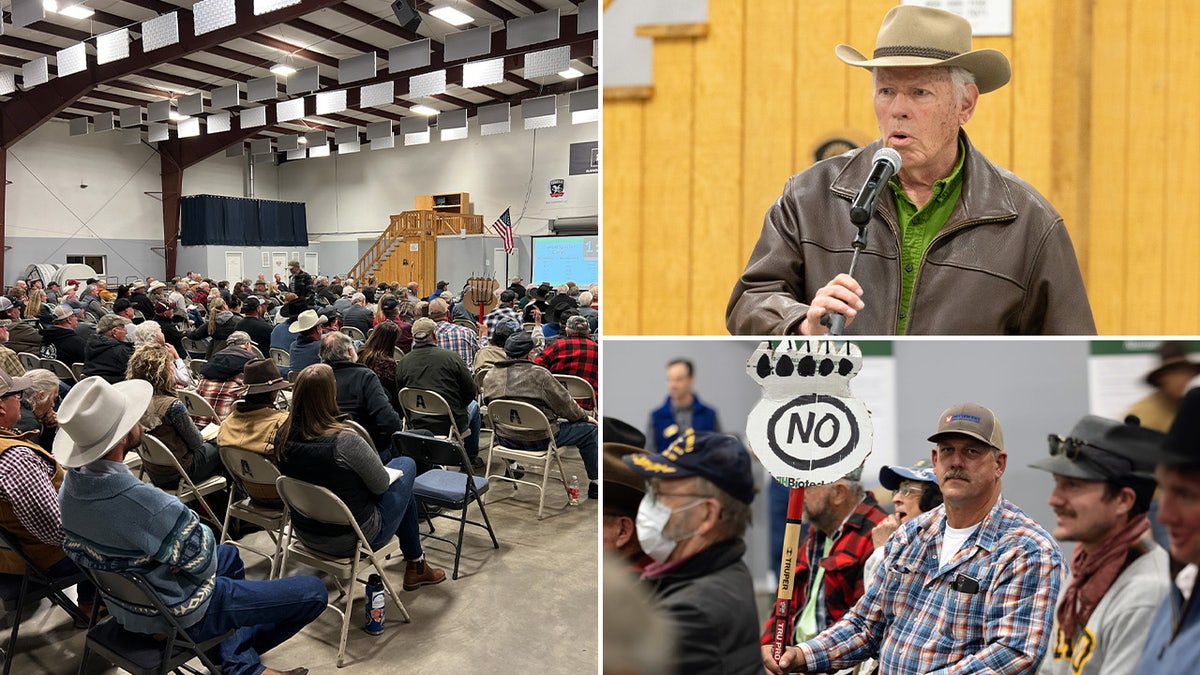
An estimated 200 residents participated in the comment session hosted by federal officials to hear feedback regarding the proposal to release grizzly bears in a nearby forest area. (Courtesy of Rep. Dan Newhouse)
Kayser said despite the “challenges” facing cattlemen today from environmental activists, he will continue to uphold his family legacy and has no plans of relocating.
“We’ve been here for five generations. And we’ve endured a lot of things. We’re going to support our industry and our way of life,” he told Ingraham.
The federal government’s overarching goal under its plan is to establish a grizzly bear population of roughly 200 bears in the coming decades.

