The UK’s chief vet has reportedly said there is a “phenomenal level” of bird flu in the country following the culling of tens of thousands of farmed birds.
An Avian Influenza Prevention Zone was declared across the UK on November 3 before being extended on November 29 with the added requirement all captive birds had to be kept indoors, amid concerns that wild birds migrating from mainland Europe during the winter are carrying the disease.
There are 40 infected premises in the UK, according to UK chief veterinary officer Christine Middlemiss.
The risk to human health from avian influenza remains very low, according to public health advice, and there is a low food safety risk.
Dr Middlemiss told the BBC the “phenomenal level” of bird flu has “huge human, animal and trade implications”.
She said the disease is being spread by migratory birds flying back from the north of Russia and eastern Europe, and insisted further research is needed to prevent a worsening outbreak in the future.
“We can’t wait until another year and have an even bigger outbreak. So, we will be working not just with our own scientists but internationally, to understand more of what we can do about what’s behind it,” Dr Middlemiss told the broadcaster.
“Maybe chickens cannot fly, but the prices certainly do,” a local resident in Turkey’s southeastern Urfa province complained about the ongoing food price spikes.
Amid unprecedented inflation, economic challenges, and concerns over avian flu, residents of the meat-loving province of Urfa in southeastern Turkey are finding it increasingly difficult to obtain affordable meat during the holy month of Ramadan.
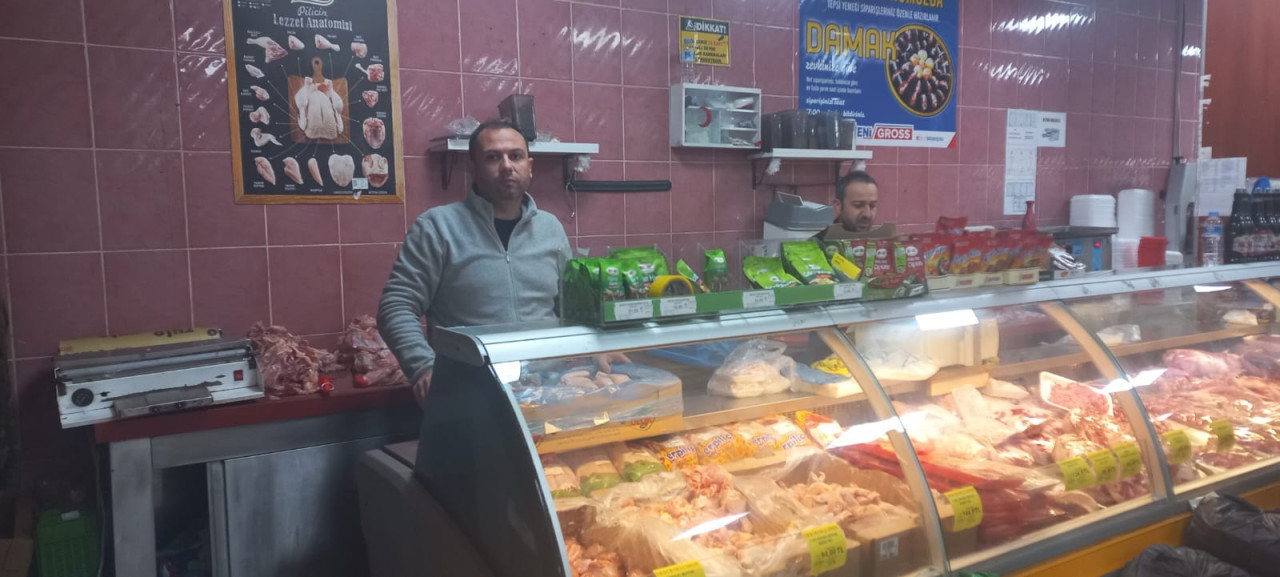
“As of today, the price of chicken wings has increased from 110 lira to 160 lira. The price a week before Ramadan was around 110 lira,” İlyas Dal, a manager at the Gross Market told Duvar. “Serious increases in chicken prices are already expected in March and April.”
Gross Market’s manager İlyas Dal complains of the rapid increase in meat prices.
Turkey’s significant inflationary pressures have not left food prices cold. Official statistics showed that food inflation stood at approximately 71.1% in February 2024.
However, some experts argue that the actual food price surges may be even higher, with increases anticipated following the March 31 local elections.
These price spikes have made meat a luxury for many, with official data indicating that 39.2% of Turkey’s population could not afford a meal containing meat every other day.
“Maybe chickens cannot fly, but the prices certainly do,” remarked İsmail Şahin Yakup, a customer at Dal’s shop. “We cannot buy a whole chicken like we used to during Ramadan,” Yakup lamented, noting that they now opted for soup instead. However, those prices also continue to rise.
“We buy soup and try to find meat on the bone like an archaeologist in Göbeklitepe,” Yakup said, referring to the oldest known temple complex in human history, located approximately 20 kilometers from Urfa’s city center.
Adding insult to injury, according to store manager Dal, were the ongoing avian flu outbreaks worldwide which have disrupted Turkey’s chicken imports.
“There is no product. The poultry farmers attribute the lack of product to the bird flu cases occurring in poultry farms in Brazil,” Dal explained.
Most recently, Turkey imposed an embargo on poultry products from Belgium following a bird flu outbreak.
Despite being the world’s second-largest producer of poultry meat, Turkey has managed to largely avoid bird flu outbreaks, remaining bird flu-free since an outbreak in Afyon and Denizli in March 2023.
These meatless days are taking a toll on Yakup’s family life as he worries about affording meat for family outdoor picnics.
“Picnic season is approaching. Children will want to have a picnic. The prices are already making us think. Why are these prices increasing all of a sudden?”
Help keep One Green Planet free and independent! Together we can ensure our platform remains a hub for empowering ideas committed to fighting for a sustainable, healthy, and compassionate world. Please support us in keeping our mission strong.Pay
In an unfolding ecological crisis, avian influenza H5N1, commonly known as bird flu, is decimating wildlife populations worldwide, with millions of birds and a growing number of mammals falling victim to this deadly virus. Originating from domestic geese in China in 1997, H5N1 quickly demonstrated its lethal potential by jumping to humans in Southeast Asia, boasting a mortality rate of 40-50%. This virus has not only wreaked havoc among poultry but has also been fatal to mammals, including endangered species like Owston’s palm civet.
Despite initial infections being largely contained to zoos and rescue centers in Thailand and Cambodia, a comprehensive analysis revealed that nearly half of all bird orders contain species that have been fatally infected by H5N1. This suggests that the virus is highly pathogenic across a broad range of bird species, posing a significant threat to global biodiversity. Mammals, including primates, rodents, and large carnivores such as Bengal tigers and domestic cats, have also been susceptible.
Over the past two decades, H5N1 has spread to every continent, causing unprecedented wildlife casualties from the high Arctic to mainland Antarctica. Recent outbreaks have led to the deaths of 26 countries’ mammal species and affected aquatic mammals like sea lions and dolphins. The UK has witnessed significant declines in bird populations, including over 75% of its great skuas and 25% in northern gannets due to the virus.
Human infections remain a concern, with 882 cases reported across 23 countries since 2003, half of which were fatal. The potential for H5N1 to mutate and become more infectious to humans underscores the urgent need for continuous surveillance and research.
To combat this global threat, experts advocate for a radical overhaul of poultry production practices. This includes making farms self-sufficient and halting the trend towards mega-farms to prevent the spread of H5N1 and protect both wildlife and human health. As the world grapples with this silent pandemic, it’s clear that our approach to managing poultry production is at the heart of preventing further devastation.
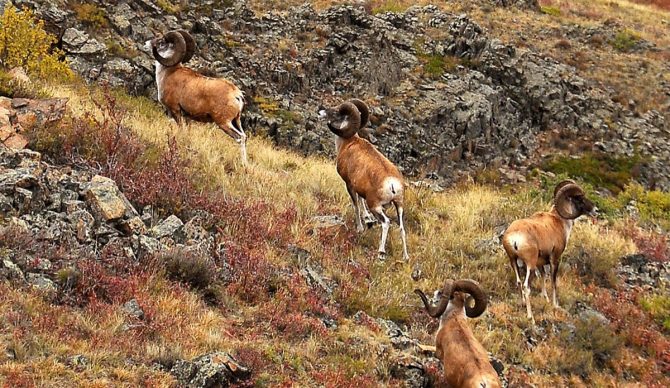
The Marco Polo sheep, also known as the Argali sheep, is the largest species of wild sheep. Photo: Wikimedia Commons
An 80-year-old Montana rancher is facing criminal charges after it emerged that he illegally created giant sheep hybrids with the intention of selling them to hunting outfits.
“Arthur “Jack” Schubarth, 80, of Vaughn, Montana, is the owner and operator of Sun River Enterprises LLC – also known as Schubarth Ranch – which is a 215-acre alternative livestock ranch in Vaughn,” the US Department of Justice wrote in a release. “The Schubarth Ranch is engaged in the purchase, sale and breeding of ‘alternative livestock’ such as mountain sheep, mountain goats and various ungulates. The primary market for Schubarth’s livestock is captive hunting operations, also known as shooting preserves or game ranches.”
Schubarth used body parts from a huge subspecies of sheep called the Marco Polo sheep. That species is native to Kyrgyzstan and can grow to over 300 pounds with horns growing to five feet in width. Those horns are what make them so attractive to hunters, but the State of Montana banned them in an attempt to protect the native sheep populations.
Schubarth trafficked the sheep parts into the US illegally, without reporting them to the necessary authorities, then sent them to a lab to make cloned embryos. Those were then implanted into some of his ewes, which resulted in a strain of sheep Schubarth named the “Montana Mountain King” or MMK. Semen from the MMK sheep was then used to impregnate other species of ewes, creating a hybrid sheep far larger than the ones native to Montana.
“Court documents explain that Schubarth worked with the other unnamed coconspirators to use MMK’s semen to artificially impregnate various other species of ewes – all of which were prohibited in Montana – and create hybrid animals,” the US Department of Justice continued. “Their goal was to create a larger and more valuable species of sheep to sell to captive hunting facilities, primarily in Texas.”
There were at least five other people involved in the scheme, which took place between 2013 and 2021. Schubarth, along with the others, forged veterinary documents pertaining to the species of sheep, and also were able to get their hands on illegally obtained genetic material from Rocky Mountain bighorn sheep.
“This was an audacious scheme to create massive hybrid sheep species to be sold and hunted as trophies,” said Assistant Attorney General Todd Kim of the Justice Department’s Environment and Natural Resources Division (ENRD). “In pursuit of this scheme, Schubarth violated international law and the Lacey Act, both of which protect the viability and health of native populations of animals.”
It’s important to enforce laws like the Lacey Act, since the species in Montana should be protected.
“The kind of crime we uncovered here could threaten the integrity of our wildlife species in Montana,” said Ron Howell, Chief of Enforcement for Montana Fish, Wildlife & Parks (FWP). “This was a complex case and the partnership between us and U.S Fish and Wildlife Service was critical in solving it.”
Schubarth faces a multitude of felony counts, each of which comes with a maximum penalty of five years in prison, a fine of up to $250,000 and three years of supervised release. He’s scheduled to hear his sentence on July 11th.