Senate Bill Would Shut Down Dog Hunting
1

By Cara Tabachnick
March 16, 2024 / 11:49 AM EDT / CBS News
A 750-pound, 11-foot-long alligator named Albert was seized from a New York home this week, setting the stage for a confrontation between the state’s Department of Environmental Conservation and the animal’s self-proclaimed owner.
The alligator lived in an in-ground pool in the backyard of owner Tony Cavallaro’s Hamburg, New York home, and has multiple health problems, including blindness in both eyes and spinal complications, officials said. Cavallaro allegedly allowed members of the public “to get into the water to pet the unsecured alligator,” according to the department.
Albert was seized on Wednesday in “the interest of public safety and the health, safety, and protection of the alligator,” the department said. He has been placed with a specialized caretaker who can care for him while the damage was assessed.
Cavallaro refuted claims that he had not properly cared for the animal, writing in an online petition calling for Albert’s return that he treated the alligator better “than most people take care of their kids.” He also criticized the department for the way the seizure was managed, writing that 20 agents came to his home in full body armor and carrying weapons.
“It was like I was a gun dealing drug dealing criminal the way they acted. The scene that they made on my street is very disturbing and totally wrong,” he wrote.
https://imasdk.googleapis.com/js/core/bridge3.627.0_en.html#goog_1625703513
https://imasdk.googleapis.com/js/core/bridge3.627.0_en.html#goog_1625703514
https://imasdk.googleapis.com/js/core/bridge3.627.0_en.html#goog_1625703515
https://imasdk.googleapis.com/js/core/bridge3.627.0_en.html#goog_1625703516
https://cds.connatix.com/p/plugins/cnx.bridge-1.0.4.html
https://cds.connatix.com/p/plugins/cnx.bridge-1.0.4.html
Officials said that Cavallaro had a license to own the alligator that expired in 2021. Cavallaro said that two years ago, the rules around owning an alligator had changed, and he attempted to renew his license in 2021 but was unable to contact the necessary authorities.
“I’ve had him 34 years and abided by all of them and renewed my permit annually as required,” he wrote.
Cavallaro said that he plans to fight to regain custody of Albert.
“I ask it all of my friends and people who love Albert will support me when this date comes available and if you can join me at the Hamburg town court to help me fight them to get him back,” he wrote.
Source: Xinhua
Editor: huaxia
2024-03-15 11:55:15
https://english.news.cn/20240315/c13e6409557b4afc86d5841be6562dd6/c.html
MANILA, March 15 (Xinhua) — The Philippines has imposed a temporary ban on the importation of poultry and poultry products from Sweden and the Czech Republic due to an outbreak of bird flu in those countries, the Philippine Department of Agriculture has said.
Domestic and wild birds and their products, including poultry meat, day-old chicks, eggs from the two European countries are prohibited from entering into the Philippines, according to two recent memorandum orders issued by Agriculture Secretary Francisco Tiu Laurel.
Sweden and the Czech Republic reported a highly pathogenic avian influenza H5N1 outbreak on Jan. 5 and Jan. 30, respectively.
Laurel stressed the need to prevent the entry of the virus to protect the health of local poultry population.
“All shipments coming that are in transit before the official communication of this order shall be allowed provided that the products were slaughtered on or before Dec. 22, 2023,” Laurel said.
Bird flu spreads among wild aquatic birds worldwide and can infect domestic poultry and other bird and animal species. ■
BY
KITTY BLOCK AND SARA AMUNDSON
SHARE https://www.humanesociety.org/blog/another-beloved-elephant-tanzania-has-been-killed-trophy-hunter
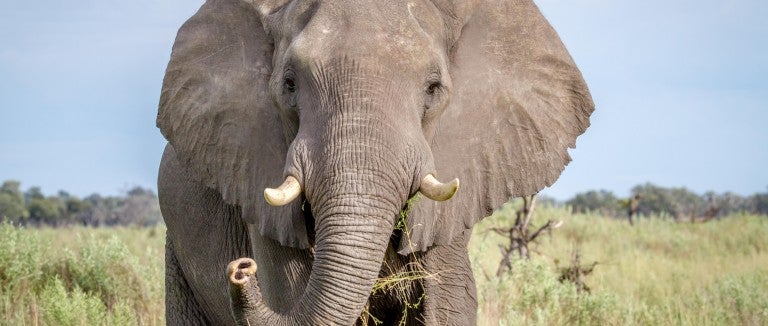
A different African elephant than the one recently killed by a trophy hunter in Tanzania.
Alamy Stock Photo
News has come out that another bull elephant was shot and killed in Tanzania, reportedly by an American trophy hunter from Texas. This is the third bull, believed to likely be another “super tusker,” beloved by locals, gunned down near the Tanzanian-Kenyan border, part of the Greater Amboseli Ecosystem, within the past six months.
“Super tusker” elephants are mature male elephants who have at least one tusk weighing 100 pounds, and their genetic makeup is extremely rare: It’s estimated that there are as few as 50 “super tusker” elephants left in Africa. Following the hunt, the hunters allegedly burned what remained of the elephant’s body.
These hunts come at a time when the U.S. Fish and Wildlife Service has itself proposed new regulations that would significantly restrict the import of elephant trophies, after having taken the position since 2014 that elephant hunting in Tanzania is not managed consistent with conservation principles.
In elephant societies, which are highly social and complex, every elephant plays a crucial role, and mature male elephants are essential for thriving elephant herds. Studies have found that as they age, male elephants dedicate more of their energy toward reproducing. Due to a well-defined hierarchy, it is only by age 35-40+ years that male elephants consistently reproduce, and by this time, 75% of bulls will have died making this age class already disproportionately small. The gunning down of older male elephants by trophy hunters reverberates through the whole elephant society.
Mature elephant bulls also act as role models for younger male elephants. When an elephant bull is killed, so is the individual animal’s vital social knowledge and experience, which can no longer be passed down to younger, inexperienced members of the society. Without older bulls, young bull elephants may become more aggressive and display delinquent behavior, including moving into risky environments, putting themselves and human beings in potential danger.
In an effort to prevent further harm to the elephants of this region, three leading nonprofit conservation organizations (ElephantVoices, Big Life Foundation and the Amboseli Trust for Elephants) released a statement appealing for “an end to elephant trophy hunting in the Enduimet Area of Tanzania.” We support them in this appeal, as their statement highlights the tremendous genetic, scientific and ecological importance of the cross-border Amboseli elephant population inhabiting both Kenya and Tanzania.
Classified as endangered on the IUCN Red Data List of Threatened Species, African Savannah elephants already have the odds stacked against them and are just a step or two away from extinction. Habitat loss and poaching for the illegal wildlife trade already loom over elephant families as existential threats. That the scourge of trophy hunting is still permitted at all could mean our children or grandchildren will inhabit a world where these animals no longer exist. How will we explain to them that, amid other threats, we allowed these animals to also be gunned down by wealthy trophy hunters for “fun”?
As Audrey Delsink, elephant behavior expert and wildlife director for Humane Society International/Africa, said: “The intrinsic value that these bulls bring to elephant society through their genetics, as repositories of social knowledge and as keystones of the environment, is irreplaceable. The killing of these iconic animals isn’t just a biological travesty but a moral tragedy and a stain on humanity’s conscience.”
Sara Amundson is president of the Humane Society Legislative Fund.

