Trumpeter swans swim around a wetland in 2017. The Utah Division of Wildlife Resources is recommending an end to hunting trumpeter swans as the swan hunting season has ended prematurely the last four years. (Utah Division of Wildlife Resources)
SALT LAKE CITY — Utah doesn’t let hunters harvest that many trumpeter swans every fall; in fact, its quota is actually based on what the federal government allows each year.
However, hunters began to hit that quota well before the season ends, after state wildlife officials expanded the hunting boundaries in 2019. The 2022 swan season ended more than three weeks early when hunters reached the 20th trumpeter swan on Nov. 17. It marked the fourth consecutive year that the hunt ended early, according to…
In this photo taken Wednesday, July 17, 2019, Sarah Bates hauls in a chinook salmon on the fishing boat Bounty near Bolinas, Calif. California fishermen are reporting one of the best salmon fishing seasons in more than a decade, thanks to heavy rain and snow that ended the state’s historic drought. It’s a sharp reversal for chinook salmon, also known as king salmon, an iconic fish that helps sustain many Pacific Coast fishing communities. (AP Photo/Eric Risberg)
10
SEATTLE — A ruling from a U.S. judge in Seattle could effectively shut down commercial king salmon trolling in Southeast Alaska — a valuable industry that supports some 1,500 fishermen — after a conservation group challenged the harvest as a threat to endangered killer whales that eat the fish.
Wild Fish Conservancy, the organization that brought the lawsuit, heralded the decision as the most significant government action in decades to provide more food for starving orcas. The group said it would also help recover struggling king salmon populations along the West Coast, as nearly all the salmon caught in Southeast Alaska spawn in rivers to the south.
But fishing organizations condemned the ruling, saying it threatens the region with economic disaster and would do little or nothing to benefit orcas. The state of Alaska quickly announced an appeal.
“If they can’t fish 10 months of the year — the two most productive seasons of the year — it’s going to be devastating,” Amy Daugherty, executive director of the Alaska Trollers Association, said Wednesday. “Southeast Alaska has always been very fish dependent.”
about:blank
On Tuesday, U.S. District Judge Richard Jones in Seattle ordered the National Marine Fisheries Service to redo a biological opinion that’s required for the fishery to take place. The decision threatens to prevent the important summer and winter king salmon seasons; the summer season begins July 1.
Officials have known for months the ruling was a possibility, and the agency has been working to draft a new biological opinion, said Linda Behnken, director of the Alaska Longline Fishermen’s Association. The industry is hoping it will be released in time to allow fishing this year or that the judge’s decision is put on hold pending appeal.
It remained unclear how likely either scenario was.
“All we can say at this point is that we are reviewing the ruling and considering next steps,” NOAA Fisheries spokesman Michael Milstein said in an email.
Officials in April canceled commercial and most recreational king salmon fishing off California and much of Oregon for the second time in 15 years after the fish returned in near record-low numbers to California’s rivers.
Meanwhile, people who work on the boats, as fish processors or even in support businesses such as fuel stations and grocery stores in Southeast Alaska are waiting to see if the season will occur or whether they must find work elsewhere for the summer.
“There is so much stress in the lives of every family that relies on this industry,” Behnken said. “We’re in a real quandary until we know whether we can have a fishery.”
Emma Helverson, executive director of Wild Fish Conservancy, said she was sympathetic to the communities’ plight and hopes the government will make emergency funding available to support them. But she also said the industry had long overharvested the fish, also known as Chinook.
“Chinook populations are crashing coast-wide, and we need a coastal recovery effort,” she said.
King salmon are the largest and priciest of the Pacific salmon species, and the Southeast Alaska troll fishery provides them to restaurants and grocery stores around the world.
They also make up the bulk of the diet for endangered orcas in the waters of the Salish Sea between Washington state and Canada. Due to overfishing, dams, development and pollution, chinook runs in the Northwest are at a small fraction of their historical abundance, and the local orca population has suffered in turn. Just 73 whales remain, inbreeding is a severe problem, and scientists are warning of extinction.
While the endangered whales don’t typically venture as far north as Alaska, a huge amount of the Chinook salmon caught in the Southeast Alaska troll fishery — about 97 percent — originate from rivers in British Columbia, Washington and Oregon. If those fish weren’t caught, many would be available for the orcas to eat as the salmon migrate to their natal rivers to spawn, the Wild Fish Conservancy argued.
In 2019, NOAA Fisheries approved the most recent decade-long plan for the commercial troll fishery for Chinook in Southeast Alaska, with harvest limits set during negotiations between the U.S. and Canada.
The agency acknowledged the harvest was likely to hurt the orcas and protected Puget Sound and Columbia River king salmon stocks, but it said it would offset the harm by spending about $100 million on habitat restoration and increasing hatchery production of Chinook by 20 million smolts per year, thus providing more food for the whales.
Last year, a magistrate judge who reviewed the case, Michelle Petersen, took issue with that, finding that under federal law, NOAA Fisheries could not rely on hypothetical mitigation measures to offset actual harm to protected species. Because the funding for the restoration efforts was uncertain, because there were no binding deadlines for the mitigation measures and because the agency did not actually study what effect an increase of hatchery production would mean for wild salmon stocks or orcas, that mitigation was legally insufficient.
The question then became whether fishing could continue while the agency addressed the legal errors. Under Jones’ ruling Tuesday, the answer was no.
Tad Fujioka, a commercial troll fisherman from Sitka, said it won’t be economical to fish only for other salmon species because Chinook make up well over half of the fleet’s profits.
Paul Olson, a Southeast Alaska troller who lives in Plain, Washington, noted that the fishery has existed for well over a century — evidence that it is sustainable, he said.
And, he said, even as the industry has seen catch limits dramatically reduced over the years, the endangered orcas have not recovered — suggesting that the problems plaguing orcas have little to do with a fishery in Southeast Alaska made up of small operators who catch and handle each fish individually, far removed from massive factory trawlers scraping the ocean clean.
JOIN THE CONVERSATION (
10
)
“We should be the poster child of the kind of fishing that everybody wants to have,” Olson said.
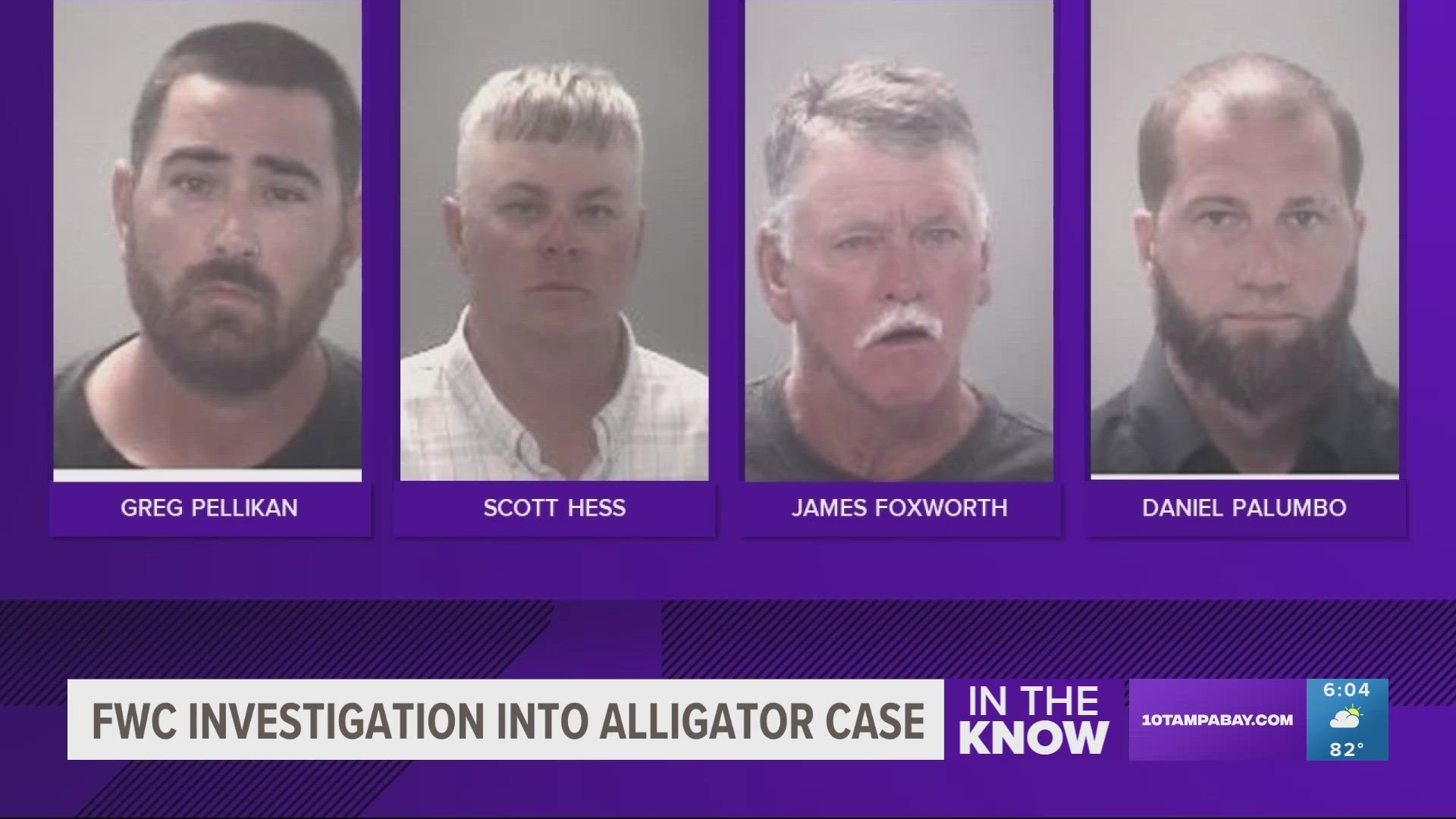
Officers met with two men on Thursday, March 9, and found evidence that showed illegal possession of an alligator on one of their cell phones, leaders with the FWC explain in a news release. The other reportedly confessed to the illegal take of an alligator using…
Default Mono Sans Mono Serif Sans Serif Comic Fancy Small CapsDefault X-Small Small Medium Large X-Large XX-LargeDefault Outline Dark Outline Light Outline Dark Bold Outline Light Bold Shadow Dark Shadow Light Shadow Dark Bold Shadow Light BoldDefault Black Silver Gray White Maroon Red Purple Fuchsia Green Lime Olive Yellow Navy Blue Teal Aqua OrangeDefault 100% 75% 50% 25% 0%Default Black Silver Gray White Maroon Red Purple Fuchsia Green Lime Olive Yellow Navy Blue Teal Aqua OrangeDefault 100% 75% 50% 25% 0%
ByMike Anderson
Published:May. 6, 2023 at 8:30 PM PDT|Updated:17 hours ago
BISMARCK, N.D. – North Dakota’s 2023 deer season is set. 53,400 deer gun licenses were made available to hunters in this year’s deer lottery, 10,800 fewer than last year.
“We have a pretty good reduction in deer licenses, probably mainly because the winter, and also a little bit to do with the condition of deer as they came into winter. Obviously, the better reserves they have, the better they’ll last through a winter, but this winter was six months, essentially of winter, and that doesn’t happen to us very often,” said Casey Anderson, North Dakota Game and Fish wildlife division chief.
Whitetail deer populations were slowly heading in the right direction after the winters of 2009, ‘10, ‘11, but the…
If you’re thinking about a long-term real estate investment or shopping for a place to settle down for 20 or 30 years, you might be wondering which cities or states could fare better than others in a changing climate.
If you want to know how the world is preparing for the next global pandemic look at Rolaing, a Cambodian village located on a tributary of the Mekong River. For a few days in February this isolated spot became a hive of public health activity after an 11-year-old girl died of H5N1, the most virulent strain of bird flu — the country’s first fatality from the disease since 2014.
A rapid response team of local health workers was dispatched within hours to the village, a two hour drive from the capital Phnom Penh. They found a community of almost 2,000 people living in brightly colored wooden and sheet metal homes, close to their livestock and chickens.
In the space of just 24 hours they set up a makeshift testing center, identified a dozen of the girl’s closest contacts, took swabs and scoured for the pathogen. Her father tested…
MONROE COUNTY, Ind. (WANE) —Indiana Conservation Officers are investigating a misidentification hunting accident at Morgan-Monroe State Forest.
On May 6th, Shawn Hooper was turkey hunting when he misidentified two other hunters. He then fired upon them. Resulting in those hunters, Jessery McClintic and Scott Poynter, suffering non-life threatening injuries.
The incident remains under investigation.
The Indiana Conservation Officers remind hunters to be aware of their surroundings. While always identifying the target and what is in front and behind it before shooting.
Famed for its bald, leathery visage and astonishing wingspan, the federally endangered California Condor symbolizes both a species on the brink of extinction and a thundering success story for conservationists.
Just 22 condors existed when the U.S. Fish and Wildlife Service began a captive breeding effort in the early 1980s. Today, there are 183 in California, and 541 on the planet.
Now, however, the majestic scavengers are facing a biological catastrophe they may not be able to overcome.
Federal wildlife officials have confirmed that an outbreak of avian influenza has killed 21 condors in Arizona and Utah since early March. That’s nearly 20% of the 116 condors that were patrolling the skies above Grand Canyon and Zion National Parks.
Now, the Fish and Wildlife Service and its conservation partners are scrambling to devise emergency…
An Asian elephant in Cambodia has moved online viewers after footage of him receiving a new prosthetic limb went viral on social media.
The videowas shared by British TV show presenter and wildlife photographer Cameron Whitnall onTikTokand has been viewed over 3.7 million times.
“Chhouk [the elephant] was found in 2007, at less than a year old, wandering alone in the forest in northeast Cambodia,” Whitnall toldNewsweek. “He had not only lost his foot to a poacher’s snare, but he was also gravely ill from the infected wound and severely malnourished.”
Cameron Whitnall holds Chhouk’s prosthetic foot, and the elephant is seen walking with…
A worker carries chickens at a market in Phnom Penh on Feb. 24, 2023. – The father of an 11-year-old Cambodian girl who died earlier in the week from bird flu tested positive for the virus, health officials said. (Tang Chhin Sothy/AFP via Getty Images/TNS)
If you want to know how the world is preparing for the next global pandemic look at Rolaing, a Cambodian village located on a tributary of the Mekong River. For a few days in February this isolated spot became a hive of public health activity after an 11-year-old girl died of H5N1, the most virulent strain of bird flu — the country’s first fatality from the disease since 2014.
A rapid response team of local health workers was dispatched within hours to the village, a two hour drive from the capital Phnom Penh. They found a community of almost 2,000 people living in brightly colored wooden and sheet metal homes, close to their livestock and chickens.
In the space of just 24 hours they set up a makeshift testing center, identified a dozen of the girl’s closest contacts, took swabs and scoured for the pathogen. Her father tested positive. He was treated with antivirals and recovered. At least 11 others, including close relatives she lived with, were found to be infection-free. The team monitored the village for another three weeks, testing dozens more people. Only the two infections, which health experts said stemmed from direct contact with sick animals, were discovered.
The speed with which Cambodia, and other countries where novel viruses are known to emerge, can identify and respond to future virus threats will determine how effectively the world can contain the next pandemic.
The Cambodian response, honed by years of work with the World Health Organization and the US Centers for Disease Control and Prevention, was remarkably swift for one of Asia’s poorest countries. It forms part of a much bigger global effort — combining government, industry and health officials — to be better prepared for the next pandemic, whether it is avian flu or anything else.
The world has been primed by COVID-19 and torqued by reports of new variants of H5N1 avian flu — a threat researchers have been tracking for over a quarter of a century — that appear to be making it more transmissible between mammals. The danger is twofold. Novel infections are emerging more quickly than in the past, leaving the public health community less time to regroup and respond to the chaos caused by entirely new pathogens. Since the 1970s, about 40 infectious diseases have been discovered. Experts also worry that COVID could be mild in comparison to what might come next. H5N1 kills more than half of those it infects. If it mutates to transmit easily between humans — the ultimate concern for public health experts — deaths could dwarf the 6.8 million caused by SARS-CoV-2, with as many as 15,000 people a day in the UK alone according to one estimate by Airfinity, a health analytics firm.
There is a community of experts constantly on high alert, even when threat levels dip. So far there has been no human-to-human transmission identified and only around a dozen people globally have been infected with H5N1 since January 2022.
“We built a strong health system here during COVID, and it has paid off,” said Or Vandine, Cambodia’s Secretary of State for Health. “Tools from the COVID response, we can use for this event. The master plan, these key elements, were still relevant.”
Cambodia, which recorded 37 bird flu deaths in the decade up to 2014, has finetuned its pandemic preparedness since COVID. The government added hundreds of health workers to local response teams, built up laboratories so they could get genetic results in hours and crafted educational materials to teach the public how to protect themselves.
“With COVID, we learned you have to be ready to immediately go, day or night,” Or Vandine added, “if the community doesn’t engage, you fail.”
The focus is on avian flu because cases in birds — wild and domesticated — have hit record levels. Since late 2021 more than 50 million birds, including farmed poultry, have been culled in Europe, 58 million in the US and 17 million in Japan, most preemptively in an effort to slow the spread. The economic impact has been severe for producers and consumers, with egg and chicken prices climbing steeply. The number of turkeys slaughtered for meat in the US last year fell to the lowest level since 1986, according to the US Department of Agriculture. Countries including China placed restrictions on imports from areas where the virus has been detected — disrupting supply chains and sales for companies including Tyson Foods Inc.
The USDA estimates the bird flu outbreak cost the US economy $2 billion in 2022, including the higher prices consumers paid for eggs, chicken and turkey.
There is no indication yet that the mass cull alone is working. In a sign that the UK believes the worst is over it has lifted restrictions, in place since November, on keeping birds inside to stifle the spread of the virus. Yet in other parts of Europe new cases continue to pop up, as they do in Asia and countries in South America. The virus is so contagious that it can sweep through an entire flock in days. Infections caused by a new variant of H5N1 are also occurring in a variety of mammals, on land and water, including mink on a Spanish farm, Peruvian sea lions and US grizzly bears, raising fresh concerns about the potential for mutations that could facilitate human-to- human transmission.
While H5N1 is the most feared form of avian influenza, more than half a dozen other strains have made their way into humans in recent years. The most recent case involved a 56-year-old woman in China who died in March after contracting an H3N8 infection.
The sheer volume of virus being carried by birds through the air is a concern, with the established strain causing outbreaks in Asia and the mutating variant picking up pace in the West.
“The current situation, with so much virus in birds, is concerning,” said Sonja Olsen, associate director for preparedness and response in the US CDC’s influenza division. “Influenza viruses like to share their genetic material. They are constantly evolving, and that’s why surveillance in animals and humans is so important.
“It’s difficult to predict which virus is going to acquire mutations that will be more adaptive to humans,” Olsen added. “That’s why we do what we do, the surveillance and rapid response, jumping on every case.”
Inside the lab
On the other side of the world from Cambodia, scientists at The Pirbright Institute, an hour outside London, are trying to harness technology in an effort to combat the threat from avian flu.
First established as a cattle testing station for tuberculosis in 1914, Pirbright is now one of the UK’s leading veterinary virus diagnostics and surveillance centers. Large colorful windows denote high containment areas, where the most dangerous pathogens — including African Swine Fever, Bluetongue Virus and Bird Flu — are handled. Showers are mandatory upon exiting to guard against any accidental spread.
At the head of the avian influenza virus team is Munir Iqbal, who has never been more in demand. Along with 25 other experts, Iqbal has been co-opted onto a new UK government panel to assess the risk of the bird flu epidemic on humans as part of its preparations for the next pandemic. Among his colleagues on the panel is Neil Ferguson, an epidemiologist who advised the UK government during COVID.
The Columbian is becoming a rare example of a news organization with local, family ownership. Subscribe today to support local journalism and help us to build a stronger community.
Experts say the immediate risk to humans is low. Globally, there have been fewer than 1,000 people infected with H5N1 since 2003. There have been at least four cases so far in 2023, with a patient in China joining the two in Cambodia, and Chile reporting its first ever case on March 29.
Despite that, government, industry and public health leaders are laying the groundwork for a global response. High on the list is the active monitoring of birds and surveillance in humans for signs of infection, while the pharmaceutical industry is crafting immunizations and governments are stockpiling antivirals that could be used if needed.
Iqbal’s team at Pirbright is monitoring the ability of the avian flu virus to spread in people. In the laboratory, they expose synthetic carbohydrate molecules like those found on the surface of cells in the human trachea, to the virus, then measure whether it can latch on. So far, every time the team has run the test, a message pops up: “UK H5N1 does not bind to human receptor.”
“At the moment, there is no sign in the virus, or no signature in the virus, that can pose any risk,” says Iqbal. “But this virus can change any time. You cannot predict tomorrow.”
The team monitors the ability of the virus to attack bird cells and studies how that process is evolving. They inject pristine eggs from specialized biosecurity farms with the virus and monitor how the 10-day-old embryos respond. The team also uses this method to grow the virus for analysis and vaccine development.
Iqbal, who has spent more than two decades studying the disease and its evolution, says this is a seminal moment for avian influenza.
We are “watching the virus,” he said. “We’re more prepared because of the coronavirus pandemic and all the losses.” This time around, experts are focused on mitigating the risk, as well as scenario planning for when action should be taken to get ahead of any outbreak that threatens human health. The UK government is already assessing rapid tests that could be used to detect the virus, evaluating whether asymptomatic infections could occur in people directly exposed and deciding what mutations should be considered a serious threat.
“It’s important from a resilience and preparedness point of view,” said Andrew Pollard, who led the UK clinical trials for the Oxford-AstraZeneca Plc COVID-19 vaccine, “to consider infectious threats in the same way that we do other threats that are very unlikely to happen — for example military conflict.”
‘This virus is here to stay’
Pollard believes there is a “risk of governments losing focus” on pandemic planning post-COVID. Yet when it comes to bird flu at least, there is a whirlwind of activity around new approaches, designed to detect emerging infections and quickly avert transmission. The pharmaceutical industry is crafting potential vaccinations for birds and humans, and designing drug treatments in case they are urgently needed.
“We have to be vigilant about H5N1, but always looking out of the corner of our eyes for what else may be coming,” said Beverly Taylor, Head of Influenza Scientific Affairs, at CSL Seqirus, one of the companies with a long-standing vaccine partnership with the US government for avian flu — including H5 strains. The ambition is to get vaccines into arms in less than 98 days after the identification of a new strain.
Vaccinating poultry flocks to prevent infection is a proposal that is gaining traction with farmers keen to avoid more culls. But the risks are substantial: immunization may help infected animals survive instead of preventing transmission. That could unintentionally prolong the spread of the virus. The USDA has four vaccine candidates for animals in development and expects to get initial results in May. Several countries, including Mexico and China, are already vaccinating some of their poultry.
Moderna Inc. is considering human tests for its bird flu vaccine this year.
One of the most urgent threats is posed by nature. Seasonal outbreaks of avian influenza make the twice yearly migration of wild birds in the spring and fall precarious for farmers with some birds potentially carrying the toxic pathogen. Brazil, the world’s largest exporter of chicken meat, is testing migrating birds in an effort to maintain its status as one of the few countries still free of avian influenza, even as case counts climb among its neighbors.
Elaine Kellner, who raises ducks on the Hearth & Haven Farm, outside the US city of Seattle, adopted strict biosecurity measures last year: no visitors, dedicated shoes and jackets for farm tasks, and a guard dog to scare off wild birds. The moves didn’t prevent a bird flu outbreak that struck before Christmas. Kellner was forced to cull more than 170 ducks and four geese.
“This virus is here to stay,” she said. “All it takes is one bird flying over your flock and defecating.”
Learning the lessons
Although the response in Rolaing has been deemed a success by health officials, the challenge is clear. It took a full week for the infection to come to the attention of the government health system. The villagers didn’t think anything was amiss when a handful of dead chickens were found along the river, blaming hot weather for the deaths.
It was only as the schoolgirl’s condition deteriorated that the connection was made. When she arrived at hospital on Feb. 21, doctors — unaware that two of the family’s four chickens, which lived largely underneath the room where she slept, had died — assumed she had a seasonal flu. The symptoms are similar, with key signs including a high fever, cough or shortness of breath, which can develop into pneumonia. So they gave her an antiviral drug, swabbed her, and processed the sample overnight.
She died hours before the results came back showing the H5N1 infection.
COVID showed that time is of the essence when it comes to air-borne respiratory viruses. Identifying and isolating anyone who is infected or has been exposed can slow the spread, while immunizations reduce the severity of those cases. Sharing information between countries and within communities is essential to mitigate the risk and allow people to protect themselves. Tests that can detect infection can now be crafted within days of uncovering a new pathogen, and it might not be bird flu.
Staying vigilant is an issue, even for experts. Li Ailan, the WHO representative to Cambodia, specifically warned her team not to make assumptions. “No single country, including Cambodia, is fully ready for the next pandemic,” she said.
“We need to continue our journey,” she added, “to keep the world safe.”