The writer is the Northeast regional director for the Humane Society of the United States.
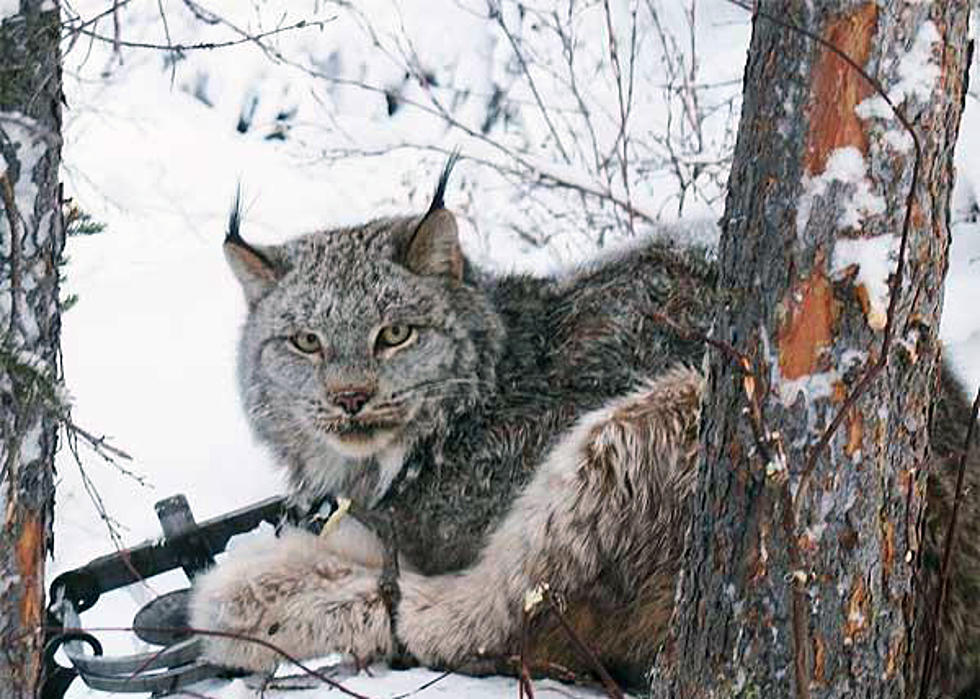
A new bill, H.191, gives Vermont legislators the opportunity to banish the cruel and widely despised practice of recreational trapping from our state.
Steel-jaw leghold traps cause gruesome injuries, prolonged agony, and death for an untold number of wild and domestic animals in Vermont.
Trapped animals may die of blood loss, dehydration, hypothermia, or predation, or may chew or twist off a limb, paw or digit to escape. Traps also drown animals, a particularly inhumane and horrifying death for river otters and beavers who can hold their breath for eight minutes or more.
Body-gripping traps are designed to kill quickly when two rotating jaws close on an animal’s neck or chest but often just slam onto the animal’s abdomen or other body part and cause unimaginable suffering.
Jurors in east-central Minnesota found guilty of murder a man who said the victim’s shooting death was from a hunting accident.
John T. Quitter, 37, of Chisago City, Minn., was convicted in Pine County District Court of second-degree murder and fleeing police in connection with the shooting on Sept. 6 near Hinckley that killed Colton J. Abbott, 33, of Sandstone, Minn.
Quitter remains jailed ahead of sentencing, which is scheduled for June 13.
According to the charges:
Essentia Health hospital in Sandstone called emergency dispatch after Abbott arrived there in his pickup truck driven by Quitter. Abbott “had numerous bullet holes to his chest that appeared to be caused…
Yesterday’s BBC Look East featured Rachel from Hertfordshire Hunt Saboteursrecalling the attack by Sam Jones of the Cottesmore Hunt, in which he rode over her with his horse.
While investors have poured billions of dollars into burgeoning lab-grown meat companies, The Wall Street Journal reports, the industry is running into a huge reality problem: scaling up and breaking into the mainstream market.
For years, we’ve heard from companies promising to turn the meat industry on its head with products that are cultivated in a lab using animal cells without the need of slaughtering methane-producing livestock on an industrial scale.
But so far, nobody’s managed to crack the fundamentals.
“We can make it on small scales successfully,” Josh Tetrick, CEO of lab-grown meat company Eat Just, told the WSJ. “What is uncertain is whether we and other companies will be able to produce this at the largest of scales, at the lowest of costs within the next decade.”
In other words, we’re still many years — and one plausible business model — away from being able to pick up a lab-grown meat burger patty at the local grocery store for a reasonable price.
Hybrid Theory
Analysts see a promising alternative approach that could stand a better chance: hybrid products that use animal cells as well as plant-based proteins.
Eat Just has made some concrete steps towards bringing its cultivated hybrid chicken product to the masses. It’s started selling the cutlet in Singapore, which is the only country in the world to actually permit the sale of lab-grown meat.
Even with hybrid products, scaling up is proving difficult, in part due to the complexities involved in maintaining a sterile environment.
“What we’re trying to do is not easy,” Uma Valeti, CEO of lab-grown meat company Upside, told the WSJ. “It’s like putting a man on the Moon. There’s no road map or blueprint.”
Former Upside employees told the newspaper that the company has struggled to produce meaningful quantities of its product and is still a long way from producing a target of 400,000 pounds at its pilot plant and hasn’t even reached its 2021 goal of just 50,000 pounds, according to the report.
Despite the shortcomings, others are steadfast in their belief that lab-grown meat is the answer to the world’s climate woes and growing population.
But getting to the point where lab-grown meat alternatives can make a meaningful dent in the global demand for meat will require companies to clear many more hurdles.
A visit to an Alaskan wetland with some of the world’s highest lake marsh methane emissions brings scientists one step closer to understanding the phenomenon.
Permafrost from the last ice age underlies Goldstream Valley’s Big Trail Lake (right). Credit: Ken Tapes
It was winter in Fairbanks, Alaska, and the moose were grumpy.
A University of Alaska Fairbanks graduate student offered me a tip: “If you see their hair coming up, and they’re going to charge you?” he said. “Find a tree.”
TAKE cover next time your dog sneezes – they could be carrying a potentially deadly virus.
Scientists fromChinahave warned that ‘dog flu’ – a mutated form of bird flu – has adapted to make it better suited to infecting humans.
Dog flu has mutated making it better suited to infecting humans, experts sayCredit: GettyHow bird flu could mutate to make it spread more effectively in humans
The bird bug, which first infected dogs in 2006, has now evolved to become a mammalian-adapted form of avian influenza, they said.
Bird flu is highly contagiousand deadly among birds, but has never been shown to cause sustained transmission from person to person.
New Canadian research has found that certain strains of bird flu, responsible for the deaths of millions of birds worldwide, are capable of spreading quickly and “efficiently” between ferrets in a laboratory setting, raising alarm bells that it may be able to jump species to humans as well.
Avian influenza — known more commonly as bird flu — has been spreading across Canada in farmed birds since 2021, with more than 7.5 million birds impacted as of last week, according to the Canadian Food Inspection Agency (CFIA).
Human infections of bird flu are rare, and mostly occur after close contact with infected birds through poultry farms or live bird markets.
The real concern would be if the virus were able to make the full jump to humans, and then be spread from human to human — a possibility that scientists have been keeping an eye on.
In this new study, released in a preprint this week, researchers with the Public Health Agency of Canada, CFIA, SickKids Research Institute and the University of Manitoba, among others, are reporting that a specific strain of bird flu was able to spread easily among mammals in a lab setting.
Specifically, they found that samples of H5N1 highly pathogenic avian influenza (HPAI) taken from a red-tailed hawk were able to spread “efficiently” in direct contact between ferrets, the mammal used most often to judge the risk of a virus achieving human-to-human transmission.
“Highly pathogenic” refers to the virus’ ability to create disease, underlining how dangerous H5N1 is.
When research is presented in a preprint, that means it hasn’t passed peer review yet. The research is currently under review for publication in the peer-reviewed journal Nature Portfolio.
Avian influenza has been devastating wild and farmed bird populations across the globe for years. Last November, HPAI was announced to have led to the deaths of over 52 million birds in the U.S. in 2022, either through contracting the disease, or due to flock culling to prevent the spread of the virus.
The virus has also been reported in mammals, such as mountain lions, red foxes, skunks and black bears, although this study is the first time mammal-to-mammal transmission of HPAI has been observed.
Previous studies have demonstrated that H5 subtypes generally do not transmit well among mammals, and researchers noted that recent studies of currently circulating H5N1 strains have only produced mild infection in ferrets, a far cry from the lethal outcomes researchers observed in this latest study.
“Our research has determined that certain, as yet uncharacterized, genetic signatures may be important determinants of mammalian adaptation and pathogenicity of these viruses,” researchers wrote in the study.
In order to study the virus, researchers isolated five distinct H5N1 HPAI strains from infected wild animals in Canada, including three birds and two red foxes who had died of the virus.
They found that the virulence of the virus itself varied widely depending on the specific isolate, with the sample from the red-tailed hawk causing the most severe and lethal disease in the ferrets. Ferrets introduced to viral samples taken from red foxes also experienced severe and lethal disease. Researchers found that specifically there were high levels of viral replication in the upper and lower airway of the mammals.
Direct transmission between the ferrets was clearly indicated in the case of the virus taken from the red-tailed hawk.
Researchers also created a cell culture consisting of primary nasal, tracheal and human airway epithelial cells obtained from healthy human subjects, in order to test how the virus would interact with these isolated cells. The viral sample from the red-tailed hawk replicated the most rapidly within these cell types compared to others.
It’s noted in the study that researchers were “struck by the high virulence and efficient transmission” of the viral samples from the red-tailed hawk among the ferrets, as that specific strain was of avian origin, unlike the virus drawn from red foxes.
They theorized that “passage through multiple animal species” could’ve have contributed to that strain’s “enhanced transmissibility.”
“This is a scenario that is likely to be observed with increasing frequency as the outbreak in wild animal species continues to transpire,” the study stated.
Currently, Canada is experiencing numerous outbreaks of bird flu, largely within commercial poultry farms, although it appears to be circulating at lower levels than in 2022.
Outbreaks of bird flu have been reported in Ontario, Quebec, Nova Scotia, New Brunswick, British Columbia and Alberta in 2023, with Ontario, Quebec and Alberta all reporting at least one infected premises in April.
Earlier this month, CFIA reported that there had been a rare case of a domestic dog contracting bird flu in Oshawa, Ont. The dog reportedly was infected with H5N1 after chewing on a wild goose, and subsequently died.
“The number of documented cases of avian influenza H5N1 in non-avian species, such as cats and dogs is low, despite the fact that this virus has caused large avian outbreaks globally over the last few years,” a release from CFIA stated.
“Based on the current evidence in Canada, the risk to the general public remains low and current scientific evidence suggests that the risk of a human contracting avian influenza from a domestic pet is minor.”
It’s still unclear why certain strains of avian influenza may be more virulent or transmissible than others, but researchers say this new evidence supports the idea that we need to be keeping an eye out now.
“Ongoing surveillance of circulating HPAI A(H5N1) viruses across species, including humans, should be a top priority so as to promptly identify viruses that may have pandemic or outbreak potential in mammals,” the preprint states.
Spring turkey season in Colorado is easy to participate in—and hunters have a decent chance of bringing home a bird—but the Avian Flu makes things more complicated for those wishing to participate in turkey hunting season.
Spring turkey season in Colorado is easy to participate in—and hunters have a decent chance of bringing home a bird—but the Avian Flu makes things more complicated for those wishing to participate in turkey hunting season. At least one home flock of chickens has already been wiped out by a hunter who brought home an infected turkey in 2022.
Joey Livingston, a public information officer with Colorado Parks and Wildlife, says hunters need to remember that the disease can spread to mammals.
“The majority of the mammals that are testing positive are eating infected birds,” Livingston said.
(UM Legislative News Service) A bill on Gov. Greg Gianforte’s desk would require a judge to place a bond and collect securities from plaintiffs who are seeking injunctions that prevent the ability to hunt or harvest wild game in the state.
Rep. Jedediah Hinkle, R-Belgrade, is sponsoringHouse Bill 419, which he said would strengthen a portion of the Montana Constitution that gives residents the rights to hunt and harvest through the “Heritage Clause.”
“It’s a great bill. It’s a design to eliminate the process of hurting people through legal assaults and lawsuits,” Sen. John Fuller, R-Kalispell, who carried the bill in the Senate, said.
Louisiana Department of Wildlife and Fisheries enforcement agents cited a man for alleged turkey hunting violations in Claiborne Parish on April 16.
Agents cited Justin Lester, 33, of Homer, for hunting turkeys over a baited area, possession of an illegally taken turkey and failing to tag a turkey.
Agents were on patrol when they came across Lester actively hunting turkeys near Athens in Claiborne Parish. Agents then heard a shot shortly thereafter and were able to make contact with Lester.
During the hunting check, Lester was in possession of a freshly harvested turkey and agents documented corn spread on the ground where Lester was hunting. Agents also found that Lester was cited for hunting turkeys over a baited area in 2022.
Agents seized the turkey and the shotgun used to take the turkey.
Second offense of hunting turkeys over a baited area…


 Top Storiesby Futurism