A dispatch to the Journal from Salem says: After chasing both ends of the low rainbow in an effort to recover the money he expended in serving a subpoena issued in another county, Sheriff W. B. Snider is still holding the sack and has been advised by Assistant Attorney General Van Winkle that his fees are gone forever.
When the sheriff of Crooks County sent the subpoena to Sheriff Snider of Lake…
Fast-food chain Taco Bell expands its test of vegan beef to the South, where customers can order a meatless version of fan-favorite Nachos BellGrande—along with tacos, burritos, and more.
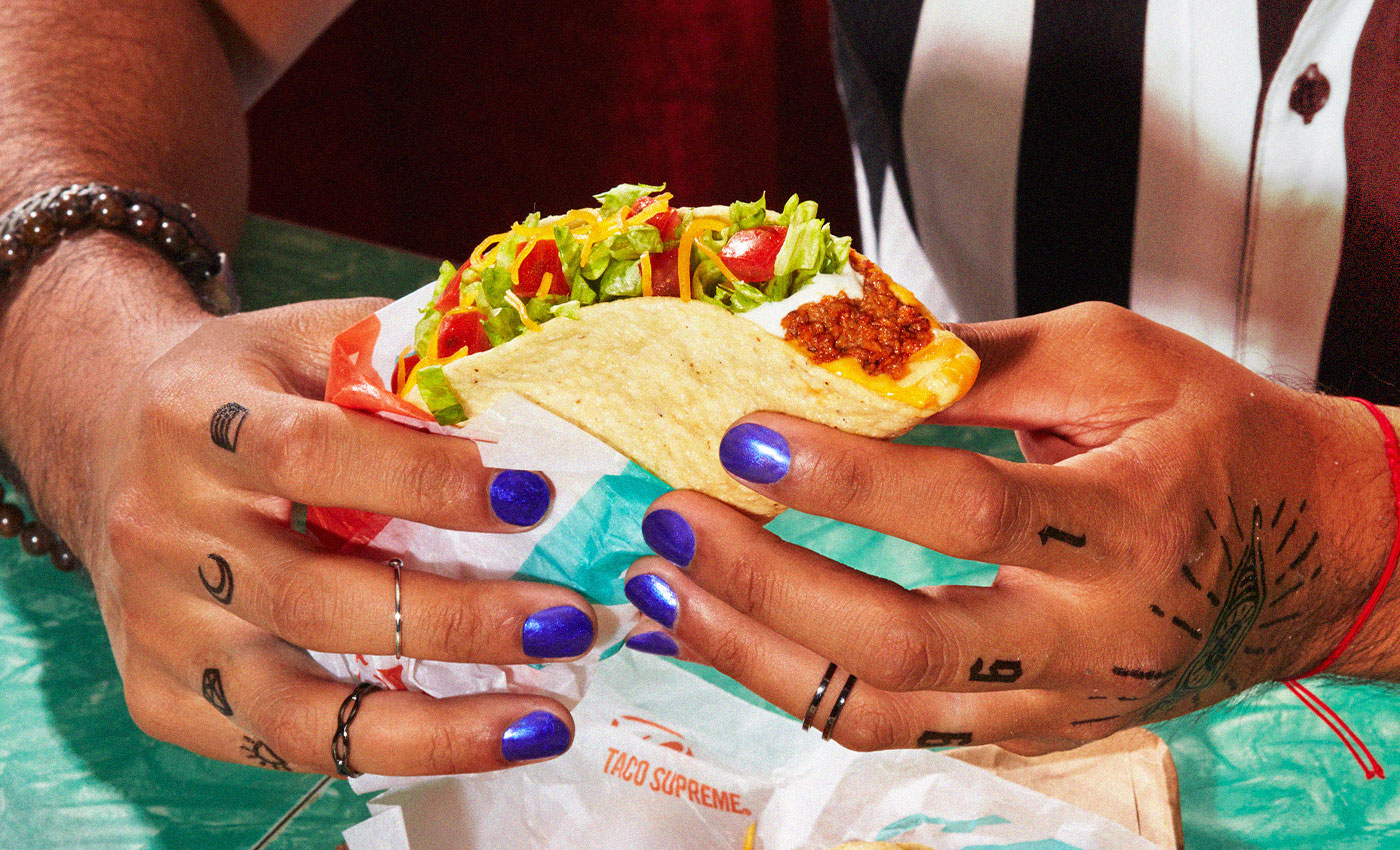
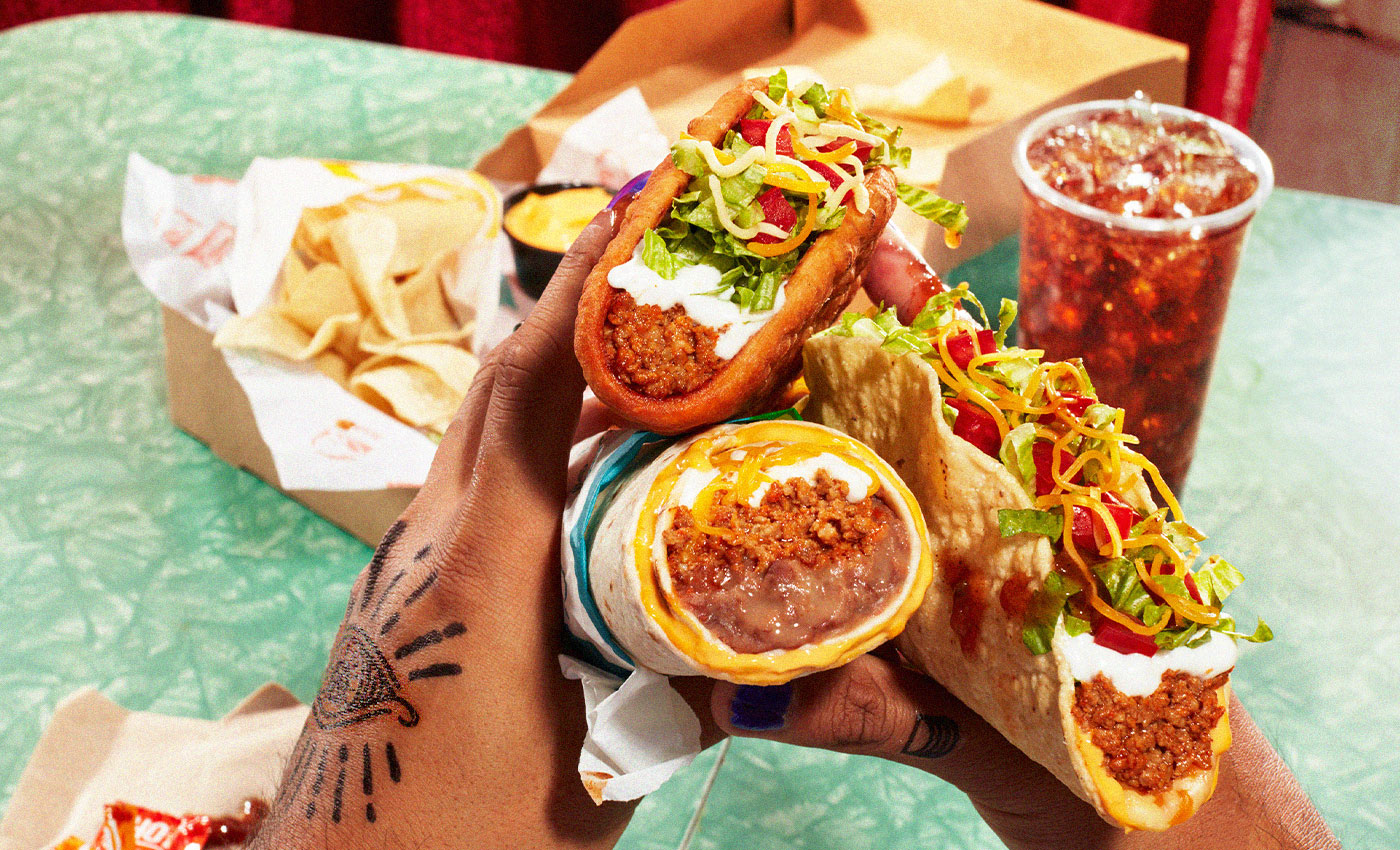
Fast-food giant Taco Bell is delving deeper into plant-based meat with a new test launch of vegan beef. Starting today, approximately 50 locations in Birmingham, AL will offer the chain’s proprietary “real seasoned plant-based protein” in place of beef across its menu in tacos, burritos, and more. Inspired by Taco Bell’s classic flavors, the vegan beef is made from a proprietary blend of soy and pea proteins.
To highlight the new option, Taco Bell is featuring the vegan protein atop Nachos BellGrande and is launching a new Crispy Melt Taco. This taco option is priced at $2.49 and can be ordered with either beef or its plant-based protein at no extra cost—which is unique, as many plant-based meat options at fast-food restaurants come at a premium price.
“Taco Bell worked hard to innovate and develop a plant-based protein that is just as craveable as Taco Bell’s iconic real seasoned beef,” a Taco Bell spokesperson told VegNews. “We believe that fans should never have to compromise taste for their cravings and dietary choices. We pride ourselves on offering food that’s delicious—and accessible—for everyone. That’s why the Crispy Melt Taco will available for the same price regardless of choice of plant-based protein or beef.”
Taco Bell’s proprietary vegan beef will be available at Birmingham locations from now until mid-October, or while supplies last. Restaurant participation may vary so customers in Birmingham are encouraged to contact their local Taco Bell about the new option.
Taco Bell
Taco Bell’s vegan beef
While Taco Bell’s customizable menu has been a favorite for vegetarians and vegans for years, the chain has recently begun exploring plant-based meat alternatives. Taco Bell first unveiled its “seasoned plant-based protein” at one location in Tustin, CA last April. There, Taco Bell offered the vegan meat as part of the Cravetarian Taco (a meatless version of its Crunchy Taco Supreme).
Last fall, Taco Bell expanded the test of its first plant-based beef to 95 Detroit area locations. The new Birmingham test will further inform Taco Bell of the vegan beef’s viability on a larger scale.
Taco Bell
VegNews was among the first to taste Taco Bell’s vegan beef, before its trial and during a media event this week. Our editors agree that the plant-based protein is a close replica of the taste and texture of Taco Bell’s animal-derived beef.
In addition to testing its proprietary vegan beef, Taco Bell has been experimenting with other plant-based meat options, including fun ideas from its test kitchen. In June 2021, Taco Bell toyed around with plant-based chicken at its Irvine, CA test location. Taco Bell’s Test Kitchen developed the Naked Chalupa with a Crispy Plant-Based Shell to mirror the chain’s Naked Chicken Chalupa but instead of using animal meat, the shell was made entirely from vegan chicken which was crafted from a proprietary pea protein-based blend that was breaded and fried.
Beyond Meat at Taco Bell
While its vegan chicken chalupa shell has not resurfaced since last summer, Taco Bell has been diligently working with vegan brand Beyond Meat since March 2021 on what it says is a “not quite yet seen in the industry” plant-based protein. Last December, rumors began circulating that this option was plant-based carne asada and that Taco Bell was not satisfied with the test.
However, a Taco Bell spokesperson quickly quashed the rumors. “The test between Taco Bell and Beyond Meat was not canceled,” a Taco Bell spokesperson told VegNews at the time. “Taco Bell and Beyond Meat are actively still working together to create a plant-based protein that’s just as craveable as Taco Bell’s current meat options and completely innovative to the national quick-service restaurant space.”
During this week’s tasting event at Taco Bell’s California headquarters, Missy Schaaphok—Taco Bell Director of Global Nutrition and Sustainability—was on hand to speak about the developments around its work with Beyond Meat. “I’m excited to confirm that Taco Bell’s long-awaited innovation with Beyond Meat will be available before the end of 2022,” Schaaphok told VegNews. “Delicious innovations take time, so I look forward to sharing more soon.”
Taco Bell
What about vegan cheese for next-level Nachos BellGrande, Mexican Pizza, and Chalupas? Schaaphok explained that the chain is focusing first on testing the performance of its plant-based meats. While vegan cheese is not in Taco Bell’s immediate plan, she said the chain is actively keeping an eye on the dairy-free space.
In the meantime, Taco Bell is also launching a new, chunky guacamole nationwide made with Hass avocados, fresh tomatoes, and onions, that is a perfect topper for items made with its reinstated seasoned potatoes.
Sarah McLaughlin (@sarahmclaughlin) is the New Products Editor at VegNews and is always on the search for the newest innovations in plant-based food.
Anna Starostinetskaya is the Senior News Editor at VegNews and is always keeping an eye on all things vegan in her home city of San Francisco, CA and everywhere else.
Every year, in more than 40 states, countless numbers of wild coyotes, foxes, bobcats, rabbits, prairie dogs, and other wildlife are hunted down and murdered like trophies as part of legalized “killing contests.” These cruel events, which are largely unregulated and unfold far from the public view, are reminiscent of the days in which predators and other “pest” animals were routinely slaughtered on sight. Today, wildlife killing contests remain one of the most blatant forms of persecution of wild species who play vital roles in native ecosystems, but who are disliked by many people.
In a typical example that shows the brutal practices endemic at wildlife killing contests, an investigation by the Humane Society of the United States reported at least 60 animals were killed in the span of less than 24 hours at a contest held in Texas last year. The victims included coyotes, foxes, bobcats, and raccoons, with cash prizes awarded for the hunting teams that brought in the heaviest of each species and for the one that killed the most and biggest animals as measured by combined weight. This type of celebration of the killing of predators encourages the wholesale slaughter of species that play important roles in natural food chains.
While contests targeting predatory mammals have rightly received much attention, events where cold-blooded creatures are killed can be just as devastating. At “rattlesnake roundups” held in many southern states, untold numbers of these shy and elusive reptiles are hunted, skinned, and often butchered for meat. Meanwhile, shark killing tournaments in coastal regions award money to whomever can kill the largest victim. Like other types of wildlife killing contests, such events have been roundly condemned by animal welfare advocates and environmental groups alike.
“These bloodbaths constitute neither wildlife management nor sport,” said Tracie Letterman of the Humane Society Legislative Fund, in a statement of support for legislation that would ban wildlife killing events on U.S. public lands.. “Killing contests aren’t merely retrograde cruelty, either. They destroy native carnivores…who play a vital role in ensuring the health of forest and pastoral ecosystems.”
In fact, as the cruelty that goes on at these events has become more widely known, some states have taken action. Eight states–Washington, California, Arizona, New Mexico, Colorado, Maryland, Massachusetts, and Vermont–have made at least some types of wildlife killing contests illegal, with efforts underway to pass similar legislation in other parts of the country. There are also examples of organizations that hold killing practices voluntarily changing the events in response to grassroots pressure or changing public sentiment. In the town of Whigam, Georgia, the local Community Club announced earlier this year that its annual rattlesnake roundup would be replaced by an educational event that celebrates rattlers and educates the public about their conservation. The Center for Biological Diversity lauded the overhaul as a “new vision [that] emphasizes how cruel and antiquated” killing contests are.
Yet, dozens of other states continue to allow predator killing contests, rattlesnake roundups, and similar mass slaughter events. The one with by far the largest number is Texas, where nearly two hundred such contests are believed to happen each year. In response, animal defenders are now calling for a federal ban on events where wildlife are killed for prizes. As a first step, the proposed Prohibit Wildlife Killing Contests Act of 2022 would make it illegal to hold the contests on federal public lands.
Most wildlife killing contests are rooted in the scientifically outdated belief that the indiscriminate killing of predatory animals is good for people and game species targeted by hunters. Prior to modern environmental laws and management practices, predators like wolves and grizzly bears were systematically slaughtered as a matter of government policy, leading to their near-extinction in the contiguous United States. The thinking was that fewer predators would lead to more deer, elk, and other prey animals. However, the actual result of this government-sanctioned kill policy was devastating for ecosystems.
Today, good wildlife managers understand that healthy predator populations are essential to the overall well-being of an ecosystem. A classic example comes from Yellowstone National Park, where the elimination of gray wolves resulted in elk herds overgrazing sensitive landscapes. Reintroducing wolves to Yellowstone in the 1990s caused elk to resume natural behaviors like being continually on the move to escape predators–with the result that overgrazed streambanks and woodlands were able to regenerate. In fact, predators are vital to the health of entire ecosystems, including the prey species they feed on. Yet, the persistence of wildlife killing contests shows that outdated ways of thinking about predators have not gone away.
Because they usually focus on common predator species like coyotes that are not protected by federal law, killing contests have been allowed to continue even as scientists and wildlife managers’ thinking about the importance of carnivores has shifted. However, while the target species may not be at high risk of extinction, their removal still puts a strain on food webs in the local environment. Fortunately, a growing and increasingly successful movement has come together to end killing contests for good.
As recently as 2013, no U.S. state prohibited wildlife killing contests. The following year, in response to grassroots advocacy, California passed a ban on contests that target non-game furbearing animals. The fact that several other states have followed with similar policies in the years since shows efforts to expose the cruelties of killing contests are working. This should be encouraging for animal lovers everywhere who want to eventually see the events banned at a national level. For the movement to continue winning victories, more grassroots activism will be key.
If you dislike the idea of wild animals being senselessly hunted for sport and prizes, getting involved in the fight against killing contests is a great way to have an impact. Write to your state legislators in support of a statewide ban on all types of killing events, including those targeting snakes and aquatic predators. Or contact your federal representatives in support of legislation like the Prohibit Wildlife Killing Contests Act of 2022. Your letter may be the one that helps convince the next lawmaker to sign onto one of these important efforts.
While the persecution of predators is a centuries-old reality, the movement to end killing contests is in many ways just getting started. With enough grassroots support, it will continue winning fresh victories for animals who have been indiscriminately targeted by hunters for far too long.
Not so long ago, a distressing footage showed her banging her head against the side of her tank. The footage captured by an anti-captivity activist called Phil Demers had raised concerns among experts because it clearly showed the orca in distress. As per Demers, Kiska’s odd behaviour is the result of her damaged mental and physical health.
The orca or killer whale has a lifespan in captivity of 10-45 years (female) and 10-30 years (male). As there is quite a huge gap in the range, many orcas outlive their families and friends despite being born at the same time,
Experts estimate the lifespan of most female orcas to be between 40 and 50 years. But in some cases, it can even reach above 60 years.
In captivity, orcas are usually placed in giant tanks with their mates. But there comes the unavoidable and unfortunate time when they start dying and only a few are left in the enclosure.
A heartbreaking footage released online shows an orca dubbed the ‘world’s loneliest’, circling its tank after outliving its friends and its own family.
Kiska is seen circling the perimeter of her isolated tank at MarineLand Park in Niagara Falls, Canada. The clip was reportedly taken in June
Kiska was captured from Icelandic waters in 1979. Since then, she has been living in captivity. Now at age 45, she is all by herself after outliving her five offspring and her friends.
Not so long ago, a distressing footage showed her banging her head against the side of her tank.
The footage captured by an anti-captivity activist called Phil Demers had raised concerns among experts because it clearly showed the orca in distress.
As per Demers, Kiska’s odd behaviour is the result of her damaged mental and physical health.
“Kiska is MarineLand’s last surviving orca. She was captured in 1979 in Icelandic waters and has been at MarineLand ever since. Her mental and physical health is deteriorating and as seen in the video, she repeatedly swims around her pool in the exact same way, even stopping briefly in some shallow water to shake erratically. For Kiska, her isolation is torture,” said Phil Demers.
“Sadly, Kiska’s fate is largely sealed at MarineLand as she is their property, and as no viable seaside sanctuaries exist, her future is heartbreakingly bleak,” he added.
For weeks, former suburbanite Eli Arnow had spent his mornings and evenings stalking deer in the woods around his new home in New York’s Hudson Valley. Besides killing a chipmunk or two as a kid, he was new to hunting, and he was starting to get discouraged: He’d only gotten a few shots within range and they were all misses. Then one November day, he looked out the window to see a deer — not only on his own lawn but right in front of his archery target.
He didn’t hesitate. He ran downstairs and grabbed his crossbow, stepped outside, and pulled the trigger. When he saw the deer hit the ground, he didn’t feel sadness or guilt. Instead, he experienced a sense of purpose. “I felt like…
WARNING: This story contains graphic imagery. Viewer discretion is advised.
HENDERSONVILLE, Tenn. (WKRN) — The Tennessee Wildlife Resources Agency is investigating after a buck was shot with a crossbow out of season.
The mature buck was spotted in a Hendersonville neighborhood and photos of the injured animal, with a crossbow bolt protruding from its head, began circulating on social media.
“While this agency doesn’t make a habit of going out and handling every injured animal, this animal was in distress, and we felt like we could make a difference for it,” said Barry Cross with TWRA.
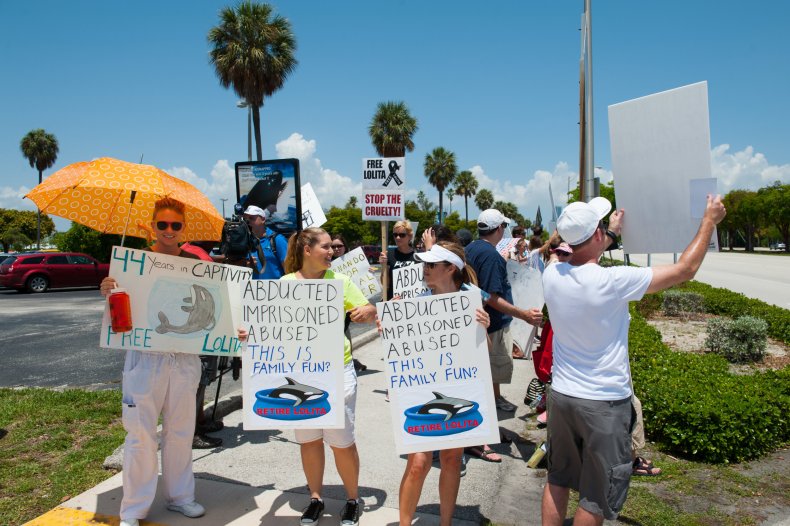
Lolita the captive killer whale could finally return home to her mom after living in captivity for 52 years.
Lolita, also known as Tokitae, is one of the most famous captive orcas in the world. The 56-year-old orca lives at Miami Seaquarium, in the smallest captive orca tank in North America, where she has been since 1970.
She is the last surviving killer whale out of 45 that were originally captured and delivered for display in aquariums between 1965 and 1973. These were some of the first orcas ever kept in captivity.
Animal welfare groups have been campaigning for Lolita’s release for years. And now, this looks like more of a possibility.
Lolita was originally captured from a pod of southern resident whales living off British Columbia, Washington and Oregon. And her mother, is still believed to roam the waters—experts believe it is a 93-year-old whale called L25 or “Ocean Sun,” however there is no evidence to corroborate this.
A picture shows protesters advocating for the release of Lolita in 2015. Animal rights campaigners have been arguing for her release for years.MICHELE SANDBERG/GETTY
According to The Guardian, Miami Seaquarium was sold to a new owner more open to discussing plans for her release in 2021. A report last year from the United States Department of Agriculture (USDA) was also the catalyst for a renewed urgency around Lolita’s release.
After an inspection of the Miami Seaquarium, the report cited multiple concerns about Lolita’s environment. It said that the Seaquarium’s management had been ignoring the recommendations of its in house veterinarian, who at the time was Magdalena Rodriguez. Rodriguez left the post shortly afterwards.
At 56 years old, Lolita is already an enigma. Captive killer whales have a much shorter life expectancy than those living in the wild. There are concerns whether Lolita would even survive the journey from her tank to the ocean, let alone whether she could deal with the stress of the new environment once she got there.
Charles Vinick, executive director of the Whale Sanctuary Project, which has been campaigning for better conditions for the whale, told The Guardian: “How do you evaluate those risks with an endangered species? Do you take any risks? And do you take risks for her life? Those are the issues we are dealing with I think for the first time ever in her life.”
Southern resident killer whales are an endangered species, with only 75 thought to be living in the wild as of July 2022. During her time at Miami Seaquarium, Lolita has fought off infections that some fear could harm the wider population if she were to return to the wild.
Vinick told Newsweek: “The priority today is on Toki’s health and welfare, making sure that she receives the best medical care possible, that her current physical environment is as optimal for her as possible, and that she has a stimulating enrichment program. We remain focused first and foremost on her health and, as her health stabilizes, we look forward to her return to her home waters in the Salish Sea.”
Miami Seaquarium told Newsweek that it doesn’t have an updated statement right now, but it’s “working with Friends of Lolita and independent marine mammal experts to provide the best possible care” for the orca.
A file photo of a captive orca in the water. Lolita has been in captivity for over five decades.FRIEDGREENBEANS/GETTY
Update 8/16/21 at 3:08 a.m. ET: This article has been updated to include comments from Charles Vinick and the Miami Seaquarium.
I like beavers and if it were not for rescuing beavers and destroying leg hold traps when I was eleven I most likely would not be a conservation and animal rights activist today.
I hate trappers and the crimes they commit against these wonderfully industrious semi aquatic beings.
I love beaver dams and all the positive ecological benefits these dams contribute to streams and wetlands.
I hate these immense monstrosities that humans call dams, the ones that destroy rivers, wildlife and wetlands.
And right now, the dam that I hate the most is the Site C mega dam project in British Columbia.
It appears that beavers, yes, the very beavers that are the symbol of Canada are to be slaughtered because they are “aggressive obstacles” to the huge dam that B.C. Hydro has constructed.
They want to log the place out before the area is flooded. But before they log they intend to breach the beaver dams and kill off all (ALL) the beavers in Watson Slough.
And what really pisses me off, is this planned massacre will take place in the Watson Slough.
Who in the world is afraid of beavers? Calling them aggressive is insane. I have swum with them, spent time with them. One of the gentlest and most harmless creatures on the planet. Calling them aggressive is just a means to demonize the victims.
Dams are aggressive destroyers of nature. Dams are destructive river killers. Beavers are contributing citizens to the eco-systems they live in.
I’m sure they will find plenty of psychos willing to murder beavers for money. Humans willing to be hired killers are in large supply.
What is not in large supply is wildlife. What is not in large supply are beavers.
BC Hydro has created a webpage for their work planned in this area: Watson Slough: We’re listening. If members of the public want to share their concerns over BC Hydro’s plan to kill beavers in the Watson Slough, use their form on the contact page: sitecproject.com/contact-us
Sometimes (oftentimes, most of the time) I resent being called human. More specifically, I resent being blamed for and associated with the careless, destructive things people sometimes do that I know I, in my right mind, would never do. Examples are countless, but the instance that came up today that made me want to renounce my membership in the species Homo sapiens was the euthanizing (killing, murder, assassination) of Freya the walrus.
Perhaps some people were bothering or stressing the poor big gal, and sure, someone could have ended up getting hurt, but that doesn’t justify executing the beloved, gregarious animal. A self-fulfilling prophecy—somebody got hurt alright—thanks to the “authorities” it was Freya. I’m getting tired of this attitude that human life outweighs all others—even if said life form is 1,300 pounds. ‘We don’t want people to get too comfortable or friendly with mere animals….’
FILE – An alligator is seen in a pond at the Kennedy Space Center in Cape Canaveral, Fla., Sunday, Aug. 27, 2006. Florida’s alligator hunting season started Monday, Aug. 15, 2022, with new rules expanding the time and weapons that can be used. (AP Photo/Dr. Scott M. Lieberman, File)
ORLANDO, Fla. (AP) — Florida’s alligator hunting season started Monday with new rules expanding the time and weapons that can be used.
The new rules expanded alligator hunting to 24 hours a day, instead of the previous 17 hours a day, primarily at night and early morning, that had been allowed.
Additionally, hunters now will be allowed to use pneumatic air-bows attached to a restraining line to hunt the alligators. The Florida Fish and Wildlife Conservation Commission says the pneumatic air-bows are easier to use for people with mobility challenges and young people.




 Taco Bell
 Taco Bell
 Taco Bell



 (Courtesy: Tennessee Wildlife Resources Agency)Read More »
 (Courtesy: Tennessee Wildlife Resources Agency)
 (Courtesy: Tennessee Wildlife Resources Agency)
 (Courtesy: Tennessee Wildlife Resources Agency)