Things you see when you don’t have a camera

A trip to town yesterday was pretty amazing, wildlife-wise. Unfortunately I didn’t bring my camera. From the north side of the Astoria bridge we saw the humpback whale who’s been seen hanging out around in the lower Colombia River for a few days.

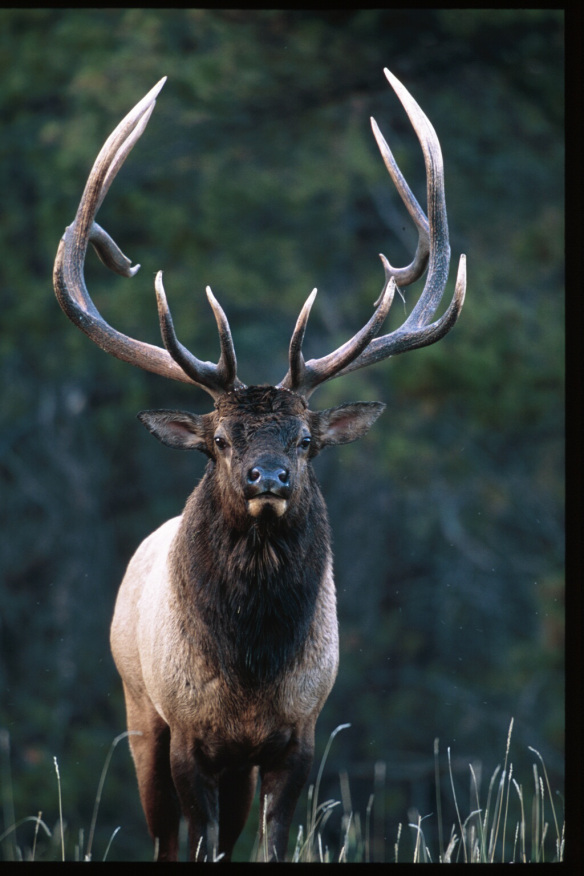
Then, after visiting the sea lions who reside on the East Moring Basin docks, we went to Hammond, by to Fort Stevens State Park, and watched a friendly herd of elk close up in a scene reminiscent of Mammoth Village in Yellowstone National Park. 

For a grand finale, we stopped to walk the dog at the “Dismal Niche”* rest area (*a name indicative of Lewis and Clark’s lack of appreciation of the area),  and saw a group of around 30 harbor seals just offshore in a channel of river. They were treading water, popping up and going under, probably looking for fish though we never saw them catch any). Perhaps they were just enjoying the gentle current in the eddy they found there. 

Text and Wildlife Photography ©Jim Robertson, 2015. All Rights Reserved

Text and Wildlife Photography ©Jim Robertson, 2015. All Rights Reserved

Wildlife needs half of the planet to avoid ‘biological holocaust’

Photo Copyright Jim Robertson

Photo Copyright Jim Robertson

https://exposingthebiggame.wordpress.com/wp-admin/post-new.php

Wednesday, August 27th, 2014 By

A Pulitzer Prize winner and Harvard scientist has said that half of the Earth should be human-free and dedicated solely to the world’s wildlife In order to avoid mass extinction of species.

Prominent biologist and two times Pulitzer winner E.O. Wilson has suggested that half of our planet should be dedicated to the world’s animals, as the only way to avoid critical mass extinction.

85-year old Wilson is considered the father of sociobiology and is a leading expert in biodiversity. His work largely focuses on the extinction crisis and the role human societies played in mass extinctions of the 20th century.

Speaking to the Smithsonian Magazine, Wilson explained his ‘Half Earth theory’ to try stop what he calls a ‘biological holocaust’, the sixth mass extinction event caused by humans, which is wiping out species at an incredible pace.

Wilson said in the interview, “It’s been in my mind for years, that people haven’t been thinking big enough –even conservationists. Half Earth is the goal, but it’s how we get there, and whether we can come up with a system of wild landscapes we can hang onto.

“I see a chain of uninterrupted corridors forming, with twists and turns, some of them opening up to become wide enough to accommodate national biodiversity parks, a new kind of park that won’t let species vanish.”

As an example of effective wildlife protected corridor, Wilson named the Yellowstone-to-Yukon 2,000 miles conservation region, which covers an area from Wyoming in the US to the Yukon territories in Canada.

A study from earlier this year revealed that humans are causing species to disappear at 1,000 times the natural rate, mainly because of the destruction of habitats and hunting, in addition to the effects of manmade climate change.

The Hummingbird Is Getting to be a Pest

DSC_0272Humans aren’t all bad—not all the time, anyway. We may be the most parasitic plague and destructive mutants ever to evolve on Earth, but occasionally our actions can actually help certain other animals.

Sometimes it’s unintentional, such as when people are driving the sandy beaches here030 on the Pacific coast. Vehicles on the soft, upland sand can disrupt or damage endangered snowy plover nests, and when people drive too fast right along the surf they’ve been known to run over migratory shorebirds feeding there. But on exceptionally windy days, while driving the beach in search of pelagic birds, like murres or grebes, washed up after brutal storms and now in need of rehabilitation, I’ve noticed that the shorebirds take refuge in deep tire tracks, hunkering down in the only cover they can find (especially if beachcombers have trucked off all the driftwood logs).

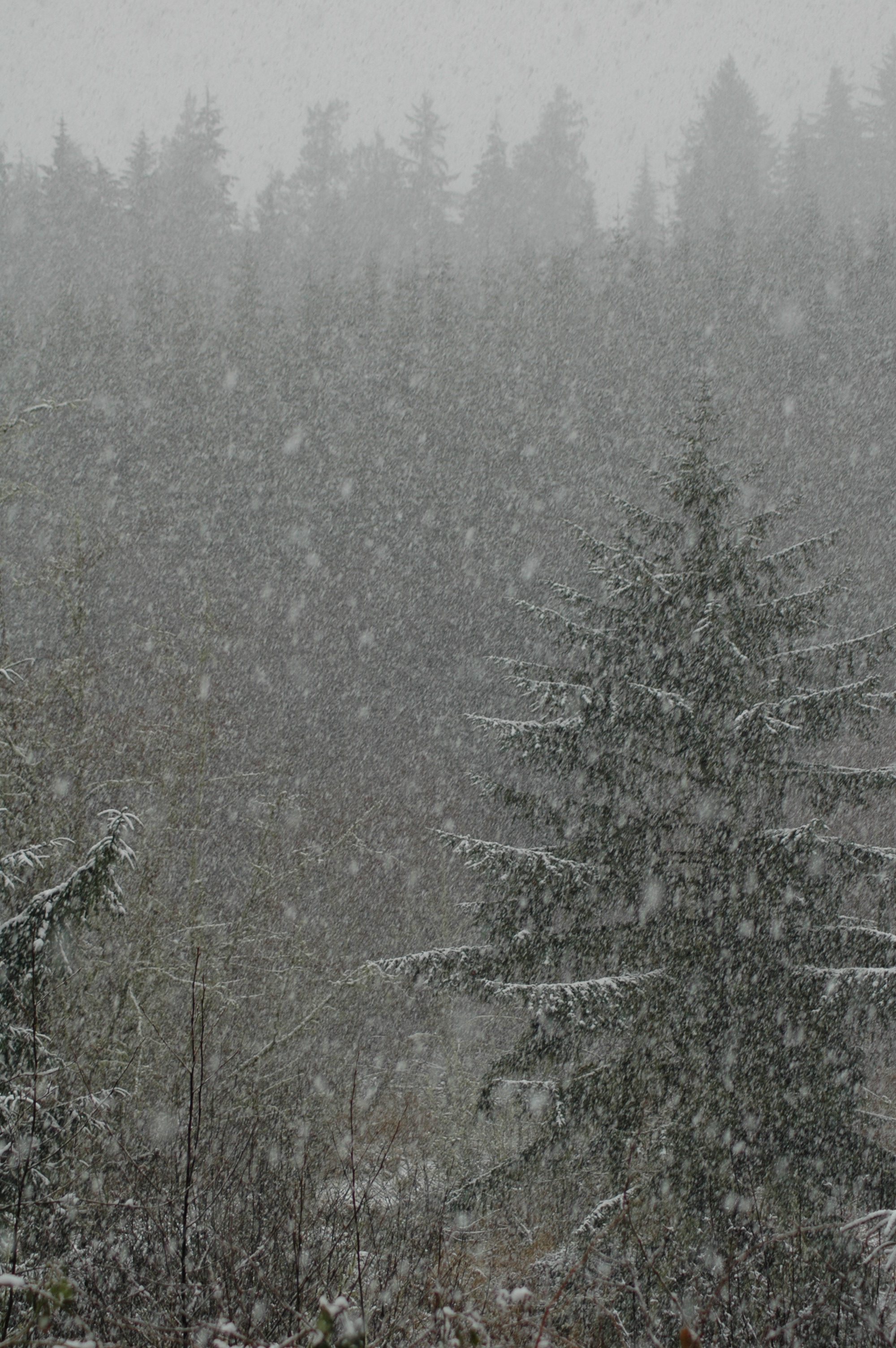
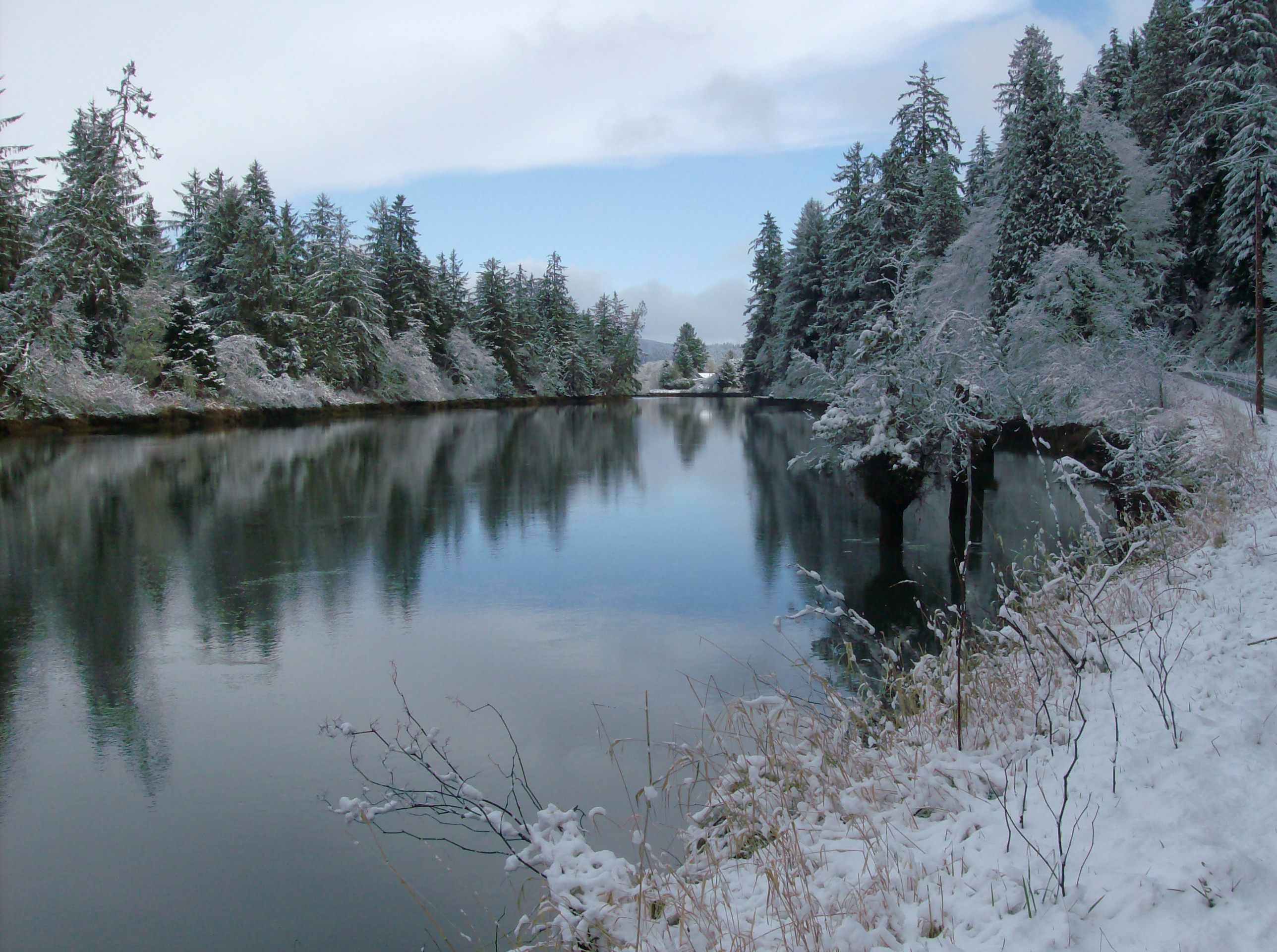
While leaving deep tire tracks in the sand can’t really be considered a direct, intentional act of kindness for an animal, keeping fresh, thawed sugar-water out for the straggler humming bird we’ve had here all winter surely can. The poor bird must have stuck around this normally mild, coastal region, rather than migrating further south, because of the late-blooming honeysuckle and early blossoming salmonberry shrubs. But now an arctic air mass has encroached for a week, bringing with it temperatures in the teens and wind-chills in the single digits. Frozen ponds and snow coating on the Sitka spruces and western hemlock complete this late Christmas-card scene, but I can imagine, to a high strung hummingbird, it must feel like the ice age is back to stay.

Photo Thanks to Linda Delano

Photo Thanks to Linda Delano

My wife has been the one diligently keeping watch over the feeder, being sure to exchange it for a thawed one every other hour on these iciest of days. But at first light this morning, while the coffee was brewing, I went out in my bathrobe before filling the other birds’ feeders and replaced his liquid refreshment. As it was, the hummingbird didn’t show up at until after 8:00.a.m. It must have been hard to leave the thicket he was crouched in and face the frozen wasteland to find out whether or not the human handout had turned into a sugar-water popsicle. He was lucky this morning. Hardly a steaming cup of hot coffee, but it must have seemed like the nectar of the gods to someone with such a high metabolism—especially after a long night spent burning precious energy trying to stay warm.

Were I of a different mindset (i.e., not an animal lover) I might say, “That hummingbird is becoming a pest. It could be considered a safety hazard, or maybe even a road hazard. It could be an exotic or even an invasive species. It might be time to call for a cull, or even a contest hunt on him.” But, fortunately for him, I’m not like that.

DSC_0022


Shut Off That TV, It’s a Beautiful Day Out

While most Americans were glued to their TV sets, cheering or shouting at their favorite410557751_d3027a6344 overpaid players in the Super Bowl–refusing to budge during the manipulative, high-tech commercials except to urinate or grab another beer, I was outside enjoying the unseasonably warm day (and secretly praying for snow).

On our daily walk to the river, my wife and I and our dog “Honey” were treated first to the sight of a pair of ravens driving an eagle out of the area. The eagle must have inadvertently flown over the ravens’ former and future nesting site, and they wanted to make it clear that though they weren’t guarding any eggs just yet, that forested hillside was off-limits until further notice.

In addition to the usual mergansers and herons fishing the river, we saw a seal stick his head above the waterline to get his bearings. Seals are a fairly rare sight here on this tidal tributary of the Columbia, twenty miles upstream from the ocean, but no doubt the winter smelt run was making his efforts worthwhile.

Next, upwards of a thousand cackling Canada geese, in four or five formations of a few hundred or so apiece, crossed loudly overhead. Uninterested in fish, they were instead searching for greener pastures and a safe place to bed for the evening.

These are just a few of the wonders going on while humans are spending their valuable yet limited time on this Earth with their ball game.

Text and Photography Copyright Jim Robertson

Text and Photography Copyright Jim Robertson

To Save Threatened Owl, Another Species Is Shot

[Typical FWS reaction to any species situation (always the result of human actions)–KILL, kill, kill!]

In desperation to save the rare northern spotted owl, biologists are doing something that goes against their core — shooting another owl that’s rapidly taking over spotted owl territory across the northwest.

“If we don’t do it, what we’re essentially doing, in my view, is dooming the spotted owl to extinction,” says Lowell Diller, senior biologist for Green Diamond, a timber company.

The decision to shoot the more aggressive barred owls has been wrenching for biologists and the federal government. But one of the biologists says the consequence of not stepping in would be so dire that it justifies what he calls this Sophie’s Choice.

hide captionThis barred owl was removed in October from California’s Hoopa Valley reservation. The barred owl is a species that threatens spotted owl recovery.

       Courtesy of Lowell V. Diller

This barred owl was removed in October from California's Hoopa Valley reservation. The barred owl is a species that threatens spotted owl recovery.

This barred owl was removed in October from California’s Hoopa Valley reservation. The barred owl is a species that threatens spotted owl recovery.

Courtesy of Lowell V. Diller

A few decades ago, the plight of the spotted owl sparked an epic struggle between environmentalists and the timber industry. In 1990, the federal government put the spotted owl on the endangered species list, giving it a “threatened” designation. Protecting the bird, and the old growth forests where they nest, accelerated the decline of the logging industry in the northwest.

At the time, small numbers of the bigger barred owls, which are native to the east, had already made their way across the continent and into historic spotted owl turf. Now, they are outcompeting spotted owls — disrupting their nesting and eating their food.

During the 1990s, a few barred owls showed up in an area of forest along Redwood Creek that was prime spotted owl territory. Barred owls, which reproduce much faster than spotted owls, now claim nearly all this territory. No spotted owls have nested in this stretch of forest in recent years.

“It’s very upsetting and there’s nothing that’s going to stop this expansion of barred owls from continuing,” says Diller, who has studied spotted owls for 25 years. The only feasible solution, Diller says, forces him to go against his nature.

“I Hate It Every Time I Go Out And Do It”

In the forest along Redwood Creek, Diller plays a recording of a barred owl, and soon a pair of real barred owls starts hooting. Barred owls are aggressively territorial — the birds are trying to intimidate what they think is another owl intruding on their turf.

The female buzzes past. Then she perches in plain view, a tactic meant to ward off interlopers that puts the birds in shooting range.

“I think you can appreciate, standing here, how easy it would be — and when I say easy, I mean technically easy or simple — to lethally remove that bird,” Diller says.

Diller’s a hunter, but he was taught never to kill a bird of prey or anything you didn’t plan to eat. At first, someone else did the shooting. But, he says, this felt hypocritical, so he started doing it himself.

Diller recalls the first time he took a shot. “I was so nervous about what I was doing, and emotional, that I had to steady myself against a tree.”

Over the past five years, Diller has killed more than 70 barred owls with a shotgun. Each time, he says, it felt “totally wrong.”

“I hate it every time I go out and do it,” he says.

Removing barred owls without killing them is not feasible, he says. He calculates it takes more than 40 hours to catch a live barred owl — compared to about two hours to shoot and collect one. Finding new homes for the barred owl would also be time-consuming and traumatic for the birds.

hide captionGuns, dogs and owl-calling decoys are used in efforts to remove barred owls. The dogs are valuable in recovering fallen owls, especially at night.

       Courtesy of Lowell V. Diller

Guns, dogs and owl-calling decoys are used in efforts to remove barred owls. The dogs are valuable in recovering fallen owls, especially at night.

Guns, dogs and owl-calling decoys are used in efforts to remove barred owls. The dogs are valuable in recovering fallen owls, especially at night.

Courtesy of Lowell V. Diller

Shoot To Save, Or Leave It To Nature?

Barred owls are not rare. Still, shooting them has presented such a quandary to the U.S. Fish and Wildlife Service that it has taken more than seven years come to this solution.

Although the agency made an exception for Diller, it’s illegal to shoot barred owls, under the Migratory Bird Treaty Act.

On the other hand, the Fish and Wildlife Service can’t ignore the invasion because it’s legally required to help rare species under the Endangered Species Act. The agency even hired an ethicist, Clark University’s Bill Lynn, to help wildlife experts resolve the dilemma.

“People recognized there’s a crisis for the spotted owl, that barred owls are part of the cause of that crisis and, so, they reluctantly, essentially justified the experimental removal of barred owls,” Lynn says.

The Fish and Wildlife Service is starting a four-year experiment to kill up to 3,600 barred owls in the northwest.

The birds will be removed from four different forests, two in Northern California, one in Oregon and one in Washington. Some birds will be captured but not killed.

The federal government says if spotted owls come back after barred owls are removed, it may decide to kill barred owls over a broader area.

An advocacy group, Friends of Animals, is suing to stop the experiment.

The group doesn’t believe the government can make a moral argument for shooting an animal, even if it would benefit another animal.

“To go in and say we’re going to kill thousands and thousands of barred owls, literally forever, I don’t see that as being a solution. At some point you have to allow these species to either figure out a way to coexist or for nature to run its course,” says Michael Harris, legal director of Friends of Animals.

hide captionLowell Diller holds a fledgling spotted owl that he banded at a site where barred owls had been removed. “This owlet would almost certainly not be alive today without active intervention,” he says.

       Courtesy of Lowell V. Diller

Lowell Diller holds a fledgling spotted owl that he banded at a site where barred owls had been removed. "This owlet would almost certainly not be alive today without active intervention," he says.

Lowell Diller holds a fledgling spotted owl that he banded at a site where barred owls had been removed. “This owlet would almost certainly not be alive today without active intervention,” he says.

Courtesy of Lowell V. Diller

But Diller argues this is an “absurd thing to say” after all the ways humans have altered nature. People cut down most of the forests that used to host barred owls. They made lots of changes to the Great Plains, which he believes helped the barred owl move across the continent.

So, he says, people should at least try to save the spotted owl. And nearly everywhere he shot barred owls, he says, spotted owls came back — and had owlets too.

The Reward

Along the Mad River, Diller scrambles through a young redwood forest to track down a pair of spotted owls. He feeds them mice so he can see the bands on their legs. The polka dot markings tells him the owl settled here in 2009, after he shot barred owls nearby.

For Diller, seeing rare spotted owls thrive in this forest is success worth the agony of shooting barred owls.

“Probably what makes spotted owls so special is the fact that as you just witnessed, they fly right up to you,” Diller says. “You get to interact with them. It’s almost impossible as a biologist not to fall in love with these birds — they’re just the neatest animal.”

Diller hopes the public also will see the value in saving this beautiful creature.

Sheep in Wolves’ Clothing

http://foranimals.org/

wildlife management

by Marc

The December 18, 2013, Santa Fe Reporter, featured a profile of

Photo Copyright Jim Robertson

Photo Copyright Jim Robertson

James Lane recently fired as director of the New Mexico Department of Game and Fish. While no public reason was given for Lane’s firing, it seems likely that it was due, at least in part, to his public derision of the nonhunters as “tree-huggin’ hippies.” The department, sometimes known as “Maim and Squish,” manages wildlife on behalf of hunters and ranchers. Even after Lane’s ignominious departure, Scott Bidegain, a board member of NM Cattlegrowers Association, continues as chairman of the Game Commission, which supervises the department’s so-called professional wildlife managers.

What has been the reaction of New Mexico’s environmental and animal protection lobbyists? The supposed protectors of wildlife sheepishly sent a letter to the hunter-rancher-in-chief, begging Bidegain to replace Lane with a professional wildlife manager dedicated to the principles of the North American Model of Wildlife Conservation.

This model is aptly summed up by the Rocky Mountain Elk Foundation:

Man has hunted since he walked the Earth. Every early culture relied on hunting for survival. Through hunting, man forged a connection with the land and learned quickly that stewardship of the land went hand-in-hand with maintaining wildlife – and their own way of life.

In the first half of the 20th century, leaders like Theodore Roosevelt and Aldo Leopold shaped a set of ideals that came to be known as the North American Model of Wildlife Conservation. They articulated the philosophy that all wildlife belong to all of us. . . .

The Pittman-Robertson act was passed in 1937, through which hunters voluntarily imposed a tax on themselves, ensuring that a portion of the sale of all firearms and ammunition would be expressly dedicated to managing the wildlife entrusted to the public. The Pittman-Robertson Act generates $700 million annually, which is distributed by the U.S. Fish and Wildlife Service to state fish and game agencies across America.

The federal tax on firearms and ammunition is collected by the Alcohol and Tobacco Tax and Trade Bureau (TTB). As its name suggests, TTB also administers federal taxes on alcohol and tobacco. No one expects these tax revenues to be used to promote smoking and drinking, yet hunters expect firearms taxes to be used to promote hunting.

RMEF is, however, correct to point out that hominids have been killing wildlife since they first learned to walk upright. In North America, hunting dates back to mass extinctions of the Pleistocene, which corresponded with the arrival of humans on this continent. Well before the establishment of “Native” American cultures species such as saber-toothed cats disappeared from the North American landscape. Species which were able to survive centuries of hunting with spears, bows and arrows, proved little match for European firearms technology.

Only when hunters began to fear an end to their gruesome blood sport did wildlife managers like Aldo Leopold begin to rethink the idea of hunting without limit. Along with the establishment of the US Forest Service and the Bureau of Land Management, the Pittman-Robertson Act attempted to protect ranchers and hunters from destroying both their own livelihoods and their ability to indulge in sadistic blood sports. Thus was born the myth that ranchers and hunters, who had come close to totally destroying the land and the wildlife who live on it, were the “true conservationists,” codified by the North American Model of Conservation.

In spite of the best efforts of the “hunter-conservationists,” hunting continues to decline in the United States. According to the latest [2011] National Hunting Survey, only 6% of the U.S. population hunts. When broken down by region, there has been a 45% drop over the last decade in the Mountain States from 11% to 6%. Correspondingly, the New Mexico report shows a 47% drop in expenditures by hunters.

The drop in hunting is a threat not only to hunters and ranchers, but also to conservation and animal protection lobbyists who have been collaborating with them. In their letter to the Game Deparment, Animal Protection of New Mexico, the Rio Grande chapter of the Sierra Club, the New Mexico chapter of the League of Conservation Voters and Wild Earth Guardians expressed their support for the hunters’ North American Model of Conservation.

Many of the organizations which signed this letter have had a long history of collaboration with hunters. Hunter Jon Schwedler headed APNM’s wildlife program before leaving to form the short-lived Sierra Sportsmen, the Sierra Club’s failed attempt to organize hunters in support of conservation.

Now it is the turn of Wild Earth Guardians to join the ranks of hunters masquerading as environmentalists, with the hiring of Erik Molvar. According to his WildEarth Guardians profile, Molvar has a degree in “wildlife management” and “enjoys antelope hunting.”

This profile reveals not only the sadistic pleasure Molvar takes in killing animals and watching them die, but also the difference between a wildlife manager and a biologist. State game departments and other wildlife managers use the cowboy term “antelope” to describe pronghorns. The last of their family to survive the Pleistocene extinctions in North America, pronghorns are not related to antelope, which are native to Africa. “Wildlife management” might be considered a “science” similar to economics and political science, but it is not a natural science like biology and geology.

In any case, contrary to the propaganda of the conservation lobbyists, there is no “pure science” which can guide the protection of wolves, prairie dogs, pronghorn, and other wild species, whether or not they are legally endangered. As the career of Jon Tester, Rancher-Democrat of Montana, demonstrates, the U.S. Congress retains the right to determine what animals can be legally killed without limit. Tester, after using funds from the League of Conservation Voters to defend his seat against the notorious “evil Koch brothers,” authored the law which removed endangered species protection for the grey wolf. A belated attempt by conservation lobbies to petition the Department of the Interior to restore wolf protection in violation of Tester’s law may succeed in raising funds, but it will not succeed in protecting wolves.

Rancher-Democrat Tester has now been joined in the Senate by New Mexico Hunter-Democrat Martin Heinrich. Heinrich & Tester’s Sportsmen’s and Public Outdoor Recreation Traditions Act (SPORT) Act (S. 1660) would open all federal lands, including National Park Service land, to hunters.

2013: The Year of the Big Backslide?

The year of our lord, 2013, could be known as the year of the big backslide, at least in terms of attitudes toward animals and the environment, as well as the general acceptance of scientific fact.

For example, CBS News reports that the number of Republicans who believe in evolution today has plummeted compared to what it was in 2009, according to new analysis from the Pew Research Center. A poll out Monday shows that less than half – 43 percent – of those who identify with the Republican Party say they believe humans have evolved over time, plunging from 54 percent four years ago. Forty-eight percent say they believe “humans and other living things have existed in their present form since the beginning of time,” up from 39 percent in 2009.

I can’t help but think this is because many people still aren’t comfortable admitting they’re animals. And this supremacist attitude is reflected in everything they do in regard to our fellow species.

Anyone who has been following the wolf issue since gray wolves were removed from the Endangered Species List in a handful of backward states has certainly noticed a rapid backslide pertaining to how wolves are perceived, treated and “managed” by those bent on dragging us back to the dark ages for animals—the Nineteenth Century—when concepts like bounties, culls and contest hunts were commonplace. Hunters and ranchers in the tri-state area surrounding Yellowstone National Park, as well as in the Great Lakes region, are doing everything they can to resurrect the gory glory days of the 1800s, and wolves are paying the ultimate price.

Meanwhile, in spite of great efforts to educate people about the myriad of problems associated with factory farming and the dependence on meat consumption in an ever more crowded human world, the number of ruminants raised for food on the planet today is at an all-time high of 3.6 billion, double what is was 50 years ago. Regardless of or our burgeoning human population, not only do we have a chicken in every pot in this country, we now have cow and sheep parts in every freezer and pig parts in practically every poke. This, of course, is all thanks to ever-worsening living conditions for farmed animals.

Professor William Ripple and co-authors of a research paper, “Ruminants, Climate Change, and Climate Policy,” prepared in Scotland, Austria, Australia and the United States, noted that about 25 percent of the earth’s land area is dedicated to grazing, and a third of all arable land is used to grow food for livestock, according to the report. Reducing the number of cattle and sheep on the planet, and thereby reducing the methane gas emissions they produce, is a faster way to impact climate change than reducing carbon dioxide alone, the report concluded. The researchers concluded that greenhouse gas emissions from cattle and sheep are 19 to 48 times higher per pounds of food produced than the gas emitted in the production of plant protein foods such as beans, grains or soy.

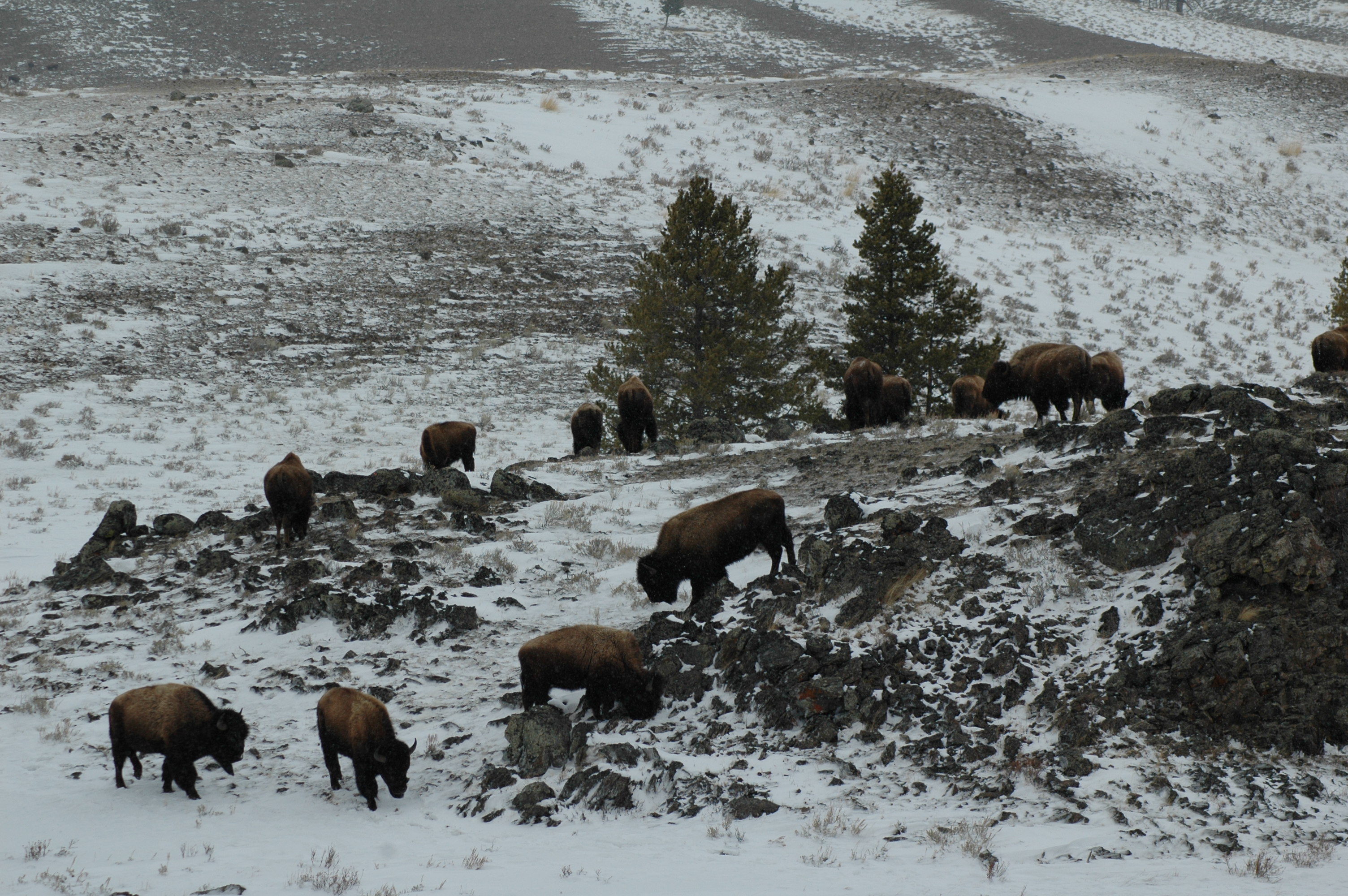
To get an idea of how unnatural and unsustainable 3.6 billion large ruminants is, think back to when vast bison herds blackened the plains. At that time there were only 50 million bison in all of North America. There are over 300 million human beef-eaters in the United States, every one of them expecting to see a fully stocked steak house, Subway or McDonald’s on every street corner.

Meanwhile, the media’s busily cooking up a spin to answer to meat’s culpability in this planet’s climate crisis. Articles on how methane from grass-eaters is a primary greenhouse gas are often accompanied by the suggestion that pigs and chickens don’t produce as much. In other words, don’t worry your little meat-addicted heads if this beef-cow-causing-global-warming thing becomes a recognized issue, you can just switch over to other non-ruminants’ carcasses—no one really expects you to become a vegetarian, after all.

One of the most outrageous spins ever concocted aired on a “Ted Talk” just last March. Allan Savory, a former Rhodesian provincial Game Officer, has been spreading the counterintuitive notion that to control desertification and stop global warming we need to turn even more cattle out onto arid land. This notion comes from a man who, as late as 1969 advocated for the culling of large populations of elephants and hippos because he felt they were destroying their habitat. Savory participated in the culling of 40,000 elephants in the 1950s, but he later concluded it did not reverse the degradation of the land and called the culling project “the saddest and greatest blunder of my life.” Now he’s trying to sell us on another blunder with even more destructive consequences. What will this guy do for an encore? Never mind, I don’t want to know.

Speaking of Africa, 2013 saw the fastest growing and second most populous continent on its way to adding another billion people to the planet. By the end of this century, 3/4 of the world’s growth is expected to come from Africa, and projections put its population at four billion—one billion in Nigeria alone. Most African countries will at least triple in population, as there are very high fertility rates and very little family planning in most regions. No one is quite sure how the continent will provide for that many hungry humans; only time will tell.

And even though China’s overwhelming population is already well past a billion, in 2013 they abandoned their one child policy and affectively doubled it by implementing a two child policy at the stroke of a pen.

Sorry, but this shit is scary, at least if you care about the plight of non-human species on this planet. Sure, cultural diversity is important—to people. But it sure as hell doesn’t trump biological diversity in the scheme of things. Regardless of what you may or may not believe about whether we were created in the image of a god, life on Earth as we know it will not go on if we humans are one of the only species left around.

The coming decades are going to test just what Homo sapiens are made of. Are we progressive and adaptable enough to learn to share the planet with others and become plant eaters, as some people have? Or is our incessant breeding and meat consumption going to put us into an all new classification—planet eater?

1535443_10151792030721493_1254752217_n

Drone Hunting Anyone?

Here’s two articles that must go together…

Drones: A New Tool For Hunting The Wild Pigs Terrorizing America

Snip> “…an outfit called Louisiana Hog Control that hunts pigs at night using a remote controlled plane outfitted with an infrared camera. Hunters on the ground, informed by the bright white blobs of porcine body heat illuminated on their video feeds, can then sneak up on the clever and twitchy critters and dispatch them to hog heaven. On a successful hunt the body count of wild hogs can reach into the dozens. By the looks of the pics and video posted by Louisiana Hog Control on its Facebook page, the pig-shooting weapon of choice is the AR-15 and its variants.”

Read more: http://www.forbes.com/sites/christopherhelman/2013/12/03/drones-a-new-tool-for-hunting-the-wild-pigs-terrorizing-america/

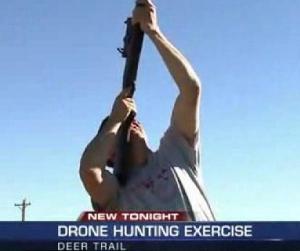
And in answer that?: Colorado man offering drone hunting lessons in Deer Trail

“The issue of whether Deer Trail should sell licenses to hunt drones first went beforeColorado-man-offering-drone-hunting-lessons-in-Deer-Trail the town board in August. It specifically lays out limitations like restricting shooting to daylight hours and only allowing the shooting of unmanned aerial vehicles flying lower than 1,000 feet over private property.”

Read more:  http://www.upi.com/Odd_News/Blog/2013/12/02/Colorado-man-offering-drone-hunting-lessons-in-Deer-Trail/8261385993846/#ixzz2mRXgWuyQ


“Time” Has it Backwards, People Are the Pests

By now, many of you have seen the outrageous Time magazine article egotistically entitled, “America’s Pest Problem: It’s Time to Cull the Herd.” If so, you probably shared my first reaction, which was:

How haughty to label the recovering animal species from whom we stole this land “pests” whenever they cross paths with the real pests, the most overpopulated and rapidly expanding, exploitive, environmentally reckless, imperialistic, pretentious, self-centered, self-important, self-aggrandizing, stuck-up, conceited, condescending –in a word, arrogant—urchins ever to emerge from the primordial ooze, namely humans.

As ethologist Marc Bekoff wrote in a recent blog post,
“There are so many things that are profoundly disturbing in [the Time magazine] essay I’m not sure where to begin or just which points to highlight. Some of the messages I received had quotes from this essay that at once shocked and saddened me. Kill, kill, and kill some more; that’s the only solution for righting the wrongs for which we — yes, we — are responsible. We move into the homes of other animals and redecorate them because we like to see them or because it’s “cool” to do so, or we alter their homes to the extent that they need to find new places in which to live and try to feel safe and at peace. And then, when we decide they’ve become ‘pests’, we kill them. Yes, technically we cull them, but of course the word ‘culling’ is a way to make the word ‘killing’ more palatable. To many people this sanitizing mechanism — using culling instead of killing — is readily transparent. But, a subtitle like ‘It’s Time to Kill the Herd’, would likely offend many people who find it difficult to grasp that that’s what we do – we kill other animals with little hesitation absent any data that this really works.

“We treat them as if they’re the problem when, in fact, whatever ‘problems’ they pose can most frequently, some might say invariably, be traced back to something we did to make them become ‘problems’.”

Well, I’m one of those who would definitely say “invariably.” On the other hand, I’m not real comfortable with the “we” part. Personally, I don’t consider the wildlife to be “pests,” I don’t fear them and I do not kill them. Ultimately, I don’t consider myself superior to the other animals.

Bekoff also writes, “Until we confront the indisputable fact that there are too many of us, we and other animals are doomed.” Talk about uncomfortable… Actually, my wife and I faced that fact decades ago and consciously chose not to add any more children to the burgeoning human horde.

The problem where we live is that, though we’re surrounded by prime habitat which we’ve left wild for the wildlife, we rarely see the deer, elk and bears who’ve had to adapt to locally rampant hunting and poaching pressure by only coming out of the heavy forest at night. The last thing the animals around here need is for Time Magazine to come along and promote more hunting!

Text and Wildlife Photography ©Jim Robertson, 2013

Text and Wildlife Photography ©Jim Robertson, 2013