Wolf protection plan raises hackles in Southwest

By Julie Cart
October 26, 2013, 6:30 p.m.

ALBUQUERQUE — In the small, rural community of Reserve, children waiting for the school bus gather inside wooden and mesh cages provided as protection from wolves. Parents consider the “kid cages” a reasonable precaution.

Defenders of the wolves note there have been no documented wolf attacks in New Mexico or Arizona. Fears of wolves attacking humans, they say, are overblown, and the cages nothing more than a stunt.

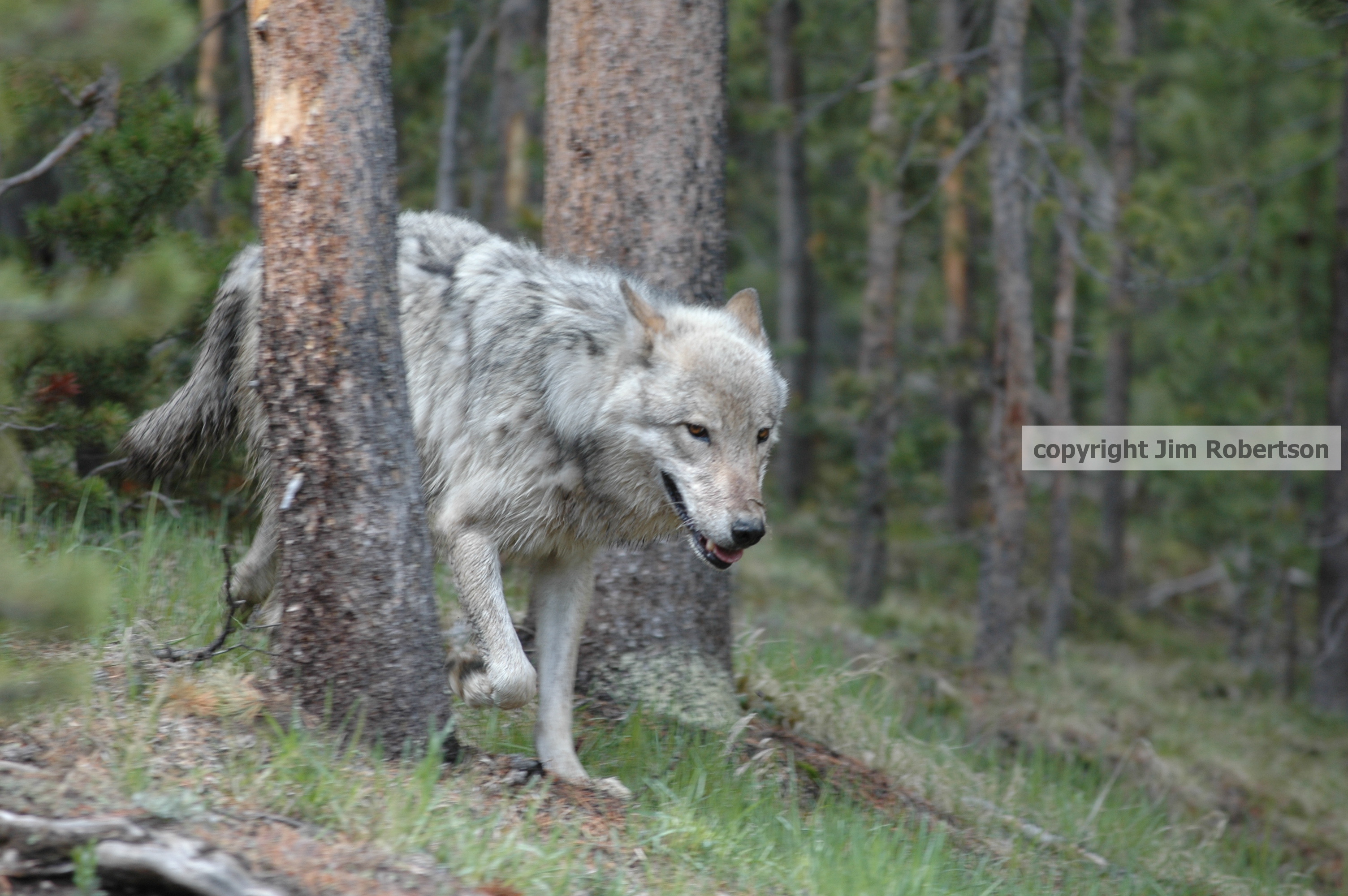
copyrighted Hayden wolf walkingIn 1995, the reintroduction of Canadian gray wolves into the northern Rockies ignited a furor.

Now that acrimony has cascaded into the Southwest, where the U.S. Fish and Wildlife Service proposes to extend Endangered Species Act protections for an estimated 75 Mexican wolves in the wild in New Mexico and Arizona.

Such protections would make it illegal to kill wolves in most instances. The new federal plan would also significantly expand the area where the wolves could roam unmolested.

To many conservatives in the West, such protections are examples of government overreach — idealistic efforts by officials who don’t know what it’s like to live with wolves.

“People have to stand up and defend our rights,” said Wink Crigler, a fifth-generation rancher from Arizona who says guests at her tourist cabins fear they might be attacked by wolves.

Anti-wolf campaigns here — paid for by conservative political organizations antagonistic toward the federal government — often portray the animal as a savage devil preying on children.

The antipathy has encouraged scores of illegal killings of Mexican wolves, whose population dwindled to seven before federal efforts to reintroduce them began in 1998. A young male wolf was fatally shot with an arrow a few weeks ago in the same rural Catron County that uses the kid cages.

Into this atmosphere have come federal officials who by the end of the year are expected to finalize their plan for managing Mexican wolves, a smaller and tawnier subspecies of the Canadian grays.

“With the political debate we see raging, we can’t just listen to the loudest voice in the room,” said Fish and Wildlife Service Director Dan Ashe. “There are many loud voices in the room. No animal engenders more polarizing emotion among Americans than does the wolf.”]]

It is a public policy debate driven not just by biology and science, but by emotional appeals and unalloyed partisanship.

When a previously scheduled Oct. 4 public comment hearing about wolf management was postponed by the government shutdown, advocates came out anyway, staking out nearby meeting rooms at an Albuquerque hotel.

The Save the Lobo rally, paid for by Defenders of Wildlife, featured a man in a wolf costume, children scrawling placards with crayons and people offering videotaped testimony to be forwarded to Washington.

Down the hall, an anti-wolf event was sponsored by Americans for Prosperity, an organization funded by the conservative Koch brothers. The group offered literature by Ayn Rand and screened the documentary “Wolves in Government Clothing,” which equated rampaging wolves with an out-of-control federal government. Said one Arizona rancher at the event: “Is this politically driven? Absolutely.”

An armed guard patrolled — made necessary, Americans for Prosperity said, by death threats from environmental groups.

The issue of public safety loomed large, with much discussion of the kid cages, boxy structures that resemble chicken coops. Photos and video of the cages have been circulated by Americans for Prosperity, although it was unclear how many exist or who requested or paid for them. Local media reports suggest at least some of them were built by students in a high school shop class.

Calls to the superintendent of schools in Reserve were not returned.

To Carolyn Nelson, a teacher in Catron County, the cages don’t go far enough to protect children. She said that seven years ago her son, then 14, was out walking and came across three wolves. Frightened, he backed against a tree. One wolf stared him down while the other two circled.

Only when the boy cocked the gun he was carrying did the wolves run off. “I think it was a miracle he wasn’t killed,” she said.

Continue the story here: http://www.latimes.com/nation/la-na-wolves-20131027,0,2078501.story?page=2#axzz2j2HBeocx

Copyright © 2013, Los Angeles Times
The War Against Wolves and Wildlife: Time to Stop the Killing

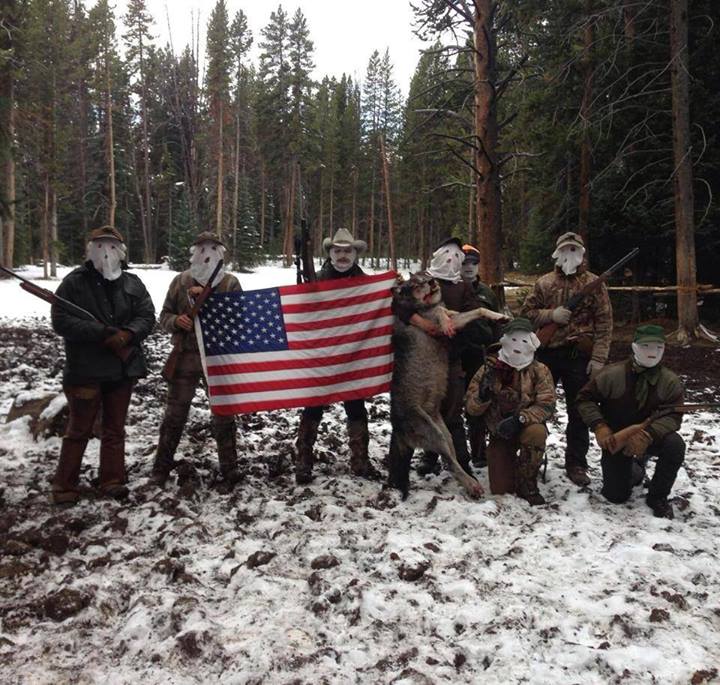
[Note: The identities of these wolf-hating villains behind the masks are said to be, from left to right: Former Secretary of the Interior, Ken Salazar, Int. Sec. Sally Jewell, Pres. Barack Obama, Former Pres. G.W. Bush, along with his squad of goons, and Dick Cheney, who tagged along hoping to chalk up another hunting accident.]

1384140_564330240283396_857016214_n

Article by Camilla Fox, Project Coyote

By the time this blog goes live this photo will probably have been pulled from Facebook. The photo, titled “Wyoming is FED up,” is posted on the FB page, Sportsmen Against Wolves.

As of October 26th the photo had 563 likes and 307 shares, after being posted for less than three days. The posted public comments are disturbing:

“Love this!!!!! I fully understand the masks, yer not idiots like those daring you to show yer faces!!!! Keep on killing guys”

“Smoke a pack a day”

“Kill everyone you see boys!”

What is perhaps most disquieting about the photograph is the vigilante feel that echoes a lynch mob — dehumanize, vilify, and murder. Wolves are now reviled and persecuted in a land where they once roamed wild and free prior to European colonization.

While the U.S. Fish and Wildlife Service proposes to remove federal protections for gray wolves through most of their historic range in the lower 48 States, blatant hostility toward wolves, coyotes, bears and other native carnivores has intensified. Like the photo above, the vilification of predators has taken on a new hue: one associated with righteous patriotism. But all true Americans should be concerned about this tenor of violence and hatred toward other living beings. What lessons are we teaching young people when we show such blatant disrespect and denigration of wildlife?…when “we” proudly post photos of men with their bloodied victims on Facebook and Twitter? (see this video posted on Facebook of a reported wolf being shot in Idaho — warning: graphic) and when our own federal government condones this violence and wanton animal abuse in its lethal predator control programs?

Anti-wolf hatred fueled a 2011 Congressional rider that removed federal protections for wolves in the Northern Rockies and Great Lakes thereby turning management over to the states in these regions. The result: In just seven days of this year’s wolf hunt in Wisconsin, 97 wolves were killed — about twice the pace at which wolves were killed last year, the state’s inaugural and very controversial wolf-hunt season. The Wisconsin Department of Natural Resources estimates the total state wolf population to be around 800 — and would like trappers and hunters to reduce the population to 350 — a number scientists say is not sustainable.

At least 1,321 wolves have been killed by trophy hunters and commercial and recreational trappers in Wyoming, Montana, and Idaho alone. Montana sold over 6,000 wolf-hunting licenses this season; each license — $19 for state residents — allows a person to kill up to five wolves. The current wolf population in Montana is estimated at 625. Wolf watching generates approximately $30 million annually to the towns around Yellowstone; the cost to reintroduce and recover wolves into the Northern Rockies was estimated to be more than $150 million. What is the value of a wolf alive — over the course of his or her lifetime — compared to one-shot dead for a $19 wolf-hunting license? Ethics of recreational killing of wolves aside, economics does not justify this insanity.

Members of Congress, predator friendly ranchers, respected scientists have spoken out publicly against the U.S. Fish and Wildlife Service’s proposal to remove federal protections for wolves arguing that delisting is premature and is not scientifically sound. The Service has extended the public comment period regarding their proposal to delist wolves from the ESA and has rescheduled public hearings. If you want to see wolves in the wild please click here, take action, and make your voice heard. Then share this blog post with others. The Service will accept comments through December 17th. Check out Project Coyote’s homepage and Facebook page for more updates.

Follow Camilla Fox on Twitter: http://www.twitter.com/projectcoyote

“Sportsmen” Against Wolves: “Wyoming is fed up”

(Or did they mean to say, “overfed”?) Who do these people remind you of? (Hint: 3 letters, starting with K and ending with K.) Look at them hiding behind their Halloween masks. Sorry kids, we’re all out of candy; time to grow up. Note to wolf lovers: before you put a bead on the next childish bully wearing a white sheet over his face, you might want to wait until after the children’s holiday promoting that kind of thing is over. https://www.facebook.com/photo.php?fbid=564330240283396

1384140_564330240283396_857016214_n

‘Wolf’ shot by Lolo resident was a dog hybrid

Wolf-dog hybrid shot

2013-10-24 missoulian.com

3 hours ago  •  By Rob Chaney

LOLO – What appeared to be a white wolf threatening a Lolo resident’s horses on Sunday was really something else.

“It turned out to be a wolf-dog hybrid,” Montana Fish, Wildlife and Parks wolf biologist Liz Bradley said on Wednesday. “It looked very wolfy, but it was neutered.”

The landowner shot and killed the dog after seeing it eyeing his horses Sunday morning. Bradley said she also got reports from a resident in Florence of a similar animal chasing her house cat up a tree.

“It’s a concern if somebody is releasing hybrids in the area,” she said. “Sometimes they can be more troublesome than wolves. They come a lot closer to people and can be dangerous.”

Bradley said she hadn’t had any other wolf incidents reported near homes in the Missoula or Bitterroot valleys this fall.

However, hunters have killed 12 wolves in FWP Region 2 since the 2013 season started on Sept. 15. The kills have been in the Bitterroot, lower Clark Fork River drainage and in the Blackfoot River drainage.

Statewide, hunters have taken 36 wolves this season. That number should grow rapidly when general big-game season opens Saturday.

In past seasons, most wolves have been shot by deer and elk hunters who encounter them by chance. Wolf hunting in Montana requires a $19, over-the-counter license.

FWP updates wolf hunting results online daily at fwp.mt.gov/hunting/planahunt/huntingGuides/wolf.

_________________

[I don’t normally peruse the comments section in newspaper articles like this (my stomach is queasy enough already lately). This kind of comment is the reason why]:

onetwopunch – 4 hours ago As a hunter and an anti wolf advocate [hmm, he comes right out and admits it] I am pleased to see that even the hybrids are being shot here. I don’t own a ranch but my elk [what makes them “his” elk?] are suffering and it makes it really hard for us hunters to sell out of state hunters Montana elk when the dang wolfs [by “wolfs,” I assume he means “wolves”] are eating them up!! outfitting is one of the most important industries in Montana and we don’t need stupid wolfs killing off our children and our elk. Get with it Missoula and join us in eradicating these vermin! At $2000.00 per elf [by “elf;” I assume he meant “elk”;)] we cannot afford to lose any to predators.

110 Wolves Have Been Killed After Day 8 Of Hunting Season

http://news.wpr.org/post/110-wolves-have-been-killed-after-day-8-hunting-season

By

The Department of Natural Resources says that as of Wednesday morning, 110 wolves have been killed in the wolf hunting and trapping season.

The season just started last week. Last year, 117 wolves were killed during the entire two month season. DNR official Tom Hauge says the faster pace of this year’s harvest remains a bit of a mystery.

“We really don’t have any good ideas as to why that is,” says Hauge. “But the trappers are out in large numbers this year and are having some good success.”

Most of the 110 wolves killed this year, were first caught in traps. Two people concerned about the possibility of using dogs to hunt wolves testified before the DNR Board today. Dogs are banned from the wolf hunt until December 2.

A wolf-hunting zone in far northeastern Wisconsin closed earlier this afternoon.

Red Wolves (and Coyotes) Under the Gun!

There are only about 100 left – and if drastic measures aren’t taken soon, the critically endangered red wolf could once again be pushed to extinction in the wild by coyote hunters in North Carolina.

Last week, Defenders of Wildlife and other conservation groups officially filed suit in federal court to halt uncontrolled hunting of coyotes in the red wolves’ North Carolina habitat. In the past year, hunters have killed at least 10 red wolves – that’s 10 percent of the remaining wild population of these remarkable creatures.

North Carolina’s red wolves are the last remaining wild population on earth. These animals were extinct in the wild as recently as 1980 due to intensive predator control and loss of habitat. A concerted reintroduction program has raised the wild population of these animals to roughly 100, all confined to a small area in the eastern part of the state.

Red wolves are almost indistinguishable from coyotes in daylight,Red-wolf-and-pups-240x300 and at night they are virtually impossible to tell apart. In spite of this, the state has authorized almost unlimited hunting for coyotes in red wolf habitat. Unless the hunting is stopped, red wolves are in serious danger of once again disappearing from the wild.

[Just thinking out loud here, but how about, while we’re at it, halting the uncontrolled hunting of coyotes throughout the country; Isn’t it time we all learn to live with them?]

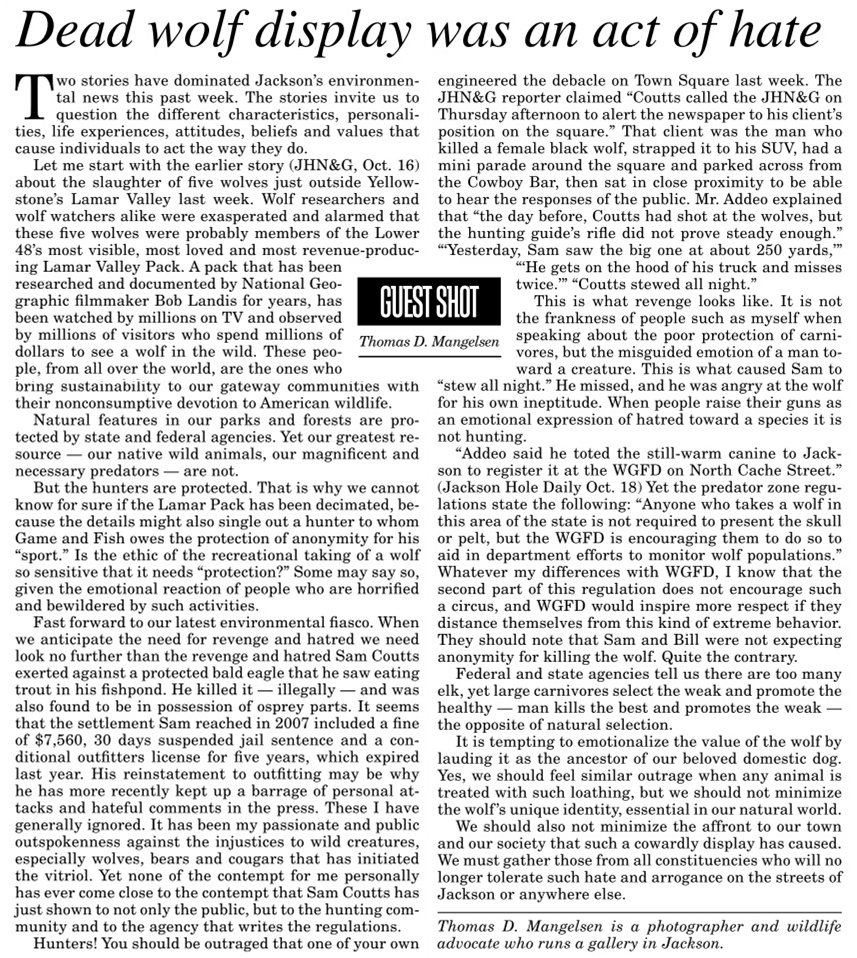
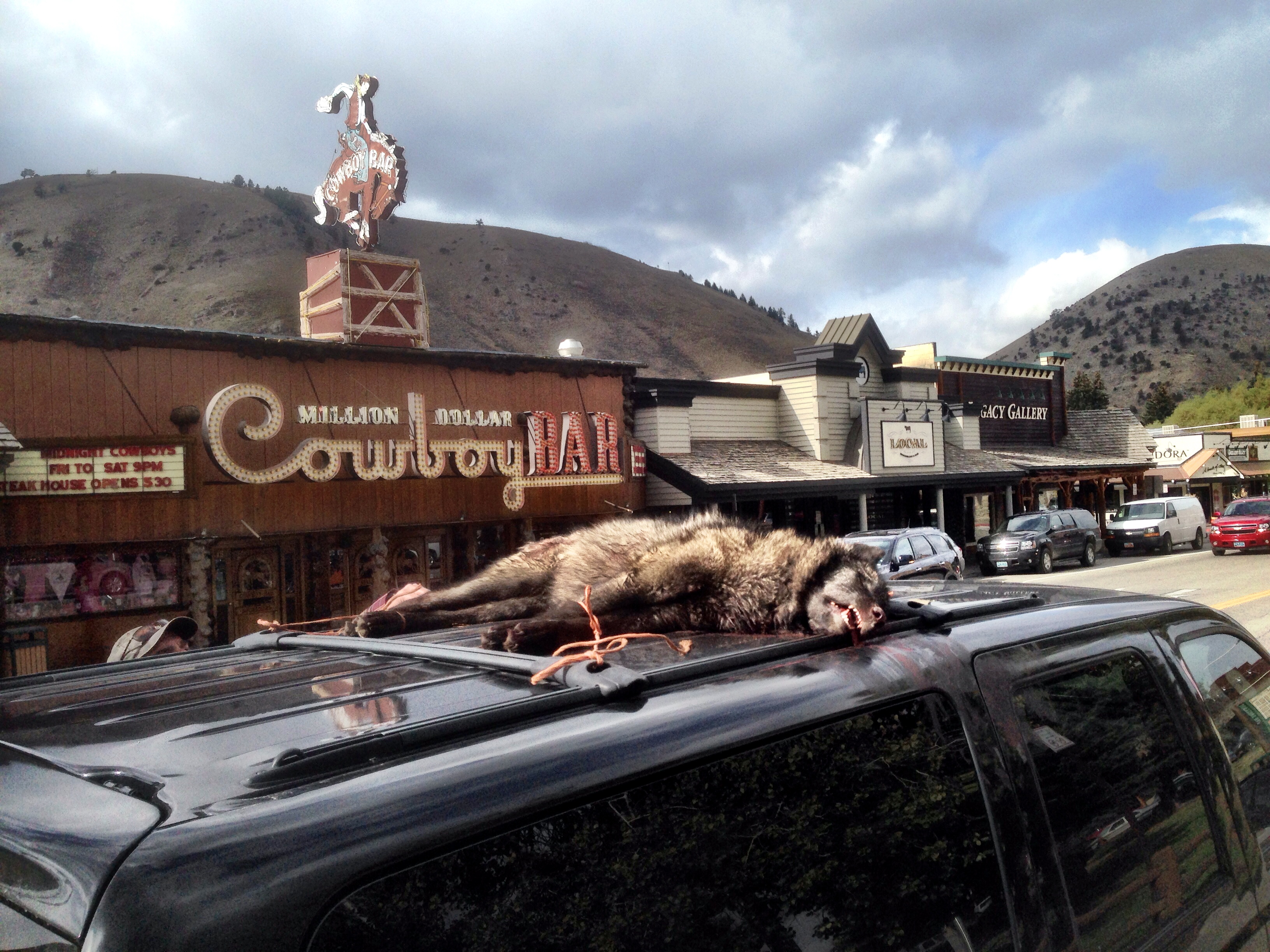
A-Hole Hunter Parks With Wolf on Roof in J-Hole

[One of the first wolves I ever saw in the lower 48 was in the Grant Tetons, near Jackson Hole, long before wolf hunting was allowed. Now, any ya-hoo a-hole who wants to can kill as many wolves as they want, any time they want—across 85% of Wyoming.

Note: Yellowstone and Grand Teton National Parks take up nearly 15% of the cowboy state.]

By Mike Koshmrl, Jackson Hole, Wyoming
Date: October 18, 2013

Bill Addeo swears he didn’t park an SUV with a dead wolf strapped to the roof on the Town Square just for the attention.

Addeo  sat on a bench next to his Ford Excursion across the street from the  Cowboy bar Thursday afternoon, eager to answer questions posed by folks  passing by.

“It’s a neck shot,” Addeo said. “The bottom of the  neck is blown apart and there’s blood everywhere, so I didn’t want to  put him in the back.”

The Hoback Junction resident killed the wolf, a black 85-pound female, that morning while elk hunting near Bondurant.

Addeo  said he toted the still-warm canine to Jackson to register it at the  Wyoming Game and Fish office on North Cache Street. He parked it on the  Town Square, he said, while his wife was shopping.

At the time Addeo shot the wolf, she and four packmates were sitting around “satiated” after having eaten an antelope, he said.

“We saw them from about one mile away,” Addeo said. “Then we crawled to 375 yards.”

His  guide, Sammy L. Coutts, had forgotten shooting sticks to rest a rifle  on for a shot, so the duo needed to improvise, Addeo said.

“He kneeled down and I put it right on his shoulder,” Addeo said. “It blew the hat right off his head.”

Coutts  called the Jackson Hole News&Guide on Thursday afternoon to alert  the newspaper to his client’s position on the Square.

The day before, Coutts had a shot at the wolves, Addeo said, but the hunting guide’s rifle didn’t prove steady enough.

“Yesterday, Sam saw the big one at about 250 yards,” Addeo said. “He gets on the hood of his truck and misses twice.”

Coutts stewed all night.

Back on the Square, almost everybody passing by stopped for a look. Most snapped photos.

Despite the interest, nobody gave Addeo flak for putting his wolf on display.

“There hasn’t been one person that’s said anything negative,” he said. “Everybody’s happy.”

Because  Addeo was hunting in Wyoming’s wolf predator zone, where there are  virtually no rules, a license was not necessary. The free-fire zone  encompasses about 85 percent of the state. The southern edge of the zone  starts in Wilson, just south of Highway 22, for about half the year.

Addeo could have shot all five wolves if he had the opportunity. The other four packmates, however, scampered off.

“After the shot went off,” Addeo said, “we ran the draw and never saw them again.”

Wolf_kill_on_vehicle_1

Wisconsin is Too Open to Hunting With Dogs

[First, I have a couple of pet peeves to air: 1) I’m getting real tired of all the articles these days that start out as a question when the author and readers clearly know the answer. Like this one: “Is the state too open to hunting with dogs?” This isn’t a question, it’s a statement! Why not just come right out and say, “The State is Too Open to Hunting With Dogs.” We all know it is, so I took the liberty in change the title to reflect the answer.

2) Another thing that gets extremely old are articles that start out something like, So and So, an expert on animal behavior, is not against hunting and even raises lamb for food…” as though So and So’s concessions to cruelty make them more credible. Okay, that’s all I have to say; enjoy the article.]

Bill Lueders: Is state too open to hunting with dogs? copyrighted Hayden wolf in lodgepoles

October 18, 2013 12:30 am  •  By Bill Lueders

Patricia McConnell, an expert on animal behavior, is not against hunting and even raises lamb for food. But the University of Wisconsin-Madison zoologist and author is appalled by what she regards as blatant cruelty to animals sanctioned and abetted by the state.

“I’m sure most people don’t know this goes on in Wisconsin,” McConnell says. “I think most people would be horrified.”

McConnell is referring to the use of dogs to hunt other animals, like bear, with often deadly consequences. Joe Bodewes, a Minocqua-based veterinarian, described the damage to dogs by bear in a recent letter to the Wisconsin State Journal.

“Broken and crushed legs, sliced-open abdomens and punctured lungs,” he wrote. “Dogs lying mangled and dying on the surgery table — all in the pursuit of sport.”

Bodewes, in an interview, says his small clinic treats about a dozen dogs a year mauled by bears while hunting. Usually two to four die. Recent cases include a dog whose jaw “was snapped off below the eyes” and one whose back muscles were “ripped loose from its spine.” Both survived.

Now Wisconsin is about to become the only state to let dogs be used in wolf hunts. A judge’s injunction blocking the use of dogs in last year’s inaugural hunt has been lifted; the case is now before a state appeals court. This year’s hunt, with a kill goal of 275 wolves, began Tuesday. Dogs can be used beginning Dec. 2.

McConnell and others warn of inevitable violent clashes. And with good reason.

According to the state Department of Natural Resources, wolves have killed 23 hounds so far this year, tying a 2006 record. All were being used to hunt or pursue bear, says DNR wildlife damage specialist Brad Koele.

Their owners can receive up to $2,500 per animal from the state. Many have already applied.

“People who choose to put their dogs at extreme risk of horrific injury are compensated,” McConnell says. “Some of these dogs die painful deaths, in a blood sport that it some cases is no better than organized dog fights.”

A recent study found that Wisconsin has a higher dog casualty rate than Michigan, which also allows their use in bear hunts. The lead author, a Michigan Tech wildlife ecologist, speculated that Wisconsin’s compensation program creates “an incentive for abuse” — that is, hunters who deliberately put their dogs at great risk.

Since 1985, a DNR tally shows, the state has spent $441,651 to reimburse hunters for hounds killed by wolves, usually while hunting or pursuing bear. Until last year these payments, and more than

$1 million paid for wolf depredations of other animals, came in part from the state’s Endangered Resources Fund.

Now these payments come from application and license fees paid by prospective wolf hunters. Last year, Koele confirms, none of these fees went for wolf population monitoring or hunt management costs.

McConnell and Bodewes trace the state’s policies back to small but politically powerful advocacy groups. These prominently include the Wisconsin Bear Hunters Association, the state chapter of Safari Club International and United Sportsmen of Wisconsin.

These three groups collectively spent nearly $400,000 since 2004 lobbying state officials, including their support for the wolf hunt law. Group officials did not respond to interview requests.

Former Republican state Rep. Scott Suder, the wolf hunt bill’s lead Assembly sponsor, helped United Sportsmen snare a $500,000 state grant, which Gov. Scott Walker yanked after concerns were raised about the group’s fitness and honesty. Suder ending up leaving a lucrative state appointment to become a lobbyist.

The owners of dogs killed by wolves while hunting wolves are not eligible for compensation. While McConnell is glad state funds won’t go to this purpose, she notes that hunters have “no motivation to report” dogs killed or injured.

A DNR official says the agency may try to gather information about dog casualties in its post-hunting-season questionnaire.

Bill Lueders is the Money and Politics Project director at the Wisconsin Center for Investigative Journalism.

Wolf watchers want IDs of dead animals near park

http://www.jhnewsandguide.com/article.php?art_id=10393

State laws keeps data about legally killed wolves secret.

By Mike Koshmrl, Jackson Hole, Wyo.

October 16, 2013

Hunters have reported killing five wolves in a Wyoming hunt area that abuts Yellowstone National Park’s Lamar Valley, raising fears a park pack has been crippled.

Wolf watchers in the Lamar Valley — perhaps the most famous place on Earth to spot a Canis lupus in the wild — fear the worst: that the animals killed were members of the Lamar Canyon Pack. It had 11 members at the end of last year.

One wolf advocate says he sought the identity of the wolves killed in area two from the Wyoming Game and Fish Department but didn’t get any answers.

“They’re hiding behind their statute that says they can only release so much information, which is a bogus excuse,” said Marc Cooke, president of Wolves of the Rockies. “They might as well face the reality that there’s a good possibility that wolves killed were from Yellowstone.”

It’s impossible to say if one or more of the five wolves killed over a span of three days last week were Lamar Canyon Pack wolves, Wyoming Game and Fish Department officials said.

“There’s no way to know, we just don’t have that information,” Game and Fish spokesman Alan Dubberley said.

Because none of the animals killed wore radio collars, pinpointing their pack identity is impossible, Dubberley said. It’s also illegal to say precisely where the five wolves in hunt area two, located northeast of Cody, were killed, he said.

The wolves, all killed between Thursday and Sunday, included two males and three females, the spokesman said.

The weekend’s harvest pushed area two one over its 2013 hunt quota of four wolves. Last year, eight wolves were allowed to be killed in area two. Statewide the quota has also been slashed in half — from 52 to 26.

An estimated 277 wolves inhabited Wyoming, including Yellowstone and the Wind River Reservation, at the end of 2012. That’s nearly double the 150 wolves required by the U.S. Fish and Wildlife Service, which removed federal protections from the predators last year.

Dave Hallac, Yellowstone’s Center for Resources chief, said that he heard word of the wolf harvests near the park boundary from Game and Fish on Monday.

“They simply let us know there is a reasonable possibility those wolves could be from the Lamar Canyon Pack,” Hallac said. The Lamar Canyon Pack, which contains no radio collared animals, had been documented recently outside of the park, he said.

Game and Fish officials said they were unaware of the communication with Yellowstone.

In fall 2012 Wyoming’s Lamar Canyon Pack attracted international attention when wolf 832F, the pack’s world-famous alpha female, was killed by a hunter during Wyoming’s inaugural regulated hunt. That fall the pack fractured, with some animals returning to Yellowstone and some joining the Hoodoo Pack, which also roams Wyoming wolf hunt area two.

By the time hunting seasons closed, 12 Yellowstone National Park wolves had been legally killed in Wyoming, Idaho and Montana.

Natural deaths, run-ins with humans and hunting combined to cut Yellowstone’s wolf numbers by about a quarter.

Wildlife safari guide Howard Goldstein said his business took a hit this summer because the Lamar wolves were harder to find and more wary.

“We get a lot of people who come specifically to see wolves,” said Goldstein, who operates out of Jackson. “Those people are buying guides, buying binoculars, getting hotels.

“They’re generating a tremendous amount of income for communities around Yellowstone,” he said.

Goldstein, like Cooke, lamented not knowing the identities of the wolves killed over the weekend.

“We don’t know if it’s the Lamar Canyon Pack or the Hoodoo Pack, because the state won’t tell us anything,” Goldstein said.

Goldstein called for the state to be more open with the wolf watching community.

“I can understand not giving us the names, addresses and the phone numbers of the hunters who killed the wolves,” Goldstein said, “but to literally give us no information other than the number of wolves killed and the district they were killed in is not OK.”

Wyoming state law restricts what Game and Fish officials can say about any wolf that’s been legally killed.

Details such as age, coloration, breeding status and location are to be kept secret. This fall the state began sharing the sex of animals killed. The statute was established to protect the wolf hunters’ identities.

The law states: “Any information regarding the number or nature of wolves legally taken within the state of Wyoming shall only be released in its aggregate form and no information of a private or confidential nature shall be released without the written consent of the person to whom the information may refer. Information identifying any person legally taking a wolf within this state is solely for the use of the department or appropriate law enforcement offices and is not a public record.”

Game and Fish officials are forward about the restrictive nature of the statute in terms of information dissemination.

“We’re under pretty strict regulations about what we can and can’t say,” Game and Fish large carnivore manager Dan Thompson said.

Pack affiliation for the wolves recently killed in area two will be included in the 2013 gray wolf annual report. The 2012 annual report was released this April, three months after the hunt ended.

Cooke said he wasn’t pleased to have a lengthy wait ahead to find out whether or not the wolves were Lamar Canyon pack animals.

He called for Montana and Wyoming to cut back on already-reduced quotas in hunt areas near Yellowstone’s boundaries.

“Hunters have the whole state to operate in if they want to go kill wolves,” the Wolves of the Rockies president said.

“Wildlife watchers don’t have that luxury,” Cooke said. “We need to give them that luxury.”

copyrighted Hayden wolf walking