Temperatures expected to be 20F to 30F above average for this time of year, breaking records and raising health fears
New Yorkers in the heat at Coney Island last year. Temperatures this weekend are expected to break or tie about 130 records.Photograph: Spencer Platt/Getty Images
Dozens of states across the US are bracing for historically high spring temperatures this weekend, as a scorching heatwave moves east.
The early onslaught of sweltering weather, before what’s expected to be another hot, dry summer, is forecast to break or tie roughly 130 heat records for this time of year, with temperatures between20F and 30F above averagein the mid-Atlantic and north-east.
More than 120 million Americans are expected to be affected by the punishing heat, raising fears of health risks for the most vulnerable, outdoor workers and those who do not have access…
Donald Trump Jr. bagged a bear on a hunting trip to Utah back in 2018, but if the state’s department of natural resources’ allegations are true the scales were tipped illegally in his favor.
And now the hunting guide who took him on that trip, Wade Lemon, is reportedly facing felony charges for baiting the bear.According to The Salt Lake Tribune,Lemon is now facing five years in state prison for using “a pile of grain, oil, and pastries” to bait the animal.
President Joe Biden said Sunday the new monkeypox outbreak should concern “everybody,” as it continues to baffle medical officials around the world.
“Everybody should be concerned about [it],”Biden said in South Korea, while speaking with a group of reporters before he boarded Air Force One for Japan, Reuters reported.
The president’s remarks come as numerous outbreaks of monkeypox were reported in Africa, followed byother reported cases in Europeand the U.S.
“We’re working on it, hard to figure out what we do,” added Biden.
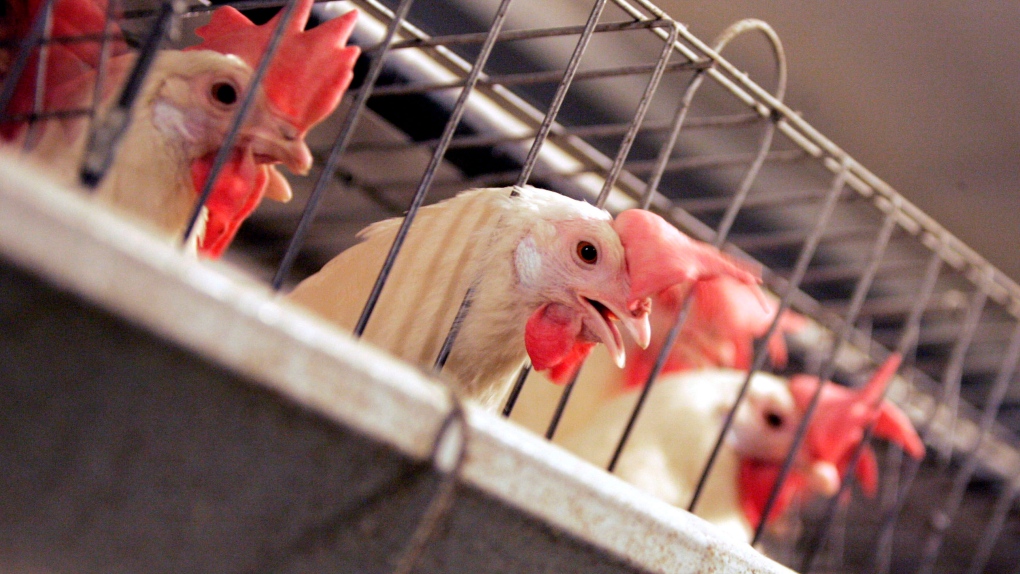
Avian flu has been found in a commercial flock in the Fraser Valley, the same area where 80 per cent of British Columbia’s poultry farms are located.
B.C.’s Ministry of Agriculture says in a statement the infected farm has been placed under quarantine by the Canadian Food Inspection Agency and producers within a 10-kilometre radius have been sent notices about the discovery.
Previous outbreaks in the Fraser Valley have prompted culls of millions of birds, although poultry groups now say they have tight control measures to prevent the spread from one farm to the next.
The inspection agency’s website says the H5N1 virus has been found in several wild birds and nine flocks across the province, starting at a commercial farm in the North Okanagan on April 13.
Alberta is the latest Canadian province to have found avian influenza, or bird flu, in another species.
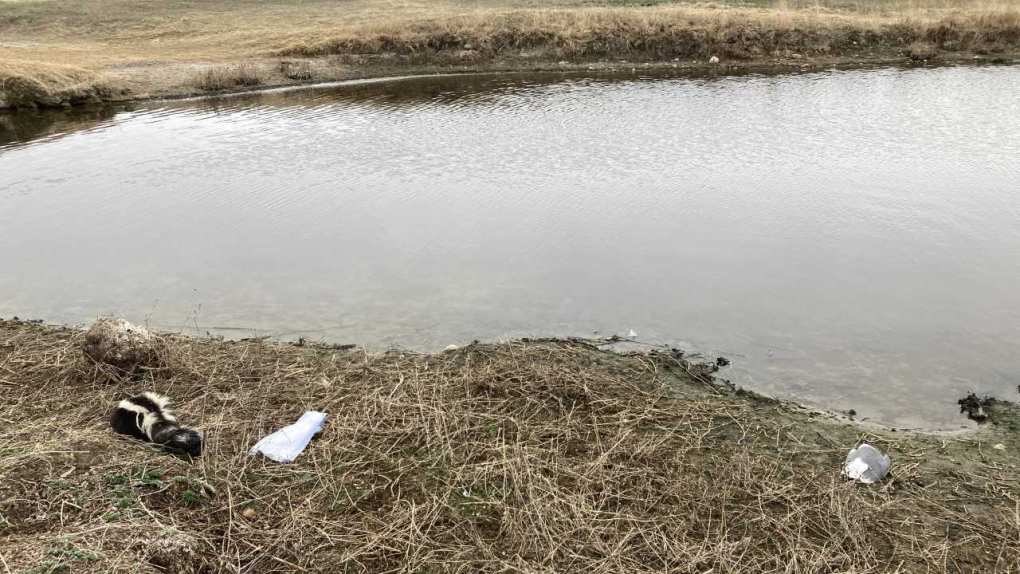
Cases of bird flu have been confirmed in skunks in the Vegreville-Wainwright-Lloydminster area in east-central Alberta, according to the province’s wildlife disease specialist.
“[Avian influenza] was brought into the province in early April in migrating waterfowl, primarily the geese. As a number of geese died, we started getting reports about a number of dead skunks,” Dr. Margo Pybus told CTV News Edmonton.
The skunks tested negative for rabies and positive for bird flu.
Ontario, Manitoba and Saskatchewan have all confirmed avian flu cases in foxes, according to Pybus’ sources.
Dead skunks found in east-central Alberta tested positive for avian influenza. (Source: Dr. Margo Pybus).
She called the recent virus strain – which first showed up in Atlantic Canada in late 2021 – “hotter than usual.”
“This is the first time we’ve seen mortality in wild birds, and it’s also the first time we’ve seen mortality in mammals that are eating the wild birds.”
HEAD TILT, SPINNING ARE OBVIOUS SIGNS
Some affected wild birds have turned up at the Strathcona Raptor Shelter, which is run by the Alberta Society for Injured Birds of Prey east of Edmonton.
Roseanna Gullekson, assistant director of the shelter, said it had never been brought a bird flu case before this year.
But since mid-April, the shelter has received seven birds which all displayed the same disconcerting signs of avian influenza: balance issues, spinning, and – the “dead giveaway” – a tilted head.
“The tricky thing is we can’t test them until they’re dead to confirm whether or not it’s bird flu,” Gullekson said.
“Anything that comes in with [central nervous system] issues comes in with a story. The red tail hawk that came in first was hit by two cars. So, right off the bat, you know, maybe that’s what’s causing the head tilt or the balance issues – concussion, right? It’s not strange for that. But the spinning in circles is.”
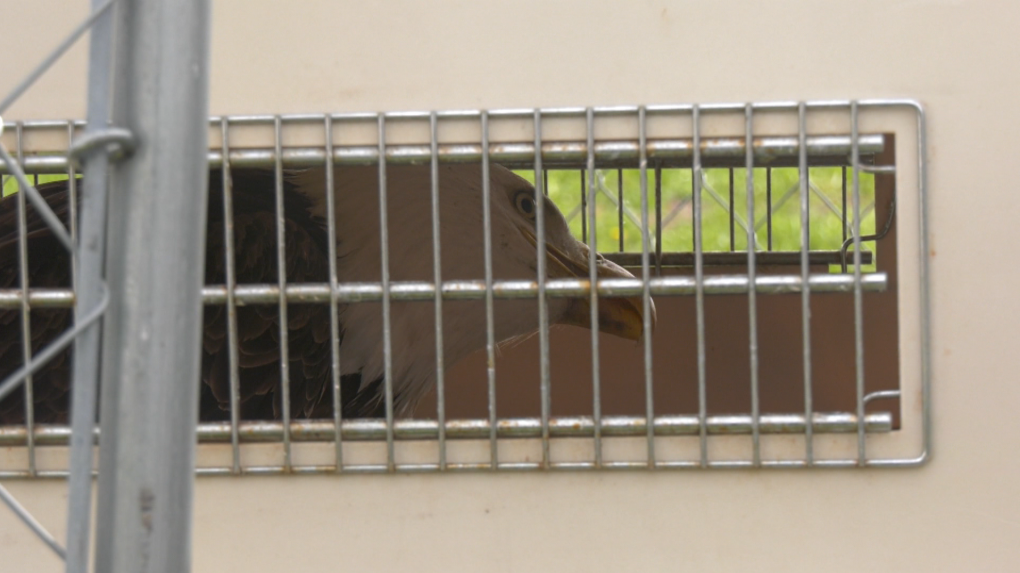
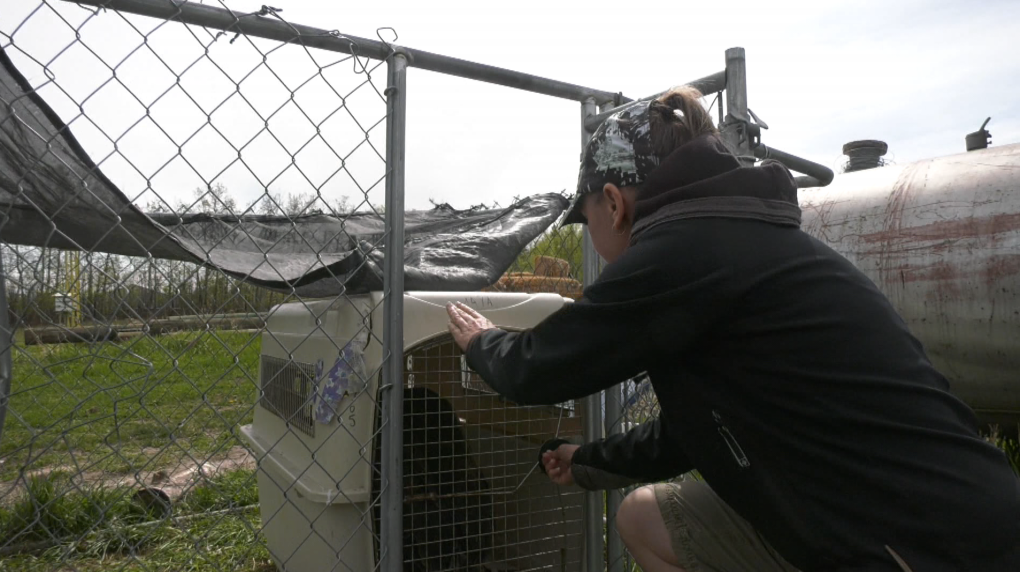
On Wednesday, she was caring for a mature bald eagle that was believed to be sick with bird flu. A vet found no signs of trauma. However, its head was almost constantly swivelled, sometimes completely upside down.
There is little recourse if it does have bird flu, so the shelter is keeping him in an animal crate with the hope that the forced rest enables him to recover.
“It’s hard to know whether it feels safe, you know,” Gullekson said before shrugging. “No predators are going to eat him, free food, breakfast in bed, basically. It could be worse.”
The eagle, unlike all of the other probable avian influenza cases the shelter has taken in, had been showing signs of improvement. The mortality rate for avian influenza in raptors is 95 per cent.
“It’s pretty bad,” Gullekson said.
OUTBREAK BELIEVED TO BE ON DECLINE
Since April 3, Alberta has found 86 probable cases of avian influenza. Most cases have been found in Canadian geese, red-tailed hawks, and great horned owls.
The most severe kind of avian influenza can only be confirmed by the national lab. As of Thursday, the Canadian Food Inspection Agency was tracking 28 “infected premises” in Alberta where either commercial or small flocks (both poultry and other kinds of birds) were sick with highly pathogenic avian influenza (HPAI).
While some strains have the potential to be passed to humans, the Alberta government says there is very low risk to human health and food safety.
Alberta’s outbreak is also believed to be on the decline.
“In other places that have already had their outbreaks, when the geese moved off, then the avian influenza seemed to disappear,” Pybus told CTV News Edmonton. “Certainly the numbers of dead birds and dead skunks in Alberta has tailed off a little bit in just the last seven to 10 days, so we’re thinking that it is on the downward side.”
But, she noted, since this is a new version of avian influenza, it’s not known what will happen in the fall, when outbreaks are atypical.
“Mother Nature’s going to tell us what’s going to happen.”
While there is low risk to humans, anyone who is handling a dead bird is advised to wear gloves, if handling the animal is unavoidable.
Both Pybus and Gullekson said cleaning up infected carcasses to prevent other animals from eating them is the best course of action.
Agriculture producers are advised to be aware of the early clinical signs, and prevent contact between wild animals and domestic flocks.
Runstadler is one of the authors of a new study,published today in the journalPLOS Pathogens,which takes a data-driven lookat influenza viruses circulating among different groups of birds and characterizes which types of birds are involved in spreading the virus. The timing of this paper is impeccable, as ahighly pathogenicstrain of bird fluhas been spreading across North America.
This lineage of bird flu originated around 1996 and was first…
Dead birds have been found along the Trans-Canada Highway
Fiona Odlum · CBC News · Posted: May 20, 2022 5:36 PM CT | Last Updated: May 20
Snow geese pass through central Saskatchewan on their annual migration from Texas to the North. (Maryse Zeidler/CBC)
Jen Gibson is a self-proclaimed bird geek who always looks forward to seeing snow geese in the spring.
But this year when the birds passed by her property near Grand Coulee, about 20 kilometres west of Regina, she noticed that something was wrong.
“I have never seen this number of dead birds,” said Gibson, who has lived in the area for almost 15 years.
It’s not an isolated problem. In Saskatchewan and across the country, snow geese have been hit hard by an avian flu that is killing them.
Dead snow geese have been found along the Trans-Canada highway between Regina and Moose Jaw. (Fiona Odlum/CBC)
Since early December, a highly contagious form of avian flu has been ravaging migrating birds in Canada, said Iga Stasiak, a wildlife health specialist with the government of Saskatchewan.
“This is the first outbreak in Saskatchewan since 2017,” Stasiak said, adding this particular strain of avian flu, H5N1, has been very aggressive.
“It has caused more significant mortality, and we’ve seen a much broader breadth of species impacted than we have with previous strains.
Bird reports
“Since late March the province has received over 300 reports of ill birds or mortality,” she said, adding there are 100 presumptive positive cases awaiting confirmation.
The birds usually die within a week of getting infected. Avian flu is generally associated with a respiratory virus, but this strain is “affecting multiple organ systems, including the liver, the kidneys, the pancreas and the nervous system, including the brain,” Stasiak said. They have noted neurological symptoms in the birds, including tremors and jerking movements.
The public is being asked to report any sightings of sick or dead birds. (Richard Agecoutay/ CBC)
The majority of cases have been concentrated in the south-central zone of the province, with the bulk of the infected birds being found in communities, such as Grand Coulee, along the Trans-Canada between Regina and Moose Jaw.
“In that region, the birds are stopping over along their migration routes and that’s where you’re seeing the very large flocks of birds,” Stasiak said. Some sick birds have been reported as far north as Nipawin, 360 kilometres north of Regina.
Snow geese migrate annually from Texas.
“[They] pass through the southern United States and then they fly up all the way up into the Arctic to their nesting grounds,” making the infection rate widespread, Stasiak said.
She said most of the snow geese have made it to the north now and people are probably seeing dead birds because the snow has melted.
That’s when Gibson really started to notice the problem.
She said the migratory season started just like any other year.
“They settled in the field and everything seemed fine. And then when they left and the snow started to melt, it became clear that there was some that didn’t make it. I would say at least a dozen, if not more.”
Fields of birds
At first she thought the deaths were due to in-flight collisions, but after some research she discovered they had most likely died from avian flu.
“I was heartbroken to see them so affected by avian flu,” Gibson said.
Her property wasn’t the only one with dead birds dotting the fields. It was clear the issue was widespread through the community.
Jen Gibson said she was heartbroken to see so many birds killed by the avian flu. (Fiona Odlum/CBC)
“You could see them off the highway,” she said. “You could see them around Grand Coulee. And then, you know, once they left, you could see that there were some that didn’t make it.”
Stasiak said the avian flu was first detected on the East Coast. It’s believed to have spread across the Atlantic seaboard into the Midwestern states and then north with the birds in the spring migration. This has meant widespread infection across the Prairies and west to British Columbia.
“We’re seeing similar reports of mortality across the country,” she said.
There have been reports of avian flu spreading to other species. (Elaine Thompson/Associated Press)
Snow geese are an abundant species and “it still seems to be a relatively low proportion of the population that’s been impacted,” Stasiak said.
Spreading to other species
Initially, Stasiak’s reports showed the virus was only impacting snow geese and Ross’s geese, but it has spread to other species.
“We are also getting quite a few reports in raptor species. So hawks, eagles, great horned owls, also scavenging birds, so crows, ravens and magpies.” She suspects these birds are likely feeding on infected waterfowl carcasses and getting infected.
While no cases have been reported of scavenger mammals being infected with the virus yet in Saskatchewan, Stasiak urged property owners to remove any dead birds that could be consumed by family pets.
She recommended wearing a mask and gloves and using a plastic bag to pick up the bird, then double-bagging it before disposing of it.
One dead bird can go in household waste, but if there are more they need to go to an approved landfill, Stasiak said.
But as a rule, she recommended leaving the birds where they are and letting them decompose naturally.
Tracking diseased birds
Stasiak said the province is relying on members of the public to report any birds that are exhibiting unusual behaviour or that appear to be sick.
While they can’t help infected birds, the department wants to know where they are, because “this will be vital in understanding the extent of the virus and its impacts.”
Officials are also trying to learn “if there are birds out there that are carriers or not showing any clinical symptoms.”
Sick and dead bird sightings can be made through the provincial inquiry line, the Canadian Wildlife Health Cooperative, the Wildlife Health Tracker app, or by calling the wildlife emergency hotline on 1-800-567-2033.
A new study is shedding light on Asian elephant behavior, and the scientists behind the study used an unconventional method to collect the data. (AP Photo/Anjum Naveed)
BENGALURU, India (WKRC) – A new study is shedding light on Asian elephant behavior, and the scientists behind the study used an unconventional method to collect the data.
YouTube videos may not be the first thing that comes to mind when you think about research tools, but scientists at the Centre for Ecological Sciences at the Indian Institute of Science say it helped them learn more about a rare behavior in these elephants: how they respond to the death of a species member, also known as thanatological responses. The study was published Wednesday in Royal Society Open Science.
It’s rare to witness how animals respond to death in the wild; researchers have to be in the right place at the right time, many times. But YouTube videos were able to give these researchers a window into the animal kingdom they normally wouldn’t have.
Researchers started by searching YouTube for phrases and keywords like:
Calf elephant death
Death of elephants
Elephant death
Elephant reactions to death
Elephant responding to death
The scientists found 58 videos matching the keywords. In 39 of those, they were able to observe 24 thanatological responses. The most recurring responses included guarding, postural changes, keeping vigil, touching and investigating the body, vocalizations and epimeletic reactions, which means the elephants tried to support, lift or pull the body.
The carrying of a dead calf by a female elephant was also observed, and the female was often accompanied by another member of the herd. In one video, a female elephant acted aggressively toward a young elephant trying to approach the calf’s body. According to the study, that behavior could be out of grief, saying it “may indicate either lack of understanding of death cues and hence perceiving it as an unresponsive calf, or perhaps might imply a ‘grief-like’ response.”
Researchers say this data challenges the notion that only humans understand death. They did note, however: “We cannot exclude the possibility that human presence might have influenced some of the elephants’ reactions. Collectively, these observations indicate that Asian elephants show interest in dying and dead conspecifics and the motivations behind thanatological responses in elephants (as in other species) need to be further explored.”
On Saturday, May 14, Pennsylvania saw its 13th flock infected with the avian flu virus. Officials confirmed that more than 83,000 birds were exposed, and experts believe the overwhelming majority will be culled as a result of the suspected infection.
The state has already lost 3.8 million birds to avian flu over the past three months, prompting calls for emergency assistance. Over the past five months, the H5N1 virus has continued to spread across the United States and around the world, breaking records set by previous strains of the disease.
Since the virus was detected in the U.S. in January of this year, over 37 million captive and wild birds across 34 states and 352 flocks have been exposed to avian flu, according to the U.S. Department of Agriculture’s (USDA) Animal and Plant Health Inspection Service. In the past five weeks alone, the virus has been linked to 128 new outbreaks in 11 other countries, including Bulgaria, Canada, Germany, Hungary, Japan, South Korea, Mexico, Netherlands, Nigeria, Poland, and United Kingdom.
Officials from the World Animal Health Information System of the World Organisation for Animal Health also note that the disease has begun to spread to “unusual hosts” like cats, dogs, tigers, gray seals, harbor seals, red foxes, and raccoons. As a result, scientists are rushing to develop an avian flu vaccine for poultry, which has long been opposed by the public health community who fear the vaccine will give rise to another more deadly virus capable of infecting large portions of the population.
Even if vaccinating poultry was a viable option, it will not prevent mass culling during a global bird flu outbreak. At best, vaccinations may prevent birds from being infected but will not stop the vaccinated birds from spreading the virus undetected.
“Vaccines can help, but are not the golden bullet,” Ron Fouchier, a virologist at Erasmus University Medical Center, tells Science. With the vaccine still in development, France, Canada, and the U.S. have been forced to cull record numbers of birds.
Farmers use a variety of different methods to cull animals, some more humane than others. But during outbreaks of bird flu, investigators say the more humane culling methods are often overlooked.
The USDA’s Animal and Plant Health Inspection Service (APHIS) has approved a number of culling methods for infected or potentially infected birds. The first method is to release mass quantities of foam—such as the foam used to fight fires—over thousands of birds to cut off their air supply. The birds eventually choke to death, as the bubbles from the foam rise above their heads and suffocate them. This method is deemed “efficient” in culling birds housed in industrial operations where thousands of birds, such as turkeys, can be crowded into cramped spaces.
However, as foam cannot rise higher than two to three feet or be used when the weather is cold, this method of culling is unable to efficiently kill chickens who are held in stacked cages and crowded crates within barns. In such cases, USDA recommends that the barns be sealed and carbon dioxide be piped into the enclosure that houses the chicken, thereby culling the birds by cutting off their air supply.
Releasing foam and piping carbon dioxide can be relatively costly and labor-intensive, so when large numbers of birds have to be killed in a timely manner, a method called ventilation shut down (VSD) has become popular. Here, the birds are packed into barns or enclosures and the air supply is shut down, causing the body temperature of the birds to rise to lethal levels.
The VSD method is often supplemented with additional heat or carbon dioxide, which is referred to as VSD+. The birds then die of heatstroke and/or a lack of oxygen. Recent studies sponsored by industrial agriculture and conducted at the University of North Carolina have shown that hens die a slow and painful death 1.5 hours after VSD, while hens exposed to VSD plus additional heat exposure and VSD plus carbon dioxide die after 54 minutes and 11.5 minutes respectively.
VSD, while considered “efficient,” goes against the American Veterinary Medical Association (AMVA) dictum that all approved culling methods be as painless and distress free as possible. Petitions to AMVA to reclassify VSD as “not recommended” filed in 2021 are still under consideration.
For now, VSD and VSD+ continue to be practiced across farms in the U.S. In April 2022, state and local prosecutors in Iowa refused to file criminal charges against Rembrandt Enterprises for suffocating its flock of 5.3 million hens via VSD, noting that the VSD method used was based on the recommendations of the USDA.
Citing the distress the animals undergo during VSD, VSD+, and foam-based killing, these methods are illegal in Europe and the U.K. Gas-based killing methods, where birds are exposed to gasses, either by filling the barns and sheds with carbon dioxide and/or piping in additional gasses such as argon to suffocate them, are preferred.
However, globally, there is no consensus among farmers or scientists as to the most efficient, cost-effective, and humane way to cull large numbers of animals quickly. In manpower-rich countries such as India, human-labor intensive methods of culling, such as wringing the neck of chickens or cervical dislocation are still practiced.
In January 2020, 35,000 ducks were tied up in sacks and burned to death in southern India as part of culling operations. The Animal Welfare Board of India has subsequently opposed the burning of live birds and has instead suggested suffocation with gasses as an alternative method of culling.
Researchers Develop New Technology to Read Pigs’ Emotions
Researchers at the University of Copenhagen are developing an automated emotion recognition tool that they claim can be used to assess pig welfare on farms. Lead researcher Elodie Briefer thinks this technology can be an important tool for determining positive welfare in animals, which looks beyond just the alleviation of suffering to how animals can have more fulfilled lives.
“Animals need to thrive,” says Briefer in an interview with Copenhagen University, “It is not enough that they are in good physical shape or you reduce negative emotions.”
To create the technology, researchers collected previously recorded vocalizations from pigs in past studies. From this data, they selected 7,414 pig calls from some of the more disturbing moments in the pigs’ lives. The data included a 2015 experiment in which piglets were placed on their backs and forcibly held down to record their reactions. In other experiments that were used, piglets were subjected to castrations without anesthesia or pain medications and recorded as they were waiting to be slaughtered, kept in social isolation, or held in small boxes.
Briefer’s team also documented calls associated with positive and negative emotions by placing piglets in completely barren environments and comparing their vocalizations to piglets who were given bedding and toys.
Based on their findings, Briefer claims they can create an automated real-time monitoring system that will let farmers know when their animals are experiencing positive or negative emotions.
Better welfare or humane washing?
Dr. Marc Bekoff, professor emeritus of Ecology and Evolutionary Biology at the University of Colorado and author of The Emotional Lives of Animals, is not convinced that the technology will help improve the animals’ lives. In fact, he says there are already decades of research attesting to the fact that animal welfare in food production systems is poor.
“We’ve had these data for decades,” says Bekoff, “Having a new method to measure emotions doesn’t mean much for the individual animals who are still being killed and eaten.”
Bekoff is concerned that the development of new technologies like Briefer’s won’t foster a better understanding of animal emotions. Instead, he believes they will contribute to humane washing, a practice used by agribusinesses to promise improvements to animal welfare without bringing about substantive change.
“Farmers may adopt technology like this with good intentions, but it can lead people down a path that continues to justify serious and inexcusable harm to animals,” he says.
‘No animal can thrive on factory farms’
Dr. Lori Marino, neuroscientist and director of the Kimmela Center for Animal Advocacy, agrees. She notes that this technology would only be an important advancement if its use translated to significant changes in the way pigs are treated. “No animal can thrive on factory farms,” she says.
Marino points out that testing welfare is not the same as providing it. She also echoes Bekoff’s concerns that technology like this could be used to mislead people about the welfare of pigs in the agricultural industry.
“If they find that most of the pigs are vocalizing in a way that indicates distress—exactly what are they going to do about it? Not farm them?” she says. “The fact that pigs make certain vocalizations during certain times is not going to change people’s minds about promoting the practice of eating animals.”
But Marino sees one possible positive application for this technology: It may be able to help find ways to improve the lives of animals in sanctuaries, who already experience good welfare, and make their environment even more beneficial and fulfilling.
Both Bekoff and Marino agree that addressing pig welfare requires systematic changes to the current food system. And that change, as they point out, requires reframing how people think about animals and their experience of emotions.
“The science is there,” Bekoff says. ”We know animals feel emotions, so why are we quibbling over degrees of suffering instead of dismantling the system that causes it?”


 02:07
 00:56
 Dead skunks found in east-central Alberta tested positive for avian influenza. (Source: Dr. Margo Pybus).