New Documentary Predicts ‘The End of Medicine’

By Ingrid L. Taylor

New Documentary Predicts ‘The End of Medicine’

May 17, 2022

the end of medicine

The End of Medicine

Read Next
bird flu
Bird Flu Spreads at Astonishing Rate, Forcing More Culls

Anew documentary film by BAFTA-award-winning director Alex Lockwood (73 Cows) and writer/producer Keegan Kuhn (Cowspiracy, What the Health) explores the underreported connections between animal farming and human disease. Weaving together whistleblower testimony and expert knowledge from scientists, physicians, and a veterinarian, “The End of Medicine” takes an unflinching look at how humanity’s exploitation of animals is leading to our own demise. 

The film is executive produced by Rooney Mara and Joaquin Phoenix, who said in a joint statement, “The End of Medicine explores how dangerously close the human population is to complete antimicrobial resistance, the government’s complicity and collaboration with the animal agriculture industry, and how unprepared we are for what’s to come if we continue to ignore the evidence around us.” 

Risk of emerging pandemics 

While the COVID-19 pandemic may have raised awareness about how infectious diseases can move from animals to humans–mainly by pointing the finger at wet markets in China–this awareness has led to few changes in our behavior toward animals. And, the looming threat of another pandemic disease emerging from the crowded, stressful conditions of animals on industrial farms is rarely talked about. 

Lockwood’s film brings these issues to light, juxtaposing data from experts with images of animals in factory farms and slabs of meat being processed to draw the connection between how animals are used and consumed and the ever-present risk of a new pandemic. The film begins with a grave warning: Industrial farming is creating scenarios where viruses can mutate, and there may come a time when an emerging virus cannot be contained by vaccines and other measures. 

The film features Dr. Alice Brough, a former pig veterinarian who left the industry when she realized animal agriculture was contributing to some of the biggest threats to humanity. She tells Lockwood that the diseases and welfare concerns she saw in pigs were not sporadic, but everyday occurrences, to the point where she would have repeated nightmares of animals dying. When Brough began to speak out about the dangers posed by how animals are farmed, she was investigated and risked having her veterinary license revoked. 

According to the film, over half of all infectious diseases are zoonotic, meaning they can be transmitted from animals to humans. And three-quarters of all emerging diseases–those of the most concern to human health–come from animals. Dr. Aysha Akhtar, co-founder and CEO of the Center for Contemporary Sciences, served as a scientific advisor for the film. In her interview with Lockwood, she says that diseases emerge when people crowd animals together in stressful conditions, which decreases their immune system function and heightens the spread of viruses and bacteria. 

Animal agriculture and human disease

Akhtar, who previously worked in pandemic preparedness in the U.S. Food and Drug Administration’s Office of Counterterrorism and Emerging Threats, warns that the most lethal viruses affecting humans have historically come from animal agriculture and other exploitative uses of animals. In terms of potential future pandemics, avian influenza viruses are particularly noteworthy. In 1997, H5N1 avian influenza virus emerged from chicken farms to infect humans, with a 40-60 percent death rate. Since 2021 the U.S. has experienced an ongoing outbreak of H5N1 in chickens and turkeys, leading to the deaths of billions of birds and most recently, the first case in a person in the U.S. 

Lockwood’s interviews with experts like Akhtar, physician Priyumvada Naik, a triple board-certified specialist in pulmonary, critical care, and lifestyle medicine, and others make the case that preventing future pandemics requires that we address the harmful conditions in which animals are kept and killed–whether on farms, in slaughterhouses, in wet markets, or in the wildlife trade. Brough warns, “potential pathogens for pandemics in the future have much, much higher mortality rates.” 

New pandemics aren’t the only threat that the “End of Medicine” explores. Antimicrobial resistance, brought on by the massive overuse of antibiotics in animal agriculture, is one of the most urgent dangers to human populations. According to the film’s experts, antimicrobial resistance may truly herald the end of medicine as more and more drug-resistant diseases claim lives. 

As Mara and Phoenix say, “We cannot exploit and manipulate other animals on a massive scale without corresponding and terrifying consequences.” But if the consequences are so dire for human health and survival, why is there a lack of urgency around these issues? 

Human consumption patterns are taking us down a path of no return, driven by “our insatiable need for cheap meat and animal protein,” says Andrew Cunningham, professor of Wildlife Epidemiology and Deputy Director of Science at the Zoological Society of London, who is also featured in the film. Eric Adams, the mayor of New York City known for introducing “Vegan Fridays” to schools in the city, also discusses how elected officials, influenced by powerful agricultural lobbies, often have no interest in promoting dietary change. 

One solution may be found in individual actions like changing consumption patterns and eating plant-based diets, as well as systemic solutions like adopting sustainable ways of growing food that do not involve the use of animals. But the message of the film is clear: We need to change our exploitative ways, and soon. As Akhtar says, “When we treat animals with kindness and respect, we also benefit.” 

“The End of Medicine” is currently streaming on all platforms. The Center for Contemporary Sciences will be hosting a panel discussion of “The End of Medicine” on June 9 with director Alex Lockwood, writer/producer Keegan Kuhn, and experts Dr. Alice Brough and Dr. Aysha Akhtar. Register here.

More Heat, More Drought: New Analyses Offer Grim Outlook for the U.S. West.

Exposing the Big Game's avatarThe Extinction Chronicles

Fri, May 20, 2022, 9:57 AM·2 min read

https://news.yahoo.com/more-heat-more-drought-analyses-165700920.html

Groundwater storage as of March 28, 2022. Blue areas are wetter than usual, while orange and red areas are drier.  Climate Central
Groundwater storage as of March 28, 2022. Blue areas are wetter than usual, while orange and red areas are drier. Climate Central

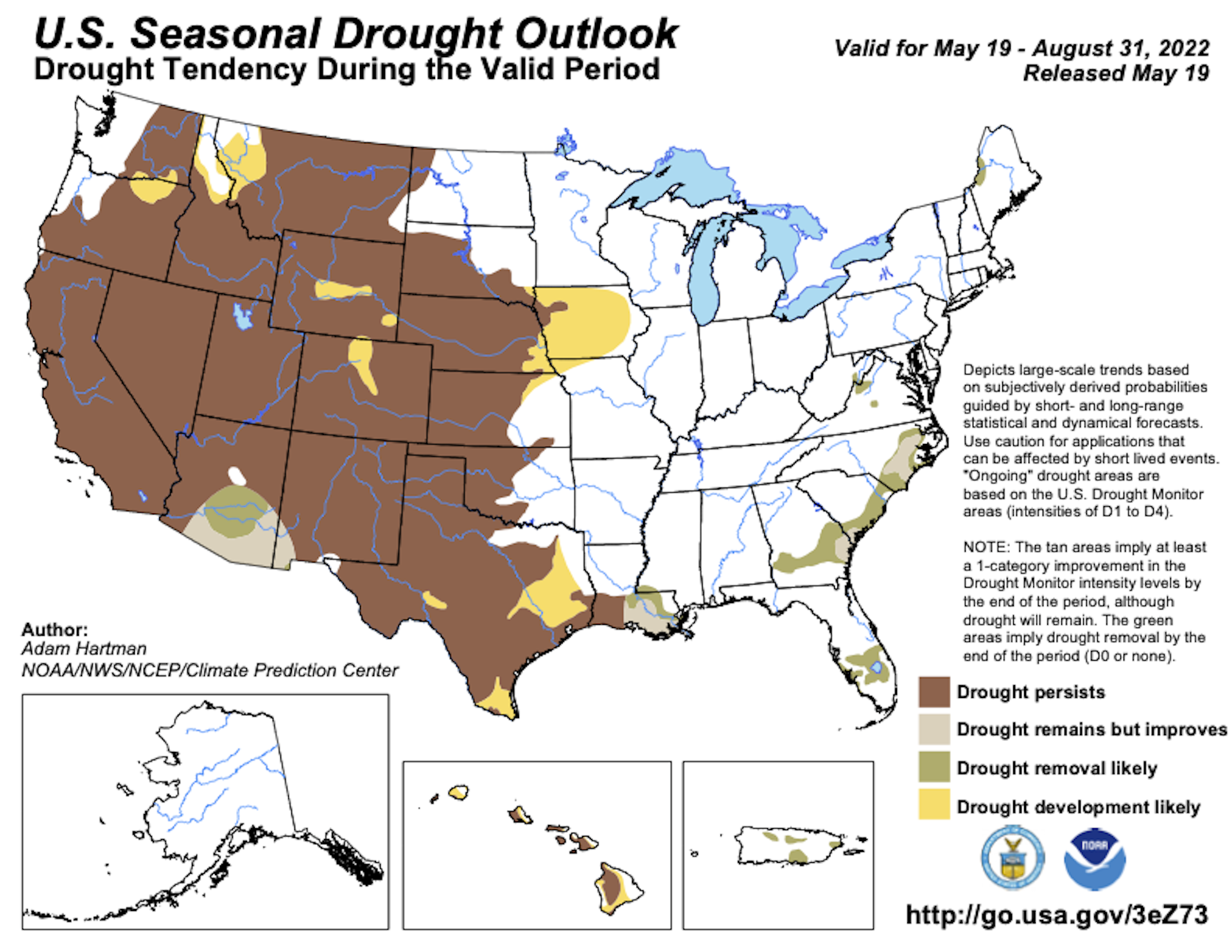
The ongoing drought in the U.S. West is expected to persist through this summer, raising the risk of water shortages and wildfires. While California, Arizona, and New Mexico are now facing the brunt of the drought, new research suggests that Colorado, Utah, and Wyoming will increasingly come to look like the Southwest as temperatures continue to rise.

In its latest seasonaloutlook, the National Weather Service projects the drought, which began in early 2020, will continue across virtually the entire American West. Cooler waters in the Pacific are giving rise to fewer storms in the Southwest, while higher temperatures on land are drying out soil. In the last two years, average temperatures have been upward of 2 degrees…

View original post 303 more words

Va. dog breeding facility accused of animal welfare crimes after 145 beagles seized

Exposing the Big Game's avatarExposing the Big Game


by Associated PressFriday, May 20th 2022

https://wset.com/news/local/virginia-dog-breeding-facility-envigo-research-accused-of-animal-welfare-crimes-after-145-beagles-seized-acute-distress-cumberland-county

UserWay icon for accessibility widget

FILE - Beagle (Photo by Jamie McCarthy/Getty Images)

FILE – Beagle (Photo by Jamie McCarthy/Getty Images)

Facebook Share Icon

Twitter Share Icon

Email Share Icon

RICHMOND, Va. (AP) — Federal officials have accused a company that runs a Virginia facility breeding dogs for research of violating animal welfare law and recently seized at least 145 beagles found to be in acute distress.

That’s according to a lawsuit the government filed Thursday against Envigo RMS.

RELATED:NIH spent $1.2 million on dogs from breeder under federal investigation for animal cruelty

The facility in Cumberland County has been under increasing scrutiny for months, drawing concerns from animal rights groups, members of Congress and Virginia lawmakers.

RELATED:New laws expand protection for cats, dogs being sold to Virginia animal testing facilities

Repeated federal inspections since Envigo acquired the facility in 2019 have found dozens of violations.

A spokesman said the company was working on a statement and would have a response Friday.

View original post

Va. dog breeding facility accused of animal welfare crimes after 145 beagles seized


by Associated PressFriday, May 20th 2022

https://wset.com/news/local/virginia-dog-breeding-facility-envigo-research-accused-of-animal-welfare-crimes-after-145-beagles-seized-acute-distress-cumberland-county

UserWay icon for accessibility widget
FILE - Beagle (Photo by Jamie McCarthy/Getty Images)

FILE – Beagle (Photo by Jamie McCarthy/Getty Images)

Facebook Share Icon
Twitter Share Icon
Email Share Icon

RICHMOND, Va. (AP) — Federal officials have accused a company that runs a Virginia facility breeding dogs for research of violating animal welfare law and recently seized at least 145 beagles found to be in acute distress.

That’s according to a lawsuit the government filed Thursday against Envigo RMS.

RELATED: NIH spent $1.2 million on dogs from breeder under federal investigation for animal cruelty

The facility in Cumberland County has been under increasing scrutiny for months, drawing concerns from animal rights groups, members of Congress and Virginia lawmakers.

RELATED: New laws expand protection for cats, dogs being sold to Virginia animal testing facilities

Repeated federal inspections since Envigo acquired the facility in 2019 have found dozens of violations.

A spokesman said the company was working on a statement and would have a response Friday.

NC community shows support for teen injured in hunting accident

Exposing the Big Game's avatarCommittee to Abolish Sport Hunting Blog

by:Cheyenne Pagan

Posted:May 20, 2022 / 10:40 PM EDT

Updated:May 20, 2022 / 10:40 PM EDT

SHARE https://www.cbs17.com/news/north-carolina-news/nc-community-shows-support-for-teen-injured-in-hunting-accident/

JACKSONVILLE, N.C. (WNCT) – A North Carolina community began rallying behind a local teen after he suffered a traumatic brain injury in January.

Bryson Capps, 13, was hunting whenhe was hit by a rogue bullet on New Year’s Eve.Months later, the community is still pulling together to support him as he recovers.

Hundreds of community members gathered for one cause on Friday and that’s to “Bring Bryson Back.”A benefit dinner was held for Capps at Tar Landing Baptist Church in Jacksonville.

ADVERTISING

“The injury took a lot away. So he’s having to relearn pretty much everything again,” said Bryson’s cousin, Emily Battle.NC teen suffers traumatic brain injury in hunting incident

Bryson is in a much better position now than he was in January, according to his cousin.

“He…

View original post 264 more words

‘Ghost’ fossils preserve haunting record of ancient life on a hellish Earth

Exposing the Big Game's avatarThe Extinction Chronicles

ByJoanna Thompsonpublished1 day ago

Geometric fossils in marine sediments have a story to tell.

https://www.livescience.com/ghost-nannofossils-ocean-acidification

The images show the impressions of a collapsed cell-wall covering (a coccosphere) on the surface of a fragment of ancient organic matter (left) with the individual plates (coccoliths) enlarged to show the exquisite preservation of sub-micron-scale structures (right). The blue image is inverted to give a virtual fossil cast, (i.e., to show the original three-dimensional form). The original plates have been removed from the sediment by dissolution, leaving behind only the ghost imprints.

The images show the impressions of a collapsed cell-wall covering (a coccosphere) on the surface of a fragment of ancient organic matter (left) with the individual plates (coccoliths) enlarged to show the exquisite preservation of sub-micron-scale structures (right). The blue image is inverted to give a virtual fossil cast, (i.e., to show the original three-dimensional form). The original plates have been removed from the sediment by dissolution, leaving behind only the ghost imprints.(Image credit: S.M. Slater/P. Bown/Science)

Ghostly imprints of tiny plankton-like creatures have been found haunting the sediments of prehistoric oceans at a time when such organisms were thought to be extinct. The so-called nannofossil imprints reveal that the organisms survived acidic oceans caused by climate change, and could offer a clue for how modern creatures can endure rising ocean temperatures, researchers…

View original post 737 more words

Why Dogs Need More Control Over Their Lives

Jessica Pierce Ph.D.

All Dogs Go to Heaven

Agency, choice, and control are essential for psychological integrity.

Posted May 18, 2022 |  Reviewed by Gary Drevitch

KEY POINTS

  • The single most significant problem facing homed dogs is lack of adequate agency.
  • Having a sense of control over one’s environment is fundamental to psychological integrity.
  • There are countless creative ways to enhance a dog’s agency.
Jessica Pierce

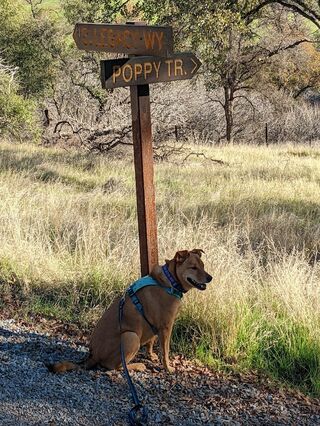
Poppy thinking about which way to go

Source: Jessica Pierce

If I could identify the single most significant problem facing homed dogs right now it would be lack of adequate agency. Dogs have very little control over their sensory environment, their social interactions, and the basic elements of daily survival, all of which are orchestrated by human guardians. This lack of control—a near-total loss of agency—has significant fallout for their physical and especially their psychological well-being. Fortunately, there are countless easy ways to enhance our dogs’ agency—the only limit is our imagination.

Loss of agency

Agency is the ability to make choices for oneself, to exert control over one’s environment and, more important, to have the perception of being in control. Pet dogs experience a loss of agency in relation to the overall arc of their lives. They rarely get to choose their home, nor can they choose to leave if they are unhappy; they cannot choose their family or friends; nor do they have much choice about how to provision food, when are where to go to the bathroom, or when to mate, bear, and raise young. Loss of agency also occurs in various small but significant ways throughout the day—for example, the imposition of a collar and leash on free movement, unwanted and invasive touching by unfamiliar humans, and the suppression through training regimens of natural canine behaviors such as barking or seeking affection.

A sense of control is essential to well-being

Having a sense of control over one’s environment is fundamental to psychological integrity. This is as true for humans as it is for other animals, including dogs. As veterinarian Frank McMillan argues in “The Mental Health and Well-being Benefits of Personal Control in Animals,” a vast body of research on human and nonhuman animals has established that having a sense of control over one’s life circumstances, and especially over events or stimuli that are unpleasant, is a strong predictor of positive feelings and mental well-being. Particularly when faced with an aversive stimulus, the perception of being in control—of being able to move away from or reduce the intensity or duration of an aversive event—makes the experience more tolerable; feeling out of control increases the stress response to negative stimuli.

Exerting control over one’s environment also seems to be rewarding in and of itself. McMillan cites a series of experiments with captive rodents which found that the animals “exercise control virtually any chance they get” and appear to find it intrinsically rewarding to exert a high degree of control over their environment.[i]

article continues after advertisement

The process of making choices and exerting control promotes psychological well-being. But it may also be that actual choices animals make are important to them. They might make different choices for themselves than we make for them, choices more aligned with their preferences and needs than with our own. Aren’t there also some situations in which dogs might be able to make better choices than people? This certainly happens all the time on a small scale: You see a person walking a dog on a leash and the dog is sending clear signals that she would like to avoid a close interaction with a passing dog. The guardian ignores the dog’s choice, the dogs are pulled together by force, and they find themselves in an extremely uncomfortable situation that may lead to fear, anxiety, even injury.

Empowering Dogs

Empowering dogs is good for them in direct ways: Not only might they make different and better choices for themselves than we might make for them, the process of making and implementing choices improves their well-being by giving them control over their lives. Lack of control can be unpleasant, even psychologically harmful. A dog with greater agency is a happier dog. Moreover, through the process of choice-making, dogs have opportunities to learn and develop.

Empowering dogs is also good in indirect ways, because it helps shift the moral paradigm for humans. The act of respecting dogs’ interests in making choices is a way of acknowledging and respecting their intrinsic value. It also goes some small way toward redressing power asymmetries in human-animal relations.

Luckily, even within the structural constraints of current dog-keeping practices, we have many opportunities to enhance dog agency. The first step is to become more mindful of the ways in which choice and control are lost or constrained. The second step, of course, is to create or embrace opportunities for choice whenever they arise.

Making Space for Agency

Agency, control, choice—whatever term we decide to use—is very much on the mind of thoughtful dog guardians. When I talk to people who live with dogs and try their best to give their dog a good and happy life, I am constantly inspired by the myriad ways in which they try to make space for the dog to express opinions and preferences, collaborate in decision-making, and feel in control.

Here are a few specific ways we can make space for agency. All require that we listen actively to our dog and pay attention to body language, facial expression, and vocal communications.

  1. When out for a walk, let your dog choose the direction, pace, and length of the excursion. If your dog wants to stop and sniff here and there, let her.
  2. Protect your dog from unwanted social interactions with other dogs or humans. Dogs should be able to control when, how closely, and with whom they interact—especially in cases where interaction makes them afraid or uncomfortable. Being “friendly” is not a requirement for being a “good” dog.
  3. Make sure your dog gives consent for any petting or other physical touching, whether by you or by unfamiliar people. Unwanted touching may be experienced as a loss of control.
  4. Give your dog the choice to walk away from a training session. Training should be by invitation only and dogs should have the right to politely decline.
  5. Accept “no” as an answer from your dog (unless her safety is at risk).
  6. Be open to inquiries from your dog. Can I please have a taste of your lunch? Can I go outside? Can we play tug?
  7. When within the confines of your home, let your dog have access to as much space as possible. (Being locked in a crate dramatically reduces a dog’s sense of control over her environment.)

References

[i] Frank McMillan, “The Mental Health and Well-being Benefits of Personal Control in Animals,” in Mental Health and Well-being in Animals (2nd ed), edited by Frank D. McMillan. Wallingford, Oxfordshire: CABI, 2019, p. 67.

It’s Endangered Species Day!

Exposing the Big Game's avatarThe Extinction Chronicles

Friend,

View this email in your browser

https://mailchi.mp/c264c8d5bfe4/its-endangered-species-day?e=34cb4196ed

It’s Endangered Species Day. Designatedon the third Friday in May, it’s a day to celebrate the wins, mourn the losses, and most importantlycommit to preserving the plants and wildlife for present and future generations and for the health of the planet.

Established in 1964, according to theInternational Union for Conservation of Nature’s Red List of Threatened Species(INCN),more than 40,000 species are threatened with extinction.

“That is 28% of all assessed species.”

Scientists tell us we are in a 6th mass extinction and this time because of us.

In Montana, rare, threatened, and protected species continue to fall victim to traps and snares, intentionally and incidentally.

Yet, species do not get listed underthe Endangered Species Actor measures are insufficient in saving species at risk who are listed.

As featured above, these are a few of species occurring in Montana who…

View original post 892 more words

Mysterious Hominin Left its Mark With 3.66-Million-Year-Old Footprint

Exposing the Big Game's avatarThe Extinction Chronicles

Volcanic ash buried evidence shortly after several individuals walked through a part of eastern Africa.

By Joshua Rapp LearnMay 18, 2022 2:30 PM

https://www.discovermagazine.com/the-sciences/mysterious-hominin-left-its-mark-with-3-66-million-year-old-footprint?fbclid=IwAR1EubYnyWSNCIKJAJ7zQdebjISYZEs-tYm0xd7HPIzfVXWojLXxV-StDGc

Hominin footprint

(Credit: sabine_lj/Shutterstock)

Newsletter

Sign up for our email newsletter for the latest science newsSIGN UP

An unknown species of hominin that lived 3.66 million years ago left its only trace of a few dozen footprints in the mud that volcanic ash quickly buried. While these tracks have been known for nearly 50 years, new research reveals that the sets of footprints may belong to two distinct hominins that walked eastern Africa at the same time.

“That is the first, oldest unequivocal evidence for that — two hominins existing at the same place at the same time,” says Ellison McNutt, a biological anthropologist the Ohio University Heritage College of Osteopathic Medicine.

Original Findings

Researchers first discovered the tracks in the 1970s at the Laetoli site in…

View original post 903 more words