Horses are dying in the name of ‘humane’ management

One of the lessons to come out of the pandemic and the latest bird flu outbreak is that confining animals in crowded conditions can spell disaster. And yet that’s exactly how the federal government is treating wild horses.

Last week, news broke that over 100 wild horses have died of a mystery illness – now suspected to be a strain of influenza – at the Cañon City Wild Horse and Burro Facility. The pens, located on prison grounds in south-central Colorado, housed only a couple hundred horses a few years ago. Yet today, following the largest wild horse roundup in the state’s history, more than 2,500 mustangs who once roamed free on the range are held captive there.

The facility, now under voluntary quarantine, is managed by the Bureau of Land Management (BLM) — the same federal agency that is charged with protecting our nation’s wild horses and burros.

BLM officials have acknowledged that the death toll could continue to climb as more horses succumb to this highly contagious illness that leads to respiratory distress and neurological problems.

Some of the horses who are trapped at this facility were rounded up from the Sand Wash Basin in northwest Colorado during the BLM’s controversial helicopter stampede in September. Gov. Jared Polis and U.S. Rep. Joe Neguse were among the many vocal opponents of the operation. Polis, for instance, called for an immediate six-month moratorium on wild horse roundups in his state, expressing concern over the “long-term well-being” of the gathered horses. Ultimately, the BLM removed nearly 700 horses.

Although the BLM is charged with protecting these animals from harassment and death under the 1971 Wild Free-Roaming Horses and Burros Act, in practice, the agency “manages” herds by using low-flying helicopters to chase terrified wild horses into temporary corrals, resulting in injuries and fatalities. Separated from their family bands, many survivors are confined to holding facilities for the rest of their lives.

The federal government spends upwards of $77 million annually on this flawed management strategy.

In January, the BLM announced that it would remove a staggering 19,000 wild horses from our public lands during fiscal year 2022.

The agency claims that such large-scale roundups are necessary to curb wild horse overpopulation, yet it sets an arbitrary number for sustainable wild horse management — a mere 27,000 horses across some 27 million public acres in 10 Western states. By comparison, approximately 60,000 horses are kept in BLM holding facilities.

Unfortunately, wild horses face relentless pressure on their shrinking habitat from ranching interests, oil and gas development, mineral extraction, and other uses of public lands. As a result, they wind up with a target on their backs, forced from the lands they have called home for centuries.

For years, animal welfare advocates have been demanding an end to these brutal roundups; the recent disease outbreak only provides further evidence that the BLM — as Polis predicted — is unable to ensure the well-being of wild horses under its care.

As part of the federal spending package approved in March, Congress — for the first time — directed the BLM to spend a significant portion of its Wild Horse and Burro Program budget on implementing proven and safe fertility control options. Existing immunocontraceptive vaccines can successfully manage herds on the range, as opposed to funneling increasing numbers of animals into holding facilities such as the one in Cañon City.

Whether the BLM will follow through with this mandate remains to be seen, but the situation could not be more urgent.

We owe it to these horses not to incarcerate them for the rest of their lives, or worse, create an untenable situation that amounts to a death sentence.

Joanna Grossman, Ph.D., is the equine program manager and senior advisor for the Animal Welfare Institute in Washington, D.C.

Joanna Grossman, Ph.D., is the equine program manager and senior advisor for the Animal Welfare Institute in Washington, D.C.

Swimming animal shot; hunter punished

Exposing the Big Game's avatarCommittee to Abolish Sport Hunting Blog

A Kenora man has been fined $7,500 and banned from hunting for a year for shooting a moose calf while it was swimming in a lake in Wabakimi Provincial Park.

A provincial investigation determined that Jonathon Parrino was hunting in the area of Heathcote Lake on Oct. 8 2020 when he shot the moose, even though the season for hunting calf moose was closed.

It’s illegal in Ontario to shoot a game animal when it’s swimming, even if a hunter possesses a proper game seal to claim it.

Parrino pleaded guilty to the offence last month in Kenora court, a provincial news release said Friday.

Wabakimi park is located north-west of Armstrong.

View original post

Man injured in hunting accident in Tetiz, Yucatán

Exposing the Big Game's avatarCommittee to Abolish Sport Hunting Blog

ByYucatan Timeson May 2, 2022

The veteran countrymen used to say that the mountain is sacred, just as it provides, it also takes its toll if you overdo it, such as the case of two friends who went hunting, but one of them ended up being mistaken for a deer to end up badly injured in mountains of this municipality.

Tetiz native Cruz Alejandro Baas Chan, 41, ended up injured on land in this Poniente region.

Cruz, together with his father Florentino Baas Poot, 66 years old, invited his friend Juan Canul Novelo, 49 years old (alias “Uraña”) to go hunting on Saturday, April 30th.

However, Uraña, a native of Hunucmá, and living in this town, works as a butcher, and well, he did not want to go. So after insisting so much, Juan finally accepted.

The three went into the bush and began to walk…

View original post 228 more words

Man dies in Mineral hunting accident; Burlington man charged

Exposing the Big Game's avatarCommittee to Abolish Sport Hunting Blog

police lights

BURLINGTON, W.Va. — A hunting accident early Saturday in Burlington claimed the life of a Mineral County man and resulted in the arrest of another man on felony charges, according to West Virginia Natural Resources Police.

Colton Jon Shoemaker, 28, was killed while turkey hunting on a farm off Upper Patterson Creek Road.

Police arrested 68-year-old David Haggerty of Burlington on two counts of felony wanton endangerment with a firearm following investigation by Natural Resources Police and the Mineral County Sheriff’s Office.

According to court documents, the incident happened about 6:30 a.m. when Shoemaker was hunting with his girlfriend, Cody Jose.

The pair reportedly set out decoys when “they heard twiggs break behind them and saw a hunter sit down by a tree,” according to the court papers.

Shortly after, Shoemaker and Jose heard turkeys above their location, so they turned to face uphill.

View original post 86 more words

Saturn’s weird moon Titan looks a bit like Earth, and scientists might finally know why

Exposing the Big Game's avatarThe Extinction Chronicles

By Stefanie Waldek published 1 day ago

https://www.space.com/study-explains-why-titan-looks-like-earth

Six images of Saturn's moon Titan that incorporate 13 years of data gathered by NASA's Cassini spacecraft.

Six images of Saturn’s moon Titan that incorporate 13 years of data gathered by NASA’s Cassini spacecraft.(Image credit: NASA/JPL-Caltech/University of Nantes/University of Arizona)

The surface of Saturn’s moon Titan looks a bit like Earth and a new study finally explains why.

Saturn’s largest moonTitanfeatures some very Earth-like landscapes: lakes and rivers, labyrinthine canyons, and soft sand dunes. However, these geological formations on Titan are made of entirely different materials. Instead of water, it’sliquid methanethat flows through rivers, and instead of sand, it’s hydrocarbons that blow into dunes.

For years, scientists have been stumped by how these landscapes came to be, given their un-Earth-like composition. But now they’ve determined a very plausible theory.

Sponsored Links

Big news – stocks are now available on eToro US! Discover alleToroClick Here

Because Titan’s sediments are theorized to be made from…

View original post 507 more words

Ukrainian drone destroys Russian patrol ships off Snake Island, says defense ministry

Exposing the Big Game's avatarThe Extinction Chronicles

From CNN’s Hannah Ritchie in Hong Kong 

https://www.cnn.com/europe/live-news/russia-ukraine-war-news-05-02-22/h_a73ac98f2400af01f729e23a7e01ae88

Two Russian Raptor patrol boats were destroyed nearSnake Islandby a Ukrainian Bayraktar drone Monday morning local time, the Ukrainian Ministry of Defense reported, citing the head of the Armed Forces General.

“Two Russian Raptor patrol boats were destroyed in the early hours of this morning near Snake [Zmiinyi] Island. #Bayraktar works! Together to Victory!” the MOD tweeted.

Video of the drone targeting one of the Raptor patrol boats near the island in the Black Sea was included in the MOD post.

The Bayraktar TB-2 is a Turkish-designed armed drone that has been used to considerable effect by the Ukrainian Armed Forces against Russian targets.

Moscow is yet to confirm or react to the claim.

Read more on Snake Island here:

First on CNN: Satellite image shows damage to Snake Island

RELATED

First on CNN: Satellite image shows damage to Snake Island

10 hr 37 min ago

New Zealand imposes…

View original post 1,328 more words

Scorching weather forces India to face climate change head on

Exposing the Big Game's avatarThe Extinction Chronicles

Tens of millions of Indians are struggling to cope with a relentless heatwave, with temperatures reaching record highs.

India weather
Commuters cover their faces to shelter from the extreme heat as they make their way in Amritsar, India last week [Narinder Nanu/AFP]

ByKapil Kajal

Published On 2 May 20222 May 2022

New Delhi, India –Construction worker Gujral Singh tears up as he voices his concerns about toiling in India’s searing heat this summer.

Tens of millions of Indians are struggling to cope with a relentless heatwave, with temperatures in some regions the hottest in more than 120 years in this South Asian nation.

KEEP READING

list of 4 itemslist 1 of 4

How much is climate change to blame for heatwaves in South Asia?

list 2 of 4

How are US special interests undermining climate action?

list 3 of 4

New Zealand faces major sea rise ‘much sooner than we…

View original post 1,850 more words

Cruel Reality of Michael Jackson’s Neverland Zoo Revealed in New Documentary

3 days ago

By Hailey Kanowsky

Michael Jackson in red shirt

Lead Image Source : Vicki L. Miller/Shutterstock

ADVERTISEMENT

Subscribe to Newsletter

FoodMonster AppSupport Us

Buy our Cookbooks

Sign Our Petitions

An ITV documentary just released follows Ross Kemp searching and tracking down dozens of animals that Michael Jackson once owned at his Neverland ranch.

Source: Lorraine/Youtube

https://player.hb.selectmedia.asia/prebid/iframe.html?adid=6139cd95681c92755&ref=https%3A%2F%2Fwww.onegreenplanet.org

Neverland Ranch was a huge home and private amusement park owned by Jackson until he died in 2009. The ranch had three railroads, several rides, and a zoo. When the ranch was put up for sale, the animals from his zoo, which was about 50 different species, were gone. In the ITV documentary, Kemp searches for these lost animals and investigates what happened to them after Jackson’s death, and finds a long trail of abuse.

Being publicly-funded gives us a greater chance to continue providing you with high-quality content.Click here to Support Us

“In the video for Earth Song, Michael Jackson brings culled elephants back to life in the Serengeti – he revives the elephants, and their tusks grow back,” documentary producer Johnny McDevitt said. “About a year before that, he’d bought two elephants, Ali and Baba, sourced from a convicted drug dealer and animal torturer in South Africa. They’d witnessed their herd being culled, the guy had used a bullhook – an instrument of torture – deprived them of water and food, and beaten them into submission so they could be sent across the world to Jackson’s ranch.” McDevitt paused. “This is not consistent with the way he depicted himself as an animal lover.”

McDevitt, Kemp, and the former EastEnders hardman set out in search of the animals and uncover a shocking story of abuse that The Telegraph says “makes Tiger King’s Joe Exotic look like a mild mannered wildlife enthusiast.”

Many former employees of the zoo are still gagged by NDA. However, the documentary features interviews with Mark Biancaniello, the Neverland zoo trainer, Rob Swinson, dubbed Maker of Dreams by Jackson, and Tom and Freddie Hancock, who owned Banjoko Wildlife Preserve, a fake sanctuary in Arizona whose improper care led to the death of two of Jackson’s giraffes in 2010.

https://player.hb.selectmedia.asia/prebid/iframe.html?adid=229574e0af7889916&ref=https%3A%2F%2Fwww.onegreenplanet.org

Tom and Freddie Hancock collected Jackson’s animals for their pseudo-sanctuary in Arizona until the local council banned them from keeping the park open after the giraffes died. However, after this, all of their animals seemingly vanished into thin air. Although there have been many conspiracy theories about where the animals went, the documentary discovers an incredibly sad ending.

Source: Reed Hatkoff/Youtube

Footage from Neverland leaked that showed a trainer beating an elephant with a bullhook for seven minutes. McDevitt and Kemp found the elephant handler and showed him the footage.

“It was a very difficult conversation until we showed him the footage and pictures of the elephants in shackles in Neverland,” McDevitt said. “He came the closest of everyone to some kind of penitence. I respected him for being candid. He made the point that back in the Nineties we didn’t know as much as we do today about the neurological damage caused to animals in captivity and he did convey some kind of regret about the elephants.”

https://player.hb.selectmedia.asia/prebid/iframe.html?adid=577474c65bc8ffd2&ref=https%3A%2F%2Fwww.onegreenplanet.org

Of course, there is Bubbles, Jackson’s famous chimpanzee pet, who was improperly cared for. Primatologist Jane Goodall even visited Jackson’s zoo and told him the way that he was treating the animals, especially Bubbles, was horrible. The documentary crew asked her if he cared, and she said no.

“For a music star who portrayed himself as a child in a man’s body and with the things he said about animals: ‘How could anyone ever hurt an animal? It would be like hurting a small child…’ Did he know [about the mistreatment of the animals]? Could he be excused? It didn’t take long for me to see that as a fallacy, but Ross was circumspect about coming to that conclusion too readily.” said McDevitt.

Most of Jackson’s animals have passed away now from horrible circumstances, but the exotic pet trade is not over. Just a few years ago, Chris Brown was ordered to give up his pet monkey and pay a fine for the illegal purchase of the animal. He even told the court that he was inspired by Michael Jackson’s love for Bubbles, but the documentary unveils that Jackson’s ‘love’ was far from healthy.

Exotic animals are not meant to be kept as pets. These poor animals are bred to sell and remain in captivity their entire lives. These should not be animals available for purchase, and they should not be used for entertainment. Sign this petition to ban private monkey sales!

Being publicly-funded gives us a greater chance to continue providing you with high-quality content.Click here to Support Us

Related Content:

For more Animal, Earth, Life, Vegan Food, Health, and Recipe content published daily, subscribe to the One Green Planet Newsletter!

A new Iron Curtain is eroding Norway’s hard-won ties with Russia on Arctic issues

April 30, 20225:00 AM ET

https://www.npr.org/2022/04/30/1092639702/russia-norway-nato-arctic-council

QUIL LAWRENCETwitter

CONNOR DONEVANLISTEN· 7:53

7-Minute Listen

Norwegian coast guard cutters are used for rescue, fishery inspection, research purposes and general patrols in Norwegian waters.

Nora Lorek for NPR

Capt. Pal Bratbak has patrolled the Barents Sea for decades. His Norwegian coast guard search and rescue cutter mostly chases after distress calls from fishermen. The fishermen are chasing the cod — and the cod sometimes lead them astray.

“The codfish, they don’t see the border, so we help every boat in our area,” he says, and that means as many Russian boats as Norwegian. A treaty allows both nations to catch a quota, and that management of the Barents Sea Arctic cod fleet is considered a success worldwide, both economically and environmentally.

“That’s important for Norway and the European Union and NATO and the whole world. And it’s important for the Russians,” he says.

Capt. Pal Bratbak has been patrolling the Barents Sea for decades in a Norwegian coast guard search and rescue cutter.

Nora Lorek for NPR

Cooperation like that has been a given on the Russian-Norwegian frontier for decades, if not centuries. The Norwegians call it “high north, low tension.”

Since Russia’s invasion of Ukraine, though, that tension isn’t so low, and Bratbak is worried. The coast guard also enforces the fishing laws in the Barents Sea.

Years ago, in a rare case, a Russian trawler fled from a coast guard ship, into Russian waters — with Norwegian inspectors on board. Back then, Russian authorities promptly arrested the captain and returned the inspectors. Bratbak hopes the same cooperation would happen today, but his confidence is a bit shaken by recent events.

Sponsor Message

“In these days, Russia can use other methods to negotiate. Like in the Ukraine conflict, they are willing to use power (more) than talking,” he says.

Critical climate work is on hold

As a founding member of NATO, Norway’s government has joined the rest of Europe in isolating Russia. But as a country bordering Russia, it’s feeling the effects more immediately than some others — in everything from Arctic climate action and nuclear waste control to cross-border trade and regional sports leagues.

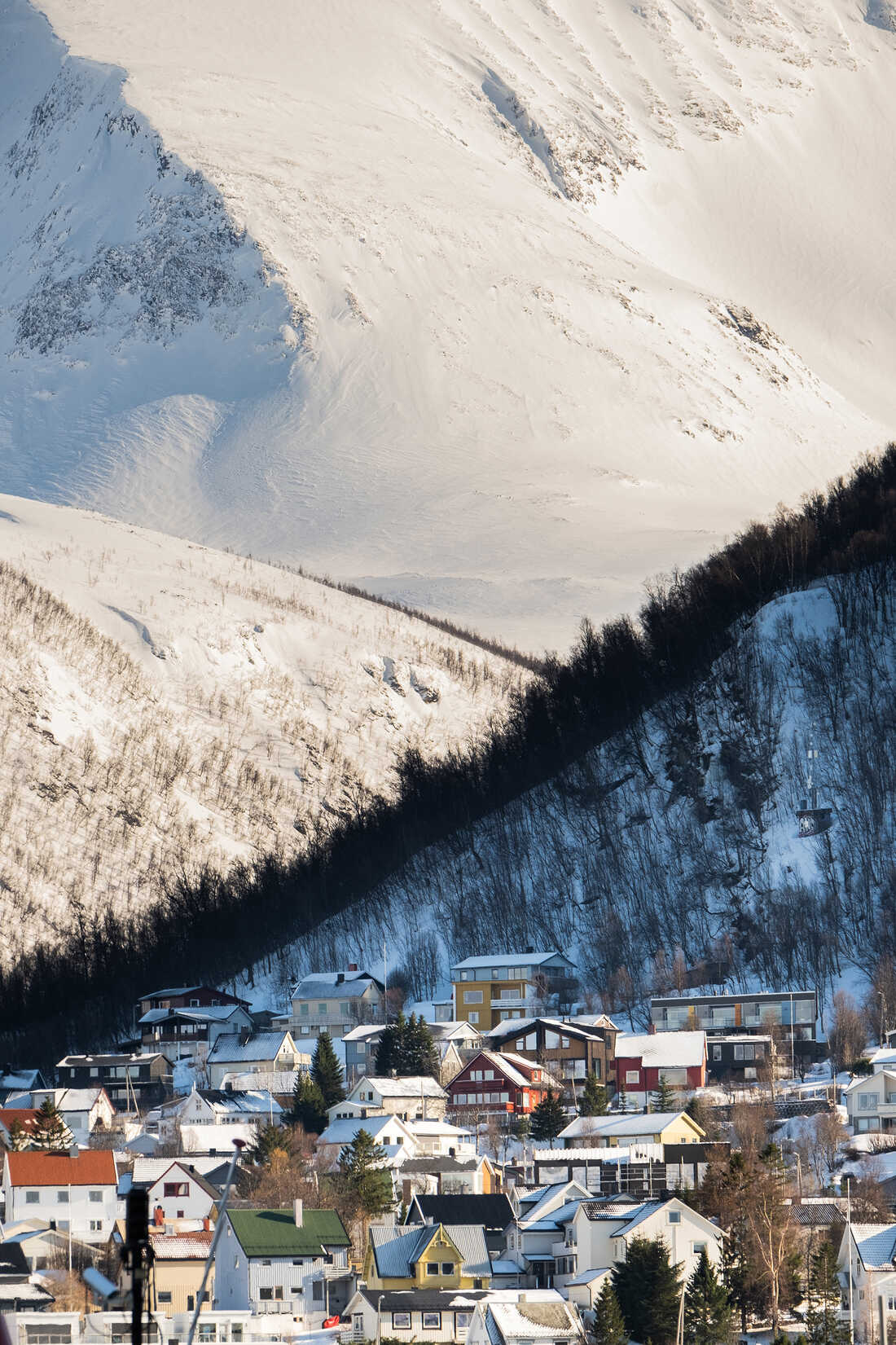
Tromso, Norway

Nora Lorek for NPR

The protection of the pristine waters of the Arctic, as well as that cod fleet Capt. Bratbak mentioned, falls under an international group called the Arctic Council. The rotating chair of that group is currently Russia, and as such the council has suspended all activities, including crucial research on climate change.

“It’s not something you can point out that failed today, but it’s ongoing,” says Kim Holmen with the Norwegian Polar Institute in Tromso, where the Arctic Council would normally be coordinating research.

Russia has about half of the world’s Arctic landmass, including permafrost that, if it melts, could release megatons of trapped carbon and greenhouse gases.

Scientists like Holmen count on collaboration with their Russian colleagues.

“We have common publications. We have collected data together. We’ve been on each other’s cruises. I’ve been to people’s homes in Saint Petersburg, good friends,” he says.

Scientists like Kim Holmen, with the Norwegian Polar Institute in Tromso, count on collaboration with their Russian colleagues.

Nora Lorek for NPR

Holmen isn’t in contact with those friends right now. He’s been working on the Arctic for more than 30 years, and he says the lesson from back in the Soviet days is that communication will only get them into trouble, which would delay getting back to work.

“Polar scientists are used to the cold,” says Holmen. “We hope and wish to pick up when it thaws.”

“We are seeing the Iron Curtain come back”

For residents of the border city of Kirkenes, their world changed overnight.

Guro Brandshaug is CEO of the Kirkenes Conference, an annual businesses summit between Russia and Norway. This was the 14th year the event was held, and, on a weeknight in February, it all started out relatively normally.

“On Wednesday the 23rd I welcomed our foreign minister and the Russian ambassador,” says Brandshaug.

With Russian troops massed on the Ukrainian border, she says, it was tense. But Kirkenes is a city built on friendly relations with Russia, and Brandshaug says no one she knew thought Russian President Vladimir Putin would really invade.

“And then we woke up on the morning on the 24th,” she says. “The Russians had started bombing Ukraine. It was a huge shock. People were actually crying.”

A nuclear waste dump poses a constant threat

“Everything that has been built up over the last 30 years, was just washed out in a few days. We are seeing the Iron Curtain coming back,” says Thomas Nilsen with the Barents Observer newspaper in Kirkenes.

The new Iron Curtain severed personal ties, economic links and even scuttled issues of mutual survival, Nilsen says. For years, Norway had been helping Russia safely dispose of spent fuel rods from its aging nuclear submarines, which were stationed in the Arctic.

At a park station in Svanvik, scientist Bredo Moller collects air samples for the Norwegian radiation safety authority.

“We are some, some kind of a nuclear watchdog on the border to Russia,” he says. “That’s more or less why we’re here — to monitor what’s on the other side of the border, just a few kilometers from here.”

He’s referring to one of the world’s biggest nuclear waste dumps, across the border, where tons of waste from Russian power plants and aging submarines pose a constant threat, either as a contaminant to the Arctic sea life or as material in a terrorist dirty bomb.

Moller says that just last November, Norway marked 25 years of cooperation on nuclear cleanup, and he went to Murmansk in Russia for a celebration with his colleagues.

“I have many friends in Murmansk, shaking their heads like me, waiting for this to end,” he says.

The Norwegian coast guard is part of the Royal Norwegian Navy and has some police authority.

Nora Lorek for NPR

Moller is counting on those colleagues to keep up the work of saving the Arctic from nuclear contamination. And he’s certain his friends oppose the war in Ukraine just as he does — they just can’t speak right now. But it’s chilling that many local officials across the border, as well as 700 rectors and university presidents in Russia, have issued strong statements supporting Putin. And that makes Moller worry that even this vital work might not resume soon.

“It will take many, many years I’m afraid, to get back to that trust that we have gained through these 25 years of cooperation. So, yeah, it is frightening times,” he says.

Bidwell Wildlife Rehabilitation hosts educational event about saving baby wildlife


by Kelly DeLeonSaturday, April 30th 2022

https://krcrtv.com/news/local/bidwell-wildlife-rehabilitation-hosts-educational-event-about-saving-baby-wildlife

UserWay icon for accessibility widget

https://imasdk.googleapis.com/js/core/bridge3.512.0_en.html#goog_1079247295

0 seconds of 0 secondsVolume 90%

Clover the baby kangaroo with Dr. Becki Brunelli and Gabe Kerschner of Wild Things (KRCR)

7

VIEW ALL PHOTOS

View All Photos

Nike the Kinkajou (KRCR)<p>{/p}

Facebook Share Icon
Twitter Share Icon
Email Share Icon

CHICO, Calif. — Saturday was a beautiful day in Chico to celebrate wildlife.

The non-profit Bidwell Wildlife Rehabilitation (BWR) held its first “Baby Shower” event.

“The reason we call it that is because species right now in the Northstate is having babies, so we really wanted to teach our community what to do if you find different varieties of wildlife orphaned away from its mama,” said BWR volunteer Shelly Rogers.

BWR is a volunteer-run non-profit that helps rehabilitate injured wildlife to release them back into their natural habitat.

“You might be out in your yard one day, and you see something on the ground. And to your great surprise, it’s a baby squirrel, or it’s a fledgling, or it’s a possum. Your first thought is going to be, what do I do? We want folks to know to get a hold of Bidwell Wildlife Rehab, and really the first thing that we want people to think of is ‘how can I reunite this baby with its mama?'”

Rogers said last year, their organization rehabilitated around 700 animals.

BWR educating the public about the dangers of balloons to wildlife (KRCR)

“Keeping wildlife healthy is not just Bidwell Wildlife Rehab’s responsibility. It’s the whole community’s responsibility. So the more that we can teach people, really the healthier and better off the wildlife in our community will be,”

There were five interactive educational booths set up at the BWR baby shower, each focused on a different animal.

Wild Things, a wildlife rescue center in Colfax, also attended the event and put on a live animal show featuring a baby kangaroo, monkey, eagle, and more.

Clover the baby kangaroo along with Dr. Becki Brunelli and Gabe Kerschner of Wild Things (KRCR)

Wild Things houses around 60 species of animals that have either been injured or can not be rehabilitated.

As we approach another dry summer and what could be another terrible fire season, Rogers recommends people consider putting a bowl of water out for the wildlife.

“Wildlife in the summer, they really run out of options where to get fresh water, and anything that we as a community can do to put water out for them is super helpful. So please, put water out if you care about the wildlife and you want to do something right in your own backyard.”