TAMPA, Fla. (WFLA) — For the millions of Americans that have gottenCOVID-19, the health care journey isn’t over. The U.S. Centers for Disease Control and Prevention confirmed in a new report that the risk of cardiac complications persists following infection and recovery.
The report released April 1paints the picture of ongoing risks and negative health outcomes that could spring up after a patient has gotten COVID-19. The report also touches on the potential risk of heart issues after receiving an mRNA vaccine for the coronavirus. The two mRNA vaccines available are from Pfizer and Moderna.New mutant omicron variant XE could be most transmissible yet, WHO says
The report said cardiac complications, “particularly myocarditis and pericarditis,” have been tied to COVID-19 infection and mRNA COVID-19 vaccination. Additionally, the study…
Ohio and Kentucky hunters will have plenty of time to hunt wild turkeys this spring.
Ohio’s season, here in the South Zone, opens April 23 and runs through May 22. A youth season, for those age 12-15, will run next weekend, April 9-10. Hunters under age 12 do not need to purchase a hunting license or turkey permit.
Those in both age groups must be accompanied by an adult who is in position to take immediate possession of the firearm if needed.
For a complete listing of dos and don’ts get a copy of “Ohio Hunting and Trapping Regulations 2021-22” wherever licenses are sold.
Kentucky’s spring wild turkey season opens April 16 and runs through May 8.
Kentucky’s bag limit is two gobblers per season, but only one can be taken per day.
Scientists fear that their last-ditch climate warnings are going unheeded amid international turmoil caused by the war in Ukraine, and soaring energy prices.
The third segment of the landmark scientific report from the Intergovernmental Panel on Climate Change – which could be the last comprehensive assessment of climate science to be published while there is still time to avoid the worst ravages of climate breakdown – will be published on Monday, warning that the world is not shifting quickly enough to a low-carbon economy.
While living in Darnestown, Maryland, Karen Davis would frequently walk along a path on her way to a pond located behind her yard. Along this path was a chicken house enclosure that had been buried in the trees behind the yard’s fence. When Karen and her husband first moved in it was empty.
One summer day in July during her daily walk Karen noticed the enclosure had been filled with chickens. Not yet the expert she is today, even she could notice many of them suffered with deformed legs and toes, unable to hold their own weight. Karen would then visit the chickens regularly, concerned about their ultimate fate.
One morning in late August during one of her almost daily visits, she noticed the chickens were gone, except one. By the time Karen was inside the shed, this one remaining little bird had buried herself deep in a far corner. Her body crippled and stained, she was frightened by Karen’s presence. Her adorable chirps, peeps and trills pulled at Karen’s heartstrings as she scooped her up and brought her inside her home.
Karen carried her into her kitchen, made her a bed next to the kitchen table and named her Viva. Undoubtedly inspired by her courage & ability to survive, despite her condition and the terrible fate of the other birds.
Looking back, Karen now credits rescuing Viva as one of the important milestones that inspired the rest of her life.
In 1990 to promote the compassionate and respectful treatment of domestic fowl, Karen Davis launched United Poultry Concerns (UPC).
A Plucky Beginning
Karen grew up in Altoona, Pennsylvania where she spent the better part of her childhood. A sibling to three brothers, she was the oldest of four. Her family was, in Karen’s words, “average.” Her mom, a stay at home mother and her father a trial attorney. Karen’s father, a traditional man with an affinity for fishing and hunting, would later become the District Attorney of Blair County.
While all three of her male siblings were drawn to fishing and hunting, with little to no resistance, Karen on the other hand would argue against these subjects with her family at the young age of 13. These spirited debates would take place over plates filled with animal products which, according to Karen, didn’t occur to her while growing up.
Deeply affected by Tolstoy’s description of his visit to a Moscow slaughterhouse in his essay “The First Step,” Karen stopped eating meat in 1974.
In 1983 Karen became vegan after reading Peter Singer’s 1975 book Animal Liberation and learned about the suffering and abuse of hens and cows for eggs and milk. Once she understood the link between food and animals, Karen was immunized against an animal-based diet.
Unlike many new vegans back then, she found it very easy and had no problem finding good things to eat. “I experienced virtually no struggles other than finding a satisfying vegan replacement for coffee cream,” Karen says with a smile. Contrary to the current notion that “there was nothing to eat back then,” Karen recalls finding plenty.
Although she credits Viva as an important milestone in her journey, she also remembers an experience that sparked the activist in her. She recalls the afternoon she attended a World Laboratory Animals Day with her husband in Lafayette Park.
“I saw two poster photos: one of a nonhuman primate who had had a head transplant with big black sutures. The other was of a laboratory beagle in a metal cage whose side had been intentionally burned in an experiment. Their wounds and most especially the expression on their faces led me, on the spot, to pledge never again to abandon animals to their fate because I couldn’t bear knowing about their suffering and abuse. Henceforth I was an animal advocate/activist.”
Inspired by Ingrid Newkirk, founder of PeTA and Brian Davies, who launched the mission to educate the public about the Canadian harp seal “hunt,” with whom she joined during an organized trip to see the seals in the Gulf of St Lawrence in March 1974, Karen has successfully carved an important niche with United Poultry Concerns.
Scarred but not Maimed
Despite staying away from the experiences of animal abuse for 10 years after being traumatized by her trip to the Gulf of St. Lawrence where she witnessed the harshest of animal cruelty, Karen Davis and United Poultry Concerns have created immense awareness of the plight of domestic fowl and inspired other organizations to follow in their own right.
Karen was one of Farm Sanctuary’s first volunteer interns in the mid-1980s and wrote the first Animal Rights article about Farm Sanctuary titled Farm Sanctuary: A Peaceable Kingdom for Farm Animals, which was published in the leading animal rights magazine at the time, The Animals’ Agenda.
Due to Karen’s stellar reputation as a passionate writer, speaker, well-informed and informative advocate for chickens and a purveyor of ideas, UPC has attracted notoriety, interest, respect, memberships, and funding…a wonderful development for chickens and other domestic fowl.
In the mid-1990s, Karen wrote the first and, to date, the most deeply informative book about the modern poultry industry and chickens, Prisoned Chickens, Poisoned Eggs: An Inside Look at the Modern Poultry Industry.
The U.S. chicken industry is the foundation of modern animal agribusiness and chickens represent 98-99% of all land animals raised and slaughtered for food in the U.S and abroad.
A Rich History
Karen’s memorable experiences include a visit to Henry Spira’s NYC apartment in the late 1980s. This was of course when UPC was a brainchild in Karen’s mind. She remembers his wall to wall manila folder collections. Henry was the first activist to run full page ads in the New York Times and other publications about the cosmetic industry’s “blinding rabbits experiments.” He was also the first activist to confront Frank Perdue who in several ads was represented with the nose of Pinocchio for being a liar. “There is too much to relate about my work for chickens with Henry,” says Karen. “Suffice to say he was very supportive and a true colleague for chickens.”
UPC as it is fondly known today, is home to a large, predator-proof 6,000 square foot bird sanctuary, an extremely robust website, a quarterly magazine, educational materials for children, news releases, as well as national campaigns and initiatives. The organization seeks to make the public aware of the ways in which birds such as chickens, turkeys, ducks and other domestic fowl are used, and to promote the benefits of a vegan diet and lifestyle.
Published since 1991, UPC’s Poultry Press has been recognized by UTNE Magazine as one of The BEST Nonprofit Publications in the world.
Karen and her powerful organization have managed to put chickens firmly and permanently on the AR map. Because of Karen’s dedication and prevision, many groups now, both large and small, including farmed animal sanctuaries and microsanctuaries, advocate for chickens and care very much about them.
Sadly, “chicken,” as food, still remains everywhere. Most people still regard chickens without sentience and mentally inferior to cows, pigs, and other animals.
But Karen remains optimistic and steadfast about her work. She is further encouraged when she meets people in various places who DO care about chickens and who are sensitive about how they are mistreated
On April 20, 2007, Ira Glass, host of This American Life, appeared on Late Night with David Letterman, where he described his visit to Karen’s sanctuary and how meeting her chickens caused him to feel sympathy for them and to stop eating them and became a vegetarian because of their encounter.
Karen tells the story. “Ira Glass ran an annual segment between Thanksgiving and Christmas called ‘The Poultry Slam.’ The show comprised 3 or 4 or more prerecorded speakers making fun of chickens, turkeys, ducks and other ‘poultry.’ It was supposed to be funny but was actually a mean-spirited repetition of pejorative stories about these birds. Via UPC, I launched a campaign against the ‘poultry slam’ urging our members to send stories and photos of their chickens, or of any chickens cast in a positive light, to Ira Glass. He received a bombardment of affirmative stories and pictures. This led him to invite me to be one of the storytellers on his next poultry slam. I said I would but only if he first visited our sanctuary and met our birds, which he cordially did.”
Other individuals who have inspired Karen’s incredible legacy are Donald Barnes, Mary Britton Clouse, co-founder of Chicken Run Rescue in Minnesota, and Mary Finelli, founder of Fish Feel.
“Mary Finelli would send me articles about the poultry industry from industry publications, highlighting the key points with a magic marker, that I incorporated into my writings and presentations from the very start back in the early 1990s,” Karen added.
The Animal Rights Tenacious “D”avis
Karen is an early riser who starts her day at around 5:00 AM.
Every day she is reading, writing, answering emails, researching data, preparing action alerts and other documents. There are campaigns to coordinate and a variety of activities with her staff on a daily basis.
She also assists the sanctuary caregiver on the weekdays and does full sanctuary bird care on weekends.
It’s fascinating to talk with Karen. Amidst the faint crows of the roosters in the background she not only has a master’s grasp of the plight of domestic fowl but also an extensive knowledge about their revered history.
Karen explains, in ancient times the rooster was esteemed for his sexual vigor. It is said that a healthy young rooster may mate as often as thirty times a day. He thus figures in religious history as a symbol of divine fertility and the life force. In his own world of chickendom, the rooster—is a lover, a father, a brother, a food-finder, a guardian, and a sentinel.
“The rooster most notably represents, for men through history in just about all cultures, a thrilling physical aggression in the form of staged cockfights, in which the roosters are traumatized/terrorized by their ‘trainers’ to act out the aggressive pathologies of enthusiasts. Cockfighting has been justified by certain scholars as an admirably ‘democratic’ sport for bringing together (for this sole purpose) men of all social classes from King to Servant.”
After nearly 40 years she remains motivated by the daily site of the lively rescued birds in her sanctuary. Perched in the trees and bushes at night, they are living their best life. At the same time she is reminded of the billions of equally wonderful but tortured birds beyond her gate. There is still much work to be done. To fight for all chickens, and by extension, all birds and animals who need to be liberated from human abuse is her daily commitment.
“Don’t worry about being successful. Just be faithful.” ~Colman McCarthy
“As an atheist,” Karen says, “these words ‘just be faithful’ mean that it’s not about having faith but about keeping faith. That is my summons. It has nothing to do with religion.”
As an educator Karen uses various forums and channels of communication available on the internet and through United Poultry Concerns. She has been publishing and updating for more than 20 years an informative teachers guide, Hatching Good Lessons: Alternatives to School Hatching Projects.
Karen has written a vegan cookbook, Instead of Chicken, Instead of Turkey, a children’s book A Home For Henny, countless articles, op-eds and letters-to-editors. She has also been interviewed by The Washington Post as well as other very respected publications.
Inducted into the National Animal Rights Hall of Fame for Outstanding Contributions to Animal Liberation in July 2002, her speaking engagements include podcasts, webinars, multiple conferences, vegfests, as well as in-classroom and academic lecture halls.
Karen has graced the stages of dozens of AR gatherings including the Animal Rights National Conference, North American Vegetarian Society Conference, Speaking About Animals in Canada Conference, Yale University Chicken Conference and Animal Personhood Conferences, Tom Regan’s International Compassionate Living Festival, University of Virginia Animal Justice Advocates’ Panel, City College of New York, TAFA Conference, Poplar Spring Animal Sanctuary, UPC’s annual Conscious Eating Conference, University of Wisconsin-Madison, and University of Maryland-College Park and Salisbury, just to name a few.
Pearls of Wisdom
“A committed activist who won’t burn out needs three important things: facts, confidence, and passion. Activism requires persistence, a friendly manner and firmness. When we know our subject and can articulate our issues, our confidence grows along with our credibility, and we become stronger and more effective every time we speak. But facts by themselves may not be persuasive. If we lack or fail to convey passion for our cause, we will have a hard time getting people’s attention.”
“If you need to take a break, do so – but come back energized and ready to contribute your time and talents to helping the animals. Every social justice movement is frustrating in one way or another to its participants. The important thing is to stay active and optimistic as an activist for animals and animal rights.”
“Don’t let your friends, family and coworkers ‘get to you.’ Remember that the average person is not a revolutionary. Try to influence your critics by your example, personal and professional.”
“I am concerned about the growing intersectionalism dominating the animal liberation movement’s conferences and discourse to the extent that the animals are overwhelmed by human social justice issues. Similarly, promoting veganism for strictly health reasons eliminates the animals from consciousness, which is a grave and cruel betrayal.”
“Veganism is very important from what I know about the effects of animal agribusiness on land, air, water, wildlife habitat, the destruction of forests for animal grazing and crops like corn and soybeans grown to feed industrially-raised birds and pigs and the use of toxic sprays to protect such crops. By choosing vegan, we eliminate the torture of billions of animals while enjoying the benefits of better health, a cleaner environment, and a more humane life.”
Karen’s books also include More Than a Meal: The Turkey in History, Myth, Ritual, and Reality (Lantern Books); and The Holocaust and the Henmaid’s Tale: A Case for Comparing Atrocities (Lantern Books).
The 2009 Revised Edition of Karen’s landmark book Prisoned Chickens, Poisoned Eggs (first published in 1996) is described by the American Library Association’s Choice magazine as “Riveting . . . brilliant . . . noteworthy for its breadth and depth.”
Karen’s latest book, published by Lantern Books in 2019, is For the Birds: From Exploitation to Liberation – Essays on Chickens, Turkeys, and Other Domesticated Fowl. “The book can only be described with superlatives – extraordinary writing, exemplary research, and heart-wrenching pathos.” – Animal Culture Magazine.
Presently Karen is focused on her annual International Respect for Chickens Day May 4/month of May annual campaign, which this year includes a collaboration between UPC and Chicken Run Rescue in the form of an “art and ideas” contest. In addition, Karen is developing a weekly podcast series where she will host 10-minute episodes on various topics relating to the plight and delight of chickens and other domesticated fowl: “Thinking Like a Chicken: News & Views” will be launched in the coming months.
“I want to influence people to perceive chickens and turkeys in their own right, apart from the categorical traps in which they are typically held captive.” – Karen Davis
Please visit UPC-ONLINE for more information about Karen and her amazing work
Social Media: Follow Karen Davis and UPC’s news and updates about her feathered friends on Facebook, Instagram and Twitter
Nobra Holsteins of Irishtown had been trying out new manure-spreading equipment
CBC News · Posted: Mar 23, 2022 7:27 PM AT | Last Updated: March 24
The manure spill on June 3, 2020 led to the death of at least 600 fish in Irishtown. (Nicola MacLeod/CBC)
3
comments
The operators of the farm responsible for a fish kill in Prince Edward Island in 2020 have pleaded guilty to an offence under the Fisheries Act and have been fined $50,000.
Nobra Holsteins in Irishtown was before Judge Nancy Orr in provincial court Wednesday.
Court documents show the farm was trying out new equipment to spread cattle manure from their holding lagoons onto fields in June 2020 when a hose disconnected and for three hours, liquid manure flowed into a nearby stream.
The spill killed more than 600 brook trout in a waterway leading to Cousins Pond.
Wednesday, court heard those fish died of ammonia toxicity from exposure to liquid manure.
An agreed statement of facts said Nobra Holsteins had hoped the new equipment would let them take just two weeks to do a job that normally takes two months, but the farm put the new system into practice without testing it.
It did not run pressure trials or inspect new pumps before using them, nor did the farm get training from the company that had provided the equipment. It also didn’t apply for the provincial permit it needed to run a long hose through an Irishtown Road culvert.
The liquid manure spilled at a rate of up to 340,000 litres an hour. It was first noticed by a neighbour and it was several hours before farm operators could put up silt fences and dams to stop it.
The spill not only killed fish, it also led to a ban on swimming in Cousins Pond that lasted all that summer, and prevented shellfish harvesting in the area until the end of September.
The farm was charged with and pleaded guilty Wednesday to “unlawfully depositing, or permitting the deposit of, a deleterious substance in water frequented by fish” under the Fisheries Act.
Peter Lauwerijssen, a shareholder of the company, was in court but would not agree to an interview.
The Crown and defence offered a joint recommendation on sentencing including the fine of $50,000, to be paid over two years. The company must also develop and implement a manure spill response and prevention plan by May 1.
Orr accepted that submission, and noted the company immediately took responsibility for what happened.
Eighteen of those locations are in commercial turkey productions. At least 800,000 turkeys have been impacted as of March 30.
About 124,000 chickens were impacted at an egg laying production site. The flu was also confirmed at a commercial mixed-species site with 47,330 birds in the flock. The flu was also confirmed in a backyard flock of 150 birds.
“As for South Dakota we are well beyond the (number of sites) in 2015,” said state assistant veterinarian Dr. Mendel Miller. “I would imagine we over the number of birds too.”
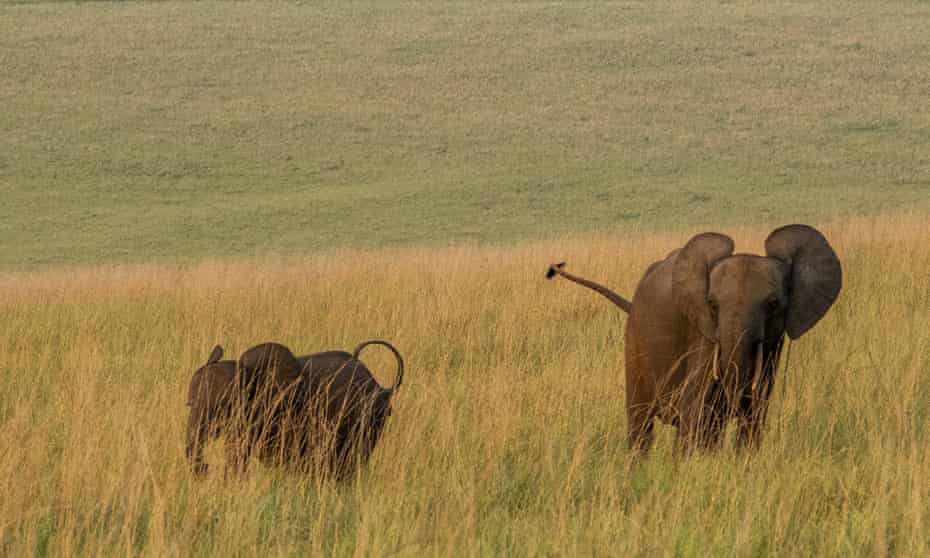
Talks ahead of the key Cop15 summit on halting mass extinction of life were slow – and much has been asked of the developing world
Forest elephants in Gabon’s Pongara national park. The country, which is the last bastion of the sub-species, called for developed countries to provide $100bn a year of biodiversity finance in Geneva.Photograph: Jérôme Delay/AP
For talks that are meant to be about halting the mass extinction of life on Earth, the slow pace of negotiations in Geneva ahead of Cop15, the major biodiversity summit in Kunming,China, later this year, was not a hopeful sign that meaningful action would follow. As discussions drew to a close this week, little progress was made on the targets and goals that are meant to herald nature’s “Paris moment”.
Register now for FREE unlimited access to Reuters.com
Register
Summary
Ukraine takes back more territory near Kyiv
Huge fire in Russian logistics hub as peace talks resume
Gas still flowing to Europe despite Putin threat
Red Cross convoy again fails to reach besieged Mariupol
Workers collect the bodies in recaptured Irpin
DMYTRIVKA, Ukraine, April 1 (Reuters) – Ukraine recaptured more territory around Kyiv from Russian soldiers who left shattered villages and their own abandoned tanks as they moved away from the capital, while a disputed cross-border strike in Russia complicated peace talks on Friday.
In the hamlet of Dmytrivka to the west of the capital, smoke was still rising from the wrecks of tanks and the bodies of at least eight Russian soldiers lay in the streets, Reuters correspondents saw.read…




 presence. Her adorable chirps, peeps and trills pulled at Karen’s heartstrings as she scooped her up and brought her inside her home.