Will Putin ever be held responsible for the atrocities we’re seeing in Bucha?

Simon Jenkins

History has shown that international justice can be difficult to achieve, but that doesn’t mean Zelenskiy shouldn’t try
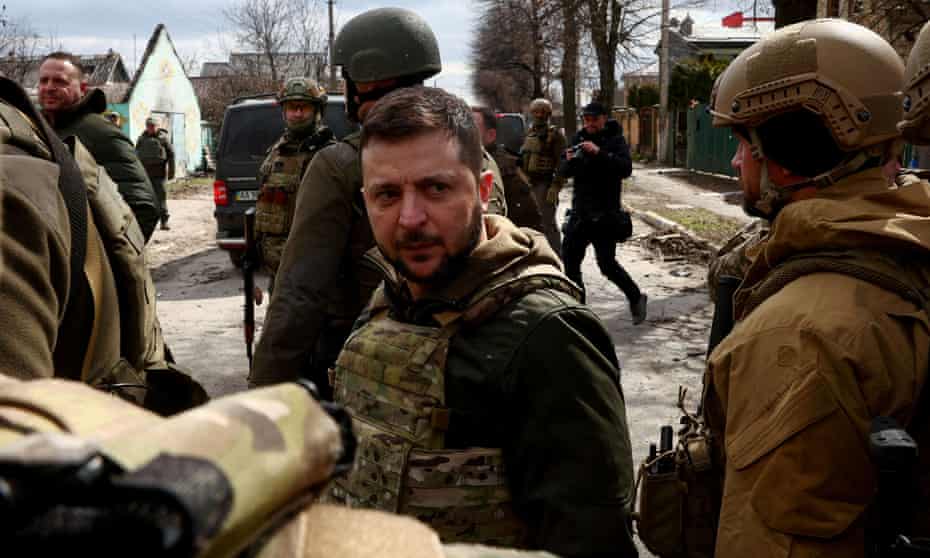
Volodymyr Zelenskiy with Ukrainian servicemen in Bucha, 4 April 2022.
‘The cruelties of war need constant publicising and the west should offer every assistance.’ Volodymyr Zelenskiy with Ukrainian servicemen in Bucha, 4 April 2022. Photograph: Marko Đurica/Reuters

Mon 4 Apr 2022 11.07 EDT

The evidence of atrocities by Russian troops as they retreat from central Ukraine is appalling. Denials and claims of fabrication out of Moscow are worthless. The alleged massacres in Bucha and elsewhere cannot be put down to the indiscipline of war. After a month of targeted destruction of homes, hospitals and schools, they indicate a systematic campaign of terror against an entire population. They recall the worst depravities of the second world war.

The conflict in Ukraine is mutating from an all-embracing Russian conquest to the strategic exploiting of separatists in Donbas to strengthen Russia’s position on the Black Sea. It has become an escalation of a secessionist war that began in 2014. From that, Nato and the western world have largely, and probably rightly, held aloof.

Advertisement

But how should the outside world react to the new revelations? The suffering of peoples in conflicts far from Europe tends to pale against suffering “on our doorstep”, when screened nightly on television. Afghanistan’s two decades of western intervention have led millions of Afghans to face starvation, largely through western sanctions. Of their agony the news is silent.

That does not make Ukraine’s suffering any less real. This week the country’s president, Volodymyr Zelenskiy, set up an inquiry to collect evidence of Russian war crimes. These may include breaches of Geneva conventions on the conduct of war, acts of genocide and crimes against humanity. As the international lawyer Philippe Sands has pointed out, “the real issue that prosecutors will face” with regard to these crimes is whether they can “trace responsibility right up to the leadership”. This requires fixing responsibility for frontline behaviour on a superior authority. In Ukraine, it would require evidence that Vladimir Putin ordered or knowingly permitted atrocities. His possible defence – he could not be accountable for the fog of war or the horrors of battle – would have to be rebutted.

The first indictment of a sitting head of state before an international tribunal was Yugoslavia’s Slobodan Milošević in 1999. He was charged with counts emerging from seven massacres. His laborious trial dragged on for six years until in 2006 he died, unconvicted, in prison. By then Yugoslavia had moved on and the trial had lost retributive or deterrent impact. This illustrates Zelenskiy’s difficulty, but should not discourage him from proceeding. The cruelties of war need constant publicising and the west should offer every assistance.

Another judicial route proposed by Sands and others is a tribunal into the crime of aggression in particular. Here the argument is that all actions by soldiers result from decisions by their leaders, including unprovoked aggression against a foreign state. Putin could not wriggle off this hook. His generals, even his seemingly vanished defence secretary, Sergei Shoigu, could argue that they were obeying no orders but his.

Whether at the Nuremberg trials or with the signing of the charter of the United Nations, international action has struggled to outlaw attacks on one sovereign state by another. It concentrates responsibility at the point of authority, be it democratic or authoritarian. It seeks to bring international law and morality to the service of peace. Law-law is better than war-war.

While superficially attractive, such an approach would face uncomfortable hurdles. It would probably require UN security council initiative, which would be vetoed by Russia and possibly China. More to the point, many UN members hardly have clean hands on aggression. Western interventions in Yugoslavia in 1999 and Iraq in 2003 were of dubious legality, as have been other interventions around the world by Nato or its members, however noble the intentions.

Ed Vulliamy

Meanwhile, Boris Johnson and other western leaders gaze at the images from Bucha and reflexively agree that something must be done, and the only thing they can think of is “ever tougher sanctions”. Despite being the most savage ever imposed on an economy of comparable size, they have patently failed to dent Putin’s resolve. Admittedly unreliable polls indicate little domestic opposition to him, whether among the Russian people or the Moscow elite. A sense of embattlement and cultural ostracism has seen both groups hunker down in a patriotic trench. Putin’s decisions are governed by battles not sanctions, by tanks not banks. If the west wants to help Ukraine it should do so by proxy, by sending weapons.

History offers scant evidence that decisions taken in the heat of war are governed by economics. The historian Nicholas Mulder finds the US withdrawal of financial support from Britain over Suez in 1956 as one of the few examples of it having any impact on policy. Plenty of sanctions “hurt” – usually poor people – but almost none can be shown to have the slightest bearing on a victim state’s conduct of a conflict. As for driving the price of Europe’s gas, oil and grain through the roof, sanctions may make outsiders “feel Ukraine’s pain”. They will not relieve it, any more than currently traumatising Europe’s political economy for years to come will help a postwar recovery.

We should not ignore the most lasting weapon, the tribunal of world opinion. The pictures of Bucha are being seen on the streets not just of Europe and the US but across the world. Russia’s reputation is being badly damaged. There will come a point when the cries of an outraged world penetrate even Moscow’s mendacious publicity machine and set the record straight. As for Putin, he has merely assured himself of pariah status for life. His yacht will never drop anchor in a western harbour.

  • Simon Jenkins is a Guardian columnist

IPCC: Window to avert catastrophic climate change is quickly closing

Yahoo News

Ben Adler

·Senior Editor

https://news.yahoo.com/ipcc-window-to-avert-catastrophic-climate-change-is-quickly-closing-161926811.html

Mon, April 4, 2022, 9:19 AM·6 min read

The Intergovernmental Panel on Climate Change on Monday released its latest report, which found that nations are falling short of their pledges to reduce greenhouse gas emissions in order to avert catastrophic climate change. While the technology exists to stay below 1.5 degrees Celsius (2.7 Fahrenheit) of average global temperature increase — the goal that virtually every nation agreed to in the 2015 Paris climate agreement and reaffirmed last year in the Glasgow Climate Pact — current policies put the world on a trajectory toward at least twice as much warming.

The YodelFree. Cancel anytime

A daily roundup of news, sports, finance, and more. See latest

By subscribing, you are agreeing to Yahoo’s Terms and Privacy Policy.

United Nations Secretary-General António Guterres called the report’s conclusion “damning.” The Working Group III report marks the end of the IPCC’s Sixth Assessment, with strong words for countries that have failed to act on climate change.

“The jury has reached a verdict. And it is damning,” Guterres said in a statement. “This report of the Intergovernmental Panel on Climate Change is a litany of broken climate promises. It is a file of shame, cataloging the empty pledges that put us firmly on track towards an unlivable world.”

The IPCC report included 278 authors from 65 countries reviewing over 18,000 scientific papers.

Smoke billows from several massive chimneys at a coal-fired power station.
Smoke billows from the chimneys at the coal-fired Lethabo power station in Vereeniging, South Africa, in 2018. (Themba Hadebe/AP)

According to their findings, to meet the 1.5°C target, global greenhouse gas emissions have to start dropping in 2025 and go down 43% from current levels by 2030 — and 84% by 2050. Achieving that requires ambitious actions from large emitters such as the United States, the European Union and China in the next few years. Waiting longer, the scientific consortium warned, will mean economic losses from the impacts of climate change such as drought, wildfires and sea level rise. Even limiting warming to 2°C (3.6°F) would require peaking emissions by 2025 and cutting them by roughly one-quarter by 2030.

Without a dramatic shift in policy, Guterres warned, “We are on a fast track to climate disaster: Major cities under water. Unprecedented heatwaves. Terrifying storms. Widespread water shortages. The extinction of a million species of plants and animals.”Story continues

Climate change: Scientists race to finish key IPCC report

Matt McGrath
Environment correspondent
@mattmcgrathbbcon TwitterPublished1 day agoShare

https://www.bbc.com/news/science-environment-60959306

Related Topics

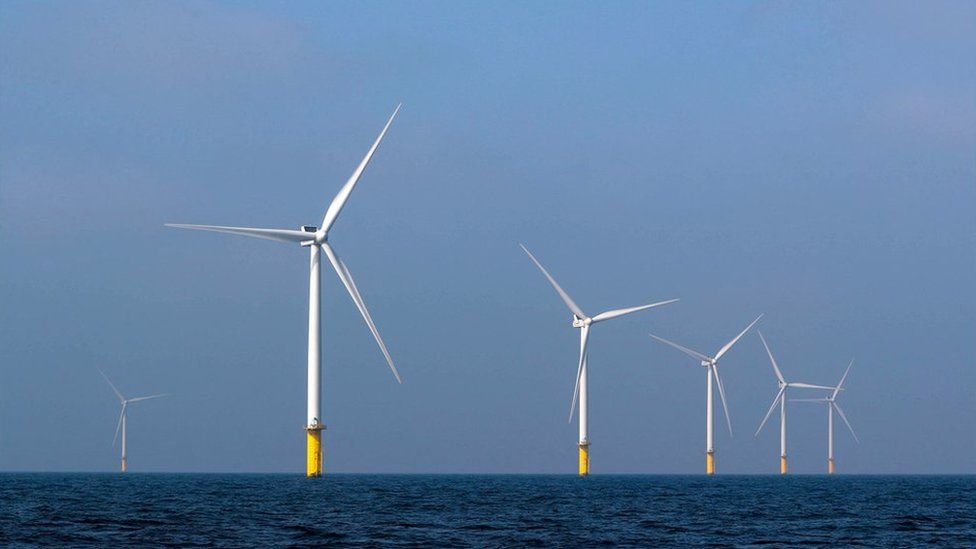
wind turbines

UN scientists have worked through the weekend to complete a key report on how to restrict the greenhouse gases that are warming the planet.

Members of the Intergovernmental Panel on Climate Change are likely to advise a rapid shift from fossil fuels over the next 8 years.

They will also suggest the widespread use of carbon removal technology to limit dangerous warming.

But disputes over the exact wording of the document have delayed agreement.

The IPCC is set to publish their findings on what we can do to stem climate change on Monday.

Most of the world’s leading researchers on climate change are involved in the production of IPCC reports – their summaries of the latest science, produced every six or seven years, are used by governments in their negotiations on climate change, such as those that took place at COP26 last November.

https://buy.tinypass.com/checkout/template/cacheableShow?aid=tYOkq7qlAI&templateId=OTBYI8Q89QWC&templateVariantId=OTV0YFYSXVQWV&offerId=fakeOfferId&experienceId=EXAWX60BX4NU&iframeId=offer_0e763acc7b457c03340a-0&displayMode=inline&widget=template&url=https%3A%2F%2Fwww.bbc.com

These IPCC reports are seen as the best, if slightly conservative studies on the state of climate science.

For the past two weeks, IPCC scientists and government officials from all over the world have been locked in a virtual approval session, going through this latest report on how to stop climate change line by line.

This new study will be the third of three important documents from the IPCC issued over the past eight months.

The previous two have looked at the causes and impacts of climate change, but this one will focus on mitigation – or what we can do to stop it.

This essentially means that researchers will look at how we can reduce the amount of warming gases that are emitted from human activities.

One key part of the summary report will detail what the world can do between now and 2030 to limit heating.

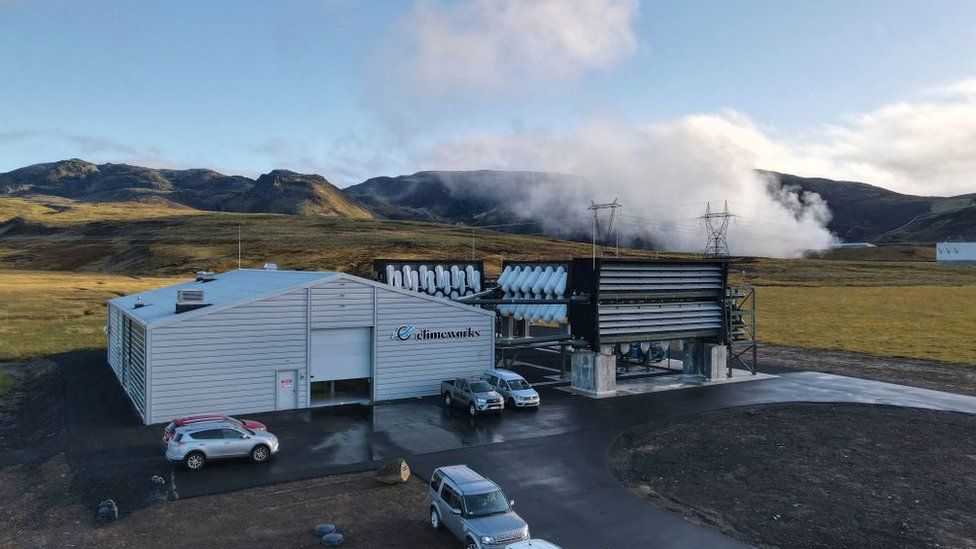
carbon removal
Image caption,Carbon removal technology, such as at this installation in Iceland, will be examined

IPCC scientists have previously warned that to keep the rise in global temperatures under 1.5C this century, emissions from warming gases would have to halve by the end of this decade.

In this new study, the researchers will likely be encouraging a rapid reduction in fossil fuel use, especially over the next eight years.

But this is sensitive territory – many large developing countries say that they should have the right to continue to use coal, oil and gas for longer, to help grow their economies.

Some major fossil fuel producers are also reluctant to embrace the urgency of cutting these fuels that scientists say is absolutely necessary.

Other countries have also taken issue with questions around the use of nuclear energy.

These divisions have seen the approval session continue way past its official closing time on Friday.

According to one person with knowledge of the proceedings, it is not a surprise that the talks are running late as everyone recognises the implications this report will have on decisions that will have to be taken in next few years.

Another key part of the report will be the focus on approaches to remove CO2 from the air.

Jim Skea
Image caption,Prof Jim Skea is one of the co-chairs of the latest IPCC report

The kind of carbon removal approaches the report will consider will likely include tree planting and agriculture, as well as the more advanced technological approaches that use large machines to remove the carbon from the air.

They will also look at combined approaches, where land is used to grow crops which can be burned for energy while the carbon is captured and buried.

The use of these types of technology is controversial. Campaigners express doubts that they can be made to work economically and there are also concerns that technology could be seen as an excuse not to make the major changes in energy production that are needed.

Scientists though say that the situation is now so serious that carbon dioxide removal will be needed in addition to massive cuts in emissions.

The discussions to approve the report’s Summary for Policymakers, due on Monday, have been one of the longest in IPCC history.

Delegates worked through Saturday night and well into Sunday to finish the document.

What Would a Hydrogen Bomb Do to the Pacific Ocean?

Exposing the Big Game's avatarThe Extinction Chronicles

http://www.dailygalaxy.com/my_weblog/2017/09/this-weeks-planet-earth-report-how-a-hydrogen-bomb-would-affect-the-pacific-ocean-to-supernova-withi.html

Maxresdefault

Betelgeuse Supernova And Its Impact On Earth – Science Documentary

Were a supernova to go off within about 30 light-years of us, that would lead to major effects on the Earth, possibly mass extinctions. X-rays and more energetic gamma-rays from the supernova could destroy the ozone layer that protects us from solar ultraviolet rays.

What Would a Hydrogen Bomb Do to the Pacific Ocean? 

Maxresdefault

The latest fiery exchange between the United States and North Korea has produced a new kind of threat. On Tuesday, during his speech at the United Nations, President Trump said his government would “totally destroy North Korea” if necessary to defend the United States or its allies. On Friday, Kim Jong Un responded, saying North Korea “will consider with seriousness exercising of a corresponding, highest level of hard-line countermeasure in history.”

The North Korean leader didn’t elaborate on the nature of this…

View original post 364 more words

Ukraine documents alleged atrocities by retreating Russians

Exposing the Big Game's avatarThe Extinction Chronicles

It looked like a ‘scene from a horror movie,’ said according adviser to Ukrainian President Zelenskyy

Associated Press

https://www.foxnews.com/world/ukraine-documents-alleged-atrocities-by-retreating-russians

Fox News Flash top headlines for April 2

Fox News Flash top headlines are here. Check out what’s clicking on Foxnews.com.

NEWYou can now listen to Fox News articles!

Listen to this article

0:00 / 7:271X

BeyondWords

Ukrainian troops are finding brutalized bodies and widespread destruction in suburbs of the capital as Russian soldiers withdraw and Moscow focuses its attacks elsewhere, including missile strikes Sunday that targeted fuel and ammunition supplies in southern and eastern Ukraine.

Associated Press journalists in Bucha, a small city northwest of Kyiv, saw the bodies of at least nine people in civilian clothes who appeared to have been killed at close range. At least two had their hands tied behind their backs. The AP also saw two bodies wrapped…

View original post 1,356 more words

Putin a ‘war criminal’ decries Biden after graphic images of atrocities emerge from war

Exposing the Big Game's avatarThe Extinction Chronicles


by AAMER MADHANI, ZEKE MILLER and CHRIS MEGERIAN | The Associated PressMonday, April 4th 2022

https://komonews.com/news/nation-world/biden-putin-should-face-war-crimes-trial-for-bucha-killings

UserWay icon for accessibility widget

FILE - A damaged gas mask lies on the pavement at a Russian position which was overran by Ukrainian forces, outside Kyiv, Ukraine, March 31, 2022. Russia’s assault on Ukraine and its veiled threats of using nuclear arms have policymakers questioning how the West should respond to a Russian battlefield explosion of a nuclear bomb. The default U.S. policy answer, say some architects of the post-Cold War nuclear order, is with discipline and restraint. (AP Photo/Vadim Ghirda, File)

A woman kisses a man while cooking on an open fire outside an apartment building which had no electricity, water or gas since the beginning of the Russian invasion in Bucha, Ukraine, Sunday, April 3, 2022. (AP Photo/Vadim Ghirda)

A mass grave in Bucha, on the outskirts of Kyiv, Ukraine, Sunday, April 3, 2022. Ukrainian troops are finding brutalized bodies and widespread destruction in the suburbs of Kyiv, sparking new calls for a war crimes investigation and sanctions against Russia. (AP Photo/Rodrigo Abd)

47

VIEW ALL PHOTOS

View All Photos

FILE – A damaged gas mask lies on the pavement at a Russian position which was overran by Ukrainian forces, outside Kyiv, Ukraine, March 31, 2022. Russia’s assault on Ukraine and its veiled threats of using nuclear arms have policymakers questioning how the West should respond to a Russian battlefield explosion of a nuclear bomb. The default U.S. policy answer, say some architects of the post-Cold War nuclear order, is with discipline and restraint. (AP Photo/Vadim Ghirda, File)

Facebook Share Icon

Twitter Share Icon

Email Share Icon

**GRAPHIC WARNING: This story contains graphic images of war. Discretion is advised.**

WASHINGTON (AP) — President Joe Biden on Monday called for a war crimes trial against Russian President Vladimir Putin and said he’d seek more sanctions afterreported atrocities in Ukraine.

You saw what happened in Bucha,” Biden said. He added…

View original post 251 more words

SCIENTIST SAYS THAT HUMANS ARE ALMOST CERTAINLY GOING EXTINCT

Exposing the Big Game's avatarThe Extinction Chronicles

HUMANITY MIGHT “ALREADY BE A DEAD SPECIES WALKING.”

GETTY IMAGES https://futurism.com/the-byte/scientist-humans-going-extinct?fbclid=IwAR39QN6_kZr0i0dGvpDYTRbVHSEh_9u2kYHkAL7oNxU43gWAVoxjG5B875k

Apocalypse When

Our days on Earth may be numbered.

In fact, by the end of this century, the global population could start its inevitable decline, paleontologist andNatureeditor Henry Gee argued in anewopinion piece forScientific American— and he’s not shy about using the word “extinction.”

“I suspect that the human population is set not just for shrinkage but collapse — and soon,” he wrote.

Extinction Debt

Gee points to lack of genetic variation, falling birth rates, pollution, and stress caused by living in overcrowded cities as a recipe for disaster.

ADVERTISEMENT

“The most insidious threat to humankind is something called ‘extinction debt,’” Gee explained. “There comes a time in the progress of any species, even ones that seem to be thriving, when extinction will be inevitable, no matter what they might do to avert it.”

View original post 118 more words

Hunting dog attacked by wolf in U.P.

Exposing the Big Game's avatarCommittee to Abolish Sport Hunting Blog

Updated: Apr. 01, 2022, 11:49 a.m. |Published: Apr. 01, 2022, 11:08 a.m.

Michigan DNR
Michigan Department of Natural Resources (Joel Bissell | MLive)

facebook

twitter

1,088

shares https://www.mlive.com/news/2022/04/training-dog-expected-to-recover-after-wolf-attack-in-marquette-county.html

ByBrandon Champion | bchampio@mlive.com

MARQUETTE, Mi – A hunting dog is recovering after it was bitten by a wolf and carried into the woods in Michigan’s Upper Peninsula.

WLUC-TV reportsthe attack occurred near the Forestville Trailhead in Marquette on Tuesday. The training dog is OK and is expected to make a full recovery, its owner told WLUC. It was bitten on the hind leg.

The DNR told the TV station that a man was training his hunting dogs. One of the dogs was baying at a rabbit when a wolf approached and carried the dog farther into the woods.

The incident hasrenewed conversations and debatesaround Michigan’s often-discussed and routinely proposed wolf hunt. Thelast wolf hunt in Michiganwas in 2013.

The…

View original post 154 more words

Even The Currents in The Ocean’s Depths Can’t Escape The Effects of Climate Change

Exposing the Big Game's avatarThe Extinction Chronicles

(mattpaul/RooM/Getty Images)

ENVIRONMENT

DAVID NIELD

https://www.sciencealert.com/global-warming-speeds-up-currents-in-the-deepest-parts-of-the-ocean

3 APRIL 2022

We know that global warmingaffects ocean currentsin a variety of ways, but questions remain about exactly how this relationship works. A new study attempts to answer some of those questions.

https://71b09fbee079a106984a95333ac64bb5.safeframe.googlesyndication.com/safeframe/1-0-38/html/container.html

Scientists pored over data stretching back 66 million years over 293 sites, looking at gaps in sedimentary layers, known as hiatuses, to figure out the varying strength of ocean currents across the millennia and how this relates to temperature changes.

Doing so provided a wealth of extra data beyond the 30 years or so of satellite imagery that researchers traditionally used to look at how ocean current activity changes as the temperature of the globe keeps on rising.

“The satellite data typically used to inform ocean models only cover a few decades, leading to a poor understanding of longer-term ocean variability,”says sedimentologist Adriana Dutkiewiczfrom the University…

View original post 345 more words

Iowa’s bird flu death toll tops 13 million

Jared Strong, Iowa Capital Dispatch

April 02, 2022

https://www.rawstory.com/iowas-bird-flu-toll-tops-13-million/


Iowa’s bird flu death toll tops 13 million

White chickens on a farm (Shutterstock)

https://trinitymedia.ai/player/trinity-player.php?pageUrl=https%3A%2F%2Fwww.rawstory.com%2Fiowas-bird-flu-toll-tops-13-million%2F&pageURL=https%3A%2F%2Fwww.rawstory.com%2Fiowas-bird-flu-toll-tops-13-million%2F&unitId=2900005331&userId=aa6acdfb-c793-4877-bf20-917b22506359&isLegacyBrowser=false&version=20220401_7516371e8d11faf71e9254ae1c1c1445db5784a0&useCFCDN=0&adsDurationThreshold=16&themeId=140

Two more poultry flocks in Iowa — including one with more than 5 million egg-laying chickens — were infected by a deadly and highly contagious avian influenza, the Iowa Department of Agriculture and Land Stewardship reported Friday.

The new detections of the virus were in a massive commercial egg-laying flock in Osceola County, and in a flock of about 88,000 turkeys in Cherokee County.

The virus was confirmed in those flocks on Thursday, the end of the first month of such outbreaks in the state this year. There were a total of 12 detections in nine counties that affected at least 13.2 million birds.

Secretary of Agriculture Mike Naig has said the threat of infection could loom for another two months as wild birds migrate through the state. Those birds are the likely carriers of the virus and can be asymptomatic if they are infected. The virus is often deadly for domestic birds.Skip in 5s

https://imasdk.googleapis.com/js/core/bridge3.508.0_en.html#goog_1246546876

https://imasdk.googleapis.com/js/core/bridge3.508.0_en.html#goog_242097511

https://imasdk.googleapis.com/js/core/bridge3.508.0_en.html#goog_1147598000

javascript:window.parent%5B%2296d72876-2745-63a5-1007-d5d3400595a6%22%5D.run(%7Bwnd%3Awindow%2Csjs%3A%22javascript%3Afalse%22%7D)

javascript:window.parent%5B%2296d72876-2745-63a5-1007-d5d3400595a6%22%5D.run(%7Bwnd%3Awindow%2Csjs%3A%22javascript%3Afalse%22%7D)

javascript:window.parent%5B%2296d72876-2745-63a5-1007-d5d3400595a6%22%5D.run(%7Bwnd%3Awindow%2Csjs%3A%22javascript%3Afalse%22%7D)

Infected flocks are culled as quickly as possible to limit the risk of transmitting the virus to other nearby facilities.

The vast majority of the affected birds in Iowa have been egg-laying chickens due to the size of their flocks. The virus was previously found in a Buena Vista egg-laying flock of more than 5.3 million.

ADVERTISEMENT

https://googleads.g.doubleclick.net/pagead/ads?gdpr=0&us_privacy=1—&client=ca-pub-5155643920455169&output=html&h=280&slotname=3833448356&adk=3304317237&adf=4134147269&pi=t.ma~as.3833448356&w=594&fwrn=4&fwrnh=100&lmt=1649022994&rafmt=1&psa=1&format=594×280&url=https%3A%2F%2Fwww.rawstory.com%2Fiowas-bird-flu-toll-tops-13-million%2F&fwr=0&fwrattr=true&rpe=1&resp_fmts=3&wgl=1&uach=WyJXaW5kb3dzIiwiMTAuMC4wIiwieDg2IiwiIiwiOTkuMC40ODQ0LjgyIixbXSxudWxsLG51bGwsIjY0IixbWyIgTm90IEE7QnJhbmQiLCI5OS4wLjAuMCJdLFsiQ2hyb21pdW0iLCI5OS4wLjQ4NDQuODIiXSxbIkdvb2dsZSBDaHJvbWUiLCI5OS4wLjQ4NDQuODIiXV0sZmFsc2Vd&dt=1649022986202&bpp=22&bdt=889353&idt=2396&shv=r20220330&mjsv=m202203300101&ptt=9&saldr=aa&abxe=1&prev_fmts=0x0&nras=1&correlator=6000902197087&frm=20&pv=1&ga_vid=584263985.1649022100&ga_sid=1649022994&ga_hid=1779144112&ga_fc=1&u_tz=-420&u_his=1&u_h=640&u_w=1139&u_ah=607&u_aw=1139&u_cd=24&u_sd=1.2&dmc=4&adx=129&ady=2729&biw=1123&bih=504&scr_x=0&scr_y=201&eid=44759876%2C44759927%2C44759842%2C21066434%2C31065371%2C31065545%2C31066008&oid=2&pvsid=4373986635310922&pem=349&tmod=1237536394&uas=3&nvt=1&ref=https%3A%2F%2Fnews.google.com%2F&eae=0&fc=1920&brdim=0%2C0%2C0%2C0%2C1139%2C0%2C1139%2C607%2C1139%2C504&vis=1&rsz=%7C%7CoEebr%7C&abl=CS&pfx=0&fu=128&bc=31&ifi=2&uci=a!2&btvi=1&fsb=1&xpc=IwGvF0CIg1&p=https%3A//www.rawstory.com&dtd=8288

The state is the country’s top egg producer and has about 60 million laying hens, Naig has said. The infected flocks account for about 21% of that total. Naig expects food prices to increase because of the virus.

“If we continue to see the spread of (highly pathogenic avian influenza) and affecting more and more sites … I think you could very well see a change in price and even availability,” he said in an appearance on Iowa Press on Friday. “Now, the good news about the poultry industry is they can restock quickly — they can rebuild populations.”

The virus is unlikely to infect humans, and eggs and meat from infected flocks are discarded.

In 2015, a deadly bird flu outbreak led to the culling of more than 32 million birds in Iowa, which accounted for about two-thirds of the affected birds in the United States that year.

Iowa’s affected birds this year account for 59% of the country’s current 22.4 million total, according to U.S. Department of Agriculture data. The virus has been detected in commercial and backyard flocks in about two dozen states.

The rate of the detections in Iowa has been accelerating. The first was March 1 in a backyard flock in Pottawattamie County. Half of the state’s detections so far occurred in the past week, and all of them were at commercial facilities.

“Maybe we’re approaching the end — maybe we’re just getting started,” Naig said of the virus detections. “Time will tell.”.indent2Container { margin-left: 1em; border-left: solid 1px var(–brand_one); padding-left: 2em; }

Here are the flocks that were infected in Iowa in March:

— March 1: A backyard flock of 42 chickens and ducks in Pottawattamie County.
— March 6: A commercial flock of about 50,000 turkeys in Buena Vista County.
— March 10: A commercial flock of about 916,000 egg-laying chickens in Taylor County.
— March 17: A commercial flock of more than 5.3 million egg-laying chickens in Buena Vista County.
— March 20: A backyard flock of 11 chickens and ducks in Warren County.
— March 23: A commercial flock of about 54,000 turkeys in Buena Vista County.

https://b4fe2956812fd804fe46fa262df73ae0.safeframe.googlesyndication.com/safeframe/1-0-38/html/container.html

— March 25: A commercial flock of about 250,000 young hens in Franklin County.
— March 28: A commercial flock of about 28,000 turkeys in Hamilton County.
— March 28: A commercial flock of about 1.5 million egg-laying chickens in Guthrie County.
— March 29: A commercial flock of about 35,500 turkeys in Buena Vista County.

https://b4fe2956812fd804fe46fa262df73ae0.safeframe.googlesyndication.com/safeframe/1-0-38/html/container.html

— March 31: A commercial flock of more than 5 million egg-laying chickens in Osceola County.
— March 31: A commercial flock of about 88,000 turkeys in Cherokee County.

https://b4fe2956812fd804fe46fa262df73ae0.safeframe.googlesyndication.com/safeframe/1-0-38/html/container.html

Iowa Capital Dispatch is part of States Newsroom, a network of news bureaus supported by grants and a coalition of donors as a 501c(3) public charity. Iowa Capital Dispatch maintains editorial independence. Contact Editor Kathie Obradovich for questions: info@iowacapitaldispatch.com. Follow Iowa Capital Dispatch on Facebook and Twitter.