Since the start of the war in Ukraine, there has been a lot of speculation about Russia’s military strategy and President Vladimir Putin’s geostrategic…
A person hunting. One type of hunting is called hunting for sport, and it refers to hunting for entertainment. Photo by Tima Miroshnichenko/Pexels
The Cambridge Dictionary defines “hunting” as “chasing and killing an animal or bird for food, sport, or profit.” Now when it comes to debating the morality of hunting, there’s an endless pit of conflicting arguments that could be covered. However, if we zoom in on hunting “for sport” in particular, the ethical waters become significantly less murky and a clear answer always emerges: sport hunting is simply unnecessary and highly problematic.
I want to make it clear that we aren’t debating hunting out of necessity, food, environmental conservation/population control, or the plethora of other topics that are used as a basis to criticize hunting. This is simply criticizing the…
Cases of humans exploiting and abusing animals have only risen with time. However, a country in South America has taken a step in the right direction and made sure that wild animals get the rights they deserve and live freely without being exploited.
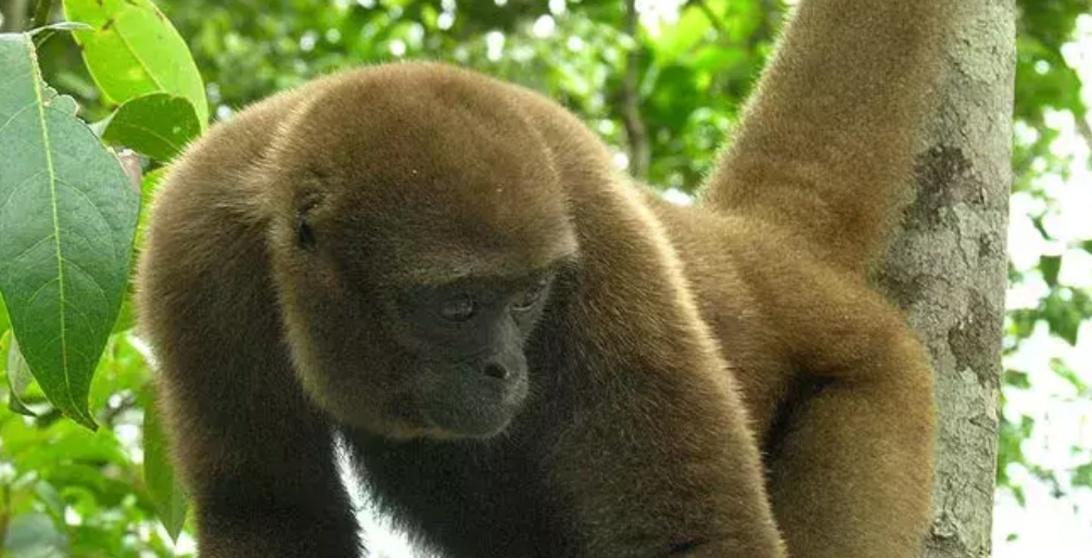
Ecuador, a South American country has become the first country in the world to give legal rights to wild animals. The highest court in the country has ruled in favour of the case that focused on a woolly monkey who was taken from her home to a zoo, where she passed just a week later.
Unsplash
Estrellita was just a month old when she was taken away from the wild so that she could become a pet for librarian Ana Beatriz Burbano Proaño.
Proaño took care of Estrellita for 18 years, however, was seized by authorities in 2019, as owning wild animals is illegal in the South American country. After being relocated to a zoo, the monkey sadly died. Following the tragic incident, the owner Ana Beatriz Burbano Proañ filed a habeas corpus asking the court to rule that the monkey’s rights were violated.
The court decided to rule in favour of Estrellita and said that her rights had been violated by the government. However, they added that the animal’s rights were also violated by the owner when she removed her from her natural habitat at a young age.
Unsplash
A Harvard law professor, Kristen Stilt spoke to Inside Climate Newsabout the importance of Ecuador’s ruling. She said: “What makes this decision so important is that now the rights of nature can be used to benefit small groups or individual animals. “That makes rights of nature a far more powerful tool than perhaps we have seen before.”
Hugo Echeverria who is an environmental lawyer said in a press release: “This verdict raises animal rights to the level of the constitution, the highest law of Ecuador.
Unsplash
“While rights of nature were enshrined in the constitution, it was not clear prior to this decision whether individual animals could benefit from the rights of nature and be considered rights holders as a part of nature. “The Court has stated that animals are subject to rights protected by rights of nature.”
A renowned vaccine expert developed life-altering ringing in his ears after his second shot. Now he’s calling for research into a possible link.
A man gets a Covid-19 vaccination shot at a clinic in San Antonio on Jan. 9. The CDC and drugmakers have investigated anecdotal reports of tinnitus following Covid vaccination but have found no cause-and-effect link.Nick Wagner / Xinhua News Agency via Getty Images file
It was the shock of a loud whistle that almost caused Gregory Poland to veer off the road as he was driving home after getting his second Covid-19 vaccine.
“It startled me,” said Poland,who is 66 years old.“I thought it was a dog whistle going off right next to me.”
During a 2020 presidential debate, then-candidate Joe Bidenvowedthat if elected, “I would transition from the oil industry.” Now in office, he has transitioned America’s economy away from the domestic U.S. oil industry while strengthening foreign oil industries. As a result, Biden played a part in emboldening Russian President Vladimir Putin’s murderous Ukraine invasion.
In just over a year, Biden buckled under pressure from domestic environmentalists.
Biden isn’t alone in his dizzying doublespeak and unhelpful virtue signaling. Western Europeans (including the United Kingdom) also embrace this mantra: We won’t sully ourselves growing domestic oil…
Driving the news:TheWHOposted anewsletter on its websitethat states that it has received reports of sudden hearing problems — including tinnitus and ringing sounds — from those who received the COVID-19 vaccine.
Most people said they experienced these side effects within one day after the shot.
GRAND PORTAGE, Minn. (AP) — To administer this COVID test, Todd Kautz had to lie on his belly in the snow and worm his upper body into the narrow den of a hibernating black bear. Training a light on its snout, Kautz carefully slipped a long cotton swab into the bear’s nostrils five times.
For postdoctoral researcher Kautz and a team of other wildlife experts, tracking the coronavirus means freezing temperatures, icy roads, trudging through deep snow and getting uncomfortably close to potentially dangerous wildlife.
They’re testing bears, moose, deer and wolves on a Native American reservation in the remote north woods about 5 miles from Canada. Like researchers around the world, they are trying to figure out how, how much and where wildlife is spreading the virus.
E.J. Isaac, Roger Deschampe Jr., and Frank Manthey, who work in resource management for the Grand Portage Band of Lake Superior Chippewa, take biological samples from a deer they caught in a Clover trap in Grand Portage, Minn. on March 2, 2022. (AP Photo/Emma H. Tobin)
E.J. Isaac, fish and wildlife biologist for the Grand Portage Band of Lake Superior Chippewa, swabs a young buck for the coronavirus in Grand Portage, Minn. on March 2, 2022. (AP Photo/Laura Ungar)
E.J. Isaac, fish and wildlife biologist for the Grand Portage Band of Lake Superior Chippewa, places a swab into a vial after testing a young buck for the coronavirus in Grand Portage, Minn. on March 2, 2022. (AP Photo/Laura Ungar)
Scientists are concerned that the virus could evolve within animal populations – potentially spawning dangerous viral mutants that could jump back to people, spread among us and reignite what for now seems to some people like a waning crisis.
The coronavirus pandemic has served as a stark and tragic example of how closely animal health and human health are linked. While the origins of the virus have not been proven, many scientists say it likely jumped from bats to humans, either directly or through another species that was being sold live in Wuhan, China.
And now the virus has been confirmed in wildlife in at least 24 U.S. states, including Minnesota. Recently, an early Canadian study showed someone in nearby Ontario likely contracted a highly mutated strain from a deer.
“If the virus can establish itself in a wild animal reservoir, it will always be out there with the threat to spill back into the human population,” said University of Minnesota researcher Matthew Aliota, who is working with the Grand Portage Reservation team.
E.J. Isaac, a fish and wildlife biologist for the reservation that’s home to the Grand Portage Ojibwe, said he expects the stakes to get even higher with the start of spring, as bears wake from hibernation and deer and wolves roam to different regions.
“If we consider that there are many species and they’re all intermingling to some extent, their patterns and their movements can exponentially increase the amount of transmission that could occur,” he said.
Their research is meant to ward off such unwelcome surprises. But it carries its own set of risks.
Seth Moore, who directs the reservation biology and environment department, recently almost got bitten by a wolf.
And they sometimes team with a crew from the Texas-based company Heliwild to capture animals from the air. One chilly late-winter afternoon, the men climbed into a small helicopter with no side doors that lifted above the treetops. Flying low, they quickly spotted a deer in a forest clearing. They targeted the animal from the air with a net gun and dropped Moore off.
Wind whipped at his face as he worked in deep snow to quickly swab the deer’s nose for COVID, put on a tracking collar and collect blood and other biological samples for different research.
Wildlife experts are searching for the virus that causes COVID-19 in deer, bears, moose and wolves in Minnesota’s north woods. They are among researchers around the world trying to figure out how and where wildlife is spreading the coronavirus. (AP Video/Emma H. Tobin)
The men capture moose in much the same way, using tranquilizer darts instead of nets. They trap wolves and deer either from the air or on the ground, and trap bears on the ground.
They knew of the young male bear they recently tested because they had already been tracking it. To get to the den, they had to take snowmobiles to the bottom of a hill then hike a narrow, winding path in snow shoes.
When Kautz crawled part-way into the den, a colleague held his feet to pull him out quickly if necessary. The team also gave the animal a drug to keep it sleeping and another later to counteract the effects of the first.
Todd Kautz, a post-doctoral researcher from the State University of New York, lies on his belly to take biological samples from a hibernating bear in its den as a colleague holds his feet in Grand Portage, Minn. on March 2, 2022. (AP Photo/Laura Ungar)
A bear hibernates in a den in Grand Portage, Minn. on March 2, 2022. (AP Photo/Emma H. Tobin)
To minimize the risk of exposing animals to COVID, the men are fully vaccinated and boosted and get tested frequently.
The day after testing the bear, Isaac packed their samples to send to Aliota’s lab in Saint Paul. The veterinary and biomedical researcher hopes to learn not just which animals are getting infected but also whether certain animals are acting as “bridge species” to bring it to others. Testing may later be expanded to red foxes and racoons.
It’s also possible the virus hasn’t reached this remote location – yet. Since it’s already circulating in the wilderness of Minnesota and nearby states, Aliota said it’s only a matter of time.
LOOKING FOR MUTANTS
Close contact between humans and animals has allowed the virus to overcome built-in barriers to spread between species.
To infect any living thing, the virus must get into its cells, which isn’t always easy. Virology expert David O’Connor likens the process to opening a “lock” with the virus’ spike protein “key.”
ADVERTISEMENT
“Different species have different-looking locks, and some of those locks are not going to be pickable by the key,” the University of Wisconsin-Madison scientist said.
But other locks are similar enough for the virus to enter an animal’s cells and make copies of itself. As it does, it can randomly mutate and still have a key that fits in the human lock. That allows it to leap back to humans through close contact with live animals, scientists believe.
E.J. Isaac, fish and wildlife biologist for the Grand Portage Band of Lake Superior Chippewa, stands over an empty deer trap in Grand Portage, Minn. on March 1, 2022. (AP Photo/Emma H. Tobin)
A young buck peeks out from under a blanket while in a Clover deer trap. A wildlife team is testing the animal for the coronavirus and taking other biological samples in Grand Portage, Minn. on March 2, 2022. (AP Photo/Laura Ungar)
Although spillback is rare, it only takes one person to bring a mutated virus into the realm of humans.
Some think the highly mutated omicron variant emerged from an animal rather than an immune-compromised human, as many believe. Virologist Marc Johnson of the University of Missouri is one of them, and now sees animals as “a potential source of pi,” the Greek letter that may be used to designate the next dangerous coronavirus variant.
Johnson and his colleagues found strange coronavirus lineages in New York City sewage with mutations rarely seen elsewhere, which he believes came from animals, perhaps rodents.
What scientists are most concerned about is that current or future variants could establish themselves and multiply widely within a reservoir species.
One possibility: white-tailed deer. Scientists found the coronavirus in a third of deer sampled in Iowa between September 2020 and January 2021. Others found COVID-19 antibodies in a third of deer tested in Illinois, Michigan, New York and Pennsylvania. Infected deer generally have no symptoms. Testing in many other wild species has been limited or absent.
“It’s possible that the virus is already perhaps circulating in multiple animals,” said virology expert Suresh Kuchipudi of Pennsylvania State University, an author of the Iowa deer study. If unmonitored, the virus could leave people “completely blindsided,” he said.
CAN IT BE STOPPED?
Ultimately, experts say the only way to stop viruses from jumping back and forth between animals and humans — extending this pandemic or sparking a new one — is to tackle big problems like habitat destruction and illegal wildlife sales.
“We are encroaching on animal habitats like we have never before in history,” Aliota said. “Spillover events from wild animals into humans are, unfortunately I think, going to increase in both frequency and scope.”
To combat that threat, three international organizations — the United Nations Food and Agriculture Organization, the World Organization for Animal Health and the World Health Organization — are urging countries to make COVID surveillance in animals a priority.
In Grand Portage, Aliota’s collaborators continue to do their part by testing as many animals as they can catch.
The sun begins to set over Hollow Rock on frozen Lake Superior in Grand Portage, Minn. on March 3, 2022. (AP Photo/Emma H. Tobin)
Frank Manthey follows E.J. Isaac and Roger Deschampe Jr. into the Grand Portage, Minn. woods on March 2, 2022, to check traps they set to catch deer for scientific research for the Grand Portage Band of Lake Superior Chippewa. (AP Photo/Emma H. Tobin)
The sun rises over icy Lake Superior in Grand Marais, Minn., on March 3, 2022. (AP Photo/Emma H. Tobin)
With icy Lake Superior sparkling through the evergreens, Isaac slipped his hand beneath the netting of a deer trap. A colleague straddling the animal lifted its head off the snowy ground so that Isaac could swab its nostrils.
The young buck briefly lurched its head forward, but kept still long enough for Isaac to get what he needed.
“Nicely done,” his colleague said as Isaac put the sample into a vial.
When they were finished, they gently lifted the trap to let the deer go. It bounded into the vast forest without looking back, disappearing into the snowy shadows.
___
The Associated Press Health and Science Department receives support from the Howard Hughes Medical Institute’s Department of Science Education. The AP is solely responsible for all content.
Deosai Plateau in Northern Pakistan spread over 3,000 square kilometers is a place of astounding beauty, lush greenery, and biodiversity where the numbers of Himalayan bears were increasing previously, but now there’s a sharp decline in their population.
In five decades, the temperature has doubled compared to the rest of Pakistan, which is affecting not only the monsoon but also rapid changes on the plateau, making it difficult to see Himalayan brown bears.
In a documentary titled ‘Bears on the Brink- Deosai’ aired on The Express News, the filmmaker elucidated that the Himalayan brown bears are in danger of extinction, climate-changing is not only causing malnutrition but also creating human-bear conflict.
These bears have lost 98 per cent of their previous numbers worldwide. By 2050, all Himalayan brown…
The Canadian Food Inspection Agency says bird flu has been found at a poultry farm in southern Ontario.
The agency says the farm is under a strict quarantine, and the CFIA is establishing movement controls and recommending higher biosecurity at nearby farms.
It says it confirmed the presence of the highly pathogenic H5N1 strain of avian flu that is spreading around the world among wild birds.
There have been outbreaks at commercial and non-commercial farms in Nova Scotia and Newfoundland and Labrador in recent months.
WILLMAR, MINN. – Highly Pathogenic Avian Influenza (HPAI) has been confirmed in a commercial turkey flock in Meeker County, Minn., that supplies Jennie-O Turkey Store, a business unit of Hormel Foods Corp., Austin, Minn. Another case of HPAI also was found in a backyard flock in Mower County, Minn.
State officials have quarantined the affected premises and the flocks will be depopulated, according to the Animal and Plant Health Inspection Service of the US Department of Agriculture. The two confirmed cases of HPAI, which were disclosed on March 26, bring the total number of cases to 61 since Feb. 8, when a case was announced in a commercial turkey flock in Dubois, Ind.
“Jennie-O Turkey Store has been preparing for this situation and took extensive precautions to protect the health of the turkeys in its supply chain,” the company said…




 Unsplash
 Unsplash
 Unsplash


 This is a file photo of a hen. (Alison Burrell/Pexels)


