


Delaney Nolan – 7h agoFollow
React|136
Since Russia invaded Ukraine on February 24, an outcry has arisen around the world. On March 2, the UN voted overwhelmingly to approve a resolution demanding the end of the invasion, with only five countries opposing – Russia, Belarus, North Korea, Eritrea, and Syria. As the war rages on, thousands have been killed according to Ukrainian authorities and many more injured.
Experts Say $49 Smart Watch Is Must For Seniors

In response, the US, EU, UK and other countries have levelled sanctions, both general and targeted, and doors have closed to Russians around the world, from research institutions to sporting events, in protest at Russia’s invasion.
Sanctions have targeting banks, oil refineries, military and luxury product exports as well as members of the Russian regime and oligarchs with close ties to the Kremlin. Companies, too, have closed their doors in Russia, including fast-food giant McDonald’s which has temporarily shut its roughly 850 outlets.
Surveys have suggested that the majority of Russians support the invasion. But it is difficult to determine how reliable these surveys are, in light of new crackdowns on free speech and dissent in Russia, where even the use of the word “war” to describe the invasion is now a crime. In the meantime, sanctions affect every Russian citizen in their daily lives – both those who support and those who oppose the war, those at home and those abroad.
Al Jazeera spoke with five young Russians about their views on the invasion, and how the blowback has affected them.
© Provided by Al JazeeraGreen ribbons, anti-war symbols, are tied to trees and plants [Courtesy of an interviewee]
I’m doing OK, but the whole situation is quite tough. Literally, all of my friends and me are shocked. None of us wanted this war, and we stand in opposition to Russian President Vladimir Putin’s actions. But we have no right to express our position. At demonstrations, people are detained for several days or fined. Now, any anti-war speech can result in up to 15 years of imprisonment. Some of my friends are leaving the country right now, and I understand them.
Russian authorities want to declare Meta (which owns Facebook, Instagram, and WhatsApp) extremist. All those platforms will stop working in Russia, but I hope that with a VPN, it will be possible to continue using them.
I deleted some of my messages because the police check social media chats on public transportation. In addition, the police recently searched the flat of a close friend of mine and then put her under house arrest for two months. I was very frightened. She had been putting up posters that said “No to war” around the city. The investigation is ongoing, but she is fine. But the whole situation is awful, of course.
The situation is exacerbated by the fact that the older generation is drowning in propaganda and believes that Putin’s actions are justified.
It is surreal. I’ve already stopped communicating with my father and grandfather for a while.
Now, I’m very encouraged by the fact that the world understands that the Russian people did not choose this war, that instead it was started by a president who lives in some absurd reality of his own. And if I am not imprisoned soon for speaking out against war, I want to try – together with like-minded people – to do everything I can to give our country hope for a peaceful future.
© Provided by Al JazeeraA McDonald’s restaurant in Moscow’s Prospect Vernadskogo district [Courtesy of an interviewee]
When I think about the conflict, I feel anxious, sad, and frustrated. Mostly because I don’t understand how anyone could take this step – to send people to fight, to kill others. It’s scary.
On one hand, it’s affected everyone – psychologically, economically, and in many other ways. And on the other hand, I understand that we could be hurt if we did something to try and change it. It feels like we don’t have any control. Petitions and protests are forbidden. People are arrested for even walking around the area where a protest was scheduled.
Right now, we can see that the situation is changing every day, and we’re trying to figure out things like, “How can we pay for foreign goods if the bank doesn’t work?” Or, “What are we going to do with these publications, university admissions, and conferences that we’ve been rejected from because we are Russians?”
For example, we can’t access Zoom. And other specialised apps, like Matlab (a programming and computing platform) and Coursera (an online course platform). Also, prices for some ordinary things, like cosmetics and food, have doubled, but in many cases, we have no alternative because there are no factories here that produce those products.
I have a colleague in my laboratory who is a reviewer at an open access science publisher. Now, those who want to publish and are affiliated with Russia have been asked to withhold applications, though they have not yet been officially withdrawn. The same thing with conferences – international events that take place in Moscow are all cancelled.
It’s affected me. I was planning to publish this month. And we’re seeing products disappear from shelves – rice, flour, sugar, canned food – but I guess that’s really just because of mass panic. I have never seen empty shelves in stores in the centre before. Yesterday, I couldn’t buy contact lenses because they ran out in the store where I would normally buy them. It seems like it will close – I saw employees removing shelves and emptying boxes, and the light was turned off.
There aren’t long lines at ATMs any more, but we saw them a few days ago. Right now, we cannot withdraw other currencies at ATMs until September.
I was thinking about leaving Russia, but there is the problem of money – ticket prices have increased tenfold, and also, there’s no one waiting for me over there.
It’s hard to differentiate global problems from everyday ones, as you can see. But to combat the anxiety, we try to remember our connections with friends and family and enjoy the spring weather.
© Provided by Al JazeeraAn anti-war painting by Tatyana* describes a feeling that the world has changed forever and that it is vanishing [Courtesy of the interviewee]
I’m OK, physically. Mentally, I’m a bit of a wreck, but I’m managing.
I moved to Germany last year to get my Master’s. However, my whole family is in Russia.
I was planning to go see my family right about this time, but it doesn’t seem possible any more. I mean – there is probably a way to go to Russia, but almost zero way for me to come back to study, and as a new semester is coming, I’m not risking it. I have a residency permit right now, but it expires in May. Because of everything escalating so rapidly, I’m anxious about whether I’ll have issues renewing it due to me being Russian.
Due to Russian cards getting blocked and Russia being disconnected from SWIFT (the international payment system), my family had to send me some money in advance, just in case, and I had to withdraw it really quickly before I lost access to it.
My family has already seen changes in prices. My sister was struggling to get baby products for my nephew because the prices skyrocketed. One of my brothers-in-law and my father will potentially lose their jobs because their businesses worked very closely with European businesses, and all of those lines of communication are closed off now.
We have a distant relative who lives in southern Ukraine. Their town has been directly affected, so we are worried about them. Right now, they are relatively safe, but it’s a constant worry for my family.
We are all affected mentally, scared, and stressed. I’ve been struggling with my mental health for months and everything that’s happening is affecting that a lot.
I’m against the war, and most of my friends and people I know feel the same way. These are mostly people around my age with the same level of education. However, when it comes to family, I, unfortunately, do have a conflict with my parents. This has been pretty hard as we have very different views.
I can’t even really tell why they believe what they believe. It could be their Soviet past, or the government propaganda that has been poured out for so many years, or just that there is too much fear and anxiety to actually allow the thought that the world is different from what they expect. Regardless, I’m having a pretty hard time with it. Being far away from them helps because we try to prioritise keeping our relationship intact and caring for each other more than anything. Sometimes I can’t help but try to convince them, which obviously doesn’t work. For the record, they don’t support the war in general, they do want it to stop; however, they can justify it in their heads somehow.
© Provided by Al JazeeraA closed H&M shop on Avtozavodskaya Street in Moscow [Courtesy of an interviewee]
It’s true that all my favourite shops like H&M, Bershka, and P&B are closed. I’m a little bit upset because of this. However, I have my favourite Russian showrooms, so the spring collection will be great, too.
I just bought an iPhone. It was three days before the inflation. It was rather cheap, but now I want to buy AirPods and they’re really expensive. They were 7,000 roubles and now cost more than 14,000 roubles.
My friend was going to be a trainee at an international magazine publisher, but they stopped working in Russia on his first day there. As for me, I’m involved in the sports industry. I’m sure you know about the FIVB world volleyball championship 2022 which was planned in Russia. It won’t be in Russia, now. It’s like having your legs cut out from under you. It’s shocking. How do you live without the thing you were living for?
I got a government email saying that we had until March 14 to download all files from Instagram. After that, it wouldn’t work. TikTok isn’t available either. We have VK (a Russian substitute for Facebook), but it’s not the same.
I can’t even look at the word “Telegram” any more, it was on every story on Instagram. People were linking to new Telegram channels because Instagram is no longer working, saying, “Let’s keep in touch” or “This is my last story, see you on TG.”
Most of my friends say that our government is awful. I don’t support that view, but I do think we need some changes.
There were rallies against the war. But the older generations are for our president. One of my friends is against our government while her grandmother supports them, and I know that’s caused a quarrel between them.
My feelings are mixed regarding the decision of our president.
I want peace, but my grandmother thinks our military is needed to protect Russians in eastern Ukraine. Also, my neighbour is from western Ukraine. She supports our president, despite the fact that her whole family is still over there. When I hear it from Ukrainian people, I begin to doubt that our president’s strategy is wrong. Maybe Putin and his people know more and it’s really all justified. I hope so, and I hope they’ll stop it soon.
The situation in our economy isn’t good today. Our president should care about us, about his people. What about my future? I don’t want to live in isolation here.
I really cannot understand why Russians don’t have the right to eat in McDonald’s. Of course, that may be a strange example, but I just mean those of us who are against war still suffer from it.
© Provided by Al JazeeraAn anti-war sketch made by Katya, which shows text saying “Military operation” as crossed out, while under “War in Ukraine”, in brackets, is written “Road to nowhere” [Courtesy of Katya]
Most of the sanctions seem strange to me. The heads of government started this horror, but prohibitions and sanctions have been imposed on ordinary people. Closing ordinary stores and removing some food from shops is illogical. Why take away even something insignificant from ordinary people? We’re in deep s*** already. The world hates us all, that’s already enough.
As for me, personally, I lost the opportunity to move into my own apartment, which I was supposed to do soon because the renovations became too expensive. Because of this, I will have to live for a long time in a place where I’m not very comfortable.
I can do without access to the blocked social media platforms. But many Russians are being deprived not only of a meaningless feed with entertaining content, but also of memories, work, and also important and truthful information about what is happening, which can’t be obtained from a zombie box (television). They blatantly lie to us on there.
Where I am, people typically express their opinion at rallies, on social networks and among their inner circle. Usually, people will spread the word about protests secretly. But everyone who wants to participate can easily find out about it. For example, in certain online communities, they’ll just post a single number (indicating a date) and everyone understands everything. But I don’t feel safe expressing my opinion, especially when I talk about it online or on the phone. I don’t attend protests. It’s too scary, the idea of dying or being locked up for life. Plus, I can see that despite many years of huge protests, the people have not achieved anything at all. The government doesn’t need the people.
The majority of the people in Russia are against the war. Many shout about it openly, but it doesn’t end in anything good. We really want to help, but we haven’t been able to solve problems even in our own country, and now requests are flying around that we stop the war in another country. Trust me, we’re still trying. We write about it on social networks, sign petitions, send money, go to rallies, but so far this hasn’t yielded any results, the government only hits us with a truncheon.
And, well, if you really want to throw anger at someone, shout at least that Putin is an a****** and his retinue, and not ordinary citizens. What have we to do with it?
As told to Delaney Nolan.
Edited and condensed for clarity and length.
*Names have been changed at the interviewees’ request.
WARNING
PublishedMar. 18, 20224:37AM ET

Friday will mark the first time U.S. President Joe Biden and Chinese President Xi Jinping have personally spoken since Russia’s invasion of Ukraine, and the call is expected to be tense. The U.S. is convinced that China is preparing to back Russia’s war efforts in Ukraine and Biden is expected not to mince words about the potential fallout of such action, according to multiple news sources. Prior to Russia’s invasion of Ukraine, Vladimir Putin and Xi had signed a joint statement that included damning disapproval of any NATO expansion—Putin’s motivating force for the ruthless invasion. While it is unclear if Xi knew Putin’s full intent against Ukraine, China has not condemned it and, prior to the invasion, discounted the U.S. warning that an invasion was imminent. The two leaders are expected to discuss potential a number of issues, including the…
View original post 16 more words
https://www.cnn.com/2022/03/18/us/eastland-complex-fire-texas-evacuation-order/index.html
ByChristina Maxouris, CNN
Updated 1:27 PM ET, Fri March 18, 2022
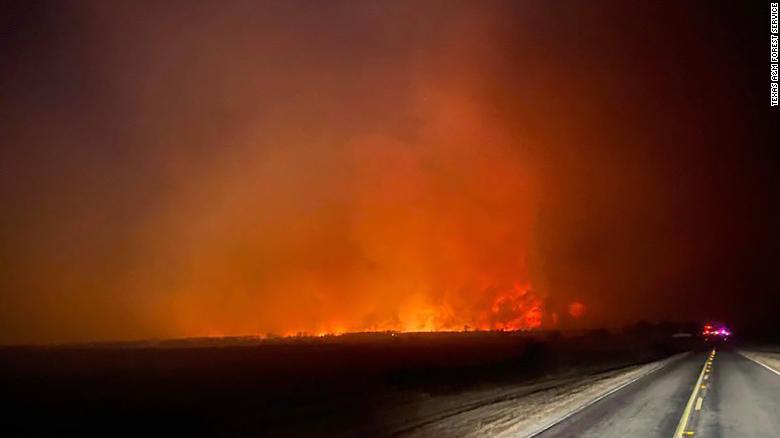
A rapidly growing fire in West Texas has charred more than 38,000 acres.
(CNN)Evacuation orders were in place across parts of several central Texas counties late Thursday as crews worked to contain the flamesin dangerous fire weather– fueled by strong winds and dry conditions.
Wildfires, which combined to form theEastland Complex blaze,have charred more than 45,000 acres, theTexas A&M Forest Servicereported Friday.
Evacuation orders were in effect for portions of Eastland, Brown and Comanche counties, and no injuries had been reported so far, said Kari Hines, a spokesperson with the Texas A&M Forest Service. About 475 homes in Gorman were evacuated, officials said in an update onthe national Inciwebwildfire information system.

A family walks through smoke Thursday after evacuating a mobile home park in Abilene, Texas.
At least…
View original post 637 more words
By

In apandemicfull of mixed messaging, you would not be alone if you found this past week inCovidnews particularly confounding.
While outbreaks in Europe and Asia are on the rise— and a spike in cases in the United States likely on the horizon, Congress this weekremoved $15 billionin Covid-related funding from a $1.5 trillion spending bill. The White House warns this will mean dire cuts to testing, treatment and vaccine distribution, with some services suspended as soon as next week. That same day theSenate voted to overturnthe public health order requiring masks on airplanes and public transit.
All of this has left many public health and infectious disease experts—and confused members…
View original post 1,603 more words
By
March 17, 20229:49am
Updated https://nypost.com/2022/03/17/cargo-ship-sinks-in-persian-gulf-off-iran/
Video Player is loading.
https://imasdk.googleapis.com/js/core/bridge3.505.0_en.html#goog_1478488221

Close
A massive cargo ship carrying cars sank in the Persian Gulf Thursday amid treacherous seas, authorities said.
The United Arab Emirates-flagged vessel, the Al Salmy 6, sank off Iran’s southern coast with 30 crew members aboard. Iranian rescue workers saved 16 of the crew and another 11 survivors got onto life rafts, Capt. Nizar Qaddoura of the Dubai-based Salem Al Makrani Cargo company said.
Another person was retrieved from the choppy seas by a nearby tanker…
View original post 192 more words
By
March 17, 2022 9:49am
Updated https://nypost.com/2022/03/17/cargo-ship-sinks-in-persian-gulf-off-iran/
Video Player is loading.
https://imasdk.googleapis.com/js/core/bridge3.505.0_en.html#goog_1478488221
Close
A massive cargo ship carrying cars sank in the Persian Gulf Thursday amid treacherous seas, authorities said.
The United Arab Emirates-flagged vessel, the Al Salmy 6, sank off Iran’s southern coast with 30 crew members aboard. Iranian rescue workers saved 16 of the crew and another 11 survivors got onto life rafts, Capt. Nizar Qaddoura of the Dubai-based Salem Al Makrani Cargo company said.
Another person was retrieved from the choppy seas by a nearby tanker, but two crew members were still in the sea, Qaddoura said. Rescue efforts were underway, but were hampered by bad weather.
The cargo ship, which is longer than a soccer field, capsized roughly 30 miles off the coast of Asaluyeh in Iran, according to its Ports & Maritime Organization.
Photos showed the ship, which departed Dubai days earlier, tilted dramatically onto its side at a precarious angle before becoming fully submerged. Its crew consists of nationals from Sudan, India, Pakistan, Uganda, Tanzania and Ethiopia, Qaddoura said.


The US Navy’s 5th Fleet, which patrols the Mideast, did not immediately return a request for comment, the Associated Press reported.
Severe weather descended onto the Persian Gulf Wednesday — with wind gusts exceeding 40 mph and high seas. Iran’s Meteorological Organization issued a “red alert” earlier this week, warning of possible impact to maritime activities through Saturday.
With Post wires
https://news.yahoo.com/is-europes-new-covid-surge-coming-to-america-next-090058064.html
·West Coast Correspondent
Thu, March 17, 2022, 2:00 AM·11 min read
While many Americans have decided the pandemic is “over” as it pertains to their own lives — a full 37 percent, according to the latest Yahoo News/YouGov poll — those who’ve been paying close attention to the latest COVID-19 developments overseas are now asking themselves two troublesome questions.
What the heck is happening in Europe? And is it about to happen in the U.S. too?
Over the last two weeks, COVID cases have shot up more than 25% across the European Union. In several European countries, the curve is even steeper: The United Kingdom (120%), Finland (88%) Switzerland (83%), Belgium (62%), Austria (59%), Germany (53%), Italy (49%), the Netherlands (45%) and France (27%). Hospitalizationsare starting to rise as well.
And it’s not just this new trajectory that’s alarming; it’s the fact that it’s coming…
View original post 1,953 more words
USA TODAY
https://www.usatoday.com/story/news/2022/03/17/st-patrick-day-saint/7039195001/
1:25
1:25
https://imasdk.googleapis.com/js/core/bridge3.505.0_en.html#goog_2124015500
Who was Saint Patrick and why do we celebrate him? Saint Patrick is the protecting and guiding saint of Ireland. Ironically, he was not Irish.
Saint Patrick went from being sold into slavery to being credited to bringing Christianity to Ireland, according to Elizabeth Stack, executive director for the Irish American Heritage Museum in Albany, New York.
“He had a dream that the Irish were crying for him that they needed him,” Stack said. “He returns to Ireland and brings Christianity with him. He is who made the Celts and the pagans into Christians.”
St. Patrick’s Day is celebrated on March 17, the day he is assumed to have died. The holiday originally was tied to religious ideals but now is also a symbol of Irish pride.
According to Stack, until around 40 years ago, it was a very traditional, religious and solemn time in Ireland. Bars even remained closed.
But things have changed. Fun symbols such as wearing green, leprechauns and shamrocks have been popularized during this holiday. Yet, what are their actual meanings?
Reviewed:10 festive St. Patrick’s Day items from HSN to help you celebrate in style
Is corned beef really Irish?:Your St. Patrick’s Day meal is more American than you think
Saint Patrick was born in Britain in 386.
At 16, he was captured by pirates and brought to Ireland where he was sold as a slave, according to Stack.
“He spent his days and his nights in the fields tending the sheep and praying, a steady routine of prayer and labor which reshaped the rest of his life,” Matthew Paul Grote, a Catholic priest with the Order of Preachers, said in a statement to USA TODAY. “It was after six years of this that he heard the voice of God in a dream, directing him to a boat which would take him home.”
Get the Everyone’s Talking newsletter in your inbox.
Get caught up with the trending news you need to know
Delivery: Mon – FriYour Email
Patrick escaped to France in 408 A.D, and eventually found his way to his family and to Ireland, according to Stack.
He was ordained as a bishop in 432 A.D., and sent by Pope Celestine I to Ireland to spread Christianity and support the Christians already living there. To fight the resistance toward Christianity, he incorporated pagan rituals into church practices.
“Patrick became inflamed with the desire to help alleviate the suffering of the Irish people who were burdened under the yoke of slavery, brutal tribal warfare and pagan idolatry. It was in the midst of this vocational experience that he understood his call to become a Catholic priest,” Grote said in an emailed statement.
According to Grote, Patrick was repeatedly attacked and captured by Irish clans. However, Patrick used non-violent approaches and would willingly surrender. He would then use this opportunity to teach the Catholic faith.
Saint Patrick died in 461 A.D. presumably on March 17, the date he is now celebrated.
“Patrick is an icon of the Gospel message of love and forgiveness, and all the hard work and social effort that hard work takes in real life,” Grote said.
St. Patrick is the one who brought Christianity to Ireland. He wrote two books, “Confessio,” a spiritual autobiography, and a “Letter to Coroticus,” where he urged the British to quit the mistreatment of Irish Christians.
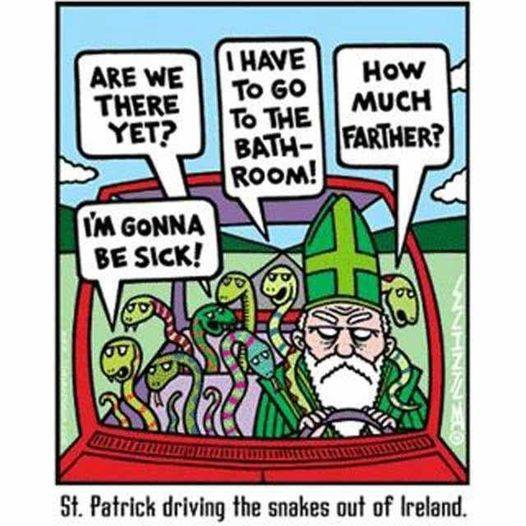
There are legends surrounding St. Patrick, such as crediting him with eradicating snakes from Ireland and that he saved the high king of Ireland, Stack said.
“They said he drove the snakes out of Ireland, but actually there weren’t wouldn’t have been snakes in Ireland anyway because the climate is not good for snakes,” said Stack. “The snakes were a symbol for pagans, so he got rid of all the pagans.”
St. Patrick’s Day is celebrated globally on March 17. The day also falls during the Christian holiday of Lent, a 40-day period filled with prayer and fasting.
Irish Christians attend church in the morning and then celebrate in the afternoon. The Catholic holiday has been celebrated since the 8th century in Ireland.
Surprisingly the earliest record of a St. Patrick’s Day parade took place in St. Augustine, Florida, not Ireland, in 1601. At the time, it was a Spanish Colony. The parade and a St. Patrick’s Day celebration a year earlier were organized by the Irish vicar Ricardo Artur, according to Stack.
The Irish immigrant population grew in America following the potato famine. The first parade was in New York in 1762, but became a yearly thing in 1851 when Irish Aid societies started to throw annual parades. Being especially big in New York, that parade is now considered the world‘s oldest civilian parade and the largest in the U.S., with over 150,000 participants, according to History.com.
Initially, the Irish faced rejection from the U.S. being categorized as heavy drinkers and uneducated in newspaper cartoons. However, as they grew in numbers, they started to have political power. They used St. Patrick’s Day as a holiday to celebrate their heritage.
“The parade started with Irish American soldiers trying to demonstrate their loyalty to America,” said Stack. “The parade was a way to show they could be good American citizens.”
That tradition then got sported back to Ireland. The parades are now tools to encourage tourism, export Irish culture, heritage and music, Stack said.
“It is supposed to be a day to feel proud to be Irish, but growing up in Ireland, it was more about a day off school,” Marigold White told USA TODAY.
An Irish national who has lived in the U.S. but currently lives in Australia, White said, “As an adult and especially living overseas from Ireland, it has had cultural significance, though I do get embarrassed sometimes by the excuse for Irish people to use the day just to get drunk. There is so much more about Ireland to celebrate.”
One of the legends surrounding St. Patrick is the way he used the shamrock to teach others about Christianity. Allegedly, he made an analogy to the Holy Trinity with the shamrock.
He explained how the shamrock has three leaves but it is still one flower. This parallels the Holy Trinity, where there is the God, the Son, and the Holy Spirit, yet still one entity. The shamrock is now the official flower of Ireland and worn to commemorate St. Patrick’s Day, according to Stack.
The leprechaun came from the idea that the Celtics believed in fairies and other magical beings that use their powers to scare away evil. It is presumed that the association came from the popular 1959 Disney movie “Darby O’Gill & the Little People,” which features Irish leprechauns, says Stack.
Stack also attributes Lucky Charms as a way the leprechaun got popularized in the USA.
ashull@insider.com (Abbie Shull) – 8h agoFollow
React1k Comments|744
© Public domainPublic domain
The UN secretary-general said nuclear war is “back within the realm of possibility” following Russia’s warning it was putting its nuclear forces on alert amid its war in Ukraine that threatens to draw NATO into direct combat with Russia.
In 2017, Russian state media detailed how Moscow would annihilate US cities and areas after a nuclear treaty collapsed and put the Cold War rivals back in targeting mode — a shocking threat even by the Russian regime’s own extreme standards.
Hyping up a then-new hypersonic nuclear-capable missile, Russian state TV said the Pentagon, Camp David, Jim Creek Naval Radio Station in Washington, Fort Ritchie in Maryland, and McClellan Air Force Base in California, would be targets, according to Reuters.
But the latter two have been closed for over two decades, making them strange choices for targets.
With most everything from the Russia or its heavily censored media, it’s best to take its claims with a grain of salt. Instead of taking Russia’s word for it when it comes to nuclear targets, Insider got an expert opinion on where Moscow would likely try to strike.
Read more: Russian state media says Putin’s hypersonic missiles would instantly vaporize these 5 US targets
Since the Cold War, the US and Russia have drawn up plans on how to best wage nuclear war against each other; and while large population centers with huge cultural impact may seem like obvious choices, strategists believe a nuclear attack will focus on countering the enemy’s nuclear forces — destroying them before they can counter-attack.
According to Stephen Schwartz, the author of “Atomic Audit: The Costs and Consequences of US Nuclear Weapons Since 1940,” as the Cold War progressed and improvements in nuclear weapons and intelligence-collection technologies enabled greater precision in where those weapons were aimed, the emphasis in targeting shifted from cities to nuclear stockpiles and nuclear war-related infrastructure.
This map shows the essential points Russia would have to attack to wipe out the US’s nuclear forces, according to Schwartz:
© Skye Gould/Business InsiderSkye Gould/Business Insider
This map represents targets for an all-out attack on the US’s fixed nuclear infrastructure, weapons, and command-and-control centers, but even a massive strike like this wouldn’t guarantee anything.
“It’s exceedingly unlikely that such an attack would be fully successful,” Schwartz told Insider. “There’s an enormous amount of variables in pulling off an attack like this flawlessly, and it would have to be flawless. If even a handful of weapons escape, the stuff you missed will be coming back at you.”
Even if every single US intercontinental ballistic missile silo, stockpiled nuclear weapon, and nuclear-capable bomber were flattened, US nuclear submarines could — and would — retaliate.
According to Schwartz, at any given time, the US has four to five nuclear-armed submarines “on hard alert, in their patrol areas, awaiting orders for launch.”
Even high-ranking officials in the US military don’t know where the silent submarines are, and there’s no way Russia could chase them all down before they fired back, which Schwartz said could be done in as little as 5 to 15 minutes.
But a strike on a relatively sparsely populated area could still lead to death and destruction across the US, depending on how the wind blew. That’s because of fallout.
© Brooke Buddemeier/Lawrence Livermore National LaboratoryDangerous radioactive fallout zones shrink rapidly after a nuclear explosion. Brooke Buddemeier/Lawrence Livermore National Laboratory
The US has strategically positioned the bulk of its nuclear forces, which double as nuclear targets, far from population centers. But if you happen to live next to an ICBM silo, fear not.
There’s a “0.0% chance” that Russia could hope to survive an act of nuclear aggression against the US, according to Schwartz. So while we all live under a nuclear “sword of Damocles,” Schwartz added, people in big cities like New York and Los Angeles most likely shouldn’t worry about being struck by a nuclear weapon.
Staff writer Alex Lockie wrote the initial version of this article.
Read the original article on Business Insider


