EXPLAINER: How plausible is Chinese military aid for Russia?

6h agoFollow

React|319

BEIJING (AP) — The U.S. says Russia has asked China to provide military assistance for its war in Ukraine, and that China has responded affirmatively. Both Moscow and Beijing have denied the allegation, with a Chinese spokesperson dismissing it as “disinformation.”

© Provided by Associated PressFILE – In this photo released by the Russian Defense Ministry Press Service, Russian Defense Minister Sergei Shoigu shows his signature under a roadmap for military cooperation between Russia and China during a video call with Chinese Defense Minister Wei Fenghe in Moscow, Russia, Tuesday, Nov. 23, 2021. The U.S. says Russia has asked China to provide military assistance for its war in Ukraine, and that China has responded affirmatively. Both Moscow and Beijing have denied the allegation, with a Chinese spokesperson dismissing it as “disinformation.” (Vadim Savitskiy/Russian Defense Ministry Press Service via AP)

Still, the claims have generated conjecture over how far Beijing would be willing to go in backing its “most important strategic partner,” as China’s foreign minister recently described Russia.

WHAT DID THE U.S. SAY?

Following initial reports that Russia had asked China for military aid, unnamed U.S. officials said that Washington had determined that China had sent a signal to Russia: Beijing would be willing to provide both military support for the campaign in Ukraine and financial backing to help stave off the impact of severe sanctions imposed by the West.

© Provided by Associated PressFILE – In this handout photo released by Russian Defense Ministry Press Service, Russian Defense Minister Sergei Shoigu and Chinese Defense Minister Wei Fenghe watch a joint military exercise by Russia and China held in the Ningxia Hui Autonomous Region in northwestern China on Aug. 13, 2021. The U.S. says Russia has asked China to provide military assistance for its war in Ukraine, and that China has responded affirmatively. Both Moscow and Beijing have denied the allegation, with a Chinese spokesperson dismissing it as “disinformation.” (Savitskiy Vadim/Russian Defense Ministry Press Service via AP, File)

At a meeting in Rome on Monday, National Security Adviser Jake Sullivan warned senior Chinese foreign policy adviser Yang Jiechi against providing such support, even as the Kremlin denied requesting military equipment.

Experts Say $49 Smart Watch Is Must For Seniors

Ad

AdTopgadgetWorld

The U.S. is wary of China’s intentions because the government of President Xi Jinping has refused to criticize the Russian invasion, even as it seeks to distance itself from the Kremlin’s war by calling for dialogue and reiterating its position that a nation’s territory must be respected.

WHAT MIGHT CHINA OFFER?

If anything, smaller items such as bullets and meals are more likely than fighter jets and tanks, experts said.

China “probably wants to avoid high-profile or big-ticket arms sales to Russia in the midst of a conflict which would expose Beijing to international sanctions,” said Drew Thompson, a former U.S. Defense Department official currently at the Lee Kuan Yew School of Public Policy in Singapore.

© Provided by Associated PressIn this photo released by Xinhua News Agency Yang Jiechi, a member of the Political Bureau of the Communist Party of China (CPC) Central Committee and director of the Office of the Foreign Affairs Commission of the CPC Central Committee, at left meets with U.S. National Security Advisor Jake Sullivan at right in Rome, Italy, March 14, 2022. Face to face, President Joe Biden’s national security adviser warned the top Chinese official on Monday about China’s support for Russia in the Ukrainian invasion, even as the Kremlin denied reports it had requested Chinese military equipment to use in the war. (Jin Mamengni/Xinhua via AP)

Beijing would be more willing to provide spare parts, consumables, ammunition, and dual-use items that don’t contravene sanctions and could fall below the threshold of international reprisals, Thompson said.

Related video: Russia asks China for military aid in Ukraine, U.S. officials say (NBC News)

Pause

Loaded: 52.33%LQCaptionsFullscreenUnmute

Russia asks China for military aid in Ukraine, U.S. officials say

For example, Russian helicopters are likely using up their flares to counter portable short-range missiles like the Stinger. China could conceivably sell Russia some of its flares, if they are compatible with Russian systems, Thompson said. China might also share surveillance and intelligence, he said.

Given Washington’s warnings, any Chinese aid would likely involve “very basic stuff,” such as ration packs for soldiers, said Sam Roggeveen, director of the International Security Program at Australia’s Lowy Institute.

He added that Russia would find it virtually impossible to integrate Chinese armaments into its armed forces on such short notice.

WOULD CHINA DO IT?

While not impossible, both Chinese and non-Chinese experts say there are several factors working against it. For starters, it could look bad.

“China will be very careful trying its best to avoid its aid and other assistance being used on the battlefields of Ukraine,” said Shi Yinhong, a professor of international relations at Renmin University in Beijing.

He added that China “has no motive to provide any assistance to Russia’s operation in Ukraine.”

Roggeveen concurred that there is no “obvious upside” for China in aiding Moscow, adding that a weakened Russia could work to China’s strategic and economic advantage.

Chinese officials have also said throughout the crisis that the territorial integrity and sovereignty of all countries should be respected — though critics say its refusal to criticize Russia’s invasion is in fundamental contradiction to that position.

“Russia’s military operation in Ukraine has in nature become an invasion, and China will never provide arms to help a country attack another sovereign county and that is not in accordance with international law,” said Li Xin, director of the Institute of European and Asian Studies at Shanghai University of Political Science and Law.

China also does not want to see the conflict worsen or be dragged in as a co-belligerent, so any Chinese support “would be measured and carefully calibrated,” Thompson said.


It’s time to reconsider our nuclear forces

Exposing the Big Game's avatarThe Extinction Chronicles

OpinionbyPatty-Jane Geller, Opinion Contributor-2h agoFollow

View Profile

React109 Comments|154

We’ve known about China’s massive nuclear expansion for some time now. Last year, Admiral Charles Richard, commander of U.S. Strategic Command, testified that we are on a trajectory to face two nuclear peers – Russia and China – for the first time in its history.

©Getty ImagesIt’s time to reconsider our nuclear forces

But things have changed. This week, Richardtestifiedthat this three-party nuclear-peer reality has already arrived.

New $49 Wireless Earbuds Is Taking Washington By Storm

Ad

AdBlxbuds

This constitutes a significant shift in threat environment. Richard said the nuclear forces we have today are“the absolute minimum”and that the Pentagon will need to make“immediate and significant”changes to our nuclear posture.

Disarmament advocates greeted his statement withskepticism, but Richard is right. There is no time to waste…

View original post 525 more words

Hunting May Have Increased During the COVID Lockdown

Exposing the Big Game's avatarCommittee to Abolish Sport Hunting Blog

12/03/2022

AATHIRA PERINCHERY

READ NEXT

What is the ‘Deltacron’ Variant Found in France?

Representative photo: Sebastian Pociecha/Unsplash


  • We may have hunted more wildlife during the lockdowns of 2020, a new survey has found.
  • Hunting for household consumption increased, while the need for sports and recreation may have played a role as well.
  • Improving livelihoods and food security during periods of socio-economic upheaval could be crucial to minimise the impact on wildlife.


Palakkad: Wildlife experts feel that we may have hunted more wildlife during the pandemic-induced lockdowns of 2020, according to a survey. Hunting for household consumption increased during this time; sports and recreation were motivators for hunting as well, the online effort found.

https://e381cf7a28c82ac6d7f7096ab3012572.safeframe.googlesyndication.com/safeframe/1-0-38/html/container.html

These findings suggest that steps to improve livelihood and food security during such periods of socio-economic upheaval could be crucial in minimising the impact on wildlife at…

View original post 1,045 more words

Black bears are the target of debate in Washington, again

Exposing the Big Game's avatarCommittee to Abolish Sport Hunting Blog

https://www.opb.org/article/2022/03/13/washington-fish-and-wildlife-commission-black-bears-hunting/

ByCourtney Flatt(Northwest News Network)

March 13, 2022 6 a.m.

Black bears were again the target of discussion on Friday during a special Fish and Wildlife Commission meeting.

Approximately 200 people hoped to comment on whether the commission should reinstate the state’s 2022 spring black bear hunt. During the meeting, which lasted more than four hours, 55 people shared their opinions on the hunt. The commission is expected to decide on the future of the 2022 spring bear hunting season on March 18.

Most of the people who spoke at this meeting supported reinstating the black bear hunts. Many hunters said the spring hunt provided an opportunity to teach their children about ethical hunting.

“You get to teach your children about the right bear to take. You don’t shoot cubs. You don’t shoot sows. That’s not the goal. The goal is to get meat and share that with your friends…

View original post 1,273 more words

Bobcat hunting season expands in Michigan, despite activist protests

Exposing the Big Game's avatarCommittee to Abolish Sport Hunting Blog

Emma Stein

Detroit Free Press https://www.freep.com/story/news/local/michigan/2022/03/12/when-you-can-hunt-michigans-expanded-bobcat-season/7003525001/

View Comments

0:21

1:04

https://imasdk.googleapis.com/js/core/bridge3.504.0_en.html#goog_482709477

A pair of bobcats survey Columbia Mine, a thousand-acre property adjacent to the Patoka River National Wildlife Refuge west of Jasper, which is close to the southern boundary of the Southern Indiana Sentinel Landscape.

TheNatural Resource Commission voted unanimously to expandbobcat hunting season in Michigan on Thursday, despite animal rights activists voicing strongopposition.

This means there will be a new season in nine counties, Kent, Ionia, Montcalm, Muskegon, Gratiot, Saginaw, Ottawa,Clinton, and Shiawassee.

The limit is one bobcat per person unless otherwise specified.

At the meeting,National Resources Commissioner David Nyberg said that conservation efforts have increased the bobcat population, which will in turn support an expanded hunting season,Bridge Michigan reported.

“We’re also going to be able to further support the actual act of conservation through the funding of licensed dollars that supports that work,” Nyberg said.

There will be an11-day hunting season in the southern counties, and the hunting and trapping season in the Lower Peninsula will now be 20 days with two weekends, Bridge reported.

https://a3d467ce45c39e889450b9d73a82f066.safeframe.googlesyndication.com/safeframe/1-0-38/html/container.html

More:U.P. Republican: Downstaters…

View original post 279 more words

Scientists propose a new mechanism by which oxygen may have first built up in the atmosphere

Exposing the Big Game's avatarThe Extinction Chronicles

by Massachusetts Institute of Technology

https://phys.org/news/2022-03-scientists-mechanism-oxygen-built-atmosphere.html

earth
Credit: CC0 Public Domain

For the first 2 billion years of Earth’s history, there was barely any oxygen in the air. While some microbes were photosynthesizing by the latter part of this period, oxygen had not yet accumulated at levels that would impact the global biosphere.

But somewhere around 2.3 billion years ago, this stable, low-oxygen equilibrium shifted, and oxygen began building up in the atmosphere, eventually reaching the life-sustaining levels we breathe today. This rapid infusion is known as the Great Oxygenation Event, or GOE. What triggered the event and pulled the planet out of its low-oxygen funk is one of the great mysteries of science.

A new hypothesis, proposed by MIT scientists, suggests that oxygen finally started accumulating in the atmosphere thanks to interactions between certainmarine microbesand minerals in ocean sediments. These interactions helped prevent oxygen from being consumed, setting…

View original post 746 more words

Sun sets on Mexico’s paradise beaches as climate crisis hits home

Rising sea levels and fierce storms threaten Quintana Roo’s coastline, and with it the ribbon of beach resorts and timeshares

https://www.theguardian.com/environment/2022/mar/14/mexico-cancun-beaches-tourism-sea-levels-climate-crisis-quintana-roo

by Feike de Jong in Tulum, Mexico

Seascape: the state of our oceans is supported by

The David and Lucile Packard Foundation

About this contentMon 14 Mar 2022 03.45 EDT

José Escalante looks out over the mile of fine, white sand leading up to the Mayan ruins perched on a bluff over the turquoise Caribbean. A few fishing boats have been pulled up on Tulum’s Playa Pescadores, one of the world’s most photogenic beaches. Tourists pose as the sun fades over the Yucatán peninsula behind them. All seems well in paradise.

But Escalante is weary. He is selling the six beachfront hotels he co-owns in this booming Mexican tourist destination and has a long list of reasons why: the increasingly unmanageable quantities of seaweed washing up on the beach, the large chains with few local connections opening restaurants and beach bars, and organised crime, which makes security a worry.

He also has a bigger, existential concern. “Climate change is definitely one of the reasons I am selling,” he says.

Almost all the infrastructure in Quintana Roo state is concentrated in a coastal ribbon of beach resorts and timeshare properties, especially from Tulum to Cancún, about 80 miles (130km) to the north. Air-conditioned white minivans filled with tourists buzz over hot asphalt as palms stand by on parade. But this land is in a perilous position.https://interactive.guim.co.uk/maps/embed/mar/2022-03-11T16:48:15.html

Advertisement

https://42fe84619cf61a051980d59d80d4d705.safeframe.googlesyndication.com/safeframe/1-0-38/html/container.html

Rises in sea level driven by the climate crisis could reach 40cm (15in) by 2050, says Ruth Cerezo-Mota, an oceanographer at the National Autonomous University of Mexico (UNAM), with four to 20 metres of beach lost. This “would mean chaos”, says Christian Appendini, a coastal engineer at UNAM. “All the beaches in front of urban developments would probably disappear unless drastic nature-based beach restoration measures are taken.”

The 700-mile coast of Quintana Roo has been eroded at a rate of 1.2 metres a year, with some parts losing up to 4.9 metres a year, according to Mexico’s tourism ministry.

A crumbling terrace outside a new beachfront development with the sea only a few metres away
A new tourist development that is already under threat from coastal erosion in Cancún. Photograph: Feike de Jong

Beaches are disappearing, and some are only maintained artificially with sand dredged from the seabed. Often they are little more than strips of sand, no wider than a dirt road. Sometimes the strand has completely vanished, leaving waves breaking against the walls of swimming pools, restaurants and houses.

Hurricanes are expected to increase in intensity due to higher ocean temperatures, leading to storm surges and exacerbating beach erosion. In 2005, Cancún lost large swaths of an eight-mile beach after Hurricane Wilma, which were later artificially restored, and then hit again by Hurricane Dean two years later. In 2020, the Riviera Maya region experienced 17 tropical storms and 13 hurricanes in one of the most active hurricane seasons on record.

Algal blooms have also plagued the coast of the Riviera Maya, a phenomenon scientists have linked to warming sea temperatures. The beachfront along the coast is frequently lined with mounds of rotting black seaweed. In Tulum, the seaweed is often stacked high in piles with workers shovelling it on to wheelbarrows on the shore and hotel owners despairing over where to put it all.

Yet as the region starts to rebound from the pandemic – about 12.5 million tourists visited Quintana Roo last year – experts say few are thinking about the climate crisis.

A worker pushes a wheelbarrow of seaweed up a beach
A worker empties another barrow-load of seaweed cleared from the beach at Tulum. Photograph: Feike de Jong

Advertisement

https://42fe84619cf61a051980d59d80d4d705.safeframe.googlesyndication.com/safeframe/1-0-38/html/container.html

Last year, the Mexican president, Andrés Manuel López Obrador, announced the construction of a new international airport in Tulum and the huge Tren Maya rail project will further accelerate development. At least 91 big tourist projects are under construction in the state, according to the Mexican environmental watchdog Bios Política.

The way hotels are built probably contributed more to the loss of the beaches than sea level rise

José Escalante

Quintana Roo’s second largest city, Playa del Carmen, grew from a population of 63,000 in 2000 to 333,000 in 2020, the Mexican census found. It is the fastest growth rate of any municipality in Latin America, according to the city government.

A tractor moves sand on a beach near a high-rise building
The pace of tourism development around Cancún is exacerbating the erosion of beaches along the coast. Photograph: Feike de Jong

Advertisement

https://42fe84619cf61a051980d59d80d4d705.safeframe.googlesyndication.com/safeframe/1-0-38/html/container.html

This development is worsening the region’s problems, Escalante says: “I think the way hotels are built has probably contributed more to the loss of the beaches than sea level rise.” Resorts have been built on the dunes, cutting the process of beach formation in a phenomenon known as coastal squeeze.

Gene Towle, of the Mexican property consultancy Softec, says: “The real-estate market in the Cancún-Riviera Maya region is not very sophisticated – nobody is thinking long term or about climate change.

Foreigners and hawkers walk along a thin strip of beach between the sea and tourists’ sun shelters
Some of the beaches in the coastal resorts around Cancún are only maintained with sand dredged up from the seabed. Photograph: Feike de Jong

“I think there is a window of about three years before developers start feeling the economic effects of environmental degradation,” says Jennifer Ruiz-Ramírez, an oceanographer at the University of Quintana Roo. “That is how long it will take for tourists to figure out that the reality no longer corresponds to the image they are being sold.”

There are some signs that the reality of the climate crisis may be slowly dawning on parts of the Riviera Maya tourism industry. In 2019, the Quintana Roo government entered into the world’s first coral reef insurance policy with premiums paid by hotel owners as well as the local government. The first payout of $800,000 (£590,000) came in 2020 after Hurricane Delta damaged reefs and beaches.

International action could also affect the industry. In June 2021, the G7 group of rich democracies backed the mandatory reporting of climate-related financial risks by publicly traded companies. This would make beachfront investments a potential liability. In Cancún, 22 resorts are projected to experience partial flooding every year by 2050, says Daniel Scott, a geographer at Canada’s University of Waterloo.

People walk along a raised mud embankment with small boats tied up alongside

“It could take about three years before the decision by the G7 is implemented,” says Scott. “But when that happens institutional investors will start selling high-risk properties on the coast.”

Escalante could be the first of many seeking to sell their investments while the market still has its dazzle. He does not expect to have much trouble selling his hotels during the present boom – he has never had less than full occupancy in Tulum’s tourist season.

“It was a truly great business,” says Escalante. But the writing is on the wall, he feels: “I was in Cancún recently and the beaches were just like they were after Hurricane Wilma 15 years ago.”

Advertisement

https://42fe84619cf61a051980d59d80d4d705.safeframe.googlesyndication.com/safeframe/1-0-38/html/container.html

The reporting on this story was enabled by the Netherlands’ Steunfonds Freelance Journalistiek.

Man facing charges in animal cruelty case pleads not guilty

1 of 2

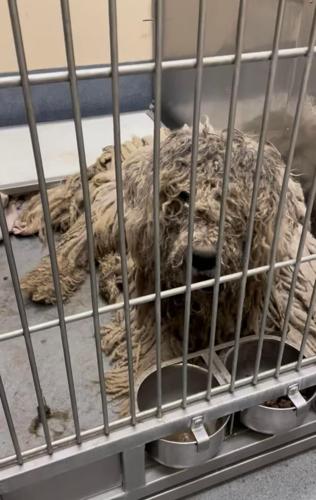
Seized dog in poor condition

YVAS

Michael Bigelow

Play Video

UPDATE, MARCH 11 AT 1:01 PM:

Michael Bigelow was arranged in Yellowstone County Friday morning and is pleading not guilty to all charges.

His bond has been set at $125,000 and will be required to be monitored via GPS.

Bigelow has been ordered to have no contact with his mother or any animals.


MONTANA – After more than a dozen dogs were found dead at one property in Yellowstone County, a man is facing four felonies and multiple misdemeanors related to animal cruelty.

Court documents say an Animal Control Officer responded to the 700 block of Bender road on Thursday, March 3rd, for a report of a loose dog in the area. When the officers arrived, the complainant told the officer that three large Great Pyrenees dogs were harassing her horses and it was not the first time this had happened. She told the officer she believed the dogs belonged to the property across the street.

Documents says the officer was familiar with the property after responding to an animal welfare call at the residence earlier this year.

The officer entered the property and looked for someone to talk to about the loose dogs. As she looked, documents say the officer saw a number of dead dogs, a dead horse, litters of puppies, and adult dogs chained up in poor condition.

The officer met the defendant, Michael Bigelow, on the property and said she was there to discuss the dogs. After observing the man’s condition, the ACO reported her observations to a detective who had her remove the suspect from the property while a search warrant was drafted.

Once the warrant was acquired, several members of the Yellowstone County Sheriff’s Office, along with a consulting veterinarian, entered the property and began to execute the search warrant.

At least 16 dogs were found dead, most by gunshot wounds. Several dogs were found to be in poor physical condition, with little to no access to food or fresh water. Yellowstone Valley Animal Shelter says they received 19 dogs from the one property. 

The four felony charges Bigelow is facing are due to the location where the dogs were shot, which caused injury, suffering, and eventual death. 

Charging documents say other animals were found on the property that were also in poor condition on the property, with one horse carcass on the property which the consulting vet said was likely a source of food for the loose dogs as it had been partially consumed. 

Since his arrest, charging documents say the suspect has made several threats to law enforcement during calls to his mother, and has not expressed any concern for the animals. 

We Need Tapirs More Than They Need Us

Photo by Mark Kostich/iStock

https://www.sierraclub.org/sierra/we-need-tapirs-more-they-need-us

They’re one of the few animals who can resuscitate degraded forests—if there are any of them left

By Sara Novak | Mar 14 2022

When tapirs first came on the scene during the Paleocene epoch, 66 million years ago, the world looked very different than it does today—and not only because it had recently been hit by a 7-mile wide asteroid traveling at 27,000 miles per hour. After the impact, earth descended into a dark, smoldering mess of debris; within a short time, dinosaurs died out, along with all the large marine and flying reptiles. Birds, small mammals, and a few remaining flora and fauna were left to start life anew. The mega-beasts of yesteryear were gone and it was finally the mammals’ chance to thrive, especially the tapir. 

A member of the Perissodactyl group that includes horses, zebras and rhinoceros, tapirs quickly diversified and spread across North America. Curious creatures that resemble an oversized hog with an anteater snout, they lived alongside miniature horses and phenacodontids, a now extinct herbivore about the size of a fox. But while horses evolved from forest dwellers to grazers as grasslands spread across the West, tapirs have changed little over tens of millions of years: Their teeth, jaw, and body structure remain largely unchanged. As a result, says Larisa DeSantis, an associate professor of biological sciences at Vanderbilt University, tapirs can provide a window into our prehistoric past. For example, their fossils tell us where ancient forests once stood. “Tapirs are living fossils that we know have never resided outside of forests,” says DeSantis.  

Shy and unassuming, tapirs have an ability to disappear in plain sight. That’s part of the reason they have lived this long. Even those trained to track tapirs, says DeSantis, often have a hard time finding them. But in recent years, Brazilian highways surrounding their habitat make it difficult to safety navigate between forests. The heavy traffic on the highway that cuts between the northern and southern Atlantic Forest is a death trap for wildlife. “Tapirs often die when attempting to cross it,” according to Patrícia Medici, coordinator of the Lowland Tapir Conservation Initiative. 

Sierra logoSupport the Sierra ClubDONATE ONE-TIME

elkBecome a Wilderness Guardian

Monthly giving provides the resources to sustain long-term campaigns that permanently protect our most precious resources.DONATE

bear familyWays to Give

Be a champion for the environment and fight for everything we hold dear. Join today.DONATE

As a result, says researcher Kevin Flesher, a scientist at the Michelin Ecological Reserve in Bahia, the tapir’s range is now less than 2 percent of what it once was in the Atlantic Forest, which covers Brazil, Argentina and Paraguay. Medici and Flesher’s research, detailed in a recent study in Neotropical and Biological Conservation, found that of the 48 populations of tapirs documented in the study, between 31 and 69 percent were “demographically unviable.” The tapir populations are becoming too isolated from one another to reach different groups. 

Like many large mammals, tapirs only have one calf at a time and tend to wait a few years between births. With such low populations, says Flesher, every animal lost to a traffic accident or a hunter can have dire implications for the species. He says that now is the time to act as new highway construction already underway could further threaten tapir habitat.  

“We need a combination of strategies including signs and speed traps to avoid speeders on the highways,” says Flesher. “On the larger super highways we need [wildlife] underpasses and overpasses especially as two-lane highways are being expanded.” Use of such tools in other parts of the world, Flesher says, has made a big difference in protecting these animals from becoming roadkill. 

The picture isn’t all bleak, however. Hunting tapirs, which used to be a problem in the Atlantic Forest, is now illegal in Brazil’s reserves. The hunting ban has led to increased populations in some areas. “Today people are generally afraid to kill tapirs because they’re big enough to draw attention in these small villages and they don’t want the authorities finding out,” says Flesher. “These are resilient creatures and if humans get out of the way, they’ll be just fine. They can eat just about anything in the forest and have for millions of years.”

Even if humans seldom see them, tapirs are hard at work. They have a surprisingly critical role to the forest by virtue of being one of few remaining South American mammals large enough to ingest and expel large seeds and scatter them across the woods. “Tapirs are among the principal dispersers of large seeded fruits,” says Flesher. “These are some of the most endangered forests in the world and they depend on tapirs for their very survival.” When you go into forests where the tapirs and monkeys have been wiped out, he says, the forests can quickly die out. Research conducted in Brazil found that tapirs disperse three times more seeds in degraded forests than in primary forests, which means that when forests are destroyed by wildfire, for example, tapirs can help resuscitate them. 

So while tapirs really don’t need us, we need them. Not only are these animals the key to unlocking the world’s ancient forests, they’re also important for preserving them in the future.