What Should We Do With Our Nuclear Anxiety?

Bridget Read – Yesterday 12:27 PMFollow

View Profile

React3 Comments|6

When Vladimir Putin put Russia’s nuclear defense system on heightened alert last Sunday, the term “nukes” began trending on Twitter. A congressman from Louisiana wrote an unintelligible post about “millennial leftists who never lived one day under nuclear threat” now living under a “woke sky” of our own making. “U.S. PRESIDENT BIDEN SAYS AMERICANS SHOULD NOT BE WORRIED ABOUT NUCLEAR WAR,” a Reuters correspondent tweeted, apparently not realizing the effect of all caps. Later, the NUKEMAP, a site that enables users to simulate the damage from a nuclear weapon launched on their location, went down because too many people had logged on.

© CSA-Printstock/Getty ImagesCSA-Printstock/Getty Images

Tracfone 6.5 Moto G Pure Smartphone W/1500Talk/Text/Data ,Clear

Ad

AdQVC

For Americans who can’t remember or weren’t around for most of the Cold War, nuclear apocalypse is the premise for a disaster movie, not a threat to our real lives. But a constant slurry of updates from Russia’s war on Ukraine — both Chernobyl and a working nuclear facility were captured by Russian forces — is making that threat more concrete. By the Wednesday following Putin’s announcement, a colleague told me that she’d had a scary, albeit realistic, nightmare in which she received a news alert on her phone saying that Biden had put the United States’ nuclear defense system on heightened alert, too.

In my text messages with friends, we discussed a planned vacation at the end of the month with an eye toward survival: “If we make it,” someone said. “Haaaaaa,” I replied. Our worries were diffused between a host of other concerns (COVID, climate change; take your pick) and veiled by the various detached registers with which people who get their news on social media talk about the things that scare us. “It’s okay, ‘nukes’ isn’t even trending above all of the names of the characters from Euphoria,” I told my sister on the phone. But behind the irony, I had gnawing, earnest questions: How concerned should we really be about nuclear war right now, and how should we act? Do you pack a bag? Call your mom? Make a joke? Just log off and look away?

To get an answer, I wanted to talk to an expert not just on nuclear weapons and on U.S.-Russia relations, but on the specific subject of nuclear fear. Cynthia Lazaroff is a disarmament activist and documentarian, whose 2017 film, US-Russia Relations: The Quest for Stability, featured prominent political voices, including former Soviet president Mikhail Gorbachev, raising the alarm about the danger of nuclear weapons. In 2018, the danger suddenly became imminent for Lazaroff, who was sitting in her home in Hawaii when she got a notification that a projectile was heading for the island and she should take cover. She said good-bye to her then-partner and called her daughter in Los Angeles to tell her she loved her, waiting as long as she could to hang up. The alert, we now know, was a false alarm. But Lazaroff considers the 38 minutes when she thought it was real to be a profound gift.

“That was my awakening, in the moment where that nuclear alert became the most real for me,” Lazaroff told me on the phone from Hawaii last week. When I asked her how she feels about the looming threat to which she has dedicated her life zooming back into popular conversation, she insisted we should be concerned about nuclear weapons all the time, not just because of recent international conflict the threat had always been pressing. “Nuclear weapons, just by their existence, and by statistics — if we don’t eliminate them, as long as we have them, they’re very likely to be used by accident, miscalculation, or mistake,” she said.

Related video: What an attack on a nuclear power plant could mean for Ukraine (NBC News)

Pause

Loaded: 32.08%LQCaptionsFullscreenUnmute

What an attack on a nuclear power plant could mean for Ukraine

As my colleague Eric Levitz laid out in a recent column, nuclear weapons are unpredictable even when they’re not wielded by an authoritarian as seemingly irrational as Putin. The early-warning systems that lock these devices into their trajectories can be accidentally triggered. The systems imposed to dismantle them can fail. Since the end of the Cold War, both the United States and Russia have ramped up their nuclear arsenals to the point where thousands of them are now ready and waiting for launch. Lazaroff said our political leaders are “sleepwalking” through an almost literal ticking time bomb.

But doesn’t my worrying about nuclear war from the security of my apartment in New York, I asked Lazaroff, reveal my very privileged position in a global hierarchy of anxieties? There were Ukrainians being shelled and shot in this conflict as we spoke; there were people suffering all over the world who were still managing to go about their days. In my city, some of my friends were working on crises with hourly dimensions: finding shelter for unhoused people, staving off our impending eviction crisis, or trying to prevent overdose deaths. “What I would say is that,” Lazaroff responded, “why do you think those people are being evicted? Why do you think that there are homeless people? Why do you think that there aren’t resources to take care of those basic needs? Why do you think there are more nuclear warheads in the United States than hospitals?”

Even having the time to contemplate such an all-encompassing threat is a blessing, I thought, but Lazaroff wasn’t interested in my taxonomy of concerns. Instead of siloing them, she wanted me to expand them into each other, to connect the issues of housing insecurity and inequality I mentioned at home with the systems that organize the whole world, specifically with the military-industrial complex her work attempts to dismantle. “Right now, the only people who are profiting from this war are the arms dealers,” she said. “We have Raytheon and Lockheed Martin boasting that their profits are higher, things are going well for them because of this conflict. We see arms being sent all over the place. We see calls for more defense spending money that’s needed. So much for human needs, the ones you say: pandemic, climate justice, racial and economic equality, health care, et cetera.” Nuclear weapons don’t take precedence over these more tangible issues; they unite them.

I realized at this point in our conversation that I had been looking for Lazaroff to say something to make me feel better, to help slow my heart rate in between using phrases like “the end of life as we know it.” I had called her to tell me how to handle fear, but I wanted her to alleviate it. I wanted her to square the bigness of what she was telling me with the smallness of my own life. I was going to go to dinner with a friend, and we would have things to discuss that felt so pressing to us — our love lives, our work — but that were grotesquely irrelevant in the context of war. “It feels crazy right now,” I told her, “to go out to dinner.”

“It should feel crazy” was her answer, in so many words. “We are being held hostage,” Lazaroff said, by nuclear weapons and the global capitalist system they uphold. Maybe the act of going out to dinner with the Doomsday Clock set 100 seconds from midnight isn’t crazy, but the dissonance between the world we have and the world we want is, and Lazaroff suggested I embrace that feeling. I understood that this was harder than being afraid. It took more effort to embrace the dire reality of our current conditions and then imagine what lies beyond them.

She did offer me one exercise to alleviate the acute anxiety of the moment: to concentrate on the world I want. “Go to the place where it’s already done,” Lazaroff suggested. “Go to the place hundreds of years into the future, where your great-great-grandchildren are on the beach, and they’re thanking you because they have clean air, they have clean water. We have to see it, even if it seems impossible.”

Coyote hunting contest prompts animal advocates to file lawsuit against province

Exposing the Big Game's avatarCommittee to Abolish Sport Hunting Blog

The Toronto Wildlife Centre says feeding coyotes is often times the biggest problem when it comes to changes in behaviour.

ByMichelle Morton

Posted Mar 6, 2022, 3:48PM EST.

Last Updated Mar 7, 2022, 3:07PM EST.

Coyote hunting contest prompts animal advocates to file lawsuit against province

Three animal advocate groups aresuing the province over an annual coyote hunting contestheld near Belleville, claiming Ontario is breaking its own laws.

Chesher’s Outdoor Store posted toFacebook that it was holding the contest again in February, with various prizes and thousands of dollars in cash awarded to participants who killed the five heaviest coyotes, as well as five ‘additional hidden weight’ prizes.

The shop wrote it was $20 to enter, and all “applicable hunting reg’s will apply as well as any provincial/federal or municipal laws with the respect to hunting coyotes.”

Last year,the store updated its Facebook post

View original post 621 more words

Thousands of acres near Panama City are torched as Florida Panhandle wildfires continue

Exposing the Big Game's avatarThe Extinction Chronicles

By Raja Razek andTravis Caldwell, CNN

Updated 4:57 PM ET, Mon March 7, 2022

https://www.cnn.com/2022/03/07/us/florida-panhandle-wildfire-monday/index.html

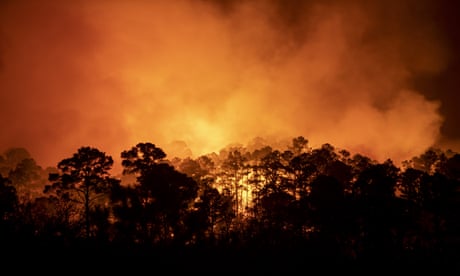
Hector Rivera and Wandi Blanco put water on hotspots on a neighbor's shed next to their home Saturday after the Adkins Fire tore through the area in Panama City, Florida.

Hector Rivera and Wandi Blanco put water on hotspots on a neighbor’s shed next to their home Saturday after the Adkins Fire tore through the area in Panama City, Florida.

(CNN)With nearly 1,100 homes evacuated, firefighting crews continue to battleseveral dangerous wildfiresacross three counties in the Florida Panhandle, officials said.

The most prominent blaze, the Bertha Swamp Road Fire, expanded over the weekend and was at 13,000 acres Monday, up from 9,000 on Sunday, with just 10% of it contained, according to aFacebook postby the Bay County Emergency Services, which cited the Florida Forest Service.

“The fire has shown extreme activity for two days as steady winds pushed the fire through thick, dry, and dead trees and vegetation left behind fromHurricane Michael,” the forest service said in…

View original post 656 more words

Russia’s Disinformation Machine Runs So Deep, Some Don’t Know War Is Happening

Exposing the Big Game's avatarThe Extinction Chronicles

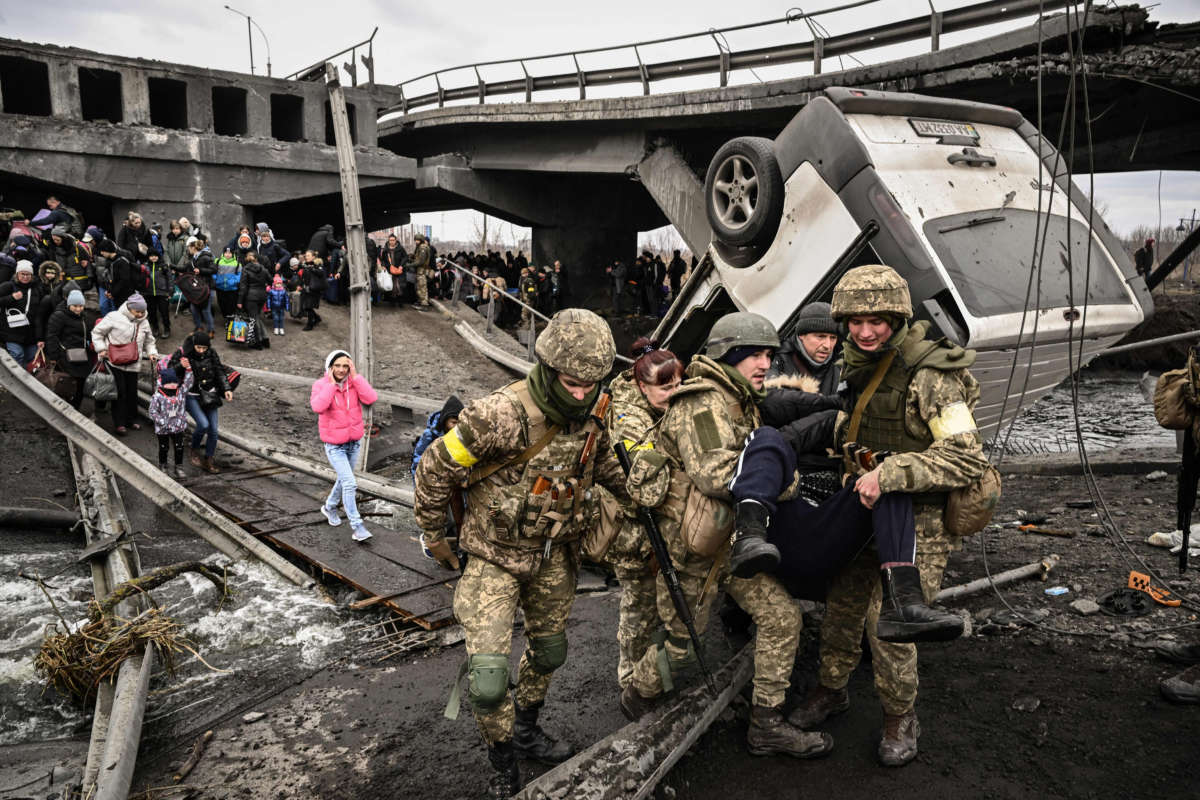
Ukrainian servicemen assist a person while people cross a destroyed bridge as they evacuate the city of Irpin, northwest of Kyiv, during heavy shelling and bombing on March 5, 2022, 10 days after Russia launched a military invasion on Ukraine.
Ukrainian servicemen assist a person while people cross a destroyed bridge as they evacuate the city of Irpin, northwest of Kyiv, during heavy shelling and bombing on March 5, 2022, 10 days after Russia launched a military invasion of Ukraine.

BYWilliam Rivers Pitt,TruthoutPUBLISHEDMarch 7, 2022

Share via FacebookShare via TwitterShare via Email

A white lower-case t on a black background

READING LIST

HUMAN RIGHTSSupreme Court Says Torture at CIA Black Site Is a “State Secret”

POLITICS & ELECTIONSTrump’s Pick for AZ Secretary of State Participated in January 6 Capitol Breach

WAR & PEACERussia’s Disinformation Machine Runs So Deep, Some Don’t Know War Is Happening

POLITICS & ELECTIONSStudents in Texas Form Book Clubs to Counter Far Right Bans

IMMIGRATIONUS Can’t Deport Families Under Title 42 If They Could Face Harm, Court Rules

WAR & PEACESanctions…

View original post 991 more words

Climate crisis: Amazon rainforest tipping point is looming, data shows

Exposing the Big Game's avatarThe Extinction Chronicles

Analysis of satellite observations show forest is losing stability with ‘profound’ global implications

https://www.theguardian.com/environment/2022/mar/07/climate-crisis-amazon-rainforest-tipping-point

Trees in the Amazon rainforest
The scientists say Amazon dieback has been having ‘profound implications at a global scale’.Photograph: Morley Read/Alamy

Damian CarringtonEnvironment editor

@dpcarringtonMon 7 Mar 2022 11.00 EST

The Amazon is approaching a tipping point, data shows, after which the rainforest would be lost with “profound” implications for the global climate and biodiversity.

Computer models have previously indicated a mass dieback of the Amazon is possible but the new analysis is based on real-world satellite observations over the past three decades.

Novel statistical analysis shows that more than 75% of the untouched forest has lost stability since the early 2000s, meaning it takes longer to recover after droughts and wildfires.

The greatest loss of stability is in areas closer to farms, roads and urban areas and in regions that are becoming drier, suggesting that forest destruction and…

View original post 796 more words

Young Ukrainian volunteer killed delivering aid to dog shelter near Kyiv: ‘She was a hero’

By Ashleigh Stewart  Global News

Posted March 5, 2022 4:45 pm

 Updated March 6, 2022 1:39 pm

Anastasiia Yalanskaya
Anastasiia Yalanskaya, a young volunteer in Ukraine, was shot and killed while delivering aid.

Descrease article font size

-AIncrease article font size

A+

As Russian troops closed in on the Ukrainian capital of Kyiv, Anastasiia Yalanskaya insisted she would stay, even while her friends and family fled around her.

The 26-year-old Ukrainian woman was delivering food to a dog shelter in Bucha, 30 kilometres outside Kyiv, on Friday when she was shot and killed alongside two men she had been volunteering with.

Yalanskaya’s friends and family say her car was deliberately targeted at close-range by Russian troops. Global News has been unable to confirm the circumstances of her death.

Friends do not know why she was targeted, but believe Russian troops are increasingly killing civilians at random as a way to scare the population into submission.

Click to play video: 'Ukrainians resist as Russia hammers major cities'2:05Ukrainians resist as Russia hammers major citiesUkrainians resist as Russia hammers major cities


“I asked her to be extra cautious. That nowadays, a mistake costs extremely much,”  her husband Yevhen Yalanskyi says.

“But she was helping everyone around. I asked her to think of evacuation but she did not listen.”

Despite denials from Russian President Vladimir Putin, the number of civilian casualties in Ukraine is mounting – though the total number remains unclear.

As of March 1, the United Nations Human Rights Monitoring Mission in Ukraine said it has recorded 752 civilian casualties. The next day, Ukraine’s State Emergency Service said 2,000 civilians had been killed.

Friends believe she was killed at close-range

Yalanskaya had been delivering food to a dog shelter in Bucha that had been without supplies for three days. The town has been devastated by Russian bombardment. It is part of the line of Ukrainian defence as Russian troops make their push to Kviv.

Her final Instagram story, posted just hours before her death, shows her sitting in the backseat of a vehicle, smiling into the camera, beside bags of dog food.

Yalanskaya’s best friend, Anastasiia Hryshchenko, who evacuated to Vinnytsia, 250 kilometres southwest of Kyiv, raised the alarm about her friend after she hadn’t heard from her in several hours.

Yalanskaya
A photo of Yalanskaya and the volunteers she was killed alongside on Friday.

Hryshchenko says she had been in constant contact with Yalanskaya, due to dangerous areas around Kyiv where fighting has intensified in recent days, including the area where her friend was delivering food and medical supplies.

When Yalanskaya didn’t respond for several hours, she contacted the father of a man that Yalanskaya had been volunteering with. The trio were due to return to his house after their trip.

READ MORE: Ukraine’s Zelenskyy has survived multiple assassination attempts amid Russian war: reports

He told her he had found their car, riddled with bullets, not far from his house, Hryshchenko says. They had delivered the dog food and had almost gotten home.

The damage to the car indicated it was fired at from a close distance and from a “heavy weapon,” she says.

Though there has been no formal identification of her body, Yalanskaya was carrying her driver’s licence and has distinctive tattoos that were identified by friends. Her body, along with those of the two men she was with, remain at the man’s father’s house, because the fighting is so intense no one can get through, Hryshchenko says.

Yevhen Yalanskyi
Yalanskaya and her husband Yevhen Yalanskyi. Yalanskyi says ‘she loved animals.’.

“Not being able to help her last journey is very painful for me,” Yalanskyi says. He and Yalanskaya were separated but remained extremely close, he says, a fact which other friends also spoke about. He is currently in Sri Lanka.

“She was one of the best human beings I knew. She was committed to help, to help her friends and relatives and whoever needed help,” Yalanskyi says.

“She loved animals. We had a dog and a cat. She was the best partner I ever had.”

‘We will all be together soon, safe and at peace’

Yalanskaya, a job recruiter, had been keeping a daily blog on Telegram to inform her friends and family of her surroundings as she delivered aid around the region.

On Saturday, February 26, she wrote on the channel in Russian, after having spent the night sleeping in a parking garage due to bombing fears: “Now I realize even better how important it is to be able to just see the loved ones whenever you want.”

“We will all be together soon, safe and at peace. I believe in it.”

Anastasiia Yalanskaya
Yalanskaya’s friends say ‘the world needs to know she’s a hero.’.

In the preceding days, she chronicled her volunteer work and spoke of her talks with the Ukrainian Armed Forces at checkpoints, saying she was proud of being Ukrainian “for the first time in my life.”

On Tuesday, she wrote about helping a kindergarten in Brovary, just outside Kyiv, where 40 children were without food and diapers, as well as bringing aid to a military hospital and bringing food for volunteer dogs.

“We are not scared. We are united like never before. We help each other. We stand for hours at roadblocks and thank those who protect us,” she wrote. “We will win.”

On Wednesday, Yalanskaya wrote her longest post, detailing her thoughts and feelings from her week of volunteering.

Click to play video: 'Further Russian troop surge in Ukraine invasion'2:11Further Russian troop surge in Ukraine invasionFurther Russian troop surge in Ukraine invasion

She spoke of needing to drive with the windows half-open to hear which side of the road the shelling was on and to “step on the gas” while driving past the forest.

Hryshchenko says Yalanskaya had told her the fighting was particularly intense around the forest.

“Do not slow down” signs must be obeyed, Yalanskaya wrote, otherwise “you can hear random sh_t exploding right next to the wheels.”

She wrote of visiting people to drop off supplies 20 kilometres from the fighting and 200 metres from the fighting.

READ MORE: Canadian troops in Latvia ready for ‘whatever we have to face,’ commander says

“The ‘hotter’ the location you are heading to, the more people there will be at the roadblocks trying to dissuade you from going. But when they see the determination in your eyes, they will wish you strength, they will thank you, and ask you to be careful.”

On Thursday, Yalanskaya outlined her plans for the next day — the day she would die.

“I am tired. Third day in the car,” she wrote. “Could not get to Irpin. They blew up the bridge where I went yesterday.

“Tomorrow we’ll try to enter from another side.”

‘She was never prouder to be Ukrainian’

Yalanskaya’s friends are reeling after her death, though they are not surprised that she was killed helping people, as it was what she was known for.

Hryshchenko says Yalanskaya was a “kind and caring person” and “she could energize everyone around her.”

While people had asked her to evacuate for her own safety, Yalanskaya was “absolutely sure she was needed there,” she says.

Anastasiia Yalanskaya
Yalanskaya decided to stay in Kyiv as her friends and family fled, despite protestations from loved ones.

“She was a very good person, she was always helping everyone, she wouldn’t do anything else.”

Hryshchenko says civilians are now increasingly being targeted, especially around Kyiv.

“They’re just randomly shooting people. They see civilians and they just shoot them,” she says.

“They want people to be scared and horrified. But it only makes our people braver.”

Valeriia Gorska, a former colleague and friend, said “the world should know that she’s a hero.”

“She was helping people. She believed in people.

“I knew her three years ago, and I knew her now, and I saw a change in her recently. She was so strong. And she was never prouder to be Ukrainian.”

Birds Face Gassing & Toxic Egg Bait in Arkansas

https://secure.everyaction.com/FormProgress/xoFxNcYekEOV_5Iptk6bMg2

In Defense of Animals

European starlings, American crows, Canada geese, and common grackles are among 22 wild bird species on the government’s hit list in Arkansas. These innocent wild birds face painful deaths by gassing and toxic egg baits. Speak up now to save them from our own federal government!

The U.S. Department of Agriculture’s Wildlife Services plans to kill Canada geese while adults are molting and unable to fly. Geese and their goslings are often placed in mobile gas chambers, a particularly cruel and painful method of killing high-flying migratory birds who are used to dramatic differences in air pressure. Entire families will be traumatized and gassed to death.

Egg-eating birds like European starlings, American crows, and common grackles may be killed with the avicide DRC-1339. Birds who eat poisoned eggs laced with DRC-1339 return to their roosts, suffer from kidney failure and die slow, painful deaths.

Killing wild birds doesn’t reduce their numbers in the long-term, it only makes room for other families to take over the habitat. Effective nonlethal stewardship strategies utilize a multi-pronged approach with habit modification, population stabilization, and site aversion. In its Environmental Assessment, Wildlife Services even lists nonlethal methods like pruning trees to discourage roosting and using bird-proof feeders for farmed animals.

What YOU Can Do — TODAY:

Arkansas’ wild birds need us to speak up for them! You can reach Wildlife Services by making calls and by submitting our letter.

Public comments on the Environmental Assessment are due by March 11, 2022.

1. Make a Call. Call the Wildlife Services Arkansas State Director at 501-835-2318 or Toll-Free at 1-866-4USDAWS and urge the selection of humane nonlethal long-term wild bird stewardship strategies.

You can say, “I strongly oppose all lethal methods to manage wild bird populations in Arkansas. Instead, I urge you to try effective, nonlethal measures to prevent conflicts with European starlings, American crows, Canada geese, and common grackles. You can find helpful strategies at www.stopgooseabuse.org.”

2. Get Involved Locally. To stop goose roundups in your community, please check out our resources at www.stopgooseabuse.org and contact us for help at geese@idausa.org. In Defense of Animals’ National Goose Protection Coalition advocates for long-term, effective, nonlethal stewardship practices to support coexistence with waterfowl. The coalition was formed in 2019 to help concerned citizens stop goose cruelty in their communities.

3. Write a Letter. Please send our letter to Wildlife Services Arkansas State Director urging the agency to decide against lethal action against the geese this year and in future years and to adopt effective, nonlethal goose stewardship strategies.

Sign our letters to deliver your comments to:

  • Wildlife Services Arkansas State Director

** Please note: Your first and last name will be published on the official comment form by regulations.gov ** Your email address will not be published.

In Defense of Animals fully expects and strongly urges all people involved in this campaign to act responsibly and lawfully and to respect the personal interests and privacy rights and concerns of any individuals who may be affected by, or become the subject of, your protests or related efforts.

Former NATO commander says Putin has his ‘gun sights’ on more nations apart from Ukraine

Exposing the Big Game's avatarThe Extinction Chronicles

mloh@businessinsider.com (Matthew Loh)-Yesterday 10:32 PMFollow

View Profile

React|397

https://www.msn.com/en-us/news/world/former-nato-commander-says-putin-has-his-gun-sights-on-more-nations-apart-from-ukraine/ar-AAUIjAz?ocid=msedgntp

©Sputnik/Aleksey Nikolskyi/Kremlin via REUTERSRussian President Vladimir Putin seen in Moscow, Russia, on February 19, 2022. Sputnik/Aleksey Nikolskyi/Kremlin via REUTERS

  • Former NATO commander James Stavridis said he is concerned that Russia won’t stop at invading Ukraine.
  • He said Russian President Vladimir Putin has trained his “gun sights” on ex-Soviet states like Moldova.
  • But Stavridis added that Putin likely won’t attack NATO members.

On Sunday, former North Atlantic Treaty Organization (NATO) Supreme Allied Commander James Stavridis warned that Russian President Vladimir Putin has “got his gun sights” on ex-Soviet neighbors apart from Ukraine, as Moscow continues its invading push into Kyiv.

Stavridis, a retired four-star US Navy admiral and current executive at the Carlyle Group, said he was “quite concerned” that Putin wouldn’t stop at Ukraine, in an interview withMSNBC’s Jonathan Capehart.

“I don’t think he’ll attack a NATO…

View original post 250 more words

The Observer view on Ukraine and the climate emergency

Exposing the Big Game's avatarThe Extinction Chronicles

Observer editorialhttps://www.theguardian.com/commentisfree/2022/mar/06/observer-view-on-ukraine-and-climate-emergency

The crisis must not become a reason to drop our commitment to net zero target

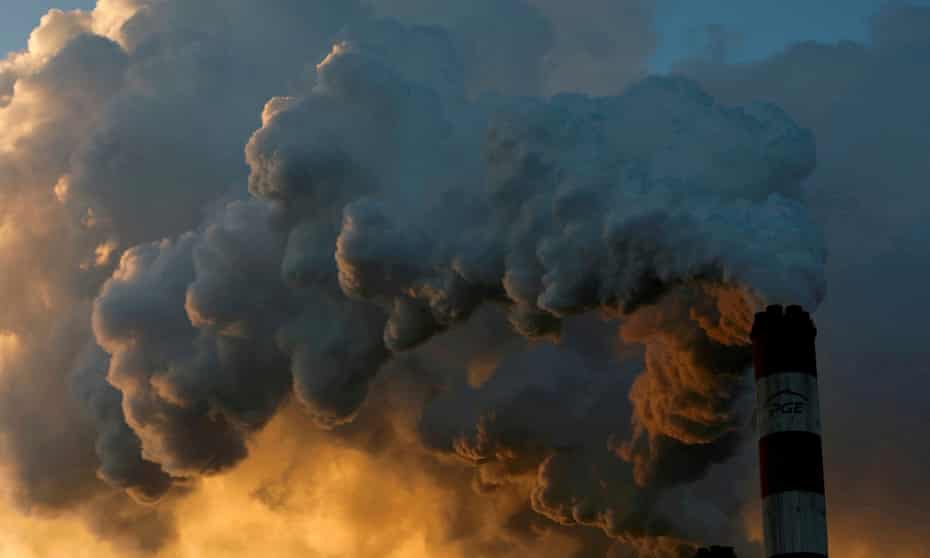
Smoke billows from Belchatow power station, Europe's largest coal-fired power plant in Poland.
Smoke billows from Belchatow power station, Europe’s largest coal-fired power plant in Poland.Photograph: Kacper Pempel/Reuters

Sun 6 Mar 2022 01.30 EST

77

The report last week by the Intergovernmental Panel on Climate Change (IPCC) on the need to adapt to global warming made stark, unpleasant reading. Described by the UN secretary general, António Guterres, as “an atlas of human suffering”, it revealed that billions of people now live in parts of the world where they are highly vulnerable to climate change.

Death tolls from droughts, floods and storms are destined to increase in these regions as extreme heat events and inundations become more frequent. Only urgent action today can halt the worst impacts and prevent a global calamity, argued the IPCC.

A wildfire in January in Bastrop State Park in Texas in the south-western US

In a normal news week, warnings as dire as these would…

View original post 539 more words

War in the Time of Neanderthals: How Our Species Battled for Supremacy for Over 100,000 Years

Exposing the Big Game's avatarThe Extinction Chronicles

TOPICS:AnthropologyArchaeologyNeanderthalsPaleontologyThe ConversationUniversity Of Bath

ByNICHOLAS R. LONGRICH, UNIVERSITY OF BATHMARCH 5, 2022

Credit: Charles R Knight/Wikimedia

Around 600,000 years ago, humanity split in two. One group stayed in Africa, evolving into us. The other struck out overland, into Asia, then Europe, becomingHomo neanderthalensis– the Neanderthals. They weren’t our ancestors, but a sister species, evolving in parallel.

Neanderthals fascinate us because of what they tell us about ourselves – who we were, and who we might have become. It’s tempting to see them in idyllic terms, living peacefully with nature andeach other, like Adam and Eve in the Garden. If so, maybe humanity’s ills – especially our territoriality, violence, wars – aren’t innate, but modern inventions.

Biology and paleontology paint a darker picture. Far from peaceful, Neanderthals were likely skilled fighters and dangerous warriors, rivaled only by modern humans.

Top predators

View original post 933 more words