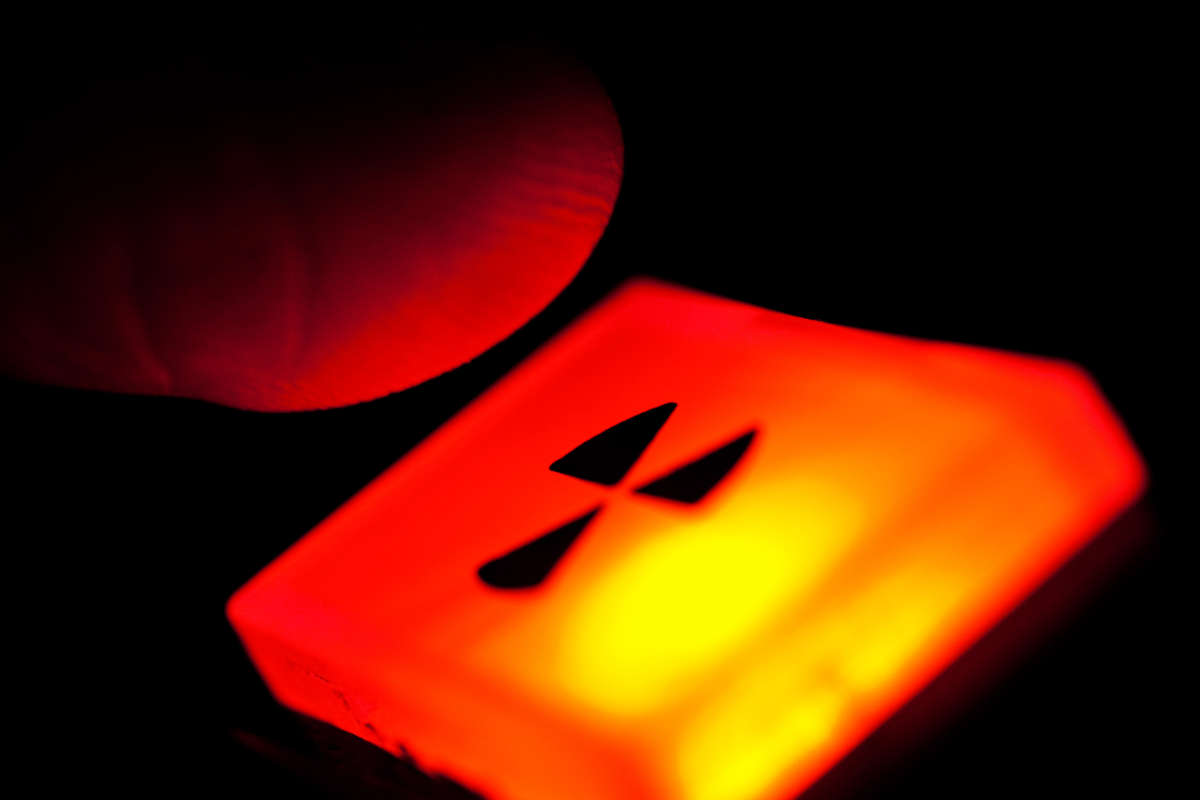
A president may be reluctant to use a nuclear weapon 80 times more destructive than the bomb that destroyed Hiroshima, but perhaps less so for a destructive 2- or 3-kiloton bomb.
The issue with Montana’s wolf hunting laws and regulations arose as FWP and the Montana Fish and Wildlife Commission are facing a lawsuit from two wildlife advocacy groupsBY TOM KUGLIN, INDEPENDENT RECORDFEBRUARY 28, 2022
Gray wolf. Shutterstock photo
HELENA – Despite a recent interpretation of Montana state law that aerial hunting of wolves is not prohibited, doing so runs afoul of federal law.
Montana Fish, Wildlife & Parks argued in state District Court recently that state law does not prohibit aerial hunting of wolves. FWP’s arguments came as legal justification for the agency removing language from the state’s wolf regulations that had stated hunting wolves from aircraft was barred. The agency says that inclusion of that language in the regulations for a decade was an error.
In response to media reporting on the case, a number of readers pointed to federal law addressing aerial hunting. The Airborne Hunting…
Climate change is already pushing some human systems and ecosystems beyond their adaptation limits
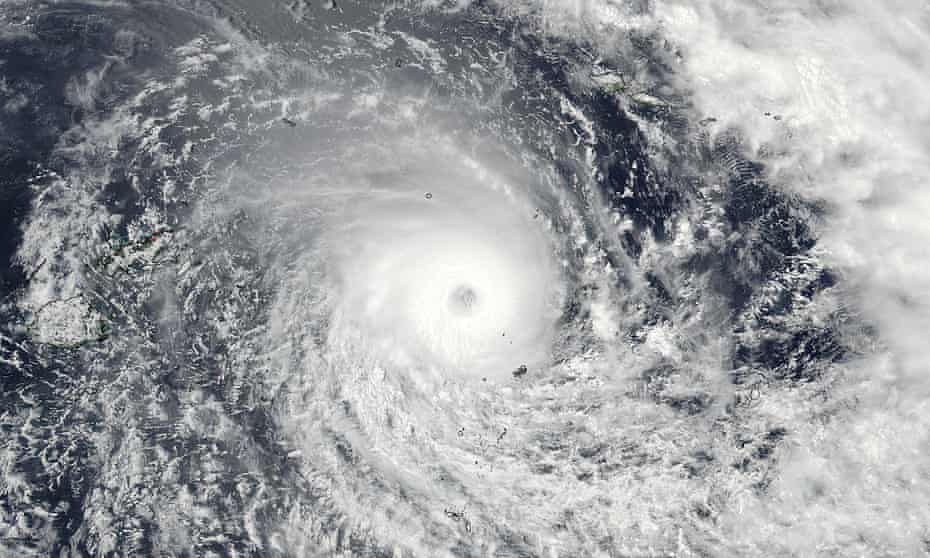
Tropical Cyclone Winston in the South Pacific: ‘There are proportionately more of the really nasty category 3, 4 and 5 cyclones, driven by warming oceans.’ Photograph: Nasa Goddard Rapid Response/NOAA
In the past decade the two most intense cyclones recorded to date in the southern hemisphere ripped through the Pacific. Tropical Cyclone Pam, the second worst, devastated Vanuatu in 2015 while in 2016 Tropical Cyclone Winston, the worst, ravaged Fiji. Both not only caused extreme environmental damage but economic damage worth 64% and 20% of the respective nations’ GDP.
Pam and Winston fit the global pattern for cyclones: there are proportionately more of the really nasty category 3, 4 and 5 cyclones, driven by warming oceans. And, sadly, there is no doubt that as our climate continues to change, the Pacific should brace for more extreme weather events. This is confirmed in the newest report from the Intergovernmental Panel on Climate Change, released on Monday.
The report shows climate change is already pushing some human systems and ecosystems beyond their tolerance and adaptation limits. It paints a stark picture; that climate change is adversely impacting every region in the world. More worryingly, the report shows that the most vulnerable people and ecosystems will be the worst hit, including in the Pacific. Pacific Island countries and territories are the least responsible for global warming and biodiversity loss yet they are facing the harshest consequences that will continue to worsen in years to come. Their future is uncertain if the world fails to pay attention to the report’s warnings.
Future extreme events and other changes in climate aren’t just devastating the Pacific’s environment, causing rising seas levels, more intense storms and deadly cyclones. They will also have widespread implications for key sectors including food, infrastructure, water and sanitation, marine ecosystems, disaster management, and health and wellbeing. A projected increase in the number of days of heavy rainfall by 2050 could lead to a heightened risk of water contamination, resulting in increasing incidences of diarrhoea, cholera and typhoid fever. Heat stress in the Pacific is also projected to increase with higher temperatures, leading to decreases in worker productivity and, in some severe cases, illness or even loss of life. Climate change impacts on mental health are particularly pertinent to the Pacific, with Tuvaluans already experiencing distress because of the local environmental impacts caused or exacerbated by the climate crisis, and by hearing about its potential future consequences.
The best risk reduction strategy is to limit global warming to the Paris agreement target of 1.5C. Beyond this temperature, the Pacific Islands could reach some biophysical limits to adaptation, if not already. Even achieving emissions reduction targets consistent with the 1.5C goal is estimated to result in the further loss of 70% to 90% of reef-building corals compared with today, with 99% of corals being lost or severely damaged under warming of 2C or more above the pre-industrial period.
People in the Pacific are not passively accepting the adverse impacts. Pacific Island nations have been spearheading demands for stronger commitments and are united in their calls for keeping global warming below 1.5C. They are pioneering innovative adaptation practices that are already being documented and replicated.
Traditional adaptive strategies influenced by Indigenous knowledge and local knowledge are having positive effects. This includes rainwater harvesting during the increasing droughts, planting native plants along coastlines to prevent erosion and flooding from higher sea levels, developing plant nurseries such as for adapted crop species or varieties, experimenting with growing salt-tolerant crops, and relocating crop cultivation inland.
In a similar vein, Pacific fishers are adapting to uncertainty by diversifying livelihoods, building social networks, expanding aquaculture production, switching fishing grounds and changing target species. There are also instances where climatic changes can provide new opportunities. For example, future increased rainfall inland could provide new areas for aquaculture in the Solomon Islands. Or new electric batteries using cheap renewable energy could revitalise near-shore fisheries constrained by rising fossil fuel prices. When linked with effective marine reserves, these are examples of adaptation strategies which can help ensure sustainable management of coastal fisheries and ecosystems.
Nature-based solutions for adaptation of ocean and coastal ecosystems are demonstrating multiple benefits in the Pacific when well-designed and implemented. The less the planet warms, the more effective and enduring and less costly these adaptation strategies are likely to be – which is why aggressive emissions reductions are needed simultaneously with locally relevant and sustainable adaptation strategies.
A lack of local resourcing is not helped by the fact that developed country climate finance has fallen short of the US$100bn a year commitment for 2020, with the money that has been contributed overwhelmingly supporting greenhouse gas reduction activities rather than adaptation. Annual adaptation costs in developing countries alone are estimated to be in the range of US$70bn, with the expectation of reaching US$140bn to US$300bn in 2030 and US$280bn to US$500bn in 2050.
The risks from climate change will keep on mounting as long as we have our foot on the greenhouse gas accelerator globally. Pacific Islands nations have been leading the call for emission-reduction action and climate adaptation for decades. But they can’t fairly do this on their own – and nor should they be asked to. There are growing calls for developed countries to urgently dial up action on adaptation policy, finance and practice so that they keep pace with climate change. And, of course, developed countries must ramp up their emission reduction actions because while climate adaptation can take the edge off climate impacts in the Pacific, the IPCC report shows clearly that on its own adaptation will not be enough. There is a lot to do and no time to waste.
Prof Mark Howden is a vice-chair of the Intergovernmental Panel on Climate Change and director of the Institute for Climate, Energy & Disaster Solutions at the Australian National University
Ofa Ma’asi-Kaisamy is manager of the Pacific Climate Change Centre at the Secretariat of the Pacific Regional Environment Programme
Register now for FREE unlimited access to Reuters.com
Register
Summary
Ukraine accuses Russia of “war crimes” at U.N. session
Kyiv seeks meeting on Russian aggression, WMD
Diplomats boycott Lavrov speeches at U.N. forums
GENEVA, March 1 (Reuters) – Russia’s foreign minister told a Geneva disarmament meeting on Tuesday that Ukraine has been seeking to acquire nuclear weapons, a “real danger” that needed a Russian response.
Russia invaded Ukraine on Thursday in what it called a special operation to demilitarise and “denazify” the country – a justification dismissed by Kyiv and the West as propaganda.read more
“Today the dangers that (Ukrainian President Volodymyr) Zelenskiy’s regime pose for neighbouring countries and international security in general have increased substantially after the authorities set up in Kyiv have embarked upon dangerous games related to plans to…
Russian nuclear submarinessailed off for drills in the Barents Sea and mobile missile launchers roamed snow forests Tuesday in Siberia after PresidentVladimir Putinordered his nation’s nuclear forces put on high alert over tensions with the West over the invasion of Ukraine.
Russia’s Northern Fleet said in a statement that several of its nuclear submarines were involved in exercises designed to “train maneuvering in stormy conditions.” It said several warships tasked with protecting northwest Russia’s Kola…
The 2021 Porsche Taycan Cross Turismo is the brand’s first all-electric station wagon, but Fox News Autos Editor Gary Gastelu says its far from a retro ride.
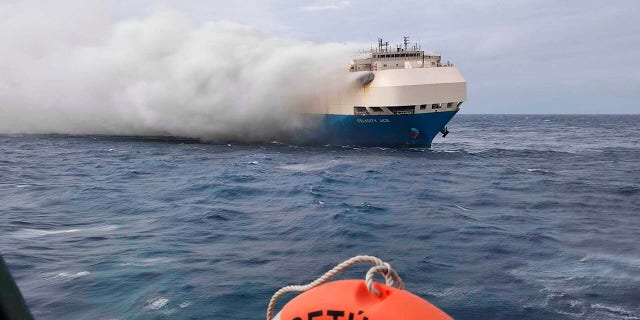
Acargo shipthat was disabled when it caught fire near the Azores almost two weeks ago has sunk in the Atlantic Ocean.
The Felicity Ace caught fire on February 16.(AP)
The Felicity Ace was being towed to land when it began to list to starboard in heavy seas about 250 miles off thePortugueseisland chain and took on water in heavy seas…
The impact crater is the second discovered in China.
(Image credit: NASA Earth Observatory image by Lauren Dauphin, using Landsat data from the U.S. Geological Survey.)
A crescent-shaped crater in Northeast China holds the record as the largest impact crater on Earth that formed in the last 100,000 years.
Prior to 2020, the only other impact crater ever discovered in China was found in Xiuyan county of the coastal province of Liaoning, according to a statement from theNASA Earth Observatory. Then, in July 2021, scientists confirmed that a geological structure in the Lesser Xing’an mountain range had formed as a result of a space rock strikingEarth. The team published a description of the newfound impact crater that month in the journalMeteoritics and Planetary Science.
The Yilan crater measures about 1.15 miles (1.85 kilometers) across and likely formed about…
DURHAM, UK, February 25, 2022 (ENS) –Astronomers from Durham University collaborating with a team of international scientists have mapped more than a quarter of the northern sky using the Low Frequency Array, LOFAR, a pan-European radio telescope. The map reveals a detailed radio image of more than 4.4 million galaxies and a dynamic picture of the Universe, which now has been made public for the first time.
To produce the map, scientists deployed state-of-the-art data processing algorithms on high performance computers all over Europe to process 3,500 hours of observations that occupy eight petabytes of disk space – the equivalent of roughly 20,000 laptops.
Durham University astronomer Dr. Leah Morabito said, “We’ve opened the door to new discoveries with this project, and future work will follow up these…