‘Report it right away’: Georgia on high alert for bird flu this spring

Cases have been found in three other states, including Kentucky

US agriculture department warns of high avian flu threat

00:0000:00

Author: Suzanne Lawler (WMAZ)

Published: 7:12 PM EST February 18, 2022

Updated: 7:32 PM EST February 18, 2022

Facebook
Twitter
https://www.13wmaz.com/article/news/local/state-on-high-alert-for-bird-flu-this-spring-2/93-55fe828c-af69-4079-8f86-503d6a0a713f


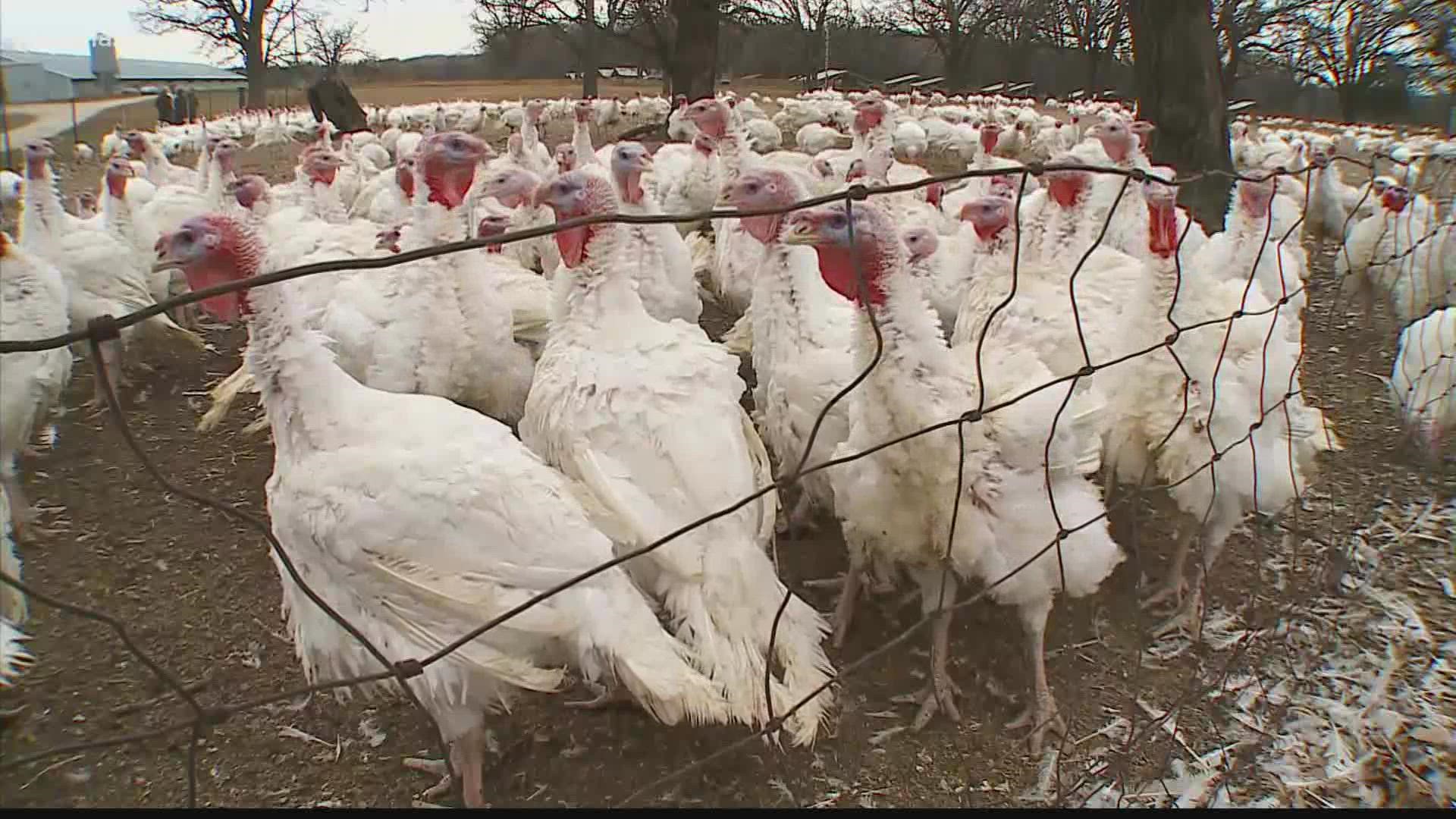
DODGE COUNTY, Ga. — Right now, the Department of Agriculture says there is an unusually-high threat for avian flu.

They haven’t put out a warning like this since 2015.

It’s because they’ve found cases in three states, including Kentucky.

Kaye and Tim Vesterfield are concerned about their chickens with the newest bird flu warning from the state.

https://imasdk.googleapis.com/js/core/bridge3.501.0_en.html#goog_563241246

https://imasdk.googleapis.com/js/core/bridge3.501.0_en.html#goog_1151244078

00:08 / 00:20

iPhone Secret Codes 2022!

FEATURED BY

https://6118fbf1fed60f9fcb6384a553836c5e.safeframe.googlesyndication.com/safeframe/1-0-38/html/container.html

Ducks and geese are the culprits that carry the disease.

You can also transmit it if you step in their droppings and carry that to a place where chickens roost.

“You have a lot of care for and feed invested in them,” Tim said, “And when they start laying, you don’t want to lose them.”

“We talked about it and we know what the symptoms are supposed to be and we know if we saw any symptoms, we are supposed to report it right away,” Kaye said.

Those symptoms include chickens laying fewer eggs, or birds that stop eating and drinking or dying suddenly with no signs of disease.

Now, the Georgia Department of Agriculture has put out some tips for you to keep your flock safe. 

  • Don’t let them drink out of farm ponds.  
  • Use designated footwear.
  • Wash your hands.

There are superheroes of sorts on the property — Great Pyrenees dogs.

Even though they like to chill, we did see them running birds off.

“We have Pepper, Ringo, Maggie, Duke, and Bobo,” Kaye said.

“They live out here out here with the animals and they will bark and they have a very vicious growl that will scare anything away,” Tim said.

Even with the extra protection, the Smiths know that if bird flu did show up, the state would have to come in and destroy their birds..

It’s serious stuff, but the threat should end with the warmer weather this spring.

Testing for avian flu is free through the Georgia Poultry Lab Network, and there is a hotline. If you have any questions, you can call 770-766-6850.

What Would Happen if the U.S. Banned Factory Farming?

By Leigh Venus

February 14, 2022

Jo-Anne McArthur / We Animals Media

What Would Happen if the U.S. Banned Factory Farming?

Memories often crystalize around food. Family rendered immobile by Sunday afternoon mac and cheese; hot pecan pie topped with melting ice cream on a crisp night; burgers slung into buns from a tailgate before the big game; pulled pork dropping from steaming carnitas devoured at a bustling market; relatives gathering around a gleaming turkey on the Thanksgiving table.

Meat, dairy, and eggs—indeed, the whole gamut of animal-derived foods—are woven into the fabric of American life and have been for as long as most will remember. But what’s on our plates will change significantly when factory farming is taken off the table, a once-unthinkable scenario that may soon become reality.

A 2017 survey of U.S. attitudes towards animal farming showed that as nearly half of U.S. adults support a ban on intensive, or ‘factory’, farming, a figure that would surely become a majority were the scale and horror of the industry fully understood. While it’s tempting to imagine factory farming as an aberration, something far from the cozy images of green fields filled with happy cows, the brute fact is that most foods at the heart of our cherished memories, traditions, and everyday lives are born of intensive animal agriculture. Though pasture-raised animals are more visible, spreading across nearly 35 percent of the total land area of the contiguous United States, 99 percent of all farmed animals in the U.S. are held in around 250,000 factory farms across the country. Already almost unfathomably massive, these operations are only increasing in number and scale. 

The number of new factory farms (often referred to as concentrated animal feeding operations, or CAFOs) in the U.S. increased from 18,000 to 20,000 between 2011 and 2017. Moreover, their size has increased alongside their number. Between 2012 and 2017, the number of animals in factory farms grew by 190 million, with an increase in the average number of all categories of animals except beef cattle. And that growth doesn’t seem to be slowing down. 

The ubiquitous expansion of factory farming is a clear indicator of how the products of intensively-reared animals dominate our plates, particularly in developed nations like the U.S. (and increasingly in rapidly growing nations like China and Brazil). The richer the country, the more animals it consumes. In 2014, the global average for meat consumption per person was 95 pounds. In the U.S., the figure was 220 pounds. As of 2020, the figure is 264 pounds per person.

Outside of the direct and brutal impact on the billions of animals processed for food within the U.S., factory farming practices are well-understood to have devastating effects on the environment as well as human health and wellbeing. Industrial animal agriculture destroys rural communities, targets immigrants, and disproportionately affects poor and minority communities. Within the facilities themselves, workers in the U.S. are three times more likely to suffer a severe injury than the average, making meat processing plants one of the most hazardous industries in the U.S. 

While factory farms are seemingly inescapable, the conversation about their closure is growing in volume. As the overwhelming scale and harm of animal agriculture become increasingly well-known, a once-unthinkable ban on factory farming is moving into the realms of possibility. In addition, the emergence of the novel coronavirus pandemic has highlighted the serious public health risk associated with factory farms, and the pandemic fuelled supply chain disruptions which caused many animal processing plants to shut down or operate at reduced capacity. 

There is a political appetite for ending factory farms. In 2020, Senator Elizabeth Warren announced she would co-sponsor Cory Booker’s bill to phase out large-scale factory farming by 2040. The Farm System Reform Act would prohibit new large factory farms from going into business and force others to cease expansions before halting operations entirely within two decades. In late 2021, the San Francisco legislature passed a resolution supporting a moratorium on the construction and expansion of animal feeding operations. On the other side of the Atlantic, ​​a legal attempt to get the UK Government to phase out animal factory farming is underway.

Changing consumer preferences are also having an impact. Thousands of American dairies have closed as milk consumption plummets. Indeed, the collapse of both dairy and cattle agriculture has also been predicted to occur as soon as 2030 by RethinkX, an independent think tank that analyses the speed and scale of disruption to propel the demise of these industries. 

There are growing examples of people formerly inside the U.S. animal agriculture industry changing tack. New York dairy Elmhurst ditched cow milk after 90 years and switched to plant-based milk production in 2017. Former beef and dairy farmer Harold Brown changed not because of demand or pandemic impact but because of a change of heart. Now a vegan activist and the founder of Farm Kind, Brown has developed an online resource that invites people to explore the interrelationships of food, environment, and animals. Howard Lyman is a fourth-generation cattle farmer who converted a small organic dairy farm into a massive factory farm operation before experiencing a health crisis that caused him to go vegan, a turning point that saw him transform his ranch into a wildlife sanctuary. 

Compounding the case for the end of factory farming is that the need to holistically reduce demand for animal products is a scientifically mainstream view. Moreover, we know that plant-based diets are appropriate for all stages of the life cycle, including pregnancy, lactation, infancy, childhood, adolescence, older adulthood, and athletes. Only a significant decrease in meat and dairy consumption will allow us to deliver a sustainable food system fit for a future in which we are already attempting to mitigate the worst effects of a climate crisis well underway. 

As both the end of factory farming and the mass adoption of plant-based diets loom, proponents of animal agriculture continue to come forward with ‘solutions’ which do little more than replace one form of animal exploitation with another. The idea that hunting, for example, is the answer to life beyond factory farming is a fantasy. In the United States, there are not enough wild animals to feed everyone, and demand would far overwhelm supply. Increasing the number of pasture-raised animals is untenable too. Pasture farming has much lower yields, in part because this type of animal production occupies much more space than factory farms and would require significantly more land clearance, and demand would again far overwhelm supply. Nor does eating different animals help, as there is evidence that abstaining from eating one kind of animal while switching to another would reduce demand in one area while increasing or maintaining it overall. 

Moving toward a mainly or entirely plant-based diet is the only viable alternative solution to the multitude of problems caused by animal agriculture and the inevitable outcome of the demise of factory animal farming. With a shift away from using animals, individual consumption would move closer to the science-based Planetary Health Diet. This suggests massive cuts in meat-eating in western countries and radical changes in sugar and oil consumption worldwide and would translate to 84 percent less red meat and six times more beans and lentils filling U.S. plates. 

Consumers worldwide are already embracing a wide range of plant-based foods. With more options than ever to replace the staples, and new products emerging all the time, the meat (and other animal products on your plate) may become cultivated or ‘clean’ meat. At the same time, milk from stem cells will take its place alongside the exploding market for plant-based meat and dairy replacements. 

A nationwide shift to plant-based agriculture would significantly change what’s on our plates. Less (or no) animal products, with the space filled by many more vegetables, legumes, grains, and an ever-growing range of plant-based meat, dairy, and egg alternatives.

While most people may be unable initially to fathom a world without fried eggs, dairy ice cream, and turkey roasts, a post-factory farm future would not be devoid of edible pleasures. It is possible for us to not only survive but to thrive without factory farming, reaping the benefits for animals, consumers, workers, and ecosystems. 

Perhaps as 2030 comes and goes, we’ll see families rendered immobile by cashew and nooch-fuelled mac and cheese; crisp nights filled with hot pecan pies covered in melting oat ice cream; Beyond Burgers jostling for space with vegan-friendly beers on a heaving tailgate as the game looms; cultivated pulled pork dropping from steaming market-stall carnitas. The family is still gathering around a gleaming turkey at Thanksgiving, of course, this one made from plants and indistinguishable from the ‘real thing’ to everyone (including the grandparents). 

As the transition to plant agriculture made by former livestock farmers like Harold Brown and Howard Lyman show, people who made a living from factory farming are making radical, inspiring changes away from harmful practices to better align with their values and consumer demand. If individuals more deeply invested in animal agriculture than most of us can make such a change to their everyday reality, there is hope for individuals to act in lock-step with political change, making our cherished memories all the richer, with what’s on our plates being proof we consigned the horrors of factory farming to history.

Read More

How Factory Farms in America Drive Deforestation in Brazil

A Closer Look at Factory Farming’s Environmental Impact

Factory Farming: What the Industry Doesn’t Want You to Know

Trap-release workshop will be held in Great Falls

Exposing the Big Game's avatarCommittee to Abolish Sport Hunting Blog

https://assets.scrippsdigital.com/cms/videoIframe.html?&host=www.krtv.com&title=Trap-release%20workshop%20will%20be%20held%20in%20Great%20Falls&kw=&autoplay=true&m3u8=https://content.uplynk.com/1bc98e413c424f89812ca24bc051e423.m3u8&mp4=https://x-default-stgec.uplynk.com/ausw/slices/1bc/08eb16cf8af2400d815b1b31a3092ff6/1bc98e413c424f89812ca24bc051e423/1bc98e413c424f89812ca24bc051e423_e.mp4&purl=/news/great-falls-news/trap-release-workshop-will-be-held-in-great-falls&dtrack=1&story=1&contplay=*recent&mute=1&tags=Homepage%20Showcase%2CGreat%20Falls%20News&cust_params=temp%3D%26weather%3D&s=krtv

Trap-release workshop will be held in Great Falls

Misha John (February 18, 2022)

By:Cade Menter

Posted at10:24 PM, Feb 18, 2022

and last updated7:33 AM, Feb 19, 2022

GREAT FALLS — Every year, animals wound being stuck in traps around the state of Montana; Footloose Montana will be hosting a trap-release workshop at the Maclean-Animal Adoption Center in Great Falls on Saturday, February 19, 2022.

Footloose Montanaboard member Clare Beelman explained, “People do get their dogs trapped regularly, you probably recall that in November, there was a dog trapped in Great Falls, just on the north side of Giant Springs State Park, so yeah, this happens regularly throughout the year.”

Recent Stories from krtv.com

https://imasdk.googleapis.com/js/core/bridge3.501.0_en.html#goog_1687395337

https://imasdk.googleapis.com/js/core/bridge3.501.0_en.html#goog_664948443

https://imasdk.googleapis.com/js/core/bridge3.501.0_en.html#goog_1232596946

She added, “It’s not just understanding how to open the traps, but how to not get bit when you are releasing your dog in particular is what we tend to focus on. A lot of people…

View original post 161 more words

River otter trapping season closed in the Clearwater Region

Exposing the Big Game's avatarCommittee to Abolish Sport Hunting Blog

  • Feb 16, 2022

Idaho Department of Fish and Game (IDFG) logo

The river otter harvest quota for Idaho’s Clearwater Region was reached on Monday, Feb 14. The otter trapping season for the entire region closes 72 hours after the harvest quota has been met. As a result, the otter season for the entire region will close at 11:59pm on Friday, Feb. 18.

The quota of 20 otters was reached on Feb. 14.

Any otter trapped in the Clearwater Region after 11:59pm must be surrendered to the Idaho Department of Fish and Game office, 3316 16th St. Lewiston, for a $10 reward.

Trappers can call 1-800-323-4334 for the most up-to-date information on harvest limits and closures. For more information on reporting requirements, review page 34 of the Upland Game, Turkey & Furbearer Seasons and Rules, or contact the Fish and Game office in the Clearwater at 208-799-5010.

https://www.idahocountyfreepress.com/outdoors/river-otter-trapping-season-closed-in-the-clearwater-region/article_cc643a8e-8f51-11ec-9db7-97991d77fb4f.html

View original post 1 more word

Dog’s shooting prompts Marion County animal rights advocates to call for change


by Christy CalcagnoFriday, February 18th 2022

UserWay icon for accessibility widget

https://imasdk.googleapis.com/js/core/bridge3.501.0_en.html#goog_1150149561

0 seconds of 0 secondsVolume 90%

https://newschannel9.com/features/for-pets-sake/dogs-shooting-prompts-marion-county-animal-rights-advocates-to-call-for-change-dogs-pets-shelter-gun

Image of Jax via Michelle Story.

3

VIEW ALL PHOTOS

View All Photos

Image of Jax via Michelle Story.

Facebook Share Icon
Twitter Share Icon
Email Share Icon

MARION COUNTY, Tenn. — Animal rights advocates in Marion County are rallying for more resources including a county-wide animal shelter and an animal control officer following a recent dog shooting.

Jax, a husky, was reportedly shot by a neighbor after wandering off his leash and into that neighbor’s property back in November. Jax died from his injuries.

Image of Jax via Michelle Story.

Though the neighbor was charged at first, District Attorney Mike Taylor told us those charges were later dismissed.

That’s because Jax was “destroying or worrying a neighbor’s livestock,” according to Taylor.

Jax’s story has since prompted community members to speak up.

It’s been fairly devastating and where we are at right now is moving forward,” animal rights activist Michelle Story told us on Friday. “We want to do everything we can to make a positive out of a bad situation.

Story says she hopes a county-wide animal shelter and an animal control officer will give neighbors an option to save the animals, rather than taking matters into their own hands.

Image of Jax via Michelle Story.

Marion County does not have a county animal shelter or an animal control officer.

So many of the county’s stray cats and dogs come to the Marion Animal Resource Connection (MARC) at 225 Sequatchie Lane in Sequatchie, Tennessee.

https://www.google.com/maps/embed?pb=!4v1645217105231!6m8!1m7!1sOyscRGC8dnDBTl-vr-2iXA!2m2!1d35.11458528136455!2d-85.59237297350876!3f42.13968671893358!4f-2.9070622194171705!5f0.7820865974627469

We can comfortably house about 20 dogs and 25 cats but when you go over that in one space, without true and a proper shelter design, it’s really not healthy for the animals,” says April Bowden, MARC’s director.

Last year, there were almost 700 reports of animal neglect or cruelty in Marion County.

Bowden says it’s common to get calls about dogs being shot or wandering the neighborhoods. She says an animal control officer would help

“If they take it into their own hands, they have two choices,’ Bowden says. ‘They can take the dog, haul it down the road and dump it where they can starve to death. Or they pull out their gun and they shoot the dog.’

Story tells us she’s working on a petition to support a county animal shelter.

She’s also gathering data to prove that there is a need for stricter animal cruelty laws in Marion County.

To report animal cruelty in an effort to collect data for Story, you’re asked to call (423) 402-5787.

https://imasdk.googleapis.com/js/core/bridge3.501.0_en.html#goog_1150149562

0 seconds of 0 secondsVolume 90%

WTVC

Depend on us to keep you posted.

Climate change: Covid shutdown linked to record rainfall in China

Exposing the Big Game's avatarThe Extinction Chronicles

By Matt McGrath
Environment correspondentPublished1 day agoShare

Related Topicshttps://www.bbc.com/news/science-environment-60423329

This aerial photo taken on 16 July 2020 shows a flooded area near the Poyang Lake due to torrential rains in Poyang county, Shangrao city, in China's central Jiangxi province

Scientists say that a rapid drop in emissions because of Covid played a key role in record rainfall in China in 2020.

The decline in greenhouse gases and small particles called aerosols caused atmospheric changes that intensified the downpours.

Hundreds of people died and millions more were evacuated during a summer of record rainfall.

But long-term cuts in emissions are unlikely to trigger similar events.

Many parts of eastern Chinaexperienced severe flooding in June and Julyin 2020. The researchers say the reductions in emissions contributed about one third of the extreme summer rain.

floods

The Yangtze river saw the heaviest rainfall since 1961, with a 79% increase in June and July compared to the…

View original post 378 more words

Russia holds nuclear drills, U.S. says Russian forces ‘poised to strike’ Ukraine

Exposing the Big Game's avatarThe Extinction Chronicles

ByPolina Nikolskaya

andTom Balmforth

5 minute read

https://imasdk.googleapis.com/js/core/bridge3.501.0_en.html#goog_1937545643

0 seconds of 30 secondsVolume 0%

01:19

01:19

Register now for FREE unlimited access to Reuters.com

Register

  • Summary
  • Companies

  • Russian forces near Ukraine starting to ‘uncoil’ – U.S.
  • Separatists in east Ukraine call for military mobilisation
  • Kremlin says Putin starts nuclear drills, no invasion plan

DONETSK, Ukraine/MOSCOW, Feb 19 (Reuters) – Russia’s strategic nuclear forces held exercises overseen by President Vladimir Putin on Saturday, and Washington accused Russian troops massed near Ukraine’s border of moving forward and being “poised to strike”.

With Western fears of war rising, foreign ministers from the G7 group of rich nations said they had seen no evidence that Russia is reducing military activity near Ukraine’s borders and remained “gravely concerned” about the situation.Report ad

After Kyiv and Moscow traded accusations over new shelling incidents near the border, France and Germany urged all or some…

View original post 826 more words

Ottawa crackdown: police arrest dozens after 3-week protest

Exposing the Big Game's avatarThe Extinction Chronicles

By ROB GILLIES, WILSON RING and ROBERT BUMSTED23 minutes ago

Protesters kneel in front of Surete du Quebec officers forming an enclosure around blockaded vehicles on Rideau Street, as police aim to end an ongoing protest against COVID-19 measures that has grown into a broader anti-government protest, in Ottawa, Ontario, Friday, Feb. 18, 2022. (Justin Tang/The Canadian Press via AP)

1 of 21

https://apnews.com/article/canada-truck-blockade-protest-coronavirus-police-1f2c87b2c31fef9cdce65449a0035334

Protesters kneel in front of Surete du Quebec officers forming an enclosure around blockaded vehicles on Rideau Street, as police aim to end an ongoing protest against COVID-19 measures that has grown into a broader anti-government protest, in Ottawa, Ontario, Friday, Feb. 18, 2022. (Justin Tang/The Canadian Press via AP)

OTTAWA, Ontario (AP) — Police arrested scores of demonstrators and towed away vehicles Friday in Canada’s besieged capital, and a stream of trucks started leaving under the pressure, raising authorities’ hopes for an end to the three-week protest against the country’s COVID-19 restrictions.

By midafternoon, at least 70 people had been arrested, mostly on mischief charges, and nearly two dozen vehicles had been towed, including all of those blocking one of the city’s major streets, authorities said. One officer had a minor injury, but no protesters…

View original post 897 more words

Wolf hunting, trapping ends in southwestern Montana

Exposing the Big Game's avatarCommittee to Abolish Sport Hunting Blog


byAssociated PressThursday, February 17th 2022

UserWay icon for accessibility widget

Wolf howling. (Getty Images).

Wolf howling. (Getty Images).

Facebook Share Icon

Twitter Share Icon

Email Share Icon
https://idahonews.com/news/local/wolf-hunting-trapping-ends-in-southwestern-montana-02-18-2022

BILLINGS, Mont. (AP) — The Department of Fish, Wildlife and Parks says wolf hunting and trapping season has ended in southwestern Montana. A recently-set quota of 82 wolves have been killed in that region of the state. Yellowstone National Park officials asked the state to suspend wolf hunting and trapping in some areas bordering Yellowstone after some wolves were killed after leaving the park.

One pack was effectively wiped out. Montana’s wildlife commission rejected the request. But it set an 82-wolf quota for southwestern Montana and that quota was reached on Wednesday. Park officials say two dozen wolves known to Yellowstone park managers were killed this winter, mostly in Montana.

View original post

Agents Cite Two Central Louisiana Men for Hunting Violations in Rapides Parish

Exposing the Big Game's avatarCommittee to Abolish Sport Hunting Blog

FEBRUARY172022

LAW ENFORCEMENTAdam EinckBaton Rouge

Louisiana Department of Wildlife and Fisheries enforcement agents citied two men for alleged hunting violations in Rapides Parish on Feb. 12.

Gavin H. Crooks, 20, and Jacob R. Tyler, 22, both from Alexandria, were cited for hunting from a moving vehicle, hunting from a public roadway, and hunting deer during illegal hours. Crooks was also cited for hunting deer with illegal electronic sights.

In the early morning hours of Feb. 12, agents received information about possible night hunting that was occurring near the Latanier community. Upon arrival, agents made contact with both Crooks and Tyler.

During questioning, agents learned the subjects were hunting from there vehicle when they shot an antlerless deer that was found in a field nearby. Agents returned during daylight hours and located a second antlerless adeer that was determined to be harvested by the subjects.

Agents seized a .223…

View original post 94 more words