Posted at 2:24 PM, Feb 15, 2022https://www.ktvh.com/news/helena-man-receives-lifetime-hunting-ban-for-2019-moose-poaching?fbclid=IwAR1atlruKUNF8dMjcmVc-waa_DwArezRmqYJpzN97BNeh6C2VlYhLHkP8ps
and last updated1:59 PM, Feb 15, 2022
HELENA — A Helena man received a lifetime ban from hunting and trapping in Montana as part of his sentence for illegally killing a trophy moose east of Townsend in 2019.
Montana Fish, Wildlife and Parks (FWP) say Shiloh Berry, 41, was sentenced Friday in Broadwater County District Court. He pleaded guilty last fall to unlawful possession of a game animal, hunting without a valid license and waste of a game animal.
In addition to the lifetime ban, Berry has also been sentenced to a three-year suspension of fishing privileges, $12,100 in fines and restitution and a suspended five-year imprisonment term.
FWP game wardens received a tip in 2019 via the department’s 1-800-TIP-MONT hotline about a dead moose with its head…
U.S. poultry producers are on high alert after cases of highly pathogenic avian influenza (HPAI) have cropped up in multiple states, sparking fears that further outbreaks could cause significant losses.
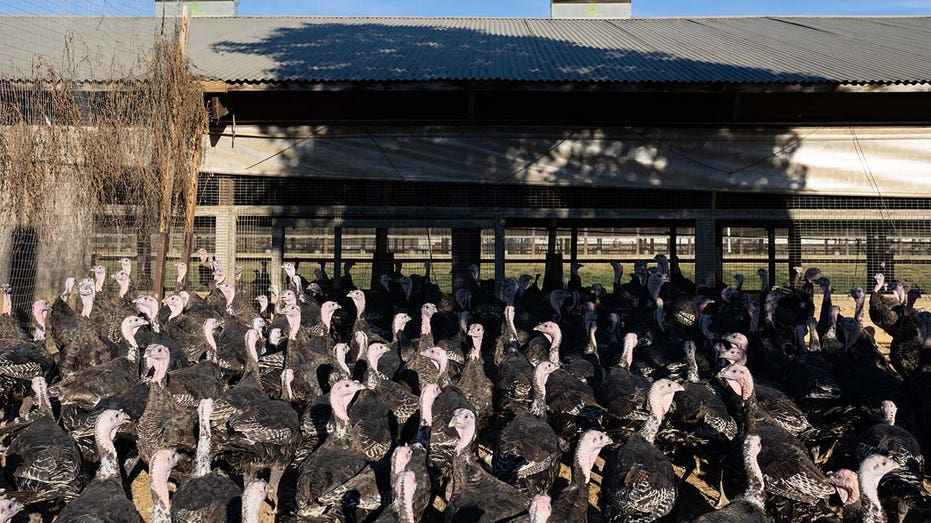
Turkeys on a farm in Orefield, Pennsylvania, U.S., on Wednesday, Nov. 10, 2021. ( Photographer: Hannah Beier/Bloomberg via Getty Images / Getty Images)
The United States Department of Agriculture confirmed Feb. 9 that a commercial turkey flock in Indiana was hit with avian flu, the first case in the U.S. since 2020. The entire flock of nearly 30,000 birds was euthanized in an effort to stop the spread.
Then on Feb. 14, the agency confirmed that a commercial flock of broiler chickens was hit with bird flu in Kentucky, and a backyard flock of mixed species fowl also tested positive in Virginia. Both flocks were culled.
Tom Super, senior vice president of the National Chicken Council, told FOX Business that while any detection of bird flu “in poultry is a concern and the industry remains on high alert,” the U.S. “has the most robust monitoring and surveillance program in the world – and detailed plans are in place to control spreading among flocks and eliminate the virus completely.”
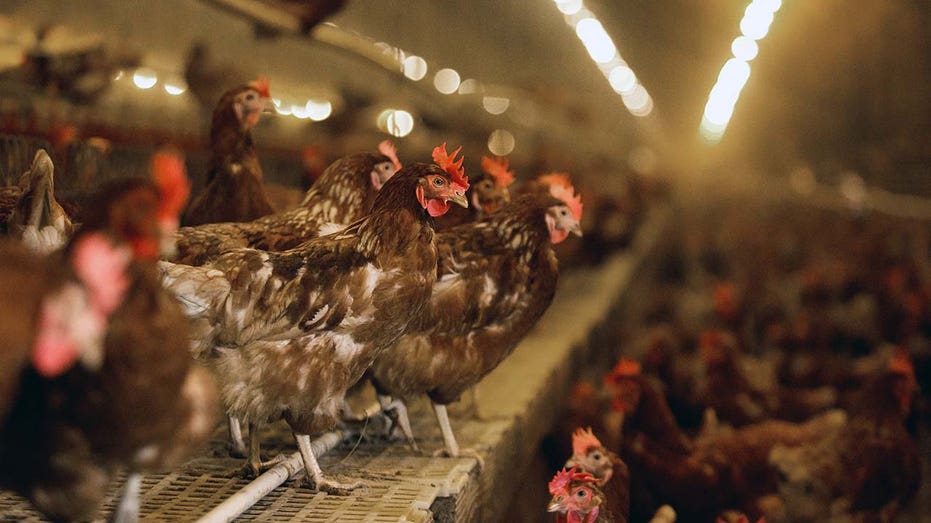
Chickens at a farm in Gonzales, Texas, U.S., on Wednesday, May 5, 2021. (Photographer: Mary Kang/Bloomberg via Getty Images / Getty Images)
National Turkey Federation Vice President of Communications Beth Breeding told FOX Business that producers “are focused on farm security every day” and that “members remain vigilant and practice all biosecurity protocols.”
She said that “for farms within a 10km control zone of confirmed [bird flu] cases, regular testing is taking place to monitor the health of flocks.”
A spokesperson from the USDA told FOX Business that the agency recently expanded its wild bird surveillance after the first detection of HPAI in a wild bird in the U.S., and that the surveillance of wild birds ensures that both the agency and the poultry industry “are able to enhance biosecurity measures and rapidly respond to reduce the risk of disease spread.”
The spokesperson said that “bird owners (whether it’s commercial or backyard poultry, or pet or hobby birds), should take some simple steps to protect their birds from the virus: In addition to practicing good biosecurity, all bird owners should prevent contact between their birds and wild birds and report sick birds or unusual bird deaths to state or federal officials.”
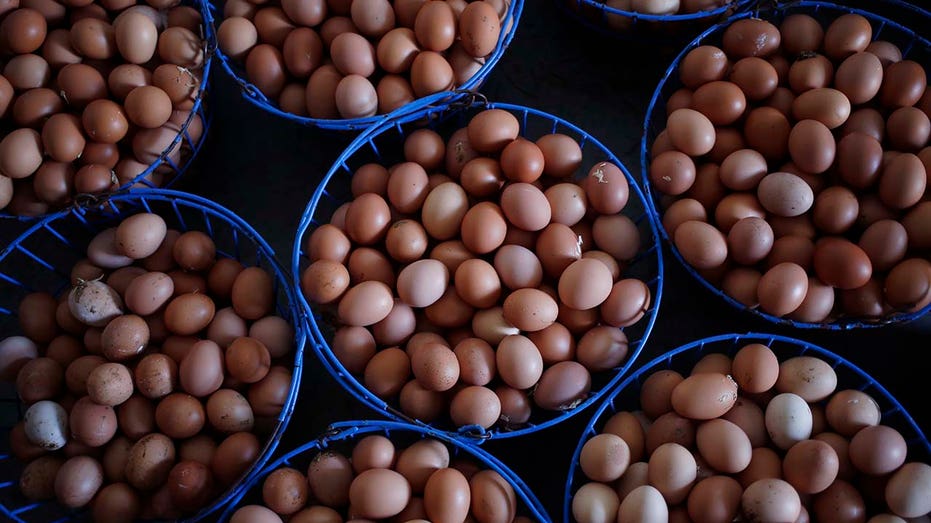
Freshly-laid chicken eggs in baskets before being washed and packaged for sale at a farm in Pleasureville, Kentucky, U.S., on Wednesday, Jan. 8, 2020. (Photographer: Luke Sharrett/Bloomberg via Getty Images / Getty Images)
The risk of humans contracting bird flu is very low, and any flock found to have an infected bird does not enter the food chain. The virus also does not present a food safety risk as long as food is properly cooked, but it has the potential of being deadly to domestic fowl and threatens to spark shortages of chicken, turkey and eggs – along with a further increase in prices for such items amid soaring inflation.
According to the Associated Press, the bird flu strain currently circulating in the U.S. is H5N1, and is related to the 2015 avian virus that killed 50 million birds across 15 states and cost the federal government nearly $1 billion.
America faces themomentous choicebetween engagement and retreat for the third time in 100 years.
The first time, America chose wrong. We retreated to the international sidelines following World War I, and the League of Nations couldn’t prevent a second world war without American leadership.
JOHN BISSET/STUFFTricia Phillips was part of a group protesting against live cattle exports in Timaru at the weekend.
Virginia Fallon is a Stuff senior writer and columnist based in Wellington.
OPINION: A distinct smell of manure is emanating from one of New Zealand’s ports right now.
There, at some point in the next few days the country’s backward welfare laws will be on full display when thousands of animals embark on their big OE, otherwise known as overseas exploitation.
The animals are due to depart from Timaru in a practice of government-approved cruelty we’ve been promised would be wound down, but that is actually ramping up. Because while the nation’s been focusing on who can’t get into the country, we’re continuing to turn a collective blind eye to just what’s leaving it.
JOHN BISSET/STUFFThe Al Kuwait livestock ship berthed in Timaru.
Last week the livestock ship Al Kuwait returned to New Zealand, where it is allowed to fill up yet another cargo of horror: 6748 cattle bound for China. It was last here about five weeks ago to load more than 10,000 cows from the South Canterbury port.
Like those before them, these most recent animals will spend weeks at sea, crammed into pens and destined for a country that lacks minimum welfare standards. Once they arrive, they’ll apparently be used for “breeding purposes”, not slaughter. Definitely not slaughter.
Of course, that’s if they get there at all. The practice of shipping animals overseas isn’t just inhumane, it’s extremely risky. The 2020 sinking of livestock export ship Gulf Livestock 1 saw 41 people and 6000 cows die in the waters off Japan, the latest in a line of needless tragedies.
In 2003 the government banned the live export of sheep for slaughter after 57,000 of the animals on board the Cormo Express were turned away from Saudi Arabia. After two months at sea, 6000 of them died.
The ban was eventually extended to include cattle, but all it did was create a loophole that’s been well-used ever since: the animals can still be transported for breeding. See what it did there?
JOHN BISSET/STUFFLyn Mansel demonstrates what she believes is all the room cattle have on live export ships, at a protest against the practice in Timaru last year. (File photo)
But back to shipping these definitely not-for-slaughter animals around the world.
Last year the Government announced the practice would be wound down over the next few years and come to an end by 2023. Agriculture Minister Damien O’Connor acknowledged the benefit some farmers get from the trade, but also noted “support of it is not universal within the sector”.
Needing to “stay ahead of the curve in a world where animal welfare is under increasing scrutiny” played a key part in the decision, he said.
The announcement was, of course, met with fury by those who profit from suffering – in 2019, the trade was worth $77 million – and also criticised by welfare groups who said the ban should be brought forward. Two years left a lot more time for a lot more agony, after all.
Still, it’s that promise of winding down that’s left an odour at the port of Timaru, where those opposed to the practice say it’s cranking through the exports like never before.
Animal welfare group SAFE says figures obtained under the Official Information Act show approximately 124,000 cows were exported in 2021, compared with 109,921 in 2020 and 39,269 in 2019.
Regardless of whether this business of suffering is ramping up or winding down, it should have been stopped years ago because it’s cruel, dangerous and outdated. And as for animal welfare being “under increasing scrutiny?”
The fur trade is directly contributing to the high risk of imminent extinction of the critically endangered European mink.
A new report detailing the environmental impact of fur has criticised the fur industry for ‘greenwashing’, as Respect for Animals calls for governments to take action.
Respect for Animals is calling for an end to the trade in fur after publishing a new hard-hitting report that denounces ‘misleading’ and ‘unsubstantiated’ claims about the sustainability of fur, including the fur trade’s so-called ‘Furmark®’ certification scheme
The fur industry has faced legislation around the world prohibiting fur farming and trapping on the grounds of their inherent animal welfare failures. Having lost the argument on animal welfare, the fur industry is trying to present itself as ‘green’, with a major fur trade European lobbying group even rebranding itself ‘Sustainable Fur’.
The new report, ‘The Environmental Cost of Fur: A scientific review of the environmental impact of the fur industry and why Furmark® is just another attempt at greenwashing’, exposes the fur industry’s impact on biodiversity, pollution, resource use, toxic chemical use, as well as scrutinising the claims underpinning ‘Furmark®’. It considers the fur industry’s claims regarding environmental sustainability and finds fur guilty of the seven ‘Sins of Greenwashing’ as defined by TerraChoice.
The report is being sent to the European Commission, the US Federal Trade Commission, the United Nations and the UK’s Competition and Markets Authority, who are all looking at the issues of sustainability and greenwashing.
The report details:
● Excessive killing of wild animals for their fur led to the extinction of some species and the need for many others (including large spotted cats) to be given protection as endangered species.
● Traps still used to catch wild animals for their fur are indiscriminate and kill non-target species, including rare species.
● The presence of non-native, alien species is one of the main threats to biodiversity. Animals such as American mink, raccoon dogs and possums have been deliberately and/or accidentally released by the fur industry in many parts of the world and the industry lobbies to prevent actions to address the problem.
● Water, land and air pollution from fur factory farms often has serious impacts on local environments as well as the health and quality of life of local residents.
● The fur processing industry uses highly toxic chemicals. In terms of land pollution by toxic metals, fur dressing and dyeing has been ranked in the top five highest pollution-intensity industries by the World Bank.
● Potentially dangerous levels of several hazardous chemicals have been found in fur on sale in Europe and China (including in children’s clothing)
● Fur has a substantially higher environmental impact (on a large number of measures) than other common textiles. The impact of a mink fur coat (over the whole life cycle of the product from production to disposal) is many times higher than coats made of many other materials, including faux fur.
● Vast amounts of fish have been used in feed for Danish fur farms. Prior to the cull of mink on Danish farms in November 2020, approximately 238,000 tonnes of sandeels were delivered to Danish fishmeal processing factories in that year, from where they were delivered directly to Danish fur farms. The industrial sandeel fishery is one of the largest in the North Sea and is permitted to operate within the foraging range of IUCN Red List species like kittiwake and puffin.
● Furmark®, the fur industry’s certification and traceability scheme, almost totally fails when assessed against a set of 12 criteria that any credible scheme would be expected to meet and appears to be little more than a public relations exercise. The scheme does not currently include any standards for emissions, biodiversity impact, resource / energy use or any other environmental performance measures. The scheme standards generally reward the status quo with no requirement to go beyond normal industry practice and basic legal requirements.
● The fur industry commits all seven ‘Sins of Greenwashing’ and has had to stop numerous advertising campaigns as a result of making false claims.
Mark Glover, Chair of Respect for Animals says:
”The fur trade’s claims to be sustainable have been exposed as greenwashing and fur lobbyists should be seen in the same light as the tobacco industry that ignored the facts and worked to undermine the science that exposed their products as lethal. It is interesting to note that one of the senior staff at the International Fur Federation used to work for the Tobacco Manufacturers’ Association.”
“One shocking example of contempt for the environment emerged during research for the report is that fur farmers have consistently argued that they feed their animals on waste products but the annual catch of hundreds of thousands of tonnes of sandeels targeted by industrial fishing boats to supply the demand from Danish fur farms (before they were forced to kill all their animals) on its own shows this is untrue.”
“Large numbers of luxury brands have come to understand the truth about fur, seeing through the fur trade’s bogus claims, and have gone fur-free”.*
The new report’s author, scientist Heather Pickett says:
“Furmark® is an elaborate but thinly disguised greenwashing exercise. The environmental damage caused by the fur industry is laid bare for all to see in this report and Furmark® is shown to be no more than a poor attempt to put a stamp of approval on business as usual.”
* On 24 September 2021, luxury brand giant the Kering Group which includes Gucci, Alexander McQueen and SaintLaurent announced it would be going ‘entirely fur free’. Chairman and CEO of Kering, Francois-Henri Pinault declared: ‘For many years, Kering has sought to take the lead in sustainability, guided by a vision of luxury that is inseparable from the very highest environmental and social values and standards…….The time has now come to take a further step forward by ending the use of fur in all our collections’.
HUDSON’S HOPE, B.C. — Environment Canada issuing a Dust Advisory for Hudson’s Hope until further notice.
High concentrations of coarse particulate matter are expected to persist until there is precipitation, dust suppression or a change in traffic patterns. The levels tend to be highest around busy roads and industrial operations.
The Ministry of Enviroment says road traffic stirring up winter traction materials is causing the dusty conditions. The ministry reporting Hudson’s Hope registering over 60 micrograms per cubic metre on Monday well above the provincial air quality objective.
Staying indoors helps to reduce particulate matter exposure.
Exposure is particularly a concern for individuals with chronic conditions, respiratory infections such as COVID-19, pregnant women, infants, and older adults. People with underlying conditions should postpone or reduce strenuous exercise until the…
While many of the birds who were headed south from Canada — where they had spent the winter — recovered from the fall and flew away, dozens of them were dead and did not move.
Eight people — including four teens — were feared dead Monday after the small plane they were in crashed into the ocean off North Carolina’s Outer Banks.
The group of duck hunters reportedly included a woman whoposted eerie photoson Facebook around 11 a.m. Sunday — before the plane disappeared — including shots from inside an aircraft featuring boys in camouflage and other snaps of the same kids posing in front of dead fowl.