Let’s be honest why this eradication is taking place before we eliminate an important ancient wild animal from our landscape for the second timeBY MATT BOWSERFEBRUARY 5, 2022
I am a big game hunter. I’m not opposed to the ethical hunting of predators when it’s balanced with economic, social, and ecological factors. But the current wolf “hunt” in Montana is an eradication.
Montana’s wolf population is estimated between 900 and 1,100. Montana Fish, Wildlife and Parks is well on its way to achieving its kill quota of 450 this year – that’s almost half the total population. In addition to shooting and trapping: baiting, snaring (strangulation), night hunting (on private land), and electronic calling are legal means for taking a wolf.
If you’re like me and nearly vomit when thinking about this atrocity and try to find a scapegoat – look in the mirror. We’ve put the people in power who are making these decisions. Our governor – himself an illegal wolf hunter– and our state legislators passed the laws, then appointed unqualified cronies to top positions.
Politics aside, what a bizarre set of societal norms we adhere to when distinguishing acceptable treatment/management of animals? You can spend a year in jail for beating your dog. And the weekly police blotter reveals just how many folks dial 911 to report an underfed horse. Yet we send Yellowstone buffalo to slaughter because they cross an invisible line in search of food. Then we casually annihilate half the population of a species that dates back nearly a million years – whose domesticated descendants loyally sit next to us on the couch each evening.
It might help us to unravel the buried layers of “ye old pioneer spirit” wrapped within our current management policy: centuries old fears, inflated horror stories, and the control of nature. And begin to separate old superstitions from current reality. Let’s be honest why this eradication is taking place before we eliminate an important ancient wild animal from our landscape for the second time.
INVESTIGATIONS are continuing into the circumstances surrounding the shooting death of Ramcharan Bhimsingh.
Bhimsingh, 42, of Poonah Road, Whiteland, was reportedly in search of a lost dog at the Catshill Forest around 2 am on Sunday, when he was killed.
Relatives say Bhimsingh was a hunter.
A report said the police were called by one of the men who accompanied Bhimsingh into the forest. There were two others who were also part of the search for the dog.
The man told police, he and Ramcharan walked some miles into the forest, while the other two men stayed behind in their camp.
Just after midnight, they heard dogs barking and Bhimsingh walked towards the sound after which a loud explosion was heard like that of a gunshot. When he checked, the man saw Bhimsingh lying on the ground with what…
COVID-19 antibodies in deer have been reported in Ohio, Illinois, Michigan, New York, and Pennsylvania. There are millions of deer in the US and although it is unknown how many have been infected, the numbers are thought to be high. Find more information on it here.
The deer don’t really get symptoms from the COVID-19 infections, but that isn’t the experts main concern.
They fear that there is a possibility of another variant emerging from the deer whole have been infected. It is concerning because the potential variant could infect humans or other wildlife.
Because humans environmental contamination, like garbage or sewage.
Scientists agree that COVID-19 in humans is far more pressing than it is in animals.
There is a real fear of the potential variant to spread. Sarah Olson, an epidemiologist at the Wildlife Conservation Society, said “We can’t even control it in people. There’s hardly a chance we’re going to be able to control it in the wild.”
The COVID-19 remains hard to predict in humans, and proves to be even more of a challenge in animals.
Alexandra SchnellResearch Fellow in Comparative Psychology, Darwin College, University of Cambridge
Andrew CrumpPostdoctoral Research Officer, London School of Economics and Political Science
Jonathan BirchAssociate Professor of Philosophy, London School of Economics and Political Science
Disclosure statement
Andrew Crump receives funding from the European Research Council (ERC) under the European Union’s Horizon 2020 research and innovation programme, Grant Number 851145. He is affiliated with the Animal Welfare Research Network, Association for the Study of Animal Behaviour, and Universities Federation for Animal Welfare.
Jonathan Birch receives funding from the European Research Council (ERC) under the European Union’s Horizon 2020 research and innovation programme, Grant Number 851145.
Alexandra Schnell does not work for, consult, own shares in or receive funding from any company or organization that would benefit from this article, and has disclosed no relevant affiliations beyond their academic appointment.
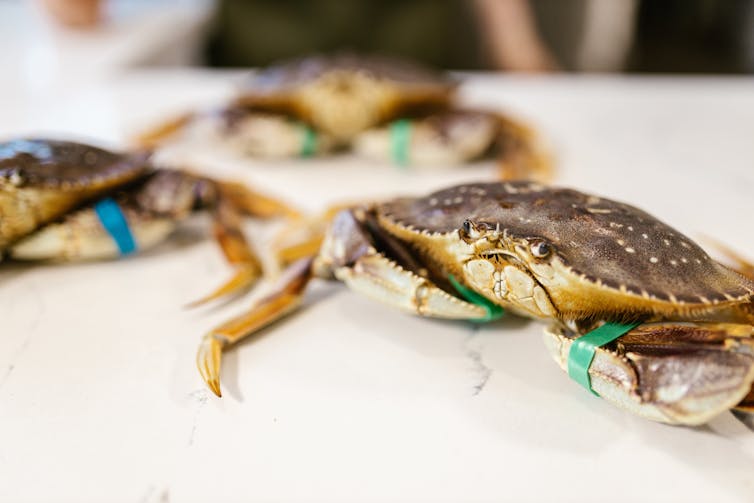
Does a lobster feel pain when you pop it in a pot? The UK government asked us to find out.
We were commissioned to find out the likelihood of sentience – the capacity to have feelings, such as pain and pleasure – in two groups of invertebrate animals: the cephalopod molluscs (including octopuses, cuttlefishes and squids) and decapod crustaceans (including lobsters, crabs and prawns). We found strong and diverse evidence of sentience in both. And our recent report, which reviewed over 300 scientific studies, led to the UK government’s decision to legally recognise all of these animals as sentient beings.
You may wonder how we find out if an animal can feel pain. It’s tempting to think we only need to look at whether they try to avoid or escape being injured. However, after touching a hot stove, humans withdraw their hand before feeling the burn. Hand withdrawal is an unconscious reflex. Perhaps other animals only respond reflexively to injury, without experiencing pain.
For our investigation, we used eight scientific criteria for determining sentience.
Don’t let yourself be misled. Understand issues with help from experts
Get the newsletter
The first four addressed whether the animal’s nervous system could support sentience. We wanted to find out whether it can detect harmful stimuli and transmit those signals to the brain. And also whether the signals were processed in integrative brain regions – parts of the brain that bring together information from many sources. Finally, it was important to understand whether anaesthetic or painkillers changed the nervous system response.
Our four remaining criteria focused on the animal’s behaviour. Could they trade-off risks of injury against opportunities for a reward? Did individuals tend to the specific site of an injury, and could they learn to avoid stimuli associated with injury, for example? We also investigated whether they valued anaesthetics or painkillers when injured. This behaviour, which distinguishes rigid and reflex reactions to injury, such as withdrawing a burnt hand, from flexible responses, is taken to be evidence of pain.
Individually, none of our criteria proves that a creature is sentient. But the more criteria it meets, the more likely sentience becomes.
Signs of feeling
We found the strongest evidence for sentience in cephalopods. Octopuses were the stars. With around 170 million brain cells, they have higher brain-to-body ratios than most reptiles and fish. This allows octopuses to perform remarkable feats of learning and memory.
Octopuses also behave in ways that point strongly to experiences of pain. For example, in a recent study, they were given three chambers to explore. Injection with acetic acid in their initially preferred chamber led to octopuses avoiding that chamber from then on. Injured octopuses learned to prefer an alternative chamber, where local anaesthetic was available. This anaesthetic silenced nerve activity between the injury site and the brain. Similar findings in mammals are taken to indicate the subjective experience of pain.
Decapods also displayed compelling signs of sentience. For instance, one high-profile study allowed crayfish to explore a cross-shaped tank. Two arms of the cross were illuminated, whereas the other two were shaded. In the wild, crayfish use dark shelters to hide from predators, so time spent in the shaded arms was taken to measure anxiety-like behaviour. Exposure to an electric field caused crayfish to avoid the light arms. Administering an anti-anxiety drug reversed the effect. These findings reveal that crayfish have mental states with similar brain mechanisms and behaviour to anxiety.
Despite striking evidence for sentience in some well-studied species, there are 750 cephalopod species and 15,000 decapod species – more than double the total number of mammal species. Most individual species have never been studied in detail.
But sentience has never been studied in most individual vertebrate species either. With vertebrates, it is usually accepted that we can make reasonable generalisations from laboratory species – such as rats and zebrafish – to other species.
Invertebrates should be treated in the same way as vertebrates. That means protecting under-studied animals if it is reasonable to generalise from strong evidence in a better-studied species. This principle led us to recommend extending protection to all cephalopod molluscs and all decapod crustaceans.
Implications for welfare
Recognising these animals as sentient is undoubtedly a step forward for UK animal welfare law, which currently applies almost exclusively to vertebrates. Some other countries, such as New Zealand, Norway and Sweden, have already given invertebrates legal protection. These cover issues such as the storage and slaughter of decapods in the food industry.
But in the UK, current industry practices will not be affected as the new bill does not apply to existing law. That means that procedures like boiling lobsters, asphyxiating octopuses and dismembering crabs will still continue.
We hope our report begins a wider conversation about how these animals can be treated humanely so we can minimise their pain and suffering. Many techniques, such as electrical stunning and rapid slaughter, are already informally considered best practice. Encouraging and enforcing best practice could protect producers against the erosion of standards, and reassure consumers that their expectations of high welfare standards are being met.
“We are committed, more than ever before … to identify ways to encourage and facilitate a coexistence between people and red wolves,” said the USFWS’s assistant regional director in the South Atlantic-Gulf and Mississippi Basin Regions.
In this June 13, 2017, file photo, the parents of this 7-week old red wolf pup keep an eye on their offspring at the Museum of Life and Science in Durham, N.C.(Associated Press photo/Gerry Broome, File)
Story at a glance
The U.S. Fish and Wildlife Service (USFWS) is preparing to release nine endangered red wolves to a conservation area west of the Outer Banks in North Carolina.
The red wolf, endemic to the United States and considered the most endangered wolf in the world, once called the entire Southeastern U.S. home before habitat destruction and overhunting nearly killed off the species.
The nine red wolves consist of a family and two additional breeding pairs that conservationists hope will help rebound the population of the species in the wild.
The U.S. Fish and Wildlife Service (USFWS) is preparing to release nine endangered red wolves to a conservation area west of the Outer Banks in North Carolina.
The red wolf, endemic to the United States and considered the most endangered wolf in the world, once called the entire Southeastern U.S. home before habitat destruction and overhunting nearly killed off the species. Red wolves were listed as endangered in 1973 under the Endangered Species Act.
Now, the USFWS is working to transfer and release nine of the wolves to a conservation area that includes the Alligator River and Pocosin Lakes National Wildlife Refuges. The nine red wolves consist of a family and two additional breeding pairs that conservationists hope will result in breeding to help rebound the population of the species in the wild.
America is changing faster than ever! Add Changing America to your Facebook or Twitter feed to stay on top of the news.
The USFWS recently held a virtual meeting with local residents, landowners, and stakeholders to address concerns and ensure a smooth transition in habiting species. The service has appointed a community liaison and set up a red wolf recovery hotline to aid with the transition.
“We are committed, more than ever before, to working with our partners — the North Carolina Wildlife Resources Commission, landowners, and other stakeholders — to identify ways to encourage and facilitate a coexistence between people and red wolves,” Catherine Phillips, the USFWS’s assistant regional director in the South Atlantic-Gulf and Mississippi Basin Regions, said in a press release.
“The recent meeting allowed us to hear from the local community and stakeholders, and to share with them what we are doing and plan to do going forward. We cannot recover the red wolf without them.”
COLUMBIA, S.C. (AP) — South Carolina wildlife officials have released 16 more coyotes with a special tag and if hunters kill them, they can get a free hunting license for life.
The Department of Natural Resources has been releasing the tagged coyotes since 2016, when the lawmakers created the program to help limit the population of the animals.
Coyotes attack deer and have caused a 30% decrease in the deer population in South Carolina in the past two decades, the wildlife agency said. They can also attack other small game and pets.
A hunter who kills a tagged coyote will find contact information to claim the lifetime hunting license, which can be given to a friend or family member.
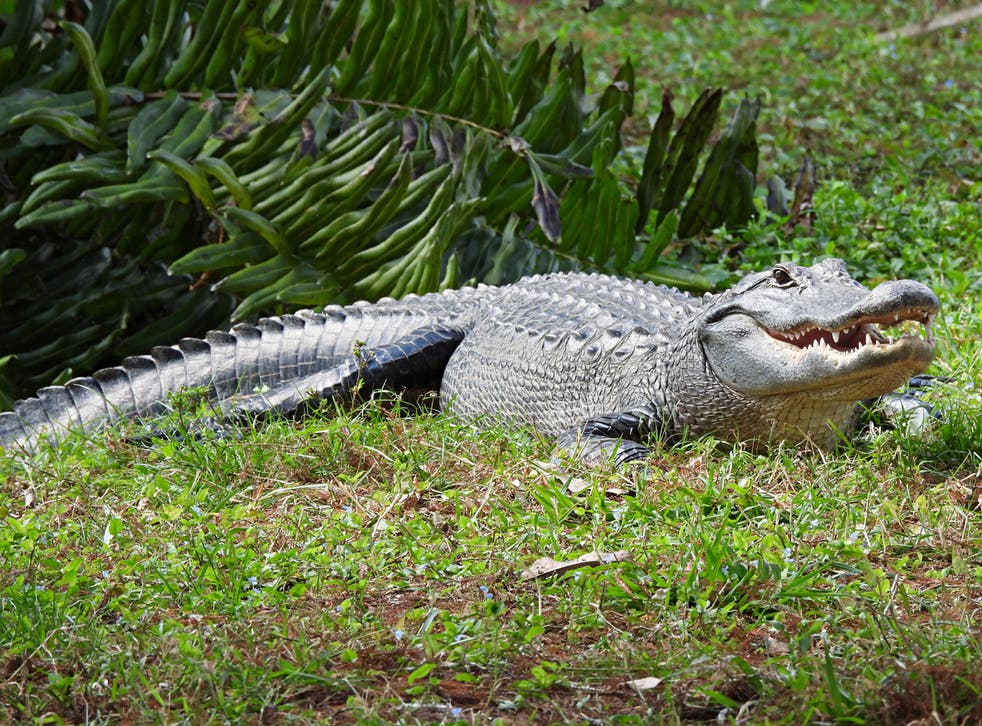
The reptile was suspected of eating livestock on private property in Okeechobee County, and was considered a threat. The owner of the property agreed to have it killed.
“I had no idea the magnitude of how big his body was until we pulled him completely out of the lake,” said Mr Borries.
“Size does matter,” he wrote on his company Facebook wall,Dynamic Outdoors TV, with images of him standing next to the enormous creature, sitting on its back and pulling open its jaws. “To me, it was a once-in-a-lifetime opportunity,” he told WXXV News 25.
SHAREShare Article via FacebookShare Article via TwitterShare Article via LinkedInShare Article via Email
KEY POINTS
A Russian invasion of Ukraine could be imminent, White House national security adviser Jake Sullivan warned on Sunday.
“We are in the window,” Sullivan said in an interview on “Fox News Sunday.” “Any day now, Russia could take military action against Ukraine or it could be a couple of weeks from now, or Russia could choose to take the diplomatic path instead.”
It comes after two U.S. officials said Russia has in place about 70% of the combat power it believes it would need for a full-scale invasion of Ukraine.
An armored personnel carrier is seen during tactical exercises, which are conducted by the Ukrainian National Guard, Armed Forces, special operations units and simulate a crisis situation in an urban settlement, in the abandoned…
The Polar Vortex is starting to power up unusually in the late Winter Season, reaching record cold levels in the lower stratosphere. This is not without consequences, as it will strengthen the polar circulation into late winter and will be ready to continue into early Spring, influencing the weather in the United States and Europe.
The Polar Vortex is a powerful short-to-medium term weather component during the cold season. It is strongly connected all the way from the ground up into the higher levels of the atmosphere.
For this reason, we always take great notice of the activity high above in the stratosphere and monitor it all the time. In the next days, the Polar Vortex will behave a bit unusual, as it will kick into overdrive, reaching near record-high power values for this time of year.
STEUBEN COUNTY, Ind. (WANE) — Indiana Conservation officers are investigating a hunting accident that happened in the northwest part of Steuben County.
Authorities were called to private property where they said Gunnar Penick, 23, of Hudson, was injured while coyote hunting. The initial investigation suggests Penick was removing his firearm from the cab of his truck when it discharged, striking him in his left arm.
Penick was taken to an Angola hospital in good condition.
ADVERTISING
Indiana Conservation Officers want to remind the public that the safest way to transport a firearm is unloaded and properly encased.


 We believe in the free flow of information