California grocers sue to stop animal welfare law that could lead to bacon shortage

While an earlier study projected bacon prices soaring by up to 60 percent in California, another report estimated pork prices rising eventually by a more manageable 8 percent.

https://www.nbcnews.com/news/us-news/california-grocers-sue-stop-animal-welfare-law-lead-bacon-shortage-rcna8546

Image:

A hog walks in a holding pen on the Ron Mardesen farm, on Dec. 2, 2021, near Elliott, IowaCharlie Neibergall / AP fileDec. 13, 2021, 5:08 AM PST / Source: Associated PressBy The Associated Press

ELLIOTT, Iowa — A coalition of California restaurants and grocery stores has filed a lawsuit to block implementation of a new farm animal welfare law, adding to uncertainty about whether bacon and other fresh pork products will be much more expensive or in short supply in the state when the new rules take effect on New Year’s Day.

The lawsuit is the latest step in a tumultuous three-year process of enacting rules overwhelmingly approved by voters but that remain in question even as the law is set to begin. Since voters approved Proposition 12 by a 2-to-1 ratio in November 2018, state officials have missed deadlines for releasing specific regulations covering the humane treatment of animals that provide meat for the California market.

Most hog producers haven’t made changes to comply with the law. And now a coalition of business owners is seeking more than a two-year delay.

“We’re saying this is not going to work,” said Nate Rose, a spokesman for the California Grocers Association.

While groups are working to delay the measure, the state has eased the transition to the new system. It has allowed pork processed under the old rules and held in cold storage to be sold in California in 2022, which could prevent shortages for weeks or even months.

As Josh Balk, who leads farm animal protection efforts at the Humane Society of the United States, put it, California residents need not fear “pork industry claims of the apocalypse.”

Put simply, the law requires that breeding pigs, egg-laying chickens and veal calves be given enough space to stand and turn around. For pigs, that means they no longer can be kept in narrow “gestation crates” and must have 24 square feet of usable space.

Image:
Niman Ranch Pork Company founder Paul Willis, left, talks with Iowa hog farmer Ron Mardesen on his farm, on Dec. 2, 2021, near Elliott, Iowa. Charlie Neibergall / AP file

Producers of eggs and veal appear able to meet the new law, but hog farmers argued the changes would be too expensive and couldn’t be carried out until the state-approved final regulations for the new standards. An estimate from North Carolina State University found the new standard would cost about 15% more per animal for a farm with 1,000 breeding pigs.

The National Pork Producers Council has challenged California’s right to impose standards on businesses in other states, but so far those efforts have failed.

California is the nation’s largest market for pork, and producers in major hog states like Iowa provide more than 80 percent of the roughly 255 million pounds that California’s restaurants and groceries use each month, according to Rabobank, a global food and agriculture financial services company.

Without that supply, it’s unclear if a state that consumes about 13 percent of the nation’s pork supply will have all the meat it demands. The North American Meat Institute, an industry group, said packers and processors “will do their best to serve the California market.”

“What will happen in California? I don’t know,” said Michael Formica, the general counsel for the National Pork Producers Council. “One thing we know is there will be finite supplies to sell there.”

Adding to the uncertainty is the lawsuit filed last month in Sacramento County by the California Grocers Association, California Restaurant Association, California Hispanic Chambers of Commerce, California Retailers Association and Kruse & Sons, a meat processor. The suit seeks a 28-month delay until final regulations for the enforcement of the rules are officially adopted.

California’s agriculture and health departments have said the voter-backed measure didn’t give them enough time to approve final regulations. The agencies were still accepting public comments for revisions in December. That means it could be months before final rules are approved.

CORONAVIRUSU.S. records over 50 million Covid cases

CULTURE MATTERSAnimated and authentic: A Puerto Rican girl’s Christmas is focus of new PBS show

Given that delay, the groups claim in the lawsuit that they can’t be sure they’re complying and could be subject to penalties stipulated in the law.

“Our concern is the uncertainty,” said Rose, of the grocers association. He said a judge has scheduled a hearing for March, but the group is pushing for an earlier date.

If the law takes effect Jan. 1, it’s possible the state could avoid immediate shortages or steep price increases because the industry has about 466 million pounds of pork in storage. Not all of that meat can be sent to California, of course, but when combined with new supplies from processors that meet the new standards, it should meet at least some of the demand.

If there is a disruption, it “would be significantly smoothed,” said Daniel Sumner, a professor at the University of California-Davis, who teamed with colleagues to study the price and supply implications of Proposition 12.

While an earlier study projected bacon prices soaring by up to 60 percent in California, a UC-Davis report estimated that the uncooked pork prices rising eventually by a more manageable 8 percent in California.

Massachusetts has approved a similar animal welfare law that takes effect next month, but state lawmakers are considering a one-year delay because of supply concerns.

The accuracy of the California estimates could depend on how many farmers adopt the new standards and how long the transition takes.

Iowa farmer Ron Mardesen already meets the California standards, and for much of the year gives sows free rein to roam through large areas of his farm about 100 miles (160 kilometers) southwest of Des Moines.

With so much room, “They’re like a bunch of big, old sisters,” he said. “You can tell they’re happy. No one is squealing or crying.”

Chris Oliviero, general manager of Niman Ranch, a specialty meat company in Westminster, Colorado, said he hopes California’s new rules help change a system he calls “lower cost at any cost.” Although Niman charges more for its pork, he said he hopes the new California rules help limit the environmental consequences of large-scale animal agriculture.

“There is volatility in the markets, so I understand the fears that comes with that, but I also think most large agricultural companies have shown that when they put their mind to it they’re very capable of solving complex problems,” Oliviero said.

31 bears had to be killed in B.C.’s Elk Valley this year, conservation officers say

https://www.cbc.ca/news/canada/british-columbia/bears-killed-euthanized-elk-valley-bc-1.6280686

Most euthanized after becoming habituated to people and garbage, after drought blighted natural food sources

Janella Hamilton · CBC News · Posted: Dec 10, 2021 7:15 AM PT | Last Updated: December 10

A bear eats from an apple tree in Elkford, B.C., north of Fernie. (Rideout Photography)

70 comments

More than 30 bears have had to be euthanized in the Elk Valley region of British Columbia this year, most of them after becoming habituated to people, conservation officers say.

In one of the worst years for human-bear conflicts in the East Kootenay, 17 black bears were killed around Sparwood, B.C., while 12 black bears and two grizzly bears were put down in the Fernie area, according to staff at the B.C. Conservation Officer Service. 

“Several bears were injured on the highway and had to be euthanized, but the majority of cases were bears who had become habituated to human food sources and were showing levels of aggression toward people,” said Ryan Gordon, a conservation officer in Fernie, B.C. 

Gordon says euthanizing a bear is not an easy decision or one officers take lightly.

Several bears had to be euthanized after being injured on Highway 3. (Darryn Epp)

“It’s on a case-by-case basis. It depends if the bear is causing property destruction, risk to community safety or showing increased levels of habituation and is not scared of people. When those factors are there, then we have to interfere,” he said.  

Those factors cropped up frequently in 2021, Gordon says. 

“It’s been a number of years since we’ve had to deal with this many bears … but it’s usually based on environmental factors such as food availability.” 

Most black and grizzly bears hibernate from four to six months starting in November or December. But Clayton Lamb, a wildlife scientist, says because of the summer drought and mild fall temperatures, some of these bears are still actively searching for food before they tuck themselves in for the winter. 

“It was a really bad year for huckleberry crops, and that’s typically a really important food source for grizzly bears and black bears,” Lamb said. 

“When bears find food waste … those specific bears will stay out much longer than bears eating natural foods.”

Lamb, who studies bear behaviour, says rehabilitation is difficult once a bear finds a high-calorie human food source, and those bears often end up being euthanized.  

Clayton Lamb is a wildlife scientist in Fernie, B.C. (Laura Smit Photography)

Co-existence challenge

Conservation officers say there are laws surrounding feeding bears, whether that’s done intentionally or unintentionally. 

“Every individual has a responsibility to ensure that they don’t have any attractants left out for bears, whether that be garbage, fruit or berry bushes — anything that is ripened and ready to be picked, needs to be picked,” said Gordon. 

He says people who inadvertently leave food out will be issued an order to clean it up. Those who intentionally leave food out for bears will be ticketed under the B.C Wildlife Act and will most likely be prosecuted in court. 

Lamb says this year’s spike in bear euthanization illustrates a continuing co-existence challenge in the Elk Valley.

He would like to see more provincial support and programs aimed at improving access to mitigation measures. 

A bear sits by railroad tracks in Fernie, B.C. (Darryn Epp)

“We have no comprehensive co-existence program in the province. These issues will likely persist if we do not start investing in innovative solutions. Electric fencing is cost-effective and a powerful tool to protect things like livestock.” 

Lamb also suggests using more bear-resistant garbage bins and removing unused fruit-bearing trees. 

Professor Tom Regan: A Case for Animal Rights Speech

There's an Elephant in the Room's avatarThere's an Elephant in the Room blog

Here, with what is still seen as one of the greatest animal rights speeches of all time, is  Professor Tom Regan  (1938 – 2017) who opened the debate “Does the Animal Kingdom Need a Bill of Rights” at the Royal Institute of Great Britain in 1989.

I have lost count of how many times I’ve listened to this over the years. The talk is as spellbinding as it is quotable, but I couldn’t find an accurate transcript. I therefore decided to transcribe it myself, so the punctuation and emphases are mine.

It is truly astonishing and also rather tragic to find how timeless it is. Sadly, as we go through his ‘question and answer’ responses to the opponents of Animal Rights, we find the same tired old justifications are STILL being used. The difference is that the sheer number of our species’ victims is escalating year on year, so as…

View original post 1,353 more words

Concern over impact of Norfolk Boreas offshore windfarm on seabirds

Project backed by Boris Johnson likely to get go-ahead but is on site that rare birds travel though, campaigners say

Gannets on migration near the existing Sheringham Shoal windfarm off the Norfolk coast.
Gannets on migration near the existing Sheringham Shoal windfarm off the Norfolk coast. Photograph: FLPA/Alamy

Helena HortonThu 9 Dec 2021 08.08 EST

A major new windfarm project that will power millions of homes is likely to be approved on Friday, but conservationists fear for the safety of endangered birds in the area.

The Norfolk Boreas offshore windfarm is due to get the green light from the government, the Guardian can reveal.

The windfarm is said to be being backed by Boris Johnson who, government sources claim, is so keen on the project that he refers to himself as “Boreas Johnson” in meetings about it. The Department for Business, Energy and Industrial Strategy (BEIS) source claimed that Johnson was extra keen on the project because of his love of Greek mythology – Boreas was the ancient Greek god of the north wind. It is said the prime minister hopes this can be a flagship green energy project that could make Britain the “Saudi Arabia of wind power”.https://interactive.guim.co.uk/uploader/embed/2021/12/norfolkwindfarm-zip/giv-825QJ9lTK8xOKyf/

The windfarms planned for the Norfolk coast – Boreas and another project, Vanguard – are estimated to be able to power 10% of UK homes – around 3.9million UK homes. Wind power contributed 24.8% of UK electricity supplied in 2020, having surpassed coal in 2016 and nuclear in 2018. To meet a net zero pledge in 2030, more windfarms need to be built, as this is currently the UK’s most significant source of renewable energy.Advertisementhttps://126c518b6419ad175c2ca146e39de34c.safeframe.googlesyndication.com/safeframe/1-0-38/html/container.html

However, the north Norfolk coast is home to some of Britain’s most significant colonies of endangered sea birds including kittiwakes, gannets and lesser black-backed gulls. There are concerns from the Royal Society for the Protection of Birds that the blades could kill the birds. On top of this the project involves disrupting the area where the birds feed, and making it more difficult to travel from the ocean to their nests. If it takes the birds too long to fly back to their young, the chicks can starve to death.

An RSPB source said the site has difficulties because of the number of rare birds that feed, travel through and nest in the area. “Ultimately we need to get away from sites with unavoidable problems. Which is in the gift of the Crown Estate, as the seabed belongs to the Queen,” he said.

“We are very concerned about the cumulative impact of all these turbines in one space. The secretary of state has ‘accepted’ other windfarms will impact on seabirds in this area (some globally important colonies for kittiwakes and others) – and the mitigation methods being proposed are untried and untested, so it could well be over a decade before we know if they will be successful, by which time the damage will have been done to the colony.”

A source at BEIS confirmed the windfarm is expected to be approved.

The windfarm, which is to be built by the Swedish firm Vattenfall, has also faced complaints from people in Norfolk, who say the vast cabling required to construct the project would be disruptive to their homes. Some 85 parish councils have written to BEIS to express opposition to the plans.

The Vanguard project was recently blocked in the high court after a resident argued the joint impact of Vanguard and Boreas would be too disruptive to his home and that the secretary of state had not taken into account the effect of both. The application must now go back to the government for reassessment, according to the Planning Inspectorate.

Vattenfall said in a statement: “Offshore wind will be the backbone of our energy system as we tackle climate change. By 2050, it’s estimated that renewable energy will provide 80% of our electricity needs, and much of this will need to come from offshore windfarms.

“Norfolk Vanguard and Norfolk Boreas are part of the next generation of windfarms. By working with communities, the supply chain, skills and environmental experts, we have designed projects that can bring real lasting benefits – to Norfolk and the UK.

“These windfarms will bring £15m of funding for local communities, and will be in place for the 25-year life of the windfarms. This is the largest funding commitment to Norfolk by an offshore wind company to date.”

It argues that biodiversity is at the forefront of its plans: “Each windfarm has its own bespoke monitoring and habitat management plan, developed through the planning process with input from expert groups.

“This work constantly improves our understanding of the ways in which wildlife and habitats responds and adapts to wind farms, and helps to inform our research programmes.”

UK plan to ban animal trophies too slow – conservation groups

By Jonah Fisher
Environment correspondentPublished1 day agoShare

https://www.bbc.com/news/science-environment-59598379

Animal trophies are brought into the UK each year
Image caption,Animal trophies are brought into the UK each year

Conservation groups and campaigners have called on the government to move faster with plans to ban the import of animal hunting trophies.

On Friday, the government published its long-awaited response to a public consultation on the issue and promised a ban.

But it stopped short of naming a date when legislation would be introduced.

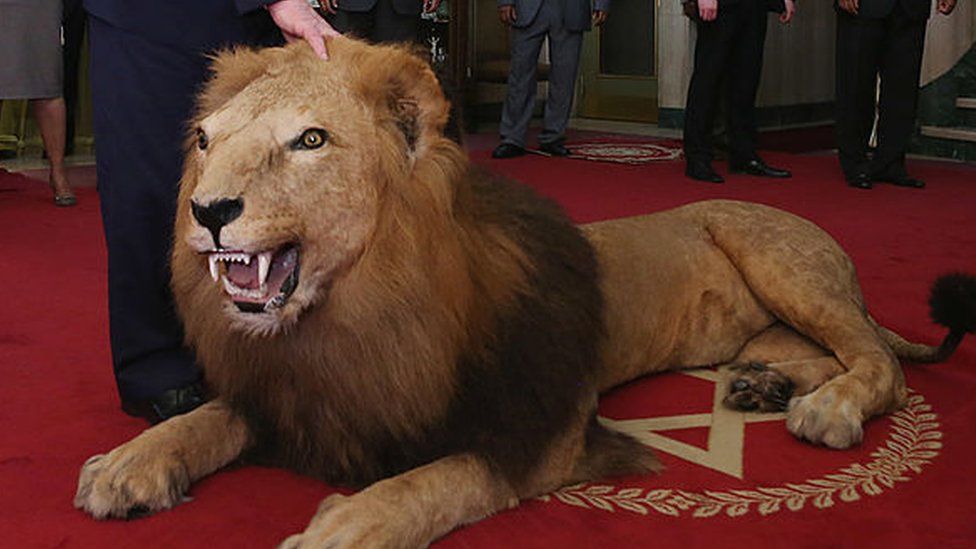
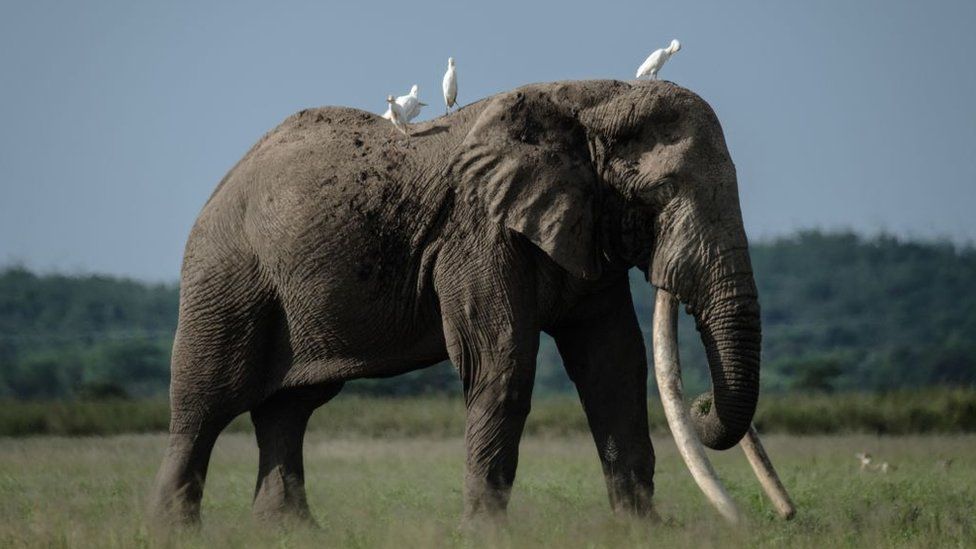
Trophies made from hunted lions and elephants are brought into the UK each year.

“The longer it goes on, the more animals are being shot and brought back to Britain as trophies,” Campaign to Ban Trophy Hunting founder Eduardo Goncalves told BBC News.

“It’s encouraging that the government is setting out its plans – but it’s deeply frustrating that we still don’t have any timetable”.https://buy.tinypass.com/checkout/template/cacheableShow?aid=tYOkq7qlAI&templateId=OTBYI8Q89QWC&templateVariantId=OTV0YFYSXVQWV&offerId=fakeOfferId&experienceId=EXAWX60BX4NU&iframeId=offer_0e763acc7b457c03340a-0&displayMode=inline&widget=template&url=https%3A%2F%2Fwww.bbc.com

Stuffed heads

Every year, hunters from the UK travel abroad, often to southern Africa, and pay thousands of pounds to legally shoot animals such as lions and elephants.

With the right paperwork, they can then bring trophies, such as stuffed heads or horns, back to the UK.

Announcing details of the new bill, Environment Secretary George Eustace said the legislation would go further than originally promised.

The import ban would include not just endangered and threatened species but also more than 1,000 others, such as zebra and reindeer.

Animals including elephants are hunted for trophies to be displayed in the UK
Image caption,Animals such as elephants are hunted for trophies to be displayed in the UK

“This would be one of the toughest bans in the world, and goes beyond our manifesto commitment,” Mr Eustace said.

“We will be leading the way in protecting endangered animals and helping to strengthen and support long-term conservation.”

In 2020, despite the pandemic restricting travel, elephant tusks, hippo skulls, lion, baboon and giraffe were among the trophies legally brought back to the UK from southern Africa, the latest, incomplete data shows.

And between 2015 and 2019, there were 335 documented imports of trophies from animals covered by the Convention on International Trade in Endangered Species of Wild Fauna and Flora, the government report says.

A ban on the import of hunting trophies was included in the Conservative Party’s 2019 election manifesto and the Queen’s Speech that followed and has been mentioned by Prime Minister Boris Johnson several times in Parliament.

But asked in early December when the legislation would be brought to Parliament, Leader of the House of Commons Jacob Rees-Mogg replied: “In the fullness of time.”

On Friday, Labour MP John Spellar will table a private member’s bill that would ban the import of trophies – but it has little chance of success without government backing.

“The public will be rightly outraged by dither and delay,” Mr Spellar said.

“It’s time to put an end to this vile trade once and for all.

“The government should either allow my private member’s bill to progress or rapidly introduce its own legislation.”https://emp.bbc.com/emp/SMPj/2.44.10/iframe.htmlMedia caption,On frontline with Kenya’s anti-poaching force

But although 86% of the 44,000 responses to the public consultation called for tighter restrictions on the import of hunting trophies and a ban has cross-party support in the Commons, some conservationists say hunting provides funds that can be used to protect endangered animals and their habitats.

“This decision is a triumph of propaganda over science, and prejudice over evidence,” Christopher Graffius, from the British Association for Shooting and Conservation, told BBC News.

“What aid will the government give to replace income from hunting to seriously economically and environmentally challenged communities around the world?

“This ban will be bad for animals, people and the land they live on.”

.

Mountain Biker in Spain Shot After Being Mistaken for a Rabbit

Exposing the Big Game's avatarCommittee to Abolish Sport Hunting Blog

Dec 9, 2021by James Smurthwaite   Followhttps://www.facebook.com/plugins/like.php?width&layout=button_count&action=like&show_faces=false&share=true&height=21&href=https%3A%2F%2Fwww.pinkbike.com%2Fnews%2Fmountain-biker-in-spain-shot-after-being-mistaken-for-a-rabbit.html%3Futm_source%3Dfacebook.com%26amp%3Butm_medium%3Dreferral%26amp%3Butm_campaign%3Dfb-like https://platform.twitter.com/widgets/tweet_button.21f942bb866c2823339b839747a0c50c.en.html#dnt=false&id=twitter-widget-0&lang=en&original_referer=https%3A%2F%2Fwww.pinkbike.com%2Fnews%2Fmountain-biker-in-spain-shot-after-being-mistaken-for-a-rabbit.html&size=m&text=Mountain%20Biker%20in%20Spain%20Shot%20After%20Being%20Mistaken%20for%20a%20Rabbit%20-%20Pinkbike&time=1639179000071&type=share&url=https%3A%2F%2Fwww.pinkbike.com%2Fnews%2Fmountain-biker-in-spain-shot-after-being-mistaken-for-a-rabbit.html&via=pinkbike Add to FavoritesPhoto: Ernest Damian Diez, Facebook
A mountain biker was shot with dozens of pellets after being mistaken for a rabbit by a hunter in Alicante, Spain, theolivepress reports

https://www.pinkbike.com/news/mountain-biker-in-spain-shot-after-being-mistaken-for-a-rabbit.html

Miguel Toran had just passed a pair of hunters on his ride but was then mistakenly shot by a third a few metres later. Torna was in colourful kit and wearing a helmet while riding on the Monte Orgergia forest trail, which is popular with riders and walkers. The hunter discharged a cartridge that contained hundreds of pellets and left Toran with impacts on his buttocks, lower back and legs. Fortunately, no major organs were hit but paramedics later removed 20 pellets that had become embedded in Toran’s skin.

Local emergency services were called and although the cyclist was not taken to hospital, his wounds are being monitored by doctors to see if…

View original post 129 more words

DNR raises concern after reports of 4 hunters shot

Exposing the Big Game's avatarCommittee to Abolish Sport Hunting Blog

DECEMBER 8, 2021 BY DAR DANIELSON

The Iowa DNR is asking hunters to review safety procedures after several weekend hunting accidents — including one that was fatal.

The DNR is still investigating the details of the shooting of 37-year-old Nathan Sharpnack of Winterset — who was hit and died while deer hunting in Marion County Saturday.

They have also received reports of an individual who was taken to the hospital after being shot in the stomach while deer hunting in southern Muscatine County. Another person was treated and released from the hospital in Waukon after a slug grazed his right hand and forearm during a deer drive in Allamakee County.

A pheasant hunter was hit with four pellets in the neck and face area while hunting in Calhoun County. He was treated and released. The DNR education coordinator says it’s time for everyone…

View original post 13 more words

PA: Lackawanna County hunter guilty of poaching deer

Exposing the Big Game's avatarCommittee to Abolish Sport Hunting Blog

https://fox56.com/news/local/lackawanna-county-hunter-guilty-of-poaching-deer

byRayna McGlynnWednesday, December 8th 2021

UserWay icon for accessibility widget

Photo Credit: Bill Williams, PA Game Commission https://imasdk.googleapis.com/js/core/bridge3.491.0_en.html#goog_1118439048Volume 90%Photo Credit: Bill Williams, PA Game Commission

Facebook Share Icon

Twitter Share Icon

Email Share Icon

NORTHEAST PA – (WOLF) —Pennsylvania Game Commission announced yesterday that a Lackawanna County man was prosecuted for the illegal poaching of eight white-tailed deer over a three-month period in Pike, Lackawanna, and Susquehanna counties.

Anthony Santarelli, 50, of Jessup, pled guilty to five counts of unlawful taking or possession of game and 16 other similar charges.

Bill Williams of the PA Game Commission confirmed that they received information earlier this year that multiple deer were unlawfully killed in the community of Fawn Lake Forest in Pike County.

Officials say that video surveillance showed Santarelli’s truck in the same area as two deer that had been fatally wounded from a crossbow bolt.

Further investigation allowed officials to find a crossbow bolt on the deck of the homeowner; forensic evidence at the scene revealed that this bolt had…

View original post 82 more words

Chinese woman dies from H5N6 strain of bird flu

Exposing the Big Game's avatarThe Extinction Chronicles

Reuters

1 minute read

https://www.reuters.com/world/china/chinese-woman-dies-h5n6-strain-bird-flu-2021-12-09/

BEIJING, Dec 9 (Reuters) – A woman in China’s Sichuan province died from the H5N6 strain of avian influenza last month, a regional health bureau said this week, in the latest human fatality from the lethal disease.

The 54-year-old woman from Zigong city developed symptoms on Nov. 17 and was admitted to hospital on Nov. 21. She died on Nov. 23, according to a Wednesday statement on the website of the health bureau of semi-autonomous region Macau.https://f959727d2f0380c5f97458a7e64741d0.safeframe.googlesyndication.com/safeframe/1-0-38/html/container.htmlReport ad

She had been exposed to dead poultry before the onset of illness, it added.

The number of people in China infected with H5N6 bird flu this year has jumped, raising concern among experts, who say a previously circulating strain appears to have changed and may be more infectious to people.read moreReport ad

Of 26 infections reported by various government departments this year, most have been…

View original post 22 more words