capegoat or scoundrel?

Why scientists want to clear the air about the role of seals and focus on ecosystemsJENN THORNHILL VERMASPECIAL TO THE GLOBE AND MAILPUBLISHED AUGUST 29, 2021

https://www.theglobeandmail.com/canada/article-scapegoat-or-scoundrel-why-scientists-want-to-clear-the-air-about-the/

Skipper Dwight Russell says there’s “no shortage of seals” in the North Atlantic Ocean, where he and his crew fish off the coast of Labrador. Interviewed in mid-July from his boat, the Miss Mackenzie, he said he and his crew had been surrounded by a herd of harp seals a few days back – an experience he says has become increasingly common.

The sight of all those seals bobbing in the water makes him worry about his fishing prospects – like many fishermen in Newfoundland and Labrador, Skipper Russell believes an “out-of-control” harp seal population has depleted commercial fishing species, leaving little chance of recovery. At the summer shrimp fishery about 80 nautical miles off the eastern tip of Labrador, Fisheries and Oceans Canada (DFO) officials have reported shrimp stock in the “critical zone” for the fifth consecutive year.

Climate Innovators and Adaptors

This is one in a series of stories on climate change related to topics of biodiversity, urban adaptation, the green economy and exploration, with the support of Rolex. Read more about the Climate Innovators and Adaptors program.

DFO estimates the Northwest Atlantic harp seal population at 7.6 million – the highest on record (based on 2017 data), at more than triple the population of 50 years ago and still steadily increasing.

But Mr. Russell’s concerns are at odds with DFO science, which says the harp seal population is not a major factor in declining fish stocks. Instead, DFO officials offer a different explanation, one that’s harder for local fishermen to accept: that climate change is at the root of the problem. DFO officials held a technical briefing at the end of June to address what they described as “misinformation” about the impacts of seals on fish such as Atlantic cod and capelin in Newfoundland and Labrador waters. During the one-hour briefing, geared toward media, the officials presented the North Atlantic seal as less of a scoundrel and more of a scapegoat.

A female harp seal looks out near the Magdalen Islands in the Gulf of Saint Lawrence, Que.INGO ARNDT/THE GLOBE AND MAIL

“People want to understand what is generating the changes in the [fish stock] abundances and why they cannot fish more,” says Dr. Mariano Koen-Alonso, one of the DFO research scientists who presented the June briefing. Certainly, he said, seals provide a convenient explanation for fishing troubles. But if you look more closely at the situation, it “becomes much more complex.”

According to DFO scientists, warmer ocean temperatures and earlier sea-ice melting are among the most worrisome ecosystem changes in the North Atlantic, and that warming trend means poor returns for a variety of fisheries, from capelin to cod to shrimp. As a result, the department is working to shift its “single-species management” model – from fishing and annual catch limits (the primary management tool of fisheries managers considering any fish species in isolation) to “ecosystem-based management,” which takes into account broader variables, such as interactions with other species, the effects of environmental changes, and/or pollution and other stressors on habitat and water quality.The seasonal maximum area of sea ice and the ice season duration on the Newfoundland and Labrador (NL) shelfSince the early 1990s, the severity of sea ice season has gradually decreased, reaching the lowest points in 2011 and 2010. With the exception of a rebound to near-normal values in 2014–2016, sea ice conditions have been weak over recent years. Colder conditions Warmer conditions-2.0-1.5-1.0-0.50.00.51.01.52.02.51969197319771981198519891993199720012005200920132017Shaded areas fallwithin the expectedtemperature range19860.1n/aTHE GLOBE AND MAIL, SOURCE: FRÉDÉRIC CYR, PETER S. GALBRAITH, (2020) NEWFOUNDLAND AND LABRADOR CLIMATE INDEX. FEDERATED RESEARCH DATA REPOSITORY.DATASHARE×

Sea IceColder conditionsWarmer conditions
1969-01-01-1.04
1970-01-010.1
1971-01-010.94
1972-01-011.89
1973-01-011.66
1974-01-011.05
1975-01-010.62
1976-01-010.89
1977-01-010.21
1978-01-01-0.36
1979-01-010.1
1980-01-01-0.25
1981-01-01-0.55
1982-01-010.18
1983-01-011.72
1984-01-012.26
1985-01-011.76
1986-01-010.15
1987-01-010.3
1988-01-010.63
1989-01-010.47
1990-01-011.48
1991-01-011.5
1992-01-011.35
1993-01-012.15
1994-01-011.31
1995-01-010.29
1996-01-010.06
1997-01-010.17
1998-01-01-0.19
1999-01-01-0.38
2000-01-010.43
2001-01-01-0.29
2002-01-01-0.14
2003-01-01-0.07
2004-01-01-1.44
2005-01-01-0.33
2006-01-01-1.14
2007-01-01-0.4
2008-01-010.46
2009-01-010.31
2010-01-01-1.59
2011-01-01-1.94
2012-01-01-0.21
2013-01-01-0.79
2014-01-010.59
2015-01-010.36
2016-01-010.52
2017-01-010.11
2018-01-01-0.05
2019-01-01-0.15
2020-01-01-0.55

THE SEASONAL MAXIMUM AREA OF SEA ICE AND THE ICE SEASON DURATION ON THE NEWFOUNDLAND AND LABRADOR (NL) SHELF

DOWNLOAD CSV×

Share this chart:

DFO documentation shows that the department recognized the need to move in this direction in 1998. Twenty years later, in 2019, DFO formally struck a national working group on an ecosystem approach to fisheries management. But so far, their progress remains stalled.

It’s one thing to collect ecological, oceanographic and climate data – an area in which DFO has shown great progress, says Dr. Pierre Pepin, the research scientist who chairs the working group – but it’s quite another to apply that data to fisheries decisions. It’s not yet routine practice to use climate variables in fisheries decisions, says Pepin, because scientists don’t yet know precisely how climate change affects marine species. As a result, even the working group’s best efforts will see DFO continuing to carry out single-species fisheries management, says Pepin. It’s a frustrating situation made even more frustrating by the continued negative attention paid to seals, says Dr. Koen-Alonso, who specializes in ecosystem-based management.

A group of harp seals in the Gulf of Saint Lawrence.JAN VERMEER/THE GLOBE AND MAIL

“This is in many ways acting as a distraction from what should be the main conversation, which is how these ecosystems are going to play out as climate conditions change,” says Koen-Alonso of the ongoing preoccupation with seals. “If we want to really rebuild [fish] stocks, we need to understand those things first and use that to guide our management, and not necessarily use our time addressing questions that we know are not going to lead us to a useful, effective answer.”

When it comes to ecosystem changes, warming waters are the key environmental factor DFO cites as affecting Atlantic cod and capelin – both species are critically depleted, compared to historical levels of abundance. While seals are an important predator, they are not an overwhelming one, says Dr. Garry Stenson, a DFO research scientist specializing in marine mammals.

STORY CONTINUES BELOW ADVERTISEMENTThe temperature of the ocean surface (as measured by satellite) on the NL shelfColder than average conditions prevailed in the early 1990s, with 1991 and 1992 being the coldest years. This period was followed by warmer-than-average conditions lasting until about 2014. In recent years, the period 2015–2019 (except for 2016) was colder than normal. The year 2020 was, however, back to above-normal. Colder conditions Warmer conditions-2.0-1.5-1.0-0.50.00.51.01.52.019821985198819911994199720002003200620092012201520181994n/a0.6THE GLOBE AND MAIL, SOURCE: FRÉDÉRIC CYR, PETER S. GALBRAITH, (2020) NEWFOUNDLAND AND LABRADOR CLIMATE INDEX. FEDERATED RESEARCH DATA REPOSITORY.DATASHARE×

SSTColder conditionsWarmer conditions
1982-01-01-1.15
1983-01-01-0.37
1984-01-01-0.48
1985-01-01-1.33
1986-01-01-0.68
1987-01-01-0.4
1988-01-010.03
1989-01-01-0.71
1990-01-01-1.1
1991-01-01-1.94
1992-01-01-1.96
1993-01-01-0.72
1994-01-010.61
1995-01-01-0.74
1996-01-01-0.41
1997-01-01-0.64
1998-01-010.93
1999-01-010.89
2000-01-010.97
2001-01-010.12
2002-01-01-0.62
2003-01-010.6
2004-01-010.33
2005-01-010.68
2006-01-011.36
2007-01-01-0.11
2008-01-010.88
2009-01-01-0.3
2010-01-010.13
2011-01-010
2012-01-011.51
2013-01-010.29
2014-01-010.6
2015-01-01-0.73
2016-01-01-0.26
2017-01-01-0.58
2018-01-01-0.88
2019-01-01-0.74
2020-01-010.73

THE TEMPERATURE OF THE OCEAN SURFACE (AS MEASURED BY SATELLITE) ON THE NL SHELF

DOWNLOAD CSV×

Share this chart:

“It would have been simple to answer a question without invoking anything about the environment, but you need to look at the environmental changes that are occurring in order to understand what’s happening to those fish stocks. That’s what’s driving things, not necessarily predation,” says Stenson, who also delivered the June briefing.

It’s not that fishermen need convincing about climate change. Mr. Russell says he’s concerned about weakening sea ice and changing ocean temperature too, particularly what he calls “a warming trend” in the North Atlantic ocean. “The climate is warming up,” he says. “The world’s warming up and the Arctic and Subarctic are warming up at a higher pace than other areas. And I think that’s pretty well reflected [in] what people around Labrador and the coast of Labrador and the fishery see too – it’s quite a warming trend for this year in particular. You just notice certain things, like the lack of icebergs.”The temperature at the ocean floor, as measured in spring and fall on the NL shelfThere was a persistent cold phase from the mid-1980s to the mid-1990s, followed by a warmer phase that peaked in 2011. Shaded areas are considered ‘normal,’ meaning they are within an expected range/show expected fluctuation. Colder conditions Warmer conditions-2.0-1.5-1.0-0.50.00.51.01.52.019801983198619891992199519982001200420072010201320162019-0.2__undefined__THE GLOBE AND MAIL, SOURCE: FRÉDÉRIC CYR, PETER S. GALBRAITH, (2020) NEWFOUNDLAND AND LABRADOR CLIMATE INDEX. FEDERATED RESEARCH DATA REPOSITORY.DATASHARE×

Bottom TColder conditionsWarmer conditions
1980-01-01-0.2
1981-01-010.66
1982-01-01-0.49
1983-01-01-0.27
1984-01-01-1.19
1985-01-01-1.55
1986-01-01-0.79
1987-01-01-0.93
1988-01-01-0.27
1989-01-01-0.72
1990-01-01-1.81
1991-01-01-1.68
1992-01-01-1.66
1993-01-01-1.76
1994-01-01-1.49
1995-01-01-0.73
1996-01-01-0.1
1997-01-01-0.53
1998-01-010.3
1999-01-011.02
2000-01-010.52
2001-01-01-0.27
2002-01-01-0.1
2003-01-01-0.83
2004-01-010.77
2005-01-010.68
2006-01-010.14
2007-01-010.02
2008-01-01-0.07
2009-01-010.21
2010-01-011.04
2011-01-011.82
2012-01-010.69
2013-01-010.51
2014-01-01-0.33
2015-01-01-0.08
2016-01-010.36
2017-01-01-0.49
2018-01-010.63
2019-01-010.38
2020-01-010.63

THE TEMPERATURE AT THE OCEAN FLOOR, AS MEASURED IN SPRING AND FALL ON THE NL SHELF

DOWNLOAD CSV×

Share this chart:

More than 100 years of climate data shows the North Atlantic is unquestionably trending warm, especially if you look at bottom temperature (temperature collected at the bottom of the ocean in spring and fall) and sea ice condition trends. The Newfoundland and Labrador Climate Index, which DFO made publicly available in May for the first time, describes the environmental conditions on the NL shelf (the continental shelf extending from Labrador to the east coast of Newfoundland, including the Grand Banks) and in the Northwest Atlantic as a whole. The data shows prevalent sea ice degradation since the early 1990s. The annual number of icebergs is also dramatically increasing – from an annual average of 495 over the last 121 years, to an annual average of 771 over the last thirty years. Meanwhile, the latest assessment report of the Intergovernmental Panel on Climate Change (IPCC), the United Nations body for assessing the science related to climate change, also cued attention to ocean warming and sea ice degradation trends, projected to continue in the Arctic region.
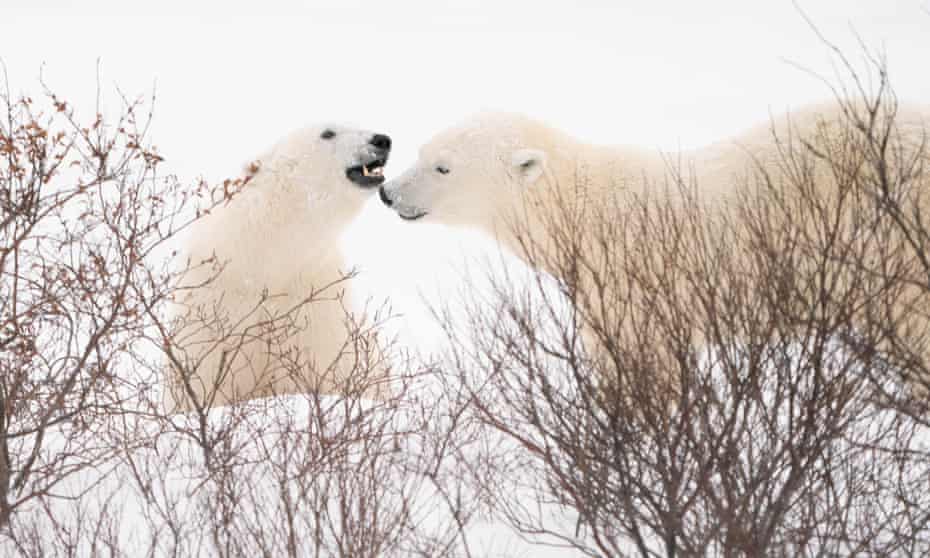
‘No easy fix’: polar bear capital of the world turns to electric buggies to save the bears

The move comes as Churchill, Canada, remained ice free for the first time in years, resulting in less feeding time for its population of polar bears

https://www.theguardian.com/world/2021/dec/03/no-easy-fix-polar-bear-capital-of-the-world-turns-to-electric-buggies-to-save-the-bears

Polars bears in Churchill, Canada. One of the town's polar bear tour companies is now using electric vehicles
Polars bears in Churchill, Canada. One of the town’s polar bear tour companies is now using electric vehicles Photograph: Leyland Cecco

Leyland Cecco in Churchill, ManitobaFri 3 Dec 2021 05.30 EST

When tourists reach the north Canadian community of Churchill they have long been greeted by two sounds: the howling of sub-Arctic winds and the rattle of diesel engines.

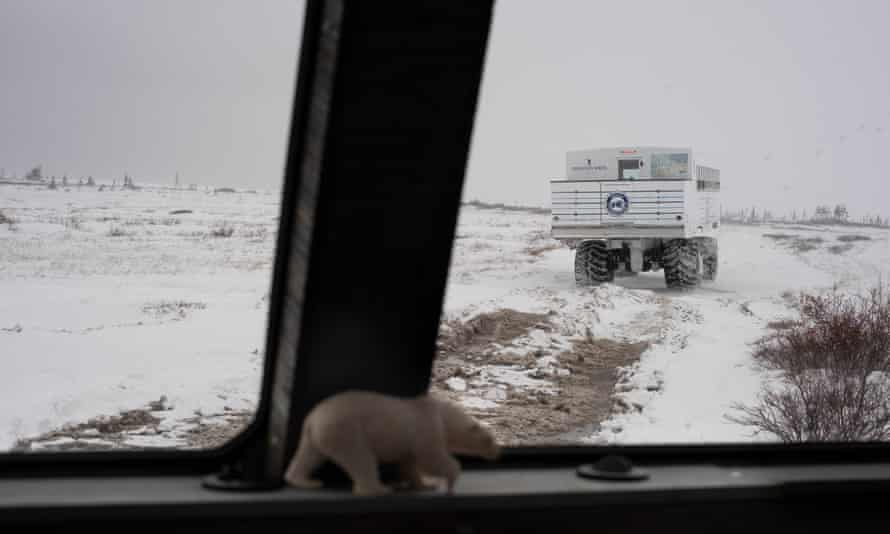
Over the years, hundreds of thousands of visitors have come to the “polar bear capital of the world”, in the hopes of spotting the predators. They journey on “tundra buggies” – hulking, spacecraft-like vehicles that rumble over the stark landscape.

Now, one of the town’s tour companies has unveiled the region’s first-ever electric buggy – a vehicle that can move almost silently into areas where the polar bears congregate. The buggy has an estimated range of three days worth of tours and can operate in frigid temperatures.https://interactive.guim.co.uk/maps/embed/dec/2021-12-02T20:51:25.html

Frontiers North Adventures, which provided transport to the Guardian and other media outlets to view the vehicle in Churchill, plans to convert the remainder of its fleet over to electric motors, reducing more than 3,600 tonnes of carbon dioxide emissions over the next 25 years – the equivalent of 353,635 liters of diesel fuel.

The company pitched it as part of a move to address the climate crisis, which experts have long said will have an outsized impact on polar bears.Advertisement

The company’s maiden voyage for its electric vehicle came as the area remained ice free for the first time in years – a scenario that may prove deadly for the bears.

A handful of kilometers from where the vehicles parked, the dark waters of Hudson Bay lashed at the shore – a rarity for late November and a warning sign for 800 or so polar bears in the region waiting to begin their hunt on sea ice for ringed seals.

In recent years, that wait has grown longer and longer.

While the timing of the ice formation varies from year to year, experts say the trend over recent decades is cause for concern.

Frontiers North Adventures plans to convert its fleet of buggies to electric motors, reducing more than 3,600 tonnes of carbon dioxide emissions over the next 25 years.
Frontiers North Adventures plans to convert its fleet of buggies to electric motors, reducing more than 3,600 tonnes of carbon dioxide emissions over the next 25 years. Photograph: Leyland Cecco

That is bad news for the bears, which don’t feed for the months leading up to ice formation. Instead, they laze around the bay, conserving their energy.

“We’re not getting the good years of sea ice formation that we used to have. We’re getting bad years and OK years,” said Andrew Derocher, a professor of biology at the University of Alberta. “When you do that over a long enough period of time, you can expect that your population is going to decline.”

It had been 156 days since most of the bears last ate. At 180 days, starvation begins to set in.

Ice is also breaking up earlier in the season, meaning bears are forced to return to land weeks earlier than normal and have a smaller window for hunting.Advertisement

Over the last decade, the bears have lost nearly a total of 12 days of ice on either end of the season.

Polar bears have lost 12 days of ice on either end of the season.
Polar bears have lost 12 days of ice on either end of the season. Photograph: Leyland Cecco

“We’ve always been concerned about an early break-up with a really late freeze-up,” said Derocher. “And that would be the worst-case scenario for polar bears.”

Already, the bears are showing warning signs.

The weight of pregnant polar bears has declined over the years, as have new births. Bears typically lose one kilogram of weight each day they remain on the tundra instead of ice – further adding pressure on the population.

The bear population has dropped by nearly 30% since 1987. If current trends hold, the bears are predicted to undergo a reproductive failure by 2040, accelerating the species’ demise.

“Eventually, you’ll pretty much have like a zombie population of polar bears that just can’t sustain themselves and it’s a matter of time before they’re extirpated. When? That’s the million-dollar question,” Derocher said.

Children play at dusk in the Inuit community of Rigolet, Labrador on Saturday, March 24, 2018. Darren Calabrese

With warming in the north tied to mounting worries over carbon emissions, the longtime Churchill mayor, Michael Spence, has praised the company’s electric vehicle prototype, calling it a vision for “where tourism is going and where our climate is going”.

But the contrast between a futuristic vision of electric vehicles in northern communities and the stark reality of disappearing sea ice, highlights the challenges the region faces.AdvertisementSkip Adhttps://imasdk.googleapis.com/js/core/bridge3.490.0_en.html#goog_1596364319https://imasdk.googleapis.com/js/core/bridge3.490.0_en.html#goog_49698048https://imasdk.googleapis.com/js/core/bridge3.490.0_en.html#goog_334339049javascript:false

Churchill once pinned its hopes on a world-class sea port, only to see that vision end in disappointment after the only rail track was washed out by floods. Some in the community of 1,000 hope that the changing climate will enable it to become a major grain port, but much of the town’s economy still relies on tourism . According to government figures, the industry brought in more than C$35m (US$27m) in 2017, mostly related to polar bear safaris.

Manitoba does as much as it can to protect the bears on the ground. Hunting is prohibited, tour vehicles have a narrow set of tracks they can follow to spot the mammals and human-bear interactions, including garbage dumps, have been minimized.

But the late freeze-up is a glimpse at the reality that local operators and scientists are forced to grapple with: the landscape will probably undergo significant changes in the coming years – and polar bear populations will suffer the most.

Ice911 researchers at work at their test site near Utqiaġvik, Alaska.

While other at-risk species can benefit from human intervention – for example fishers in Atlantic Canada are experimenting with rope-less gear to help endangered whales – saving the disappearing sea ice is a far more difficult task.

“There’s no easy fix. We can’t just put a park somewhere. And while it’s a nice idea and indicative of the kind of solutions we need, an electric tundra buggy isn’t going to save the world,” said Derocher. “The only levers that we have left that we can pull are the human behavior ones.”

Livestock death toll from B.C. flooding: 628,000 poultry, 12,000 hogs, 420 cows

https://imasdk.googleapis.com/js/core/bridge3.490.0_en.html#goog_1596832901Volume 90% NOW PLAYINGOfficials estimate more than 640,000 animals died because of flooding in southern B.C.00:55

Hundreds of thousands of livestock deaths in B.C.

UP NEXTA normally busy stretch of the Trans-Canada Highway that has been shut down twice due to flooding is set to reopen.00:48

Temporary dam removed; Highway 1 to reopen

A much-needed break in the rain is finally allowing some residents of flood-stricken Mission to return home.02:10

Flood recovery efforts underway in Mission

Flood-ravaged Abbotsford, B.C., recorded a record 540 mm of rain last month, and there's more on the way.03:26

Record amount of rainfall in Abbotsford

Much of the South Coast was under a flood warning Wednesday night as the third consecutive atmospheric river pounded B.C.03:03

Southern B.C. under flood warning

Many of those affected by flooding are families with children. As of Wednesday, two schools were flooded and remained closed.01:49

Some schools remain closed due to flooding

Updated Dec. 2, 2021 7:34 p.m. PSTPublished Dec. 2, 2021 1:54 p.m. PSTShare

With recovery efforts underway in flood-stricken parts of British Columbia, officials are getting an idea of the massive impact the extreme weather has had on the province’s livestock.

In an update Thursday, Agriculture Minister Lana Popham said more than 640,000 animals are known to have died.

That total includes 628,000 poultry, 12,000 hogs and 420 dairy cows. Additionally, 110 beehives were destroyed.

There are still more than 800 farms under evacuation, so officials believe the death toll will likely change as residents and operators return.

Popham said solemnly that the weather is expected to be better over the next few days, which will be “critical for removal of carcasses.”

“The work by farmers and volunteers and companies to clean out barns and to remove those animals continues to be extremely heartbreaking. I request that folks remain empathetic and caring in their comments, as they continue to do this very difficult work,” she said.

Popham did not provide details on her motive for making such a statement, but it may have been a reference to comments posted on social media suggesting those who look after these animals didn’t care for their wellbeing anyway, as they’d raised them for consumption.

The minister said that the farmers she’s been in contact with are showing resilience, and she said they’re experiencing what she described as “a good problem to have.” They’re having to find several centres for the public to drop off feed and supplies.

“The generosity of people is exceptional,” she said.

Popham said she’s also working with the B.C. Agriculture Council to ensure farmers are supported, and she’s met with her federal counterpart, Marie-Claude Bibeau, to discuss a recovery package from Ottawa.

“We’re still in the process of quantifying losses, whether it be animal crops or plant crops, and we hope to firm up those numbers as the waters recede,” Popham said.

The waters reached depths of 2.4 metres in places, including on properties owned by blueberry producers, and some plants are still under water.

There are about 700 acres of blueberries planted in the Sumas Prairie, part of which is located in Abbotsford, and as with other crops, the full extent of the damage is not yet known.

A series of intense storms brought days of relentless rain over southern B.C., leading to mudslides and flooding across the area. The City of Abbotsford was among the areas hit hardest by the floods.

Further north, a mudslide claimed the lives of at least four people. Another person is still missing and presumed dead.RELATED IMAGES

Calf houses float in the flood waters in Abbotsford, B.C., Tuesday, Nov. 16, 2021. (Jonathan Hayward / THE CANADIAN PRESS)

Late youth portion of deer hunting season second-highest on record, MDC says

Sara KarnesSpringfield News-LeaderView Comments0:000:59https://imasdk.googleapis.com/js/core/bridge3.490.0_en.html#goog_153711491

Makynna Gulick, 12, holds an 8-point buck she shot during the early youth portion of deer season Oct. 30, 2021.

Numbers are a skosh down compared to the previous year for Missouri’s late youth portion of the 2021 deer hunting season, but it came in at second place.

Missouri Department of Conservation released preliminary data earlier this week that showed young hunters six to 15 years old harvested 3,477 deer between Nov. 26-28. Of the 3,477 deer harvested, 1,470 were antlered bucks, 383 were button bucks, and 1,624 were does.

Twelve-year-old Addison Gibbs harvested a buck Nov. 28 in Howard County.

Top counties for the late youth portion included Osage with 86 deer harvested, Franklin with 82 and Miller with 68.

Last year’s harvest total for the late youth portion was 3,967 with 1,467 being antlered bucks, 524 button bucks and 1,976 does, per MDC.

“After a breezy and cold Thanksgiving Day, we had some pleasant conditions for our young hunters to be in the woods during the three-day late youth portion,” said Jason Isabelle, MDC Cervid Program Supervisor. “This year’s harvest total was the second-highest on record and nearly 20-percent above the five-year average.”

Meranda Gulick, 14, holds a 15-point buck she shot during the early youth portion of deer season Oct. 30, 2021.

For current ongoing preliminary harvest totals by season, county, and type of deer, visit the MDC website at https://extra.mdc.mo.gov/widgets/harvest_table/.

Archery deer season runs through Jan. 15, 2022. The antlerless portion of firearms deer season runs Dec. 4-12 followed by the alternative methods portion Dec. 25 through Jan. 4, 2022.

Sara Karnes is an Outdoors Reporter with the Springfield News-Leader. Follow along with her adventures on Twitter and Instagram @Sara_Karnes. Got a story to tell? Email her at skarnes@springfi.gannett.com.

https://www.news-leader.com/story/sports/outdoors/2021/11/30/late-youth-portion-deer-hunting-season-second-highest-record/8796746002/?fbclid=IwAR2C8tKe8uBdtt_uyqCjiU6jx6UzLdNg4RjPuhOD1xVIAMxCSs61ykjAGJc

Member of committee guiding wolf policy has been cited for illegal trapping

Exposing the Big Game's avatarCommittee to Abolish Sport Hunting Blog

BY: HENRY REDMAN – NOVEMBER 29, 2021 7:00 AM

Gray wolf (photo from Pixabay)

Gray wolf (photo from Pixabay)

A member of the committee responsible for establishing how wolves will be managed in Wisconsin has twice been cited for violations of state trapping laws, court records show.

Patrick Quaintance, a former warden with the Wisconsin Department of Natural Resources (DNR), is amemberof the Wolf Management Plan Committee (WMPC) — which is working to update the state’s plans for managing its wolf population for the first time since 2007.

Members of the committee are appointed through their membership of groups involved in wolf issues across the state, including hunting groups, thestate’s Native American tribesand conservation groups. Quaintance is on the committee as a member of pro-hunting group Wisconsin Wolf Facts.

In January 2016, Quaintance, who said he was…

View original post 1,089 more words

Sebring man charged with killing black bear, cub in illegal trapping attempt

Exposing the Big Game's avatarCommittee to Abolish Sport Hunting Blog

HIGHLANDS COUNTY

by: Sam SachsPosted: Nov 30, 2021 / 11:40 AM EST / Updated: Nov 30, 2021 / 01:48 PM EST

Getty Images (file)

SUBSCRIBE NOW
Daily News

SIGN UP

TAMPA, Fla. (WFLA) — The Florida Fish and Wildlife Conservation Commission has charged a Sebring man for shooting and killing a mother black bear and her cub while illegally trying to trap them without a permit.

FWC said John Falango, 43 of Sebring, shot and killed the two black bears in an illegal trapping attempt. Biologists and officers with FWC found the bears in the Sun ‘n Lake community in Sebring.Man shot by Lakeland police officers was working overnight construction job, neighbor says

“Our officers work tirelessly to protect Florida’s natural resources and this egregious violation serves as a reminder of why our work is so important,”saidCol. Roger Young, FWC Division of Law Enforcement.“The deliberate shooting of these two bears is…

View original post 194 more words

Trump Has Already Laid the Groundwork to Subvert the 2024 Election

Exposing the Big Game's avatarThe Extinction Chronicles

Former President Donald Trump arrives for a rally at the Iowa State Fairgrounds on October 9, 2021, in Des Moines, Iowa.

BYKenny Bruno, TruthoutPUBLISHEDNovember 28, 2021SHAREShare via FacebookShare via TwitterShare via Email

A white lower-case t on a black background

READING LISTPOLITICS & ELECTIONSVaccine Mandates Are Working. Democrats Should Act Boldly on Other Issues Too.POLITICS & ELECTIONSRedistricting Threatens Decades of Black Voters’ Hard-Fought VictoriesPRISONS & POLICINGAbolitionists Are Fighting Against the Surveillance State in Their NeighborhoodsHUMAN RIGHTSBlack and Palestinian Unity Is Powerful. Jamaal Bowman Should Support BDS.ENVIRONMENT & HEALTHClimate Justice Doesn’t Start With Politicians. It Starts in the Streets.ENVIRONMENT & HEALTHMy Daughter Was Exposed to COVID. Thank Goodness She Was Vaccinated.

Donald Trump and the Republican Party have laid the groundwork for assuming the U.S. presidency regardless of the result…

View original post 1,053 more words

Joe Biden to announce nationwide coronavirus battle plan

Exposing the Big Game's avatarThe Extinction Chronicles

Plans include a drive to encourage vaccine boosters, expansion of at-home tests and tighter restrictions on international travel

https://www.theguardian.com/us-news/2021/dec/02/joe-biden-coronavirus-nationwide-campaign

Iker Santiago-Sias, 10, cringes as medical worker Joanna Muniz, at left, administers a Covid vaccine.
Iker Santiago-Sias, 10, gets his Covid vaccine from medical worker Joanna Muniz at Zavala elementary school in Odessa, Texas.Photograph: Jacob Ford/AP

David Smithin Washington@smithinamericaThu 2 Dec 2021 05.00 EST

Joe Biden is set to announce new actions to combat thecoronavirus, including a nationwide campaign encouraging vaccine boosters, an expansion of at-home tests and tighter restrictions on international travel.

Buffeted by the emergence of the Omicron variant and a political backlash from Republicans, the US president will visit theNational Institutes of Healthin Bethesda, Maryland, on Thursday and lay out a pandemic battle plan for the winter months.

The CDC recommends testing after arrival in the US from overseas, but compliance appears to be low.

Biden will announce steps to ensure that the nearly 100 million eligible Americans who have not yet received their booster shot do so as soon as possible, the…

View original post 609 more words

Just in time for the holidays, the Omicron variant storms into our lives. Thanks for nothing

Exposing the Big Game's avatarThe Extinction Chronicles

By Billy Baker and Julia Carlin Globe Staff and Globe Correspondent,Updated December 2, 2021, 7:25 a.m.18

https://www.bostonglobe.com/2021/12/02/nation/just-time-holidays-omicron-variant-storms-into-our-lives-thanks-nothing/

A COVID-19 test center operated inside the Tom Bradley International Terminal at Los Angeles International Airport on Wednesday.
A COVID-19 test center operated inside the Tom Bradley International Terminal at Los Angeles International Airport on Wednesday.MARIO TAMA/GETTY IMAGES

There’s a new coronavirus variant people are freaking out about. Or they’re freaking out about the people who are freaking out about it. Or they don’t freaking care anymore. It’s exhausting being exhausted for 20 long months.

Boosters are available now, and kids can finally get vaccinated. So even as the pandemic grinds on, Thanksgiving brought hope for better days, with many family and friends able to reunite for the holiday.

But with bitterly cruel timing, news of theOmicron variant broke the very next day, fracturing our fragile sense of normalcy and jolting us back into pandemic mode with a whole new mess of uncertainty.

More: https://www.bostonglobe.com/2021/12/02/nation/just-time-holidays-omicron-variant-storms-into-our-lives-thanks-nothing/

View original post

Montana man dies of gunshot wound in hunting accident

Exposing the Big Game's avatarCommittee to Abolish Sport Hunting Blog


by The Associated PressWednesday, December 1st 2021

https://nbcmontana.com/news/local/montana-man-dies-of-gunshot-wound-in-hunting-accident

UserWay icon for accessibility widget

<img src=”https://nbcmontana.com/resources/media2/16×9/full/1015/center/80/d7d46bf5-1c46-46a6-bb8f-dbff58687437-large16x9_635680757_p_707342581694452_200_fs.jpg” alt=”A western Montana man has died of a gunshot wound in an apparent hunting accident. (Photo: Josie Thomas)

A western Montana man has died of a gunshot wound in an apparent hunting accident. (Photo: Josie Thomas)<p>{/p}

Facebook Share Icon

Twitter Share Icon

Email Share Icon

HAMILTON, Mont. —A western Montana man has died of a gunshot wound in an apparent hunting accident.

Ravalli County officials say the 21-year-old man from Conner was found dead near a trailhead southwest of Conner on Sunday, the final day of the state’s general hunting season.

Sheriff and Coroner, Steve Holton says the case is still being investigated, but there is nothing to indicate the man’s death was due to anything other than a tragic accident.

The man was hunting alone. His name is not being released until family members are notified.

View original post