Breaking: New lawsuit aims to save leopards from American trophy hunters

By Kitty Block and Sara Amundson

November 9, 2021 0 Comments

Breaking: New lawsuit aims to save leopards from American trophy hunters

The U.S. imports over half of all leopard hunting trophies—like this one seen here—far more than any other country. The HSUS394SHARES

African leopards are magnificently powerful animals who can take down prey animals ten times their size. But despite their strength, leopards are no match for trophy hunters, who go to great lengths to lure the animals to their deaths and bring back their body parts as trophies.

Here’s how a typical leopard hunt goes: Trophy hunters hire a company, a “hunting outfitter,” to put bait, night after night, in the leopard’s territory and bring the hunter to kill the leopard only after the leopard has become acclimated to this food source. The hunter, guided by the outfitter, lurks in the dark night and waits for the hungry leopard to arrive. When the leopard comes to the bait, a bright spotlight blinds the leopard while the hunter takes his shot.

Hunters often miss their mark, wounding the leopard who limps off into the dark bush to hide. Often, the hunter is unwilling or unable to find and kill the animal, who is left to suffer from the wounds.

Who hunts leopards?

The drain of leopards from Africa to the U.S. is a disgrace. Today, Humane Society International and the Humane Society of the United States, in coalition with a conservation organization, sued the U.S. Fish and Wildlife Service to protect African leopards from the dire threat they face from U.S. trophy hunters.

Poorly regulated trophy hunting, which is the only kind of leopard trophy hunting there is, threatens the survival of the species. There are no reliable population estimates for African leopards, which means it’s impossible to ensure that hunting quotas do not harm leopard populations. Based on the information that is available (such as prey base depletion data), leopard experts say that leopards in sub-Saharan Africa have likely suffered a population decline of approximately 30% over the past 22 years.

Hunters—mostly American and European—go to Africa in droves to kill leopards and bring home their trophies. From 2014 to 2018, the bodies of at least 2,836 African leopards, about 567 per year, were exported as hunting trophies from the countries where they were killed. The U.S. imports over half of all leopard hunting trophies, far more than any other country: 1,488 over the five-year period, or 297 per year on average.

In addition to trophy hunting, the species is threatened by habitat loss and fragmentation, loss of prey, poaching for illegal trade and direct persecution as livestock predators.

Even though the species receives some protections under the U.S. Endangered Species Act, the conservation status of the African leopard continues to decline. While leopards in Asia and northern Africa are listed as “endangered” under the Act, and receive the highest level of federal protections, leopards in 18 countries in sub-Saharan Africa are listed as “threatened.” In order to import a trophy of a species listed as “endangered,” the U.S. has an additional layer of oversight to determine if the import benefits the survival of the species. Hunting trophies of these threatened leopards, however, are exempt from this critical import consideration. That means that these sub-Saharan leopards are fair game for those cruel trophy hunts.

A short history of our long fight to save leopards

In July 2016, Humane Society International and the Humane Society of the United States, along with other conservation and animal protection organizations, petitioned the U.S. Fish and Wildlife Service to extend full endangered species protections to all leopards throughout their range. Enhancing protections in this way would provide much-needed increased federal oversight over leopard imports into the U.S.

The Service was legally required to make a decision on our petition to list all leopards as endangered by July 2017, and yet, four years later, it has still failed to do so, despite acknowledging that such a listing may be warranted. The Service also has failed to respond to our petition to stop exempting leopard trophies from critical import restrictions needed to curb this destructive practice. The lawsuit we filed today challenges the Service’s failure to take desperately needed action to protect the species from the U.S. trophy trade.

African leopards need these protections now more than ever. For the first time in several years, the government of South Africa announced that it intends to imminently open up trophy hunting of its delicate leopard population. As with so many other countries, the leopard hunting quota in South Africa would be divorced from any basis rooted in facts or science.

The Fish and Wildlife Service has an opportunity to ensure that U.S. trophy hunters won’t further contribute to the decline of the species in South Africa and elsewhere on the continent—it’s far past time that it do so.

How you can help

Leopards desperately need protection from American trophy hunters, so we are suing the U.S. Fish and Wildlife Service to ensure that leopards remain in the wild tomorrow and forever. You can help leopards and other victims of trophy hunting by signing this pledge.

Dog gets caught in illegal trap near Giant Springs

https://assets.scrippsdigital.com/cms/videoIframe.html?&host=www.krtv.com&title=Dog%20gets%20caught%20in%20illegal%20trap%20near%20Giant%20Springs&kw=&autoplay=true&m3u8=https://content.uplynk.com/fec755bb04e3465082096a64f0c0175f.m3u8&mp4=https://x-default-stgec.uplynk.com/ausw/slices/fec/08eb16cf8af2400d815b1b31a3092ff6/fec755bb04e3465082096a64f0c0175f/fec755bb04e3465082096a64f0c0175f_e.mp4&purl=/news/great-falls-news/dog-gets-caught-in-illegal-trap-near-giant-springs&dtrack=1&story=1&contplay=*recent&mute=1&tags=Homepage%20Showcase%2CGreat%20Falls%20News&cust_params=temp%3D%26weather%3D&s=krtvDog gets caught in illegal trap near Giant Springs

Leo, a 2-year-old blue heeler border collie mix, was walking with his owner Tony Bynum

By: Asher LyndePosted at 6:46 PM, Nov 08, 2021 and last updated 8:13 AM, Nov 09, 2021

GREAT FALLS — Hunting season has more people outdoors this time of year on public and private land. If you are out and about, there’s a chance you aren’t the only ones there and there may also be traps hidden to catch coyotes or other animals.

Leo, a 2-year-old blue heeler border collie mix, was walking with his owner Tony Bynum just north of the Missouri River several days ago when he went through something that has people asking questions about what to do with trapping.

Recent Stories from krtv.comTop VideosWATCH MOREIncreased clouds and shower chances, stayingright around averagehttps://imasdk.googleapis.com/js/core/bridge3.488.0_en.html#goog_490852545https://imasdk.googleapis.com/js/core/bridge3.488.0_en.html#goog_160574055https://imasdk.googleapis.com/js/core/bridge3.488.0_en.html#goog_1655540937Increased clouds and shower chances, staying right around average

Bynum likes to walk his dogs along the north shore of the Missouri River and in Giant Springs State Park, but one recent walk just outside the park has left him concerned.

“My dogs and I occasionally walk over here on the north side of the Giant Springs State Park and we were just up along where the power lines are, and all of a sudden Leo started yelping. So I just ran back over there and I got right next to him and realized his paw was in a coyote trap. My first instinct of course was to get him out, but as I sort of knelt down to open the trap and let his foot out, he bit me on the hand and then on the arm pretty bad, and he was really scared,” Bynum recalled.

Leo is recovered now, but the situation has raised some eyebrows on trapping in the area and what you can and can’t do. The traps were found on private land where the owners do not allow trapping, making it illegal, but if you get permission, you can do it safely.

Dave Hagengruber from Montana Fish, Wildlife, and Parks says to always ask private landowners for permission to be on their property. He also says he has not heard of anything like this happening in recent history and added most hunters and trappers are good about following regulations.https://ad6c7a3402296b0155d30d994b70fcb9.safeframe.googlesyndication.com/safeframe/1-0-38/html/container.html

“Me personally as a dog owner I keep close tabs on where my dog is and if I know there’s trapping going on I’m extra cautious with that. If it’s on private land, you ask permission from the landowner to gain access. I’ve asked that when I’ve gone out to hunt again, with my own dog, I’ve asked are there any traps out? Is anybody trapping? It’s good to be prepared,” Hagengruber said.

Bynum plans to continue to walk his dogs as usual and wants to give trappers the benefit of the doubt because the traps are made for coyotes and not pets, and he knows that no one wants to hurt someone else’s pet.

“Trappers do this. I mean they’re not trying to hurt people or their pets. I don’t think they’re malicious or anything. I’m not against trapping but I think we’re getting a little close to town and you know, I think it’s time to revisit some of this trapping activity that’s so close to town,” Bynum said.

FWP says trapping is not allowed in Giant Springs to ensure visitor and pet safety and that it is important to stay up to date on regulations on what you can and can’t do. They also require you to keep your pets leashed while within park boundaries. If you have questions about trapping or hunting regulations, you can contact an FWP regional office, or click here to visit the FWP website.

https://www.krtv.com/news/great-falls-news/dog-gets-caught-in-illegal-trap-near-giant-springs

RSPCA investigates after huntswoman filmed kicking and punching a horse

Exposing the Big Game's avatarCommittee to Abolish Sport Hunting Blog

Naturalist Chris Packham calls for legal action over ‘appalling abuse’ at the Cottesmore hunt

https://www.theguardian.com/uk-news/2021/nov/08/rspca-investigate-after-huntswoman-filmed-kicking-and-punching-a-horse

Woman hits and kicks a horse
Huntswoman filmed appearing to kick and punch a horse – video

Kevin RawlinsonMon 8 Nov 2021 09.51 EST

The RSPCA is investigating after a woman was filmed by a hunt saboteur group apparently punching and kicking a horse.

The woman was condemned by the anti-hunting campaigners, as well as the naturalist Chris Packham and the organisation that oversees hunting with hounds in the UK.

Packham called upon the RSPCA to “urgently investigate and definitively prosecute this appalling abuse – thus upholding our standards of animal welfare protection”.

Megan McCubbin, a zoologist and a presenter of BBC Springwatch, called on anyone with information to forward it to the RSPCA, adding that the footage showed “disgusting behaviour”. She said: “Yet another ugly side of an activity some call ‘sport’.”AdvertisementCould flying electric ‘air taxis’ help fix urban transportation?‘The cusp of a reuse revolution’: startups take the waste out of takeoutEco-friendly, lab-grown coffee is on the way, but it comes with a catchOut of thin air: can hydropanels bring water to parched communities?Fossil fuel companies paying top law firms millions to ‘dodge responsibility’Could flying electric ‘air taxis’ help fixurban…

View original post 321 more words

SC: Elloree man accidentally shot while hunting

Exposing the Big Game's avatarCommittee to Abolish Sport Hunting Blog

https://thetandd.com/news/local/crime-and-courts/report-elloree-man-accidentally-shot-while-hunting/article_77a92cc7-ce4a-588b-a799-46348710bc8e.html

OCSO logo new

Martha Rose Brown

Orangeburg County Sheriff’s Office

An Elloree man is undergoing medical treatment after his teen son accidentally shot him while they were hunting, according to a sheriff’s office incident report.

The incident occurred just after 2 p.m. Saturday on Horse Pond Road in Elloree, the report said.

The injured man said that his son shot at a deer and one of the pellets of buckshot struck his stomach, the report said.

A helicopter transported the injured man to Prisma Health Richland.

CRIME & COURTS

Calhoun County High School: Teen accused of shooting gun at crowd

S.C. Department of Natural Resources officers also responded to the scene.

View original post

CONVICTED FELON FOUND HUNTING ON AMERICAN LEGION PROPERTY

Exposing the Big Game's avatarCommittee to Abolish Sport Hunting Blog

Posted by Staff Reports | Nov 9, 2021 | Floyd News, Top Local News | 0  |  

https://coosavalleynews.com/2021/11/convicted-felon-found-hunting-on-american-legion-property/   

Convicted Felon Found Hunting on American LEgion Property

A convicted felon, Carl Lewis Cramer III, 37 of Rome, was arrested this week after reports said he was found hunting without a license.

Reports said that Cramer was found hunting on private property on Jones Bend Road with a Mossberg .308 rifle.

A second man was also found on the property, also hunting without a license. Both men stated the gun, which was located within 30 yards of them, did not belong to them and that they were not hunting.

Cramer is charged with hunting without a license, possession of a firearm by a convicted felon, and obstruction.

View original post

Forget the bougie image: Plant-based eating is the cheap, tasty way to save us all

Celebs, plant-based burgers and faddishness have shrouded the fact that a true “frugal gourmet” lifestyle is plant-based https://www.cnet.com/personal-finance/your-money/forget-the-bougie-image-plant-based-eating-is-the-cheap-tasty-way-to-save-us-all/

Brian CooleyNov. 8, 2021 2:17 p.m. PTLISTEN- 04:15

Bon Appetit's vegan pasta alfredo
Bon Appetit

This story is part of The Cost of Climate Change, CNET’s coverage of how the changing climate impacts a range of financial issues.

Let’s face it, a plant-based diet is often associated with showy elitists willing to spend money to make a point, which is odd since plant-based foods are the least expensive way to eat well.

The cost perception of a plant-based diet has certainly been muddled by pricey, headline-grabbing burgers made from plants. And animal meat is really cheap, absurdly, perversely so, thanks to a long history of industrial advances similar to those that have allowed cars, televisions and computers to proliferate. Combine those two in the average consumer’s mind and “plant-based diet” quickly seems like something best left to Beyonce or Bill Clinton.

A recent survey of 1,072 Americans found that a plant-based diet was about $23 a week less expensive than one with meat (and that scales with household size) even though most of us assume the opposite. Much of that misperception might be due to the blurring of plant-based food vs. plant-based processed food.https://www.myfinance.com/r/d902abc3-0a4e-42ef-8e09-c0a605028c92?utm_campaign=ad3b331869f71b12bed5529c0972c00bbe48044d&utm_medium=embed&selector=%23myfinance-top&csid=f304f729-01d4-4913-9754-02ec9733b1a0&caid=c4c889b0-ffda-4fb3-b0de-c3a6fcf80ae1&ciid=94088d75-8100-4dab-9b9b-b71b638cf1b9&tenant=wk_1jbobeCiGVIPZaBX3yXqhexRwuy&srckey=src_1jbobeEHGTZmBD9QsSnBOaHCzpy&cxsid=4a38fccf-75ea-4f7f-ab8c-92216adec254&placement=945992e478&imre=aHR0cHM6Ly93d3cuY25ldC5jb20vcGVyc29uYWwtZmluYW5jZS95b3VyLW1vbmV5L2ZvcmdldC10aGUtYm91Z2llLWltYWdlLXBsYW50LWJhc2VkLWVhdGluZy1pcy10aGUtY2hlYXAtdGFzdHktd2F5LXRvLXNhdmUtdXMtYWxsLw%3D%3D&_mfuuid_=da4fee74-a995-470e-a352-d30949a82c67&width=618&subId=prod%7Ca2020250-0373-4082-b984-523a1916ef50%7Cyour-money%7Cnull%7Cdesktop

Whole foods

Highly processed plant-based food like new alternative meats and cheeses, while very impressive, are often more expensive compared to animal products. That’s where the savvy diner will discern between processed and whole foods. There’s nothing radical here: The standard food pyramid has long been composed primarily of minimally-processed vegetables, fruits and grains, long before Beyond Sausage and Impossible Burgers existed.

The standard food pyramid has always been primarily plant-based and economically so.Wikimedia

Whole food plant-based eating doesn’t get any more basic (or cheap) than variations of rice and beans, a long-enjoyed combination that even Consumer Reports says “is one of the healthiest dishes you can eat … combined they make complete protein, supplying all the essential amino acids found in dairy, meat, poultry, and fish.” From a meatless San Francisco mission style burrito to a vegan version of Brazilian Feijoada or Jamaican rice and peas, rice and beans does not require compromising your dining.

Boring plant-based meal
The affordable and unappetizing plate that comes to mind for many when you say “plant-based meal.” This is the furthest thing from what affordable plant-based dining looks like, though.CNET/Brian Cooley

There are so many tempting pasta and vegetable combinations that you can fill a kitchen shelf with cookbooks devoted to them. And I would hazard a guess that, in most American homes, such pasta dishes have an easier road to acceptance at the dinner table since they print “Italian” more than “plant-based.”

All manner of nutritious potatoes, bean stews, grilled tofu and seitan round out an arsenal of ingredients with as much variety as a conventional diet — but at lower cost and waste. Plant-based cookbooks are no longer aimed at hippies establishing communes, with top-tier titles like Ottolenghi’s gorgeous Plenty, Linda McCartney’s prescient cookbooks and collections on Bon Appetit leading a long list that yields beautiful dishes, not plates of bland green stuff. 

Spaghetti aglio olio with kale
Bon Appetit’s recipe with kale, spaghetti, garlic, a little good oil and red chili flakes: It’s low-cost perfection.Bon Appetit

The hurdle of the “minimally viable meal”

I have a hack theory called the “minimally viable meal,” which recognizes that most people feel meat anchors the center of a plate in any proper meal while confirming a subconscious sense of financial well-being — not just dietary satiation. The age-old saying “putting meat on the table” confers more about household income than diet, though. Having meat on the table is what persuaded the Joad family’s patriarch in The Grapes of Wrath to stay in an exploitative work arrangement rather than join fellow migrant workers striking for a livable wage: “Tonight we had meat, not much, but we had it. You think Pa’s gonna give up his meat on account of some other fellas?”

Grapes of Wrath
The Joad family would rather be exploited than go without meat on their plates, but that was then.Twentieth Century-Fox

Meat therefore ends up defining the parameters of dining, often leaving plant-based diets as underdogs in a clear-eyed analysis of nutrition vs. tradition. How can the cost and nutritional merits of plant-based eating be considered if the gut reaction is to rule them out? This is the kind of long game plant-based diets have to play.

How to shop

If you’re ready to clear your mental deck and economically migrate to a plant-based diet, here are the best tips:

  • Rice, beans, grains and pasta are cheap, crave-able and never go bad. (Get over the old idea that carbs make you fat: They don’t.)
  • Buy vegetables and fruit in season, not off-season oddities that have the cost of shipping from another hemisphere built in.
  • Watch the “alt meats”. I hate to say this, because I really like them, but if saving money is your main focus, plant-based burgers and sausages aren’t quite there yet. Enjoy occasionally.
  • Cook for two: Two meals, not two people. Making double of any dish and storing half for later in the week is cheaper than making just a bit more than you need and either throwing out the remainder or letting it go bad in the fridge as it waits for a time when it’s enough to do something with.
  • Don’t conflate “plant-based” with “organic.” This happens all the time, but they’re different concepts. Unless you specifically want organic food, buy conventional and save money.
  • Spend on key seasonings: Buy good oil, quality salt and fresh herbs. These go a long way toward elevating any dish and are worth the money.

If you love extravagant meals there’s a growing list of fine restaurants that can accommodate, as well as my elegant plant-based Scrambled Eggs James Bond. But if you can live better for less, why wouldn’t you?

World is on track for 2.4 degrees of warming despite COP26 pledges, analysis finds

By Rachel Ramirez, CNN

https://www.cnn.com/2021/11/09/world/cop26-pledges-climate-change-analysis/index.html

Updated 10:28 AM ET, Tue November 9, 2021Young protestors demonstrated in Glasgow, Scotland, on Friday to demand climate action from world leaders at the COP26 summit.Young protestors demonstrated in Glasgow, Scotland, on Friday to demand climate action from world leaders at the COP26 summit.


(CNN)The world is on track for 2.4 degrees Celsius of warming above pre-industrial levels, if not more, according to a new analysis — despite countries’ new and updated climate pledges, including those made at the COP26 summit in Glasgow, Scotland.The watchdog Climate Action Tracker (CAT) warned on Tuesday that global greenhouse gas emissions in 2030 will still be roughly twice as high as what’s necessary to limit warming to 1.5 degrees — a threshold scientists have said the planet should stay under to avoid the worst consequences of the climate crisis.The net-zero goals of 40 countries account for 85% of global emissions cuts, but the group found only 6% of those emissions were backed up by concrete plans.

Reality check: Here's what the COP26 deals actually mean for our future climate

Reality check: Here’s what the COP26 deals actually mean for our future climate“It’s all very well for leaders to claim they have a net zero target, but if they have no plans as to how to get there, and their 2030 targets are as low as so many of them are, then frankly, these net zero targets are just lip service to real climate action,” said Bill Hare, CEO of Climate Analytics, in a statement. “Glasgow has a serious credibility gap.”https://1697c276f5bbe9d143707fa8aedd3370.safeframe.googlesyndication.com/safeframe/1-0-38/html/container.html

Delegates from around the world are gathering at COP26 to attempt to limit the climate crisis. While there were several breakthroughs in the first week of negotiations, experts warned the deals may not meet the urgency of the moment — specifically, that they won’t bring the world closer to limiting warming to 1.5 degrees.

“There’s a lot of big statements, which don’t have the details underneath: exactly when, how much, who’s going to do what,” said Helen Mountford, vice president for climate and economics with the World Resources Institute.Enter your email to sign up for the Wonder Theory newsletter.close dialog

Wonder Theory logo

Want to stay updated on the latest space and science news?We’ve got you.Sign Me UpBy subscribing you agree to ourprivacy policy.More than 130 countries that represent more than 85% of the planet’s forests pledged last week to end and reverse deforestation and land degradation by 2030, in what was seen as the first big deal of the COP26 summit. When destroyed, forests can emit carbon dioxide into the atmosphere. The agreement included some of the world largest carbon stocks locked away in tropical forests.

5 takeaways from Day 8 of COP26: Obama swipes at Trump, big fossil fuel producers block progress

5 takeaways from Day 8 of COP26: Obama swipes at Trump, big fossil fuel producers block progressIn another breakthrough, more than 25 countries have so far signed on to an agreement to stop financing fossil fuel projects abroad. But critics say it doesn’t go far enough and should include financing for fossil fuel projects at home, not just internationally.Christine Shearer, the program director for coal at Global Energy Monitor, called the deal “a game changer,” but stressed that fossil fuel projects must be stopped within these countries’ own borders, too.

Under current policies — not proposals, but rather what countries are actually doing — CAT projects global temperatures to climb to 2.7 degrees.If all net-zero pledges are fully implemented, CAT reported the most optimistic scenario would be warming of 1.8 degrees, which would require bold and rapid action by 2030. Still, countries’ climate targets for 2030 remain inadequate, according to the analysis.

Pelosi, touting accomplishments at climate conference, lists items of social spending bill that has not passed

Exposing the Big Game's avatarThe Extinction Chronicles

Pelosi said, ‘We’re here to report on what we have done’

ByRonn Blitzer| Fox News

Fox News Flash top headlines for November 9

Fox News Flash top headlines are here. Check out what’s clicking on Foxnews.com.

Democrats have yet to pass their $1.75 trillion social spending bill, but at the COP26 climate conference on TuesdayHouse SpeakerNancy Pelosiincluded some of the bill’s key goals when discussing actions that the Biden administration has already taken.

Pelosi was discussing President Biden’s commitments to addressingclimate changeand the role women will play, when she took a moment to point to what she said were the administration’s accomplishments thus far.

DC LOCALS SHARE THEIR THOUGHTS ON NANCY PELOSI: ‘DOESN’T HAVE CONTROL’https://86e79e6eb788c2a0267b9ff337256c4f.safeframe.googlesyndication.com/safeframe/1-0-38/html/container.html

“We’re here to report on what we have done,” Pelosi said, going on to refer to “a nearly trillion dollar investment…

View original post 353 more words

Why did glacial cycles intensify a million years ago? Researchers find clues on the bed of the Atlantic Ocean

Exposing the Big Game's avatarThe Extinction Chronicles

by Earth Institute at Columbia University

https://phys.org/news/2021-11-glacial-million-years-clues-bed.html

Why did glacial cycles intensify a million years ago?
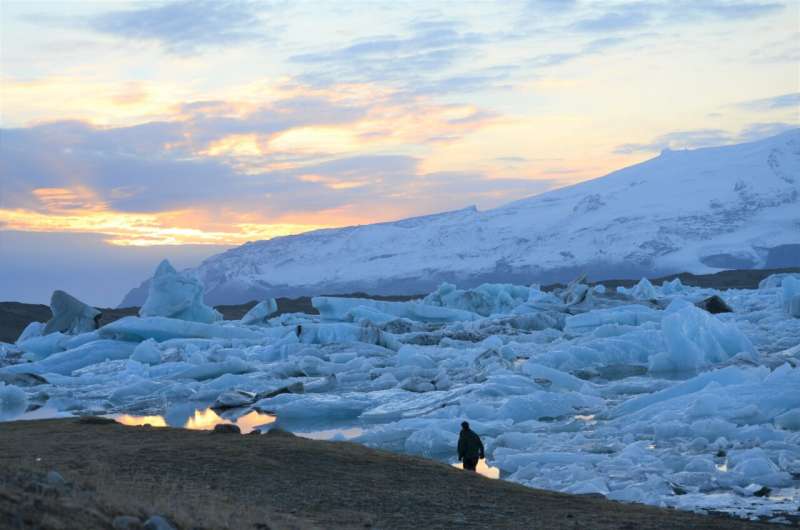
A new study suggests that a million years ago, glaciers began sticking more persistently to their beds, triggering cycles of longer ice ages. Here, ice discharged from Iceland’s Breiðamerkurjökull glacier on its way to the Atlantic ocean. Credit: Kevin Krajick/Earth Institute

Something big happened to the planet about a million years ago. There was a major shift in the response of Earth’s climate system to variations in our orbit around the Sun. The shift is called the Mid-Pleistocene Transition. Before the MPT, cycles between glacial (colder) and interglacial (warmer) periods happened every 41,000 years. After the MPT, glacial periods became more intense—intense enough to form ice sheets in the Northern Hemisphere that lasted 100,000 years. This gave Earth the regular ice-age cycles that have persisted into human time.

Scientists have long puzzled over what triggered this. A likely reason would be a phenomenon…

View original post 504 more words

Plant-based or vegan? Here’s the difference between the terms, according to experts

Kaitlin ReillyMon, November 8, 2021, 6:00 AM·3 min read

Vegan burger with beetroot cutlet, sweet potato sauce and guacamole.
What’s the difference between a “plant-based” diet and a “vegan” diet? (Photo: Getty)

Most people agree that you really can’t go wrong with incorporating more plants into your diet. Yet when it comes to the term “plant-based” to describe one’s eating habits, many people are unsure about its official definition. Is it the same thing as “going vegan”? Does it mean eliminating all animal and animal-derived products from your plate?

The word “vegan,” on the other hand, was created by Donald Watson in 1944 as a way to describe vegetarians who did not consume dairy. The intention of the word wasto connect it with the larger animal rights movement: Watson, who founded The Vegan Society alongside Elsie Shrigley, sought to eliminate animal suffering for the benefit of humans as best as possible.

The term “plant-based” sought to eliminate any social and political associations. According to Eater, it was first coined in 1980 by biochemist Thomas Colin Campbell, as a way to describe his animal-free diet in more neutral terms.

The philosophy behind these ways of eating is what differentiates “plant-based” eating from a vegan diet. A plant-based diet is more about one’s individual health, while a vegan diet is about harm reduction of animals. While many vegans do believe their diets are healthier than diets rich in animal products, that’s not the primary driver of the diet.

Video: McDonald’s debuts plant-based burger in the U.S. Ad: 0:08 0:14  Paulina Porizkova snaps a sexy bikini moment while on vacation: ‘I couldn’t resist posing’https://s.yimg.com/rx/vrm/builds/36185336/xdomain-vpaid.html?id=2

“If someone calls themselves a vegan, it means not just that they eat not only plant-based food, but there’s an ethical component that goes along with it,” says Ashley Byrne, Director of Outreach and Communications at PETA. “They see it as a whole lifestyle of not using products that use animals or exploit animals. You’re more likely to see someone call themselves plant-based if they’re just eating plant-based foods, but not eating a completely vegan lifestyle. If someone is calling themselves vegan, they’re likely applying that broadly to other areas of their lives.”

While people who call themselves vegan tend to stick to habits that reduce animal harm across all areas of their life, not all plant-based dieters have identical habits. Some who say they are plant-based eaters may even occasionally fold animal products into their diet, according to Lauren McNeill, a registered dietitian who focuses on plant-based nutrition.

“A plant-based diet can mean different things to different people, so there isn’t one hard and fast definition,” McNeill explains. “Some people define a plant-based diet as a brand of a vegan diet, where you eat mostly whole, plant-based foods like legumes, whole grains, fruits and vegetables, nuts and seeds. Others consider a plant-based diet to mean eating mostly vegan, but occasionally including some animal based foods.”

For Byrne, the labels we put on an animal-free, or even mostly animal-free diet, is less important than its overall impact.

“The words we use to describe our diets don’t matter nearly as much as the act of leaving animals off of our plates,” she explains. “Whether you call lifestyle vegan or plant-based, the impact is still the same for our health, for the environment, and certainly for the animals, who benefit from us choosing oat milk and pea-protein nuggets regardless of what label we slap on them.”