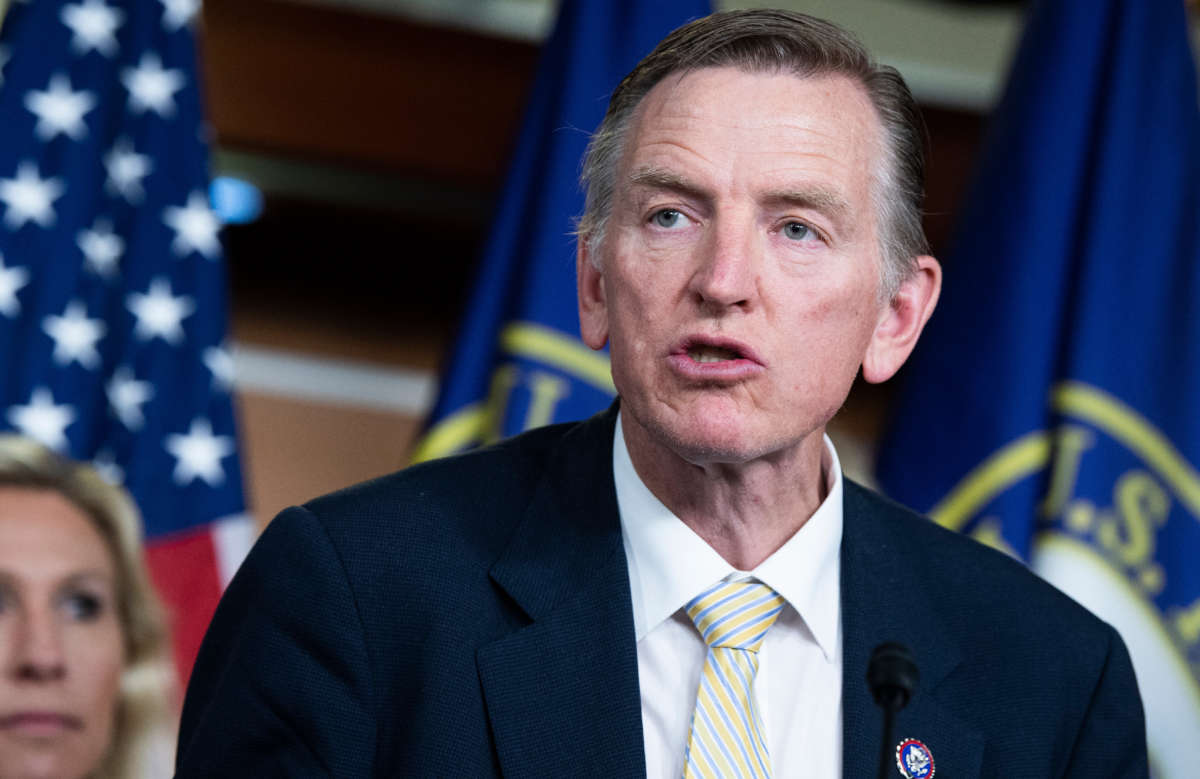
A gray whale off Baja California Sur. ‘We believe that that life isn’t taken by us, but that the creature chooses to give its life to us to sustain us,’ said the Makah tribal council chairman. Photograph: Guillermo Arias/AFP/Getty Images
Hunting gray whales has long been a sacred tradition for the Makah Tribe, dating back thousands of years. But in recent decades, the practice has faced severe scrutiny from conservationists, and the tribe, located in Washington state, has fought a lengthy legal battle to try to resume the historic practice.
Now, the situation could be finally gearing up to a resolution.
On Saturday, a public comment period is set to close, opening the doors for a key determination by the National Marine Fisheries Service on whether to grant the tribe a special waiver.
The granting of such a waiver would set Makah Tribe members on a path to finally resume the sacred whaling practice that dates back at least 2,700 years.Advertisementhttps://6b0107dcd44a620a22637c6633a037ee.safeframe.googlesyndication.com/safeframe/1-0-38/html/container.html
The comment period came after a recent recommendation to the US Department of Commerce in support of awarding the tribe a waiver under the Marine Mammal Protection Act, which bars the killing of marine mammals.
Administrative law judge George J Jordan stated in his recommendation that the eastern North Pacific gray whale stock “will not be disadvantaged by the issuance of a waiver” and the authorized take “will not meaningfully affect its distribution, breeding, or migratory habits”.
According to a spokesperson for the National Oceanic and Atmospheric Administration (Noaa), such a recommendation could have a major influence on the final decision.
Jordan’s recommendation included proposed regulations, such as allowing Makah tribal members to hunt for only four months beginning on 1 July on odd years, and strike up to two eastern North Pacific gray whales. During even years, they would be allowed to hunt for six months beginning on 1 December and strike no more than three.
In the ensuing weeks, community members and environmental groups submitted over 100 comments in response to the recommendation. The majority, based on an examination by the Guardian, were against whaling, with some claiming the tribe no longer needed whales for sustenance, while others argued the creatures needed to be protected. Some that did support the waiver, cited the tribe’s sovereign rights and long history of whaling.
Members of the Makah Tribe paddle away from the rising sun as they head from Neah Bay, Washington, toward open Pacific Ocean waters during a practice for a planned whale hunt in 1998. Photograph: Elaine Thompson/AP
Noaa Fisheries’ decision on whether to grant a waiver – the timing of which is unclear – is expected to be based on such documents as the judge’s recommendation, submitted comments and a forthcoming supplement to the 2015 draft environmental impact statement.
The Makah Tribe, which today includes about 3,100 enrolled members, features the sentient creatures in their dances, songs, visual arts and family crests, explained the Makah tribal council chairman, Timothy J Greene Sr. At the same time, whale hunting has long been completed through a process of giving thanks and acknowledgment for a gift given to them by the Creator. And if the hunts were successful, according to Chairman Greene, tribal members used virtually every part of the creatures, from their bones and meat to their intestines and baleen.
“We acknowledge the life of the whale in the process and ceremonies,” he said. “We give that life the respect that it deserves. We believe that that life isn’t taken by us, but that the creature chooses to give its life to us to sustain us and carry out our connection with the ocean and with that part of the natural world.”
In the Treaty of Neah Bay of 1855, the tribe gave up hundreds of thousands of acres of land, while explicitly securing the right to whale in “usual and accustomed grounds and stations”.
In the 1920s, with commercial whaling and a clear decline in the whale population, the tribe voluntarily paused the hunts.
Chairman Greene said the tribe’s most recent successful hunt was in 1999, soon after gray whales were removed from the endangered species list. The lead-up to the hunt involved community members praying and fasting, as well as intense training and other preparation by the whaling crews.
The hunt “was a moment that really brought joy to the community, it brought the community together in a way that I haven’t seen since”, he said.
But there was also intense pushback from conservation groups, including from the Sea Shepherd Conservation Society, a non-profit marine conservation organization based in Washington state. A spokesperson for the organization declined the Guardian’s request for an interview.
Now, after years of working through the legal process of trying to return to whaling, tribal members will probably soon see a key decision made. But even if the waiver is granted, there are more steps involved before they could actually go out and hunt, including the tribe having to apply for a hunting permit.
DJ Schubert, wildlife biologist for the Animal Welfare Institute, which opposes the Makah Tribe resuming gray whale hunting, said it was impossible to humanely kill such a large creature. He said their opposition also stems from the decline in the eastern North Pacific gray whale population since 2019 due to an unusual mortality event, as well as concern that the endangered western North Pacific gray whales could be mistakenly hurt or killed.
“While we respect the Makah, we respect their culture and their traditions, and we firmly believe that they should continue to celebrate whales through dance and song and storytelling and so on and so forth, we simply disagree with them as to whether or not it is legally or scientifically or ethically appropriate to hunt gray whales,” said Schubert.Advertisementhttps://6b0107dcd44a620a22637c6633a037ee.safeframe.googlesyndication.com/safeframe/1-0-38/html/container.html
Chairman Greene compared the community no longer hunting whales to a member of the Catholic church being denied communion.
“It’s that deep,” he added.
John Hocevar, Greenpeace USA oceans campaign director, said in an email that whether or not the Makah assert their treaty rights and continue their tradition of whaling should be up to the tribe.
He said: “Subsistence hunts by Indigenous peoples have a long history, and have never put entire populations at risk … As we think about the major course corrections that humanity must undergo today, we might benefit from seeing what we can learn from Indigenous communities that have been much more successful at living in balance with nature than those who colonized their lands and waters.”
A system that is expected to dump several inches of rain on an already soggy Seattle area is expected to raise the risk of flooding for much of Puget Sound, starting Thursday and lasting well into Friday night.
KOMO News meteorologist Shannon O’Donnell said we can thank an atmospheric river for the additional precipitation, which she said is defined as “a long plume of moisture that carries copious amounts of precipitation from the subtropics toward the mid and upper latitudes. Heavy, warm rain, especially when combined with melting snow, can quickly lead to severe river flooding.”
GLASGOW, Scotland — Democrats from the Biden administration and Congress have been in the unusual position at the U.N. Climate Change Conference of taking the blame for the actions of their archnemesis, former President Donald Trump, in public — and in private as well, Yahoo News has learned.
In a private meeting between the Senate delegation and China’s special climate envoy Xie Zhenhua, Xie chastised the U.S. repeatedly for Trump’s withdrawal from the 2015 Paris Agreement.
“I sat down with the Chinese this morning. I thought that was an interesting exchange,” Senate Majority Whip Dick Durbin, D-Ill., told Yahoo News on Saturday afternoon. “They did not…
A woman who breached Auckland’s strict regional boundary was later rescued from a wildlife refuge after her vehicle became stuck at a nesting site for New Zealand’s rarest endemic bird.
In a statement on Thursday, the Department of Conservation said the first fairy tern/tara iti egg of the 2021/2022 breeding season has appeared at Papakānui, one of their four nesting sites located north of Auckland.
The fairy tern/tara iti is regarded as New Zealand’s rarest breeding bird. Its conservation status has been listed as threatened-nationally critical due to predation and habitat loss.
While the Department of Conservation is rejoicing at the first egg of the season, rangers have expressed concern about behaviour at another breeding site in Mangawhai, which occurred at around the same time as the egg was laid at Papakānui.
Craig Deal, the operations manager for the Department of Conservation’s Whangarei branch, said an Auckland woman and her dog were forced to stay at the reserve overnight after her car became stuck in the soft sand. She was eventually escorted out of the dunes and the police were notified.
It’s understood the woman allegedly breached Auckland’s alert level 3 boundary, which remains in place to curb the spread of COVID-19.about:blank
“Last weekend we came across a vehicle with an occupant and a dog parked in the dunes at the base of the wildlife refuge at Mangawhai. The person had breached the COVID-19 alert level 3 border restriction to enter the area and had got her vehicle stuck in the soft sand and had to stay overnight,” Deal said on Thursday.
“She was escorted out of the reserve and police were notified. This will also be followed up with our DoC compliance officers for entering a wildlife refuge (breaching the Northland reserves bylaws) with a vehicle and a dog. Both are prohibited and may result in a $800 infringement notice.
With less than 40 birds remaining in the country, the tara iti has teetered on the brink of extinction since the 1980s despite intensive management and conservation efforts.
Tara iti nest on shell and sand banks, sometimes just above the spring high tide mark, which makes them vulnerable to stormy weather that coincides with high tides and strong winds.
Tara iti are also vulnerable to predation and disturbance by people and vehicles, with all nest sites fenced off as a precaution.
A dedicated team of seven rangers focused on tara iti conservation have been working alongside community organisations and volunteers since September to prepare for the breeding season, including traping predators near the nesting sites, fencing the sites off, and preventing nesting birds from being disturbed by humans. The rangers and volunteers will continue to monitor the birds and their nests during the breeding season.
Once widespread around the North Island and eastern South Island, tara iti now only breed at the four main nesting sites – Papakānui Spit, Pākiri Beach, and Waipū and Mangawhai sand spits.
The department works closely with Patuharakeke, Ngāti Whātua o Kaipara, Ngāti Manuhiri, Ngātiwai and Te Uri O Hau, The Shorebirds Trust, The NZ Fairy Tern Charitable Trust, About Tern, Birds NZ, Armourguard and the Waipū Trapping Group to help protect the native bird.
To protect tara iti at their nesting sites, people are advised to follow these rules:
stay out of taped-off or fenced areas and use designated walkways
follow dog and vehicle bylaws
remove bait and rubbish from the beach to deter rats and other predators.
FILE – This June 30, 2017 remote camera image released by the U.S. Forest Service shows a female gray wolf and her mate with a pup born in 2017 in the wilds of Lassen National Forest in Northern California. Trump administration officials on Thursday, Oct. 29, 2020, stripped Endangered Species Act protections for gray wolves in most of the U.S., ending longstanding federal safeguards and putting states in charge of overseeing the predators. (U.S. Forest Service via AP, File)
BILLINGS, Mont. (AP) — Government attorneys are due before a federal judge to defend a decision from the waning days of the Trump administration to lift protections for gray wolves across most of the U.S. Friday’s hearing before U.S. District Judge Jeffrey White comes as Republican-led states including Wisconsin, Montana and Idaho step up efforts to drive down wolf numbers through aggressive hunting and trapping.
Wildlife advocates say the hunts threaten to reverse the gray wolf’s recovery to large parts of the West and Midwest over the past several decades.
After Rep. Paul Gosar (R-Arizona) tweeted a video depicting an animated version of him killing Rep. Alexandria Ocasio-Cortez (D-New York) on Monday, Democratic leaders in Congress have called for an investigation into the Arizona lawmaker.
“Threats of violence against Members of Congress and the President of the United States must not be tolerated,” House Speaker Nancy Pelosi (D-California) wrote on Tuesday. She then called on House Minority Leader Kevin McCarthy (R-California) to join her in “condemning this horrific video,” asking him to “call on the Ethics Committee and law enforcement to investigate.”
Senate Majority Leader Chuck Schumer (D-New York) also condemned Gosar’s video, calling it a “disgusting video from a pathetic man.”
Never miss another story
Get the news you want, delivered to your inbox every day.
Email
The video, which Gosar tweeted on Monday, depicts Gosar’s face overlaid on an anime character slashing the neck of a character with Ocasio-Cortez’s face superimposed on it. After killing Ocasio-Cortez, the video shows Gosar — alongside Representatives Marjorie Taylor Greene (R-Georgia) and Lauren Boebert (R-Colorado) — preparing to attack President Joe Biden.
McCarthy has been mum on the issue so far — and it’s unlikely that the house minority leader will pursue formal disciplinary action against Gosar, Ocasio-Cortez pointed out on Twitter. “He’ll face no consequences because [McCarthy] cheers him on with excuses,” she wrote. Although this isn’t the first time that the New York progressive has faced violent language and threats from her colleagues, there has never been any action or ethics investigations in response. “All at my job,”Ocasio-Cortez continued, “and nothing ever happens.”
The House Democratic Policy and Communications Committee also called for an ethics investigation on Tuesday, saying, “In any other job in America, if a coworker made a video killing another coworker, that person would be fired.”
“Mr. McCarthy needs to decide whether he will finally stand with the American people on the side of law and order or he will continue to support violence and chaos,” wrote the committee’s co-chairs, Representatives Matthew Cartwright (Pennsylvania), Debbie Dingell (Michigan), Ted Lieu (California) and Joe Neguse (Colorado) in a statement.
Predictably, Gosar’s office has downplayed his violent threat. In a disingenuous statement released on Wednesday, Gosar said that he doesn’t “espouse violence or harm against any Members of Congress or Mr. Biden,” despite the video showing him literally espousing violence against Democrats. He then made the dubious claim that the video was meant to portray fights over bills in Congress — fights, evidently, where politically motivated murder is justified.
If McCarthy chooses to ignore this incident, it wouldn’t be the first ethics violation that he’s blatantly ignored. Multiple far-right members of his caucus have been tied to the January 6 attack on the Capitol, in which several people died and the lives of many lawmakers, including Vice President Mike Pence, were threatened.
Last month, Rolling Stonereported that one of the attack’s organizers claimed a number of extremist right-wing Republican lawmakers had helped plan the attempted coup, specifically naming Gosar, Greene and Boebert. That report was met with silence from Republican leaders.
In fact, some experts say that McCarthy himself has violated ethics rules. Earlier this year, McCarthy threatened telecommunications companies, saying that if they comply with the January 6 committee request to retain call records related to the attack, the GOP “will not forget.” In an op-ed for Politico, ethics experts Norm Eisen and Fred Wertheimer said that this threat should be subject to a House Ethics Committee probe, and perhaps even a criminal referral.
Meanwhile, lawmakers are calling for Gosar to be removed from Congress. “Every day these white supremacists push the limits further and further to see how far they can go without consequences. This puts lives in danger,” wrote Rep. Cori Bush (D-Missouri) on Tuesday. “Enough with the violent bigotry. Expel this white supremacist clown.”
A 35-year-old man was brought to the Redwood Falls hospital Saturday, after being hit by a 12-guage slug in the northern part of Cottonwood County.
According to Cottonwood County deputies, a group of hunters was reportedly pushing deer from a grove to an open field in Ann Township when someone shot and the slug struck a deer. The slug then ricochetted into the man, who was part of the hunting party. The slug did not penetrate the skin but hit the man’s ribs, leaving a bruise. No further details were available.
For more on the past week’s worth of local law enforcement reports, see the Nov. 10 Cottonwood County Citizen and Citizen eEdition.
Watch http://www.windomnews.com for regular weekday updates at 8 a.m./noon/5 p.m., plus BREAKING stories at other times. Follow CoCoCitizen @CitPub on Twitter.
A 35-year-old man was brought to the Redwood Falls hospital Saturday, after being hit by a 12-guage slug in the northern part of Cottonwood County.
According to Cottonwood County deputies, a group of hunters was reportedly pushing deer from a grove to an open field in Ann Township when someone shot and the slug struck a deer. The slug then ricochetted into the man, who was part of the hunting party. The slug did not penetrate the skin but hit the man’s ribs, leaving a bruise. No further details were available.
For more on the past week’s worth of local law enforcement reports, see the Nov. 10 Cottonwood County Citizen and Citizen eEdition.
Climate activists protested outside the U.N. climate summit in Glasgow Monday spotlighting the role of the U.S. military in fueling the climate crisis. The Costs of War project estimates the military produced around 1.2 billion metric tons of carbon emissions between 2001 and 2017, with nearly a third coming from U.S. wars overseas. But military carbon emissions have largely been exempted from international climate treaties dating back to the 1997 Kyoto Protocol after lobbying from the United States. We go to Glasgow to speak with Ramón Mejía, anti-militarism national organizer of Grassroots Global Justice Alliance and Iraq War veteran; Erik Edstrom, Afghanistan War veteran turned climate activist; and Neta Crawford, director of the Costs of War project. “The United States military has been a mechanism of environmental destruction,” says Crawford.
TRANSCRIPT
This is a rush transcript. Copy may not be in its final form.
AMY GOODMAN: Former U.S. President Barack Obama addressed the U.N. climate summit Monday, criticizing the leaders of China and Russia for not attending the talks in Glasgow.
BARACK OBAMA: Most nations have failed to be as ambitious as they need to be. The escalation, the ratcheting up of ambition that we anticipated in Paris six years ago has not been uniformly realized. I have to confess, it was particularly discouraging to see the leaders of two of the world’s largest emitters, China and Russia, decline to even attend the proceedings. And their national plans so far reflect what appears to be a dangerous lack of urgency, a willingness to maintain the status quo on the part of those governments. And that’s a shame.
AMY GOODMAN: While Obama singled out China and Russia, climate justice activists openly criticized President Obama for failing to deliver on climate pledges he made as president and for his role overseeing the world’s largest military. This is Filipina activist Mitzi Tan.
MITZI TAN: I definitely think that President Obama is a disappointment, because he lauded himself as the Black president who cared about the people of color, but if he did, he wouldn’t have failed us. He wouldn’t have let this happen. He wouldn’t have killed people with drone strikes. And that is connected to the climate crisis, because the U.S. military is one of the biggest polluters and causing the climate crisis also. And so there are so many things that President Obama and the U.S. has to do in order to really claim that they are the climate leaders that they’re saying they are.
AMY GOODMAN: Speakers at last week’s large Fridays for Future rally in Glasgow also called out the U.S. military’s role in the climate emergency.
AYISHA SIDDIQA: My name is Ayisha Siddiqa. I come from northern region of Pakistan. … The U.S. Department of Defense has a larger annual carbon footprint than most countries on Earth, and it also is the single largest polluter on Earth. Its military presence in my region has cost the United States over $8 trillion since 1976. It has contributed to the destruction of environment in Afghanistan, Iraq, Iran, the greater Persian Gulf and Pakistan. Not only have Western-induced wars led to spikes in the carbon emissions, they have led to use of depleted uranium, and they have caused poisoning of air and water and have led to birth defects, cancer and suffering of thousands of people.
AMY GOODMAN: The Costs of War project estimates the U.S. military produced around 1.2 billion tonnes of carbon emissions between 2001 and 2017, with nearly a third coming from U.S. wars overseas, including in Afghanistan and Iraq. By one account, the U.S. military is a larger polluter than 140 countries combined, including numerous industrialized nations, such as Sweden, Denmark and Portugal.
However, military carbon emissions have largely been exempted from international climate treaties dating back to the 1997 Kyoto Protocol, thanks to lobbying from the United States. At the time, a group of neoconservatives, including future vice president and then-Halliburton CEO Dick Cheney, argued in favor exempting all military emissions.
On Monday, a group of climate activists staged a protest outside the COP spotlighting the role of the U.S. military in the climate crisis.
We’re joined now by three guests. Inside the U.N. climate summit, Ramón Mejía joins us, the anti-militarism national organizer of Grassroots Global Justice Alliance. He’s an Iraq War vet. We’re also joined by Erik Edstrom, who fought in the Afghan War and later studied climate change at Oxford. He’s the author of Un-American: A Soldier’s Reckoning of Our Longest War. He’s joining us from Boston. Also with us, in Glasgow, is Neta Crawford. She’s with the Costs of War project at Brown University. She’s a professor at Boston University. She’s just outside the COP.
We welcome you all to Democracy Now! Ramón Mejía, let’s begin with you. You participated in protests inside the COP and outside the COP. How did you go from being an Iraq War veteran to a climate justice activist?
RAMÓN MEJÍA: Thank you for having me, Amy.
I participated in the invasion of Iraq in 2003. As part of that invasion, which was a crime, I was able to witness the sheer destruction of Iraq’s infrastructure, of its water treatment plants, of sewage. And it was something that I couldn’t live with myself and I couldn’t continue to support. So, after leaving the military, I had to speak up and to oppose U.S. militarism in every shape, way or form that it shows up in our communities. In Iraq alone, the Iraqi people have been researching and said that they are — have the worst genetic damage that has ever been studied or researched. So, it is my obligation as a war veteran to speak out against wars, and especially how wars impact not only our people, the environment and the climate.
JUAN GONZÁLEZ: And, Ramón Mejía, what about this issue of the role of the U.S. military in fossil fuel emissions? When you were in the military, was there any sense among your fellow GIs about this enormous pollution that the military is visiting on the planet?
RAMÓN MEJÍA: When I was in the military, there wasn’t any discussion about the chaos that we were creating. I conducted resupply convoys throughout the country, delivering munitions, delivering tanks, delivering repair parts. And in that process, I saw nothing but waste being left. You know, even our own units were burying munitions and disposable trash into the middle of the desert. We were burning trash, creating toxic fumes that have impacted veterans, but not only veterans, but the Iraqi people and those adjacent to those toxic burn pits.
So, the U.S. military, while emissions is important to discuss, and it’s important that within these climate conversations that we address how the militaries are excluded and don’t have to reduce or report emissions, we also have to discuss the violence that the militaries wage on our communities, on the climate, on the environment.
You know, we came with a delegation, a frontline delegation of over 60 grassroots leaders, under the banner of It Takes Roots, from Indigenous Environmental Network, from Climate Justice Alliance, from Just Transition Alliance, from Jobs with Justice. And we came here to say that no net zero, no war, no warming, keep it in the ground, because many of our community members have experienced what the military has to offer.
One of our delegates from New Mexico, from the Southwest Organizing Project, spoke to how millions and millions of jet fuel have spilled in Kirtland Air Force Base. More fuel has spilled and leached into the aquifers of neighboring communities than the Exxon Valdez, and yet those conversations aren’t being had. And we have another delegate from Puerto Rico and Vieques, how munitions tests and chemical weapons tests have plagued the island, and while the U.S. Navy is no longer there, cancer still is strickening the population.
JUAN GONZÁLEZ: And the group Global Witness has estimated that there are over 100 coal, oil and gas company lobbyists and their associated groups at COP26. What’s your sense of the impact of the fossil fuel lobby at this gathering?
RAMÓN MEJÍA: There can’t be any genuine discussion about addressing climate change if we’re not including the military. The military, as we know, is the largest consumer of fossil fuels and also the largest emitter of greenhouse gases most responsible for the climate disruption. So, when you have fossil fuel industries that have a larger delegation than most of our frontline communities and the Global South, then we’re being silenced. This space is not a space for genuine discussions. It’s a discussion for transnational corporations and industry and polluting governments to continue to try and find ways to go as business as usual without actually addressing the roots of the conversation.
You know, this COP has been dubbed net zero, the COP of net zero, but this is just a false unicorn. It’s a false solution, just the same way as greening the military is. You know, emissions, it’s important that we discuss it, but greening the military is also not the solution. We have to address the violence that the military wages and the catastrophic effects it has on our world.
So, the conversations within the COP aren’t genuine, because we can’t even hold pointed conversations and hold those accountable. We have to speak in generalities. You know, we can’t say “U.S. military”; we have to say “military.” We can’t say that our government is the one that’s most responsible for pollution; we have to speak in generalities. So, when there is this unlevel playing field, then we know that the discussions aren’t genuine here.
The genuine discussions and the real change is happening in the streets with our communities and our international movements that are here to not only discuss but apply pressure. This — you know, what is it? We’ve been calling it, that the COP is, you know, profiteers. It’s the convening of profiteers. That’s what it is. And we’re here not to concede this space in which power resides. We’re here to apply pressure, and we’re also here to speak on behalf of our international comrades and movements from around the world that aren’t able to come to Glasgow because of vaccine apartheid and the restrictions that they have on coming to discuss what’s happening in their communities. So we’re here to uplift their voices and to continue to speak on — you know, with them, on what’s happening around the world.
AMY GOODMAN: In addition to Ramón Mejía, we’re joined by yet another Marine Corps vet, and he is Erik Edstrom, Afghan War vet, went on to study climate at Oxford and write the book Un-American: A Soldier’s Reckoning of Our Longest War. If you can talk about — well, I’ll ask you the same question as I asked Ramón. Here you were a Marine Corps [sic] veteran. How you went from that to a climate activist, and what we should understand about the costs of war at home and abroad? You fought in Afghanistan.
ERIK EDSTROM: Thank you, Amy.
Yes, I mean, I would be remiss if I didn’t make a brief correction, which is I am an Army officer, or a former Army officer, and don’t want to take heat from my fellow colleagues for being misconstrued as a Marine officer.
But the journey to climate activism, I think, started when I was in Afghanistan and realized that we were solving the wrong problem the wrong way. We were missing the upstream issues underpinning foreign policy around the world, which is the disruption caused by climate change, which endangers other communities. It creates geopolitical risk. And to be focusing on Afghanistan, effectively playing Taliban whack-a-mole, while ignoring the climate crisis, seemed like a terrible use of priorities.
So, immediately, you know, when I was done with my military service, wanted to study what I believe is the most important issue facing this generation. And today, when reflecting upon military emissions in the overall accounting globally, it’s not only intellectually dishonest to exclude them, it is irresponsible and dangerous.
JUAN GONZÁLEZ: And, Erik, I’d like to ask you about the relationship between oil and the military, the U.S. military but also other imperial militaries around the world. There’s historically been a relationship of militaries seeking to control oil resources in times of war, as well as being the prime users of these oil resources to build up their military capacity, hasn’t there?
ERIK EDSTROM: There has been. I think that Amy did a fantastic job laying out, and so did the other speaker, around the military being the largest institutional consumer of fossil fuels in the world, and I think that that definitely drives some of the decision-making in the military. The emissions attributable to the U.S. military is more than civilian aviation and shipping combined. But one of the things I really wanted to drive home in this conversation is around something that’s not discussed very much in the costs of war, which is the social cost of carbon or the negative externalities associated with our global bootprint as a military around the world.
And Amy was right to point out that — citing the Brown University Watson Institute and the 1.2 billion metric tons of estimated emissions from the military during the time of the global war on terror. And when you look at public health studies that start to do the calculus to say how many tonnes must you emit in order to harm somebody elsewhere in the world, it’s about 4,400 tonnes. So, if you do the simple arithmetic, the global war on terror has potentially caused up the 270,000 climate-related deaths around the globe, which further heightens and exacerbates an already high cost of war and strategically undermines the very objectives that the military is hoping to achieve, which is stability. And morally, it is also further undermining the very mission statement and the oath of the military, which is to protect Americans and be a global force for good, if you take a globalized or globalization perspective. So, undermining the climate crisis and turbocharging it is not the role of the military, and we need to apply additional pressure for them to both disclose and reduce its massive carbon footprint.
AMY GOODMAN: To put Juan’s more eloquent question into — I remember this sad joke with the U.S. invasion of Iraq, a little boy saying to his father, “What’s our oil doing under their sand?” I was wondering if you can elaborate more, Erik Edstrom, on what constitutes military emissions. And what does the Pentagon understand? I mean, for years, when we were covering the Bush wars, under George W. Bush, there was the — we would always cite that they’re not talking about their own Pentagon studies saying climate change is the critical issue of the 21st century. But what do they understand, both overall about the issue and the role of the Pentagon in polluting the world?
ERIK EDSTROM: I mean, I think that probably at the senior levels of brass within the military, there is understanding that climate change is a real and existential threat. There is a disconnect, though, which is a point of tension, which is: What is the military going to do specifically about it, and then specifically its own emissions? If the military were to disclose its full carbon footprint and to do so on a regular basis, that number would be deeply embarrassing and create a tremendous amount of political pressure on the U.S. military to reduce those emissions going forward. So you could understand their reluctance.
But nonetheless, we should absolutely count military emissions, because it does not matter what the source is. If it comes from a civilian aircraft or a military aircraft, to the climate itself, it does not matter. And we must count every tonne of emissions, irrespective of whether it is politically inconvenient to do so. And without the disclosure, we are running blind. To prioritize decarbonization efforts, we need to know the sources and volume of those military emissions, so that our leaders and politicians can make informed decisions about which sources they might want to shut down first. Is it overseas bases? Is it a certain vehicle platform? Those decisions will not be known, and we cannot make smart choices intellectually and strategically, until those numbers come out.
AMY GOODMAN: A new research from Brown University’s Costs of War project shows that the Department of Homeland Security has been overly focused on foreign and foreign-inspired terrorism, while violent attacks in the U.S. have more often come from domestic sources, you know, talking about white supremacy, for example. Neta Crawford is with us. She’s just outside the COP right now, the U.N. summit. She’s the co-founder and director of the Costs of War project at Brown. She’s a professor and department chair of political science at Boston University. Professor Crawford, we welcome you back to Democracy Now! Why are you at the climate summit? We usually just talk to you about, just overall, the costs of war.
NETA CRAWFORD: Thanks, Amy.
I’m here because there are several universities in the U.K. which have launched an initiative to try to include military emissions more fully in the individual countries’ declarations of their emissions. Every year, every country that’s in Annex I — that is, the parties to the treaty from Kyoto — have to put some of their military emissions in their national inventories, but it’s not a full accounting. And that’s what we’d like to see.
JUAN GONZÁLEZ: And, Neta Crawford, could you talk about what is not being registered or monitored in terms of the military? It’s not just the fuel that powers the jets of an air force or that powers ships, as well. Given the hundreds and hundreds of military bases that the United States has around the world, what are some of the aspects of the carbon footprint of the U.S. military that people are not paying attention to?
NETA CRAWFORD: OK, I think there’s three things to keep in mind here. First, there are emissions from installations. The United States has about 750 military installations abroad, overseas, and it has about 400 in the U.S. And most of those installations abroad, we don’t know what their emissions are. And that is because of the 1997 Kyoto Protocol decision to exclude those emissions or have them count for the country that the bases are located in.
So, the other thing that we don’t know is a large portion of emissions from operations. So, at Kyoto, the decision was taken not to include operations from war that was sanctioned by the United Nations or other multilateral operations. So those emissions are not included.
There’s also something known as — called bunker fuels, which are the fuels used on planes and aircraft — I’m sorry, aircraft and ships in international waters. Most of the United States Navy’s operations are in international waters, so we don’t know those emissions. Those are excluded. Now, the reason for that was, in 1997, the DOD sent a memo to the White House saying that if missions were included, then the U.S. military might have to reduce its operations. And they said in their memo, a 10% reduction in emissions would lead to a lack of readiness. And that lack of readiness would mean that the United States would not be prepared to do two things. One is be militarily superior and wage war anytime, anywhere, and then, secondly, not be able to respond to what they saw as the climate crisis that we would face. And why were they so aware in 1997? Because they had been studying the climate crisis since the 1950s and 1960s, and they were aware of the effects of greenhouse gases. So, that’s what’s included and what’s excluded.
And there’s another large category of emissions we don’t know about, which is any emission coming out of the military-industrial complex. All of the equipment that we use has to be produced somewhere. Much of it comes from large military-industrial corporations in the United States. Some of those corporations acknowledge their, what are known as direct and somewhat indirect emissions, but we don’t know the entire supply chain. So, I have an estimate that the top military-industrial companies have emitted about the same amount of fossil fuel emissions, greenhouse gas emissions, as the military itself in any one year. So, really, when we think about the entire carbon footprint of the United States military, it has to be said that we’re not counting all of it. And in addition, we’re not counting Department of Homeland Security emissions — I haven’t counted them yet — and those should be included, as well.
AMY GOODMAN: I wanted to —
JUAN GONZÁLEZ: And —
AMY GOODMAN: Go ahead, Juan.
JUAN GONZÁLEZ: Could you talk about burn pits, as well? The U.S. military must be unique in the world, that wherever it goes, it always ends up destroying stuff on the way out, whether it’s a war or an occupation. Could you talk about burn pits, as well?
NETA CRAWFORD: I don’t know as much about burn pits, but I do know something of the history of the environmental destruction that any military makes. From the colonial era to the Civil War, when the Civil War log structures were made from entire forests cut down, or roads were made from trees, the United States military has been a mechanism of environmental destruction. In the Revolutionary War and in the Civil War, and obviously in Vietnam and Korea, the United States has taken out areas, jungles or forests, where they thought that insurgents would hide.
So, the burn pits are just part of a larger sort of disregard for the atmosphere and the environment, the toxic environment. And even the chemicals left at bases, that are leaking from containers for fuel, are toxic. So, there’s a — as both of the other speakers have said, there’s a larger environmental damage footprint that we need to think about.
AMY GOODMAN: Finally, in 1997, a group of neoconservatives, including the future vice president, then-Halliburton CEO Dick Cheney, argued in favor exempting all military emissions from the Kyoto Protocol. In the letter, Cheney, along with Ambassador Jeane Kirkpatrick, former Defense Secretary Caspar Weinberger, wrote, by “exempting only US military exercises that are multinational and humanitarian, unilateral military actions — as in Grenada, Panama and Libya — will become politically and diplomatically more difficult.” Erik Edstrom, your response?
ERIK EDSTROM: I think, indeed, it absolutely will be more difficult. And I think it is our duty, as engaged citizens, to apply pressure on our government to take this existential threat seriously. And if our government fails to step up, we need to be electing new leaders who are going to do the right thing, that will change the tides and will actually put forth the effort that is required here, because, truly, the world depends on it.
AMY GOODMAN: Well, we’re going to end it there but, of course, continue to follow this issue. Erik Edstrom is an Afghan War vet, a graduate from West Point. He studied climate at Oxford. And his book is Un-American: A Soldier’s Reckoning of Our Longest War. Ramón Mejía is inside the COP, anti-militarism national organizer with Grassroots Global Justice Alliance. He is an Iraq War vet. He has been participating in protests inside and outside the COP in Glasgow. And also with us, Neta Crawford, Costs of War project at Brown University. She’s a professor of political science at Boston University.
When we come back, we go to Stella Moris. She’s the partner of Julian Assange. So, what’s she doing at Glasgow, as she talks about how WikiLeaks exposed the hypocrisy of wealthy nations in addressing the climate crisis? And why isn’t she and Julian Assange — why aren’t they able to marry? Is the Belmarsh prison authorities, is Britain saying no? Stay with us.





 © Provided by Newshub
 © Provided by Newshub