[I’ve seen the way those pheasants are raised firsthand. As a young wildlife advocate, I was asking about jobs at the local “game” refuge, while they were trying to crowd 20 pheasants into one crate. One bird got away and flew into the “refuge”, where a hunter shot in a matter of seconds… And a follower of the C.A.S.H. blog commented: “In New York even state wildlife managers call this type of thing a “put and take” hunting. They report where and when the birds are being released to make it even easier for hunters! Birds raised like this hardly have skills to then survive in the wilderness if they don’t get shot. Easy prey for predators. Plus suffering for the birds trying to live in what are foreign conditions for them. This sure makes a mockery of conservation and the constant claim hunting is done for population control!”]
There were no injuries reported among the group of seven who became stuck after the Yukon River iced over while they were on a hunting trip.Nov. 5, 2021, 9:02 PM PDTBy Phil Helsel
Seven people were rescued late Thursday after being stranded at a remote Alaska fish camp for a week, state troopers said Friday.
Ice on the Yukon River stranded the group at the camp about 20 miles east of Emmonak, a small city of around 800 in the southwestern part of the state, Alaska State Troopers said.
They were reported stuck on Oct. 29, but weather and later mechanical issues with a U.S. Coast Guard helicopter prevented their rescue, state troopers said.
Two U.S. Army helicopters were on the way for a rescue planned for Friday, but a Coast Guard helicopter was able to take off from Nome on Thursday evening, troopers said.
The MH-60 Jayhawk helicopter crew hoisted the six adults and one teenager to safety from the remote site and took them to Nome, about 130 miles away, officials said.
There were no injuries reported and troopers said earlier Thursday that the group was “adequately supplied with food, water, shelter, and necessary supplies.”
The group set out on Oct. 25 to hunt and bring back food for Pilot Station and another village, one of the rescued hunters told NBC affiliate KTUU of Anchorage.
The hunter, Rex Nick, told the station the wait for rescue was frustrating. The river iced over on Oct. 28, he said.
“It’s like, the plane will be there, the chopper will be there, and it never showed up,” he said.
The wife of one the stranded hunters told KTUU that her husband said they were trying to make it home but it was slow going because there was a lot of ice on the river, and then they called for help.
The group had an InReach device, which is a satellite communicator, and were able to stay in contact with authorities, state troopers said.
A Coast Guard spokesperson could not immediately be reached Friday night.
Petty Officer 1st Class Ali Blackburn told The Associated Press that a break in the weather allowed its helicopter to fly Thursday and rescue the group. KTUU reported that freezing fog kept crews grounded for several days.
Nome and Emmonak are in the western part of Alaska, on or near the coast of the Bering Sea.
This 2020 photo provided by Polar Bears International shows a polar bear in Churchill, Manitoba, Canada during migration. (Kieran McIver/Polar Bears International via AP)Listen to article
Majestic, increasingly hungry and at risk of disappearing, the polar bear is dependent on something melting away on our warming planet: sea ice.
In the harsh and unforgiving Arctic, where frigid cold is not just a way of life but a necessity, the polar bear stands out. But where it lives, where it hunts, where it eats — it’s disappearing underfoot in the crucial summertime.
“They have just always been a revered species by people, going back hundreds and hundreds of years,” said longtime government polar bear researcher Steve Amstrup, now chief scientist for Polar Bear International. “There’s just something special about polar bears.”
GET TOP STORIES IN YOUR INBOX.
Email *
Scientists and advocates point to polar bears, marked as “threatened” on the endangered species list, as the white-hot warning signal for the rest of the planet — “the canary in the cryosphere.” As world leaders meet in Glasgow, Scotland, to try to ramp up efforts to curb climate change, the specter of polar bears looms over them.
United Nations Environment Program head Inger Andersen used to lead the International Union for the Conservation of Nature, which monitors and classifies species in trouble. She asks: “Do we really want to be the generation that saw the end of the ability of something as majestic as the polar bear to survive?”
THE STATE OF SEA ICE
Arctic sea ice — frozen ocean water — shrinks during the summer as it gets warmer, then forms again in the long winter. How much it shrinks is where global warming kicks in, scientists say. The more the sea ice shrinks in the summer, the thinner the ice is overall, because the ice is weaker first-year ice.
Julienne Stroeve, a University of Manitoba researcher, says summers without sea ice are inevitable. Many other experts agree with her.
Former NASA chief scientist Waleed Abdalati, now a top University of Colorado environmental researcher, is one of them.
“That’s something human civilization has never known,” Abdalati said. “That’s like taking a sledgehammer to the climate system and doing something huge about it.”
The warming already in the oceans and in the air is committed — like a freight train in motion. So, no matter what, the Earth will soon see a summer with less than 1 million square kilometers of sea ice scattered in tiny bits across the Arctic.
The big question is when the Arctic will “look like a blue ocean,” said Mark Serreze, director of the National Snow and Ice Data Center.
Maybe as early as the 2030s, most likely in the 2040s and almost assuredly by the 2050s, experts say.
The Arctic has been warming twice as fast as the rest of the world. In some seasons, it has warmed three times faster than the rest of the globe, said University of Alaska at Fairbanks scientist John Walsh.
That’s because of something called “Arctic amplification.” Essentially, white ice in the Arctic reflects heat. When it melts, the dark sea absorbs much more heat, which warms the oceans even more quickly, scientists say.
THE POLAR BEAR CONNECTION
There are 19 different subpopulations of polar bears in the Arctic. Each is a bit different. Some are really in trouble, especially the southernmost ones, while others are pretty close to stable. But their survival from place to place is linked heavily to sea ice.
“As you go to the Arctic and see what’s happening with your own eyes … it’s depressing,” said University of Washington marine biologist Kristin Laidre, who has studied polar bears in Baffin Bay.
Shrinking sea ice means shrinking polar bears, literally.
In the summertime, polar bears go out on the ice to hunt and eat, feasting and putting on weight to sustain them through the winter. They prefer areas that are more than half covered with ice because it’s the most productive hunting and feeding grounds, Amstrup said. The more ice, the more they can move around and the more they can eat.
Just 30 or 40 years ago, the bears feasted on a buffet of seals and walrus on the ice.
In the 1980s, “the males were huge, females were reproducing regularly and cubs were surviving well,” Amstrup said. “The population looked good.”
With ice loss, the bears haven’t been doing as well, Amstrup said. One sign: A higher proportion of cubs are dying before their first birthdays.
Polar bears are land mammals that have adapted to the sea. The animals they eat — seals and walruses mostly — are aquatic.
The bears fare best when they can hunt in shallow water, which is typically close to land.
“When sea ice is present over those near-shore waters, polar bears can make hay,” Amstrup said.
But in recent years the sea ice has retreated far offshore in most summers. That has forced the bears to drift on the ice into deep waters — sometimes nearly a mile deep — that are devoid of their prey, Amstrup said.
Off Alaska, the Beaufort Sea and Chukchi Sea polar bears provide a telling contrast.
Go 30 to 40 miles offshore from Prudhoe Bay in the Beaufort Sea “and you’re in very unproductive waters,” Amstrup said.
Further south in the Chukchi, it’s shallower, which allows bottom-feeding walruses to thrive. That provides food for polar bears, he said.
“The bears in the Chukchi seem to be faring pretty well because of that additional productivity,” Amstrup said. But the bears of the Beaufort “give us a real good early warning of where this is all coming to.”
THE FUTURE
Even as world leaders meet in Scotland to try to ratchet up the effort to curb climate change, the scientists who monitor sea ice and watch the polar bears know so much warming is already set in motion.
There’s a chance, if negotiators succeed and everything turns out just right, that the world will once again see an Arctic with significant sea ice in the summer late this century and in the 22nd century, experts said. But until then “that door has been closed,” said Twila Moon, a National Snow and Ice Data Center scientist.
So hope is melting too.
“It’s near impossible for us to see a place where we don’t reach an essentially sea ice-free Arctic, even if we’re able to do the work to create much, much lower emissions” of heat-trapping gases, Moon said. “Sea ice is one of those things that we’ll see reach some pretty devastating lows along that path. And we can already see those influences for polar bears.”
An Iowa City man who was trying to shoot a squirrel in his yard with an air rifle is now facing charges.
Iowa City police found a man involved in a single-car traffic accident on Highway 6 on October 17th who had been shot. Sixty-nine-year-old Philip Olson heard about the accident and turned himself in –telling police he was trying to shoot a squirrel from his home along Highway 6 with a .22 caliber air rifle.
Air rifles are not considered dangerous weapons under Iowa code — but city code prohibits shooting an air rifle, toy pistol, toy gun or slingshot within city limits — and Olson faces a code violation. He also is facing DNR charges of hunting without a license or habitat fee, unlawful attempt to take a squirrel…
A senior politician says the change is possible but will need to be debated in parliament, as hunters and ecologists clash over stag hunts in the north west
A 67-year-old man who was hit by a hunter’s bullet while driving has died from his injuries the public prosecutor in Rennes said, prompting local mayors to call for partial hunting bans.
The driver was travelling along the RN137 near Rennes on October 30, when a 9.3-millimetre bullet ricocheted off a stone and flew into his car.
There are ample reasons you may not want to serve a turkey at your feast. Experts offer ways to create a new holiday tradition.By Ellen Kanner11/03/2021 05:51am EDT
If you’re having turkey at your Thanksgiving, Karen Davis is not the guest you want at your table.
The president of United Poultry Concerns and a tireless advocate for chickens, turkeys and other farmed fowl, Davis can rattle off details and statistics about how turkeys are raised and “harvested” (industry-speak for slaughtered) that are guaranteed to curb — or kill — your appetite. But she’ll settle for three big reasons to skip the turkey this Thanksgiving: “Animal cruelty, disease, filth — the toxic waste in the conditions in which the birds are forced to live.”ADVERTISEMENThttps://4766de10cd5e313f75b796e4430c53a8.safeframe.googlesyndication.com/safeframe/1-0-38/html/container.html
According to the U.S. Department of Agriculture, close to 230 million turkeys were slaughtered in 2018 ― more than the number of Americans fully vaccinated against COVID-19 right now. Food production on that scale doesn’t happen in an idyllic farm setting; it happens in concentrated animal-feeding operations (CAFOs). The Environmental Protection Agency mandates a small CAFO be limited to 16,500 turkeys, while a large one can hold 55,000 or more.
At Davis’ sanctuary in Virginia — Tyson and Perdue territory — turkeys and chickens run free. “Turkeys like to run. They’re great walkers. But turkeys bred for the turkey meat industry are so disproportioned, with this big, heavy breast. Their toenails are cut off so they can’t grip the ground well,” she said. And anyway, there’s nowhere for them to go. Their brief lives are spent confined “beak to butt.”AN ESSENTIAL DAILY GUIDE TO ACHIEVING THE GOOD LIFESubscribe to our lifestyle email.Successfully Subscribed!Realness delivered to your inbox
A whole lot of turkeys in a single cramped space produce a staggering amount of waste. “Imagine 10,000 birds in a factory building. Imagine those massive factory buildings, one after the other. Imagine if you could see that, could hear that, could smell that,” said Samantha Ragsdale, senior director of education and research at Farm Sanctuary, an animal protection organization. Smell? Oh, yeah. “Factory warehouses are full of ammonia,” she added. “That concentration of animal urine and feces is toxic to the animals themselves, to the workers, and it’s all ultimately seeping into our groundwater.”
“People don’t understand,” Davis said. “Suffering and sickness are linked. Cruelty and contamination are linked.” She can connect the dots for you in grisly detail, but suffice it to say, it’s not nice for the turkeys.ADVERTISEMENThttps://4766de10cd5e313f75b796e4430c53a8.safeframe.googlesyndication.com/safeframe/1-0-38/html/container.html
It’s not nice for you, either. That stomach flu you get over the holidays? It may not be the flu, according to Davis. It could potentially be foodborne illness from eating undercooked turkey contaminated with salmonella, Campylobacter or E. coli. “Abdominal pain, diarrhea, nausea — they’re bacterial infections. You put yourself at risk,” she added.
A far cry from the way we usually see turkeys at the Thanksgiving table, a turkey is served a kale dinner at the 2018 “Honoring of the Turkeys” at Farm Sanctuary, an animal protection organization.
Well, you say, United Poultry Concerns and Farm Sanctuary are animal advocacy organizations; of course they’re going to try to take away my Thanksgiving turkey. But the risk of foodborne illness is real. According to the USDA, 48 million people get food poisoning every year, a million from salmonella alone. A quarter of those cases are traced to tainted chicken or turkey.
If all of this is giving you pause about cooking a turkey this year, no worries — there are other options. “We have so may other marvelous choices that don’t cause suffering,” Davis said. “We can do and be so much better.” So let’s not yuck your yum. Let’s talk about how to do this:
If you’ve been hosting the same crowd for years, your guests will be expecting the same menu, especially since the pandemic has canceled so many celebrations. Give guests a heads-up beforehand. Help dial down their anxiety, and get them excited to be part of a new, progressive, turkey-free Thanksgiving tradition.
Worried there won’t be enough to eat? Are you kidding? The standard holiday feast is laden with dishes. Think hot biscuits, your favorite dressing, fluffy mashed potatoes, a vegetable (whether it’s your auntie’s green bean casserole or roasted Brussels sprouts), cranberry sauce and pumpkin pie. “Embrace the sides,” Ragsdale said. People may say they love roast turkey, but really, “they’re mostly looking forward to mashed potatoes and pumpkin pie,” she added.
Instead of turkey, feature dishes with corn, cranberries and other native foods served at that first Thanksgiving feast. And you’re in luck, “A Gathering Basket,” a multimedia multi-series cookbook of Indigenous recipes from I-Collective, was just released. Catch “Gather,” a new Netflix film about Indigenous food sovereignty, too.
Turkey isn’t the only holiday entree. Davis and Ragsdale each make their own version of shepherd’s pie (without sheep). They’re umami, hearty, filling and Instagram-worthy. Davis’ recipe, which has lentils for meatiness and protein, goes by the adorable name of Mrs. Gobblegood’s golden brown pie.
Worried you’ll miss that apocryphal post-feast tryptophan high? Fear not, there’s tryptophan galore in dairy, so butter up those mashed potatoes and put another dollop of whipped cream on that pumpkin pie. Tryptophan, that essential happy-making amino acid, is also found in seeds, oats and something else enjoyed at that first Thanksgiving feast — nuts.
If you want to keep turkey a tradition at your Thanksgiving, don’t eat it — adopt it through a place like Farm Sanctuary, or become a turkey guardian through The Gentle Barn.
‘Everything we care about depends upon and relies upon a stable climate,’ Moby said in a new video he produced with Humane Society International as part of its #TheCowInTheRoom campaign. The HSUS
There’s a chorus of voices calling for changing the conversation around climate change, and now Moby joins Humane Society International in stressing that reforming global food systems simply must be part of these discussions.
Young people know that our generation already disproportionately feels the effects of the climate crisis. Almost all of the intense heatwaves that have hit Europe since 1950 occurred during my lifetime. It’s likely they will only get worse.
Unfortunately, Poland, where I live, has clung to an energy model driven by burning fossil fuels for too long. This irreversible destruction violates our right to life, health, property and values of the natural world. That is why at 17 years old, I decided to take the Polish government to court in June 2021 over its failure to act on the climate crisis.
The grim stakes for my generation are undeniable. It has been more than five years since world leaders pledged to limit global warming to 1.5C. Since then, emissions have continued to rise, and according to the International Energy Agency emissions will hit a record high by 2023 if green recovery fails. The newest report published by the Intergovernmental Panel on Climate Change states that human-caused emissions have already contributed to irreversible changes in our climate system, and are rapidly moving us toward an uninhabitable planet.Advertisementhttps://6e2f9dbd639798cebe5b1c7547f226c8.safeframe.googlesyndication.com/safeframe/1-0-38/html/container.html
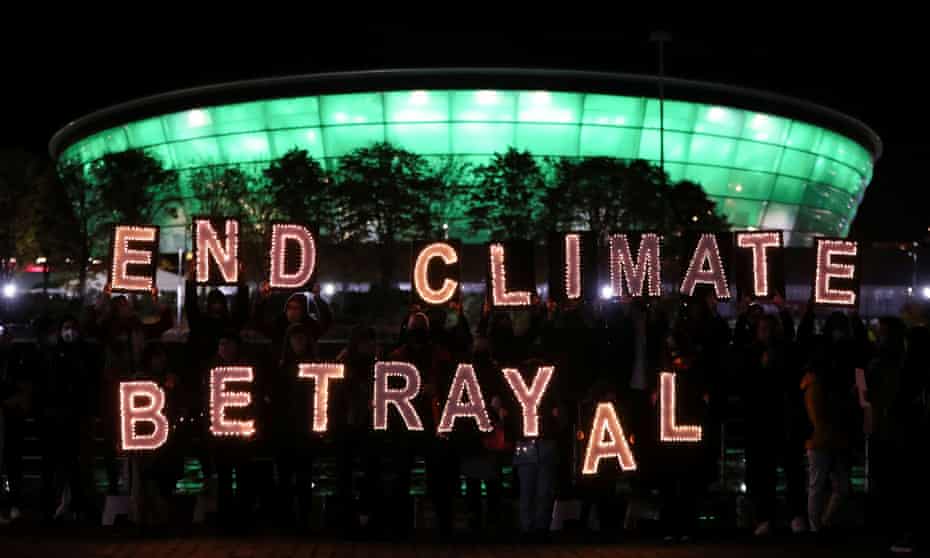
What we really need as world leaders gather for the Cop26 climate summit in Glasgow is a global system change. A world built on business as usual is clearly falling apart – it has already for the most vulnerable.
The world economy is reliant on constant growth and human exploitation in order to create profits. That’s why it is no surprise to see that a country’s rise in emissions correlates with its growth in GDP, energy consumption and pollution. But the capitalist growth model is incompatible with a zero-carbon world.
By popularizing concepts such as “green growth” or “green capitalism”, world leaders sentence humanity to a life of dystopia. Ultimately, these proposals are the same concepts that brought us into this crisis in the first place, but in disguise. Activists call it greenwashing for a reason.
The climate crisis may center on the term ‘climate’, but in fact it may be one of the biggest social crises humanity has ever faced
When high-income nations transition their economies toward “green” solutions, what happens to low-income nations? Will the global north continue to exploit other countries in order to deliver on their climate pledges while also growing their economies? And what about climate reparations for the most affected communities?
While leaders of the global north continue to perpetuate the status quo built on the exploitation of others, they deepen the harsh socio-economic conditions in countries that bring them profits. In other words, high-income nations use “growth” as a justification for the torture caused in other territories.
Low-income nations are robbed of their ability to address the climate crisis when more immediate issues become a necessary priority, such as feeding their people, securing access to electricity, quality healthcare and education or ending conflict. Climate change worsens these “more pressing” issues, perpetuating the downward cycle even more.
The climate crisis may center on the term “climate”, but it may be one of the biggest social crises humanity has ever faced. Hence, climate justice cannot be achieved without addressing and prioritizing social justice in all parts of the globe.
I think about the climate crisis and its intersectional connections every single day. I started my activism journey more than two years ago and have called myself a full-time activist since summer 2020. While activism may take a toll on my physical and mental wellbeing, I find it’s the best antidote for climate depression.
Communities fighting on the frontlines have already been transforming their radical imagination of a fully liberated world into a reality
Utopia quite literally means achieving a perfect imaginary world that doesn’t exist (from Greek ou-topos – no place, nowhere). However, striving toward a near-utopian state is the only chance we have today to save humanity.
In today’s world, limiting the global average temperature to 1.5C and achieving climate justice may seem out of reach due to the fundamentals on which the global north has built its societies. However, the miracle happens when one realizes that this system is not inherently this way – it was created.
The utopia we dream of is within our reach if we address the colonial, racist and oppressive roots of our current planetary crisis. Communities fighting on the frontlines have already been transforming their radical imagination of a fully liberated world into a reality.
Everything has to change, especially our understanding of the impossible.
Fox News Flash top headlines are here. Check out what’s clicking on Foxnews.com.
The menu served up at this year’s U.N. climate summit in Glasgow was criticized by some activists who pointed to at least one item that had a significantly larger carbon footprint than the average meal in the U.K.
“Meat and fish on the menu at #COP26?!” Joel Scott-Halkes, a climate activist and founder of wildcard.land, posted. “This is the equivalent of serving cigarettes at a lung cancer conference. Only when governments grasp animal agriculture’s central role in the #climate crisis will we stand a chance of solving it.”
Israel’s Prime Minister Naftali Bennett, U.S. President Biden and British Prime Minister Boris Johnson chat as they attend an evening reception to mark the opening day of the COP26 summit at the Scottish Event Campus (SEC) on Nov. 1, 2021, in Glasgow. (Photo by Alberto Pezzali – Pool/Getty Images) (Getty)
The Hill reported that COP26 released the menu online for all to see and showcased the carbon impact. The website pointed to one item, the haggis dish, that was twice the carbon footprint of the average meal in Great Britain. There was a separate menu for burgers and half of which had about the same footprint as the haggis dish, the report said.
Prince Charles, Prince of Wales speaks with Leonardo DiCaprio as he views a fashion installation by designer Stella McCartney, at the Kelvingrove Art Gallery and Museum, during the COP6 summit being held at the Scottish Event Campus (SEC) on Nov. 3, 2021, in Glasgow. (Photo by Owen Humphreys-WPA Pool/Getty Images) (Getty)
The menu pointed out that 95% of the food that was served was locally sourced and seasonal.
“Many of our suppliers are based within 100 miles of Glasgow, which supports our aspirations of delivering a lower carbon menu,” the menu read. About 40% of the options were plant-based and “plant-forward alternatives.”
The average meal in the U.K. has a carbon footprint of 1.7 kg, according to the menu’s organizers.
“According to the WWF, we need to get this number down below 0.5 kg CO2e to reach the goals defined in the Paris Agreement,” the menu said. “By including climate labels on our menus, we aim to make it easier to achieve this goal – together.”
The vast majority of items on the menu were at or around that goal.