(The Center Square) – Hunters in Wisconsin are pleading with the state’s Department of Natural Resources to save this year’s wolf hunt.
A Dane County judge on Friday issued an order that essentially ends this year’s hunt. The judge said Wisconsin’s wolf quota should be zero, not the 130 that DNR regulators approved this fall.
“I’m not overruling the wolf hunt law, I’m not saying it’s enjoined from ever being enforced,” Judge Jacob Frost wrote in his ruling. “In fact I’m saying that it has to be enforced as it was written and intended.”
Frost sided with environmentalists and advocates who’ve been fighting Wisconsin’s wolf hunting law for years…
Should bears that wander into humans’ lives be destroyed? After six years, Bryce Casavant is sharing the story of his decision that day and the long battle that followedNancy MacdonaldVancouverPublished Yesterday
Bryce Casavant is photographed with a copy of an original painting of black bear cubs Athena and Jordan by artist Michael Schutte.CHAD HIPOLITO/The Globe and MailCommentsListen to article
Two aging black bears are living out their days in the lush, loamy rainforests of northern Vancouver Island thanks to Bryce Casavant. Six years ago, the former conservation officer refused an order to kill the bears. They were infants at the time, weighing a little over 10 pounds apiece. He called the male Jordan and the female Athena – for his two-and-a-half-year-old daughter, who had been born profoundly ill. The ginger-haired former military officer wasfired for declining to kill the cubs.
Effective July 21, 2021, the B.C. government enacted an 18-month ban on second-generation anticoagulant rodenticides (SGARs), citing the serious risk they pose to the public, pets and wildlife. This means SGARs cannot be used in or around most residential buildings, offices, parks, schools, or non-food retail shops.
These highly toxic rodent poisons cause a slow and painful death for the rodents that consume them and can severely injure or kill any scavengers, predators or pets who encounter the poisoned rodents. In fact, B.C.-based Orphaned Wildlife Rehabilitation Society (OWL) noted that a few years ago a blood test study found that more than half of the animals in their care had poison residue in their system. VHS welcomes this 18-month SGAR ban as a first step and is calling on the B.C. government to take further action to address rodenticide use across the province.
Details of SGAR ban
The SGAR ban is specific to poisonous baits containing brodifacoum, bromadiolone or difethialone. Use of SGARs is now prohibited, but with a long list of exemptions for what the government has deemed to be essential services, as well as agricultural operators.
Essential services are categorized as public health and safety; critical infrastructure; food supply; transportation; sanitation; communications and information technology; and mortuary services. For specific business types that qualify as exempt from the ban, visit the B.C. government website.
Given the list of exemptions, including in locations where there is a lot of active wildlife such as at a garbage dump or recycling facility, it remains to be seen how effective this ban will be at significantly reducing the widespread use of SGARs and their negative impacts.
While the use of SGARs for non-essential services is prohibited, the ban does not prohibit other dangerous rodenticides from being used. This includes first-generation anticoagulants (FGARs), such as chlorophacinone, diphacinone, and warfarin, and neurotoxins, such as bromethalin. These rodenticides pose a similar threat to the public, pets and wildlife.
What’s next?
VHS is advocating for the B.C. government to ban all rodenticides and to reassess and shorten the list of exempt users. VHS recommends that the remainder of the 18-month temporary SGAR ban be used to plan the phase out of rodenticides, in favour of humane alternatives for lethal management and preventative measures that address the underlying causes of conflict with rodents. VHS encourages the B.C. government to prioritize and invest in research around new and emerging humane alternatives and set goals and targets for shifting away from rodenticide use overall.
It’s also crucial that the government proactively enforce the current SGAR ban to ensure prohibited rodenticides are removed in a timely manner from locations where they are no longer permitted. The government must also take steps to educate the public about these restrictions and how to identify what is in bait boxes.
Actions you can take
1) Add your signature below, in support of VHS’s request that the B.C. Ministry of Environment take additional action to ban rodenticides. VHS will deliver a summary report, including a letter outlining our recommendations and the total number of public signatures, to the Environment Ministry’s Integrated Pest Management Unit.
2) Help raise awareness within the community about the current SGAR poisons ban:
Share this link to the B.C. government’s website, outlining the details of the ban. Send it to your strata or building manager, the principal and other school administrators at your school, the building manager at your office, and anyone else who should be made aware of the ban.
3) Support citizen science projects related to rodenticides:
Identify and report the use of banned rodenticides:
Be on the lookout for black bait boxes, often found around the outside perimeter of buildings, as well as inside of buildings. If the bait box contains a rodenticide, a label identifying the active ingredient or its registration number, along with the contact information for the pest control company, should be on the outside of the container lid. Note: The presence of a bait box does not necessarily mean SGAR poisons are being used, as bait boxes may contain snap traps or other products.
If the active ingredient noted on the label is brodifacoum, bromadiolone, or difethialone and the bait box is not in a location that is exempt from the ban (see the complete list of exemptions), please document the following in order to file a report: take photos of the outside of the bait box, label and surrounding location. Please also note the date, time and location. If there is no label noting the active ingredient, please take the same steps to file a report. Note: Do not tamper with bait boxes.
Please contact VHS for assistance in reporting the suspected non-compliance to the province’s “Report All Poachers and Polluters” (RAPP) hotline at 1-877-952-7277 (RAPP) or via an online form. Our goal is to also keep record of prohibited use of SGAR poisons, so please use the form below to submit a report to VHS as well.
In addition to the slaughtering of animals 88 billion animals a year, the livestock industry is responsible for deforestation, greenhouse gas pollution, antibiotic resistance, and water shortages.
As this man-made industry continues to grow, it is estimated that by 2030, the livestock sector will account for nearly 50% of the global emissions budget if we are to achieve the 1.5-degree warming target set out in the Paris Agreement.
However, Moby highlights there is an alternative to this, simply switching to a plant-based diet will contribute towards a greener environment.
The animal rights activist has called on the leaders of COP26 to address animal agriculture in the upcoming conference, so there is greater awareness and education on the subject.
Furthermore, joining the vegan celebrity in the fight against animal exploitation and climate crisis is Billie Eilish, Joaquin Phoenix, and Ricky Gervais.
“It is imperative that world leaders acknowledge and act”
In a statement made to Vegan Food & Living, Humane Society International’s vice president for farm animal welfare, Julie Janovsky, said: “Reducing the environmental impacts of our diets and transforming our global food systems to be more plant-based are some of the most effective climate-mitigation measures we can take.
“If we want to prevent a climate change catastrophe, it is imperative that world leaders acknowledge and act to cut every major driver of climate change, including industrial animal agriculture.”
Janovsky continued to emphasise the importance of COP26 leaders including animal agriculture to the agenda to restore biodiversity and reduce global suffering.
Moreover, we must hold ourselves accountable and address #TheCowInTheRoom to prevent irreversible damages to our planet.
Speech-language pathologist Christina Hunger can make her dog talk—without barking. The 26-year-old has devised a way for her pup Stella to use human language to communicate her needs. Thanks to Hunger’s ingenuity, the Catahoula/Blue Heeler mix can specify when she is thirsty, when she wants to go outside, and when she is looking for her favorite toy. Hunger documents Stella’s burgeoning skills in short videos and their back-and-forth conversations are nothing short of amazing.
So, how does Stella talk? Hunger created an adaptive device that features rows of large, colorful buttons. Each switch corresponds to a different word that describes places like “park” and objects including “ball” as well as emotions ranging from “happy” to “mad.” When the button is pressed, Hunger or her fiancé’s voice says the word. Stella can then string together multiple words to express what she’s trying to say.
In one video, Hunger told Stella that it was time to lay down, but Stella responded with the word “water.” When her human went to her dish, it turns out that it did need to be refilled. After Stella drank the water, Hunger again tried to get her to go to bed. Stella countered with “toy ball want” to communicate that she wanted her Kong toy—something that is always in her bed with her. Once the Kong was found, Stella showed her gratitude by saying “all done happy!”
Scroll below to watch Stella talk and follow Hunger on Instagram to see what the two are saying next.
Ever wanted a talking dog? Speech-language pathologist Christina Hunger has created an adaptive device that allows her pup Stella to string words into ruff sentences.
CHINA has confirmed another person has tested positive for H5N6 bird flu, as the World Health Organization (WHO) calls for “urgent action” to be taken.
The Hong Kong Health Department has said it was notified that a 60-year-old woman from Changde, Hunan Province, had tested positive. According to the Hong Kong Health Department, the woman developed symptoms on October 3 and was admitted for treatment on October 13. The woman’s condition was described as “critical”.
Health officials in China have identified the patient as a farmer who had been exposed to dead poultry.
Other early symptoms may also include diarrhoea, stomach pain, vomiting, conjunctivitis and bleeding from the nose or gums.
The WHO warned earlier this month more surveillance is “urgently needed” to better understand the threat posed by the H5N6 virus.
To date, there have been no confirmed cases of the virus being transmitted among humans.
However, a 61-year-old woman who tested positive for bird flu in July denied having come in contact with dead poultry.https://googleads.g.doubleclick.net/pagead/ads?client=ca-pub-5706389785272067&output=html&h=280&slotname=7052410502&adk=4243808991&adf=119888116&pi=t.ma~as.7052410502&w=702&fwrn=4&fwrnh=100&lmt=1635197435&rafmt=1&psa=1&format=702×280&url=https%3A%2F%2Fen.brinkwire.com%2Fscience%2Fchina-confirms-a-human-case-of-avian-flu-and-the-world-health-organization-begs-for-immediate-action-to-avert-an-outbreak%2F&flash=0&fwr=0&fwrattr=true&rpe=1&resp_fmts=3&wgl=1&uach=WyJXaW5kb3dzIiwiMTAuMC4wIiwieDg2IiwiIiwiOTQuMC40NjA2LjgxIixbXSxudWxsLG51bGwsIjY0Il0.&dt=1635196578410&bpp=9&bdt=1902&idt=1767&shv=r20211020&mjsv=m202110140101&ptt=9&saldr=aa&abxe=1&cookie=ID%3D517343fb332c8af3-22d016a277cb00af%3AT%3D1634771432%3ART%3D1634771432%3AS%3DALNI_MYeREtXNA8PZrZB2bsPwhAvdsHW1A&prev_fmts=0x0%2C325x250%2C1123x520%2C702x280%2C702x280%2C300x250&nras=2&correlator=1257989940224&frm=20&pv=1&ga_vid=2059227999.1634771432&ga_sid=1635196580&ga_hid=1506747046&ga_fc=1&u_tz=-420&u_his=1&u_h=640&u_w=1139&u_ah=607&u_aw=1139&u_cd=24&adx=25&ady=2112&biw=1123&bih=520&scr_x=0&scr_y=100&eid=44750884%2C31063183&oid=2&psts=AGkb-H8JmnVbYCpAqqUNb5tZ98e6cy96CJPPaWP2Ey_67hFJXsntslyC632p7fPNqal7sCZrFOnzKi_V290_Ow%2CAGkb-H-SCxa10_ZXh5iAZ-nH3mdJbPqFsGnUDpLUd7r4F2PBwy2dVPB-m8MmMSLXh8SllQ9-FE04gVv_JDUb%2CAGkb-H9ba5kO5sI08FwSa0NAkUjAQLrYaebw3SAzDXMs1ghIIYrOFQvmhWFNS-3pPLybyX4_zmkMAdEnHGso%2CAGkb-H-lGvYVZqsP9VXlydPymekEFGVa9cRjuJaLaQ71kLTRY5DPoCY-LvtEjEVQABNno0v-z_4ug9EgQJSAcA&pvsid=813209578625012&pem=313&ref=https%3A%2F%2Fwww.google.com%2F&eae=0&fc=1920&brdim=0%2C0%2C0%2C0%2C1139%2C0%2C1139%2C607%2C1139%2C537&vis=1&rsz=%7C%7CoEebr%7C&abl=CS&pfx=0&fu=1152&bc=31&ifi=4&uci=a!4&btvi=4&fsb=1&xpc=cTz3p9Ypy0&p=https%3A//en.brinkwire.com&dtd=M
The virus is transmitted through close contact with infected birds, that are dead or alive.
This can happen through direct contact with bird carcasses, touching bird droppings and bedding, as when preparing or killing poultry for cooking.
In a study published in September, researchers from China’s Center for Disease Control (CDC) a number of new mutations in the H5N6 strain of the virus.
The researchers warned: “The increasing genetic diversity and geographical distribution of H5N6 pose a serious threat to the poultry industry and human health.
“The increasing trend of human infection with avian influenza virus has become an important public health issue that cannot be ignored.”
Thankfully, the virus does not appear to have developed the ability for sustained transmission between humans.
Unlike the highly contagious SARS-CoV-2 virus that causes COVID-19, the WHO believes the risk of human-to-human transmission is low.
Scientists at the European. “Brinkwire Summary News”.
Updated 7:28 AM ET, Mon October 25, 2021Scientists collected 535 samples of permafrost and sediment from across Siberia, Alaska, Canada and Scandinavia.
(CNN)Mammoths and other giant creatures of the Ice Age such as woolly rhinos survived longer than scientists thought, coexisting with humans for tens of thousands of years before they vanished for good. That’s according to the results of an ambitious 10-year research project that analyzed DNA from hundreds of soil samples across the Arctic.The scientists involved in the project collected 535 samples of permafrost and sediment from frozen lakes, often in extremely cold locations from across Siberia, Alaska, Canada and Scandinavia, in 73 locations where the remains of mammoths have been found.Analysis of DNA contained in the soil showed that mammoths were living in mainland Siberia 3,900 years ago — after the Great Pyramid of Giza was built in Egypt and the megaliths of Stonehenge were erected.
Most woolly mammoths were previously thought to have died off about 10,000 years ago, except for a very tiny population that survived on remote islands off Siberia.
Mammoth Steppe was a unique ecosystem that hosted a number of large grazing animals.Woolly rhinos, the researchers said, were still roaming around the Arctic 9,800 years ago. Earlier studies said they went extinct about 14,000 years ago.
Instead, extinction came when the last areas of Mammoth Steppe — a unique ecosystem in the Arcticthat doesn’t exist today — gave way to peatland as the climate became warmer and wetter.Enter your email to sign up for the Wonder Theory newsletter.close dialog
Want to stay updated on the latest space and science news?We’ve got you.Sign Me UpBy subscribing you agree to ourprivacy policy.“The authors present several dates for mammoth, woolly rhino, horse and steppe bison that are also substantially younger than the fossil record indicates, which builds a stronger case for late survival across the Arctic than has been made previously,” said Tori Herridge, an evolutionary biologist and mammoth specialist at the Natural History Museum in London.
How Neanderthal DNA from cave dirt is revealing details about how early humans lived“I am very excited to see how this work develops, and what new data might arise to support or refute this. I am sure it will come under intense scrutiny,” she said via email. Herridge was not involved in the research.Most ancient DNA is typically taken from bones or teeth (the oldest DNA ever sequenced was from a mammoth tooth and was more than 1 million years old), but new techniques mean that genetic material preserved in soil can now be analyzed, dated and sequenced.All animals, including humans, constantly shed genetic material when they pee, poop and bleed, lose hair and slough off dead skin cells. This genetic material leaches into the soil, where it can remain for tens, if not hundreds, of thousands of years when the conditions are right — such as in frozen ground.”An individual animal continuously spreads DNA throughout its lifetime in its dung, urine, epidermal cells, and hair, containing millions of DNA segments as it wandered across its full geographic range, but only left one skeleton upon its death, which is far less likely to have been preserved, recovered and dated,” said one of the study’s authors, Yucheng Wang, a research associate in the Department of Zoology at the University of Cambridge.”By sequencing only a few of these DNA molecules preserved in the environment, we can identify its existence and range. It is therefore not surprising that sedimentary DNA could produce a later and more accurate extinction estimate.”Known as environmental or eDNA, the technique has been used by archaeologists to shed light on ancient humans, and the same method has also been used during the pandemic to test the sewage of human populations to detect and track Covid-19.The Arctic environment today.
Megafauna mystery
The study, which published in the journal Nature, also detailed the Arctic ecosystem for the past 50,000 years. The environment in which mammoths lived, known as the Mammoth Steppe, was cold, dry and regionally complex, with a distinct community of vegetation composed of grasses, sedges (a grass-like plant), flowering plants and shrubs. As part of the research, the team sequenced the DNA of 1,500 Arctic plants for the very first time.Why large, grazing animals such as the mammoth went extinct has been debated for more than a 100 years, Wang said. There are two main theories: Mammoths were hunted to death within centuries of their first contact with humans, or they weren’t able to adapt quickly enough to a rapidly changing climate at the end of the Ice Age.
Scientists want to resurrect the woolly mammoth. They just got $15 million to make it happenWang said their research supported the theory that climate change at the end of the last Ice Age 12,000 years ago played the major role.The longer overlap between humans and mammoths in the Arctic region, together with a detailed understanding of the Mammoth Steppe ecosystem and how quickly it changed, strengthened the case against the idea that humans were the main driver of mammoth’s extinction, Wang explained.”When the climate got wetter and the ice began to melt, it led to the formation of lakes, rivers, and marshes. The ecosystem changed and the biomass of the vegetation reduced and would not have been able to sustain the herds of mammoths,” Wang said in a news release.”We have shown that climate change, specifically precipitation, directly drives the change in the vegetation — humans had no impact on them at all based on our models.”
True dynamics?
Herridge at the Natural History Museum said more work needs to be done on the human presence in the Mammoth Steppe if any human role in the disappearance of mammoths is to be ruled out.
Mammoths were the original ‘ice road truckers,’ traveling vast distances across the ArcticIn the models used in this paper, she said, researchers used the scarce presence of human remains in the archaeological record and the existence of a climate suitable for humankind as a proxy, not DNA. Much finer data is needed to understand whether and when humans and mammoths actually overlapped in these regions.
“Environmental DNA studies like this have a lot of potential for directly testing for the presence through time of humans across the Arctic, in much the same way as they have done here for mammoths — this is the sort of high resolution data we need to tease apart the true dynamics of the extinction of the woolly mammoth,” she said.”Overlap data alone won’t cut it, as it isn’t the last mammoth that matters, it’s working out what drove mammoth numbers down so low that they were reduced to just few isolated and vulnerable populations.”
Hundreds of endangered Cape cormorants have been picked up every day since last week when the Western Cape coast was hit by a serious outbreak of high pathogenic avian influenza (HPAI).
In the worst-affected colonies, hundreds of birds have already died from the disease. On Wednesday alone, 1,500 dead birds were collected. About 700 were collected every day over the weekend.
Avian flu also known as H5N1 is a highly contagious viral disease affecting all birds including domestic poultry like ducks, chickens, and ostriches with no curative or preventative treatment.
In 2011, the flu saw at least 38,000 ostriches culled and the industry incurring losses of about R800-million. The Highgate Ostrich Show Farm outside Oudtshoorn was forced to close for two years and between 20 and 30 workers were laid off.
In April this year, Daily Maverick reported that the recent outbreak of avian flu in Gauteng has placed Western Cape veterinary services on high alert.
James-Brent Styan, spokesman for Anton Bredell, Western Cape MEC for Local Government, Environmental Affairs and Development Planning, said provincial authorities, with multiple partners, continued to respond to the ongoing outbreak among seabirds.
Cape Cormorant.Photo:Cat Rayner/Flickr
“Over the weekend, roughly 700 dead birds per day were collected from various regions across the province, with the main hotspots continuing to be the Bergrivier Municipality and Dyer Island in the Overberg,” he said.
Bredell said authorities had been working all weekend to clean up suspected outbreaks and remove dead and sick birds, to prevent the spread of the virus.
“It is critical to prevent the spread of the disease… people must not attempt to assist or transport any sick birds. This remains a serious situation with the impact hard felt amongst endangered wild birds, particularly cormorants. This is an incurable disease affecting birds that is not [preventable], cannot be treated and is highly contagious to birds”.
He said the Southern African Foundation for the Conservation of Coastal Birds (Sanccob), the Department of Forestry, Fisheries and the Environment, CapeNature, SANParks, West Coast District Municipality, Bergrivier Local Municipality, the Robben Island Museum, Western Cape Veterinary Services, BirdLife South Africa, Dyer Island Conservation Trust, The Owl Orphanage St Helena Bay, Dwarskersbos Snake Rescue, the SPCA and local veterinarians were collaborating to help monitor and manage the situation.
Clean up operations in Velddrif on the Cape West Coast at the weekend. (Photo: Charles Malherbe)
“Environmentalists have been monitoring the outbreak since May when the virus was first detected in wild seabirds. We believe the mass fatalities seen since last week are due to the beginning of the breeding season,” Bredell said.
In a statement released last week, Bredell said there were reports of dead birds from Velddrif to Arniston.
“Neighbouring municipalities have been alerted and urged to be cautious and to keep an eye out for potential spreading of the disease. The Western Cape Disaster Management Centre is currently doing an assessment to determine if the outbreak constitutes a disaster or not,” he said.
Bredell said last week that the deaths were occurring among endangered wild birds including cormorants.
“Yesterday (Wednesday last week) alone an estimated 1,500 dead cormorants were collected in the region. The current virus strain was detected in wild birds in May 2021, mainly affecting gulls. The first cormorants were only diagnosed with the disease in mid-September and cases have increased rapidly over the past week,” he said.
A Sanccob statement on Thursday said that the worst affected colonies were those on Dyer Island and near Velddrif.
“Careful surveillance is being done wherever Cape cormorants congregate. Mitigation measures in progress include the safe removal of carcasses and sick birds. Treating affected birds is futile and poses a serious risk of disease spread. Therefore, sick birds are euthanised,” read the statement.
Clean-up operations over the weekend in Velddrif, a West Coast fishing town in the Western Cape’s Bergrivier Local Municipality. A serious outbreak of avian flu has killed thousands of seabirds. (Photo: Charles Malherbe)
According to the statement, the signs of avian influenza in seabirds can range from tame behaviour or weakness to muscle twitches and seizures.
“Abnormal numbers of sick birds can be reported to your local conservation authority or state veterinarian. Avian influenza poses a very low health risk to humans, but people can carry the virus on their hands and clothes. Therefore, do not handle suspected cases if you will have contact with other birds. If handling is necessary, wear disposable gloves and face protection,” said the statement. DM/OBP
Emissions rise from Duke Energy’s coal-fired Asheville power plant in Arden, N.C., in 2018.Charles Mostoller/Bloomberg via Getty Images
Despite a world economy that slowed significantly because of COVID-19, the accumulation of greenhouse gases in the atmosphere reached a new record last year, putting the goal of slowing the rise of global temperatures “way off track,” according to the World Meteorological Organization (WMO).
The United Nations body said Monday that carbon dioxide had risen by more than the 10-year average in 2020 to 413.2 parts per million, despite a slight decrease in emissions due to the coronavirus pandemic. Methane and nitrous oxide, two other potent greenhouse gases, also showed increases, the WMO said in thelatest issue of itsGreenhouse Gas Bulletin.
The report comes ahead of a major climate conference
FILE – In this March 28, 2018, file photo, a North Atlantic right whale feeds on the surface of Cape Cod bay off the coast of Plymouth, Mass. The population of North Atlantic right whales has dipped to the lowest level in two decades, according to the North Atlantic Right Whale Consortium. (AP Photo/Michael Dwyer, File)
PATRICK WHITTLEMon, October 25, 2021, 8:48 AM·2 min read
PORTLAND, Maine (AP) — A type of whale that is one of the rarest marine mammals in the world lost nearly 10% of its population last year, a group of scientists and ocean life advocates said on Monday.
The North Atlantic right whale numbered only 366 in 2019, and its population fell to 336 in 2020, the North Atlantic Right Whale Consortium said. The estimate is the lowest number in nearly two decades.
Right whales were once abundant in the waters off New England…






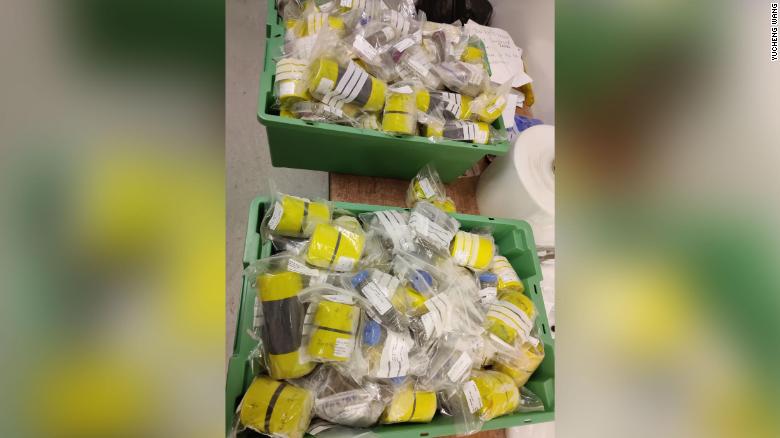 Scientists collected 535 samples of permafrost and sediment from across Siberia, Alaska, Canada and Scandinavia.
 Mammoth Steppe was a unique ecosystem that hosted a number of large grazing animals.Woolly rhinos, the researchers said, were still roaming around the Arctic 9,800 years ago. Earlier studies said


 The Arctic environment today.


 Cape cormorant,South Africa.Photo:Jay Pruett/Flickr


