There are no simple solutions to complex problems like climate change. But there have been times in the past when the world has come together to try to fix an environmental crisis.
How did we deal with acid rain, for example, or the hole in the ozone layer? And are there lessons for tackling the bigger issue of global warming?
1970, ’80s and ’90s: Acid rain
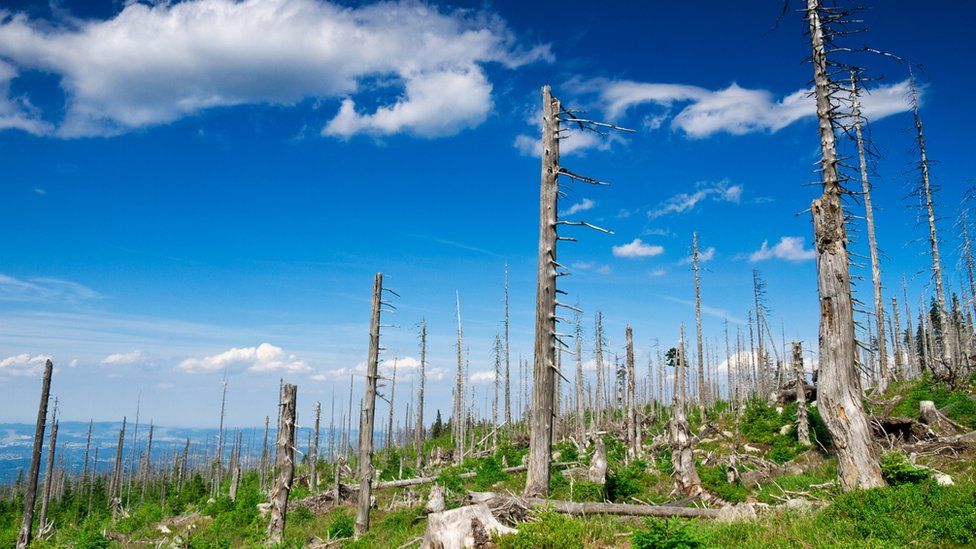
It’s the 1980s, and fish are disappearing in rivers across Scandinavia. Trees in parts of the forests are stripped bare of leaves, and in North America some lakes are so devoid of life their waters turn an eerie translucent blue.
The cause: Clouds of sulphur dioxide from coal-burning power plants are travelling long distances in the air and falling back to Earth in the form of acidic rain.
2021 is proving to be a dangerous year for grizzly bears.
So far this year, 42 grizzly bears have died in Wyoming, from the Beartooth Range down to the Dubois region — and there are still more than two months to go in the calendar year.
In 2020, the number of grizzlies killed through October totaled 31.
Some of the increase can be traced to the fact there has been an above-average number of encounters between grizzlies and humans this year, said Luke Ellsbury, a large carnivore biologist for the Wyoming Game and Fish Department.
“Typically we’ll have three or four aggressive encounters every fall,” he said. “I think we’re at seven or eight maybe this year. And so it is a little bit high, although we see that every few years… we have a high year.”
The Wyoming Game and Fish Department has received seven reports of human-bear encounters in the last month, with one injury.
Ellsbury blamed the increase in incidents on more people and more bears using the same landscape.
“Bears are coming into hyperphagia, so preparing for winter and going into the den,” he said. “This year, we did have a really dry year, and there was a shortage of a lot of natural foods. And so a lot of bears are a little bit food stressed right now.”
Ellsbury said reports of aggressive bear encounters began at the beginning of last month.
“It started in early September, and I think our last one was about a week and a half, two weeks ago,” he said. “And that’s typical. We usually see it in the fall — September, October time frame,” he said, noting that more hunters are in the woods at the same time bears are preparing for winter.
Ellsbury noted most of the encounters have involved females with cubs.
“And so they’re probably really searching for food, trying to get enough fat to make sure those cubs make it through winter, as well as defending those cubs from what they see as a threat,” he said.
Ellsbury reported that all of the aggressive encounters this year have taken place in traditional grizzly bear habitat.
“Hunter run-ins have been the number one cause,” he said. “We’ve had a few bears coming down to the low country and in developed areas near towns, but so far, we haven’t had too many aggressive encounters with them.”
Fortunately, there has only been one encounter so far that has resulted in an injury to humans – a grizzly caught a hunter by surprise west of Cody earlier this month.
“It bit his hand near his thumb, but they were able to save his hand,” he said.
Ellsbury noted that the rest of the encounters have involved a deterrent and either the bears were killed or they were driven away without any injury to the human.
“We have had a few bears killed in self-defense this fall,” he said, “and those are under investigation.”
Ellsbury pointed out that there are ways to keep safe while recreating in grizzly bear country.
“If you’re just out recreating or hunting, make sure you have a defense on you, such as bear spray or a firearm,” he said. “Both are effective tools in deterring an aggressive encounter. But just make sure that you carry them where they’re accessible, and you know how to use them.”
Registered nurse Janet Gilleran prepares to treat coronavirus patient Mike Mokler with Bamlanivimab, a monoclonal antibody, in the Respiratory Infection Clinic at Tufts Medical Center in Boston, Massachusetts on December 31, 2020.Craig F. Walker/The Boston Globe/Getty Images
A new study reveals that people who’ve had COVID-19 in the past may exhibit cognitive impairments months after an infection.
Those impairments can include problems with memory, as well as slower processing speed.
One of the longterm effects of COVID-19 is “brain fog,” or difficulty thinking and concentrating, the CDC says.
People who’ve recovered from the coronavirus are experiencing problems with their memory, new research and data reveal.
A study,publishedFriday in medical journal JAMA Network Open, says nearly a quarter of individuals who’ve been infected with the coronavirus have problems retaining information and focusing months after contracting the disease. Researchers, examining…
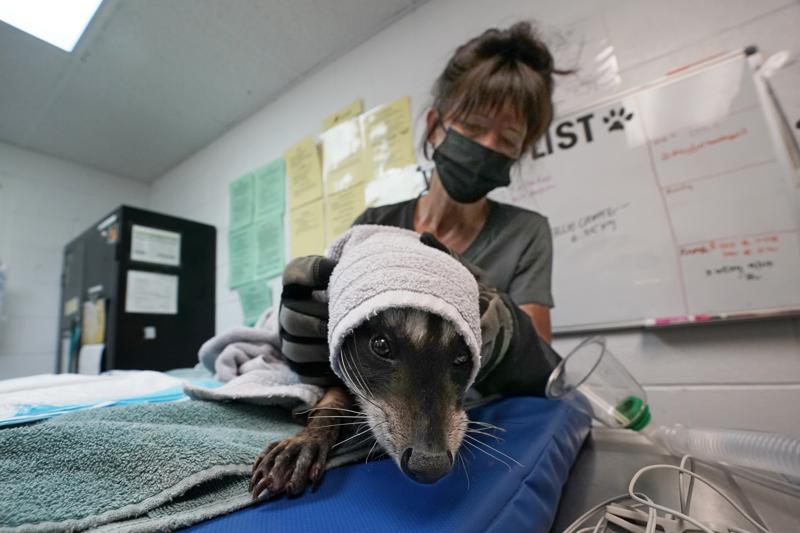
1 of 10Dana Fasolette uses a towel to hold a raccoon under treatment for burns at the Gold Country Wildlife Rescue in Auburn , Calif., Saturday, Oct. 2, 2021. As wildfires die down in the far western United States, wildlife centers are still caring for animals that were injured or unable to flee the flames.(AP Photo/Rich Pedroncelli)
FLAGSTAFF, Ariz. (AP) — The porcupines were walking slow and funny, more so than they usually do.
Their stride concerned some residents in a South Lake Tahoe neighborhood who called a rehabilitation center. Turns out, the porcupines had extensive burns to their paws, fur, quills and faces after a wildfire burned through the area.
Wildlife centers in the U.S. West are caring for animals that weren’t able to flee the flames or are looking for food in burned-over places.
An emaciated turkey vulture recently found on the Lake Tahoe shore couldn’t fly, likely because food isn’t as plentiful in burned areas, said Denise Upton, the animal care director at Lake Tahoe Wildlife Care.
“That’s what we’re seeing in the aftermath of the fires — just animals that are having a hard time and being pushed into areas they are not traditionally in,” she said.
REGIONAL— The USDA’s Animal Services division killed just over 1.5 million wild creatures last year, which ranged from 8,524 common ravens to 626 great blue herons, to 13 northern cardinals, to 707 river otters. Most of the killings were intentional, undertaken by federal trappers, although thousands of birds and mammals are unintentionally killed by the service each year as well. That has included threatened and endangered species, like the Canada lynx, and it’s those deaths that appear likely to land the federal agency in court. The Center for Biological Diversity has filed a notice of intent to sue the agency over the deaths of several lynx in Minnesota over the past several years. In a press statement, the CBD says it plans to sue over Animal Services’ inadequate analysis of the risks to lynx as a result of the agency’s wolf-trapping program…
LOVELL — Jeremy Dickson is known for his calm demeanor. Wife Carmen says he’s even analytical in histhought processes.Even after being mauled by agrizzly bear.
Dickson was one of a party of four hunting, fittingly, on Grizzly Ridge near Wapiti on the morning of Saturday, Oct. 2, when the bear came out of nowhere and attacked. He and his hunting partner killed the attacking bear, but only after the bear tore his thumb from his left hand.
But Dickson kept his composure, called for help and rode out to an awaiting air ambulance – almost as if itwas no big deal.
Before the attack, itwas a typical huntingmorning for the experiencedhunter and guide.
A 1995graduate of Lovell HighSchool who is well familiarwith the Northwest Wyomingbackcountry, Dickson wasn’t guiding that…
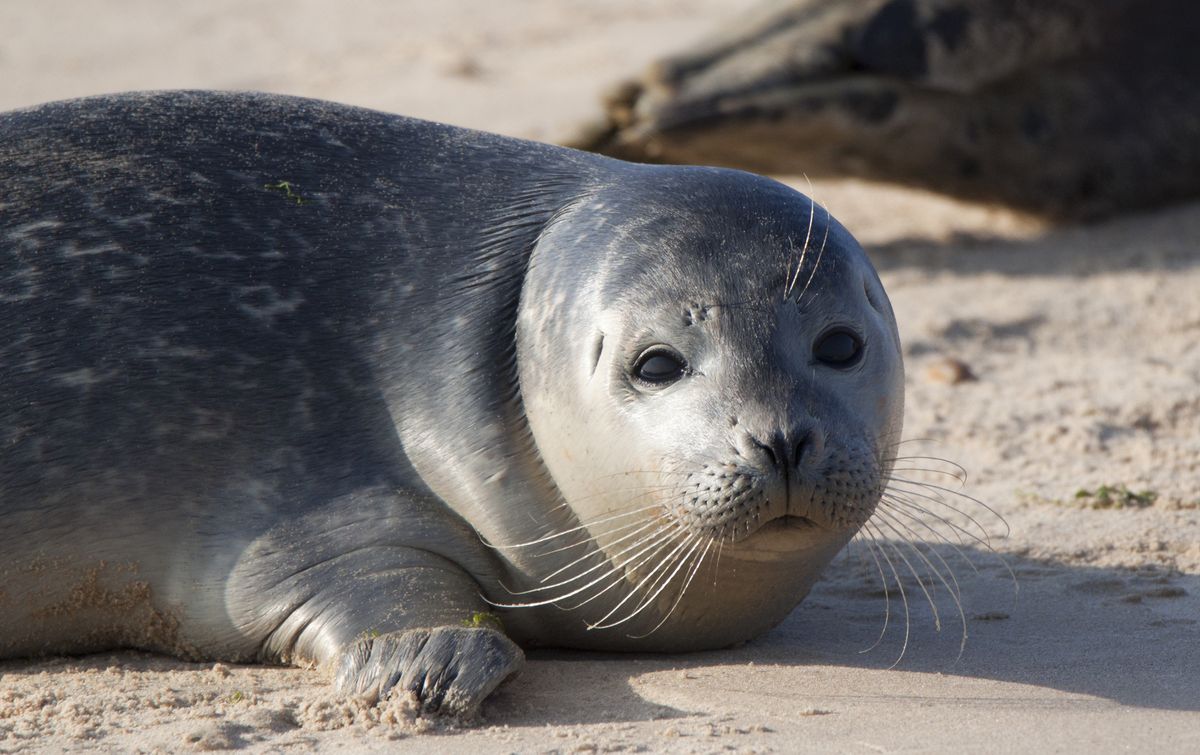
An unusual bird flu outbreak in the United Kingdom has killed five swans. seal According to a new report, the fox at the Wildlife Rehabilitation Center.
Outbreaks in late 2020 surprised researchers for birdsInfluenza virusIt rarely “spreads” to infect mammals. However, in this case, two different mammalian species were infected and developed a serious illness.
Genetic analysis revealed a single mutation in the avian influenza strain known as H5N8, which could allow the virus to fly from birds to mammals, the authors said. However, the mutation itself is not strongly associated with human transmission, and the authors determined that the strain in this case does not appear to pose a risk of transmission to humans. In addition, no human cases were identified in relation to development.
Nonetheless, “genetic analysis did not show an increased risk of human transmission…
Every month, Mongabay brings you a new episode of Candid Animal Cam, our show featuring animals caught on camera traps around the world and hosted by Romi Castagnino, our writer and conservation scientist.
Camera trapsbring you closer to the secretive natural world and are an important conservation tool to study wildlife. This month we’re meeting the world’s most trafficked mammal: the Sunda pangolin.https://www.youtube.com/embed/toxC22tM6Zg
The Sunda pangolin (Manis javanica), also known as the Malayan or Javan pangolin, is a unique mammal native to Southeast Asia. Pangolins are covered by many rows of overlapping scales, which are made from keratin, the same protein that forms human hair and fingernails. The scales never stop growing and are constantly filed down as the animals dig burrows and forage for insects. Pangolins use…




 Jimmy Orr: